The VA and Portland’s road fee: two peas in a pod

More money. That’s the answer, says government. More money.

Portland has a problem with maintenance of its roads. So government does what government does best, it proposes spending more money. The city has “no alternative”, said Mayor Charlie Hales but to impose new street user fees on households, apartment complex owners, businesses and government agencies, including school districts.

The city claims it needs the extra money because revenue has been declining. But John A. Charles, Jr., President and CEO of the Cascade Policy Institute, took a closer look . Charles discovered that the city’s transportation revenue has actually been growing steadily and the city’s general fund has been flush. He concluded that it’s not a lack of money, but choices on spending priorities that has put the city in its current situation with road maintenance.

Meanwhile, back in Washington, D.C., a political debate is raging about what to do with the Veterans Administration, and more money seems to be the easy answer there, too.

department-of-veterans-affairs-lincoln-plaque

Democrats are already saying the solution to the VA’s problems is more money. At the same time they are attacking Republicans for opposing a VA bill earlier this year that would have addressed the crisis with more spending.

And Senator Bernie Sanders (I-VT), Chairman of the Senate Veterans Affairs Committee, has reintroduced a bill to reform the VA that copies the free-spending elements of a similar bill defeated in the Senate earlier this year,  including a provision that would open 27 costly new VA medical centers across the US and in Puerto Rico.

Senator Bernie Sanders (I-VT)

Senator Bernie Sanders (I-VT)

But more money isn’t going to solve the VA’s problems.

A May 28, 2014 report on problems at the VA’s Phoenix, AZ Health Care System noted, for example, that while conducting its work in Phoenix, the staff and Hotline of the Office of Inspector General (OIG) “received numerous allegations daily of mismanagement, inappropriate hiring decisions, sexual harassment, and bullying behavior by mid- and senior-level managers at this facility.”

The issues with excessive patient wait times identified in current allegations are also hardly new. The May 2014 report noted that since 2005, the VA OIG has issued 18 reports that identified, at both the national and local levels, deficiencies in scheduling resulting in lengthy waiting times and the negative impact on patient care. Each of the reports listed was issued to the VA Secretary and the Congress and is publicly available on the VA OIG website.

When the Senate failed to pass Sanders bill earlier this year it was principally because of Republican opposition, with Sanders’ cynically saying he hoped opponents would have the courage to face the vets they were depriving of care.

Other Democrats tried to position the party, which rarely sees a new spending bill it doesn’t like, as the pure for-the-good-of-the-people arm of the government, by raising the old “don’t play politics” argument. “Can we put politics aside for the good of our nation’s veterans?” said Sen. Patty Murray, D-Wash. “Can we show these heroes that – despite our differences – we will work as diligently toward getting them the benefits and care they’ve earned as they have worked for our nation?”

The problem is Sanders’ bill would have cost $21 billion dollars by vastly expanding existing programs and adding new ones, when the VA budget has already been growing like topsy.

The VA, with 151 hospitals and 821 clinics, already has an annual budget that’s more than double what it was a decade ago.

According to the Office of Management and Budget, the VA budget increased in real terms from $45 billion in fiscal year 2001 to $150.7 billion in fiscal year 2014 and President Obama’s 2015 budget for the VA proposes an increase to $163.9 billion.

But Senate Majority Leader Harry Reid is already going the class warfare route in urging even more spending.
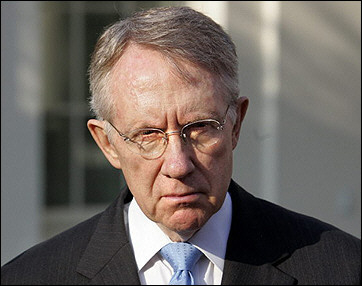
Senate Majority Leader Harry Reid (D-NV)

Senate Majority Leader Harry Reid (D-NV)

On Monday he blasted Republicans for favoring tax cuts for the wealthy over the health of vets and spending for the war in Iraq on “America’s credit card”  but not being willing to pay for the medical care of vets. All senators should support the Sanders bill regardless of its cost, he said.

With the country already facing more than $17 trillion in national debt and with annual deficits continuing to contribute to that debt, adding more debt just plain makes no sense, even if it is to serve honored veterans.

Equally, adding more veterans services and vastly expanding the pool of veterans eligible for VA services makes no sense when the VA is apparently incapable of professionally providing its services now to its existing caseload.

It would make more sense for Congress to restrain the growth of its potential clients, facilitate a shift of veterans with service-connected disabilities who don’t require specialized VA care to medical services outside the VA system, and address the serious cultural problems that have led to a dysfunctional VA bureaucracy and interminable waiting times for vets deserving of our nation’s care.

In addition, Congress owes it to our heavily indebted country to pay for any additional costs that may be incurred in connection with VA reform with real money. That would require hard choices on budget priorities. Sanders’ February bill proposed that the additional spending be paid for with overseas contingency operations funds used to fund the war in Afghanistan. His new bill would also place caps on overseas contingency operations funds . That money isn’t real savings because it wouldn’t have been spent anyway with U.S. Afghanistan operations winding down.

So watch closely as Congress tries to get out in front of the VA mess. There’s reason to be worried. As Will Rogers said, “This country has come to feel the same when Congress is in session as when a baby gets hold of a hammer.”


Gervais gets it right on condoms for teens

One of every 20 girls in grades six through 12 in Oregon’s Gervais School District got pregnant this school year. That’s right. One of every 20.

So the District, thinking of those nine girls and others, as well as the boys involved, is making condoms available to students in those grades, its Superintendent, Rick Hensel, said yesterday. The District is on the right path.

A study last year by some nursing interns at Oregon Health & Science University revealed that 42 percent of Gervais High School students surveyed said they “never” or “sometimes” use anything to protect themselves from pregnancy or sexually transmitted diseases.

The disturbing rate of teen pregnancies in Gervais runs contrary to overall trends in Oregon, where teen pregnancies girls dropped 55 percent from 1988 to 2010, according to a Guttmacher Institute analysis. Gervais’ situation also in inconsistent with trends in the nation as a whole. According to the Guttmacher study, teen pregnancies have declined dramatically in the United States since their peak in the early 1990s, as have the births and abortions that result.

I’m drawn by this situation to revisit an earlier post about the perils and consequences of single motherhood in which I pointed out that single motherhood is a prescription for economic insecurity for many women.

Image

I cite this because, according to the Campaign for Our Children, Inc.,

  • Even though most teen mothers have expectations for marrying the father of their child, not even eight percent of unwed teen mothers are married to the baby’s father within one year of giving birth.
  • Teenage mothers have reduced chances of ever marrying compared to women who do not have children.
  • Teenage marriages are unstable; one-third of teenage marriages formed before the bride is 18 years old end in divorce within five years, and almost half dissolve within 10 years.

As the Single Parents Network says, “Children from homes run by teenage mothers have to face almost insurmountable obstacles in life.”

Single-mother families are nearly five times as likely to be poor than married-couple families and a majority of America’s poor children live in single mother-led households, according to the left-leaning Center for American Progress.

At the other end of the political spectrum, the conservative Heritage Foundation says marriage is the greatest weapon against child poverty.

“Family disintegration, lack of education, and counterproductive welfare incentives all contribute to child poverty,” Heritage wrote recently. “Rebuilding a strong marriage culture should be at the forefront of our efforts to fight poverty.”

A New York Times story cited a number of studies that attributed the growing income gaps in American society to the changing structure of the typical family with the growing number of single parent families. The article suggested that changing marriage patterns could account for anywhere from 15-40% of growing income inequality across the country, with a surge in births outside of marriage among less educated women pushing single-parent families into the lower end of the socio-economic range.

Helping teenagers reach adulthood before having children will mean more children will grow up in families with healthy marriages, will improve the well-being of children and will strengthen society.

Vote? Fuhgettaboutit

A bunch of folks won in Oregon’s May  20 primary elections, but that doesn’t mean they enjoy the enthusiastic support of Oregonians. In fact, far too often a small number of Oregonians are determining the winners and losers in Oregon politics. Only about one-third of registered voters bothered to vote in the May primaries.

And this doesn’t take into account the fact that significant numbers of eligible adults 18 years and older are not even registered to vote.

non_voters

In the hotly contested Republican primary for the U.S. Senate race against Jeff Merkley, candidate Monica Wehby captured 132,501 votes, 49.99 percent. That allowed her to overcome her principal challenger, Jason Conger, who pulled in 99,706 votes, 37.61 percent.

Wehby’s victory sounds impressive until you realize that there are 650,176 Oregonians registered as Republicans. That means Wehby won the primary with the votes of just 19.77 percent of registered Republicans. Those are the only people who can vote in Oregon’s Republican primary in the state’s closed primaries.

Votes in Washington County Commission races were similarly low. There are 284,138 registered voters in the county.For the nonpartisan Commissioner-at-large position, Andy Duyck won with 43,837 votes. That’s 15.4 percent of registered voters.

The fact is, despite Oregon’s much-vaunted vote-by-mail system, the May primary had one of Oregon’s lowest voter turnouts ever and turnout has been falling for years.

Why?

In races where there seems to be no real contest, motivating voters to turn out is damn hard. Jeff Merkley won the Democratic primary for U.S. Senator with 271,344 votes, just 33 percent of registered Democrats.

In other cases, it’s hard to get excited when there truly is no contest. For example, in three Metro races the incumbent candidates, Carlotta Collette, Shirley Craddick and Kathryn Harrington, had no opponents.

In some cases the ideological split in a voting district is so unbalanced, with Democrats or Republicans firmly in control, that going to the polls if you’re in the minority seems like a total waste of time. A Republican in Multnomah County may feel that way as may eligible voters in most Congressional districts in the U.S. According to the Pew Research Center, political scientists and analysts disagree on why so few House districts are competitive; some blame gerrymandering, while others say the district maps reflect a politically polarized America where people are more likely to live among those who think like they do.

Then there are the races that just don’t engage voters, where few voters feel any connection to whoever wins and probably couldn’t even name the incumbent if asked.

Of course, Oregon’s closed primary system is also a guilty party. With 648,146 Oregonians registered as Nonpartisan (nonaffiliated, minor parties & others), a number that’s been growing steadily, none of them can vote in a Republican or Democratic primary.

There’s also the growing disenchantment with politics and politicians in general in Oregon and across the country. In Kentucky, for example, turnout was only 26 percent in a nationally covered intensely competitive primary between U.S. Senate Republican Leader Mitch McConnell and Matt Bevin.

Merkley’s money: pick your poison

I got a friendly personal note from Senator Jeff Merkley the other day. Well, it was addressed to me and had his signature, so I think it was personal.

Anyway, he told me that if I’m “fed up with special interests always getting their way in Washington” he needs my help because “the special interests that are used to calling the shots are hell-bent on defeating me in 2014.” And in a kind of ironic twist, he said he needs lots of money because every supporter he adds today will be “a rejection of the big money politics that’s created a government by and for the powerful.”

This is the same man who has raised nearly $8 million from the special interests that he embraces, particularly unions, lawyers and law firms, and real estate interests. In the DC game, it’s more a matter of picking your poison than staying pure.

specialinterests

During 2009 -2014, principal contributors to Merkley’s campaign have been:


Industry    Total raised       From Individuals From PACS
lawyers/law firms $337,313 $259,615 $77,698
Leadership PACs $166,500 0 $166,500
Real estate interests $146,868 $74,358 $72,510
Building trade unions $117,000 0 $117,000


The lawyer/law firm contributors include the American Association for Justice, also known as the Association of Trial Lawyers of America ($26,000) and the Boston-based law firm, Thornton & Naumes ($25,000). Thornton & Naumes is a heavy hitter in the contributions game, having contributed $326,250 so far during the 2014 election cycle. That made it the top contributor to 23 members of Congress, all but one a Democrat.

The trial lawyers have been long-time big-time money machine for the Democratic Party. Already losing tort-reform battles in states run by Republican governors and legislatures, and threatened by the GOP-led House, the trial lawyers are deathly afraid of having to deal with a GOP-led Senate, too, so they’re manning the barricades and handing out cash..

Another special interest heavily invested in Merkley is the real estate industry, blamed by some for exacerbating the housing collapse by promoting easy-credit policies.

Then there are the unions. Now there’s a special interest.   Unions making big contributions to Merkley in the 2014 election cycle include:

  • International Brotherhood of Electrical Workers, $30,000
  • Communications Workers of America, $25,000
  • National Electrical Contractors Assn., $25,000
  • International Association of Fire Fighters, $23,500
  • Operating Engineers Union, $20,000
  • Teamsters Union, $20,000
  • Painters & Allied Trades Union, $18,000
  • International Longshoremen’s Association, $18,000
  • International Association of State/County/Municipal Employees, $16,500.

In 2013, the union membership rate–the percent of wage and salary workers who were members of unions–was 11.3 percent, according to the federal Bureau of Labor Statistics. The number of wage and salary workers belonging to unions, was 14.5 million.

The strongest union representation in 2013 was with public-sector workers, which had a union membership rate (35.3 percent) more than five times higher than that of private-sector workers (6.7 percent). This reflects a fairly steady decline in union membership over the years. Thirty years ago, for example, the union membership rate was 20.1 percent, and there were 17.7 million union workers.

Unions in the United States are waging an aggressive effort to maintain their membership and to support union-friendly government policies. And Merkley’s on board.


Single mothers = singular troubles

It’s no secret that single motherhood is a prescription for economic insecurity for many women.

Single-mother families are nearly five times as likely to be poor than married-couple families and a majority of America’s poor children live in single mother-led households, according to the left-leaning Center for American Progress.

Lone mothers

At the other end of the political spectrum, the conservative Heritage Foundation says marriage is the greatest weapon against child poverty.

“Family disintegration, lack of education, and counterproductive welfare incentives all contribute to child poverty,” Heritage wrote recently. “Rebuilding a strong marriage culture should be at the forefront of our efforts to fight poverty.”

A New York Times story cited a number of studies that attributed the growing income gaps in American society to the changing structure of the typical family with the growing number of single parent families. The article suggested that changing marriage patterns could account for anywhere from 15-40% of growing income inequality across the country, with a surge in births outside of marriage among less educated women pushing single-parent families into the lower end of the socio-economic range.

“College-educated Americans … are increasingly likely to marry one another, compounding their growing advantages in pay,” The Times said. “Less-educated women…are growing less likely to marry at all, raising children on pinched paychecks that come in ones, not twos.”

“It is the privileged Americans who are marrying, and marrying helps them stay privileged,” said Andrew Cherlin from Johns Hopkins University.

Now there’s even more evidence connecting single-motherhood to poverty.

The Earned Income Tax Credit (EITC) is a refundable tax credit for low to moderate income working persons, particularly those with children.

The Brookings Institution, a Washington, D.C.-based centrist think tank, put together an illuminating interactive map of the share of taxpayers that claim the EITC at the county level nationwide:

Map: The Earned Income Tax Credit in Your County

Brookings then compared the EITC map with a map of single motherhood in the United States in the most recent year for which complete data is available.

Map: Percent of all households that are single female headed with children in 2010.

The principal conclusion? The map of EITC benefits by county looks a lot like a map of single motherhood.

As Brookings points out, looking at the number of parents in a household as an indicator of financial stability and opportunity, changing marriage patterns could account for anywhere from 15-40% of growing income inequality across the country.

While correlation doesn’t necessarily equal causation, the link between poverty and mothers with children growing up without a father is clearly something that ought to be part of the discussion of income inequality in the United States.

Cover Oregon: big management paydays/ small results

coveroregonAD


When Clyde Hamstreet took over as Interim Executive Director of Cover Oregon earlier this month, he said one of his priorities would be clamping down on spending. He might want to start by looking at the compensation of his senior staff.

That’s because the fiasco that is Cover Oregon has still found a way to pay some pretty hefty salaries and generous benefits.

While the focus of most Cover Oregon media coverage has been on the utter failure of its enrollment website and the millions paid to contractors, little has been said about the employees behind the scenes.

Cover Oregon’s 2013-2015 budget for personnel is $18 million. That covers 175 employees.

The top ten highest paid of those employees are all getting more than their boss, Governor John Kitzhaber, whose annual salary is $98,600. With benefits, Kitzhaber’s total annual compensation is $125,163.

In contrast, the total compensation of each of the ten highest paid Cover Oregon staff exceeds $150,000.

Before Interim Executive Director Bruce Goldberg resigned in March, his annual compensation totaled $229,761.

The salaries, benefits and total compensation of the rest of the top 10, which includes state payment of 95 percent of their health insurance premiums, are as follows:


Chief Communications Officer $132,516 $35,700 $168,216
Sr. Mktg Mngr $132,516  $35,700


$168,216


Chief Policy Officer $132,516


$35,700


$168,216


Position title Current salary Benefits* Total Compensation
Operations Mngr. $122,000 $32,867 $154,867
Operations Liaison $125,002 $33,676 $158,678
Functional Lead $150,000 $40,410 $190,410
Chief Operating Officer $162,516 $43,782 $206,298
Chief Information Officer $162,516 $43,782 $206,298
Executive Director $181,000 $48,761 $229,761

*Derived from a benefits factor equal to 26.94 percent of salary, based on 2013 overall year-end totals. Source: Cover Oregon

But even with all this high-paid firepower, Cover Oregon couldn’t get the job done.

Maybe part of the reason is because Cover Oregon employees have so much time off. According to Cover Oregon’s recruitment information, benefits for all employees include 30 days of paid time off and 11 paid holidays annually. That adds up to 41 days, or more than 8 weeks, off each year. Not a bad deal … for them.


Berlin Redux: Those who cannot remember the past are condemned to repeat it

In July 2009, speaking at Moscow’s New Economic School, Obama said long-standing assumptions that the US and Russia were antagonists vying for spheres of influence were inaccurate.

“Given our interdependence, any world order that tries to elevate one value or people over another will inevitably fail,” he said. “That is why I have called for a ‘reset’ in relations between the United States and Russia. This must be more than a fresh start between the Kremlin and the White House, though that is important.”

“It must be a sustained effort among the American and Russian people to identify mutual interests, and to expand dialogue and co-operation that can pave the way to progress,” he added.

Obama calls for reset of U.S.-Russian relations in 2009

Obama calls for reset of U.S.-Russian relations in 2009

All this just 12 months after Bush’s hopes for better relations with Russia had been shattered by its war with Georgia.

Now, five years later, Russia has annexed the Crimean Peninsula of Ukraine and the United States is sitting by helplessly.

Obama has said that Russia, by its actions in Crimea, is on the wrong side of history.

Perhaps Obama is forgetting history.

In 1933, Adolph Hitler emphatically proclaimed Germany’s commitment to peace.

“The German government “…is…of the conviction that there can only be one great task in our time: securing peace in the world,” he declared to the Reichstag. “The German Government wishes to engage in peaceful discussions with the other nations on all difficult questions,” he added.

Hitler proclaims Germany's pursuit of peace

Hitler proclaims Germany’s pursuit of peace

That same year, however, Hitler laid the groundwork for what would become the pretext for forcefully absorbing other countries. “We have particularly at heart the fate of the Germans living beyond the frontiers of Germany who are allied with us in speech, culture, and customs and have to make a hard fight to retain these values,” he said in a policy statement submitted to the Reichstag on March 23, 1933. “The national Government is resolved to use all the means at its disposal to support the rights internationally guaranteed to the German minorities,” he said.

When Germany annexed Czechoslovakia’s Sudetenland in 1939, it was justified as an effort to “liberate” the predominantly German area and protect the abused ethnic German population . Foregoing action, Britain and France chose to negotiate a deal that preserved “peace in our time”.

Austria was next. In March 1938, a coup d’état was engineered by the Austrian Nazi Party of Austria’s state institutions in Vienna and Germany annexed Austria into the Third Reich that same month. The Nazis then held a plebiscite allowing the people to vote on the annexation and claimed that the vote in favor was 99.8 percent. (Sound familiar?)

The reaction from the Allies? Mostly words.

It wasn’t until Germany and the Soviets invaded Poland in 1939 that Britain and France declared war on Germany, too late to stop the Soviets and Nazis from slaughtering millions of Jews and Polish intelligentsia through starvation, forced labor and mass killings.

The Russian portion of Poland, by the way, was incorporated within Russia by Soviet “elections” and Russian citizenship was conferred on the Polish inhabitants. (Sound familiar?)

Allied action also came too late for Ukraine, which was overrun by the Nazis in 1941 after years of brutal killings under Stalin, during which millions of Ukrainians were murdered and millions more were sent to concentration camps.

Now we have Putin talking about the need to “protect” ethic Russians in Eastern Ukraine.

“It’s all nonsense. There are no kinds of Russian units in eastern Ukraine. No special forces, no instructors. They are all local citizens.” Russia's President Vladimir Putin

“It’s all nonsense. There are no kinds of Russian units in eastern Ukraine. No special forces, no instructors. They are all local citizens.”
Russia’s President Vladimir Putin

On April 17, 2014, in a televised Q&A session with the Russian public, Putin observed that the Federation Council, the upper house of Russia’s Parliament, had granted him the right to use military force in Ukraine. “I really hope that I do not have to exercise this right and that we are able to solve all today’s pressing issues via political and diplomatic means,” he said.

And today, with Russian-connected demonstrators fomenting unrest in Eastern Ukraine, Russia had the gall to accuse the new Ukrainian government of flouting a just concluded agreement intended to diffuse the crisis. “The Geneva accord is not only not being fulfilled, but steps are being taken, primarily by those who seized power in Kiev, that are grossly breaching the agreements reached,” said Russian Foreign Minister Sergei Lavrov in a press conference in Moscow.

Here we go again?

Warning: this post may trigger thinking

Universities apparently have a new mission…protecting students from exposure to speech that makes them uncomfortable. God forbid, we don’t want our academic institutions subjecting kids to provocative ideas that might challenge their preconceptions and destroy their youthful innocence.

On a recent trip to Santa Barbara, CA I spotted a brief item in a local paper about the University of California Santa Barbara (UCSB). Its Associated Students Senate had passed a resolution to begin the process of instituting mandatory “trigger warnings” on class syllabi.

“Having a trigger warning on a syllabus allows a student the choice to be present and gives a student advance notice of possible triggers and the choice to be present or not instead of having to leave in the middle of a class or lecture,” the Resolution said.

The high level of Students Senate debate at the sun-steeped school overlooking the blue Pacific was exemplified by the supportive comment of Off-Campus Senator Beatrice Contreras, “I’ve been in this kind of situation before — it sucks; we should pass it.”

University of California Santa Barbara

University of California Santa Barbara

The Los Angeles Times opined, and rightly so, that the whole idea is foreign to learning. “Trigger warnings are part of a campus culture that is increasingly overprotective and hypersensitive in its efforts to ensure that no student is ever offended or made to feel uncomfortable,” said a Times editorial.

Still, the concept appears to be gaining ground.

In February, Ohio’s Oberlin College put out guidelines asking faculty to refrain from using in their course materials information or works that would offend students. If professors believed such materials were essential to the course, they were expected to place a “trigger warning” in their syllabus. If students felt the material would be too emotionally difficult, faculty were encouraged to make such triggering material optional.

Faculty were urged to “be aware of racism, classism, sexism, heterosexism, cissexism, ableism, and other issues of privilege and oppression,” to remove triggering material when it doesn’t “directly” contribute to learning goals.

For example, faculty were cautioned that Chinua Achebe’s Things Fall Apart, a highly-praised novel about the struggles of a man from an Ibo village in Nigeria, may “trigger readers who have experienced racism, colonialism, religious persecution, violence, suicide and more.”

After strenuous criticism within the school and in the media, Oberlin has temporarily suspended the trigger policy, pending further faculty review.

The issue has surfaced at Rutgers University, too, where a student wrote to the university newspaper endorsing notifications to students of material that might trigger discomfort.

“…literature courses often examine works with grotesque, disturbing and gruesome imagery within their narratives,” the student noted. “For instance, F. Scott Fitzgerald’s critically acclaimed novel, “The Great Gatsby,” possesses a variety of scenes that reference gory, abusive and misogynistic violence. Virginia Woolf’s famous cerebral narrative, “Mrs. Dalloway,” paints a disturbing narrative that examines the suicidal inclinations and post-traumatic experiences of an English war veteran.”

Even the liberal New Republic ran a piece criticizing the trigger-happy trend. “Structuring public life around the most fragile personal sensitivities will only restrict all of our horizons,” wrote Jennie Jarvie. “Engaging with ideas involves risk, and slapping warnings on them only undermines the principle of intellectual exploration.”

Supreme Court Justice William O. Douglas had the right answer to all this foolishness.

“…a function of free speech under our system of government is to invite dispute,” he wrote in the majority opinion in   Terminiello v. City of Chicago  “It may indeed best serve its high purpose when it induces a condition of unrest, creates dissatisfaction with conditions as they are, or even stirs people to anger. Speech is often provocative and challenging. It may strike at prejudices and preconceptions and have profound unsettling effects as it presses for acceptance of an idea.”

A university free from challenging or disturbing thoughts is a university free from learning.


Addendum, 11/19/14:

The Microaggression Farce

The latest campus fad, which sees racism everywhere, will create a new generation of permanent victims.

I just can’t keep up; who am I supposed to deplore now?

It’s just getting hard to keep up.

So many people with so many different points of view is proving to be a real conundrum.

Brandeis University recently invited Ayaan Hirsi Ali,

Ayaan Hirsi Ali

Ayaan Hirsi Ali

a visiting fellow at the conservative American Enterprise Institute , a campaigner for women’s rights and a critic of intolerance, to receive an honorary degree at the school’s commencement on May 18.

Some of her comments allege a link between Islam and mistreatment of women. “The connection between violence, particularly violence against women, and Islam is too clear to be ignored,” she said in a Wall Street Journal piece. “We do no favors to students, faculty, nonbelievers and people of faith when we shut our eyes to this link, when we excuse rather than reflect.”

An outcry of opposition to her appearance arose from some Brandeis students and The Council on American-Islamic Relations, a civil rights and advocacy group. “She is one of the worst of the worst of the Islam haters in America, not only in America, but worldwide,” Ibrahim Hooper, a spokesman for the Council, told the New York Times.

Unwilling to face the heat, Brandeis cancelled its invitation to Ayaan Hirsi Ali. “We cannot overlook that certain of her past statements are inconsistent with Brandeis University’s core values,” the university, that bastion of free speech and academic inquiry, said in a statement explaining its decision.

So, if Ayaan Hirsi Ali comes to Portland to speak, should I go and listen or publicly deplore her, start a social media campaign against her and urge that everybody boycott her appearance?

I’ve also been reading about how upset some people are with Chauncy Childs, the owner of a planned Moreland Farmers Pantry in Sellwood. When it was discovered that she’d posted comments on Facebook about her opposition to same-sex marriage, some folks went ballistic.

Chauncy Childs

Chauncy Childs

According to The Oregonian, the outrage even extended to people who came to Childs’ defense. “The idea of blacklisting and boycotting people for their thoughts and beliefs, as opposed to their actions leads to a world that is less tolerant, less caring and more segregated,” Nick Zukin, co-founder of Kenny and Zuke’s delis, told The Oregonian. Gay rights activist Byron Beck lambasted Zukin and urged people to boycott his businesses, too.

“They’re choosing to open a business in a very open-minded neighborhood,” Tom Brown, president of the Sellwood Westmoreland Business Alliance, said without apparent irony to The Oregonian. “I think their personal views are going to hurt.”

Given this situation, should I stop by the Moreland Farmers Pantry if I’m in the neighborhood or deplore its owner’s views and pass it by?

And, by the way, I’m debating whether to install the Firefox browser on my laptop, but I’m conflicted.

Not long ago it was discovered that Brendan Eich, the newly appointed CEO of Mozilla, developer of the open source browser, Firefox, donated $1,000 in 2008 to support the campaign for Proposition 8, a California ballot proposition that aimed to ban gay marriage in California.

Brendan Eich

Brendan Eich

The donation was uncovered in 2012 when Eich was Mozilla’s Chief Technology Officer, but it didn’t become a huge controversial public issue until he was appointed CEO in late March 2014.

At that point Eich came under heavy fire from some Mozilla employees, gay-rights activists, executives of companies active in the Firefox marketplace and others.

Will Oremus, senior technology writer at Slate, said Eich’s departure was a sign of the times.

“There was a time when supporting gay marriage made you a radical,” Oremus wrote. “Then there was a time when it made you a progressive. Now we’ve reached a point where not (emphasis in the original) supporting gay marriage makes you unfit to lead a major Silicon Valley organization.”

The National Organization for Marriage, initially created to support Proposition 8, has jumped into the fray, too. It has called for a boycott of Firefox “to protest the company forcing out its CEO over his support of Proposition 8.” A conservative website, TruthRevolt.org, has urged people to uninstall the Firefox browser in protest of “Mozilla’s decision to fire Eich.” (Note: Eich resigned)

Others took the anti-Eich crowd to task for attempting to quell free speech and silence those who hold dissenting views.

So, what do I do? Should I deplore Mozilla for giving in to the pressure of the crowd and intentionally get a Firefox browser or should I bond with the critics of Eich’s donation and boycott Mozilla products?

And while I’m thinking about it, what should I do about all the other companies whose employees, including some executives, made donations in support of Proposition 8?

FiveThirtyEight put together a table of thousands of dollars of Prop. 8 donations by major Silicon Valley companies that showed money coming from employees of firms such as Google, Apple, Intel, Oracle and Yahoo.

A further analysis of the data showed that 83 percent of the donations by Californians were in opposition to Proposition 8, but there was a lot of variation between companies. At one big tech company based in California 60 percent of employee donations were in support of Proposition 8.

Should I deplore that company, maybe boycott its products?

Oh, I almost forgot Chick-fil-A. You may remember how, in 2012, the chain’s president, Dan Cathy, was reported to have said, “”We are very much supportive of the family — the biblical definition of the family unit…We want to do anything we possibly can to strengthen families.” His comments spawned outrage among some gay rights activists and politicians and calls for a boycott of Chick-fil-A.

Dan Cathy

Dan Cathy

I know there aren’t any Chik-fil-A’s in Oregon, but if I come across one out of state can I stop for a bite to support free speech or am I still supposed to be deploring them?


All I need to know about life I learned from a cow


learnedfromcow


◦   If it’s good, milk it for all it’s worth

◦   Successful people are “moo-vers and shakers”

◦   Don’t be just one of the herd

◦   The cream always rises to the top

◦   Don’t stoop to a barnyard mentality

◦   Don’t be bossy

◦   It’s better to have milked and churned thean to have never milked at all

◦   If you need to get somewhere, hoof it

◦   Some days can be udder frustration

◦   If you’re feeling low, moo yourself a little song

◦   Chew your food 50 times before swallowing

◦   Don’t let others corrall you

◦   Munch hay while the sun shines

◦   He who lives with the herd learns to watch his step

◦   Following your heart will always steer you in the right direction

◦   Party ’till the cows come home

Source: anonymous