Don’t Give ANY Taxpayer Money to Tom Dundon and His Cronies for the Moda Center

The Portland City Council approved a term sheet for a possible Moda Center renovation on August 12, one more step in a potential misguided commitment to a billionaire and his buddies. 

The term sheet commits what The Oregonian has dubbed “a torrent of taxpayer money” of up to $573 million in public funds for the renovation of the Moda Center, including a state commitment of $365 million, a Portland commitment of $120 million and a Multnomah County commitment of $88 million. Portland would also commit up to $275 million in maintenance costs on the arena over the next 20 years and Multnomah County would chip in $13 million for capital expenses.

Don’t cry for Texas billionaire Tom Dundon and Rip City Rising, the group he leads in the Blazers deal, under which the group purchased 80.1% of the Trailblazers at a $4 billion valuation and the remaining 19.9% at a $4.5 billion valuation. Whatever they pay is likely to be rewarded with a much bigger payday down the road. At some point they are going to turn it over and probably make a bundle.

On august 21, it was reported that Marc Lore had agreed to sell his control stake in the NBA’s Minnesota Timberwolves and the WNBA’s Minnesota Lynx to billionaire investor Marc Stad at a $4.5 billion enterprise value. Lore and Alex Rodriguez purchased their initial controlling stake in the Minnesota Timberwolves and Minnesota Lynx from Glen Taylor based on a  $1.5 billion valuation, completing the process in June 2025.

And look at what one owner just pulled off selling the Los Angeles Lakers. 

Earlier this month, Mark Walter sold the Los Angeles Lakers to Bob Iger, the former Disney CEO and Los Angeles notable, and Josh Kushner, a venture capitalist. The deal came together in three days: $12.5 billion for a team that Walter bought less than a year ago for $10 billion. 

Dundon and his investment group also stand to reap billions from the Blazers acquisition down the road. What makes ordinary people who would never go along with subsidies for billionaires become willing supporters of such rewards when they become politicians? 

The payoffs for other buyers of NBA teams who have subsequently sold their teams have been eye watering.

  • Boston Celtics: Bought by an investment group, Boston Basketball Partners L.L.C, led by Wyc Grousbeck that purchased the team in 2002 for $360 million; sold to an investment group led by private equity mogul Bill Chisholm in August 2025 for $6.1 billion.
  • Phoenix Suns: Bought by Robert Sarver, leading an investment group called Suns Legacy Partners, in 2004 for $401 million; billionaire mortgage lender, Mat Ishbia, purchased the majority stake of the Suns and the WNBA’s Mercury for $4 billion in 2023.
  • Dallas Mavericks: Mark Cuban purchased a majority stake in the Dallas Mavericks from H. Ross Perot Jr. in January 2000 for $285 million; Cuban sold a majority interest in the team to Miriam Adelson and Patrick Dumont of the Adelson family casino empire for $3.5 billion in 2023.
  • Charlotte Hornets: Michael Jordan bought a majority stake in the Charlotte Bobcats (now the Hornets) from founder Bob Johnson in March 2010 for $275 million; sold his majority stake for $3 billion to a group led by Gabe Plotkin and Rick Schnall in July 2023. 
  • Golden State Warriors: Bought from Chris Cohan by Joe Lacob and Peter Guber for $450 million in July 2010; current valuation estimated at  $10.8 – $11.3 billion.
  • Milwaukee Bucks: Bought by former U.S. Senator Herb Kohl in 1985 for $18 million; sold by Kohl to Wes Edens and Marc Lasry in 2014 for $550 million; current estimated valuation $4.1 – $4.5 billion. 
  • LA Lakers: Bought by Jerry Buss in 1979 for $67.5 million; in June 2025, Buss family agreed to sell controlling interest to Mark Walter, a minority owner since 2021 and owner of the L.A. Dodgers, for $10 billion. 

And the money changing hands in these deals is likely to get bigger. “I am absolutely convinced that we have not reached anything close to a ceiling,” Irwin Kishner, a partner at the law firm Herrick and co-chair of its sports law division, told The New York Times. And particularly with the most recognizable teams, he said, “you could only envision the numbers going further north.”

Enough already with the taxpayer support!
Trailblazer Buyers Will Make Out Like Bandits; Taxpayers Not So Much

Don’t cry for Tom Dundon. He just pulled a fast one and he’s laughing all the way to the bank.

The Texas billionaire is purchasing 80.1% of the Portland Trailblazers at a $4 billion valuation and the remaining 19.9% at a $4.5 billion valuation. To push the deal along, the Blazers lobbying group, Rip City Media, secured $365 million in state tax bailouts to remodel the Blazer arena at the Moda Center. Portland and Multnomah County tax pledges could bring the total tax bailout to $600 million.

“This is a great day for our community,” said Dewayne Hankins, Portland Trail Blazers President of Business Operations, after the legislature approved a bill to subsidize the deal.

We are such rubes. To be honest, it was more a great day for Dundon and his investment group, which stands to reap billions from the acquisition down the road. What makes ordinary people who would never go along with subsidies for billionaires become willing supporters of such rewards when they become politicians?

The payoffs for other buyers of NBA teams who have subsequently sold their teams have been eye watering.

  • Boston Celtics: Bought by an investment group, Boston Basketball Partners L.L.C, led by Wyc Grousbeck that purchased the team in 2002 for $360 million; sold to an investment group led by private equity mogul Bill Chisholm in August 2025 for $6.1 billion.
  • Phoenix Suns: Bought by Robert Sarver, leading an investment group called Suns Legacy Partners, in 2004 for $401 million; billionaire mortgage lender, Mat Ishbia, purchased the majority stake of the Suns and the WNBA’s Mercury for $4 billion in 2023.
  • Dallas Mavericks: Mark Cuban purchased a majority stake in the Dallas Mavericks from H. Ross Perot Jr. in January 2000 for $285 million; Cuban sold a majority interest in the team to Miriam Adelson and Patrick Dumont of the Adelson family casino empire for $3.5 billion in 2023.
  • Charlotte Hornets: Michael Jordan bought a majority stake in the Charlotte Bobcats (now the Hornets) from founder Bob Johnson in March 2010 for $275 million; sold his majority stake for $3 billion to a group led by Gabe Plotkin and Rick Schnall in July 2023.
  • Golden State Warriors: Bought from Chris Cohan by Joe Lacob and Peter Guber for $450 million in July 2010; current valuation estimated at  $10.8 – $11.3 billion.
  • Milwaukee Bucks: Bought by former U.S. Senator Herb Kohl in 1985 for $18 million; sold by Kohl to Wes Edens and Marc Lasry in 2014 for $550 million; current estimated valuation $4.1 – $4.5 billion.
  • LA Lakers: Bought by Jerry Buss in 1979 for $67.5 million; in June 2025, Buss family agreed to sell controlling interest to Mark Walter, a minority owner since 2021 and owner of the L.A. Dodgers, for $10 billion.
  • And then there’s this deal. In August 2026, Mark Walter sold the Los Angeles Lakers to Bob Iger, the former Disney CEO and Los Angeles noble, and Josh Kushner, a venture capitalist. The deal came together in three days: $12.5 billion for a team that Walter bought less than a year ago for $10 billion. 

So, weep for taxpayers, not billionaire Dundon and his team.

Risky business: Corporate messaging and abortion.

Remember when people used to buy products because they were well made, priced right and met their needs?

Corporate meddling in politically contentious issues to signal virtue of one kind or another has put an end to that.

Businesses have been trying to position themselves as good corporate citizens for years in order to bring about a more favorable operating environment, but earlier efforts focused on neutral moves like raising public awareness of such things as charitable contributions, employee volunteerism and hiring veterans.

Recently, however, companies have been more willing to take public stands on truly controversial issues in order to raise their public profile… and sell more products.  And it just happens to be that federal and state lawmakers are simultaneously using abortion politics to rile their voters ahead of the 2020 election.

An example of this new outspokenness is the response to restrictive abortion legislation recently enacted in several states, including Missouri, Georgia, Mississippi, Kentucky, Alabama, and Ohio.

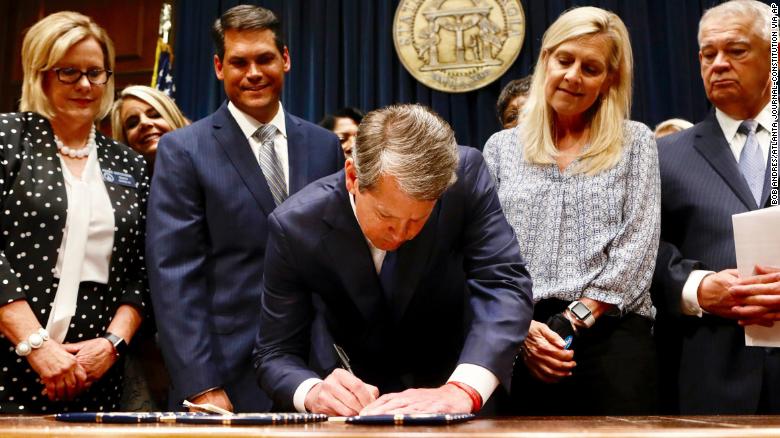
On May 7, 2019, Georgia Governor Brian Kemp signed a law that would ban abortion as soon as physicians can detect a heartbeat, which can be as soon as six weeks (before some women are aware they’re pregnant).

brianKempabortion

Georgia Governor Brian Kemp signing abortion law.

“Georgia is a state that values life,” Kemp said at the bill signing. “We protect the innocent, we champion the vulnerable, we stand up and speak for those that are unable to speak for themselves.”

On May 15, Alabama’s governor, Kay Ivey, signed a law defining a fetus as a legal person “for homicide purposes” and making performing an abortion in the state a felony.

Netflix, Disney and WarnerMedia responded that they might stop producing television shows and movies in Georgia, and multiple actors threatened that they wouldn’t work in Georgia if the state’s law takes effect.

“I think many people who work for us will not want to work there, and we will have to heed their wishes in that regard,” said Disney CEO Bob Iger. “… we will work with the ACLU and others to fight it in court,” said Netflix chief content officer Ted Sarandos.

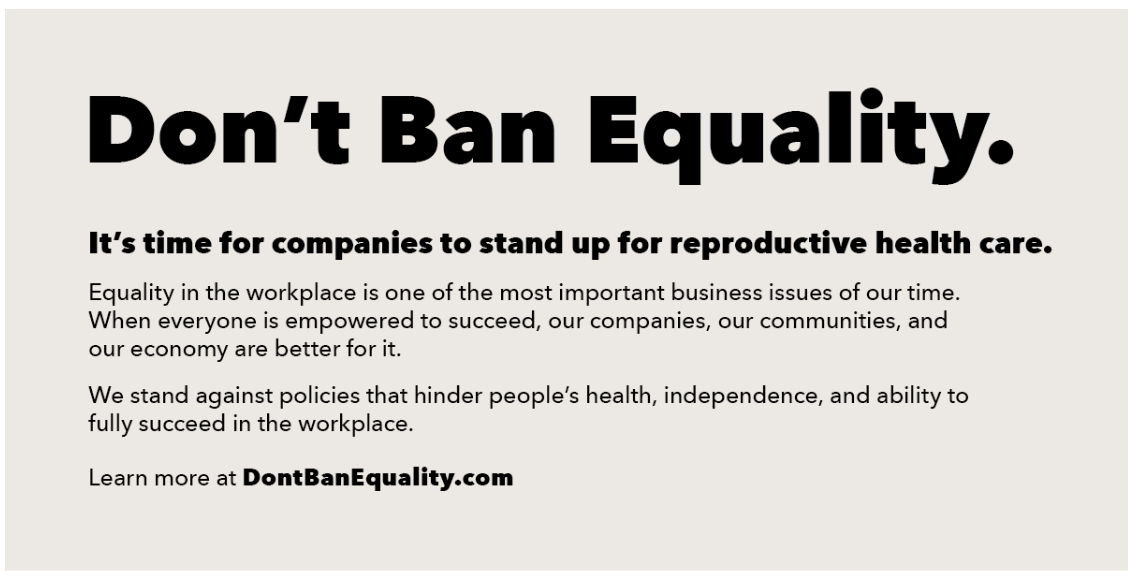
Earlier this month, leaders of more than 180 businesses, including Maria Pope, President and CEO of Portland General Electric, signed a letter that ran as an ad in The New York Times opposing the restrictive abortion laws enacted recently in multiple states.

mariapopePGE

Maria Pope, President and CEO of PGE, signed the “Don’t Ban Equality” letter.

“It’s time for companies to stand up for reproductive health care,” the Don’t Ban Equality letter said. Restricting abortion is “bad for business.”

dontbanequality


A problem with corporate virtue signaling like this as a marketing strategy is that it assumes the company has other people’s best interests at heart, that it’s not driven by profit seeking. There’s a risk that even altruistic millennials passionate about social causes will see through that, increasing cynicism, not brand loyalty.

Another issue with corporations trying to sell themselves as social justice warriors is that, as Tara Isabella Burton wrote in Vox, companies are pushing the spending of money “as a ritualistic as well as transactional act.” That can backfire. Purchases based on product quality are more likely to be sustained than those based on ever-changing corporate advocacy.

Public policy positions taken by corporate leaders on social issues may also not reflect the views of many employees or consumers, despite the presumptions of executives that others must be in alignment.

On abortion, for example, polling shows that Americans are actually fairly evenly split between those who identify as pro-life and those who identify as pro-choice. A majority of Americans, including many Democrats, support abortion restrictions in the second and third trimesters. In short, corporate honchos are mistaken if they believe most Americans are unrestricted abortion supporters.

As columnist David Byler wrote in the Washington Post, “… neither Republican nor Democratic voters unanimously want the total victory that activists on both sides are agitating for. Republicans are generally pro-life and Democrats are mostly pro-choice, but there’s real dissent among the rank-and-file voters in both camps. Our constantly shifting status quo may be unnerving to the most engaged pro-choice and pro-life advocates. But whatever they might say, the average U.S. voter wants a negotiated compromise in the abortion wars.”

Corporate evangelizing on all sorts of social issues can run afoul of public and employee attitudes, particularly with toxic social media serving as a megaphone for unhinged mobs of ever-smaller tribes determined to play a role in a debate.

Ideology-driven public positioning can also alienate employees and potential hires who are not in sync with a company’s cultural alignment or simply value open thinking.

”Internally, if leaders can create safe avenues for employees with different values and beliefs to voice their ideas (about CSR practices, products, or other business-related issues), this may lead to greater innovation, not to mention goodwill among those who value ideological tolerance as an over-arching feature of their workplace,” several U.S. business professors wrote in United States Politics and Policy.

Then there’s the fact that organizations and individuals who praise corporate intervention on sensitive public issues are generally much less enthused when the intervention has a conservative bent.

A striking example of this is the left’s outrage over comments made in July 2012 by Dan Cathy, Chick-fil-A’s CEO, to the Baptist Press. Cathy said he was “guilty as charged” in his support of what he described as traditional marriage. “We know that it might not be popular with everyone, but thank the Lord, we live in a country where we can share our values and operate on biblical principles,” Cathy said.

To say the least, all hell broke loose, with liberals and LGBTQ activists condemning Cathy and endorsing Chick-fil-A boycotts.

Controversy resurfaced with a March 2019 report by the progressive organization Think Progress that the chain’s foundation donated $1.8 million in 2017 to groups Think Progress said have anti-LGBTQ agendas.

Then there’s the shifting attitudes in the corporate world, which make executives unreliable moral leaders. “Americans ought to be cautious before making corporations their moral compass or primary vehicle for reform,” Adam Winkler, a professor of law at UCLA, wrote recently in The New Republic. “The policy positions taken by U.S. companies on social issues today lean in the direction of inclusion. But tomorrow might be different, if the country—or a business’s particular consumer base—turns in a different direction.

If all this keeps up, you may soon be nostalgic for the days when companies tried to sell their products with simple “plop, plop, fizz, fizz” jingles.