Donald Trump is no Winston Churchill. He does not, as Oliver Wendell Holmes urged, ” carve every word before you let it fall”. More often than not, when Trump speaks, as Rod Serling said, “You’re traveling through another dimension, a dimension not only of sight and sound but of mind. A journey into a wondrous land whose boundaries are that of imagination. That’s the signpost up ahead – your next stop, the Twilight Zone!”

A collection of Trump’s curious remarks:
o March 11, 2026 – Trump urging ships to go through the perilous Strait of Hormuz : “These ships should go through…and show some guts. There’s nothing to be afraid of,” Trump said to Fox News’ Brian Kilmeade on the phone, not long before three international cargo ships were hit by fiery Iranian projectiles.
o March 6, 2026 – Reporter: “It sounds like the Russians are helping Iran.” Trump: “I have a lot of respect for you. You’ve always been nice to me. What a stupid question to be asking.”
o March 2, 2026 – At a Congressional Medal of Honor ceremony, Trump turned and pointed at gold curtains to his right. . “See that nice drape? When that comes down right now you see a very, very deep hole, but in about a year and half from now, you’re gonna see a very, very beautiful building. And there’s your entrance to it right there. In fact, I think I’ll even, I’ll save money on the doors because you can’t get more beautiful than that. I picked those drapes in my first term. I always liked gold, but I think we can save a lot of money. I just saved, I just saved curtains.”
o February 9, 2026 – Trump railed against Canada and China for attempting to improve trade cooperation. ″…Prime Minister Carney wants to make a deal with China — which will eat Canada alive. We’ll just get the leftovers! I don’t think so. The first thing China will do is terminate ALL Ice Hockey being played in Canada, and permanently eliminate The Stanley Cup.”
o January 21, 2026 (Speech at Davos): “When they go out into those boats, they want to take over a billion and a half dollar tanker, load it up with oil, and they say, “We’re going to blow up your boat, they have powerful weapons.” You hit the side of the boat, you blow the whole thing up. The insurance companies are petrified, so they say, “Just give them the boat, we’ll give them money instead.” And I don’t do that. We blow them right to hell out of the water. We see them going out, we blow them out of the water. We don’t have any pirates so much anymore. We do. They won’t be there long. We’ve cut down with the hitting of the boats that are loaded up with drugs, including submarines. Can you believe they actually buy some, they call mini subs. very fast. They’re meant for drugs. We’ve knocked out to them the Democrats. They were fishing. You have ruined somebody’s fishing. We can’t, I would say, a submarine is not a fishing boat. You don’t fish. But we’ve knocked down drugs by water. The oceans, the sea, by 97.2%.”
o Dec. 15, 2025: A Truth Social post by Trump on the Dec. 14 murder of actor and director Rob Reiner and his wife – “Rob Reiner, a tortured and struggling, but once very talented movie director and comedy star, has passed away, together with his wife, Michele, reportedly due to the anger he caused others through his massive, unyielding, and incurable affliction with a mind crippling disease known as TRUMP DERANGEMENT SYNDROME, sometimes referred to as TDS. He was known to have driven people CRAZY by his raging obsession of President Donald J. Trump, with his obvious paranoia reaching new heights as the Trump Administration surpassed all goals and expectations of greatness, and with the Golden Age of America upon us, perhaps like never before. “
o Dec. 1, 2025: A female reporter to Trump – Can you tell us what they were looking at with the MRI test? What part of the body? Trump: I have no idea. It was just an MRI. It wasn’t the brain because I took a cognitive test and aced it. I got a perfect mark, which you would be incapable of doing.”
o Nov. 28, 2025: “Q: Do you plan to attend Sarah’s funeral? (National Guard soldier killed in DC) TRUMP: I haven’t thought about it yet, but it’s certainly something I can conceive of. I love West Virginia. You know, I won West Virginia by one of the biggest margins of any president anywhere.”
o Nov. 26, 2025: Trump on Truth Social: NOV. 26: The Creeps at the Failing New York Times are at it again. This cheap “RAG” is truly an “ENEMY OF THE PEOPLE.” The writer of the story, Katie Rogers, who is assigned to write only bad things about me, is a third rate reporter who is ugly, both inside and out. Despite all of this, I have my highest Poll Numbers, ever.” In late November 2025, Trump’s overall job approval was hovering around 36-38%, hitting new lows for his second term.
o Nov. 17, 2025: Trump speaking at McDonald’s Impact Summit: “As an example, if you take me at 20 for one year, sleepy Joe Biden, you know what he was? Less than one for four years. And if they got elected, they would’ve been at minus 10 because people were moving out of the country in record numbers and welfare and other charges were increasing at levels that nobody has ever seen before. So, you would’ve had double and maybe 50%, maybe literally more than they’ve ever seen.”
“Why is the Gulf of Mexico called the Gulf of Mexico?” I said, “We’re changing the name.” And now it’s the Gulf of America. It has nothing to do with McDonald’s, but maybe it does because it’s very nice… We have 92% of the shoreline, they have 8%. I wouldn’t say I made a lot of friends in Mexico, but they still like me. Wasn’t that a good change? No, seriously, wasn’t that beautiful? “(Fact: The United States controls approximately 45% of the Gulf of Mexico; Mexico claims about 48%; Cuba claims 5%)
“And we got rid of the drip-drip water. We call it the drip-drip where drip-drips out of the sink. States with tremendous water, so much water, they have nothing but problems getting rid. They had restrictions on water. It comes down from heaven, right? They had restrictions on water. So you want to wash your hands or like me, I want to wash my hair. I lather up. Then I turn that and there’s no water. The water’s drip, they call it. “
o Nov. 13, 2025: “Christians and more, think of this, more than twice as likely foster care they’ll adopt the general population. They adopt to it so easily. When they get out, they adopt to it like it’s become second nature. It’s amazing.”
o Nov. 12, 2025: An interview with Fox host Laura Ingraham discussing Trump’s proposal to initiate 50 year mortgages: Q – Is a 50 year mortgage really a good idea? Trump: It’s not even a big deal. You go from 40 years to 50. Ingraham: It’s 30 years. Trump: It’s not even a big deal! You go from 40 to 50 years. And what it means is you pay something less. From 30, some people had a 40, and now they have a 50. You pay it over a long period of time. It’s not like a big factor!”
o Oct. 28, 2025: (1) Trump in a speech to US service members on the USS George Washington, an aircraft carrier stationed in Japan: “I’d like to be an Admiral. I always wanted to be an admiral, to be honest.” (2) “You know, we won the second election (2020) by a lot, so we had to just prove it by winning the third — by too big to rig, I called it. It was too big to rig.” (3) “I ended eight wars in eight months,” including “Kosovo and Serbia, Egypt and Ethiopia.” The facts: The war between Kosovo and Serbia didn’t occur during his presidency, and there was no war between Egypt and Ethiopia for Trump to end. (4) “we have 92% of the shoreline” of the Gulf of Mexico. Fact: There is a roughly even divide in Gulf coastline between Mexico and the US .
o October 27, 2025: Asked by a reporter about an CE raid on a Hyundai battery factory: Q – “Did I hear you right that you said you were opposed to the way that raid in Georgia was handled? Trump: I was opposed to getting them out and before they got out they were pretty well set but before they got out, I said they could stay. They’re going to be coming back.”
o October 19, 2025: “Trees fall down after a short period of time, about 18 months. They become really dry. They become really like a matchstick and they get up. You know, there’s no water pouring through and they become very, very, uh . They just explode. ” So much for the redwoods, I guess.

o Sept. 30, 2025: Sorry, this is a long one. Remarks by President Trump to 800 of the nation’s top military generals and admirals, along with their top enlisted advisors, flown from around the world to Marine Corps Base Quantico – “We were not respected with Biden. They looked at him falling downstairs every day. Every day, the guy is falling downstairs. He said, It’s not our President. We can’t have it. I’m very careful. You know, when I walk downstairs for, like, a month, stairs, like these stairs, I’m very—I walk very slowly. Nobody has to set a record. Just try not to fall, because it doesn’t work out well. A few of our presidents have fallen and it became a part of their legacy. We don’t want that. You walk nice and easy. You’re not having—you don’t have to set any record. Be cool. Be cool when you walk down, but don’t—don’t pop down the stairs. So one thing with Obama, I had zero respect for him as a President, but he would bop down those stairs. I’ve never seen it. Da-da, da-da, da-da, bop, bop, bop. He’d go down the stairs. Wouldn’t hold on. I said, It’s great. I don’t want to do it. I guess I could do it. But eventually, bad things are going to happen, and it only takes once. But he did a lousy job as president. A year ago, we were a dead country. We were dead. This country was going to hell.”
o Sept. 22, 2025: “Bobby wants to be very careful with what he says. I’m not so careful with what I say. Certain groups, the Amish, as an example – they have essentially no autism.” According to a study cited by the International Society of Autism Research, Preliminary data have identified the presence of ASD in the Amish community at a rate of approximately 1 in 271 children using standard ASD screening and diagnostic tools.
o Sept. 22, 2025: “They’re pumping, it looks like they’re pumping into a horse. You have a little child, a little fragile child, and you get a vat of 80 different vaccines, I guess. 80 different blends. And they pump it in.” In fact, a typical American child receives approximately 25-30 vaccine doses, with the exact number of shots depending on the specific combination vaccines used and whether annual Covid-19 or flu shots are included. The recommended immunization schedule protects against around 16 serious and potentially deadly diseases from birth to adulthood.
o “Tariffs are making us rich again. Richer than anybody ever thought was possible.” Economists overwhelmingly conclude that tariffs are not making the United States richer. While tariffs do generate revenue for the government, this is not a net gain for the country because the costs are primarily borne by domestic consumers and businesses through higher prices and reduced economic growth.
o Sept. 5, 2025: Asked if he would trust new jobs numbers issued that day – “Well, we’re going to have to see what the numbers, I don’t know, they come out tomorrow. But the real numbers that I’m talking about are going to be whatever it is. But, uh, will be in a year from now when these monstrous huge beautiful places they’re palaces of genius and when they start opening up. You’re seeing, I think you’ll see job numbers that are absolutely incredible. Right now it’s a lot of construction numbers, but you’re going to see job numbers like our country has never seen before.”
o August 26, 2025: “Foreign nations are paying hundreds of billions of dollars (in tariffs) straight into our treasury. Numbers nobody has seen before. Many of those countries, just to sit at the table, are paying us hundreds of billions of dollars. Trillions of dollars is coming into our country. Trillions.” Foreign nations don’t pay tariffs directly to the U.S. government. American companies that import goods from foreign countries pay the tariffs to the U.S. Customs and Border Protection. and then try to recoup the money by absorbing the cost or raising prices.
Trump on deploying the National Guard to Chicago: “I have the right to do anything I want to do. I’m the president of the United States.” Umm. Not exactly.
“There’s no inflation.” The inflation rate as of August. 25, 2025 was 2.7%, above the Fed’s 2% target.
o August 25, 2025: “”We are going to be doing numbers on the cost of drugs…I’m not talking 20% decrease. I’m talking 1,000%.”
o Aug. 25, 2025: “I gave Wes Moore (Governor of Maryland) a lot of money to fix his demolished bridge. I will now have to rethink that decision??” Trump had nothing to do with the appropriation of funds to rebuild the Baltimore bridge after a ship struck it. The appropriation was passed in 2024 as part of a continuing resolution President Biden signed into law.
o Aug. 20, 2025: “Crimea is massive — I would say, like, the size of Texas or something — in the middle of the ocean. And it’s gorgeous.” Crimea is roughly 1/25th the size of Texas and is a peninsula in the Black Sea that borders the Sea of Azov.
o Aug. 19, 2025: Although some want Netanyahu prosecuted on war crime charges, “he’s a war hero” Trump said. “He’s a war hero because we worked together. He’s a war hero. I guess I am too.” Trump has never been deployed or fought in a war.
o Aug. 19, 2025: “The Smithsonian is OUT OF CONTROL, where everything discussed is how horrible our Country is, how bad Slavery was, and how unaccomplished the downtrodden have been — Nothing about Success, nothing about Brightness, nothing about the Future.” Posted on Truth Social. Uh, well, maybe slavery wasn’t so bad.
o Aug. 18, 2025: “We are now the only Country in the World that uses Mail-In Voting. All others gave it up because of the MASSIVE VOTER FRAUD ENCOUNTERED.” Data compiled by a Sweden-based organization that advocates for democracy globally, The International Institute for Democracy and Electoral Assistance, found in an October 2024 report found that 34 countries or territories allow mail-in voting.
o August 10, 2025: Truth Social post – “The Homeless have to move out, IMMEDIATELY. We will give you places to stay, but FAR from the Capital.” It’s spelled Capitol, Mr. President.
o August 1, 2025. “I think we’re gonna be very successful fairly soon (in lowering drug prices). We’ll have drug prices coming down by 500%, 600%, 800%, even 1,200%.”
o July 27, 2025: “You have a certain place in the Massachusetts area that over the last 20 years had 1 or 2 whales wash ashore. And over the last short period of time they had 18. Ok? Because it’s driving them loco. No, windmills will not happen in the United States.” According g to NOAA, , there is no scientific evidence that noise resulting from offshore wind site characterization surveys could potentially cause whale deaths. There are no known links between large whale deaths and ongoing offshore wind activities. There are, according to the U.S. Wind Turbine Database (USWTDB), 76,051 wind turbines operating across 45 states, plus Guam and Puerto Rico.

o July 23, 2025: “This is somebody nobody else can do. I can get the drug prices down… 1000% 600% 500% 1500%. Numbers that are not even thought to be achievable.” Huh?
o On July 16, 2025, during a rant against Federal Reserve Chair Jerome Powell, Trump said, “I’m surprised he was appointed. I was surprised that Biden put him in.” Trump nominated Powell for the position in 2017.

o At a July 14, 2025 Oval Office press conference:
Q – If Putin escalates further, how far are you willing to go in response if Putin were to escalate and send more bombs in coming days? TRUMP: “Don’t ask me a question like that. They’re not Americans that are dying in it. I have a problem – and JD has a problem with it. It’s a stance that he’s had for a long time – they’re not Americans dying. We want to defend our country.”
… Q – Why are you giving Putin 50 more days? TRUMP: “I’ve just really been involved in this for not very long. It wasn’t an initial focus. This is a Biden war. This is a Democrat war.”
o July 10, 2025:
Asked about the Epstein files, Trump posted: Could you all just FOCUS on the very many other more important things to discuss than whether or not I may or MAY NOT be all over the Epstein Files? There was a BIG FLOOD in Texas. Huge flood as it relates to water. Many people DIED. Many beautiful young girls. Perhaps some not so beautiful illegal Mexican peoples as well. Perhaps drug dealers disguised as day laborers. You can never tell. They don’t speak American. That is very suspicious. Again, forget about me and the Epstein Files. Focus on MEXICANS and FLOODING.
Talking about the deadly Texas floods: You know, it’s called rain. It rains a lot in certain places. But, now their idea, you know, did you see the other day? They just, I opened it up and they closed it again. I opened it, they close it, washing machines to wash your dishes.
o REPORTER: How do you want Republican voters in NYC to vote in the upcoming mayoral election? TRUMP: We have tremendous power at the White House to run places when we have to. We could run DC … we’re thinking about doing it, to be honest with you.
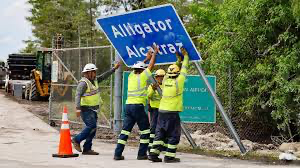
o On July 1, 2025, a reporter from the Fox News Channel asked Trump about Alligator Alcatraz, the new detention facility in the Everglades: “Mr. President, is there an expected time frame that detainees will spend here? Days, weeks, months?”
Trump’s reply: “In Florida? I’m going to spend a lot. Look, this is my home state. I love it, I love your government, I love all the people around. These are all friends of mine. They know very well. I mean, I’m not surprised that they do so well. They’re great people. Ron has been a friend of mine for a long time. I feel very comfortable in the state. I’ll spend a lot of time here. I want to, you know, for four years, I’ve got to be in Washington, and I’m okay with it because I love the White House. I even fixed up the little Oval Office, I make it—it’s like a diamond, it’s beautiful. It’s so beautiful. It wasn’t maintained properly, I will tell you that. But even when it wasn’t, it was still the Oval Office, so it meant a lot. But I’ll spend as much time as I can here. You know, my vacation is generally here, because it’s convenient. I live in Palm Beach. It’s my home. And I have a very nice little place, nice little cottage to stay at, right? But we have a lot of fun, and I’m a big contributor to Florida, you know, pay a lot of tax, and a lot of people moved from New York, and I don’t know what New York is going to do. A lot of people moved to Florida from New York, and it was for a lot of reasons, but one of them was taxes. The taxes are so high in New York, they’re leaving. I don’t know what New York’s going to do about that, because some of the biggest, wealthiest people, and some of the people that pay the most taxes of any people anywhere in the world, for that matter, they’re moving to Florida and other places. So we’re going to have to help some of these states out, I think. But thank you very much. I’ll be here as much as I can. Very nice question.”
o “Gettysburg, what an unbelievable battle that was, The Battle of Gettysburg. What an unbelievable – I mean, it was so much and so interesting, and so vicious and horrible, and so beautiful in so many different ways. It, it represented such a big portion of the success of this country. Gettysburg, wow. I go to Gettysburg, Pennsylvania, to look and to watch.”
o On why Trump wouldn’t call Minnesota Gov. Tim Walz after the targeted shootings of state lawmakers: “I don’t really call him. He’s slick — he appointed this guy to a position. I think the governor of Minnesota is so whacked out. I’m not calling him. why would I call him? I could call him and say, ‘Hi, how you doing? The guy doesn’t have a clue. He’s a, he’s a mess. So, you know, I could be nice and call him but why waste time?”
o “[Harris’s] vice presidential pick says abortion in the ninth month is absolutely fine. He also says execution after birth – it’s execution, no longer abortion because the baby is born – is okay.”
o Reporter – “Is there ‘a threshold’ of pain in the stock market you are unwilling to tolerate?” “I think your question is so stupid.”
o On why he decided to reopen Alcatraz: “Well, I guess I was supposed to be a moviemaker. We’re talking about, we started with the movie making it will end. I mean, it represents something very strong, very powerful in terms of law and order. Our country needs law and order. Alcatraz is, I would say, the ultimate, right? Alcatraz, Sing Sing and Alcatraz, the movies, but, uh, it’s now a museum, believe it or not. A lot of people go there. It housed the most violent criminals in the world. …It sort of represents something that’s both horrible and beautiful and strong and miserable. It’s got a lot of qualities that are interesting.”

o On sea level rise with climate change: “It’s going to create more oceanfront property.”
o “Silence of the Lamb! Has anyone ever seen The Silence of the Lambs? The late, great Hannibal Lecter is a wonderful man. He oftentimes would have a friend for dinner. Remember the last scene? Excuse me, I’m about to have a friend for dinner as this poor doctor walked by. I’m about to have a friend for dinner. But Hannibal Lecter. Congratulations. The late, great Hannibal Lecter. We have people that are being released into our country that we don’t want in our country.”

o On airplanes during the revolutionary war: “Our army manned the air, it rammed the ramparts, it took over the airports, it did everything it had to do, and at Fort McHenry, under the rockets’ red glare, it had nothing but victory.”

o “But the transgender thing is incredible, think of it! Your kid goes to school and comes home a few days later with an operation, the school decides what’s going to happen with your child. And you know many of these childs (sic) 15 years later say, what the hell happened, who did this to me? They say, who did this to me? It’s incredible.”
o “Whoever heard you get indicted for interfering with a presidential election where you have every right to do it, you get indicted, and your poll numbers go up?” When people get indicted, your poll numbers go down. But it was such, such nonsense.”
o On Senator John McCain: “He’s not a war hero. He was a war hero because he was captured. I like people who weren’t captured.”
o “The great pandemic certainly was a terrible thing where they lost anywhere from 50 to 100 million people. Probably ended the Second World War, all the soldiers were sick.”
o “I think Viagra is wonderful if you need it, if you have medical issues, if you’ve had surgery. I’ve just never needed it. Frankly, I wouldn’t mind if there were an anti-Viagra, something with the opposite effect. I’m not bragging. I’m just lucky. I don’t need it. I’ve always said, “If you need Viagra, you’re probably with the wrong girl.”

o “My fingers are long and beautiful, as it has been well documented, are various other parts of my body.”
o On consulting with others on foreign policy: “I’m speaking with myself, number one, because I have a very good brain and I’ve said a lot of things.”

o On him stealing a gossip columnist’s girlfriend: “Any girl you have, I can take from you.”
o On why Napolean failed to invade Russia in the 18th century: “His one problem is he didn’t go to Russia that night because he had extracurricular activities, and they froze to death,”
o Criticizing a nuclear deal the Obama administration negotiated with Iran: “…but you look at the nuclear deal, the thing that really bothers me — it would have been so easy, and it’s not as important as these lives are — nuclear is so powerful; my uncle explained that to me many, many years ago, the power and that was 35 years ago; he would explain the power of what’s going to happen and he was right, who would have thought? — but when you look at what’s going on with the four prisoners — now it used to be three, now it’s four — but when it was three and even now, I would have said it’s all in the messenger; fellas, and it is fellas because, you know, they don’t, they haven’t figured that the women are smarter right now than the men, so, you know, it’s gonna take them about another 150 years — but the Persians are great negotiators, the Iranians are great negotiators, so, and they, they just killed, they just killed us, this is horrible.”
o Responding to a complaint about illegal immigrants taking away opportunities from Americans. “It’s going to start with the Black population. African Americans are losing their jobs. And I don’t know if you heard the latest statistic, that of the jobs that these people created, which is very little, every single job was taken – about 107 percent – was taken by illegal immigrants.”
o Speaking about hurricane Florence: “This is one of the wettest we’ve seen, from the standpoint of water.”
o “Right now, in a number of states, the laws allow a baby to be born from his or her mother’s womb in. the ninth month. It is wrong. It has to change.”
o On the affect of wind turbines: “If you have a windmill anywhere near your house, congratulations, your house just went down 75 percent in value. And they say the noise causes cancer. You tell me that one, okay?”
o Reporter: “George W. Bush said the reason the Oval Office is round as there are no corners you can hide in.” Trump:
“Well, there’s truth to that. There is truth to that. There are certainly no corners. And you look, there’s a certain openness. But there’s nobody out there. You know, there is an openness, but I’ve never seen anybody out there actually, as you could imagine.”
o On the impact of his tariffs. “You know, somebody said, ‘Oh, the shelves are going to be open. Well, maybe the children will have two dolls instead of 30 dolls, you know? And maybe the two dolls will cost a couple of bucks more than they would normally.”
o On the Dodgers winning the 2024 World Series: “When you ran out the healthy arms, you ran out of really healthy— they had great arms but they ran out. It’s called sports. It’s called baseball in particular and pitchers I guess you could say.”

o On Project 25, which has been guiding his 2nd term: “I know nothing about Project 2025. I have no idea who is behind it. I disagree with some of the things they’re saying and some of the things they’re saying are absolutely ridiculous and abysmal. Anything they do, I wish them luck, but I have nothing to do with them.”
o On wind power and bacon: “You take a look at bacon and some of these products. Some people don’t eat bacon anymore. And we are going to get the energy prices down. When we get energy down — you know, this was caused by their horrible energy — wind, they want wind all over the place. But when it doesn’t blow, we have a little problem.”
o On his supporters storming the Capitol on January 6, 2021: “The primary scene in Washington was hundreds of thousands, the largest group of people I’ve ever spoken before, and I’ve spoken – and it was love and peace. And some people went to the Capitol. And a lot of strange things happened there. A lot of strange things with people being waved into the Capitol by police, with people screaming, go in with – that never got into trouble, you know? I don’t want to mention names, but you know who they are. A lot of strange things happened.”

o On whether Chinese ownership of TikTok is a security threat: “I think it is a threat. I – I – frankly, I think everything’s a threat. There’s nothing that’s not a threat.They do treat me very badly. Oh, and he told me no way. You’re the No. 1 person on all of Google for stories. I mean – which probably makes sense, to be honest with you. I hate (inaudible). Most of them are bad stories but these are minor details, right? Be – and it’s only bad because of the fake news, cause the news is really fake. We – that’s the one we really have to – straighten it – and we have to straighten out our press because we have a corrupt press.”
o Aug. 10, 2020: “In 1917 … the great pandemic certainly was a terrible thing where they lost anywhere from 50 to 100 million people. Probably ended the Second World War, all the soldiers were sick. That was a terrible situation.” The pandemic, due to the Spanish Flu, occurred in 1918-1919 toward the end of WWI.
o On how he would react if Playboy magazine were to feature a picture of his daughter Ivanka on its cover: “I don’t think Ivanka would do that inside the magazine. Although she does have a very nice figure. I’ve said that if Ivanka weren’t my daughter, perhaps I would be dating her.”

o On attractive girlfriends serving as an antidote to bad press: “You know, it doesn’t really matter what they write as long as you’ve got a young and beautiful piece of ass.”
o On his sexual prowess: “Oftentimes when I was sleeping with one of the top women in the world I would say to myself, thinking about me as a boy from Queens, ‘Can you believe what I am getting?”
o On politics in the year 2000: . “One of the key problems today is that politics is such a disgrace. Good people don’t go into government. I’d want to change that.”
o A Trump tweet at 12:06 a.m. on May 31, 2017: “Despite the constant negative press covfefe.”
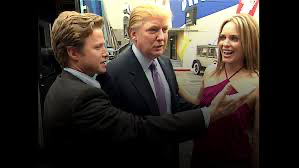
o “I’m automatically attracted to beautiful women — I just start kissing them, it’s like a magnet. Just kiss. I don’t even wait. And when you’re a star, they let you do it. You can do anything. Grab ‘em by the pussy.”
o On his superiority to “the haters”: “Sorry losers and haters, but my I.Q. is one of the highest -and you all know it! Please don’t feel so stupid or insecure, it’s not your fault.”
o Said during a Rose Garden speech on tariffs: “It’s such an old-fashioned term, but a beautiful term: groceries. It says ‘a bag with different things in it.”
o On violent sadists being employed by the federal government: “The other thing we did is, we had civil service, 9,000 people that were crooks and thugs and sadists, a lot of sadists. They enjoyed beating up our wounded warriors in less than primetime. You know, in primetime, they would’ve gotten the hell beat out of them, but our people were in bad shape and they would beat them up. We had sadists. Can you believe this is a country? But it’s the way it is.”
o “They should give me the Nobel prize for Rwanda and have you looked at the Congo? You could say Serbia. You could say a lot of them. The big one is India and Pakistan. I should have gotten it 4-5 times. They won’t give it because they only give it to liberals.”

o On media reporting that the US aerial attacks on Iranian nuclear sites may not have” obliterated ” them as Trump asserted: “They’re really hurting great pilots that put their lives on the line. CNN is scum. And so is MSDNC, their all. I think CNN ought to apologize to the pilots of the B2s. I think MSDNC ought to apologize. I think these guys really; these networks and these cable networks are real losers. You really are. You’re real losers. You’re gutless losers. I say that to CNN, ’cause I watch it. I got no choice. I got to watch that garbage. It’s all garbage. It’s all fake news. But, I think CNN is a gutless group of people.”
o In a 1997 interview with radio personality Howard Stern , Trump claimed he was a “brave soldier” for avoiding STDs during his single years in the late ’90s. “It’s amazing, I can’t even believe it. I’ve been so lucky in terms of that whole world, it is a dangerous world out there. It’s like Vietnam, sort of. It is my personal Vietnam. I feel like a great and very brave solider,” Trump said when Stern asked how he handled making sure he wasn’t contracting STDs from the women he was sleeping with. Trump went on, calling women’s vaginas “potential landmines” and saying “there’s some real danger there.”
OK, one more.
Trump speaking at a Nevada rally on the danger of electric boats: “So I said, “Let me ask you a question.” And he said, “Nobody ever asks this question,” and it must because of MIT, my relationship to MIT. Very smart. I say, “What would happen if the boat sank from its weight, and you’re in the boat, and you have this tremendously powerful battery, and the battery’s now under water, and there’s a shark that’s approximately 10 yards over there”—by the way, a lot of shark attacks lately, do you notice that? Lotta shark—I watched some guys justifying it today, “Well, they weren’t really that angry, they bit off the young lady’s leg because of the fact that they were, they were . . . not hungry but they misunderstood what—who she was.” These people are crazy. He said, “There’s no problem with sharks, they just didn’t really understand a young woman swimming,” no, really got decimated and other people, too, a lot of shark attacks. So I said, “There’s a shark ten yards away from the boat, ten yards, or here. Do I get electrocuted if the boat is sinking, water goes over the battery, the boat is sinking? Do I stay on top of the boat and get electrocuted, or do I jump over by the shark and not get electrocuted?” Because I will tell you, he didn’t know the answer. He said, “You know, nobody’s ever asked me that question.” I said, “I think it’s a good question. I think there’s a lot of electric current coming through that water.” But you know what I’d do if there was a shark or you get electrocuted? I’ll take electrocution every single time.”

And none of this, of course, includes the the vitriol Trump spews on Truth Social, such as this post after CNN’s Natasha Bertrand reported that the U.S. strikes on three of Iran’s nuclear facilities did not destroy the country’s nuclear program, but, in an initial finding that could change with additional intelligence, only set it back by months:
“Natasha Bertrand should be FIRED from CNN! I watched her for three days doing Fake News. She should be IMMEDIATELY reprimanded, and then thrown out “like a dog.” She lied on the Laptop from Hell Story, and now she lied on the Nuclear Sites Story, attempting to destroy our Patriot Pilots by making them look bad when, in fact, they did a GREAT job and hit “pay dirt” — TOTAL OBLITERATION! She should not be allowed to work at Fake News CNN. It’s people like her who destroyed the reputation of a once great Network. Her slant was so obviously negative, besides, she doesn’t have what it takes to be an on camera correspondent, not even close. FIRE NATASHA!”























 ThinkingOregon