Trump’s Terezin: America’s Detention Camps

It wasn’t designed to be a concentration camp with gas chambers for mass annihilation. It was intended to be a waystation, a stopover before prisoners were moved elsewhere.

Terezin, contained within the walls of the fortress Theresienstadt 30 miles north of Prague in the Czech Republic, was established by Germany’s Gestapo.

Terezin concentration camp

More than 150,000 Jews from Czechoslovakia, Germany, Austria, the Netherlands and Denmark were sent there, including 15,000 children. They were held for months or years. An estimated 33,000 died there from extreme crowding, malnutrition and disease. About 88,000 were sent to their deaths at Treblinka and Auschwitz extermination camps in occupied Poland, as well as to smaller camps elsewhere.  Less than 150 children survived.

Access to Terezin during WWII by outside impartial investigators was denied until the King of Denmark demanded it in late 1943 to determine the condition of 466 Danish Jews sent there earlier that year. 

In late 1943, Christian X, the king of Denmark, demanded an inspection of Terezin to determine the condition of 466 Danish Jews sent there in October of that year. According to the organizationTerezin: Children of the Holocaust, to hide their cruelty, the Germans initiated a beautification program, “Operation Embellishment,” a ruse intended to mollify the king’s concerns.The area was cleaned up, many of the Jews were sent to Auschwitz to minimize the appearance of overcrowding and even fake shops and cafes were built to imply that the Jews lived in relative comfort. 

A photo of Jewish children in Terezin during the
inspection by the International Red Cross.

The International Red Cross carried out an inspection hosted by Adolf Eichmann on June 23, 1944. According to the United States Holocaust Memorial Museum, the Red Cross issued “a bland report about the visit, indicating that the representatives were taken in by the elaborate fiction”.  

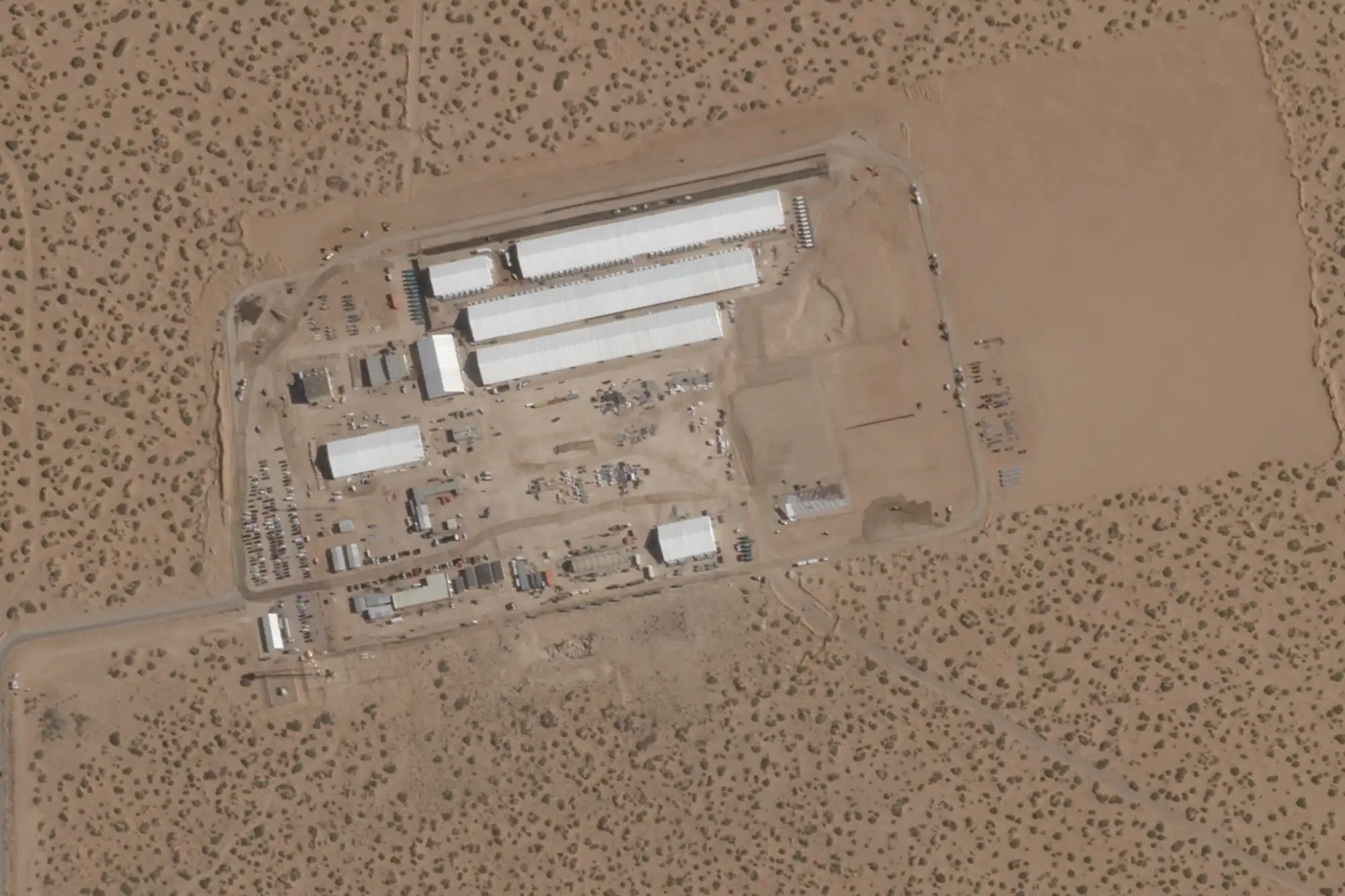
Today, President Trump’s mass deportation push has resulted in the detention of a massive and growing number of alleged undocumented immigrants in the United States. U.S. Immigration and Customs Enforcement (ICE) reports holding an average of approximately 65,000 to 73,000 people daily in its detention facilities. It’ is a vast network with detainees constantly being shifted around multiple times far from their homes.

KING 5 Seattle television recently reported that ICE is repeatedly flying detainees back and forth across the country. The station cited a case where a Cuban man detained in Florida was subsequently flown from Miami to Denver, Colorado, then to Florence, Arizona, back to Denver, then to Florence again, then Denver, then back to Florence. “A lot of lawyers and judges around the country…believe that ICE is intentionally doing this to put people away from families, from legal representation and just honestly to try to encourage them self-deport,” the station reported.

For concerned people trying to keep track of the detainees the process is a nightmare.

The more frightening nightmare, however, bringing up memories of Terezin, is the use of American detention centers as waystations for deportations back to home countries where great danger lurks and to third countries where they are not citizens, frequently don’t speak the local language, have no personal ties and are subject to God knows what brutal conditions and even death.

More than 23,000 people have reportedly been sent to 26 countries other than their own in 2026 as the Trump administration pays other countries, often countries with documented histories of corruption and human rights abuses, millions of dollars to take in deported people under “third country” agreements.

The Guardian recently reported that in August about 20 people were put on a flight in the US, shackled at the wrists, waist and ankles, and sent to Liberia as part of a major third-country deportation arrangement. When six of them refused to get off the plane, they were dropped off in another African country, Equatorial Guinea, “one of the world’s most repressive and corrupt regimes, where armed men took them to a former luxury hotel turned detention centre in the capital, Malabo, where they have been held ever since,” the Guardian reported.

ICE has deported over 200 Venezuelan migrants to El Salvador and deposited many of therm into CECOT (the Center for Terrorism Confinement)—a notorious maximum-security mega-prison. The migrants have testified that they were shot with rubber bullets and beaten on a regular basis. Many of them have alleged that they were routinely raped and tortured.

ICE has also deported migrants originating from countries such as Afghanistan and Iran to volatile regions like the Central African Republic and South Sudan. The U.S. State Department warns “Do not travel to Central African Republic due to risk of unrest, crime, kidnapping, landmines, health, and terrorism” and “Do not travel to South Sudan due to risk of unrest, crime, kidnapping, landmines, and health risks”.
  
Detainees have also been sent to the African nation of Eswatini, where they were held in a maximum-security prison without charge and with no access to legal counsel. And last year U.S. immigration and federal authorities tried to deport nationals from Laos, Vietnam, and the Philippines to war-torn Libya until a federal judge blocked the planned flights.

Even in cases where ICE is deporting people to their home countries, the situations are often dire. There’s been an escalation of deportation flights to Haiti since the  June 2026 Supreme Court decision that allowed the termination of Temporary Protected Status (TPS), stripping legal protections from an estimated 330,000 Haitian immigrants. The humanitarian and security crisis in Haiti will expose all such deportees to harm. According to the New York Times, some 3,000 people were killed there in the first six months of this year, many of them in gang-related violence.

“Millions of people in Haiti continue to face a compounding crisis of food insecurity, forced displacement, deadly disease outbreaks, and surging violence,” says Alice Ribes, the International Rescue Committee’s director for Haiti.  “Public services in many areas have collapsed under gang rule, leaving people with limited or no access to clean drinking water, food, medical care, and education.”

ICE attempts to minimize or conceal the conditions in America’s detention centers and the threats faced by deportees to their own and other countries are America’s “Operation Embellishment”.

The blood of those in harm’s way will be on our hands.

Trump’s Anti-Immigrant Invective Signals Trouble for Those With Temporary Protected Status

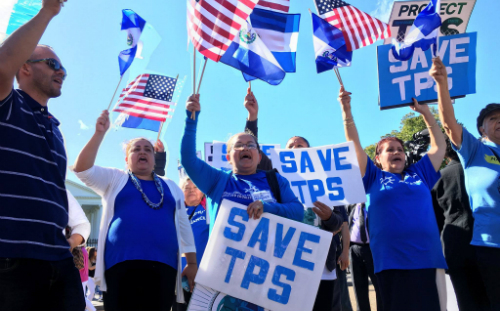
Photo: American Friends Service Committee

UPDATE 02/02/2025: The New York Times reported today that the Trump administration has ended Temporary Protected Status, or T.P.S., for more than 300,000 Venezuelans in the United States, leaving the population vulnerable to potential deportation in the coming months, according to government documents obtained by The New York Times. “The Trump administration’s attempt to undo the Biden administration’s T.P.S. extension is plainly illegal,” said Ahilan Arulanantham, who helps lead the Center for Immigration Law and Policy at the U.C.L.A. School of Law. “The T.P.S. statute makes clear that terminations can only occur at the end of an extension; it does not permit do-overs.”

——————————————————-

President-elect Donald Trump has made it crystal clear. 

America’s “immigration crisis” is a “massive invasion” spreading “misery, crime, poverty, disease and destruction to communities all across our land” and the nation’s cities are being “flooded” by the “greatest invasion in history” of undesirables from “every corner of the earth, not just from South America, but from Africa, Asia, Middle East,” Trump bellowed at the Republican National Convention in July 2024.

One action Trump plans to take in response to the “invasion” is to cut back on the Temporary Protected Status (TPS) program. Set up in 1990, the program gave the federal government the ability to grant work permits and deferrals from deportation to nationals of any designated nation going through or recovering from natural or man-made disasters.

If you recall the uproar over unfounded claims that Haitians who live and work legally in Springfield, Ohio, were eating their neighbor’s cats and dogs, those Haitians are TPS holders. In an interview with NewsNation, Trump said the influx of migrants in Springfield “just doesn’t work” and “you have to remove the people; we cannot destroy our country.”

To say the least, the fate of those in Oregon with TPS will be precarious, too, under the upcoming Trump administration.

I asked Oregon’s Office of Immigrant and Refugee Advancement how many people in Oregon are here under the Temporary Protected Status program, but they never responded. But I located a report by the Congressional Research Service (CRS) on the TPS topic. According to the CRS, as of March 31, 2024, there were an estimated 2,705 individuals with TPS in Oregon, fewer than the 9,500 in Washington, but more than the 510 in New Mexico. The current number in many states is likely higher now because the number of TPS individuals in the United States has increased by about 150,000 since March. 

TPS offers qualifying individuals already in the U.S. work authorization and a temporary legal status to remain in the country if their home country is determined unsafe. TPS offers up to 18 months of relief to qualifying individuals based on the status of that country. For example, the TPS program is scheduled to end in March 2025 for El Salvador and in April 2025 for Sudan, Ukraine, and Venezuela. 

TPS designations can be terminated prior to expiration with 60 days notice. TPS status can also be extended by the Department of Homeland Security. For example, on Oct. 17, 2024, the department extended through Aug. 3, 2025, the validity of certain Employment Authorization Documents (EADs) issued to Temporary Protected Status (TPS) beneficiaries under the designation of Haiti.

Since 1990, successive Republican and Democratic administrations have largely automatically renewed certain key TPS designations

The impact of Trump’s plans on current TPS holders could be calamitous. That’s partly because the number of people in the United States under TPS exploded under President Biden.

In 2020, TPS protected about 330,000 people from 10 countries who would otherwise be subjected to disease, violence, starvation, the aftermath of natural disasters, and other life-threatening conditions. The largest group of TPS recipients was from El Salvador (195,000 people) followed by Honduras (57,000 people) and Haiti (50,000 people).

Other countries with TPS holders included Nepal (8,950 people), Syria (7,000 people), Nicaragua (2,550 people), Yemen (1,250 people), Sudan (1,040 people), Somalia (500 people), South Sudan (84 people), Guinea (930 people), and Sierra Leone (1,180 people). 

With President Biden’s term winding down, there are now over 1 million immigrants in the United States under TPS status. Qualifying individuals include people from 16 countries, with Venezuelans, Haitians and Salvadoreans the largest groups of TPS beneficiaries.[1]

Under the Biden administration, new TPS designations have been issued for six countries (Afghanistan, Cameroon, Ethiopia, Myanmar [also known as Burma], Ukraine, and Venezuela), and extended for ten others (El Salvador, Haiti, Honduras, Nepal, Nicaragua, Somalia, South Sudan, Sudan, Syria, and Yemen). The government has also granted or extended a similar protection, deferred enforced departure (DED), for people from Hong Kong and Liberia, with an estimated 3,900 and 2,800 covered respectively.

If a TPS designation ends, beneficiaries return to the immigration status that the person held prior to receiving TPS, unless that status has expired or the person has successfully acquired a new immigration status.

 If the Trump administration is aggressive in ending the TPS program, its beneficiaries in Oregon and elsewhere would return to being undocumented at the end of a TPS designation and become subject to removal. 

“It’s possible that some people in his administration will recognize that stripping employment authorization for more than a million people, many of whom have lived in this country for decades, is not good policy” and economically disastrous, Attorney Ahilan T. Arulanantham, a teacher at the University of California, Los Angeles School of Law, recently told PBS News. “But nothing in Trump’s history suggests that they would care about such considerations.”


[1] Countries Currently Designated for TPS. Select the country link for additional specific country information.