Identity Politics is Alive And Well at The New York Times

I’m a member of Tau Kappa Epsilon fraternity, one of the largest men’s collegiate fraternities in North America.  If I ran for office, would you assume all 12,000 voting-age collegiate members of my fraternity and all the living TKE alumni would support me?  

Ronald Reagan was a member of Tau Kappa Epsilon fraternity, too. When he ran for president, did the news media assume the votes of all his TKE fraternity brothers were a sure thing?

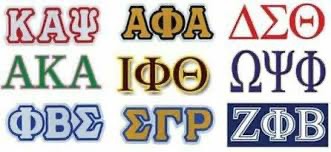
The New York Times seems to think that members of all the Black Greek-letter sororities and fraternities at US colleges are a ready-made bloc of Kamala Harris supporters in her quest for the presidency because she’s been a member of the Black sorority Alpha Kappa Alpha since her undergraduate days at Howard University. 

“As Vice President Kamala Harris’s presidential campaign rushes to shore up its base, its efforts will be bolstered by a ready-made coalition: the more than two million members of Black Greek-letter organizations who have quickly united to mobilize Black voters nationwide,” the Times reported today.  

“A united Black Greek front has the potential to offer even more significant political advantage, as their voter engagement programs reach millions every four years,” the Times added. 

Maya King, the Times reporter who wrote the story, says in her bio, “As a native Southerner, I have been most fascinated by the ways the region has changed politically, culturally and demographically over the last few presidential election cycles — and how those changes are connected.”

But King barely acknowledged those changes in her article. The cheerleading article barely mentioned that there have been signs of deteriorating Black support for the Democratic ticket and growing Black consideration of Donald Trump. 

In November 2023, the Times reported that Black voters were  more disconnected from the Democratic Party than they have been in decades, frustrated with what many saw as inaction on their political priorities and unhappy with President Biden, a candidate they helped lift to the White House. Polls by the Times and Siena College found that 22 percent of Black voters in six of the most important battleground states said they would support former President Trump in the 2024 election, and 71 percent would back President Biden.

Erosion of Black support for the Democratic Party has also been found by the Pew Research Center. The Center reports that although the majority of Black voters across education levels are Democrats, there has been a decrease in affiliation with the Democratic Party in recent years. While 93% of Black voters with college degrees identified with or leaned toward the Democratic Party in 2012, that number decreased to 79% in 2023.

Biden’s withdrawal from the 2024 presidential contest and Harris’  ascension may well change some Black voters’ preferences, but it’s not likely to be a universal shift. Harris, for example, is a progressive Democrat, but only 28 percent of black Democrats consider themselves liberal, according to the Pew Research Center, while 70 percent identify as moderate or conservative.

On June 25, the Times reported on data  captured by a new Harvard study that shows Black voters  have slightly shifted toward Trump since 2020. “One possible explanation is that some Black voters’ economic gains have allowed them to focus more on noneconomic issues — such as abortion and L.G.B.T.Q. rights — on which they are more conservative than typical Democrats,” the Times said.

The fact is, Black candidates can’t rely on group solidarity. “It’s certainly true that black voters support black Democratic candidates at higher rates, … but analysis of past elections and campaigns shows that black voters have never prioritized simple descriptive representation over other factors, like party affiliation, campaign viability, candidate electability, preexisting relationships with the black community and a sense of authenticity,” according to the New York City-based Brennan Center for Justice. 

For the New York Times to publish a story assuming Black solidarity for a Black presidential candidate who’s a member of a Black sorority is irresponsible journalism.

As James Bennett, who was the editorial page editor at The New York Times from May 2016 until his forced resignation in June 2020 over a controversial op-ed, has said, “The reality is that the Times is becoming the publication through which America’s progressive elite talks to itself about an America that does not really exist.”

Union Members Can Stop Subsidizing Liberal Candidates and Causes


liberalconservativesigns

A question to conservative Oregon union members (I know you’re out there): Why are you contributing to union political funds when most of the money ends up supporting liberal Democratic candidates?

About 18% of the electorate across the country was from union households in the Nov. 8, 2016 presidential election. Donald Trump captured 43% of those union-household voters.

In Oregon, 14.8 percent of the wage and salary workforce belonged to a union in 2015. It’s not clear how they voted, but it’s likely, based upon national patterns, that a decent share voted Republican.

Still, Oregon’s unions overwhelming endorsed Democrats. For example, all but two of the AFL-CIO’s 2016 Legislative endorsements in Oregon were for Democrats (one was an independent, one a Republican), as were all the statewide candidate endorsements.

Similarly, in the 2016 election, political contributions from Oregon’s unions went overwhelmingly to Democrats. For example, SEIU’s PAC, Citizen Action for Political Education (CAPE), spent $2,001,758.89 on the 2016 election. Of that, $706,750.00 went to Defend Oregon (the group pushing Measure 97), $205,000 to the Committee to Elect Brad Avakian, $180,000 to the Kate Brown Committee, and $37,380 to The Real Mike Nearman Committee (created to defeat Republican Mike Nearman).

So why don’t more union members who disagree with their union’s political stances decline to contribute to their union’s PAC and opt out of supporting the union’s political activities. It’s not that hard to do. All a union member has to do is become an “agency fee payer”, sometimes also called a “Fair Share Payer” or “Non-member.”

Oregon allows public employees who are part of a collective bargaining unit to refuse membership in the union that represents that unit. But because the union still has to negotiate on their behalf, these nonmembers must contribute to cover costs which cover collective bargaining, contract administration and grievance adjustment, but not costs associated with political activities.

This worker right was established in 2012 when the U.S. Supreme Court decided that while employees can be required to pay dues for the direct benefits they get from the union, they can’t be forced to give money to unions for political activities.

According to Steve Buckstein,  Founder and Senior Policy Analyst at Cascade Policy Institute, even before the 2012 Court decision, a telephone company employee named Harry Beck spent over two decades fighting for the right to opt out of paying the political portion of his union dues to the Communications Workers of America. In 1988, the U.S. Supreme Court ruled in his favor in Beck v. CWA and created what are now known as Beck rights. Harry is now retired and lives in Oregon. You can watch him tell his story here: https://www.youtube.com/watch?v=a29L3ouJ6tw.

Political spending by unions can be substantial…and influential.

In a Sept. 2015 report to individuals who pay Fair Share fees, the liberal-leaning Oregon Education Association (OEA) said 22.9 percent of its total expenses were nonchargeable for Fair Share fee payers and the liberal-leaning National Education Association (NEA) said a whopping 62.71 percent of its total expenses were nonchargeable for Fair Share fee payers.

This means that if annual OEA dues were $600, they could have been reduced to $462.60 and if annual NEA dues were $185, they could have been reduced to $68.99.

Think of it. Workers, rather than union bosses, deciding for themselves how, or whether, they want to spend their money on political causes.


Liberals love science, except on GMOs

Have some doubts about human-caused climate change. Get over it, liberals say. It’s an indisputable fact, a sure thing, unassailable. Science proves it and you gotta trust science.

Heck, it’s so clear-cut, even the Portland School Board has unanimously adopted a resolution that directs district officials to get rid of classroom materials that express “doubt about the severity of the climate crisis or its root in human activities.”

The Board didn’t clarify whether that meant such faulty materials were to be burned, a la Fahrenheit 451 where Captain Beatty burned books because they produce “two sides to a question to worry him”.

But scads of liberals take a different tack when the issue is GMOs.

bamGM0

Ranting and raving that GMOs just aren’t safe, they demand labeling of products containing GMOs and insist there’s a need to protect the non-GMO food supply. In a 330-page publication dismissing the “myths” about the safety of GMOs, Earth Open Source, an organization that “is presenting the evidence regarding the social, environmental, and health impacts of GMO foods”, asserts “that those disagreeing with GMO proponents’ claims of safety include hundreds of eminent scientists.”

GMOatCostco

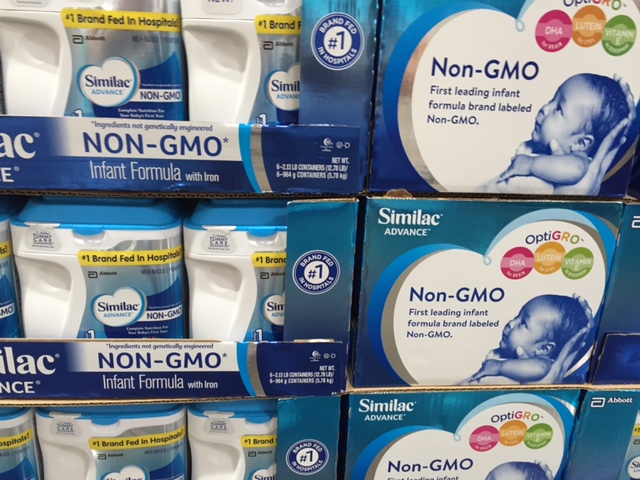
A display at a Costco store

But science says differently.

GMO crops are as safe to eat as their non-GMO counterparts and have no negative environmental impacts according to a comprehensive report released on May 17 by the National Academy of Sciences —a group founded by the U.S. Congress to provide expert scientifically-based advice on a variety of issues. The report is a 388-page, comprehensive look at every aspect of genetically engineered crops.

Key messages in the report, summarized by National Geographic, are:

  • GMO crops are safe to eat…there’s no evidence of harm.
  • The GMO crops in our food system have “…helped farmers protect yields from insects and weeds.”
  • The report found no adverse affects on biodiversity or danger from interbreeding between GMO crops and wild relatives.
  • The economic benefits to farmers have been well-documented.
  • Appropriate regulation is imperative, and that regulation should be based on the characteristics of the crop, rather than the technique used to develop it, whether GMO or non-GMO.
  • Ongoing public conversations about GE crops and related issues should be characterized by transparency and public participation.

The National Academy of Sciences report also notes that both genetic engineering and conventional breeding are important to crop improvement. Each method has strengths and weaknesses, and treating them “as competing approaches is a false dichotomy; more progress in crop improvement can be brought about by using both … than by using either alone.”

So, will the GMO alarmists finally see the light? Will they embrace science and back off? Doubtful. But at least now there’s a stronger argument to challenge their illusions.