Chasing The Money: The Democratic Primary in Oregon’s 6th Congressional District

Are direct campaign contributions going to be the determining factor in the Democratic primary for U.S. House Oregon District 6 on May 17, 2022? How about money from Oregonians? Will it be critical?

The campaign committees of the nine ambitious people running in the primary had raised a total of $4,821,322.84 according to reports just filed with the Federal Election Commission covering up to March 31, 2022. Reports were due on April 15, 2022.

If you just look at the campaign finance reports for the official campaign committees, Steven Cody Reynolds is far and away the strongest candidate.

The reported totals for each candidate are as follows:

Ricky Barajas: No data available

Carrick Flynn:  $830,185.45

Greg Goodwin: No data available

Kathleen Harder:  $137,259.28

Teresa Alonso Leon:  $67,704.00

Steven Cody Reynolds: $2,506,917.65 (Includes $2,000,006.00 in loans and $502,186.65 in contributions from the candidate)

Andrea Salinas: $178,195.00

Loretta Smith: $297,478.00

(Includes $60,000 in loans from the candidate)

Matt West: $803,583.46 (Includes $400,000.00 in loans and $47,878.16 in contributions from the candidate)

But this is far from the whole story. All this data obscures millions of dollars of so-called independent expenditures in support of individual candidates.  

An independent expenditure is a political campaign expenditure that expressly advocates for the election or defeat of a candidate that is not made in cooperation, consultation or concert with, or at the request or suggestion of, a particular candidate, a candidate’s authorized committee  or the candidate’s party.

The Democrat’s House Majority PAC, the largest super PAC supporting Democratic House candidates, has already stepped up to support Carrick Flynn with a $1 million independent expenditure.

House Majority PAC television ad for Flynn

On top of that, Protect Our Future PAC, funded largely by Bahamas-based crypto billionaire Sam Bankman-Fried, has thrown its weight behind Flynn with about $6 million in expenditures on a wide range of activities, including radio, television and digital ad production and time purchases, lawn signs, direct mail, and get-out-the-vote phone calls.

Flynn is also benefiting from other independent expenditures. An independent expenditure of about $800,000 was just committed by the Justice Unites Us super PAC, which says it wants to engage and mobilize progressive Asian-American voters.

“In Congress, Carrick Flynn will be the ally AAPI voters in his district deserve,” said Minh Nguyen, Executive Director of Justice Unites Us PAC. “He knows what it’s like to grow up poor and has spent his career helping others escape poverty, an experience that is sadly shared by too many AAPI families across America. We know his perspective will lead him to advocate for a government that looks out for our most vulnerable, and we are excited to support his candidacy with this historic investment.”

The National Wildlife Federation Action Fund also announced several days ago it was investing in Flynn and already has an ad running on television. “We need more champions for wildlife and #climate action in Congress, which is why we’re significantly investing in Carrick’s race to underscore his leadership and what’s at stake for people and wildlife alike,” it said on Facebook.

By the way, the Salem Statesman Journal reported on April 15 that Flynn’s  campaign committee filings show just 2.5% of his direct campaign committee support has come from Oregonians. That makes the independent expenditures coming from outside Oregon crucial to his campaign, a clear demonstration of how money can undermine faith in our democratic institutions…and an insult to Oregonians.

It also raises a legitimate question. If Flynn wins the primary and then the election, to whom will he owe his fealty? We’re deluded if we think that fealty will be to the common people of Oregon.

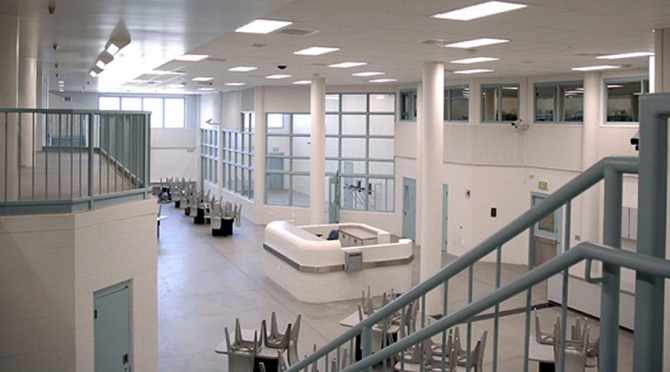
Playing fast and loose: Multnomah County and the Wapato Jail

wapatojail

The still empty Wapato Jail

Has Multnomah County been flouting the law in its management of the Wapato jail?

In 1996, Multnomah County voters approved a $79.7 million public-safety bond measure to deal with inmate crowding and predictions of rising crime.

Of the total, $43.9 million went toward construction of the $58.4 million Wapato Jail in North Portland. The 168,420 sq. ft. jail was completed in 2004…and has sat empty ever since.

Now some folks, including Multnomah County Commissioner Loretta Smith, want to turn the jail into a giant homeless shelter. But other county officials are adamant the jail is unsuitable for such a use.

A major reason is because county officials have chosen to do what was convenient, rather than what was right.

When property at the County Sheriff’s office or other county jails broke or got too old or just needed replacing, rather than buying something new, the county ransacked Wapato.

“What people think is out there is a fully functioning building with kitchens and everything. It has none of that. It’s been stripped bare,” County spokesman Dave Austin told KGW-TV. “What we did was, if the sheriff’s office in their other three jails had a need for something — you know a big stove, an oven, a dishwasher — if those broke, we didn’t spend taxpayer dollars and buy new stuff. We went and took the stuff from Wapato.”

It would cost taxpayers at least $5 million to $7 million to replace all the stuff that was spirited away and get Wapato ready for occupancy, Austin told KOIN 6 News.

That’s right. County employees have ripped off $5-$7 million of Wapato property for other uses.

The problem is the 1996 bond measure for Wapato didn’t say that after the county built the jail, it could loot it.

The Dec. 17, 1996 Official Statement, the offering document delivered to prospective investors for the $79.7 million of bonds that were sold in the public market, specified that the bond proceeds would be used for the following:

  • Increase jail beds to end unsupervised early release of prisoners
  • Secure treatment facilities for mandatory drug and alcohol treatment of offenders
  • Computer systems and high-tech equipment for tighter tracking of criminals
  • Restructured booking facilities to eliminate delays for police
  • Expansion of the juvenile justice complex
  • Child Abuse Center

 In 2003, the State authorized the County to shift from building the bed alcohol and drug / work release / mental health beds to building 300 jail beds, instead, raising the total number of Wapato jail beds to 525 and committing $58.4 million to the project.

Wapato Jail was finally completed in July 2004.

But one thing didn’t change with all the machinations. There was still no provision allowing for the Wapato jail to be raided of contents worth millions so they could be shifted to other facilities.

A California case supports the view that such slippery shenanigans are prohibited.

In 2008, voters in the San Diego, CA Unified School District authorized $2.1 billion in general obligation bonds for school projects listed in a 96-page pamphlet. Later that year, voters challenged the District’s use of general obligation bond proceeds for the acquisition and installation of field lighting for the football stadium at a local high school.

In 2013, the California Court of Appeal determined in Taxpayers for Accountable School Bond Spending v. San Diego Unified School Dist. that the school district’s failure to make explicit reference to the installation of stadium lighting within the site-specific section of a bond project list rendered that expenditure unlawful.

Maybe some folks involved in pillaging the Wapato Jail should be in it.