Are Socialists Taking Over the Democratic Party?

Hyperventilating political prognosticators don’t always get it right. 

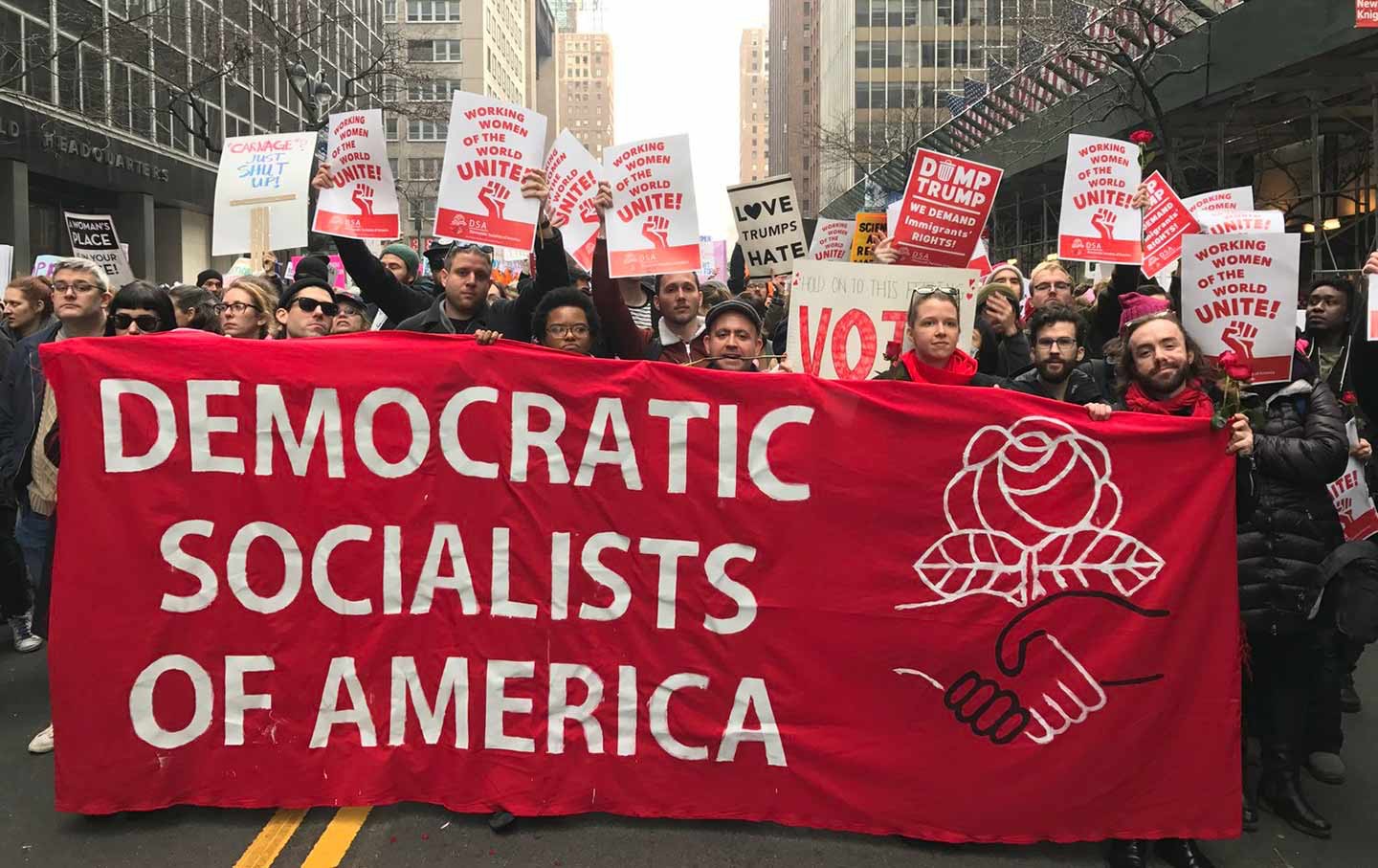
“(New York City) Mayor Zohran Mamdani and his Democratic Socialists of America are now the most capable political force in the Democratic Party heading into 2028,” John Ketcham and Christian Browne at the Manhattan Institute, a conservative policy think tank, just wrote in City Journal. “In yesterday’s primaries in New York, his three endorsed candidates beat better-established adversaries, demonstrating how Mamdani and the DSA have become the face of the party’s progressive wing.”

“…the Democratic Party has been taken over by socialists,” says Republican Rep. Mike Lawler, who represents a suburban New York House seat.

Zeteo, a left-leaning digital media company, says “a new politics is brewing. And the epicenter is New York City.”

Wait a minute. Before other pundits and the public accept this assertion, let’s step back and examine what just happened in New York City, focusing on one of the winning socialist candidates, Darializa Avila Chevalier.

32-year-old Chevalier is no shrinking violet. In 2020, she branded Joe Biden a “rapist” and a “war criminal” and called the US a “fucking disgrace”. The day after the horrific October 7, 2023, Hamas massacre of Jews in Israel, she joined a pro-Palestinian rally in Times Square organized by leftist groups that appeared to celebrate the event. In posts onTwitter from 2018 through 2022, she maligned interracial relationships. She’s written that Russia invaded Ukraine because the United States had “been bullying Russia”. In a tweet disparaging America, she wrote, “I forgot to get napkins so I just wiped my hand on the American flag behind me”. 

Voter apathy in primary races is the culprit here, as in so many political contests across the country. That, combined with the creation of safe districts across the country, is increasingly causing primaries to be the real elections.

In looking at the New York primary race, it’s important to recognize not only that the race was limited to registered Democrats, of which there are 373,000 in the District NY-13, but that only 67,473 voters participated in the primary, or 18.09 percent. That allowed the Democratic Socialists to wield disproportionate influence. Of those, who bothered to vote, just 32,790 voted for Chevalier, who came out ahead of her main challenger, Adriano Espaillat, by only 2,326 votes.

City Journal acknowledged this in a post on June 27: “Turnout in New York’s closed primary races is typically small—even Mamdani won last year’s Democratic mayoral primary with less than 7 percent of the city’s overall population backing him. Tuesday’s results do not prove, then, that the majority of residents in New York are hard-left socialists. They instead suggest that, since most potential voters remain politically apathetic, a small but well-organized machine like the DSA’s can deliver big results.”

There’s a parallel here with Democratic Socialist Janeese Lewis George’s  victory in Washington, D.C’s mayoral Democratic primary, which has led some to declare her win a mandate. There are approximately 357,000 registered Democrats in Washington, D.C., making up roughly 75% of all registered voters in the District. Only about 38% of registered Democrats voted and Janeese Lewis George won with just 75,000 votes. A mandate? Hardly.

So, calm down folks.

This isn’t to say, however, that the new socialist legislators in the House, largely a result of voter lethargy, won’t muck things up.

As commentator Gerard Baker has observed, “The victory by “democratic socialists” and their allies in New York Democratic primaries last week is a signal moment in the nation’s descent into political dystopia. In it we see a Democratic base, relatively small in number but energized by anti-Trump rage, that has decided that the Black Lives Matter, No Such Thing as a Woman, Mostly Peaceful Rioting that the party nourished under Joe Biden and Kamala Harris is too timid for their tastes.

Sure, we can overstate its importance. New York isn’t America. What passes for cool radicalism in Brooklyn’s Park Slope would get you a psychiatric evaluation in most of the country.”

Also, even if the Democrats retake the House in November, their margin is likely to be slim and an enlarged cadre of disruptors will be able to challenge leadership. Republicans are also likely to try to tar the entire Democratic Party for its association with the Democratic Socialists. President Trump has already called the socialist nominees “godless” communists who are threatening the country. At a Faith and Freedom Coalition gathering, he urged religious conservatives to prevent a “communist” victory in the midterms, saying his pro-Christian policies would be reversed if Democrats returned to power. 

And right on cue, Mike Marinella, a spokesperson for National Republican Congressional Committee, said, “Tonight wasn’t just a bad night for so-called ‘Leader’ Hakeem Jeffries. It was the night the Democrat establishment officially surrendered to Zohran Mamdani and the socialist wing of their party. Every House Democrat, in safe and competitive districts alike, will now answer to the radicals calling the shots. And Americans should be terrified by where the Democrat Party is headed.”

Hang on.
Oregon Higher Education Endowments Under Threat

For Donald Trump, it’s always about the filthy lucre. 

Rewarding allies and punishing perceived adversaries financially has long been Trump’s raison d’être in business and politics. His life is a story of questionable real estate and tax payment shenanigans, a sham Trump University, hush money payments to porn star Stormy Daniels and misuse of charitable funds at the Trump Foundation. His greed and shameless behavior seem to have no limits. Nor does his assault on higher education.

Now he and his party are after higher education endowments and Oregon’s private institutions, including those with large and small endowments, should be worried.

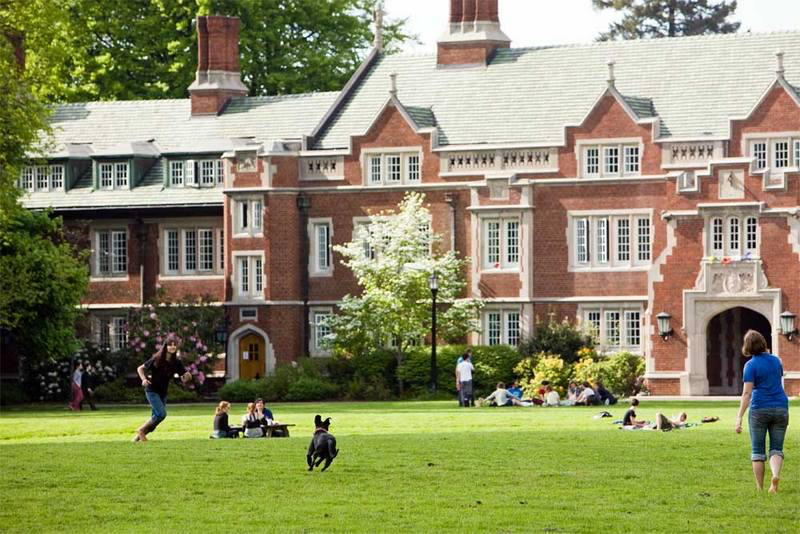
Reed College has the largest endowment among Oregon’s private higher education institutions.

In 2017, during Trump’s first term, a Republican Congress passed the first excise tax on college endowments. Private colleges and universities now pay an annual 1.4% excise tax on endowment net investment income. The excise tax is levied on schools that have at least 500 tuition-paying students and net assets of at least $500,000 per student. 

Because the $500,000 is not adjusted for inflation, the threshold is being effectively lowered over time. The tax has affected about 50-55 institutions to date. 

In 2023, 56 universities paid about $380 million under the endowment tax, up from about $68 million in 2021 and slightly more than the $200 million annual forecast made by the Joint Committee on Taxation in 2017.

In 2023, when he was still a U.S. Senator, J. D. Vance introduced the College Endowment Accountability Act which proposed increasing the excise tax from 1.4% to 35% for secular, private, nonprofit colleges and universities with at least $10 billion in assets under management.

“University endowments…have grown incredibly large on the backs of subsidies from the taxpayers, and they have made these universities completely independent of any political, financial, or other pressure, and that is why the university system in this country has gone so insane,” Vance asserted. 

Vance’s bill went nowhere, but the issue resurfaced in January 2025 when Rep. Troy E. Nehls (R-TX) introduced the Endowment Tax Fairness Act, a bill that would raise the excise tax levied on certain private university endowment profits from 1.4% to 21%. 

The tax would apply to private colleges and universities with 500 or more students with an aggregate fair market value of assets of at least $500,000 per student of the institution, and more than 50% of the student body is located within the United States. 

The Tax Foundation, assuming a 7.5 percent average annual return, estimates Nehis’ bill would raise about $69.8 billion in additional revenue over 10 years.

The House Ways & Means Committee also appears interested in raising the endowment tax rate. Committee Chair Jason Smith (R-MO) pitched the idea during an all-member meeting among House Republicans in January as well. 

In February, Rep. Mike Lawler (R-NY) introduced the Endowment Accountability Act, proposing raising the excise tax rate from 1.4% to 10% of endowment income and lowering the per-student endowment threshold from $500,000 to $200,000, likely pulling in many more colleges.  

“If passed, such a tax would fundamentally alter the relationship between the government and many nonprofit colleges, as well as between those institutions and their donors,” reported Higher Ed Dive. “Moreover — and perhaps more importantly as a practical reality — such a tax could land hard on students, research programs and college operations.

Many institutions with much lower profiles than the Harvards of the world could get taxed if lawmakers broadened the threshold for paying, Jason Delisle, with the Urban Institute, said at an American Council on Education panel. And that’s exactly what higher ed institutions are preparing for. 

“University leaders and endowment chiefs also expect Congress to consider raising the tax on the richest endowments and expanding the number of schools affected,” the Wall Street Journal reported. And there’s talk of spreading the pain around more, hitting up smaller schools with smaller endowments, too. 

Although it may not be maintained in a final bill, under a tax plan unveiled by House Republicans on May 12, 2025, some universities would pay an annual tax of up to 21%. on their annual net investment income in endowments.

According to data from the National Association of College and University Business Officers and the asset management firm Commonfund, colleges spend the largest share of endowment funds on student financial aid (48.1% in FY2024), followed by academic programs and research (17.7% in FY2024).

Mauling endowments with egregious excise taxes would seriously threaten the ability of many schools to maintain these efforts, though that may not be of much concern to Trump and his allies, who have so far displayed little more than contempt for higher education.  

FY2024 endowments at selected private higher education institutions in Oregon[1]

InstitutionEndowment ($ millions)
Reed College814
Lewis and Clark College322
University of Portland315
Willamette University312
Linfield University118
Pacific University57
George Fox University34
Warner Pacific University18

[1]

 Source: 2024 NACUBO-Commonfund Study of Endowments (NCSE)