The Ritz-Carlton Residences in Portland: A Towering Mistake

“If you’re blue, and you don’t know where to go to
Why don’t you go where fashion sits? Puttin’ on the ritz”

Can you think of anything more incongruous than the Ritz and Stumptown?

Like a diamond in the rough, The Ritz-Carlton Residences Portland at 550 S.W. 10th Ave. are set to open for occupancy in July 2023. 

Owners of the 138 residential condominiums on floors 21-35 atop The Ritz-Carlton, Portland will enjoy magnificent views as the $600 million building becomes a landmark in a dynamic Pacific Northwest city, the developers exult. 

Keller Williams Realty Professionals is already marketing 39 of the individual condos at prices ranging from $1,1000,000 for a one bedroom 2 bath 1,105 sq. ft unit to $8,999,000 for a 3 bedroom 4 bathroom 3,256 sq. ft unit. Principal and interest on the mortgage, plus property taxes and condo fees, could translate to an $8000 a month expense for the 1 bedroom.

“We are seeing interest from folks that have made businesses in other cities that are spending more time in Portland,” he said, “and they want to be here. They like the lifestyle of Portland and the quality of life that we have here,” Brian Owendoff, owner’s representative for the tower, told KGW-TV in March. 

Is he serious? Is “…the quality of life that we have here…” in Portland going to be a magnet for well-heeled luxury-seeking sophisticates?

In 1992, journalist and urban critic Philip Langdon marveled at how “this courteous, well-kept city of 453,000, and especially its downtown, has become a paragon of healthy urban development.” Nobody’s saying that now. 

With Ineffectual government at all levels, property crime more than double the national average, motor vehicle thefts through the roof. (More than 11,000 vehicles were stolen in 2022, up from 6,500 in 2019; and it’s not just individuals being hit. International Auto Sales on Southeast 82nd Avenue in Portland has had twenty two vehicles stolen in just two years, costing near a quarter million in damages.), homeless encampments sprouting like weeds, used hypodermic needles littering the sidewalks and parks (In 2022, crews collected 176,962 used needles in the 213 block Downtown Enhanced Service area), open air drug markets, routine store break-ins, routine homeless camp fires (Portland Fire & Rescue responded to more than a thousand tent or tarp-related fires during 2021-2022), gun violence, homicides (2022 was a particularly bloody year for Portland, with homicides climbing from 36 in 2019 to 97 in 2022 – a record), bicycle thefts galore (More than 1,000 bikes are reported stolen in the city each year, according to Willamette Week), public urination and defecation,  Portland is far from the magnet it once was.

Businesses in the Ritz-Carlton area are already up in arms over Multnomah County’s new Behavioral Health Resource Center on S.W. Park Ave. between Oak and Harvey Milk Streets. Willamette Week recently reported business owners are asking the county to do more to keep the neighborhood free from what some of the center’s clients are bringing, including threats of violence and drug use. Painting a bleak picture of the situation, the businesses are frustrated to no end and question how the Ritz-Carlton will be able to attract customers to its $518 a night and up hotel rooms. 

Polls conducted in 2022 showed only 11% of voters thought Portland was heading in the right direction — a steep drop from 76% in 2000.

With highlights  like a vegan strip club,  a museum for vacuums and the world’s largest Naked Bike Ride, Portland is also far from a ritzy kind of place offering a comfortable milieu for high-end sophisticates.

There’s a reason why an outpost of the upscale Saks Fifth Avenue  at Portland’s much-heralded Pioneer Place Mall abruptly closed in 2010 and was replaced by Off Fifth at Bridgeport Village in the suburbs, a discount venue that offers closeouts, clearance items and private-label goods. “Saks didn’t quite fit in with our fleece and flip-flops,” Kathleen Healey, senior associate broker with Urban Works, told The Oregonian. 

That’s another way of saying Portland has a reputation for being kind of quirky, dismissive of pretense, leery of brazen displays of wealth. Drenched in wetness and lefty idealism, where people wait till the “Walk “ sign lights up even if no cars are coming, it is hardly a haven for moneyed showoffs or a welcoming place for a Ritz-Carlton.

Like with Saks Fifth Avenue, the prognosis isn’t promising.

There just aren’t enough of Slim Aaron’s beautiful people in Portland


Thank you for reading ThinkingOregon. If you liked this post and think others would find it interesting, why not forward it to a friend?

Consumer Alert: “Lawyers of Distinction” Is A Scam

UPDATE, 08/14/2023: Lawyers of Distinction: The Fraud That Won’t Die

Lawyers may not all infest dimly lit moldy offices “like maggots in nuts”, as Charles Dickens wrote, but far too many have a habit of being pompously boastful without reason. Among those are surely lawyers who claim to be “Lawyers of Distinction”.

With inescapable regularity, an Orlando Florida-based company runs ads every year promoting the latest “Lawyers of Distinction”. The newest ad, congratulating the 2023 winners, ran in the Sunday New York Times today, Feb. 26, 2023.

This time there were nine  winners listed from Oregon:

  • Pamela Blackwell, In-House Counsel, Malarkey Roofing Products, Portland
  • Joshua Callahan, Personal Injury Law, The Callahan Law Office, Clackamas, OR
  • Alice Cuprill-Comas, Healthcare Law, general counsel for Oregon Health and Science University, Portland, OR
  • Thomas Howe, Howe Law Firm, Portland, OR
  • Nicole Lemieux, Personal Injury Law, Portland, OR
  • Gregory Oliveros, Criminal Defense Law, ))& Law, Oliveros Law Group PC, Clackamas, OR
  • Maryanne Pitcher, Family and Divorce Law, RISE Law Group, Medford, OR
  • Phillip Williams, Estate + Injury Attorney, Eugene, OR
  • Kali Yost, Disability Rights & Estate Planning,  Kali Yost Law, Portland, OR

Lawyers of Distinction says on its website it “Recognizes Excellence in The Practice of Law.”

Sounds impressive, until you dig deeper. 

About all that’s required to be named a “Lawyer of Distinction” is to apply yourself or be nominated, fill out some online forms and pay a fee. It’s like diploma mills that claim to be higher education institutions, but only provide illegitimate academic degrees and diplomas for a fee.

“There’s a sucker born every minute,” is a phrase often attributed to P. T. Barnum, an American showman. It’s apparently true with respect to the attorneys who buy “Lawyers of Distinction” memberships as well as members of the public who are misled by them. 

The Lawyers of Distinction website makes the application and review process sound complex. 

According to the website, it includes a review and vetting process by a Selection Committee. That involves an analysis of a candidate’s work, experience and abilities based upon 12 independent criteria using a platform spelled out under U.S. Provisional Patent #62/743,254. Once a final score is generated, an applicant is subjected a final background check and Ethics Review. Applicants who achieve a minimum passing score and have no disqualifying ethical violations within a 10-year period prior to completion of the application are then eligible for acceptance to Lawyers of Distinction.

Sounds tough and thorough.

Don’t believe it.

Essentially, it’s just pay-for-play. It’s selling badges.  It’s paying for meaningless accolades. Apply, pay the annual membership fee and you’re in.

According to the Florida Division of Corporations, “Lawyers of Distinction Inc.” is a private for-profit company with a principal address of 4700 Millenia Boulevard, Suite 175, Orlando, FL 32839. 

Robert (Robbie) Brian Baker at the same address is listed as the President in the company’s 2020 Annual Report. But don’t go there expecting to be ushered into an office with a clean, modern aesthetic that communicates success. The address is identified online as nothing more than an “Orlando Virtual Business Address & Live Receptionist Answering Service.”

Lawyers of Distinction is a sign of the overabundance of lawyers, leading some to try to elevate themselves with impressive, but meaningless, awards. The ads the organization places in multiple publications are fake news at its most blatant and deceptive. 

Some lawyers may want the Lawyers of Distinction plaque on their wall to bolster their self-esteem, even though in their heart they know the plaque is meaningless piece of junk. Maybe they want to add a plaque to their office brag wall. Maybe the “honor” adds glamour to what some lawyers describe as mind-numbing work.

Whatever their reasons for signing up, Oregon’s lawyers Lawyers of Distinction shouldn’t be proud; they should be embarrassed. 

Lake Oswego’s Short Term Rental Rules Are Widely Ignored; Are Other Cities in the Same Boat?

Any scofflaws in upscale Lake Oswego?

Widespread abuse of Lake Oswego, Oregon’s short-term rentals program proves the point.

In 2019, Lake Oswego tried to get a handle on controversial short-term rentals (STRs) by enacting Ordinance 2815. The ordinance allows STRs (rentals of less than 31 days) of certain residential properties.

Residents who want to operate a STR are required to obtain a business license from the city and pay an $80 annual fee. They’re also required to see to it that the city is paid Transient Lodging Taxes equal to 6% of taxable income from the STR. The tax revenue is used for the promotion and development of tourism and visitor programs for Lake Oswego.

Sounds pretty simple. If you own a property being used for STRs, you need to get a business license and pay taxes on your revenue. But a review of city data on STR business licenses and prominent STR websites shows a lot of people are ignoring the ordinance. 

According to information obtained from the city in response to a public records request, there were 42 active STR business licenses as of Dec. 1, 2022. However, a review of just two high use STR websites, Airbnb and VRBO, turned up 75 STRs with Lake Oswego addresses. 

Separately, AirDNA, a STR marketing firm, reported that as of Dec. 8, 2022 there were 90 active STRs in Lake Oswego, with 88% being entire home rentals and 12% private rooms.

Of the 90 STR’s counted by AirDNA, 96% had internet access and 8% had pools. Although some Lake Oswego properties are quite expensive, the average daily rate is just $170, generating average revenue per property of $2,682 during Jan -July 2022. The highest average monthly revenue was $3,333 in July 2022. 

Of the 90 STRs, 69% were listed on Airbnb, 17% on VRBO and 14% on both. 

The Lake Oswego STRs that pop up include everything from a $75-a-night cottage and $47-a-night private room to a “Modern, kid-friendly, walkable” $405-a-night 3-bedroom home and a $1467-a-night massive luxurious estate with 8 bedrooms and a pool. 

It’s not possible to identify the addresses of all the properties without trying to book them one by one. Website maps, reveal, however, that they are spread all over Lake Oswego. 

Clearly, a lot of people in Lake Oswego are cheating, diminishing themselves, feeding a culture of dishonesty and disrespecting their neighbors.

If a STR is found to be in violation of City Code, the City may suspend or revoke its business license, if it has one. The property owner may also be cited and have to pay a fine or appear in Municipal Court.

It’s time for city government to lay down the law.

What Were They Thinking? Multnomah County’s Non-Citizen Voting Proposal

The election’s over, and Measure 26-231, an appalling proposal to let non-citizens vote in Multnomah County, lost 52.79% – 47.21%. But the fact it even got on the ballot should worry us all. 

What in heaven’s name would have propelled a group of citizens to advocate undermining their constitutional rights with such an alarming proposal? And the fact the measure got 163,163 votes is a distressing reminder that the idea of non-citizen voting is in danger of being normalized.

We need to stop pretending like this is okay or normal because it’s not,”  Rep. Jeff Duncan (R-SC) said earlier this year, Non-citizen voting is explicitly un-American and disrespectful to those who fought and died for the preservation of our freedoms and democracy.”

A Charter Review Committee appointed by state senators and representatives who represent districts in Multnomah County initiated the proposal. 

The committee members, all appropriately listing  their She/Her, She/They, They/Them, He/Him pronouns on the committee’s website, were a cabal of overzealous progressives akin to a left-leaning social justice advocacy non-profit intent on remaking the body politic to advance their agenda.

Samantha Gladu (She/They) was described as“…committed to addressing power inequities by building representative and progressive anti-racist leadership.” 

Ana I. González Muñoz (She/Her)…works at Latino Network as the Director of Community Engagement & Leadership Development” and her “… professional and personal commitment revolves around serving her community to advocate for equity, inclusion, and social justice.” 

Jude Perez (They/Them)“…is the Grants Manager at Seeding Justice…an organization that practices community-led grantmaking to distribute funds to grassroots groups that are working towards long-term, systemic solutions, and community-centered strategies to dismantle oppression in Oregon.”

The civic groups that supported the measure[1] deserve to be admonished as well. 

The ACLU of Oregon made the illogical argument that the measure advanced its commitment to the civil liberties and civil rights fundamental to our democracy, ignoring the fact it would mean one less benefit to be gained from becoming a citizen and erode  the integrity of America’s  democracy,

The Oregon Food Bank exceeded its mandate when it endorsed Measure 26-231 because it would “extend voting rights to more local residents who are affected by county policies.”

Measure 26-231 was not just an example of progressive overreach, but of moral rot. It was a sign not of appreciation, but of contempt, for liberal democracy. At its root, it was a progressive attempt to enlarge their base.

The idea made a mockery of citizenship, removing the long-standing linkage between the responsibilities of citizenship and voting rights. 

Before the Nov. 8 election, Ricardo Lujan-Valerio, a policy director to Portland City Commissioner Carmen Rubio and former policy associate at ACLU of Oregon, told OPB he estimated the committee’s proposal “…could potentially affect up to 100,000 people if the final definition of ‘noncitizen’ includes the roughly 22,000 undocumented residents living in Portland.” It’s not clear if that estimate included not just undocumented people in the county illegally, but also people admitted to the US legally, but not yet US citizens.  

That many non-citizens added to Multnomah County’s voting rolls would have resulted in a substantial dilution of the power of the county’s citizen voters.

Justice Ralph J. Porzio, a State Supreme Court justice on New York City’s Staten Island, raised the dilution issue when, on June 27, 2022, he struck down a law that would have allowed non-citizens to vote in local elections in New York City, saying it violated the State Constitution.

“This Court finds that the registration of new voters will certainly affect voters, political parties, candidate’s campaigns, re-elections, and the makeup of their constituency and is not speculative.,” the judge said in his ruling. “The weight of the citizens’ vote will be diluted by municipal voters and candidates and political parties alike will need to reconfigure their campaigns. Though the Plaintiffs have not suffered any harm today, the harm they will suffer is imminent, and it is reasonably certain that they will suffer their claimed harm if the proposed municipal voters are entitled to vote.”

“Voting is of the most fundamental significance under our constitutional structure…The addition of 800,000 to 1,000,000 non-eligible votes into municipal elections significantly devalues the votes of the New York citizens who have lawfully and meaningfully earned the right to vote pursuant to constitutional requirements.”

The Charter Review Committee’s non-citizen voting proposal would have devalued the votes of citizens in Multnomah County and run counter to the values of our constitutional republic. May it rest in peace.


[1] ACLU of Oregon; Adelante Mujeres; APANO (Asian Pacific American Network of Oregon); Center for Migration, Gender, and Justice; Coalition of Communities of Color; IRCO (Immigrant and Refugee Community Organization); Latino Network; Next Up; Oregon Food Bank; Oregon Interfaith Movement for Immigrant Justice.

Worried About Getting Into An Oregon Public University? Don’t Be.

What’s all the angst about getting into college?

Sure, Harvard University admitted only 3.2% of the 61,220 people who applied to join the fall 2022 class, but Harvard’s not typical.

According to U.S. News & World Report, college acceptance rates average 68%. Pew Research Center found that over half of U.S. universities have an admissions rate of at least 67%.

Then there’s Oregon.

Can you breathe, fog up a mirror? If yes, just submit an application and you’ll probably be accepted at some of Oregon’s public universities.

Acceptance rates at Oregon’s seven public universities are unusually high. For the 2022-2023 academic year, they ranged from a high of 98.43% at Portland State University (PSU) to a low of 89.21% at Oregon State University (OSU):

           School                                Acceptance Rate (%)  

Portland State University                         98.43

Eastern Oregon University                       97.68

University of Oregon                                93.00

Western Oregon University                      91.57

Oregon Institute of Technology                90.62

Southern Oregon University                     89.70

Oregon State University                            89.21

Not only are acceptance rates high at Oregon’s public universities, but they’ve been going up.

At the University of Oregon, for example, the average acceptance rate over the past 10 years is 79.89%, but it has been fairly steadily increasing from 72.96% for the 2012-13 academic year to 93.00% for the 2022-23 academic year.

So hang in there high school seniors. If you want to go to an Oregon public university there will probably be a spot for you.

Cutbacks Threaten Three Prominent Oregon Newspapers

UPDATE (Aug. 12, 2022): In a late move on Friday, Aug. 12, 2022, Gannett, the nation’s largest newspaper chain, executed layoffs at outlets across the country. While no official tally was available, journalists at the Salem Statesman Journal (Oregon), Athens (Georgia) Banner-Herald, (South Texas) Caller-Times, Columbia (Missouri) Daily Tribune, Ventura County Star, St. Cloud (Minnesota) Times, Monroe (Louisiana) News-Star, Billerica (Massachusetts) Minuteman, (Milwaukee) Journal Sentinel, Panama City (Florida) News-Herald, Gainesville Sun (Florida), The Athens Banner-Herald (Georgia) The Des Moines Register (Iowa), Burlington Free Press(Vermont), Beaver County Times (Iowa), MetroWest Daily News (Mass) and the (Kentucky) Courier Journal all reported layoffs at their publications. Friday’s layoffs also affected non-journalists. A reporter at the Pueblo (Colorado) Chieftain tweeted that the paper’s only customer service representative, who had been making less than a dollar above minimum wage, had been let go after working there for 16 years.

—————–

The decline of Oregon’s local newspapers is set to continue with cutbacks by Gannett Co.

Gannett, the owner of the Statesman Journal in Oregon’s capital, Salem, The Register-Guard in Eugene and the Daily Journal of Commerce in Portland, is planning a “significant cost reduction program” amid a “challenging economic backdrop marred by soaring inflation rates, labor shortages and price-sensitive consumers.”

A message to all of its employees on Thursday from Gannett’s president of news warned of “painful reductions to staffing, eliminating some open positions and roles that will impact valued colleagues.”

The Statesman Journal, the second-oldest newspaper in Oregon, was sold to Gannett in 1973. Currently listing 16 reporters on its website, it has been steadily shrinking in staff and as a reliable news source.

The Register-Guard, formed in a 1930 merger of two Eugene papers, the Eugene Daily Guard and the Morning Register, was acquired by GateHouse Media in 2018. At the time, the paper had 240 full-and part-time employees. The newspaper has been owned by Gannett since Gannett’s 2019 merger with Gatehouse. The paper’s current website lists just 8 reporters. 

Founded in 1872, the Daily Journal of Commerce (DJC) provides comprehensive resources and reporting on the Portland, Oregon building and construction market. Owned by Gannett through its BridgeTower Media division, the paper has a circulation of 1,966.

Gannet, which owns over 100 daily newspapers and nearly 1,000 weekly newspapers in 43 U.S. states and six countries, reported on Thursday a net loss of $53.7 million in the second quarter, compared with a net income of $15.1 million the same period a year earlier. Adjusted earnings before interest, taxes, depreciation and amortization (EBITDA) totaled $50.9 million, down 56% from the prior-year quarter, with declines driven by a decline in print revenue and inflationary pressures. 

“We are not satisfied with our overall performance in the second quarter,” Gannett CEO and Chairman Michael Reed said in a release, noting the results reflect “industry-wide headwinds” in digital advertising and tightening across the economy.  

Anticipated cutbacks at Gannett’s Oregon papers would track declines in locally focused daily newspapers across the United States.

The total combined print and digital circulation for locally focused U.S. daily newspapers in 2020 was 8.3 million for weekday (Monday-Friday) and 15.4 million for Sunday, among the lowest ever reported, according to the Pew Research Center. Total weekday circulation is down more than 40% and total Sunday circulation has fallen 45% in the past seven years. Local newspaper advertising and circulation revenue has also been dropping precipitously.


Is Home Selling Greed Hitting A Wall? Lake Oswego May Offer a Hint.

Is the frenzied home selling market slowing down?

I just did a sample of home pricing in Lake Oswego, OR, a high-income, largely white-collar town. It may have been small, but I wonder if it’s telling us something.

People are listing their homes at high prices and, with no offers, lowering their asking price, and still waiting for a sale. Instead of greeting lines of eager prospective buyers the day after listing, many homeowners appear to be anxiously awaiting offers.

  • A 4-bedroom 5-bathroom 4,050 house on Westlake Drive was listed on June 29, 2022, at $1,790,000. On July 11, the asking price was lowered to $1,599,000, a $191,000 cut.
  • A home on Dogwood Drive was listed on July 16 at $1,200,000 and then promptly lowered to $995,000, a $205,000 cut. 
  • A home on Nansen Summit was listed for sale on May 26 at $1,495,000, increased to $1,595,000 on July 8 and then dropped again to $1,495,000 on July 12.
  • A home on Koderra Ave listed for $1,370,000 on June 20 dropped its price to $1,275,000 on July 7, a $95,000 cut.
  • A house on Streamside Dr. listed for $1,369,000 on June 13 and dropped its asking price to $1,299,000 on July 7.
  • A house on Upper Dr. listed at $2,300,000 on June 2 dropped its asking price to $2,250,000 on July 13.
  • Even a smaller home on Aquinas St. that was listed on June 23 at $899,900 dropped its price to $875,000 on July 13 and a house on Oriole Lane listed at $625,000 on May 7 dropped its asking price to $585,000 on June 19, a $40,000 cut.

In June, Lake Oswego home prices were up 6.3% compared to last year, selling for a median price of $985K. On average, homes in Lake Oswego sold after 7 days on the market compared to 5 days last year. But there were just 70 homes sold in June, down from 132 last year.

The Wall Street Journal reported today that the U.S. housing market overall is rapidly cooling as record prices and high mortgage rates weigh on home sales, locking out potential buyers. Across the country, sales of previously owned homes fell for a fifth straight month, dropping 5.4% in June to an annualized rate of 5.12 million. That was lower than the number of sales recorded in all of 2019, before the Covid-19 pandemic became widespread in the U.S.

The average rate on a 30-year fixed-rate mortgage rose to 5.51%, mortgage-finance giant Freddie Mac said on July 14. That was lower than the 13-year high of 5.81% set in June, but still a big jump from the 2.88% rate a year ago and high enough to dissuade many potential homebuyers.

Maybe all this is a sign the overheated housing market, including in Lake Oswego, is slowing down.


Taking to the TAC: Cycling Across the U.S.A. to Port Orford, Oregon

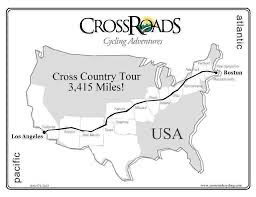
Riding x-country is a dream for many cyclists. A few years ago I realized that dream when I rode my bicycle with Crossroads Cycling Adventures 3,415 miles across the US on a paved route from Manhattan Beach in Los Angeles County, CA to Boston, MA.

Let me tell you, you haven’t lived till you’ve cycled in the 118 degree heat of the Mojave Desert:

Pedalled on the fabled Route 66:

Taken a break to do a little Standin’ on the Corner in Winslow, Arizona to commemorate the Eagles’ song:

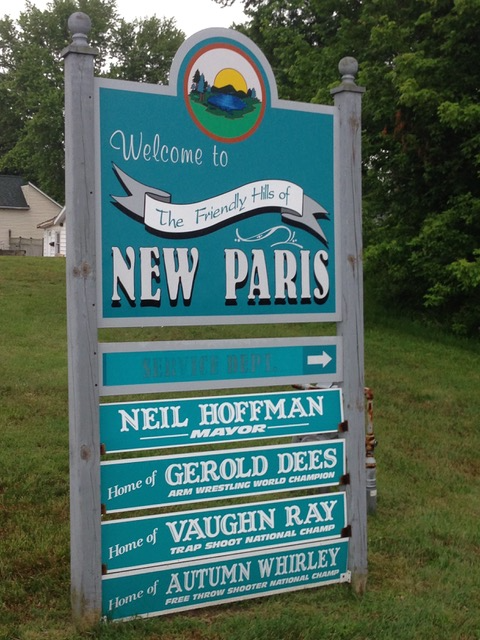
Rolled through New Paris, IN, home of a world champion arm wrestler:

and cruised along the historic Erie Canal:


A stop in Lock Springs, Missouri on my x-country ride

A lot of cyclists also know about a different route, the 4215.5 – mile TransAmerica Bicycle Trail, a classic paved route from Yorktown, Virginia to Astoria, Oregon.

TransAmerica Bicycle Trail

But I recently learned Oregon is also the terminus of another x-country cycling route, this one the much more challenging, mostly unpaved  5,273 – mile TAT (also the Trans-America Trail) . The TAT starts in the Outer Banks of North Carolina and ends at Port Orford, OR.

The TAT route across the United States

Sam Correro, a motorcyclist, originated and mapped out the TAT and most of its users are still motorcyclists, but bicyclists are increasingly making their way across America on the route as well.

Instead of sticking to paved roads, the TAT follows mostly dirt, gravel and forest roads, jeep trails, and sort-of-paved backroads. 

The Adventure Cycling Association, a non-profit member organization I’m a member of that is focused on travel by bicycle, recommends riding the TAT east to west. Either way, the route is more challenging and remote in the West, with fewer towns, some as far as 160 miles apart.

When cyclists on an east-west trip hit Port Orford, they usually head first to Battle Rock Beach, a bit south of downtown.

Most exuberant riders celebrate their accomplishment there by dipping their front wheels into the Pacific Ocean, a long-established tradition of x-country cyclists.

The Pineapple Express cycling shop in Port Orford is often the next stop for finishers. “We do see cyclists, but the TAT can be such a tough trail we probably see more motorcylists,” said Erin Kessler, the shop’s owner and mechanic.

Erin Kessler, owner, at her Pineapple Express cycling shop in Port Orford

Kessler moved to Port Orford from Palmer, Alaska in 2017. She initially established Pineapple Express as a fat bike rental and tour company. Then, seeing the need for a brick-and-mortar bicycle sales and repair business, she opened the current shop on Oregon St. (Hwy 101).

Sarah Swallow, of Durango, CO, who has ridden the TAT on her bicycle with her husband, Tom, described the route for Adventure Cycling.

The TAT begins in the Outer Banks of North Carolina, she said, and travels west across coastal Carolina and over the Great Smoky Mountains. From the Smoky Mountains, the route follows the backroads of the lush, humid river valleys and forests of southern Tennessee and northern Mississippi. 

The route travels over the Mississippi River and into the rugged Ozark Mountains of Arkansas before it begins an ascent through the prairie grasslands of northern Oklahoma and the No Man’s Land of the state’s remote panhandle. 

The route then travels through northeast New Mexico before navigating northwest into the Rocky Mountains and over the high alpine passes of the San Juans. The red rocks of Moab lead to a long stretch across the high desert of Utah, the Great Basin of Nevada, and eastern Oregon.

The route finally leaves the desert and drops into the greener land of Surprise Valley, California, over Oregon’s Cascades and to Battle Rock Beach.

Sarah and Tom Swallow reviewed their trip in a video on PathLessPedaled.com

If you’re looking for an exciting x-country bicycle trip, try the TAT. It’s a long, challenging ride, but as Tom Swallow said, “If it’s fun, it’s easy.”

Not ready for a x-country ride yet? Stick to Oregon.

Oregon was the first state to develop a statewide Scenic Bikeway Program in 2009. According to Travel Oregon, the program now consists of 17 designated bicycle routes that showcase Oregon’s breathtaking landscapes, cultural treasures and western hospitality.

One of these routes is the 61 mile Wild Rivers Coast Scenic Bikeway which starts and ends at Battle Rock City Park in Port Orford.

“Scenic Bikeways are Oregon’s best-of-the-best bicycle rides for exploring this beautiful state,” says Travel Oregon.

By the way – I just learned about another challenging long-distance cycling route, the Eastern Divide bikepacking route that stretches 5,900 miles from Cape Spear, Newfoundland to Key West, Florida. a meandering chain of dirt roads, pavement, and singletrack first imagined back around 2014 or 2015. Check out this story by a fellow named Eddie O’Dea who in September 2022 was attempting to Become the first to bikepack the entire route.

In Oregon, Being on Time is Now Racist

I don’t know whether to laugh or cry.

On July 1, 2022, Danielle Droppers, MSW, (she/her), Regional Health Equity Coalition Program Manager with the Oregon Health Authority, emailed that a scheduled conversation between OHA officials and members of the public wouldn’t take place as planned.  No special news there. 

But read her tone-deaf reason:

“Thank you for your interest in attending the community conversation between Regional Health Equity Coalitions (RHECs) and Community Advisory Councils (CACs) to discuss the Community Investment Collaboratives (CICs). In being responsive to partners from across the state, we’re hearing the liming of this meeting is not ideal and that people would like more time to prepare for this important conversation.
We recognize that urgency is a white supremacy value (emphasis added) that can get in the way of more intentional and thoughtful work, and we want to attend to this dynamic. Therefore, we will reach out at a later date to reschedule. Thank you so much for your patience, care and understanding.”

“…urgency is a white supremacy value…”?

“The KKK would unironically love this explanation,”  commented a July 8 post from Common Sense with Bari Weiss.

I guess even Alice’s White Rabbit, “I’m late, I’m late! For a very important date! No time to say ‘hello, goodbye,’ I’m late, I’m late, I’m late!,” was a racist.

By the way, Droppers is the same woman who resigned from the Portland Police Bureau’s Training Advisory Council because, she said, it had not responded promptly to a council proposal. “We’re getting untimely responses to our recommendations,” she told The Oregonian newspaper. “There’s a level of frustration.”

Droppers’ LinkedIn account says she has a Bachelor of Arts (BA) in Sociology from California State University Bakersfield and a  Masters degree in Social Work (MSW) from Portland State University. Where do educated people like her get this stuff?

Adding insult to injury, Reason magazine,  an monthly American libertarian publication, disclosed that a county health official responded to an inquiry about the email by citing a link that redirects to a website that purportedly identifies aspects of white supremacy culture.

The website, Reason noted, was “conceived and designed” by Tema Okun, a white antiracist educator who has popularized the idea that several benign and widespread traits are actually characteristic of white supremacy. Among these are preferring quantity over quality, wanting things to be written down, perfectionism, becoming defensive, and yes, possessing a sense of urgency.

“The characteristics…are damaging because they are used as norms and standards without being pro- actively named or chosen by the group.,” Okun has written. “They are damaging because they promote white supremacy thinking. 

So now, in Oregon at least, being on time is racist. 

Is It Time To Bring Back “Bum”?

On June 17, Portland’s alternative weekly, Willamette Week, posted a story titled, “Tires Slashed, Mirrors Shattered Along Laurelhurst Street Where Tensions Between Neighbors and Houseless Residents Continue to Escalate.” 

“Houseless residents”? 

How did the media and much of liberal Portland get to the point where people who slash tires, shatter car mirrors, rip out landscape lights, overturn trash and recycling bins, destroy landscaping and damage parking strip trees are simply described as “houseless,” as though that’s their defining characteristic? 

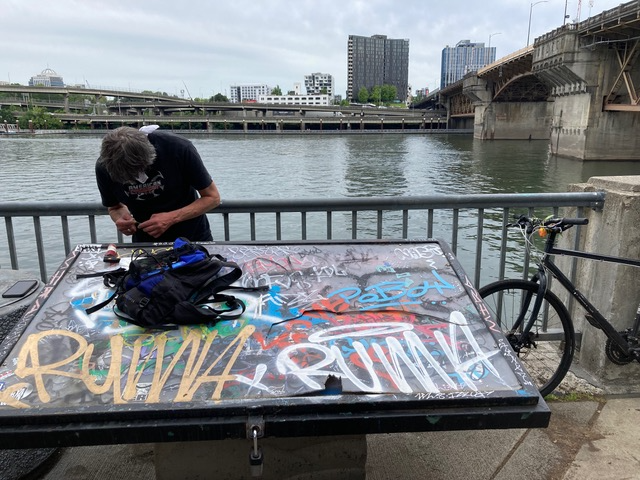
How did we get to the point where people doing this:

or this:

or this:

are excused because they are “homeless” or “houseless” or some other insipid term? That’s just plain criminal.

Some would say calling some people bums is offensive, callous and unfeeling, that it’s not “fair” to lump people together for any reason.

Being homeless or houseless should not be a free pass to a different set of behavioral expectations. Being homeless doesn’t give somebody license to break into a small business, deface property with graffiti, shoot at each other and unsuspecting pedestrians, bury sidewalks and parkland under trash and garbage, pollute waterways , steal and chop up bicycles and cars, openly sell and buy drugs, assault  random passers-by and litter private properties with discarded syringes.

On June 20, KGW8 television reported on incidents at a tent site on the corner of Southeast 33rd Avenue and Powell Blvd. in Portland next to Grover Cleveland High School’s track and sports field. 

“We live in a war zone basically and there’s nothing I can do,” said Elias Giangos, who said he’s lived in the neighborhood for the past seven years. He and his wife plan to move out at the end of the month. Giangos said he was assaulted multiple times by those living at the campsite. Scars from the time he was stabbed by someone living at the campsite disfigure his left arm.

“Even when I was getting assaulted, we called the police, there’s no response,” he said.

Things recently got so bad with the so-called homeless around Multnomah County’s Gladys McCoy Building in Portland across from Union Station that the county hired a firm to assess the risks to county employees and recommend responses. 

According to the Physical Security Vulnerability Assessment of the area in and around Multnomah County’s Gladys McCoy Building prepared by Eric Tonsfeldt / Operations Manager – Foresight Security Consulting, “The density of unsanctioned homeless camping immediately around the McCoy Building represents the most immediate, consistent, and palpable threat to the safety and security of the employees and contractors in the McCoy Building.”

“The building is currently surrounded by ongoing, frequent drug abuse and distribution, violence, and aggression within dense areas of unsanctioned houseless camping.,” the report said. 

The report said the following crime occurred just within the 1/8-mile area centered on the McCoy Building between 7/19/2020 and 7/18/2021: 33 assaults, 79 instances of larceny, 7 instances of vandalism and 35 drug/narcotics offenses.

Those aren’t the to-be-ignored actions of “the homeless.” They’re the actions of vagrants, malcontents, addicts, crooks, criminals….bums.

.