Capturing Luigi Mangioni: A Cautionary Tale

A host of clues helped law enforcement profile Luigi Mangioni as they tried to track down the alleged killer of UnitedHealthcare CEO Brian Thompson. 

There’s a cautionary tale in one element of that profiling effort.

One of the clues to learning more about Mangioni was his reading habits, which were revealed when media found his account on the online book review site, Goodreads, used by over 150 million members.

A key feature of the Goodreads site is an ability for members to post the titles of books they’ve read. Any member accessing the site can go to another  member’s profile to see and search their bookshelf if they haven’t set their account to private. Members can even find out if anybody in their Gmail account is a Goodreads member. 

Before Mangioni’s Goodreads account was deleted, Wall Street Journal reporters discovered Mangioni had written at least 13 book reviews there. Four included links to public Google drive folders containing his thoughts and feedback. 

“A review of his reading diet suggested that, at some point, his ideas about activism had crossed into an interest in violence,” the Wall Street Journal reported, including a  “chilling” January 2024 review of  Theodore Kaczynski’s “Industrial Society and Its Future,” also known as “The Unabomber Manifesto.”

In the review, he wrote: “A take I found online that I think is interesting…Had the balls to recognize that peaceful protest has gotten us absolutely nowhere and at the end of the day, he’s probably right…. When all other forms of communication fail, violence is necessary to survive. You may not like his methods, but to see things from his perspective, it’s not terrorism, it’s war and revolution.”

Who would have thought Goodreads would be a treasure trove of information about a suspected killer.

Your first reaction might be, “Great news. A potentially dangerous person’s online actions revealed his reading habits, political opinions and behavior inclinations.”

But let’s take a look at another situation where online actions are monitored.

Earlier this month, the New York Times reported on how some students’ online typing was being monitored by local school districts: 

“Dawn was still hours away when Angel Cholka was awakened by the beams of a police flashlight through the window. At the door was an officer, who asked if someone named Madi (a student at Neosho High School ) lived there. He said he needed to check on her. Ms. Cholka ran to her 16-year-old’s bedroom, confused and, suddenly, terrified.

Ms. Cholka did not know that A.I.-powered software operated by the local school district in Neosho, Mo., had been tracking what Madi was typing on her school-issued Chromebook.

While her family slept, Madi had texted a friend that she planned to overdose on her anxiety medication. That information shot to the school’s head counselor, who sent it to the police. When Ms. Cholka and the officer reached Madi, she had already taken about 15 pills. They pulled her out of bed and rushed her to the hospital.”

The Times story noted that from 2014 to 2018, Neosho had eight student suicides. It would later be learned that the students had often told friends of their plans, but they had not reported concerns to adults. The district decided to contract with GoGuardian, a company offering software tools that scanned what students type on their computers, alerting school staff members if they appeared to be contemplating self-harm or suicidal ideation.

“Millions of American schoolchildren — close to one-half, according to some industry estimates — are now subject to this kind of surveillance,” the Times reported. “Most systems flag keywords or phrases, using algorithms or human review to determine which ones are serious. During the day, students may be pulled out of class and screened; outside school hours, if parents cannot be reached by phone, law enforcement officers may visit students’ homes to check on them.”

At first glance, all this may seem like a good idea that helps protect kids.  But the systems are incredibly intrusive, false positives can become consequential for children and their families when they prompt dramatic interventions, and there are potential privacy violations.

 “Using these tools, schools can filter web content; monitor students’ search engine queries and browsing history; view students’ emails, messages and social media content; and/or view their screens in real-time,” says EdSurgea digital news and research magazine about education. To stay the least, that can turn schools into Big Brother, invading students’ privacy not just for signs of suicide, but also for “unpopular” political opinions, signs of interest in LGBTQ issues, indications of drug use, the notes of student journalists and more.

Research by the Center for Democracy and Technology (CDT), a nonprofit organization that works to shape tech policy and architecture, shows that monitoring can have a “chilling impact” on students who won’t share their true thoughts or feelings online if they know they’re being monitored. It also raises potential concerns that the data collected through the activity monitoring will be used out of context.

Amelia Vance, founder and president at Public Interest Privacy Consulting, told EdSurge that Districts also tend to collect and store too much sensitive data that can be used to paint a very detailed, intimate profile of “everything that kids are doing, and that may be retained far longer than it should be,” said Vance. That data could be subject to a data breach.

Schools’ online surveillance is permitted through the Children’s Internet Protection Act, which requires schools to monitor students’ online activity and educate them about appropriate behavior on the internet. Some organizations are advocating that the act should be amended to make it clear it “does not require broad, invasive, and constant surveillance of students’ lives online.”

It’s also useful to remember that in today’s culture young people are always online, not just when they are doing schoolwork, so pervasive monitoring can capture their whole life. Just about every time I’m in a public place I see teenagers in groups totally absorbed in their screens, staring at them oblivious to what’s around them and likely unaware that their activity is open to capture by others.

And all of this debate about online monitoring of students is part of growing concern that it is becoming far too intrusive in the broader population. Many people who responded to a recent Pew Research Center study on the pros and cons of a digital life expressed deep concerns about people’s well-being in the future.

“Much like a mutating virus, digital services and devices keep churning out new threats along with the new benefits – making mitigation efforts a daunting and open-ended challenge for everyone,” said David Ellis, Ph.D, course director of the department of communication studies at York University in Toronto.

“The technologies that 50 years ago we could only dream of in science fiction novels, which we then actually created with so much faith and hope in their power to unite us and make us freer, have been co-opted into tools of surveillance,” the study said.

And all the data being accumulated from that surveillance is not lying in repose. It is being actively mined to build rich, detailed dossiers on each and every one of us. not just Luigi Mangioni.

More Sex is Better, Right? More News, Too?

“The sexual revolution obviously succeeded in its aim: more freedom”, writes Rob Henderson[1], who publishes a newsletter on human nature.  “But many people conflate liberation with happiness and, sadly, the world doesn’t work that way,” Women are freer today, he argues, but they are less happy.

It’s the same with access to information. We all have access to much more information today, both free and paid, but it’s debatable whether we are better informed. 

When I was a kid in a small Connecticut town in the 1950s, we got our news facts from the Meriden Record newspaper delivered in the morning and the New Haven Register newspaper delivered in the afternoon. In the mail, we got weekly issues of the magazines U.S. News & World Report, Life and Time and monthly editions of the National Geographic and Reader’s Digest. 

We also listened to radio, mostly station WTIC out of Hartford. In the early 1950s we got a black and white TV (We didn’t get a color TV until the 1960s) and started watching evening news shows. 

Those were the days, my friend. We thought they’d never end.

We thought that was plenty to connect us with local, national and world news.

But the internet proved us wrong, at least with respect to the volume and variety of available news. Where news used to come out of a straw, now it’s spewed out of a bullhorn. It’s turning us all into nervous wrecks.

As Tom Slater, the editor of Spiked put it, with the deluge of commentary out there, “We are riven by ‘culture wars’ and hot-button topics that no one cared about five minutes ago.” 

We’re smothered in a torrent of news 24/7 from a fragmented media environment, much of it of dubious veracity.

A clear majority of U.S. adults (86%) say they at least sometimes get news from a smartphone, computer or tablet, including 57% who say they do so often, according to the Pew Research Center , and a high number still get their news from television.  Americans turn to radio and print publications for news far less frequently. In 2024, just 26% of U.S. adults say they often or sometimes get news in print, the lowest number Pew’s surveys have ever recorded.

There are several different pathways Americans use to get news on their digital devices, Pew says. News websites or apps and search engines are the most common: About two-thirds of U.S. adults at least sometimes get news in each of these ways. A little more than half (54%) at least sometimes get news from social media, and 27% say the same about podcasts.

Younger people, in particular, get their news from digital devices, with 86% of people ages 18-29 and 72% of people ages 30-49 preferring digital devices as their news source. 

But is the wider availability of news making us all smarter, better informed, more responsible participants in the dialog of democracy? 

In a recent essay in The New Yorker, staff writer Adam Gopnik wrote that “the Internet age and the era of social media has led not so much to engagement as enragement, with algorithms acting out addictively on tiny tablets.” 

“The aura of the Internet age is energized, passionate, and, above all, angry,” Gopnik wrote. “The democratic theorists of old longed for an activated citizenry; somehow they failed to recognize how easily citizens could be activated to oppose deliberative democracy.”

The deluge of information posing as news has also left us in a constant rush, buried in misinformation and outright lies unchecked by gatekeepers like the editors of yore. As Hamish McKenzie, a co-founder of Substack, puts it, “With few exceptions, the media power brokers of yesterday now oversee a series of properties with dwindling reach and a limited ability to convince anyone of anything,”

One result – a growing lack of trust in all media. 

The just-released Trust in Media Survey results from Gallup “leave no doubt that members of my profession are officially America’s lowest life form,” Gopnik wrote.

The Gallup survey asked:

In general, how much trust and confidence do you have in the mass media — such as newspapers, T.V. and radio — when it comes to reporting the news fully, accurately, and fairly — a great deal, a fair amount, not very much, or none at all?

  • A great deal 7 
  • Fair amount 25 
  • Not very much 29 
  • None at all 39

That’s 68% saying they have “not very much” or “none at all” trust and confidence in mass media., which includes newspapers, magazines, radio, television, and the Internet.

In the current political environment, the fragmentation and declining reliability of the mainstream media has led to a decline of its influence. 

“One of the contradictions of the social-media age is that we can follow the campaigns incredibly closely—tracking every movement in the polls, listening to every concerning Trump remark—but somehow this flood of content makes us feel even more distant from the process, and less empowered,” Jay Caspian Kang, another staff writer at The New Yorker, asserts. “…the proliferation of content has actually weakened the mainstream media’s influence on voters, many of whom have moved on to alternative outlets of news and commentary.”

And those alternative outlets are often little more than collections of conspiratorial rubbish, like the manufactured news that Hillary Clinton was running a pizza-restaurant child-sex ring, accusations that FEMA prevented Florida evacuations in the recent hurricanes and claims that funding for storm victims was instead given to undocumented migrants. And all of this is reinforced by the echo chambers online news consumers occupy.

 “It used to be in this world that people could at least agree on the same set of facts and then they could debate what to do about those facts.,” says writer, Steven Brill. “We’re at a point where nobody believes anything. Truth as a concept is really in trouble.”

That has led to a widespread feeling of disappointment in America and its institutions.

Author and theater critic, Hilton Als, wrote of Joan Didion’s “romance with despair.” That’s where we are. Wallowing in such gloom can’t be good for this country.


[1] Rob Henderson is the author of “Troubled: A Memoir of Family, Foster Care, and Social Class.” A veteran of the U.S. Air Force, he holds a B.S. from Yale and a Ph.D. in psychology from the University of Cambridge (St. Catharine’s College).

Identity Politics is Alive And Well at The New York Times

I’m a member of Tau Kappa Epsilon fraternity, one of the largest men’s collegiate fraternities in North America.  If I ran for office, would you assume all 12,000 voting-age collegiate members of my fraternity and all the living TKE alumni would support me?  

Ronald Reagan was a member of Tau Kappa Epsilon fraternity, too. When he ran for president, did the news media assume the votes of all his TKE fraternity brothers were a sure thing?

The New York Times seems to think that members of all the Black Greek-letter sororities and fraternities at US colleges are a ready-made bloc of Kamala Harris supporters in her quest for the presidency because she’s been a member of the Black sorority Alpha Kappa Alpha since her undergraduate days at Howard University. 

“As Vice President Kamala Harris’s presidential campaign rushes to shore up its base, its efforts will be bolstered by a ready-made coalition: the more than two million members of Black Greek-letter organizations who have quickly united to mobilize Black voters nationwide,” the Times reported today.  

“A united Black Greek front has the potential to offer even more significant political advantage, as their voter engagement programs reach millions every four years,” the Times added. 

Maya King, the Times reporter who wrote the story, says in her bio, “As a native Southerner, I have been most fascinated by the ways the region has changed politically, culturally and demographically over the last few presidential election cycles — and how those changes are connected.”

But King barely acknowledged those changes in her article. The cheerleading article barely mentioned that there have been signs of deteriorating Black support for the Democratic ticket and growing Black consideration of Donald Trump. 

In November 2023, the Times reported that Black voters were  more disconnected from the Democratic Party than they have been in decades, frustrated with what many saw as inaction on their political priorities and unhappy with President Biden, a candidate they helped lift to the White House. Polls by the Times and Siena College found that 22 percent of Black voters in six of the most important battleground states said they would support former President Trump in the 2024 election, and 71 percent would back President Biden.

Erosion of Black support for the Democratic Party has also been found by the Pew Research Center. The Center reports that although the majority of Black voters across education levels are Democrats, there has been a decrease in affiliation with the Democratic Party in recent years. While 93% of Black voters with college degrees identified with or leaned toward the Democratic Party in 2012, that number decreased to 79% in 2023.

Biden’s withdrawal from the 2024 presidential contest and Harris’  ascension may well change some Black voters’ preferences, but it’s not likely to be a universal shift. Harris, for example, is a progressive Democrat, but only 28 percent of black Democrats consider themselves liberal, according to the Pew Research Center, while 70 percent identify as moderate or conservative.

On June 25, the Times reported on data  captured by a new Harvard study that shows Black voters  have slightly shifted toward Trump since 2020. “One possible explanation is that some Black voters’ economic gains have allowed them to focus more on noneconomic issues — such as abortion and L.G.B.T.Q. rights — on which they are more conservative than typical Democrats,” the Times said.

The fact is, Black candidates can’t rely on group solidarity. “It’s certainly true that black voters support black Democratic candidates at higher rates, … but analysis of past elections and campaigns shows that black voters have never prioritized simple descriptive representation over other factors, like party affiliation, campaign viability, candidate electability, preexisting relationships with the black community and a sense of authenticity,” according to the New York City-based Brennan Center for Justice. 

For the New York Times to publish a story assuming Black solidarity for a Black presidential candidate who’s a member of a Black sorority is irresponsible journalism.

As James Bennett, who was the editorial page editor at The New York Times from May 2016 until his forced resignation in June 2020 over a controversial op-ed, has said, “The reality is that the Times is becoming the publication through which America’s progressive elite talks to itself about an America that does not really exist.”

College Protests and the Law of Unintended Consequences

An intervention in a complex system always creates unanticipated and often undesirable outcomes.

Rabbi Danya Ruttenberg understands unintended consequences. “[W]e all know that sometimes people mean well but cause harm nonetheless—out of ignorance, out of carelessness, out of deeply ingrained ways of thinking they haven’t examined, out of an emotional reaction that got the better of their lofty intentions, or … well, the list goes on,” she says.

There’s a message here for today’s rabid pro-Palestine student protesters convinced that their actions will bring about change.

If they are trying to emulate the protests against the Vietnam war in 1960s, the bloodiest and most dramatic of which occurred at the 1968 Democratic Convention in Chicago, they’re forgetting something. Those protests may have helped drive out President Lyndon Johnson, but they undermined the candidacy of the Democratic candidate for president, Hubert Humphrey, and invigorated the conservative supporters of Republican Richard Nixon.

In his first months in office, Nixon had the U.S. military increase, not decrease, its pressure on the battlefield and, in violation of international law, ordered secret bombings of North Vietnamese camps in Cambodia.

After he took office, another 21,200 Americans died in Vietnam and elsewhere in Southeast Asia, about one-third of all American deaths in the war (58,220), along with an estimated half a million Vietnamese., 

Nixon’s aggressive pursuit of the war also led to more protests on college campuses with deadly consequences. During one of those protests at Kent State University on May 4, 1970, National Guardsmen shot and killed four students. Just 10 days later, another two students at Jackson State University were killed by police.

Paul Berman, an American writer on politics and literature, wrote in yesterday’s Washington Post, about being involved as a Columbia University student in a late April 1968 campus uprising. He wrote about how professors upbraided him, warning about the potential dangers of the protests.

“The professors were haunted by Germany and its history, ” Berman wrote.” In 1968, the defeat of the Nazis was only 23 years behind us, and the era of World War II and the catastrophe of the Jews had not yet definitively disappeared into the past — at least, not in the professors’ eyes. They wanted me to understand that Germany’s leftists in the 1930s had failed to understand Nazism’s danger. Foolish left-wing radicalism had helped undermine the German universities, which ought to have been a place of anti-Nazi resistance. They wanted me to understand, all in all, that what people think they are doing might not be what they are actually doing, and, in the name of high ideals, society might be weakened, and the worst of disasters might be brought about.”

I bring all this up to remind today’s aggrieved student protesters that their aggressive actions may not lead events to where they want them to go. 

First, despite the protesters’ assumption that their peers have their back, the annual Harvard Youth Poll, run by the Institute of Politics (IOP) at Harvard’s Kennedy School, found that  Americans between the ages of 18 and 29 are not prioritizing the Israel-Gaza conflict. 

The poll found that young people are more worried about inflation, health care, housing and gun violence. The survey listed 16 issues facing the U.S., asking respondents which of two randomly paired issues most concerned them. The conflict in the Middle East ranked near the bottom at 15th.

The general public also can’t be counted on to support the protesters. Americans are actually quite divided about how – and whether – the U.S. should be involved in the Israel-Hamas war. According to the Pew Research Center, among US adults, only 22% say Hamas’ reasons for fighting Israel are valid and roughly six-in-ten Americans (58%) say Israel’s reasons for fighting Hamas are valid. 

In this environment, the student protests, particularly if they continue with violent events at the Democratic National Convention in Chicago, may, as in 1968, lead to a conservative backlash that helps defeat President Biden and elect Donald Trump.

For most of the protesting students, that would surely be a worst case of unintended consequences. 

Cutbacks Threaten Three Prominent Oregon Newspapers

UPDATE (Aug. 12, 2022): In a late move on Friday, Aug. 12, 2022, Gannett, the nation’s largest newspaper chain, executed layoffs at outlets across the country. While no official tally was available, journalists at the Salem Statesman Journal (Oregon), Athens (Georgia) Banner-Herald, (South Texas) Caller-Times, Columbia (Missouri) Daily Tribune, Ventura County Star, St. Cloud (Minnesota) Times, Monroe (Louisiana) News-Star, Billerica (Massachusetts) Minuteman, (Milwaukee) Journal Sentinel, Panama City (Florida) News-Herald, Gainesville Sun (Florida), The Athens Banner-Herald (Georgia) The Des Moines Register (Iowa), Burlington Free Press(Vermont), Beaver County Times (Iowa), MetroWest Daily News (Mass) and the (Kentucky) Courier Journal all reported layoffs at their publications. Friday’s layoffs also affected non-journalists. A reporter at the Pueblo (Colorado) Chieftain tweeted that the paper’s only customer service representative, who had been making less than a dollar above minimum wage, had been let go after working there for 16 years.

—————–

The decline of Oregon’s local newspapers is set to continue with cutbacks by Gannett Co.

Gannett, the owner of the Statesman Journal in Oregon’s capital, Salem, The Register-Guard in Eugene and the Daily Journal of Commerce in Portland, is planning a “significant cost reduction program” amid a “challenging economic backdrop marred by soaring inflation rates, labor shortages and price-sensitive consumers.”

A message to all of its employees on Thursday from Gannett’s president of news warned of “painful reductions to staffing, eliminating some open positions and roles that will impact valued colleagues.”

The Statesman Journal, the second-oldest newspaper in Oregon, was sold to Gannett in 1973. Currently listing 16 reporters on its website, it has been steadily shrinking in staff and as a reliable news source.

The Register-Guard, formed in a 1930 merger of two Eugene papers, the Eugene Daily Guard and the Morning Register, was acquired by GateHouse Media in 2018. At the time, the paper had 240 full-and part-time employees. The newspaper has been owned by Gannett since Gannett’s 2019 merger with Gatehouse. The paper’s current website lists just 8 reporters. 

Founded in 1872, the Daily Journal of Commerce (DJC) provides comprehensive resources and reporting on the Portland, Oregon building and construction market. Owned by Gannett through its BridgeTower Media division, the paper has a circulation of 1,966.

Gannet, which owns over 100 daily newspapers and nearly 1,000 weekly newspapers in 43 U.S. states and six countries, reported on Thursday a net loss of $53.7 million in the second quarter, compared with a net income of $15.1 million the same period a year earlier. Adjusted earnings before interest, taxes, depreciation and amortization (EBITDA) totaled $50.9 million, down 56% from the prior-year quarter, with declines driven by a decline in print revenue and inflationary pressures. 

“We are not satisfied with our overall performance in the second quarter,” Gannett CEO and Chairman Michael Reed said in a release, noting the results reflect “industry-wide headwinds” in digital advertising and tightening across the economy.  

Anticipated cutbacks at Gannett’s Oregon papers would track declines in locally focused daily newspapers across the United States.

The total combined print and digital circulation for locally focused U.S. daily newspapers in 2020 was 8.3 million for weekday (Monday-Friday) and 15.4 million for Sunday, among the lowest ever reported, according to the Pew Research Center. Total weekday circulation is down more than 40% and total Sunday circulation has fallen 45% in the past seven years. Local newspaper advertising and circulation revenue has also been dropping precipitously.


America’s Rising Inequality Threatens National Stability

I wandered through Nordstom’s downtown Portland store the other day.

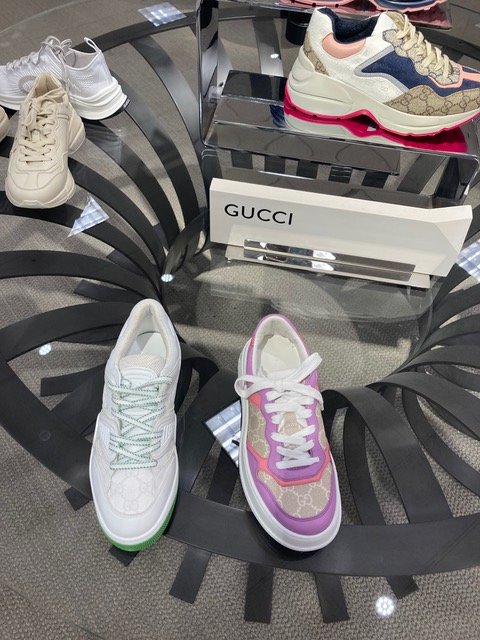
Take a look at some of the shoes I came across:

OK, but what’s so special about all these shoes? Even single one of them, including the sneakers, costs $850 or more. The Black Libelli Booties (top right) are $1795. The Fendigraphy white leather slides (bottom) are $1100.

And, by the way, big spenders looking for socks to wear with their $1000 sneakers can buy a pair of black-and-white Bottega Veneta “ghost pattern” crew socks at Nordstrom for $420. That’s right, $420.

If that’s just a bit too much, the striver can also get a pair of Balenciaga Logo Cotton Blend Socks at Nordstrom for $210 a pair or a pair of Off-White Arrow Cotton Blend Crew Socks for $120.

“The logic is, if you’re paying $1,000 for a pair of shoes, what’s $200 more?” Jian DeLeon, the men’s fashion director at Nordstrom, told the Wall Street Journal. “Lavish socks are “something you don’t need, but it’s the ultimate expression of luxury.” When you pair fancy shoes and socks, he said, it shows you’re going the “extra mile.”

It’s hard not to wonder who is buying this exorbitantly priced stuff and what it says about our economy.

Per capita income in the Portland Metro Area is just $40,138 and median household income is only $77,511.

The annual income of 31% of households is $50,000 or less. Another 31% of households have annual incomes of $50,000 – $100,000. It is probably reasonable to assume that the members of this 62% of households in the Portland Metro Area are not the ones buying $895 and over pairs of shoes.

That leaves 38% of Metro Area households earning $100,000 a year and more.

Household income

ColumnPortland-Vancouver-Hillsboro, OR-WAOregonUnited States
Under $50K31.2%±0.5%299,055±4,61338.1%±0.4%626,425±6,571.739.1%±0.1%47,785,414±58,302.5
$50K – $100K30.8%±0.5%295,189±4,384.331.4%±0.3%516,210±5,646.930%±0.1%36,648,022±63,450.6
$100K – $200K28.1%±0.4%268,728±4,128.523.2%±0.3%381,343±4,795.522.7%±0.1%27,817,092±73,446.1
Over $200K9.9%±0.2%95,005±2,1407.2%±0.2%118,601±2,8408.3%±0%10,103,691±51,548

I assume the buyers of high-priced items like the shoes above come from that segment of the population. But are enough of them so blasé about overall economic conditions to be drawn into buying extravagant goods?

The answer seems to be yes.

The middle class, once the economic stratum of a clear majority of American adults, has steadily contracted in the past five decades, according to a new Pew Research Center analysis of government data. The share of adults who live in middle-class households fell from 61% in 1971 to 50% in 2021. Although household incomes have risen substantially since 1970, those of middle-class households have not climbed nearly as much as those of upper-income households. 

On Sept. 27, 2022, the Congressional Budget Office issued a study of trends in the distribution of family wealth between 1989 and 2019. In that period, total real wealth held by families tripled from $38 trillion to $115 trillion.

But the distribution of that growth was uneven.

Money moved toward the families in the top 10%, and especially in the top 1%, shifting from families with less income and education toward those with more wealth and education. In the 30 years examined, the share of wealth belonging to families in the top 10% increased from 63% in 1989 to 72% in 2019, from $24.3 trillion to $82.4 trillion (an increase of 240%). The share of total wealth held by families in the top 1% increased from 27% to 34% in the same period. In 2019, families in the bottom half of the economy held only 2% of the national wealth, and those in the bottom quarter owed about $11,000 more than they owned. 

As the New York Times recently observed, “Higher-income households built up savings and wealth during the early stages of the pandemic as they stayed at home and their stocks, houses and other assets rose in value. Between those stockpiles and solid wage growth, many have been able to keep spending even as costs climb. But data and anecdotes suggest that lower-income households, despite the resilient job market, are struggling more profoundly with inflation.”

Even during the pandemic, when most Americans fared well financially, the rich saw most of the gain. According to the Federal Reserve, while American households overall saw about $13.5 trillion added to their wealth, the top 1% got a third of that and the top 20% 70% of it.

As the Wall Street Journal recently reported, even though the United Status is technically in a recession, and consumer confidence isn’t great, the demand for expensive luxury goods, such as handbags and jewelry, is off the charts

“Spending by Americans and Europeans is roaring, despite headlines of all-time-low consumer sentiment in the eurozone and greater caution in the U.S.,” reported the Journal. “Many luxury brands have more than doubled the size of their sales in America compared with prepandemic levels. Because of their wealthier customers, luxury brands might be more immune to the challenges other businesses now face.”

Luxury company LVMH Moët Hennessy Louis Vuitton (LVMH), whose brand stable includes Christian Dior, Louis Vuitton and Tiffany, reported a rise in sales at all its divisions in the first half of 2022. Growth was strongest in the fashion and leather goods unit, the company’s biggest, where first-half sales rose 31% year-over-year to €18.1 billion. U.S. revenues gained 24%.

U.S. credit card data from Bank of America shows that shoppers earning less than $50,000 a year are rethinking their priorities as inflation hits everyday expenses, but this has been more than offset by demand from core luxury spenders.

Then there’s the desire of some people to be noticed, to display their wealth, even if the items on display are rather bizarre or not particularly attractive. I call this the “Sure it’s ugly, but it’s expensive” syndrome.

It’s the weirdness itself that has appeal.

It’s not that people want an ugly or bizarre watch or pair of shoes. What they want is to stand out, to have their friends, neighbors and even strangers see their distinctive, peculiar, expensive accoutrements.

Oh well, at least people blowing all their money on overpriced things are keeping the people who make them employed. And that’s good, right?

The mob is not the rest of us

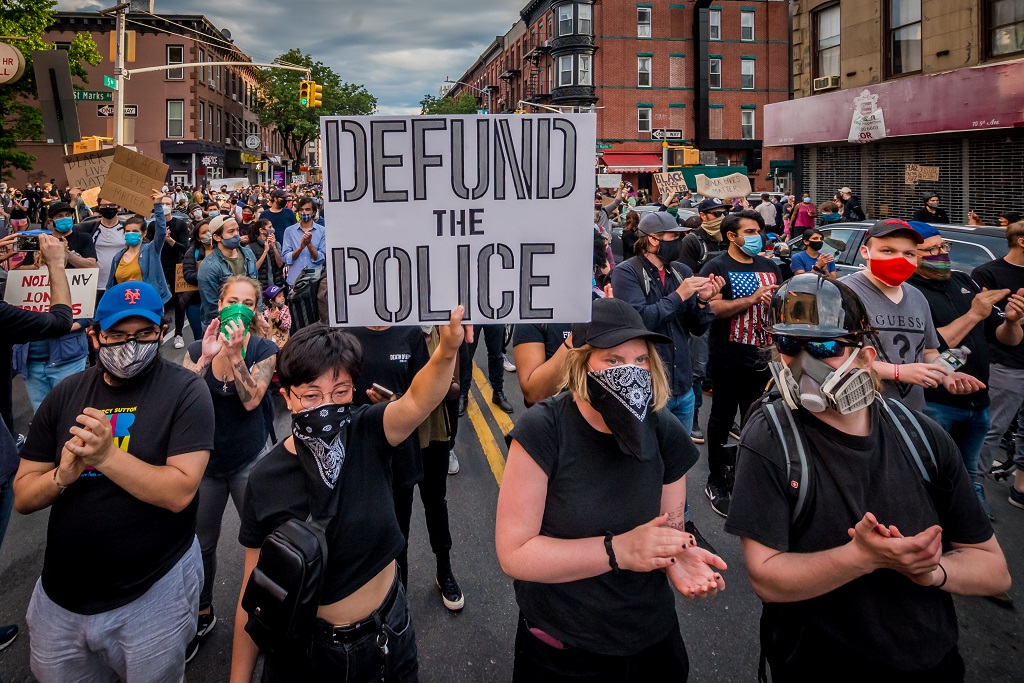
BROOKLYN, NEW YORK, (Photo by Erik McGregor/LightRocket via Getty Images)

When the demand went out from activists earlier this year to “Defund the police,” Portland, Oregon responded. 

In June, the City Council cut $15 million from the police budget, rewarding Commissioner Jo Ann Hardesty, a key architect of the cut, with a big win. 

But when Hardesty pushed later for deeper cuts, she failed. At an Oct. 28 City Council Zoom call meeting, Hardesty proposed slashing the Portland Police Bureau’s budget by $18 million and shifting the money to other city services. When the proposal was tabled until a Nov. 5 meeting, Hardesty did not take it well. “I see it as a cowardly move to put this vote off until after the election,” she said. “I am a bit disgusted at the lack of courage on this council.”

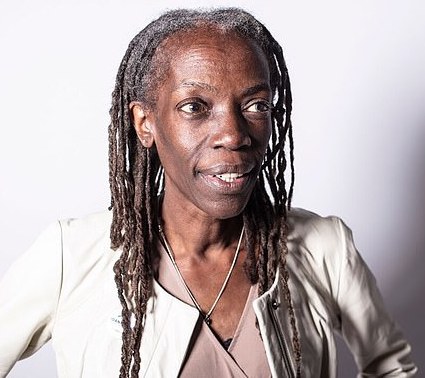
Commissioner Jo Ann Hardesty

Citing 156 nights of street protests as a call for action, Hardesty said, “It is shocking that my City Council colleagues don’t know why people are taking to the streets.”

Hardesty either didn’t know, or didn’t want to acknowledge, that the people “taking to the streets” in this and other protests, and generating a lot of overwrought media coverage, don’t necessarily represent the community at large. Too many other politicians and members of the public often make the same mistake.

A recent Gallup poll, conducted as part of a newly launched Gallup Center on Black Voices, found that, in fact,  a large majority—81 percent—of black Americans want the same or increased levels of police presence in their neighborhoods. Just 19 percent of black Americans said they wanted the police to spend less time in their neighborhoods. This is similar to the 67% of all U.S. adults preferring the status quo, including 71% of White Americans.

Previously reported Gallup findings show the vast majority of Blacks believe police reform is needed, such as improving police relations with the communities they serve and preventing or punishing abusive police behavior, but that’s not the “Defund the police” message seen on protester’s placards.

“The “defund the police” movement is backed by progressive activists and politicians, who in turn are funded by nonprofit social-justice organizations and money from corporations shaken down by agitator groups…which pose as community organizations, though they have little popular representation or membership,” Charles Blain, the president of Urban Reform and Urban Reform Institute, asserted in City Journal, a publication of the Manhattan Institute for Policy Research. “They champion the most adverse policies for the very citizens they claim to be fighting for.”

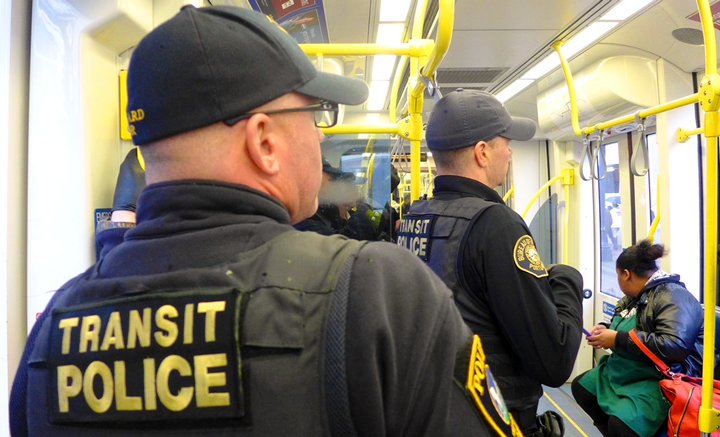
Linked to this is the pressure by some activists to eliminate the Transit Police that patrol TriMet’s transit system. 

Activists have aggressively criticized The Transit Police, alleging that say they focus on people of color and make members of marginalized communities fearful. In response, the Portland City Council has already voted to pull the Portland Police Bureau out of group on Dec. 31.

The problem is research presented to TriMet’s board of Directors indicates there’s actually a high level of support for the Transit Police among TriMet riders. According to a TriMet survey, a lack of transit police makes half of all riders feel unsafe. The percent is higher for Blacks (67%), non-English speakers (58%), and people of color (54%). Just 24% of those surveyed said the presence of police makes them feel unsafe.

According to the TriMet survey, 61% of riders think the greatest threat to their safety isn’t the Transit Police,  but other riders who are too aggressive, perceived to be abusing drugs, or having mental health issues.

Then there are the Parlance Police who want to ram their word usage down our throats.

One of the best examples of these people in action is activists (including much of the media) pushing the public to embrace use of the term Latinx as a gender-neutral, pan-ethnic label to describe a diverse Hispanic or Latino population.

The term has come into wide use by entertainment outlets, magazines, corporationslocal governments, and universities to describe the nation’s Hispanic population. Politicians, in particular, have hopped on the Latinx trend. Sen. Elizabeth Warren, D-Mass., for example, marked Hispanic Heritage Month by promising in English and Spanish to champion Latinx families.  

But there’s a problem. Recent work by the respected Pew Research Center found that only 23% of U.S. adults who self-identify as Hispanic or Latino have even heard of the term Latinx, and just 3% say they use it to describe themselves.

“Progressives, Hispanics are not ‘Latinx.’ Stop trying to Anglicize our Spanish language,” Giancarlo Sopo, a public relations strategist, wrote in a USA Today Opinion column. “Hispanic Americans face plenty of challenges as it is. The last thing we need are English-speaking progressives ‘wokesplaining’ how to speak Spanish.”

Progressives argue that Latinx fixes the gendered nature of Spanish,” Sopo wrote.” It is true that nouns are gendered in Spanish, but it is unclear what, if any, problem this poses to Americans. Taken to its logical conclusion, a push for gender-neutral Spanish nouns requires dismantling a language spoken by 572 million people across the world.” 

“The term (Latinx) makes me sad and angry — it represents another anglicism of my native language and a feeble attempt at gender inclusivity,”  Laura Phillips-Alvarez, a student at the University of Maryland, wrote in an Opinion column for the school’s newspaper, The Diamondback. “…America is obsessed with labeling things, and “Latinx” is just another attempt at categorizing a group of people who are so frustratingly difficult to categorize.”

And while we’re on the subject of mobs, let’s not leave out the college student activists who pressure campus administrators and intimidate the rest of the student body.

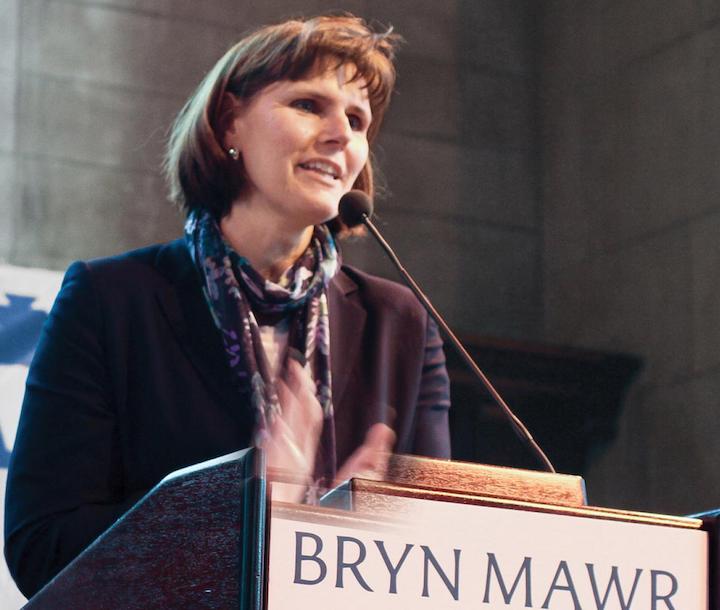
Recent events at Bryn Mawr College, a small women’s liberal arts college in Pennsylvania that charges $71,550 a year to attend, are a prime example of a student mob takeover that effectively shut down the campus and led to administration capitulation. 

After two Philadelphia police officers fatally shot Walter Wallace Jr., a Black man armed with a knife, on Oct. 25, a group of Bryn Mawr activists “embraced the dubious claim that their extremely progressive campuses were actually contaminated by a dangerous climate of racism that (quite literally) threatened the survival of black students,” the parent of one student’s parent wrote in Quillette, an online magazine. “In many cases, the ire was directed not only at administrators and non-ideologically-compliant faculty, but also at any student suspected of not supporting the strikers’ apocalyptic rhetoric, dramatic postures, and inflated demands. Anyone who sought to attend class, go to the dining hall, or even turn in schoolwork was denounced as a “scab,” and often faced acts of bullying.”

The leaders of Bryn Mawr’s student strike, which began on October 28th, said their goals were “to dismantle systemic oppression in the Bryn Mawr community,” and end the apparently crippling regime of “institutional racism, silencing, and instances of white supremacy.” Their demands, which by mid-November were a dense 24 pages long, included implementation of a “Reparations Fund” for grants to “Black and Indigenous students in the form of grants for summer programs, affinity groups, multicultural spaces, and individual expenses such as books, online courses, therapy, and any and all financial need beyond the scope of racial justice work.”

This would presumably mimic an action students at Georgetown University took in 2019 when they voted to increase their tuition(likely paid by their parents) to benefit descendants of enslaved Africans that the Jesuits who ran the school sold nearly two centuries ago to enhance its financial future.

On Nov. 16, Bryn Mawr President Kim Cassidy surrendered, sending an email to Bryn Mawr students, faculty, and staff saying, ” I am in agreement with the areas for action laid out in the November 12 demands. I have attached a response that details how specific aspects of demands will be fulfilled, including timelines and our commitments to invest the resources needed.” 

At the end of the strike, Bryn Mawr President Kim Cassidy said The Bryn Mawr Strike Collective’s actions ” have been brave and bold.”

On November 21st, Cassidy sent an email to parents saying the strike was over. The strike leaders, now named The Black Student Liberatory Coalition (BSLC), invited students and faculty to “continue to disrupt the fucking order.” 

According to the parent-written Quillette article, some professors have agreed to accept “strike work”—conversations with friends and family about racism, diary entries, time spent watching anti-racism documentaries, and so forth—in lieu of actual course work, even in math and science programs. 

Activists have every right to press their agenda, but decision makers, the general public and the media need to be more careful about assuming the activists speak for the rest of us.

 It’s like relying on Twitter to interpret the public mood. A small share of highly active Twitter users – most of whom are Democrats – produce the vast majority of tweets from U.S. adults, according to another Pew Research Center report. The most active 10% of users were responsible for 92% of tweets sent between November 2019 and September 2020 by U.S. adults with public-facing accounts. Democrats and Democratic-leaning independents accounted for 69% of these highly active Twitter users, while Republicans and GOP leaners accounted for 26%. 

Mobs are like that. They don’t speak for everybody.

These are difficult and dangerous times. Pandering to the mob makes things worse.

Challenging shaming: Trader Joe’s takes the lead


joes2

Finally, somebody stood up to the mob.

Briones Bedell, 17, a California high school senior, thought Trader Joe’s used racist branding and packaging, so she started a Change.org petition to stop it. “We demand that Trader Joe’s remove racist branding and packaging from its stores,” her petition says. “The grocery chain labels some of its ethnic foods with modifications of “Joe” that belies a narrative of exoticism that perpetuates harmful stereotypes.”

The petition touched a nerve with some people, generating castigation of Trader Joe’s by a Twitter mob and even a New York Times  story on July 19, even though the petition had captured fewer than 2,000 signatures at that point, hardly evidence of a groundswell in public condemnation.

That all led to what appeared to be capitulation by Trader Joe’s, though the company said it had decided to get rid of the allegedly racist branding and packaging before the petition emerged.

In an unexpected and groundbreaking twist, however, Trader Joe’s reversed course, issuing a statement on July 24, 2020 saying the branding and packaging would stay: “We want to be clear: we disagree that any of these labels are racist. We do not make decisions based on petitions…We make decisions based on what customers purchase, as well as the feedback we receive from our customers and Crew Members… those products that resonate with our customers and sell well will remain on our shelves.”

Has the tide finally begun to turn against social media zealots? There are good reasons why it should.

In the case of Change.org, one good reason to ignore it is because its petitions are useless social barometers generated by a for-profit private company, not a nonprofit charity as many falsely assume. It makes millions by selling advertised petitions on its website. According to Activist Facts, its revenues come from tracking profile data on petition signers and promoting advertised petitions to targeted Change.org members. The promotion comes from Change’s staff of professional campaigners and organizers.

The Wall Street Journal reported on how the system works on the individual user’s end:

[You] join Change.org and sign a petition. Your email is registered as having an affinity with that subject. Change.org then matches you with petitions dealing with similar causes that are sponsored by political groups, activists or nonprofits such as Oxfam. You can sign their petitions and opt to learn more about the groups. If you do opt in, the sponsor gets your address.

 “I have huge problems with Change.org because they are a lead-generation business disguised as a social-change organization for whoever is willing to pay them for the email addresses,” Clay Johnson, author of “The Information Diet” and a veteran of fund raising through social media, told the Journal.

A New York Times story on the effectiveness of online petitions expanded on this point. “Digital petitions are popularly used to build databases of names, emails and phone numbers of those who can be called on to act or donate. ‘It’s moved from an organizing effort to an intelligence-gathering operation,’ said Scott Payne, who worked as an organizer for a software company that helps clients gather supporters and donors. That granular level of detail also allows organizations to direct ads to supporters on Facebook.”

Change.org also makes money from people who choose to promote petitions. Promoted petitions let you pay to show any petition (including your own) to other potential supporters on Change.org or its distribution channels. As Change.org puts it, “When someone chips in to promote a petition it helps us share it with wide audiences of action-takers in the Change.org community. Each contribution helps cover the costs of distributing the petition to hundreds, thousands, even millions more people in the Change.org community, many of whom go on to sign the petition.”

Change.org petitions are also unreliable barometers of public opinion because, as the saying goes, “On the Internet, nobody knows you’re a dog.” The people the petition is trying to influence don’t know much of anything about the signers. Does a signer buy their product, for example? Petition targets also don’t know if people are signing multiple times or signing for other people.

Is the signer a registered voter in a congress member’s district? When I worked for a congressman from New Jersey, he paid a lot more attention to a communication from somebody in his district than from an activist in Santa Clara, CA. That’s why members’ websites ask commenters to identify where they live. In the case of Change.org petition signers, it’s not clear where they’re from or even if they’re Americans. Signers are pretty much a blank slate.

A large number of petition signers is also an unreliable gauge of public opinion. A petition calling for hazard pay for United States Postal Service (USPS) employees, for example, had attracted 979,249 signatures as of early Tuesday afternoon, but the petition is hardly an action by a public-spirited citizen. It was submitted by “Carrying Mail 365”, an organization of U.S. postal workers, who on their own number almost 500,000. Nevertheless, media such as Newsweek, Fox Business and MSN have covered the petition as though it is news.

As with Change.org, mobs on Twitter, Facebook, Instagram and other Internet-based applications are often unreliable reflections of broad public opinion and should be treated with caution. One reason is because their algorithms pour gasoline on the flames, spreading the grievances of a scant few to the attention of millions.

In the case of twitter, according to a 2019 Pew Research Center report:

  • Adult Twitter users are younger and more likely to be Democrats than the general public. Nearly two-thirds (63%) of Twitter users ages 18 to 49 identify as Democrats or lean toward the Democratic Party, leading to a lot of urban liberal condescension.
  • Twitter users are more highly educated and have higher incomes than U.S. adults overall.
  • Twitter users are more likely to see evidence of racial and gender-based inequalities in society.
  • Much of the content posted by Americans on Twitter comes from a small number of authors.
  • The 10% of users who are most active in terms of tweeting are responsible for 80% of tweets from adult U.S. users

As with Twitter, it’s important to understand the demographics of Instagram’s users. In the U.S. they skew young, with 67% of those age 18-29 and only 23% of those age 50-64 using the app. Users also skew urban. A  Pew Research survey found that 46% of urban respondents are using Instagram, but only 34% of suburban respondents and 21% of those living in rural areas.

Instagram’s audience is also a factor in its influence. Instagram is most popular with Hispanic Americans, with 51% of this audience using the app, compared to 40% of Black Americans, and 33% of white, according to Business of Apps. This may be connected with the rural/urban split, with Hispanic and Black users more likely to live in cities.

One unfortunate result of the insistence on personal accountability that emanates from social media campaigns is the lack of any notion of proportionality. Those with opposing views are assailed as enemies to be punished, rather than as fellow citizens to be persuaded (or, at worst, provocateurs to be ignored), U.K.-based researcher, Noah Carl, wrote in Quillette.

What’s the solution?

The best remedy would be resistance by strong adult leaders—university presidents, newspaper publishers, heads of corporations such as Trader Joe’s and so on—capable of standing up to Twitter, other nasty social media and profit-driven petition companies, says Lance Morrow, a senior fellow at the Ethics and Public Policy Center.

What’s the chance that will happen?  “The odds are against such a miracle,” Morrow says. “The woke, like hyenas, hunt in packs, and those in authority are craven.”


40% of American workers couldn’t come up with $400. Is that true?

payingbillsworry

There it was again.

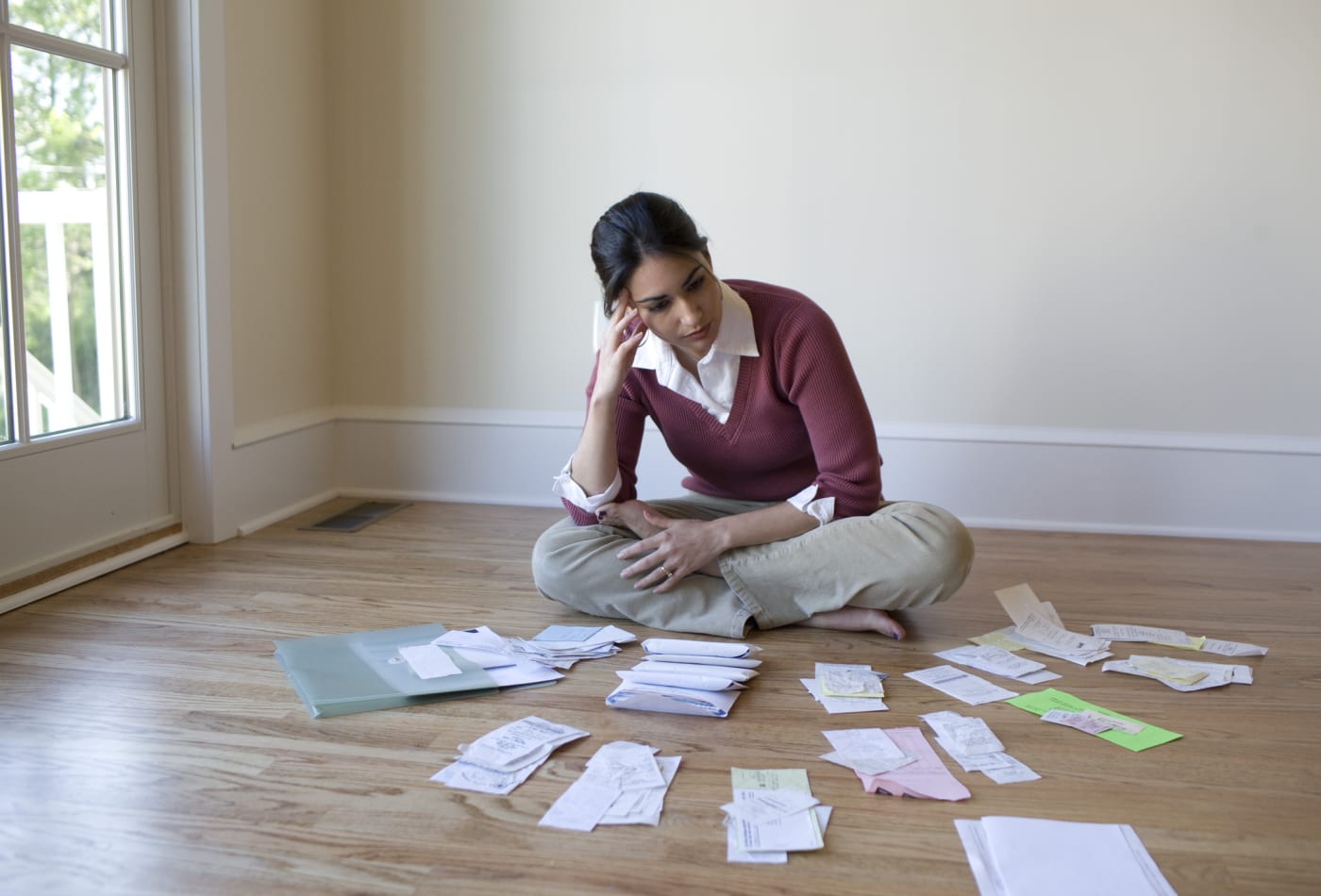
Only six in ten American workers could afford a surprise $400 expense, John Hope Bryant, founder of Operation Hope, an Atlanta-based non-profit, told the Wall Street Journal for a profile that ran today (July 25, 2020)

That $400 figure crops up everywhere like a persistent weed, portraying a large segment of Americans as living perilously on the edge of catastrophe.

“Some 40% of Americans would struggle to come up with $400 for an unexpected expense,” reported CNBC.

“In America right now today, almost half of Americans are a $400 unexpected expense away from complete upheaval,” Sen. Kamala Harris (D-CA) said on April 1, 2020 when announcing plans to introduce a Rent Relief Act.

“The gap between incomes and costs is so gaping that 40% of Americans can’t come up with $400 in an emergency,” Sen. Elizabeth Warren said on May 9, 2019.

Those pushing the $400 story usually cite the Federal Reserve’s report, “Well-Being of U.S. Households in 2018.”   The Report writers interviewed a sample of over 11,000 individuals—with an online survey in October and November 2018.

But the 40% figure is wrong.

People who just skimmed the initial text of the executive summary of the Report or relied on a text message, probably saw this: “Results from the survey show that many adults are financially vulnerable and would have difficulty handling an emergency expense as small as $400.”

If they read the Report itself further, however, they would have seen this: “If faced with an unexpected expense of $400, 61 percent of adults say they would cover it with cash, savings, or a credit card paid off at the next statement—a modest improvement from the prior year. Similar to the prior year, 27 percent would borrow or sell something to pay for the expense, and 12 percent would not be able to cover the expense at all.

So it’s not true, as Warren claimed, that 39% of people “can’t come up with” the money they’d need to handle this situation.

The Federal Reserve report makes clear that, although 4 in 10 adults “would have more difficulty covering such an expense,” many of them would be able to make it work by carrying a credit card balance or borrowing from friends and family.

covering400

Parents are often the source of financial help. One in 10 adults received some form of financial support during 2018 from someone living outside of their home. Over one-quarter of young adults received such support and among young adults with incomes under $40,000, nearly 4 in 10 received some support from outside their home.

Only 12% of adults “would be unable to pay the expense by any means,” the Federal Reserve Report concluded.

This doesn’t mean, however, that all is well in the American economy. Although many families reported that they had made substantial gains since the survey started in 2013, persistent disparities remained by race, education, and geography. Also, the report relied on interviews in 2018, well before COVID-19 struck the United States and massive economic dislocation occurred.

All the research done so far is showing that the economic fallout from COVID-19 is hitting lower-income adults harder.

The Pew Research Center has noted that The financial shocks of the outbreak have hit Hispanic and black Americans especially hard. When it comes to public health, black Americans appear to account for a larger share of COVID-19 hospitalizations nationally than their share of the population. One result is that, according to a July 2020 Rand Corp. survey, 40% of non-Hispanic black households and nearly 50% of Hispanic households reported problems paying their bills, compared with 21% of non-Hispanic white households.

We won’t know for quite a while what the public has to say to the Federal Reserve about how things are 2020, but it probably won’t be good.

Nobody’s watching the Democratic debates. Does it matter?

Just 1.9% of Americans watched the Dec. 19 Democratic presidential debate.

APTOPIX Election 2020 Debate

The way things are going, the audience for the 10th and last 2020 Democratic Party presidential debate on Feb. 24, 2020 will be zero.

A total of 15.26 million viewers watched the first debate on June 26, 2019. By the most recent debate on Dec. 19, the number of viewers had sunk like a stone to 6.17 million.

That’s a miniscule 1.9% of Americans.

But it doesn’t matter. What really matters is how the media of all types, particularly social media, interpret the debates to the public and grab elements of the debates to advance agendas.

Social media is the dominant influencer because:

  • National television news has a steadily shrinking audience. In the 2016 presidential race between Hillary Clinton and Donald Trump, only 10 percent of people said national nightly network television news was the most helpful news source.
  • Print newspapers have a steadily shrinking audience. Total circulation of U.S. daily newspapers today, for a U.S. population of 329 million, is less than in 1940, when the U.S. population was 132 million. In the 2016 presidential election, as many people named late night comedy shows as most helpful for political news as named a print newspaper.
  • Local TV news tends to focus on murders, fires, car crashes and the weather, not presidential politics.

Regardless of the issues discussed by the 10 Democrats during the 120 minutes of the second night of the first debate on June 27, 2019, it was a terse exchange between Kamala Harris and Joe Biden about busing that dominated subsequent coverage of the debate and online discussion. “Kamala Harris attacks Joe Biden’s record on busing and working with segregationists in vicious exchange at Democratic debate”  proclaimed the CNBC headline.

Similarly, regardless of the consequential issues discussed by the seven Democrats during the 120 minutes of the Dec. 19 debate, the media, including social media, focused on:

  • Who “won” the debate.
  • Assertions that “the knives came out” for Pete Buttigieg.
  • The vile wine cave.  Elizabeth Warren castigated Buttigieg for holding a fundraiser with rich people in a Napa Valley “wine cave.” Politico reporter Natasha Korecki said that was “the most entertaining” part of the debate. “ The conservative National Review headline read, “Biden Cruises and Buttigieg Takes Fire in the Wine Cave Debate.” The left-leaning Mother Jones said, “The “Wine Cave” Debate Was One of the Campaign’s Most Consequential Arguments.” And the story still has legs. On Sunday, Dec. 22, the New York Times ran a story relating the frustration and disappointment of the wine cave’s owners, both of whom are active Democrats, at being thrust into the public eye in such a negative manner.
  • Elizabeth Warren’s statement that economists are “just wrong” when they argue her proposals for trillions in new taxes will stifle growth and investment.
  • It was a testy night. “The political press, always thirsty for conflict, pounced,” the Columbia Journalism Review noted. “In a push notification, the New York Times alerted readers that we’d seen a “contentious evening”; Dan Balz, of the Washington Postnoted that a “collegial start” had given way to “fireworks.” There was talk of gloves coming offpummeling, and slugfests, and that was just from Politico. Another Politico piece listed the “five most brutal onstage brawls” of the night, complete with a tally chart and boxing-glove emojis.”
  • Diversity is what matters. Time pointed out that the only non-white candidate on stage was Andrew Yang.“This forced the uncomfortable conversation about how the party that talks so big about including diverse voices and that depends on minority voters ended up with such a white set of candidates in a field that was, at one point, historically diverse,” Time said.

In any case, what the American public really cared about, some media observed, wasn’t the debate but the upcoming release of Star Wars: The Rise of Skywalker. The first item in the Dec. 21, 2019 NY Times On Politics newsletter referenced this. “It appears nobody consulted the Jedi Council before scheduling a Democratic debate on the same night “Star Wars: The Rise of Skywalker” opened, the newsletter noted.

Lots of folks have chimed in about all the debates on social media, but they’ve mostly talked to others in their bubble in response to algorithm-delivered news content. As noted in Towards a New Enlightenment? A Transcendent Decade“… the emergence of the political “Twitterverse,” … has become a locus of communication between politicians, citizens, and the press, has coarsened political discourse, fostered “rule by tweet,” and advanced the spread of misinformation.”

tweet

Twitter discourse on national politics also tends to be driven by a very small segment of the population. According to the Pew Research Center, Twitter dialogue by American adults about national politics is driven by a small number of prolific political tweeters. They make up only 6% of all U.S. adults with public accounts on the site, but account for 73% of tweets from American adults that mention national politics.

Furthermore, as a Knight Foundation study  put it, Twitter is “a distorted mirror of Americans’ political views,” because it is dominated by the center left, countered by the extreme right.

Facebook plays a major role in the political debate, too, and not in a good way. As the Columbia Journalism Review reported, “Facebook is a toxic town square.” And that makes it dangerous because, it’s a primary source of political news for a growing segment off the public. A recent study conducted by the Pew Research Center estimated, for example, that more than 60% of Americans got their information about the 2016 US presidential election on Facebook.

Instagram has a growing place in public perception of politics and the debates, too, and could be a flashpoint for online disinformation during the 2020 election. “Disinformation is increasingly based on images as opposed to text,” said Paul Barrett, the author of an NYU report that’s prompted a renewed look at the problem. “Instagram is obviously well-suited for that kind of meme-based activity.”

It’s an engagement powerhouse that attracts far younger users than its parent company, Facebook, according to the NYU report  The report cited a Senate Intelligence Committee report that noted the Internet Research Agency — which led Russia’s disinformation campaigns in the 2016 election — found more engagement on Instagram than any other platform.

So, does it matter whether  fewer and fewer people are actually watching the Democratic debates? Probably not.