Since Trump’s election, Elon Musk and Vivek Ramaswamy have been running the Department of Government Efficiency (DOGE) with the goal of promoting government efficiency and reducing government spending.
They’ve said they want to cut $2 trillion from the government’s budget. The federal government spent $6.75 trillion in fiscal year (FY) 2024.
If they are sincere in their efforts, a good place to start would be by advocating once again eliminating earmarks, provisions put into an appropriation or spending bill that funnel money to a project favored by a politician.

Over time, earmarks have had a troubled history. Controversy and scandal tarnished their image with members of Congress using them to promote their re-election and reward special interests.
In 2010, responding to institutional and public concerns, earmarks were banned by Congress for a 10-year period. But the ban was lifted in 2021.
Leave it up to Congress to try to obscure the resuscitation of earmarks by renaming them. Under Senate rules, the earmark proposals are now called “Community Initiated Projects” (CIPs). Under House rules, they are called “Community project funding requests” (CPFs).
In fiscal year 2022, Congress approved $9.1 billion in earmarked spending on 4,963 projects. In fiscal year 2023, earmarks almost doubled, with Congress approving $16.7 billion on 8,852 earmarked projects.
There are rules, but they leave plenty of room for massive government spending, largely on activities traditionally regarded as state and local affairs and all funded by federal debt.
On March 27, 2024, Oregon’s U.S. Senators Jeff Merkley and Ron Wyden proudly announced they secured $225 million in funding for a veritable cornucopia of 139 community-initiated projects across Oregon in the final FY24 spending bill.[1] The projects are listed in a footnote.
Russell B. Long, a US Senator from Louisiana, is reported to have described American’s attitudes toward federal taxation as “Don’t tax you. Don’t tax me. Tax the guy behind the tree.” Attitudes about cutting government spending tend to follow the same thinking. “Don’t cut your government handout. Don’t cut my handout. Cut the handout to the guy behind the tree”.
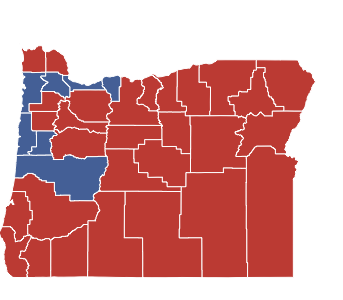
Now the test for the 910,000 Oregonians who voted for Trump in November. Take a look at all the earmarks secured for Oregon by Wyden and Merkley. Did you want your vote for Trump and reining in the cost of government to result in the loss of all your earmark handouts?
I doubt it.
[1] The 139 Oregon community-initiated projects secured by Merkley and Wyden in FY24, broken down by region, are as follows:
Oregon Coast:
- $2.521 million for the Oregon Kelp Alliance to help address marine habitat loss while providing benefits for community well-being, ecosystem services, climate resilience, and biodiversity. This project will restore 3-6 hectares of declining kelp forest habitat and benefit various coastal communities by increasing essential fish habitat, business opportunities in ecotourism and recreation, as well as enhancing job opportunities in kelp restoration work.
- $1.895 million for the City of Astoria to replace a nearly 100-year-old, 6-inch cast-iron waterline—which runs through several mapped landslide areas on Irving Avenue and has a history of failure—with a more resilient pipe. Replacing the existing pipe with more modern materials and a design approach that accounts for geologically sensitive areas will greatly improve the resiliency and serviceability of this critical water line that serves central Astoria.
- $1.087 million for the City of Warrenton to help with its Iredale Tide Gate and Culvert Replacement project, to replace a critical piece of stormwater conveyance infrastructure that has collapsed and caused flooding on city streets and Highway 101. Total system failure would result in large-scale flooding and severe damage to local homes and businesses. Project funding will help mitigate against the effects of flooding and other natural disasters by making Warrenton’s critical infrastructure more resilient.
- $1.087 million to help fund a fisheries vulnerability assessment through Oregon State University to provide timely, science-based information to better support science-informed community engagement in the Floating Offshore Wind development process.
- $1 million for the Port of Astoria’s Pier 2 West Rehabilitation project, to include replacing an elevated timber dock structure with a seawall-and-backfill pier with far more strength to survive natural hazards than the existing timber dock. Secured with support from Rep. Bonamici.
- $1 million for Tillamook County’s Three Rivers Fiber Broadband Phase 2 project. The funding will be used to build over 7 miles of fiber optic broadband infrastructure and enable services to 322 homes and a fish hatchery in rural southern Tillamook County. Secured with support from Rep. Bonamici.
- $896,000 for Oregon Coast Community College, in collaboration with secondary, postsecondary, industry, and workforce partners to create an educational pipeline to develop Blue Economy workers.This includes expanding programs in Maritime Construction/Welding and developing a new program that builds the regional workforce capacity for high-skilled, high-wage, and in-demand jobs that support the maritime sector.
- $748,000 for U.S. Army Corps of Engineers (USACE), on behalf of Port of Garibaldi, for pipeline dredging in the Tillamook Bay and Bar. This funding will specifically be used to dredge the part of the federal navigation channel that provides vessel access to the marina.
- $720,000 to USACE, on behalf of Port of Coos Bay, to dredge river mile 12-15 to the authorized depth in the Port. This is critical for maintaining safe navigation and economic activity at the Port and for the entire region.
- $500,000 for Community Action Resource Enterprises, Inc. (CARE) to renovate an existing building to serve as Tillamook County’s first low-barrier navigation center for people experiencing homelessness. The center will be co-located with employment, support, and case management services.
- $361,075 to the Port of Newport to make repairs to the dock and pilings at the Newport International Terminal. Repairs will address deteriorated pilings, and piling caps, and concrete repairs above and below the splash zone. These improvements will result in future opportunities to spur economic development through the creation of new jobs and revenue for the City of Newport. Secured with support from Rep. Hoyle.
Metro:
- $20 million for the Oregon Air National Guard – 142nd Wing to be used toward Phase 3 of a four-phase project to consolidate training facilities for the 125th Special Tactics Squadron, as the current buildings used for training are set to be returned to the Port of Portland in 2030.
- $11 million for the Oregon Air National Guard – 142nd Wing to be used towards Phase 4 of a four-phase project to consolidate training facilities for the 125th Special Tactics Squadron, as the current buildings used for training are set to be returned to the Port of Portland in 2030. The funding for both awards for the Oregon AIR National Guard will increase operational and energy efficiencies and reduce overall maintenance costs. Once complete, this center is expected to become a West Coast training hub and will be a draw for the 125th Special Tactics Squadron in addition to those looking for specialized training.
- $5 million for TriMet to construct a new facility that will be a critical hub for powering and maintaining hundreds of zero-emissions busses, key to achieving TriMet’s commitment to a zero-emissions fleet by 2040.
- $4 million for the Port of Portland to complete necessary infrastructure improvements to redevelop the Port’s former Marine Terminal 2 into a housing innovation campus. This will become a housing hub for innovators to collaborate on ways to address the affordable housing crisis by improving the housing construction industry and creating more housing options. The Innovation Campus is expected to create about 17,000 good-paying jobs for rural, urban, and BIPOC communities and work to provide housing for working families and those on fixed incomes. Secured with support from Rep. Bonamici.
- $4 million for the City of Oregon City’s Abernethy Green Access Project to modernize road systems and provide easier, safer access to community, retail, and entertainment facilities. Secured with support from Rep. Chavez-DeRemer.
- $4 million for the USACE, on behalf of Columbia River Ports, for dredging and maintaining environmental compliance of pile dike systems.
- $3 million to the City of Clatskanie for their Wastewater Treatment Plant. This project includes substantial site preparation at Clatskanie’s designated site for their new wastewater treatment plant. This is a critical step in building the City’s new plant and transitioning away from the current plant, which is over fifty years old and experiencing structural and mechanical failures.
- $2.5 million for Washington County to help construct the Center for Addictions Triage and Treatment (CATT).WithWashingtonCounty experiencing one of the highest gaps in addiction treatment service availability in the state, this project will improve access to outpatient and residential treatments, withdrawal management, peer drop-in services, and other support such as access to supportive housing services.
- $2.349 million for the City of Portland to improve two of the highest-risk, high-crash intersections in East Portland that are located along SE 112th Avenue. By targeting these dangerous intersections, the city aims to update pedestrian infrastructure with the mission to increase pedestrian safety at these intersections. Secured with support from Rep. Blumenauer.
- $2.25 million for the USFS for the Timberline Lodge Roof Replacement Project. Funding will advance the project by helping finish design and engineering of a new roof for the historic lodge.
- $2.24 million for the City of Hillsboro to complete the first phase of its Upper Pipeline Mitigation System Project. The City’s current system is 50 years old and experiences leakage of up to 50%, increasing vulnerability of water access to a significant area, most of which is rural.
- $2 million for the City of Estacada to help replace their outdated wastewater treatment plant, which cannot keep up with the city’s rapid growth.
- $2 million for the City of Portland to help with construction costs for its Barbur Apartments project in Southwest Portland. This development will offer 149 family-focused affordable rental units between one and four bedrooms, serving extremely low and low-income households. Secured with support from Rep. Bonamici.
- $2 million for Portland Community Reinvestment Initiatives Inc for its project to provide 75 units of multigenerational, affordable rental housing on the historic Williams and Russel block in inner Northeast Portland to help reverse displacement of BIPOC and low-income families who owned property and lived in the neighborhood before their homes were unjustly taken from them by the City fifty years ago.
- $2 million to Oregon Health and Science’s (OHSU) Oregon Nurse Education, Practice Integration and Retention Demonstration Project,an innovative pilot demonstration project to provide opportunities for nurse education and improve nurse retention to work toward addressing Oregon’s nurse shortage.
- $2 million for Parrott Creek Regional Center of Excellence for Youth Residential Treatmenttoward construction of a 26,000 square foot building designed for living, education, treatment, recreation, and administrative space, serving some of Oregon’s most vulnerable youth and enabling Parrott Creek to double their capacity.
- $1.97 million for renovation costs to keep the Rockwood Health Center facility in East Multnomah County operational well into the future.Currently providing care to 7,200 clients annually, with nearly 67% reporting as BIPOC, Multnomah County is significantly investing in this health center to maintain and expand care for some of the county’s most vulnerable populations.
- $1.675 million for Portland Community College to launch their mental health and community wellness initiativeto increase the availability of a skilled mental health workforce. With Oregon currently ranked at the bottom in the nation for access to substance-use disorder treatment, this initiative will help address this gap by focusing on recruitment in the fields of addiction treatment and human services, and by creating class offerings for current professionals looking to expand their knowledge and credentials in the field.
- $1.616 million for the City of Beaverton’s Downtown Loop Project, which aims to improve the walkability, access, safety, and overall experience of all those using the city’s 20-block downtown core. Secured with support from Rep. Bonamici.
- $1.359 million to help the City of Portland expedite the launch of a body-worn cameras program for officers and help ensure the longevity of the program to support further safety and transparency in law enforcement.
- $1.5 million for the Portland Opportunities Industrialization Center and Rosemary Anderson High School to complete a two-acre mass timber community redevelopment called the Sunrise Learning Center. The property is in the diverse and economically disadvantaged Rockwood district. It will serve as a hub for small, locally owned businesses and community organizations, educational facilities for vulnerable youth, and affordable housing designed in collaboration with the community.
- $1.304 million for the University of Oregon’s Ballmer Institute for Children’s Behavioral Health to help fund a behavioral health pilot project with the goal of providing technical assistance to Oregon schools seeking to offer preventative interventions to children experiencing mental health and behavioral issues.
- $1.25 million to help the City of West Linn fund a new drinking water main pipe that crosses the Abernethy Bridge. The water line, which supplies all of West Linn’s drinking water, must be replaced due to construction on the bridge. Secured with support from Rep. Chavez-DeRemer.
- $1.163 million to Lines for Life for their YouthLine National Expansion projectto increase availability of YouthLine—a peer-to-peer crisis line and youth development program—to be available to young people 24 hours a day, 365 days a year: a substantial increase from the current six hours per day. Suicide is the second-leading cause of death for youth ages 10-24 nationwide, and YouthLine provides critical suicide prevention services at no cost.
- $1.045 million for the Oregon Institute of Technology (OIT) to purchase solar manufacturing research equipment to create a Thin Film Research & Development Center at OIT’s Wilsonville campus, allowing students hands-on training and the potential for industry partnerships.
- $1 million for Neighborhood House, Inc.—Portland’s largest food pantry on the west side and the only senior center in Southwest Multnomah County— for construction costs to renovate a newly-acquired building. This project will allow for program expansion, including developing a consortium of food providers that will serve as a centralized hub for combating hunger through shared resources and greater efficiency.
- 963,000 for Portland State University (PSU) to create a transportation decarbonization resource hub. This will create a resource center to help government agencies, Tribal governments, and community partners better understand and prioritize transportation decarbonization investments via the development of analytical tools, which will assess the impact of transportation decarbonization activities. Secured with support from Rep. Bonamici.
- $963,000 for Washington County to rehabilitate law enforcement facilities. This will help fund the replacement of the HVAC system in Washington County’s three congregate care facilities and a portion of the county courthouse. Secured with support from Rep. Salinas.
- $959,752 for the City of Gresham for its Wastewater Treatment Plant improvements project. This funding will be used toward design and construction of water treatment plant elements to allow for the removal of ammonia, a byproduct of semiconductor manufacturing. Secured with support from Rep. Blumenauer.
- $959,752 for Clean Water Services for Western Washington County toward the replacement of approximately 14,000 linear feet of existing sanitary sewer mainline. This effort is part of its larger Inflow and Infiltration Rehabilitation Project and aims to reduce the volume of stormwater entering the sanitary sewer system. Secured with support from Rep. Bonamici.
- $946,956 for the Tualatin Hills Park & Recreation District (THPRD) to improve emergency preparedness infrastructure for wildfire and disaster response. These funds will support the installation of equipment in seven buildings, enabling them to serve as safe air-filtered cooling and warming centers during wildfires and extreme weather; purchase technology to maintain communication across the district in emergencies; and conduct seismic and solar evaluations of the Fanno Creek Service Center, THPRD’s emergency operations hub. Secured with support from Rep. Bonamici.
- $940,000 for USACE, on behalf of the City of Portland, to help restore a site in Tryon Creek. This waterway is a 7-mile stream home to threatened native fish including steelhead and cutthroat trout, Coho and Chinook salmon, as well as Pacific and western brook lamprey.
- $900,000 for the City of Forest Grove for their project to install three 100 KW solar arrays at community facilities. This will reduce energy costs for low-income customers while reducing fossil gas dependence and combatting economic inequity.
- $900,000 for Parrott Creek Child & Family Services to help achieve Net Zero Status and enhance resilience. This project will install a 146kw solar array and battery system at their renovated campus in rural Clackamas County.
- $850,000 for the City of Forest Grove to improve the local portion of the Tualatin Valley (TV) Highway. This will fund installation of a mid-block crossing to connect a low-income and historically disadvantaged community to transit and commercial options and installation of an enhanced bikeway to allow bicyclists to travel the corridor safely. This major stretch in rural Washington County is among the riskiest arterials statewide, according to the Oregon Department of Transportation (ODOT). Secured with support from Rep. Bonamici.
- $850,000 for the City of Hillsboro’s Year-Round Shelter Project. These funds will support construction costs of a 24/7 shelter for homeless and housing-unstable community members. The shelter is designed to offer a diverse range of sheltering and wrap-around service options for single adults and couples, estimated to provide up to 75 beds and replace current short-term safe Rest Pods the city offers to homeless community members. Secured with support from Rep. Bonamici.
- $850,000 for Clackamas County to make Mt. Hood Transit enhancements. The project will fund transit improvements including a new park and ride facility, improved transit stops, and the construction of public restrooms. These improvements work toward a shared goal of improving and expanding transportation services to Mt. Hood – a popular travel and recreation destination. Secured with support from Rep. Blumenauer.
- $850,000 for Friends of the Children Portland to construct the National Center of Excellence for Paid Professional Mentoring. This Center will promote Friend’s model and provide training and technical support for professional paid mentorship services. Secured with support from Rep. Blumenauer.
- $750,000 for Williams & Russell Community Development Corporation (CDC) for its project to construct a 20-unit townhouse-style condominium development that will be affordable to families and prioritizes housing Black community members as an effort to foster restorative justice for their displacement from this block 50 years ago.
- $750,000 for Clackamas County’s 911 Safety and Service Enhancements. This project will upgrade building safety, security, and technology features for the Clackamas 911 center, which provides 911 call-taking and emergency dispatch services for six law enforcement agencies and eight fire districts within Clackamas County. Secured with support from Rep. Lori Chavez-DeRemer.
- $500,000 for the African Youth & Community Organization (AYCO) to go toward finalizing construction of a community center which will continue providing culturally specific, safe spaces for East African immigrants in Portland.
- $500,000 for the City of Portland to remove and replace unsound light posts in city parks. These funds will be used to replace aging light poles that may pose a life and safety hazard to the public, replacing them with energy-efficient, Dark-Sky compliant, and historically consistent lighting in Portland Parks. Secured with support from Rep. Blumenauer.
- $500,000 for the City of Tigard to renovate a public library into an emergency heating and cooling center that will serve as a vital community resource in dangerous weather for people experiencing homelessness. Secured with support from Rep. Salinas.
- $500,000 for the Family Justice Center of Washington County to construct a multi-service resource center in the county to support survivors of domestic violence, sexual assault, and child abuse. Funds will be used toward construction and renovation for the Center which will serve as the County’s primary site for the provision of prevention, intervention, and healing services to survivors. Secured with support from Rep. Bonamici.
- $500,000 for Clackamas County’s Clackamas School-Based Behavioral Health and Substance Abuse Juvenile Justice Prevention Program. The funding will be used for staffing costs to expand an existing program that screens students in Clackamas County for potential substance abuse and connects them with appropriate services. Secured with support from Rep. Chavez-DeRemer.
- $500,000 to expand the City of Portland’s Small Business Digital Navigator Training Program—which supports targeted technical assistance, training, and other activities leading to the development or expansion of small and emerging private businesses and BIPOC entrepreneurs—and hire an English-Spanish speaking staff member.
- $488,000 for the Archives for the Public project,which includes four projects that preserve, organize, digitize, and make accessible unique primary materials cared for by four Oregon institutions: the Oregon Historical Society based in Portland, Oregon Black Pioneers based in Salem, the Maxville Heritage Interpretive Center based in Joseph, and the Chinese Consolidated Benevolent Association based in Portland.
- $426,000 for the Oregon Native American Chapter to help diversify Oregon’s semiconductor manufacturing workforce.The project will specifically support socially and economically disadvantaged workers, most especially those from BIPOC communities, to ensure they are included in the growing semiconductor industry in the state.
- $300,000 for the City of Tigard to support a full-time Homelessness Community Service Officer, ensuring the officer’s salary is sustained for two years. Secured with support from Rep. Salinas.
- $100,000 for the Human Access Project in Multnomah County for efforts to help mitigate harmful algae bloom in the Ross Island Lagoon on the Willamette River. The harmful algae bloom impacts all recreational users of the Willamette River and poses a threat to wildlife, including native protected species such as Chinook Salmon and lamprey.
Mid-Columbia:
- $4 million for the Port of Hood River to help replace the Hood River/White Salmon Bridge. This lifeline across the Columbia River is almost 100 years old, inadequately sized, and dangerous to both bridge users and river traffic that pass between its narrowly placed piers. Funding will cover early-phase costs of the project, including right-of-way acquisition and mitigation for impacts to tribal fishing access during construction, with the goal of breaking ground in 2025.
- $3 million for the Columbia Cascade Housing Corporation to develop affordable housing in The Dalles on Chenowith Loop. The 75-unit building will provide housing and services to veterans, families, and households experiencing severe and persistent mental health challenges.
- $2 million for the City of Grass Valley for its Municipal Wastewater System Development Project, which would establish a city sewer in Grass Valley.
- $850,000 to help ODOT fund the Historic Columbia River Highway State Trail: Perham Creek to Mitchell Creek project. The investment will advance construction in the Columbia River Gorge National Scenic Area. Completion of this critical trail segment would create a full 7.5-mile continuous Historic Columbia Highway State Trail allowing pedestrians and cyclists to travel between Wyeth Trailhead and a reconstructed Mitchell Point Tunnel. Secured with support from Rep. Blumenauer.
- $525,000 for the City of Mosier for its Well 5 project, which would establish a new backup well for the city’s drinking water system.
- $500,000 to the USACE, on behalf of The Dalles Lock and Dam, to fund continued work toward the creation of a Villages Development Plan for multiple sites along the Columbia River.
- $300,000 to support the final major equipment needs for the Columbia Gorge Community College’s (CGCC) Advanced Manufacturing Program, which consists of two labs used by all programs offered by CGCC, high school pathway programs, and local businesses in the area.
- $250,000 for the Condon Arts Council to restore the historic Liberty Theatre in downtown Condon. The rehabilitated theatre will serve as a regional hub for performing arts events and community arts programs for Oregonians living in Gilliam County and beyond.
Eastern Oregon:
- $3 million for the Confederated Tribes of the Umatilla Reservation to install a wastewater treatment plant that will produce recycled water for non-potable uses. This localized treatment facility will produce water for irrigation needs, therefore reducing the amount of groundwater that needs to be drawn from the community’s aquifers.
- $2 million for the Wallowa Lake Irrigation District to continue its work with partners to create safe passage for fish listed under the Endangered Species Act. Existing diversion structures block the ability of fish to access valuable habitat. Funding will also be used to install screens to prevent fish from entering irrigation ditches.
- $1.5 million for the City of Boardman to construct a new facility to support new and emerging businesses with the space they need to operate.The incubator building will especially focus on enhancing opportunities for minority business enterprises and low-income populations in an underserved area of Morrow County.
- $1.5 million to Regional Rural Revitalization—an Oregon intergovernmental agency—to help facilitate public-private partnerships between emerging small businesses and public sector agencies for small frontier cities, including Lakeview, Burns, and John Day. The funding will be used to help source the needed expertise and capacity for projects that may not otherwise be available in rural and frontier communities.
- $1.5 million for the Pendleton Children’s Center to purchase and renovate a building next to their current facility in Pendleton to provide more space for childcare. Affordable, reliable, and high-quality childcare is much needed in Pendleton and is necessary to allow parents to join the workforce or to further their own education. The center’s goal is to help address this issue by enrolling a total of 150 children, in comparison to the current 36.
- $1.365 million for the City of Sumpter to install a new water transmission mainline and install modern water meters at every connection. Sumpter’s current transmission line from the 1970s is made of asbestos cement and is failing, with frequent leaks. Without upgrades, a major break of this transmission main is likely.
- $1.33 million was secured for the Oregon Trails Coalition for recreational trail work at the USFS. The funding will support Signature Trails on the Umatilla National Forest, as well as the Willamette National Forest and in the Columbia Gorge National Scenic Area. These projects will expand access to outdoor recreation in rural communities and support local economies.
- $1.32 million for Morrow County for the second phase of their work to address nitrate contamination of private wells.Funding will be used to develop a Preliminary Engineering Report and for vetting alternatives for providing well users with clean water.
- $978,000 to Lifeways to construct a Stabilization Center in Ontario.Lifeways is the Certified Mental Health Program of Malheur County. This much needed facility will help individuals with mental illness and substance use disorders with services including 24-hour crisis assessments and interventions, counseling, mobile crisis services, peer support, and connection to community resources. The center would also provide training to law enforcement and community partners.
- $500,000 for the Harney County Watershed Council for the U.S. Geological Survey (USGS) to work with the State of Oregon to better understand the state’s groundwater resources. In 2021, the Oregon Legislature directed the Oregon Water Resources Department to enter into an agreement with USGS to develop and publish groundwater budgets for all major hydrologic basins in Oregon. This funding will support that effort. The data will be a critical management tool for understanding the conditions of groundwater throughout the state.
- $220,000 for the Travel Information Council (TIC) to install panels of tribal-approved historical interpretation in 12 safety rest areas in Oregon. Currently, travelers stopping at rest areas in Eastern Oregon along I-84 have access to informational kiosks that feature the Oregon Trail. The funds will be used to update the text of these kiosks to be more accurate and more comprehensively describe the landscapes and the people along the Oregon Trail—both those newly arriving as well as those who had already lived here for millennia.
- $113,000 for the Grant County CyberMill Expansion project in John Day to support more equitable internet access for rural Oregonians. The federal funding will be used for distance learning, telemedicine, and broadband equipment and technology.
Willamette Valley:
- $3.589 million for Oregon Department of Transportation (ODOT) to ensure a right-of-way acquisition and design for a new roundabout at the intersection of OR-99W and NE McDougall Rd/OR18 in rural Yamhill County. This roundabout would address serious safety issues at this high-speed, unsignalized intersection. Secured with support from Rep. Salinas.
- $3 million to Oregon Health Authority for 988 Suicide & Crisis Lifeline Statewide Public Awareness Campaign.This aims to increase awareness of crisis services across the state and expand availability of services, with a particular emphasis on increasing awareness across underserved communities, including veterans and communities of color.
- $2.8 million for ODOT’s OR 22: Rural Community Enhanced Crossings (Mill City, Gates, and Idanha) project in Marion County. Funds will be used to design and construct enhanced pedestrian crossings in the rural communities of Mill City, Gates, and Idanha in the Santiam Canyon, all of which were severely impacted by the 2020 Labor Day fires. Oregon Highway 22 runs through these communities creating pedestrian safety issues throughout the Canyon. Secured with support from Rep. Chavez-DeRemer.
- $1.875 million for the City of Stayton to make critical stormwater infrastructure improvements, which will unlock access to approximately 80 acres of developable industrial land and spur economic development in the community. Secured with support from Rep. Chavez DeRemer.
- $1.8 million for Marion County to install an emergency announcement system with loudspeakers in strategic locations in the Santiam Canyon. This will help ensure community members are notified of emergencies, such as wildfires, flooding, landslides, or dam failures given the unreliable phone and radio service in the remote area.
- $1.577 million for Marion County to make safety improvements including a highway safety median and median barriers along the McKay/Yergen/Ehlen Road – corridor with high crash activity and an average of two fatalities per year. Secured with support from Rep. Salinas.
- $1.565 million for DevNW to build 54 Community Land Trust (CLT) affordable homes in Corvallis. The homes will be 2-3 bedrooms and sold to low-to-moderate income families. The homes will be permanently affordable for subsequent Oregon homebuyers, helping to address the urgent affordable housing crisis in Benton County.
- $1.5 million to further realize the Behavioral Health Stabilization Center in Lane County.The Center will serve those with co-occurring disorders, offering prescribers and peer-delivered services, and a dedicated space for law enforcement to bring individuals as a diversion from arrest.
- $1.25 million for the City of Albany to undergo Phase 3 of its Interceptor Project to improve wastewater infrastructure.Completion of the expansion and extension of the Cox Creek Interceptor is critical to provide sewer service to east Albany community members. The funding will help construct 2,400 feet of a sewer main, including a portion which will be bored under Interstate 5. Secured with support from Rep. Chavez-DeRemer.
- $1.16 million for Benton County to design and construct critical upgrades to the rural Alpine and Alsea Sewer Districts,which will lead to sewer system improvements for connected users in the county.
- $1.116 million for the City of Springfield to fund the full construction of nearly one mile of Mill Street. The stretch serves as a collector for homes and some businesses, while providing access to Centennial Boulevard and Main Street, which are two key Springfield arterial streets. This improvement will increase accessibility for pedestrians and bicyclists by addressing pedestrian crossings, bring curb ramps up to meet ADA standards, and fill in key gaps in the Springfield bicycle network. Secured with support from Rep. Hoyle.
- $1 million for the Eugene Water & Electric Board to be used to support fuels reduction work on a landscape scale in high-risk priority areas in the McKenzie River Valley, helping reduce the risk of out-of-control wildfires.
- $1 million for Benton County to build the Monroe Rural Health Center, which will provide greater access to quality healthcare for rural community members. The new Health Center will provide acute primary care, behavioral health, chronic disease management, and health screenings to vulnerable residents by addressing financial, geographic, language, and cultural barriers to care. Secured with support from Rep. Hoyle.
- $1 million for Lane County’s Emergency Communications Resiliency and Interoperability Project. Funding will go toward a key portion of the project to replace aging radio communication infrastructure at Bear Mountain. Radios for fire districts are critical to radio continuity for first responders during both routine and catastrophic situations, as well as keeping communication networks (cell and internet) functional for the public. Secured with support from Rep. Hoyle.
- $963,000 for the City of Eugene to replace body-worn cameras and in-car video systems for the City’s police department.This will help ensure the longevity of the program to support further safety and transparency in law enforcement. The systems record interactions between police officers and the public, capturing evidence and providing an impartial accounting of events. These systems are a vital component of the local Criminal Justice System. Secured with support from Rep. Hoyle.
- $963,000 for Benton County to enhance Regional Public Safety Radio Infrastructure. The funds will support their installation of three antennas and purchase of new radios to eliminate “dead-zones” in communication between agencies. This project will improve public safety and emergency response in Benton County by enhancing interoperability and situational awareness between law enforcement and Fire/EMS. Secured with support from Rep. Hoyle.
- $880,000 for the City of Independence’s Corvallis Road water main replacement project to install a new water main with the goal of modernizing the City’s water infrastructure and ensuring clean drinking water for all community members. Secured with support from Rep. Salinas.
- $850,000 for the City of McMinnville’s Third Street Improvement Project. The funding will help advance the project’s goals of improving McMinnville’s downtown corridor including sidewalk reconstruction that will improve mobility, safety, and accessibility in the city’s historic core commercial district. Secured with support from Rep. Salinas.
- $850,000 for the City of Salem to update the Salem Airport. This funding will build on the city’s investment to improve the air passenger occupancy and efficiency at the Salem Airport terminal by adding more gates, gate seating, and a new expanded baggage claim area and additional restroom facilities. All of these updates will enhance the Airport’s capacity and improve passenger experience. Secured with support from Rep. Salinas.
- $775,000 toward construction for the relocation and expansion of the Ella Curran Food Bank in Polk County. This project will allow the Food Bank to continue to serve as a safety net against hunger and food insecurity amid increasing community need.
- $610,000 for the University of Oregon (UO) to expand its ALERTWildfire camera system,which features cameras in use throughout Oregon that provide firefighters and first responders with real-time, live images and time lapse footage to spot and track wildfires. The UO Hazards Lab installs and maintains the cameras throughout Oregon, and they will use this funding to better coordinate and optimize existing cameras, as well as place more wildfire cameras. These cameras are proving to be critical tools to identify wildfires quicker—especially in remote areas—and produce faster, coordinated responses.
- $500,000 to the City of Oakridge help cover significant repair and construction costs needed for its Willamette Activity Center Renovation Project. This effort will bring the now-closed multi-purpose community facility back online to serve as a hub once again for critical community services and activities including hosting the Lane County Food Bank, the Oakridge Warming Center, a local church food distribution center, a community theater group and city council chambers. Secured with support from Rep. Hoyle.
- $500,000 to the City of Carlton to help replace and upgrade a portion of an over 100-year-old sewer mainline in the City’s downtown, which is currently made of very porous clay and concrete. The funding will help modernize the City’s wastewater infrastructure to better serve this rural community. Secured with support from Rep. Salinas.
- $500,000 to the City of Dayton to help construct the Dayton Civic Center, which will include a new City Hall, library expansion, and community meeting space. It will also serve as a dedicated location for emergency preparedness and response activities. Secured with support from Rep. Salinas.
- $500,000 to help support the Salem Area Mass Transit District’s South Salem Transit Center Mobility Hub to increase city-wide connectivity. This new multi-modal mobility hub will include local and regional fixed-route buses, paratransit vehicles, and neighborhood circulators. Notably it will be designed with flexibility to accommodate micro-transit, transportation network company vehicles, bike share/scooter share, bicycles, pedestrians, and an area for easy drop-off and pick-up for connections between car and bus. Secured with support from Rep. Salinas.
- $500,000 for the City of Independence’s Chestnut Street Bridge and Collector Road Extension Project, which seeks to construct a bridge across the South Fork of Ash Creek. This project will increase transportation system capacity, provide an additional road out of the community, and most importantly, facilitate significant housing development in one of the last large tracts of developable land in Independence. Secured with support from Rep. Salinas.
- $500,000 for the Confederated Tribes of Grand Ronde to develop the Grand Ronde Resident and Recreation Center. This project will support the construction of a recreation center within the Grand Ronde Tribe’s housing community and will provide new recreation areas for health and wellness in this growing community. Secured with support from Rep. Salinas.
- $500,000 for Elderberry Wisdom Farm in Salem to expand their agricultural business acceleratorto provide culturally specific technical assistance to Indigenous people interested in establishing or growing their agricultural business.
- $450,000 for the Oregon Department of Education’s Revitalizing Rural School Libraries project, which aims to revitalize rural public-school libraries through a series of grants to expand library collection size and range. In particular, these grants for rural schools will go toward purchasing relevant, updated, culturally relevant books. $76,000 for the South Lane Mental Health Center to help modernize their existing facilities, including a new roof, a new computer server, and security upgrades. These upgrades will benefit patients and staff by providing a safer, cleaner environment.
- $30,000 for the Lane County Historical Museum to expand access to physical and online archive materials.This project comprises the expansion of a publicly accessible reading room and research space that lowers barriers to accessing library and archive materials and online subscription-based history research resources.
Central Oregon:
- $6 million for the Bend Municipal Airport to construct a new air traffic control tower in accordance with Federal Aviation Administration requirements that will enhance aviation safety in Central Oregon, serving to deconflict aircraft operating in the congested airspace around Bend. Secured with support from Rep. Chavez-DeRemer.
- $5.7 million for the City of Bend’s Hawthorne Avenue Pedestrian and Bicyclist Overcrossing project which will construct a pedestrian and bicycle bridge that safely connects the east and west sides of Bend. Secured with support from Rep. Chavez-DeRemer.
- $3.5 million for the Tumalo Irrigation District in Deschutes County to help fund 2 miles of high-density piping and 75 turnouts to deliver more reliable irrigation water to farms and ranches within the irrigation district. The project will lead to both less stress for farmers and ranchers and better habitat for wildlife amid persistent drought and hotter weather impacting the Deschutes Basin.
- $3 million for the Arnold Irrigation District in Deschutes County to help complete the third phase and begin the final phase of its resiliency and modernization project which will convert 11.9 miles of open-ditch irrigation canal into a buried, closed pipe system. As persistent drought continues to impact the Deschutes Basin, these irrigation modernization efforts will better serve farmers and ranchers and strengthen habitat for wildlife, making the region more resilient to climate chaos.
- $2 million for the North Unit Irrigation District in Jefferson County to begin its irrigation modernization project, which will transition 27.5 miles of open-ditch irrigation canals into buried pressurized piping as well as upgrade 153 turnouts. This infrastructure modernization project will lead to significant water savings that benefit farmers, ranchers, and wildlife.
- $1.5 million for Bend-Redmond Habitat for Humanity to construct 15 permanently affordable townhomes for workforce families. Due to soaring home prices in Central Oregon, workforce families are being priced out of the housing market. With this permanent affordability model, this investment supports not only these 15 homes but also supports each family who lives in the homes in perpetuity. After the completion of this project, Bend-Redmond Habitat for Humanity will have built 230 homes in Bend and Redmond since 1989, 71 of which are permanently affordable.
- $1.25 million for the City of Redmond to construct a sewer plant interceptor line, which is part of a larger sewage treatment project for the community that will collect and deliver all the city’s wastewater to the future constructed wetlands complex. Secured with support from Rep. Chavez-DeRemer.
- $1.142 million for the St. Charles Health System and OHSU to help establish a Psychiatry Residency Programto improve psychiatric and behavioral health services in Central Oregon. As Central Oregon has seen a surge in population growth the past decade, this program will help meet the need for increased services involving mental health, which has put a strain on the region’s only hospital system.
- $1 million for the City of Prineville to help address human health and safety concerns by extending water and wastewater services that will provide safe drinking water and sanitary wastewater disposal to underserved and traditionally low-income areas. This funding is especially needed as Prineville’s growth has soared in recent years and infrastructure modernization is needed for water system safety and sustained city growth.
- $1 million for the Central Oregon Intergovernmental Council to construct the Central Oregon, Ready, Responsive, Resilient (CORE3) project.CORE3 will be Central Oregon’s dedicated multi-agency emergency coordination and operations center for local, state, and federal public safety agencies near the Redmond Airport. The location is designated as the primary hub for the Pacific Northwest in the event of a major Cascadia earthquake.
Southern Oregon:
- $4 million for the City of North Bend to help demolish the old Coos County annex and construct affordable workforce housing for critically needed workers in education, public safety, logistics, and the healthcare industry.
- $2.38 million for the City of Myrtle Creek for a water infrastructure improvement project to replace an essential plant treatment pod to meet the City of Myrtle Creek’s demand.
- $2.929 million for the Cole Rivers Hatchery in Jackson County for repairs to the fresh water supply system. This will prevent the complete failure of and loss of fish at the hatchery, as well as help create a more climate-resilient hatchery that meets its mitigation obligations, reliably sustains regionally important fisheries and economies, and plays a key role in conservation programs for at-risk native fish populations.
- $2.034 million for Umpqua Community College Medical Careers Hub and Clinic toward the construction of their Medical Careers Hub facilityon theUmpqua Community College (UCC) campus.? The building will include a public clinic, fulfilling a need for medical services, and providing clinical space for students to learn.
- $2 million for Lake County to upgrade its current public safety interoperable radio and microwave system. Lake County is Oregon’s third largest county by land area, and the funding will help modernize its microwave and radio systems so public safety agencies in the south end of the county can hear the north end public safety radio traffic. This project will address major officer safety issues, better handle call volume increases, and support more reliable, clear radio communication in the event of emergencies.
- $2 million for La Clinica Acute Care Center Expansion Project to expand La Clinica’s Acute Care Centerin order to improve access to urgent care services for nearly 80,000 low-income, uninsured, and under-insured residents in Jackson County, Oregon. This expansion will enable La Clinica to add twelve exam rooms, on-site pharmacy services, an ancillary lab for same-day specimen processing, and in-house imaging capabilities.
- $2 million for Curry Health Network Chemotherapy Treatment Project for the construction of a new chemotherapy clinic co-located at the Curry Health Network Hospital in Gold Beach. Chemotherapy is currently not available in Curry County, a coastal region, which spans 1,988 square miles, requiring patients to travel hundreds of miles for treatment. Secured with support from Rep. Val Hoyle.
- $1.85 million for the Bonneville Environmental Foundation to support innovative canal-mounted projects for rural solar. This will help reduce both electricity costs and water loss through evaporation in the Klamath Basin.
- $1.615 million for the Rogue River Watershed Council for Rogue River Watershed Restoration and Barrier Removal. The funding will be used for five restoration projects in Southern Oregon focused on reconnecting, restoring, and increasing habitat for Endangered Species Act-listed Coho Salmon and numerous other species.
- $1 million for The Klamath Tribes to create a workforce training programfor Tribal members to have the skills and tools to work in forest restoration, prescribed fire, and wildfire management on the Fremont-Winema National Forest. With half the forest being former Tribal land, the program will help ensure The Klamath Tribes have greater access to care for known sacred sites within the forest.
- $880,000 to help the City of Medford acquire a Mobile Incident Command Center which will provide a central hub for coordinating emergency response and significantly enhance regional resiliency among the City of Medford and its partners throughout the Rogue Valley.
- $650,000 for the City of Sutherlin to acquire and develop a 13-acre parcel and 17,000-sq. foot building to provide emergency shelter and supportive, wrap-around services to address health, financial, or other barriers to securing stable housing for people experiencing homelessness in Sutherlin, Oregon.
- $552,000 for Coos County’s Records Reduction and Accessibility Project. The funding will be used to acquire and operate digital scanning equipment for local law enforcement to digitize paperwork to be scanned as a matter of public record. Secured with support from Rep. Hoyle.
- $500,000 to help Glide Revitalization renovate a community space to be utilized for childcare, social services, office space and as a library. The Center will serve the Glide community as well as the entire Glide School District and to community members of the greater Douglas County region that work in the Glide area and need access to childcare where they work. Secured with support from Rep. Hoyle.
- $500,000 for Southern Oregon University’s (SOU) Oregon Chinese Diaspora Projectfor SOU students to assist with a comprehensive statewide inventory of Chinese heritage sites in order to document this underrepresented population in the settlement and development of Oregon. The project will consist of archival research, targeted field visits, and community outreach, followed by archaeological investigations.
- $475,000 for Curry Soil and Water Conservation District for Gorse Removal. This funding will be used to convert nearly 580 acres of gorse encompassing the wildland-urban interface around Port Orford, including treatment of outlier gorse throughout Curry County.
- $400,000 for the Oregon Wildlife Heritage Foundation for their projects to secure wildlife crossings on I-5 in Southern Oregon, which bisects the Cascade-Siskiyou National Monument. The funding will complete design and engineering for fencing to accompany two high-priority wildlife overcrossings in the region renowned for its remarkable ecology and diverse range of biological resources.












 ThinkingOregon