
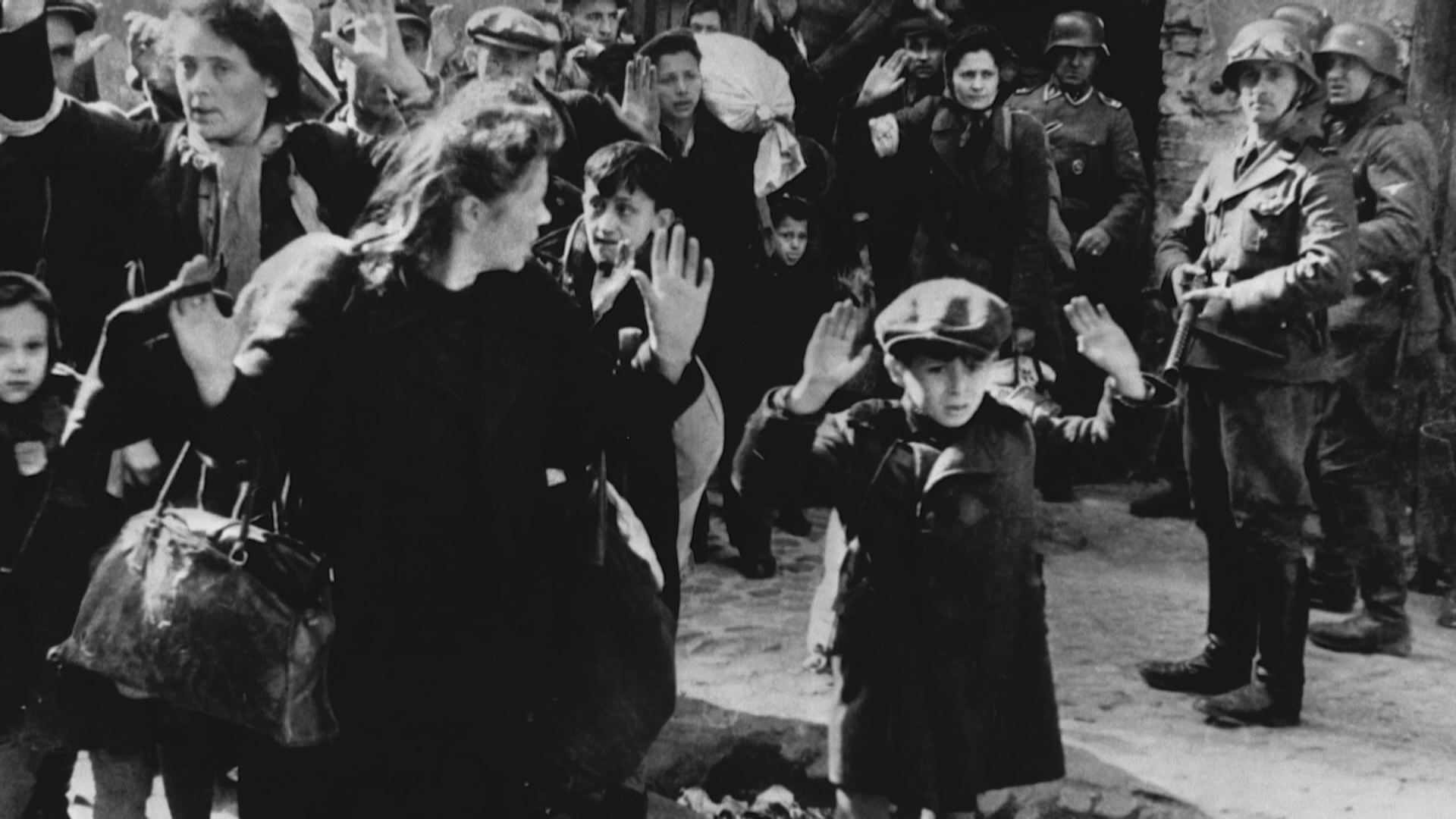
If there was ever a time for Oregon schools to teach about the holocaust, the time is now.
In a December 2023 YouGov/Economist poll, 20% of young American respondents aged 18-29 said the Holocaust is a myth. Another 30% said they don’t know if it’s a myth. And the proportion of respondents who said they believe the Holocaust is a myth was similar across all levels of education.

And now, denial of the well-documented Oct. 7 Hamas terrorist attack on Israel that left about 1,200 people dead is spreading, despite truly massive real-time documentation of the attacks.
On social media, an expanding group of denialists link Israel itself to the attack, claiming it was a “false flag” event spurred by Israel to cast blame on Hamas. And as the Washington Post has reported, the denialism is “bleeding into the real world.”
“Demonstrators have shouted the claim at anti-Israel protests and have used it to justify removing posters of hostages in cities like London and Chicago,” the Washington Post reported. “At a November city council meeting in Oakland, Calif., multiple residents disputed the veracity of the attack.”
According to the Post, “researchers are warning that Oct. 7 conspiracy theories may follow a similar trajectory to Holocaust denial, which was waning before social media platforms propelled a resurgence a decade ago.”
Fortunately, Oregon is ahead on educating its public school students on the Holocaust.
Claire Sarnowski, when she was a freshman at Lake Oswego’s Lakeridge High School, came up with the idea of mandating Holocaust instruction at Oregon’s public schools after hearing a Holocaust survivor, Alter Wiener, tell his story. Sarnowski approached state Sen. Rob Wagner, who agreed to introduce a bill, SB 664.
The bill passed unanimously in the Oregon House and Governor Brown signed it on June 4, 2019.
The bill required school districts across Oregon to provide instruction about the Holocaust and genocide in social studies classes, starting in the 2020-21 school year, to “enable students to evaluate the morality of the Holocaust, genocide and similar acts of mass violence and to reflect on the causes of related historical events.”
.As so often happens with legislation, the true believers expanded on Sarnowski’s vision and declared that the instruction must also address: the immorality of mass violence; respect for cultural diversity; the obligation to combat wrongdoing through resistance, including protest, and; the value of restorative justice. Like anti-terrorism laws, it was a classic example of mission creep.
But it was at least a start. And now it’s needed more than ever.
The question, of course, is whether schools are aggressively following the law’s mandates and whether students are absorbing the lessons. The State has also mandated drug prevention education in Oregon’s public schools, for example, but an investigative series from the Lund Report, the University of Oregon’s Journalism Project and Oregon Public Broadcasting (OPB) has revealed that what students are being taught varies widely and that many school districts don’t use programs backed by evidence that they are effective at delaying or preventing substance abuse.
And then there’s the question of whether students are acting on what they are learning about the Holocaust.
Rep. Ritchie Torres (D-NY) said recently in a Dr. Martin Luther King Jr. Sermon at Central Synagogue NYC that when he was asked why he spoke out so frequently and forcefully about anti-Semitism, his answer was, “The question is not why have I chosen to be outspoken. The question is why have others chosen to be silent amidst the deadliest days for Jews since the Holocaust?”
 ThinkingOregon