Immigrants at Camp East Montana, a sprawling desert detention camp on the Fort Bliss military base in west Texas, are in danger. A lawsuit filed in El Paso, Texas on Oct. 15 is asking the court to order defendants to protect the health and safety of the detainees as people detained there raise alleged constitutional, statutory and ethical issues.
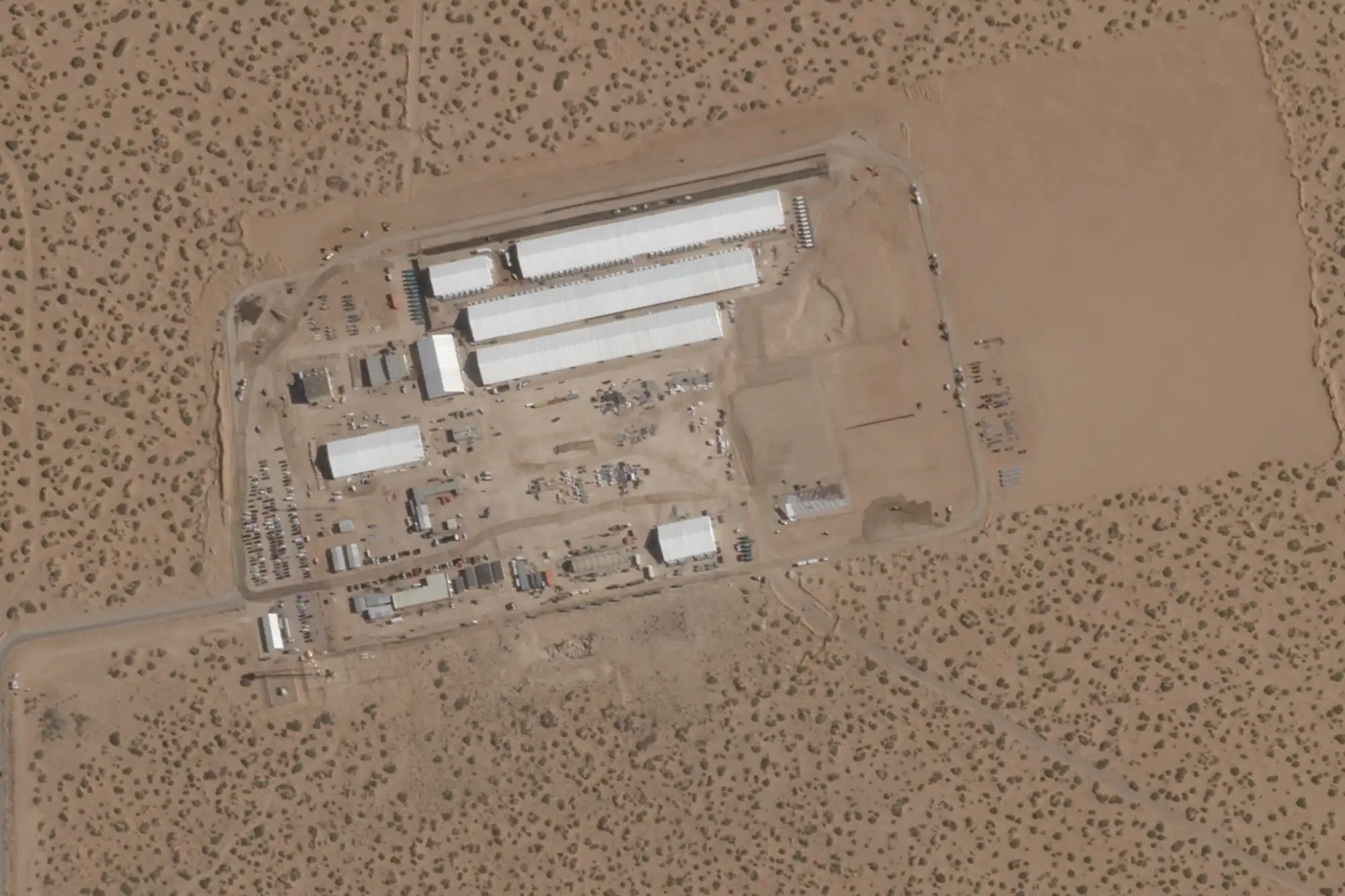
“All tell similar stories – of relentless physical and verbal abuse by guards; of going days or weeks without seeing the sun; of filthy, crowded living conditions with repeated outbreaks of measles, tuberculosis and other diseases; and of egregious medical neglect that has resulted in unnecessary suffering and death,” the lawsuit says.
President Trump’s mass deportation push has resulted in the detention of a massive and growing number of alleged undocumented immigrants in the United States. U.S. Immigration and Customs Enforcement (ICE) reports holding an average of approximately 65,000 to 73,000 people daily in its detention facilities. It’ is a vast network with detainees constantly being shifted around multiple times far from their homes. In theory, all these people are subject to deportation.

America’s gulag-style detention centers like Camp East Montana are being used as waystations for deportations back to home countries where great danger lurks and to third countries where they are not citizens, frequently don’t speak the local language, have no personal ties and are subject to God knows what brutal conditions and even death.
More than 23,000 people have been sent to 26 countries other than their own in 2026, and according to Third Country Deportation Watch, at least 35 countries have signed agreements with the United States to take deported immigrants. The Trump administration pays other countries with documented histories of corruption and human rights abuses millions of dollars to take in deported people under “third country” agreements. As Jonathan Capeheart has said, “…the stories from immigrants swept up in third-country deportations should shock the conscience of a nation that says it believes in equal protection and the rule of law. “
The Guardian recently reported that in August about 20 people were put on a flight in the US, shackled at the wrists, waist and ankles, and sent to Liberia as part of a major third-country deportation arrangement. When six of them refused to get off the plane, they were dropped off in another African country, Equatorial Guinea, “one of the world’s most repressive and corrupt regimes, where armed men took them to a former luxury hotel turned detention centre in the capital, Malabo, where they have been held ever since,” the Guardian reported.
On Sept. 18, the New York Times reported that two men deported to Equatorial Guinea by the Trump administration “were hooded, bound, beaten with guns and shoved down a flight of stairs recently by police officers at a remote hotel where immigrants are being held indefinitely, according to witnesses and lawyers. Videos and interviews show that police aggression inside the hotel escalated in recent weeks and peaked on Sept. 11. The police put burlap sacks over the two men’s faces, tied their hands with rope, beat them with guns and shoved them down the stairs as several deportees watched. The beatings were recounted by multiple witnesses and lawyers.”
ICE has deported over 200 Venezuelan migrants to El Salvador and deposited many of therm into CECOT (the Center for Terrorism Confinement)—a notorious maximum-security mega-prison. The migrants have testified that they were shot with rubber bullets and beaten on a regular basis. Many of them have alleged that they were routinely raped and tortured.
ICE has also deported migrants originating from countries such as Afghanistan and Iran to volatile regions like the Central African Republic and South Sudan. The U.S. State Department warns “Do not travel to Central African Republic due to risk of unrest, crime, kidnapping, landmines, health, and terrorism” and “Do not travel to South Sudan due to risk of unrest, crime, kidnapping, landmines, and health risks”.
Detainees have also been sent to the African nation of Eswatini, where they were held in a maximum-security prison without charge and with no access to legal counsel. And last year U.S. immigration and federal authorities tried to deport nationals from Laos, Vietnam, and the Philippines to war-torn Libya until a federal judge blocked the planned flights.
As reporting of the abuses associated with third country deportations spreads, it’s tempting to think the Trump administration is not ashamed, but gleeful, as word gets out that not only are people being deported, but the administration is making the process as cruel as possible.
Even in cases where ICE is deporting people to their home countries, the situations are often dire. There’s been an escalation of deportation flights to Haiti since the June 2026 Supreme Court decision that allowed the termination of Temporary Protected Status (TPS), stripping legal protections from an estimated 330,000 Haitian immigrants. The humanitarian and security crisis in Haiti will expose all such deportees to harm. According to the New York Times, some 3,000 people were killed there in the first six months of this year, many of them in gang-related violence.
“Millions of people in Haiti continue to face a compounding crisis of food insecurity, forced displacement, deadly disease outbreaks, and surging violence,” says Alice Ribes, the International Rescue Committee’s director for Haiti. “Public services in many areas have collapsed under gang rule, leaving people with limited or no access to clean drinking water, food, medical care, and education.”
The firm that runs Camp East Montana, which currently holds about 2,026 detainees, is Chantilly, Virginia-based Amentum Services Inc. The company is one of the largest government contractors in the United States, managing massive portfolios across defense, intelligence, homeland security, and civilian agencies. It stands to be paid more than $1.2 billion if it operates Camp East Montana from March 2026 through September 2027.
That’s blood money, folks.

