Their Blood Is On Our Hands: Trump’s Terezin

It wasn’t designed to be a concentration camp with gas chambers for mass annihilation. It was intended to be a waystation, a stopover before prisoners were moved elsewhere.

Terezin, contained within the walls of the fortress Theresienstadt 30 miles north of Prague in the Czech Republic, was established by Germany’s Gestapo.
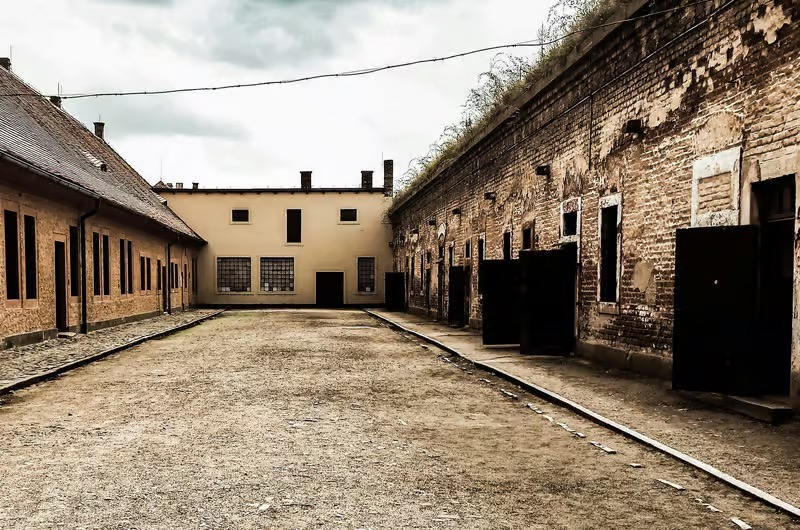
Terezin concentration camp

More than 150,000 Jews from Czechoslovakia, Germany, Austria, the Netherlands and Denmark were sent there, including 15,000 children. They were held for months or years. An estimated 33,000 died there from extreme crowding, malnutrition and disease. About 88,000 were sent to their deaths at Treblinka and Auschwitz extermination camps in occupied Poland, as well as to smaller camps elsewhere.  Less than 150 children survived.

Access to Terezin during WWII by outside impartial investigators was denied until the King of Denmark demanded it in late 1943 to determine the condition of 466 Danish Jews sent there earlier that year. 

In late 1943, Christian X, the king of Denmark, demanded an inspection of Terezin to determine the condition of 466 Danish Jews sent there in October of that year. According to the organizationTerezin: Children of the Holocaust, to hide their cruelty, the Germans initiated a beautification program, “Operation Embellishment,” a ruse intended to mollify the king’s concerns.The area was cleaned up, many of the Jews were sent to Auschwitz to minimize the appearance of overcrowding and even fake shops and cafes were built to imply that the Jews lived in relative comfort. 
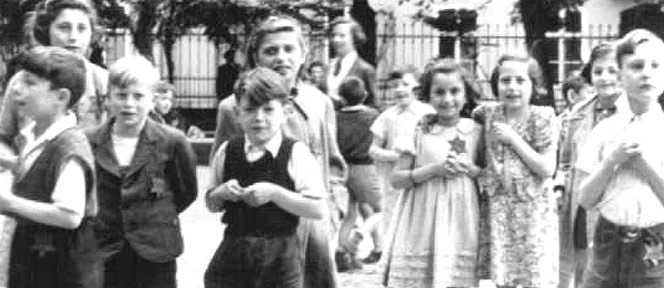
A photo of Jewish children in Terezin during the
inspection by the International Red Cross.

The International Red Cross carried out an inspection hosted by Adolf Eichmann on June 23, 1944. According to the United States Holocaust Memorial Museum, the Red Cross issued “a bland report about the visit, indicating that the representatives were taken in by the elaborate fiction”.  Today’s visitors to ICE detention centers should we wary of ICE “cleaning things up” to deceive them.

Today, President Trump’s mass deportation push has resulted in the detention of a massive and growing number of alleged undocumented immigrants in the United States. U.S. Immigration and Customs Enforcement (ICE) reports holding an average of approximately 65,000 to 73,000 people daily in its detention facilities. It’ is a vast network with detainees constantly being shifted around multiple times far from their homes. In theory, all these people are subject to deportation.
KING 5 Seattle television recently reported that ICE is repeatedly flying detainees back and forth across the country. The station cited a case where a Cuban man detained in Florida was subsequently flown from Miami to Denver, Colorado, then to Florence, Arizona, back to Denver, then to Florence again, then Denver, then back to Florence. “A lot of lawyers and judges around the country…believe that ICE is intentionally doing this to put people away from families, from legal representation and just honestly to try to encourage them self-deport,” the station reported.

For concerned people trying to keep track of the detainees the process is a nightmare.

The more frightening nightmare, however, bringing up memories of Terezin, is the use of American detention centers as waystations for deportations back to home countries where great danger lurks and to third countries where they are not citizens, frequently don’t speak the local language, have no personal ties and are subject to God knows what brutal conditions and even death.

More than 23,000 people have reportedly been sent to 26 countries other than their own in 2026, and according to Third Country Deportation Watch, at least 35 countries have signed agreements with the United States to take deported immigrants. The Trump administration pays other countries with documented histories of corruption and human rights abuses millions of dollars to take in deported people under “third country” agreements. As Jonathan Capeheart has said, “…the stories from immigrants swept up in third-country deportations should shock the conscience of a nation that says it believes in equal protection and the rule of law. “

The Guardian recently reported that in August about 20 people were put on a flight in the US, shackled at the wrists, waist and ankles, and sent to Liberia as part of a major third-country deportation arrangement. When six of them refused to get off the plane, they were dropped off in another African country, Equatorial Guinea, “one of the world’s most repressive and corrupt regimes, where armed men took them to a former luxury hotel turned detention centre in the capital, Malabo, where they have been held ever since,” the Guardian reported.

ICE has deported over 200 Venezuelan migrants to El Salvador and deposited many of therm into CECOT (the Center for Terrorism Confinement)—a notorious maximum-security mega-prison. The migrants have testified that they were shot with rubber bullets and beaten on a regular basis. Many of them have alleged that they were routinely raped and tortured.

ICE has also deported migrants originating from countries such as Afghanistan and Iran to volatile regions like the Central African Republic and South Sudan. The U.S. State Department warns “Do not travel to Central African Republic due to risk of unrest, crime, kidnapping, landmines, health, and terrorism” and “Do not travel to South Sudan due to risk of unrest, crime, kidnapping, landmines, and health risks”.
  
Detainees have also been sent to the African nation of Eswatini, where they were held in a maximum-security prison without charge and with no access to legal counsel. And last year U.S. immigration and federal authorities tried to deport nationals from Laos, Vietnam, and the Philippines to war-torn Libya until a federal judge blocked the planned flights.

Even in cases where ICE is deporting people to their home countries, the situations are often dire. There’s been an escalation of deportation flights to Haiti since the  June 2026 Supreme Court decision that allowed the termination of Temporary Protected Status (TPS), stripping legal protections from an estimated 330,000 Haitian immigrants. The humanitarian and security crisis in Haiti will expose all such deportees to harm. According to the New York Times, some 3,000 people were killed there in the first six months of this year, many of them in gang-related violence.

“Millions of people in Haiti continue to face a compounding crisis of food insecurity, forced displacement, deadly disease outbreaks, and surging violence,” says Alice Ribes, the International Rescue Committee’s director for Haiti.  “Public services in many areas have collapsed under gang rule, leaving people with limited or no access to clean drinking water, food, medical care, and education.”

ICE attempts to minimize or conceal the conditions in America’s detention centers and the threats faced by deportees to their own and other countries are America’s “Operation Embellishment”.

The blood of those in harm’s way will be on our hands.

College Protests and the Law of Unintended Consequences

An intervention in a complex system always creates unanticipated and often undesirable outcomes.

Rabbi Danya Ruttenberg understands unintended consequences. “[W]e all know that sometimes people mean well but cause harm nonetheless—out of ignorance, out of carelessness, out of deeply ingrained ways of thinking they haven’t examined, out of an emotional reaction that got the better of their lofty intentions, or … well, the list goes on,” she says.

There’s a message here for today’s rabid pro-Palestine student protesters convinced that their actions will bring about change.

If they are trying to emulate the protests against the Vietnam war in 1960s, the bloodiest and most dramatic of which occurred at the 1968 Democratic Convention in Chicago, they’re forgetting something. Those protests may have helped drive out President Lyndon Johnson, but they undermined the candidacy of the Democratic candidate for president, Hubert Humphrey, and invigorated the conservative supporters of Republican Richard Nixon.

In his first months in office, Nixon had the U.S. military increase, not decrease, its pressure on the battlefield and, in violation of international law, ordered secret bombings of North Vietnamese camps in Cambodia.

After he took office, another 21,200 Americans died in Vietnam and elsewhere in Southeast Asia, about one-third of all American deaths in the war (58,220), along with an estimated half a million Vietnamese., 

Nixon’s aggressive pursuit of the war also led to more protests on college campuses with deadly consequences. During one of those protests at Kent State University on May 4, 1970, National Guardsmen shot and killed four students. Just 10 days later, another two students at Jackson State University were killed by police.

Paul Berman, an American writer on politics and literature, wrote in yesterday’s Washington Post, about being involved as a Columbia University student in a late April 1968 campus uprising. He wrote about how professors upbraided him, warning about the potential dangers of the protests.

“The professors were haunted by Germany and its history, ” Berman wrote.” In 1968, the defeat of the Nazis was only 23 years behind us, and the era of World War II and the catastrophe of the Jews had not yet definitively disappeared into the past — at least, not in the professors’ eyes. They wanted me to understand that Germany’s leftists in the 1930s had failed to understand Nazism’s danger. Foolish left-wing radicalism had helped undermine the German universities, which ought to have been a place of anti-Nazi resistance. They wanted me to understand, all in all, that what people think they are doing might not be what they are actually doing, and, in the name of high ideals, society might be weakened, and the worst of disasters might be brought about.”

I bring all this up to remind today’s aggrieved student protesters that their aggressive actions may not lead events to where they want them to go. 

First, despite the protesters’ assumption that their peers have their back, the annual Harvard Youth Poll, run by the Institute of Politics (IOP) at Harvard’s Kennedy School, found that  Americans between the ages of 18 and 29 are not prioritizing the Israel-Gaza conflict. 

The poll found that young people are more worried about inflation, health care, housing and gun violence. The survey listed 16 issues facing the U.S., asking respondents which of two randomly paired issues most concerned them. The conflict in the Middle East ranked near the bottom at 15th.

The general public also can’t be counted on to support the protesters. Americans are actually quite divided about how – and whether – the U.S. should be involved in the Israel-Hamas war. According to the Pew Research Center, among US adults, only 22% say Hamas’ reasons for fighting Israel are valid and roughly six-in-ten Americans (58%) say Israel’s reasons for fighting Hamas are valid. 

In this environment, the student protests, particularly if they continue with violent events at the Democratic National Convention in Chicago, may, as in 1968, lead to a conservative backlash that helps defeat President Biden and elect Donald Trump.

For most of the protesting students, that would surely be a worst case of unintended consequences. 

Berlin Redux: Those who cannot remember the past are condemned to repeat it

In July 2009, speaking at Moscow’s New Economic School, Obama said long-standing assumptions that the US and Russia were antagonists vying for spheres of influence were inaccurate.

“Given our interdependence, any world order that tries to elevate one value or people over another will inevitably fail,” he said. “That is why I have called for a ‘reset’ in relations between the United States and Russia. This must be more than a fresh start between the Kremlin and the White House, though that is important.”

“It must be a sustained effort among the American and Russian people to identify mutual interests, and to expand dialogue and co-operation that can pave the way to progress,” he added.

Obama calls for reset of U.S.-Russian relations in 2009

Obama calls for reset of U.S.-Russian relations in 2009

All this just 12 months after Bush’s hopes for better relations with Russia had been shattered by its war with Georgia.

Now, five years later, Russia has annexed the Crimean Peninsula of Ukraine and the United States is sitting by helplessly.

Obama has said that Russia, by its actions in Crimea, is on the wrong side of history.

Perhaps Obama is forgetting history.

In 1933, Adolph Hitler emphatically proclaimed Germany’s commitment to peace.

“The German government “…is…of the conviction that there can only be one great task in our time: securing peace in the world,” he declared to the Reichstag. “The German Government wishes to engage in peaceful discussions with the other nations on all difficult questions,” he added.

Hitler proclaims Germany's pursuit of peace

Hitler proclaims Germany’s pursuit of peace

That same year, however, Hitler laid the groundwork for what would become the pretext for forcefully absorbing other countries. “We have particularly at heart the fate of the Germans living beyond the frontiers of Germany who are allied with us in speech, culture, and customs and have to make a hard fight to retain these values,” he said in a policy statement submitted to the Reichstag on March 23, 1933. “The national Government is resolved to use all the means at its disposal to support the rights internationally guaranteed to the German minorities,” he said.

When Germany annexed Czechoslovakia’s Sudetenland in 1939, it was justified as an effort to “liberate” the predominantly German area and protect the abused ethnic German population . Foregoing action, Britain and France chose to negotiate a deal that preserved “peace in our time”.

Austria was next. In March 1938, a coup d’état was engineered by the Austrian Nazi Party of Austria’s state institutions in Vienna and Germany annexed Austria into the Third Reich that same month. The Nazis then held a plebiscite allowing the people to vote on the annexation and claimed that the vote in favor was 99.8 percent. (Sound familiar?)

The reaction from the Allies? Mostly words.

It wasn’t until Germany and the Soviets invaded Poland in 1939 that Britain and France declared war on Germany, too late to stop the Soviets and Nazis from slaughtering millions of Jews and Polish intelligentsia through starvation, forced labor and mass killings.

The Russian portion of Poland, by the way, was incorporated within Russia by Soviet “elections” and Russian citizenship was conferred on the Polish inhabitants. (Sound familiar?)

Allied action also came too late for Ukraine, which was overrun by the Nazis in 1941 after years of brutal killings under Stalin, during which millions of Ukrainians were murdered and millions more were sent to concentration camps.

Now we have Putin talking about the need to “protect” ethic Russians in Eastern Ukraine.

“It’s all nonsense. There are no kinds of Russian units in eastern Ukraine. No special forces, no instructors. They are all local citizens.” Russia's President Vladimir Putin

“It’s all nonsense. There are no kinds of Russian units in eastern Ukraine. No special forces, no instructors. They are all local citizens.”
Russia’s President Vladimir Putin

On April 17, 2014, in a televised Q&A session with the Russian public, Putin observed that the Federation Council, the upper house of Russia’s Parliament, had granted him the right to use military force in Ukraine. “I really hope that I do not have to exercise this right and that we are able to solve all today’s pressing issues via political and diplomatic means,” he said.

And today, with Russian-connected demonstrators fomenting unrest in Eastern Ukraine, Russia had the gall to accuse the new Ukrainian government of flouting a just concluded agreement intended to diffuse the crisis. “The Geneva accord is not only not being fulfilled, but steps are being taken, primarily by those who seized power in Kiev, that are grossly breaching the agreements reached,” said Russian Foreign Minister Sergei Lavrov in a press conference in Moscow.

Here we go again?