There’s so much money sloshing around in American politics a lot of questionable activities get overlooked, like the sweet thing Virginia lobbyist Robert J. “Rob” Catron has going on.
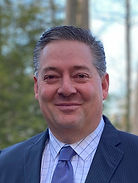
A native of South Florida and a graduate of Florida State University, Catron worked as Chief of Staff for Rep. Ed. Schrock, a conservative Virginia Republican, during 2001 – 2003. He later joined the Arlington, VA-based lobbying firm of Alcalde & Fay, where he’s now a Partner. According to the firm, he is “a proud veteran of the United States Army Reserve” and “has successfully managed or consulted on more than 50 winning political campaigns for federal, state and local offices”.
On December 4, 2023, Catron registered Ranger PAC, a political action committee, with the Federal Election Commission (FEC). Based in Athens, Georgia, the PAC says its mission is to support the election of “highly accomplished conservative military veterans to Congress to defend the Constitution and get America squared away”.
The focus on veterans is an exploitation of the fact that although public trust in many institutions is in retreat, the public generally still has high confidence in veterans as effective leaders in civic life.
Ranger PAC’s treasurer is Paul Kilgore, CEO of Professional Data Services Inc (PDS), a political financial consulting company in Athens he founded in 1999 that is a leading compliance firm in Republican politics. In 2024, Kilgore represented more than 157 Republican candidates.
From January 1, 2025 to November 30, 2025, Catron’s Ranger PAC raised $1,394,894.74, according to its filing with the Federal Election Commission (FEC). In the same period, it spent $1,353,836.73.
The problem is that, in a deliberate assault on trust, Catron’s Ranger PAC spent just $69,500, 5% of its total spending, on aspiring or serving politicians. That’s right, a measly 5%. The rest, 95%, went to fundraising and administrative expenses.
Although there’s no legal minimum percentage of money raised that a PAC must donate to candidates, legitimate PACs generally spend less than a quarter of their donations on fundraising, with many spending considerably less.
Charity Navigator, an independent non-profit organization that evaluates U.S. charities on their financial health, accountability and transparency, encourages nonprofits to spend no more than 30% combined on administrative and fundraising costs. Organizations earning the highest scores spend less than 10 cents to raise $1 (a 10% ratio).
In Ranger PAC’s case, it added insult to injury: 5 the 19 politicians who received donations from January 1, 2025 to November 30, 2025 weren’t even veterans.[1]
The Center for Public Integrity, a nonprofit newsroom that investigates betrayals of public trust, calls PACs like Ranger PAC “Scam PACS”. They purport to raise money for political and social causes, but spend most of the money they raise from unsuspecting donors on fundraising, salaries and overhead.
In 2015, Politico reported, for example, that a PAC called the Black Republican PAC spent less than 1 percent of the $700,000 it raised on contributions to candidates or ads supporting them, according to government filings.
The FBI warns: “Scam PACs are fraudulent political action committees designed to reroute political contributions for personal financial gain. This is a federal crime—and can be costly to victims who thought they were making legitimate campaign contributions.”
If most of the money Ranger PAC raised didn’t go to candidates, where did it go?
$19,641.81 went to Paul Kilgore’s Professional Data Services Inc for “PAC Compliance Consulting”.
Most of the rest went primarily to enriching 10 firms involved in fundraising[2] , some of them with shadowy histories.
The website for Better Mousetrap Digital, which Ranger PAC paid $25,291.33, says it “is the premier digital fundraising consulting firm for Republicans…with decades of experience spanning from state house campaigns to the White House”.
Better Mousetrap Digital’s founder is Jack Daly. The company’s website doesn’t note that in December 2023, Daly was sentenced to 4 months’ imprisonment for conspiring to (i) commit mail fraud by defrauding thousands of conservative political donors out of money and (ii) lie to the Federal Election Commission (“FEC”). He was also ordered to pay a $20,000 fine, along with two separate payments of $69,978.37 for restitution and forfeiture.
Daly emerged from federal custody, nevertheless, to re-establish himself as a top Republican Party campaign fundraiser. NOTUS reported in Oct. 2025 that dozens of federal-level Republican political committees — including the Republican National Committee, numerous congressional committees and campaign operations tied to President Donald Trump — had together spent nearly $18 million on digital fundraising, donor lists and other services from Better Mousetrap Digital.
The FBI says it is actively looking for Scam PACs that only spend money on telemarketing and junk mail. It urges Americans targeted by a scam PAC to contact their local FBI office and ask to speak to an election crimes coordinator.
Unfortunately, scam PACs have been around for a while.
“Since the tea party burst into the political landscape in 2009, the conservative movement has been plagued by an explosion of PACs that critics say exist mostly to pad the pockets of the consultants who run them,” Politico wrote in 2014. “They collect large piles of small checks that, taken together, add up to enough money to potentially sway a Senate race. But the PACs plow most of their cash back into payments to consulting firms for additional fundraising efforts.”
A POLITICO analysis of reports filed with the Federal Election Commission covering the 2014 cycle found 33 PACs that courted small donors with tea party-oriented email and direct-mail appeals raised $43 million, but spent only $3 million on ads and contributions to boost the long-shot candidates often touted in the appeals.
In 2016, two Democratic FEC commissioners, Ellen Weintraub and Ann M. Ravel, urged their colleagues to take action against scam PACs, but there’s been little follow-up. On January 31, 2025, President Trump sent a brief letter to Weintraub firing her “effective immediately” as a FEC Commissioner and Chair. Weintraub challenged her dismissal, but is no longer serving on the commission. Ravel resigned from the FEC in February 2017. Weintraub has not been replaced, denying the FEC a quorum for votes.
During 2002 – 2018, Virginia political operative Scott B. Mackenzie served as treasurer of 12 PACs that spent 68% of the money they raised on fundraising, wages and administration. But he paid a price. In 2020, a Federal District Judge sentenced him to 12 months and one day in prison for making false statements to the FEC in relation to his association with the PACs. Mackenzie also had to pay $172,200 in restitution.
“If the Justice Department was seeking to send a message to others tempted to get into the ‘scam PAC’ game, that message came through loud and clear,” said Brett Kappel, a campaign finance lawyer at the Akerman law. “These are not victimless crimes and people will go to prison for them.”
It looks like Catron hasn’t gotten that message, even though he’s been in trouble before.
In June 2021, he was indicted by a Virginia Beach grand jury on 10 counts of making false statements and election fraud. He avoided prison when he pleaded no contest to three election-related charges. The charges stemmed from a petition scandal during a Republican congressman’s ultimately losing 2018 campaign for a second term in Congress representing a coastal Virginia district. Catron was accused of being involved in an effort to get a third-party spoiler candidate on the ballot with petitions using forged signatures.
Catron received a three-year suspended sentence and was ordered to pay court costs and fines after entering the plea to three counts of neglect of election duty.
With his Ranger PAC antics, maybe it’s time to bring morally hollow Robert J. “Rob” Catron back to court.
[1] Recipients of Ranger PAC donations, January 1, 2025 – November 30, 2025
| Donation Recipient | Donation ($) | Service | ||||
| Matt Van Epps, Tennessee | 10,000 | Army | ||||
| Michael Whatley, N. Carolina | 5,000 | Not a veteran | ||||
| Ronny Jackson, Texas | 8,500 | Navy | ||||
| Derrick Van Orden, Wisconsin | 5,000 | Navy | ||||
| Mariannette Miller-Meeks, Iowa | 5,000 | Army | ||||
| Zach Nunn, Iowa | 5,000 | Air Force | ||||
| Gabe Evans, Colorado | 5,000 | Army | ||||
| Tom Barrett, Michigan | 5,000 | Army | ||||
| Stewart Whitson, Virginia | 1,000 | Army | ||||
| Dan Butierez, Arizona | 1,000 | Not a veteran | ||||
| Jen Kiggans, Virginia | 5,000 | Navy | ||||
| Ryan Zinke, Montana | 5,000 | Navy | ||||
| Pat Harrigan, N. Carolina | 2,000 | Army | ||||
| Nick Lalota, New York | 1,000 | Navy | ||||
| Ken Calvert, California | 1,000 | Not a veteran | ||||
| Warren Davidson, Ohio | 1,000 | Army | ||||
| Abraham Hamadeh, Arizona | 2,000 | Army | ||||
| Randy Fine, Florida | 1,000 | Not a veteran | ||||
| Jimmy Patronis, Florida | 1,000 | Not a veteran | ||||
[2] Recipient / percent of total disbursements / Total disbursement
DIRECT SUPPORT SERVICES 17.15%
ONE VOICE SOLUTIONS 14.29%
CONSOLIDATED MAILING SERVICES. 9.23%
DRAGONFLY CONSULTING 9.1%
FORTHRIGHT STRATEGY, INC. 7.78%
LAUNCHPAD STRATEGIES, LLC. 3.9%
TAILWINDS POLITICAL 3.89%
NAMS-NORTH AMERICAN FULFILLMENT. 3.56%
DIRECT SUPPORT SYSTEMS 3%
BETTER MOUSETRAP DIGITAL 1.87%
 ThinkingOregon