The House’s  “Build Back Better” plan: A Costly Collection of Misfires

Build Back Better Is Worse - YouTube

Democrats say Americans love their $2.2 trillion Build Back Better bill passed by the House on Nov. 19. That must be because they don’t know what’s in it.

While the media has largely concentrated on overarching themes of the legislation, gone largely unnoticed are all sorts of provisions most folks would probably find unpalatable if not downright unseemly.

Take a look at the catalog of misfires:

  • Think the Democrats are all about the little people? The current state and local taxes (SALT) deduction allows taxpayers who itemize their deductions to reduce their federal taxable income by the amount of state and local taxes they paid that year, up to $10,000. The House bill would raise the cap to $80,000 through 2030, mostly benefiting the wealthy from high-tax states such as California, New Jersey and New York. Even liberal Jason Furman, a Harvard economist who served as chair of President Barack Obama’s Council of Economic Advisers, has said the provision’s benefit to “the super-rich” is “obscene.” 
  • Just 6.3% of private sector workers in the U.S. were union members in 2020. The House bill adds a $4500 credit exclusively for Electric Vehicles (EVs) built in the United States with unionized labor. This heavily favors the Big Three American auto manufacturers, all of which operate unionized factories in the U.S. Excluded from the credit: Tesla, Rivian, and every foreign automaker that operates a U.S. assembly plant, none of which are unionized. Vehicles such as the Ford Mustang Mach-E full-electric sport utility vehicle, which is built in Mexico, wouldn’t meet the domestic production requirement either. Canada, the European Union, Germany, Japan, Mexico, France, South Korea, Italy, and other countries recently sent a letter to U.S. lawmakers saying the tax credit proposal would also violate international trade rules. In a separate letter, Canadian Trade Minister Mary Ng told U.S. lawmakers and the Biden administration that the credits, if approved, “would have a major adverse impact on the future of EV and automotive production in Canada.” Way to go Democrats. Piss off a lot of automakers and allies to placate the UAW.
  • “We’re for working parents,” the Democrats crow. The House bill would guarantee that families making up to 250 percent of a state’s median income would not have to pay more than 7 percent of their annual income on childcare. Sounds good, but it will inevitably federalize child care, favor big corporate providers, raise childcare costs overall and increase the burden on families making more than the cap. 
  • In another sop to unions, the House bill would allow union members to deduct up to $250 of dues from their tax bills, allowing them to exclude the cost of dues from their gross income. The Joint Committee on Taxation says this would cost taxpayers $1.8 billion. A lot of union dues money goes into supporting political campaigns and lobbying. OpenSecrets, a non-partisan analyst of political money, says Democrats got 90% of union donations in 2020 federal races. 
  • Americana’s journalism industry, which prides itself on its independence, got a piece of the Build Back Better pie in the House bill, too. The House bill would provide a payroll tax credit for companies that employ eligible local journalists. The measure would allow newspapers, digital news outlets, and radio and television stations to claim a tax credit of $25,000 the first year and $15,000 the next four years for each of up to 1,500 journalists. The theory is this would incentivize some publishers to hire or retain local reporters. The projected cost of putting journalism outlets on the public dole – $1.7 billion. I’m a former newspaper reporter and the struggles of local news are undeniable, but this is embarrassing. Why large and small journalism enterprises deserve taxpayer bailouts like this is beyond me. Supporters say there will be guardrails to prevent the tax breaks from going to partisan or fake-news sites. Good luck.  

Who knows what other godawful provisions lurk in the 2000+ page Build Back Better bill. As House Speaker Nancy Pelosi said of another contentious legislative process, “We have to pass the bill so that you can find out what is in it …”

The Newberg School Board’s Messaging Ban: A Different Perspective

Gay Straight Alliance becomes a reality – The Prowler

OK. I’m going to be the odd man out.

Do the people insisting on the display of Black Lives Matter and LGBTQ Pride messages in Newberg, Oregon schools honestly believe those are non-political non-controversial messages? 

Does the teachers’ union, the Newberg Education Association, really believe that the display of such messages on school campuses is essential “to create safe learning environments for our students”?

Do Newberg students all agree that the Newberg School Board, in banning the display of images “relating to a political, quasi-political, or controversial topic,” is demonstrating that is has no empathy?

Or are the parents, students and union representatives simply embracing progressive messaging in Newberg schools and cloaking their advocacy in claims of free speech rights, while the Board is trying to keep their schools neutral in today’s toxic political environment?

I ask these questions because I doubt the critics of the ban would be so outspoken if the debate was over the display of conservative-leaning messages.

Would they support a poster in the Newberg High School lobby with National Right-to-Life’s message, “Promote respect for the worth and dignity of every individual human being, born or unborn”?

aohadmin, Author at AOH Tír na Nóg Division 1, Lehigh County

How about a “thin blue line” flag endorsed by the Blue Lives Matter movement hanging prominently in the school gym?

Commentary: Blue Lives Matter Bills Send Wrong Message | Fortune

Would they support a massive pro-death penalty banner such as “Keep capital punishment safe and legal” in every classroom?

What's next for the death penalty?

Citing a lawsuit filed by the Newberg Education Association calling for the Yamhill County circuit court to block the Newberg School District from enforcing its new policy, union president Jennifer Schneider said the lawsuit “… is just one more step to guarantee that the personal politics and prejudices of the new School Board majority aren’t able to enter our classrooms…” 

How about preventing the personal politics and prejudices of the ban’s critics from entering Newberg’s classrooms?

Making the whole controversy worse, Oregon Senate Majority Leader Rob Wagner (D- Lake Oswego) is using it as an excuse to stir the pot by introducing two bills for the 2022 legislative session:  One would require all school boards to receive a biannual audit and implement strategies around equity training. The other bill would prohibit school boards from terminating superintendents who implement state-mandated best practices that relate to diversity, inclusion and public health practices.

Just what we need, more political grandstanding and micromanagement of Oregon’s public schools. 

Biden’s Federalization of Child Care Will Be Costly

“You can’t handle the truth!” Colonel Nathan R. Jessup roared in A Few Good Men.

President Biden and the Democrats in Congress apparently think the same way in explaining the costs of their Build Back Better budget proposals. Supposedly, the cost of the House Democrats’ budget reconciliation bill is $1.75 Trillion.

But this is a fiction based on smoke and mirrors.

On Thursday, the Penn Wharton Budget Model reported that if all the provisions of the bill (except green energy tax cuts) are made permanent, new spending would increase by $3.98 trillion, more than double what President Biden’s White House said.

On Friday, Nov. 5, the House passed a $1 Trillion infrastructure bill, but put the social policy bill on hold because a half-dozen Democrats withheld their votes until a nonpartisan analysis by the Congressional Budget Office (CBO) could tally its price tag, which could be delayed until at least mid-November. In other words, even the Democrats don’t know what their social policy bill would cost.social policy

One area that stands out in terms of unknown real costs is projected spending on child care. 

Child Care Services Association — Ensuring affordable, asccessible,  high-quality child care

On Friday, Nov. 5, the House passed a $1 Trillion infrastructure bill, but put the social policy bill on hold because a half-dozen Democrats withheld their votes until a nonpartisan analysis could tally its price tag, which could be delayed until at least mid-November. In other words, even the Democrats don’t know what their social policy bill would cost.

The childcare part of the package attempts to spur more workers to join the childcare workforce and raise providers’ wages by spending around $100 billion over the first three years.

The bill would guarantee that families making up to 250 percent of a state’s median income would not have to pay more than 7 percent of their annual income on child care.

“How can we compete in the world if millions of American parents, especially moms, can’t be part of the workforce because they can’t afford the cost of childcare or eldercare,” Biden said in October. 

All well and good, but what’s going to be the actual cost to the federal government if the Democrats’ bill passes and gets signed by the President? The House will be out on recess next week, returning the week of Nov. 13. If there is a CBO score by then, it’s possible that the House could move immediately to a final vote on the bill.

First of all, the program would supposedly come to an end in six years, but that’s just part of the Democrats’ budget trickery. The assumption that spending on the child care program will cease in six years reduces its overall cost during the 10-year budget window that Congress uses to determine whether a bill will add to the federal deficit. But Democrats are counting on parents becoming so fond of the government largesse that Congress will extend the program.

President Biden has said the child care subsidies would save the average family $14,800 per year on child care expenses. In other words, the federal government would pick up $14,800 in childcare costs now paid by the average American family. 

,Using Oregon as a test case, median family income in 2020 was $76,554. On that basis, no Oregon family making less than $191,385 would pay more than 7% of their income on child care. Families earning more than $191,385 would, however, likely pay more once all the government’s mandates kicked in. Higher wages for childcare workers, for example, would likely be passed on to parents by child care providers.

Under the House bill, all the teachers and staff participating in the child care workforce, would have to be paid at least $15 an hour. Many child care workers are now so low paid that more than 15 percent are below the poverty line in 41 states, according to a Sept. 2021 report from the U.S. Department of the Treasury. Similarly, nearly half of child care workers use public assistance, such as the Children’s Health Insurance Program (CHIP), Supplemental Nutrition Assistance Program (SNAP), and Temporary Assistance for Needy Families (TANF).

According to ZipRecruiter, as of Oct 30, 2021, the average annual pay for a child care worker in Oregon was $18,969 a year or approximately $9.12 an hour. 

Under the Democrats’ bill, child care staff with the qualifications of kindergarten teachers would have to be compensated as such, according to The White House. Kindergarten teachers Oregon must have finished a degree program that includes a teacher education component. Teaching kindergarten also requires passing several exams before earning a license. According to ZipRecruiter, as of Oct 30, 2021, the average annual pay for a kindergarten teacher in Oregon was $33,785 a year or $16.24 an hour.

The U.S. Bureau of Labor Statistics says there are 494,360 child care workers in the United States. Oregon has about 13,000 of those. 

According to the White House, child care providers will also “receive funding to cover the true cost of quality early childhood care and education–including a developmentally appropriate curriculum, small class sizes, and culturally and linguistically responsive environments that are inclusive of children with disabilities.”

Under the House bill, the federal government would also pay for child care workers to receive job-embedded coaching and professional development to help child care workers grow their skills during their careers.

The federal government would have to pony up a lot of new money to pay for all this. Not only that, but the states would have to step up, too. States would not be required to match any funds for the first three years, giving them time to ramp up their programs while funded entirely by the federal government. After three years, states would have to provide a 10% match to the federal funds. Where’s that money going to come from?

In addition, President Biden has said he would “ensure families have access to the quality care their children need by working in partnership with states to ensure providers meet rigorous quality standards. These standards will include a developmentally appropriate curriculum, small class sizes, and support positive interactions between educators and children that promote children’s socio-emotional development.”

To say that the Democrats want to federalize child care would be an understatement.

Although the goal of affordable child care seems worthwhile, I can’t help but think this particular proposal is going to have major unintended consequences if it becomes law.

For example, it is likely the proposal will lead to higher childcare costs overall, particularly for those not under the subsidy umbrella. As the Acton Institute has written, “There is little reason to expect that large increases in government subsidies toward childcare would lead to declining overall costs. All prices are relative prices. Increasing the demand for childcare services through subsidies while directing that demand to more formal, regulated, and already stressed institutions is a recipe for…cost explosions.”

Jonathan Bydlak of the R Street Institute makes the same point. “The idea of using subsidies to essentially engineer some sort of outcome is not exactly a great idea,” he says. “Any time you end up subsidizing something that represents a market manipulation. There’s always a potential, as we’ve seen in areas like education, for example, where… education costs are almost certainly higher as a result of the ways in which we subsidize that system.”

Many have argued that years of government subsidies for college have raised the spending power of the average person for higher education, but not necessarily to their benefit. Colleges and universities, those people say, have taken note of families’ increased spending power and raised their tuitions accordingly, resulting in the sky-high tuition rates that exist today.

At one point recently, President Biden said his Build Back Better plan would cost nothing because rich people and corporations would pay the bill. “The fact of the matter is, my Build Back Better Agenda costs $0,” Biden said.

If you believed that, or if you think the Democrats’ proposed child care program is only going to cost $100 billion over its first three years, you’re smoking some pretty potent weed.

Biden’s Black Hawk Down

A U.S. Chinook helicopter flies near the U.S. Embassy in Kabul.

July 8, 2021, East Room, Remarks by President Biden on the drawdown of U.S. forces in Afghanistan:

Q Is a Taliban takeover of Afghanistan now inevitable?

THE PRESIDENT: No, it is not.

Q Why?

THE PRESIDENT: Because you — the Afghan troops have 300,000 well-equipped — as well-equipped as any army in the world — and an air force against something like 75,000 Taliban. It is not inevitable.

Q Mr. President, some Vietnamese veterans see echoes of their experience in this withdrawal in Afghanistan. Do you see any parallels between this withdrawal and what happened in Vietnam, with some people feeling —

THE PRESIDENT: None whatsoever. Zero. There’s going to be no circumstance where you see people being lifted off the roof of a embassy in the — of the United States from Afghanistan. It is not at all comparable. … the likelihood there’s going to be the Taliban overrunning everything and owning the whole country is highly unlikely.

I live “out in the sticks” as sophisticated power brokers in Washington DC would call my suburb outside Portland, Oregon. I haven’t been to Afghanistan as a citizen, soldier or policy wonk. I haven’t sat in on any high-level foreign policy strategy meetings in the White House or debated military policy in a conference room at a D.C think tank. I haven’t been asked by President Biden or any of his hangers-on what we should do in Afghanistan.

But even I knew the battle-ready 300,000 man Afghan military force was a fiction and that it wouldn’t be long before American helicopters were rescuing desperate people from rooftops in Kabul in a debacle for the ages. Like everything else about the war in Afghanistan, it was all a lie.

Segregation now; Segregation Forever: Western Oregon University students pushing for BIPOC center

Black, Indigenous and people of color at Western Oregon University (WOU) in Monmouth are advocating for the establishment of a Freedom Center for their exclusive use on the top floor of the school’s Academics Program and Support Center building.

“It’s a place for BIPOC students by BIPOC students that allows them to have safe spaces, accessibility [and] resources,” Makana Waikiki, the proposal’s lead advocate, told Oregon Public Broadcasting. Arlette Tapia, Director of Multicultural Advocacy with the student government, added, “It’s very devastating as a student, as a student of color, to see that we have to fight for these things.”

There are, however, good reasons why the university should resist. Portrayed by its advocates as a step forward, the Center would more likely be a step back in encouraging diversity and inclusion.

WOU’s total enrollment is 4,526, 33% men and 64% women. The students are 61% white, 18.6% Hispanic or Latino, 3.81% Asian, 3.04% Black and 1.18% American Indian or Alaska Native. About 34% of students are minorities or people of color.

The Freedom Center Proposal says, “Students of color are marginalized and diminished on campus, and the Freedom Center will be a place where students will feel safe to be themselves.” WOU’s Faculty Senate President Dr. Leigh Graziano echoed that view in an email to WOU leadership. “When we make decisions to not create space for voices of color, we only underscore our lack of genuine commitment as a university to antiracist practices that actually make our campus culture more inclusive,” she wrote.  

But in reality, the Freedom Center, would just reinforce separatism and tribalism, the exact opposite of what a liberal education is supposed to transcend. 

If diversity is so important to academic success, why would WOU facilitate construction of an identity center that will spur division and encourage BIPOC students to self-segregate?

It’s a contradictory effort that only weak-kneed hard-left academics overly eager for student approval and worried about being labeled racist could endorse. In fact, it sounds suspiciously like something segregationist Alabama Governor George C. Wallace would have pressed for in less flowery language.

“Civil rights leaders put their lives on the line working for a color-blind, non-race determined society,’ “ Richard Vedder, Professor of Economics Emeritus at Ohio University, wrote. “The bitter struggle to break down racial distinctions in education lasted for decades, yet now universities are reintroducing segregation.”

The supporters of these wayward efforts often try to justify racially-based identity centers on the basis of research that affinity groups are a benefit to students who may not identify with the prevalent or dominant culture. But this is a slippery slope, leaning to justification for splitting  everybody into little niches, rather than reinforcing the common good. Furthermore, it’s one thing to facilitate a coming together of people with common interests; it’s quite another to encourage racial division.

If WOU capitulates to the students and faculty encouraging the Freedom Center, they will be delivering a self-inflicted wound to the school. In short, the Center wouldn’t be a way forward, but a step back, way way back.

True grift: Oregon’s Gov. Kate Brown rewards another politician with a cushy pension-enhancing appointment

Gov. Kate Brown Brown has found a nice new lucrative home for State Sen. Ginny Burdick (D-Portland).

State Sen. Ginny Burdick (D-Portland)

Last week Brown nominated Burdick, who has no particular power and conservation expertise, for a seat on the Pacific Northwest Electric Power and Conservation Planning Council. The Council is a federally funded panel that provides policy and planning leadership on regional power, fish and wildlife issues.

If Burdick, 73, is approved by the Senate Rules Committee for a three-year term on the Council, beginning Nov. 1, 2021, not only will she make $120,000 a year, but she’ll likely end up with a much fatter PERS pension payout than her 25 years of legislative service alone would have provided.

That’s because lifetime retirement benefits under PERS are designed to provide approximately 45 percent of a state employee’s final average salary at retirement. Final average salary is generally the average of the highest three consecutive years or 1/3 of total salary in the last 36 months of employment.

As a legislator, Burdick has an annual salary of just $31,200 plus $149 each day of the legislative session to pay for meals and lodging.  After three years on the Council, Burdick’s pension will be calculated using her new substantially higher salary, potentially rewarding her with hundreds of thousands of extra dollars over here lifetime. This when PERS is already overwhelmed with billions in unfunded liabilities.

To say it’s all a scam is being too charitable.

Brown played the same game in 2017 when she put then Sen. Richard Devlin (D-Tualatin) and Sen. Ted Ferrioli (R-John Day) on the Council.

In March, Gov. Brown nominated Pendleton resident Chuck Sams, interim Executive Director of the Confederated Tribes of the Umatilla Indian Reservation, to replace Fererioli on the Council.  If approved, Burdick will replace Devlin.

Welcome to the trough, Sen. Burdick.

J’Accuse…! George W Bush and the Iraq War

“Tell me lies. Tell me sweet little lies.” Fleetwood Mac

On this, March 20, the 18th anniversary of when the United States and coalition forces began the war in Iraq, causing hundreds off thousands of military and civilian deaths, the one person responsible for this unnecessary and tragic war needs to be acknowledged.

When David Halberstam wrote The Best and the Brightest about the people who dragged the United States into the war in Vietnam, he didn’t intend to praise them. He meant, instead, to strike a sardonic tone, to mock the elite, highly educated and well-born men (and they were mostly men) who promoted the Vietnam fiasco.

The policymakers Halberstam highlighted in “Best and the Brightest” were high-level actors such as President John F. Kennedy and his brother, Robert F. Kennedy, Robert McNamara, Dean Rusk, McGeorge and William Bundy, George Kennan, George Ball, Clark Clifford, Walt Rostow, John McCone, and others. 

The U.S. war in Iraq was a replay, just with different faces.

The players who dragged the United States down the twisted road into the conflagration in Irag were first and foremost the president himself, George W. Bush. His supporting cast included a long list of enablers, including: Vice President Dick Cheney; Deputy Secretary of Defense Paul Wolfowitz; Undersecretary of Defense for Policy Douglas Feith; Cheney’s chief of staff Lewis “Scooter”Libby; Secretary of Defense Donald Rumsfeld; David Wurmser, a member of Feith’s Policy Counterterrorism Evaluation Group; and Richard Perle, who served as chairman of the Defense Department’s Defense Policy Board. The weight of the unnecessary war should still hang like an albatross on the necks of these so-called public servants.

Not surprisingly, that’s not where the official White House-appointed commission created to find out where things went wrong laid the blame. 

“We conclude that the Intelligence Community was dead wrong in almost all of its pre-war judgments about Iraq’s weapons of mass destruction,” said the March 31, 2005 Report to the President of The Commission on the Intelligence Capabilities of the United States Regarding Weapons of Mass Destruction. “This was a major intelligence failure. Its principal causes were the Intelligence Community’s inability to collect good information about Iraq’s WMD programs, serious errors in analyzing what information it could gather, and a failure to make clear just how much of its analysis was based on assumptions, rather than good evidence. On a matter of this importance, we simply cannot afford failures of this magnitude.” 

“Finally, it was a failure to communicate effectively with policymakers; the Intelligence Community didn’t adequately explain just how little good intelligence it had—or how much its assessments were driven by assumptions and inferences rather than concrete evidence,” the Commission added.

Bullshit.

It wasn’t the intelligence community that owned all the screw ups. There’s no question that deficiencies in intelligence gathering, including a lack of useful human intelligence and reliance on unreliable Iraqi defectors, played a major role in making bad decisions. CIA Director George Tenet contributed to the manipulation of intelligence to maintain his access to, and influence on, Bush and other administration officials.

But if you read the books, reports, essays, etc. written by people not appointed by the Bush administration, the real blame belongs on the shoulders of the top policymakers, all the way up to President George W. Bush, whose eyes were wide shut, refused to see things in plain view. He was determined to go to war and embraced questionable intelligence data to make it happen. 

The result was a war that twisted and perverted whatever it touched, over there as well as over here, as Luke Mogelson wrote in a New Yorker essay about Peter Van Agtmael’s book, “Sorry for the War.” 

Photo by Peter van Agtmael, “Sorry for the War.” 

Bush and his cadre of neoconservatives thought they were doing the right thing, pushing for the transformation of Iraq in the belief that would have a bandwagon effect on the fractious middle east. 

President George W. Bush said on Nov. 6, 2003 at the 20th Anniversary of the National Endowment for Democracy: “Iraqi democracy will succeed –- and that success will send forth the news, from Damascus to Teheran –- that freedom can be the future of every nation. The establishment of a free Iraq at the heart of the Middle East will be a watershed event in the global democratic revolution.”

But in the end Bush and his acolytes were like the young idealist Alden Pyle in Graham Greene’s The Quiet American, set in Saigon during the French fight to retain Vietnam in colonial rule. “I never knew a man who had better motives for all the trouble he caused . . . impregnably armored by his good intentions and his ignorance,” the novel’s narrator, Thomas Fowler, said of Pyle.

Yes, subsequent analysis has revealed serious intelligence shortcomings.

  • Rafid Ahmed Alwan al-Janabi, known by the Defense Intelligence Agency cryptonym “Curveball”, reportedly told German intelligence that Iraq possessed stockpiles of biological weapons and had manufactured ingeniously simple mobile trailers to produce them. He was not considered a credible, reliable source and later admitted he had fabricated the story.
  • President Bush, Secretary of State Colin Powell and other senior administration officials asserted that Iraq had attempted to acquire more than 100,000 high strength aluminum tubes for gas centrifuges to be used for enriching uranium that could be used to make nuclear weapons. Evidence showed that was not the case. In fact, the dimensions and the aluminum alloy were identical to those of tubes acquired for small rockets by Iraq.
  • The Bush administration alleged that a Sept. 11 hijacker, Mohamed Atta, met with an Iraqi intelligence agent, Ahmed Khalil Ibrahim Samir al-Ani, at a café in Prague five months prior to the 9/11 attacks. There was no evidence to support that claim.
  • The administration claimed that Iraq had trained al Qaeda members in bomb-making and poisons and deadly gases, strengthening a claim of close ties between Saddam Hussein and al Qaeda. A June 21, 2002 CIA report, “Iraq and al-Qa’ida: Interpreting a Murky Relationship,” stated that “the level and extent of this assistance is not clear.” The document noted the “many critical gaps” in the knowledge of Iraqi links to al Qaeda because of “limited reporting” and the “questionable reliability of many of our sources.”
  • The Bush administration claimed that Iraq attempted to obtain processed uranium from Niger in Africa as part of its effort to reconstitute its nuclear weapons programs. Former Ambassador Joseph Wilson, sent to Niger by the CIA to investigate reports about Iraq’s attempts to acquire uranium from that country, concluded the claim was not credible and others asserted that documents allegedly detailing uranium transactions between Iraq and Niger were “not authentic.”
  • The Bush administration said Iraq was exploring ways of using unmanned aerial vehicles that could be used to disperse chemical and biological weapons across broad areas, potentially for missions targeting the United States. The Air Force, it was later revealed, had maintained that Iraqi drones with chemical and biological weapons were not capable of posing any real threat to the U.S., or even to the countries bordering Iraq.
  • President George W. Bush and key members of his administration insisted that Iraq was reconstituting its nuclear weapons program and that Saddam Hussein possessed weapons of mass destruction (WMD) that posed an immediate threat to the United States and its allies. There was no program for development of WMDs, nuclear or otherwise. The United States failed to find weapons stocks or active production lines.

But the fact is intelligence, or the lack thereof, on Iraqi weapons programs isn’t what drove President Bush’s decision to go to war in Iraq.

As Paul R. Pillar, who served as National Intelligence Officer for the Near East and South Asia at the CIA from 2000 to 2005, wrote in an article published in the March/April 2006 edition of Foreign Affairs, “What is most remarkable about prewar U.S. intelligence on Iraq is not that it got things wrong and thereby misled policymakers; it is that it played so small a role in one of the most important U.S. policy decisions in recent decades.”

The decision to topple Saddam Hussein was “driven by… the desire to shake up the sclerotic power structures of the Middle East and hasten the spread of more liberal politics and economics in the region,” Pillar wrote.

Where intelligence raised doubts about the reliability of information the policymakers were using to justify war, they disregarded it.

And American media mostly cheered them on, led by reporters for the major media outlets, particularly the New York Times and Washington Post. Then there was Congress, which, despite some misgivings, essentially gave President Bush a blank check to do his thing.

So Bush did.

As Johann Wolfgang von Goethe so eloquently put it, “A man is not deceived by others; he deceives himself.” 


Feeding the frenzy: the Atlanta murders and anti-Asian racism

Bam. Right out of the gate, national news media, advocacy groups, celebrities and politicians tied Tuesday night’s spa killings by Robert Aaron Long in Atlanta of seven women and one man, six of them of Asian descent, to anti-Asian racism.

“Call the Atlanta killings what they are: racial terrorism,” ran the Boston Globe headline on March 17.

“The killings of eight people, including six women of Asian descent, during a shooting spree in the Atlanta area yesterday have prompted a national outcry, and at a news conference today Biden noted a “very, very troubling” pattern of violence against Asian-Americans in recent months,” The New York Times reported.

The paper went on to cite statistics reported by Stop AAPI Hate, a nonprofit social organization that says it tracks incidents of discrimination, hate and xenophobia against Asian Americans and Pacific Islanders in the United States. “Asian-Americans and Pacific Islanders were targeted in nearly 3,800 hate incidents reported over the past year, according to Stop AAPI Hate,” the paper said.

NBC news even reported Stop AAPI Hate’s numbers as fact on March 17, with absolutely no critical analysis. “There were 3,800 anti-Asian racist incidents, mostly against women, in past year,” ran the NBC headline.

Meanwhile, the left-leaning policy institute, the Center for American Progress, tried to tie the Atlanta killings to not only anti-Asian racism, but to white supremacy and misogny as well. “We…need to be unafraid and unflinching in calling Tuesday’s attack what it was: the result of anti-Asian racism, white supremacy, and misogyny, the Center said. “Anything less would be counterproductive in our fight to dismantle these systems of violence. Increased anti-Asian rhetoric and violence are a tragic reminder of the urgent need to dismantle white supremacy. #StopAsianHate

Others piled on:

  • Atlanta mayor Keisha Lance Bottoms noted that the shootings follow a surge in racial violence against Asian Americans across the U.S. “It is unacceptable, it is hateful, and it has to stop,” she said.
  • Former President Donald Trump bears some responsibility for threats and violence against Asian Americans, said White House Press Secretary Jen Psaki. “There’s no question that some of the damaging rhetoric that we saw during the prior administration…has elevated threats against Asian-Americans.”
  • “The reported shootings of Asian American women on Tuesday in Atlanta is an unspeakable tragedy—for the families of the victims first and foremost, but also for the AAPI community—which has been reeling from high levels of racial discrimination,”  Stop Asian American and Pacific Islander Hate said in a statement.
  • Margaret Huang, president and CEO of the Southern Poverty Law Center, a racial justice nonprofit, argued that Long was motivated by hate because he chose “targets owned by Asians.”
  • Bee Nguyen, the first Vietnamese American to serve in the Georgia house of representatives, said”misogyny and xenophobia” prompted the shootings.
  • Olivia Munn, who recently called out the new Teen Vogue editor-in-chief for her past allegedly racist tweets against Asians, said she’s “struggling” with the latest act of violence. “We are being targeted, we are living in a country that is attacking us simply just for being us,” Munn said. 
  • One news outlet, NewsOne, even tied the resignation under pressure of Teen Vogue editor Alexi McCammond, 27, to the spa murders partly because she sent a derogatory tweet about an Asian teacher when in college. “The move comes as violence against AAPI communities has spiked during the COVID-19 pandemic, culminating in a targeted attack on Tuesday in Georgia where six Asian-American women were killed in massage parlors,” NewsOne, a Black-focused site, reported today.

There’s one problem. All the evidence, including statements by Long, indicates the shootings were not racially motivated.

“He (Long) apparently has an issue, what he considers a sex addiction, and sees these locations as something that allows him to go to these places, and it’s a temptation for him that he wanted to eliminate,” said Cherokee County Sheriff’s Office spokesman Capt. Jay Baker.

But in the current frenzy over purported anti-Asian incidents in the United States, the temptation to tie the Atlanta shootings to anti-Asian racism has apparently been too tempting and the hook too easy.

Part of that is likely because it serves the agenda of some groups trying to draw attention to themselves. Part is probably because too much of the media is lazy, jumping on convenient connections to fill out a story and draw an audience.

And part, in this case, is probably because tying the shootings to anti-Asian racism caters to the predispositions of liberal audiences. They’re the ones now pushing to have the shootings called a hate crime, so they can push the Asian anti-racism connection harder, despite the evidence.

The reaction to the incident involving the Covington Catholic students near the Lincoln Memorial in January 2019 is a case in point of jumping to conclusions that satisfy presumptions.

Media outlets, celebrities and social media leaped on a viral videotaped encounter between a Native American man and high school boys that suggested a clash of racial and ideological differences. The initial media portrayal of the incident triggered outrage at the students in some quarters. The students received death threats and Covington Catholic High School temporarily closed due to fears for its students’ safety.

When more complete video footage emerged, it was clear that the students were not the aggressors in the incident. Reporting on the incident was so egregious that Nicholas Sandmann, the Covington student featured in most media coverage of the incident, filed lawsuits against CNN and The Washing ton Post. Both settled with Sandmann. The terms of the settlements were not disclosed.

All of this squanders the faith and trust of the general public. But in this age of preconceived notions and instant outrage it probably won’t stop.

Chaos: America’s immigration fiasco

“There’s a difference between a failure and a fiasco. A failure is simply the non-present of success. Any fool can accomplish failure. But a fiasco, a fiasco is a disaster of mythic proportions.” Elizabethtown -2005

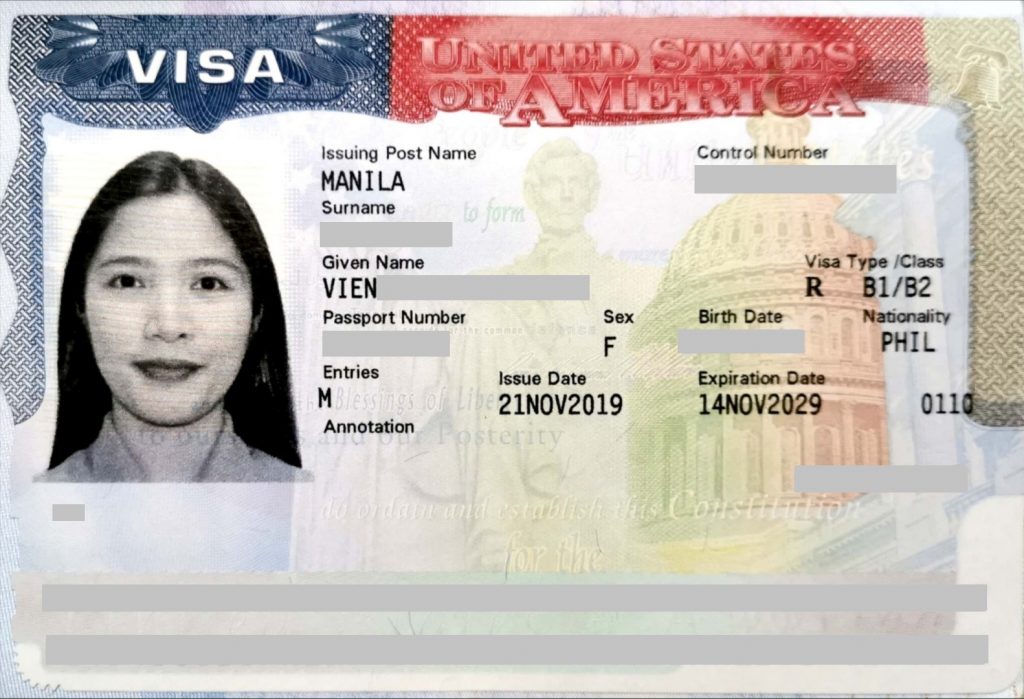
  • Contradicting a common assumption that most of the approximately 11 million undocumented immigrants in the United States came across the US-Mexico border illegally, almost half of all undocumented immigrants in the United States came into the US legally with a visa, often on fiancée, tourist or education visas, and then overstayed their visa time limit. They became what are simply labeled “overstayers”. A 2017 study by the Center for Migration Studies, a nonpartisan think tank, estimated visa overstays in 2014 accounted for 42 percent of the total undocumented population, or about 4.5 million people. It also projected that overstays made up about two-thirds of the total number of people who became unauthorized immigrants in the U.S. that year. There’s a strong case that, until the recent upsurge in border crossings, visa overstayers accounted for a larger share of the overall total of unauthorized immigrants. Complicating matters, the government doesn’t even compile information on the millions of overstayers, leaving it to others to piece together a snapshot of who they are and where in the U.S. they live.

So much for homeland security.

  • Contrary to assumptions that asylum applications have been going up, until recently asylum applications received by U.S. Citizenship and Immigration Services (USCIS) were actually down, not up, for the third straight year. Approximately 92,800 affirmative asylum applications were received by (USCIS) in FY 2020, the lowest number in five years, according to the Migration Policy Institute.
  • Whether to count undocumented immigrants in the 2020 census matters. About half of the 11 million unauthorized immigrants in the United States in 2018 resided in just three states: California (24 percent), Texas (16 percent), and New York (8 percent). If unauthorized immigrants were excluded from the apportionment count, California, Florida and Texas would each end up with one less congressional seat than they would have been awarded based on population change alone.
  • You may think that once an immigrant makes an asylum claim, action is prompt. Not so. Due to the large application volume and limited resources, both the affirmative and defensive asylum systems have extensive backlogs. As of December 2020, according to USCIS, there were 350,000 affirmative cases pending; the Executive Office for Immigration Review (EOIR) reported over 570,000 pending asylum cases. EOIR is a sub-agency of the United States Department of Justice whose chief function is to conduct removal proceedings in immigration courts and adjudicate appeals arising from the proceedings.
  • You may assume that when unaccompanied children are allowed to stay in the United States under Biden’s presidency and are placed with sponsor families, at least those families are in the country legally. Not necessarily. According to UPI, The Biden administration announced on March 12 it was terminating a policy of checking the immigration status of caregivers who come forward to sponsor unaccompanied migrant children because it discouraged caregivers from coming forward to sponsor the children. HHS and the Department of Homeland Security signed an agreement to promote “the safe and timely transfer of children” to sponsors, which the administration said was usually a parent or another close relative who crossed the border before their children.
  • Despite common assumptions that Mexicans and Central Americans are the entire illegal immigration problem. MPI has estimated that of all unauthorized immigrants during 2014-18, about 1.5 million (14 percent) were from Asia; 783,000 (7 percent) from South America; 648,000 (6 percent) from Europe, Canada, or Oceania; 406,000 (4 percent) from the Caribbean; and 230,000 (2 percent) from Africa. In one week of Dec. 2019, U.S. Border Patrol agents assigned to the Del Rio Station in Texas apprehended 56 migrants trying to cross into the United States from African countries, including Angola, the Democratic Republic of the Congo, Congo, Guinea, and Sierra Leone. During FY 2019, Del Rio Sector agents apprehended a total of 1,211 people from 19 African nations. Just a few days ago, a man was sentenced in federal court after three Chinese migrants, including a mother and her 15-year-old son, were found dead in the trunk of the man’s BMW in August 2019 after he crossed into the United States through the San Ysidro Port of Entry. On March 21, 2021, the New York Times reported that a center run by the Val Verde Border Humanitarian Coalition in Del Rio had recorded about 1,325 migrants so far in March, more than three times the number in February, said Tiffany Burrow, its director of operations. About 70 percent of them are Haitians, she said, with many others coming from Africa, “from Ghana down to Angola plus the Congo.”
Litter and bedding covers the floor of the hard-top shipping cargo container used to smuggle Chinese nationals to the United States.
  • In his eagerness to roll back President Trump’s immigration policies, President Biden has exacerbated the problems at the U.S.-Mexico border, creating a massive surge of migrants and numerous economic and security risks.  

What a mess.