Bolton’s Blather: The decline and fall of political biographies

boltontrump

When Dean Acheson wrote “Present at the Creation,”  a memoir of his years at the State Department, he was hailed as “probably the most consequential American diplomat of the twentieth century” and his book was applauded as  “…a must-read book not only for historians, but also for anyone interested in national policy, diplomacy, or military strategy.”

“As Truman’s Secretary of State from 1949 to 1953, he became the primary spokesman for America’s leadership in the world and for the creation of the post-World War II international system that exists today, a reviewer wrote in Foreign Policy.  “Present at the Creation is an insightful, absorbing and even occasionally humorous insider’s guide to how that system was created.”

Compare that with the reception of “The Room Where It Happened,” a memoir by John Bolton, who spent 453 days as President Trump’s national-security adviser. “John Bolton’s Epic Score-Settling – a scathing account of the President’s ‘stunning ignorance,’ incompetence, and corruption,” announced the New Yorker. “Bolton Spills the Beans,” declared the Dispatch. “John Bolton Dumps His Notes and Smites His Enemies,” wrote the New York Times.

How times have changed.

Bolton was apparently appalled by what he observed, but not appalled enough to go public with his concerns and resign in disgust. And certainly not appalled enough to forego a lucrative book advance.

Instead of offering readers a sweeping perspective of momentous occurrences, too many of the Trump books are just hatchet jobs, spiteful tell-alls written by peevish, self-aggrandizing, hangers-on. And too often they commit the cardinal sin of not even being well written.

 “The book is bloated with self-importance, even though what it mostly recounts is Bolton not being able to accomplish very much,” Jennifer Szalai wrote of Bolton’s book in the New York Times. “It toggles between two discordant registers: exceedingly tedious and slightly unhinged….(The account) has been written with so little discernible attention to style and narrative form that he apparently presumes an audience that is hanging on his every word.”

A librarian noted last year that she had found no less than 51 books about the Trump presidency, excluding self-published works, if you start counting with The Truth About Trump in May 2016.

Former press secretary Sean Spicer wrote just one Trump book, The Briefing: Politics, the Press, and the President. Cory Lewandowsi, Ann Coulter, Newt Gingrich, and David Cay Johnston have each written two Trump books.

“Eventually, perhaps there will be nothing more to say about the President’s competence or lack thereof,” the librarian said. “At that point, it’s unclear what will happen to this ballooning literary phenomenon. A bubble bust situation seems possible.”

And unlike Present at the Creation, most of the Trump screeds will likely be soon forgotten. Unhinged: An Insider’s Account of the Trump White House by Omarosa Manigault-Newman is surely one of those, as is Full Disclosure by Stormy Daniels and Michal Avenatti.

That will also likely be the fate of many Trump books still to come, including one by Trump’s niece, Mary L. Trump. Her book, “Too Much and Never Enough: How My Family Created the World’s Most Dangerous Man,” is set to come out on July 28.

This book is being pitched as a revealing missive that, according to Amazon, “shines a bright light on the dark history of their family in order to explain how her uncle became the man who now threatens the world’s health, economic security, and social fabric.”

I can’t wait.

I suppose the next book after Mary Trump’s will be “Life with me and mine,” by Arabella Rose Kushner. Put your order in now.

When a COVID-19 vaccine is found, give it to me first.

karenzimmerman

Karen Zimmerman

Karen Zimmerman, 74, died on April 14, 2020 at Good Samaritan Regional Medical Center in Corvallis. Two of her four children were by her side.

Bobby Rutledge, 77, died April 1, 2020; Robert Rykken, 83, died May 8, 2020; Merle and Delores Tofte, 87 & 85, died March 16, 2020.

All Oregonians, all died from COVID-19, all older adults.

They fit a pattern.

People 65 years old or older account for 80% of COVID-19-related deaths in the United States to date, according to the CDC.  It’s not just their age that’s relevant. Older people are more likely have underlying health conditions, such as cardiovascular disease, lung conditions, diabetes and cancer. These complications, not just age, dictate the mortality of older adults.

The mortality of COVID-19 patients is just 0.3% for patients in their 40s, according to research by Imperial College London published in Lancet Infectious Diseases. Mortality rose to 1.25% of those in their 50s,  4% of those in their 60s, 8.6%, of those in their 70s and 13.4% of patients 80 and older.

“These early estimates give an indication of the fatality ratio across the spectrum of COVID-19 disease and show a strong age gradient in risk of death,” the research concluded.

Not only are older adults more at risk, but as treatments have improved fewer young people are dying. In late March, Americans over age 75 made up about half of all weekly deaths while Americans under 45 made up between 4-5%, according to the CDC. People over 75 now make up about two-thirds of deaths while those younger than 45 make up less than 2%.

Covidagechart

With these kinds of numbers, it only makes sense that when a successful vaccine is developed it shouldn’t be given away willy-nilly or first come-first served. It should be given first to those most at risk, older adults. I’m 76, so that includes me and my older folks cohort. Right?

So many demands: Seattle’s CHAZ agenda

CHAZ

Think the people holding hostage the six-blocks of Seattle known as CHAZ (Capitol Hill Autonomous Zone) are just a ragtag bunch of activists putting on a street festival with no real agenda except a vague push for social justice?

Not so.

They’ve created a website and, like everybody with a gripe these days, they’ve posted on it a 1354-word “list of demands” by The Collective Black Voices at Free Capitol Hill.

They’ve got a lot of demands, at least 35 by my count. They include:

  • Eliminate 100% of the funding for the Seattle Police Department and the attached criminal justice apparatus and abolish both.
  • Redirect all the former Police Department and criminal justice money to: free public housing; public education to decrease class size and increase teacher salaries; naturalization services for undocumented immigrants; general community development.
  • Defund all Seattle Police employee pensions.
  • Disallow the operations ICE in Seattle.
  • In the period between now and the dismantlement of the police department, ban any use of armed force, including guns, batons, riot shields and chemical weapons.
  • Abolish youth jails and an under-construction juvenile detention center.
  • Provide reparations to victims of police brutality.
  • Retry all People of color currently serving a prison sentence for violent crime by a jury of their peers
  • Decriminalize all acts of protest; give amnesty to all protesters generally.
  • Release any prisoner currently serving time for a marijuana-related offense and expunge the conviction.
  • Give all prisoners currently serving time the full and unrestricted right to vote.
  • Abolish all imprisonment.
  • Empty the Seattle Police Department’s “Lost and Found” and return the items to citizens.
  • De-gentrify Seattle.
  • impose rent controls
  • Restore city funding for arts and culture. Americans to protest.
  • Provide free college to the people of Washington.
  • Prohibit the Seattle Police from performing homeless sweeps.
  • Require that hospitals and care facilities in Seattle employ black doctors to help care for black patients.
  • Give significantly greater focus to the history of Black and Native Americans in Washington State’s education curriculum.
  • Require that anti-bias training be a legal requirement for all jobs in education, medicine and the mass media.
  • Remove all monuments to historical figures of the Confederacy in Seattle and the State of Washington.

They even demand that “the people of Seattle seek out and proudly support Black-owned businesses.”

A section of the website titled “Commentary from International comrades” has not attracted much reaction either, though “K. Tulin” from Leningrad says, “You must attract new people from all over America, but for this you must have an idea of the future that will appeal to most Americans. You must read the works of Friedrich Engels, Karl Marx and Lenin!”

It’s not clear whether the CHAZ participants are finding the time to do the recommended reading.

As extreme as some of the demands may appear, Charlie Warzel, an Opinion writer at large for the New York Times, argues that large scale public support for Black Lives Matter activism wasn’t evident for a long time either. “And yet, there conversations didn’t disappear off the internet when they left the front pages,” he wrote recently. “They continued, despite portrayals to discredit the movement as a violent fringe and specious claims that ‘systemic racism is a myth’ perpetuated by the media and so-called social justice warriors.”

Calls to “Defund the Police,” in particular, need to be recognized as real “calls for a complete remaining of what they see as a corrupt, broken system,” Warzel argues.

Ironically, some Republicans in Congress are arguing that budgetary burdens imposed on states because of Covid-19 and the social unrest accompanying Black Lives Matter protests justify more, not less, funding of police in states. “In the wake of everything that’s happened with George Floyd’s murder, we can’t afford not to have EMTs, we can’t afford to not have police  officers on the street,” said Rep. John Katko (R-NY).

It’s hard to tell what the CHAZ site’s occupiers or the general public really think about all these demands because the principal media don’t ask. They should.


Heading down a perilous path: New York Times journalists vs. Sen. Tom Cotton

UPDATE: Sunday, June 7, 2020: JOURNALISM’S RETREAT –

James Bennet, editor of The New York Times’ editorial page, resigned today in the aftermath to the furor over publication of a controversial opinion piece by Sen. Tom Cotton (R-AR). Bennet’s resignation was announced by the Times’ publisher, A.G. Sulzberger. Bennet initially defended the piece’s publication, saying ” It would undermine the integrity and independence of The New York Times if we only published views that editors like me agreed with, and it would betray what I think of as our fundamental purpose — not to tell you what to think, but to help you think for yourself.” Sulzberger, had also initially defended the column’s publication.

Bari Weiss, a staff editor and columnist for the opinion pages of the Times, described the whole dispute as a “civil war”. “The civil war inside The New York Times between the (mostly young) wokes (and) the (mostly 40+) liberals is the same one raging inside other publications and companies across the country,” she tweeted.

“The dynamic is always the same,” Weiss added. “The Old Guard lives by a set of principles we can broadly call civil libertarianism. They assumed they shared that worldview with the young people they hired who called themselves liberals and progressives. But it was an incorrect assumption. The New Guard has a different worldview, one articulated best by @JonHaidt and @glukianoffThey call it “safetyism,” in which the right of people to feel emotionally and psychologically safe trumps what were previously considered core liberal values, like free speech.”

Weiss’ tweets set off a deluge of responses, some supportive, some critical:

#MeToo Barbie, MD
Um…pretty sure the “safetyism” that Black people want is physical safety. You know, since they keep getting shot by the cops. It’s fragile white people who are demanding emotional safety from having to confront their own racism.
John Barton
1/ Call it “safetyism” if you wish, but they’re seeking safety from arguments that run counter to their preferred narratives, which are a mix or leftist/progressive/intersectional views. I think “coercive leftism” is a more accurate label.


@Jyrkface


OF COURSE, @bariweiss sees people criticizing the NYT for pushing the idea that protesters should be shot, and considers the criticism an attack on the first amendment

@kbk3n3


Safetyism is actually just an excuse to control and manipulate people instead of growing up and dealing with opinions different from their own.


______________________________


“What is freedom of expression? Without the freedom to offend, it ceases to exist.”
Salman Rushdie

freespeech

“Running this puts black @nytimes writers, editors and other staff in danger,” New York Times opinion columnist Roxane Gay tweeted.

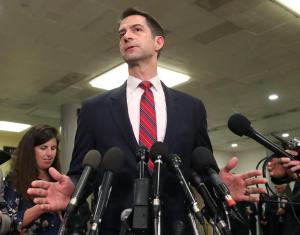
The “this” Gay was referring to was an op-ed written by Republican Sen. Tom Cotton of Arkansas that appeared in the Times on June 3, 2020. Running under the headline, “Send in the Troops,” Cotton argued that federal troops were needed to stamp out “anarchy” caused by the protests sweeping the United States that recalled “the widespread violence of the 1960s.”

“Some elites have excused this orgy of violence in the spirit of radical chic, calling it an understandable response to the wrongful death of George Floyd,” Cotton wrote. “Those excuses are built on a revolting moral equivalence of rioters and looters to peaceful, law-abiding protesters…The pace of looting and disorder may fluctuate from night to night, but it’s past time to support local law enforcement with federal authority.”

tomcotton

Sen. Tom Cotton (R-AR)

Gay wasn’t the only Times journalist to decry the paper’s publication of Cotton’s Op-Ed. Multiple other staff retweeted her message, with some adding comments.

“As a black woman, as a journalist, as an American, I am deeply ashamed that we ran this,” tweeted Nicole Hannah-Jones, creator of “The 1619 Project,”  a New York Times Magazine effort that aims to reframe America’s history by focusing on the consequences of slavery.

“Running this puts Black @nytimes staff in danger and it’s fucking dumb as shit. I stand with my colleagues,” tweeted Times reporter Kyle Buchanan.

Then, like a thundering herd, as though they’d signed a loyalty oath to lazy thinking and the progressive branch of American politics, more than 800 New York Times staff members signed a letter protesting publication of Cotton’s  Op-Ed, according to a story in the paper.

The whole affair is reminiscent of when Bari Weiss, a staff editor and columnist for the opinion pages of the New York Times, found herself at the center of a social media feeding frenzy for sending a positive but carelessly worded tweet.  The furor was described in a 2018 Quillette article by Jamie Palmer, “Fundamentalists vs The New York Times.”

The News Guild of New York, a news professionals union, jumped into the fray, too. “Though we understand the Op-Ed desk’s responsibility to publish a diverse array of opinions, we find the publication of this essay to be an irresponsible choice,” the Guild said in a statement.  “Its lack of context, inadequate vetting by editorial management, spread of misinformation, and the timing of its call to arms gravely undermine the work we do every day.”

Even the Times’ Public Editor, Gabriel Snyder, piled on. “The problem with this idea of the Times as an open forum for views of all stripes — no matter how abhorrent — is that by opening the door to all “operative opinion” (as a member of the Opinion section described it to me a couple of years ago), the Times becomes a platform for those who are hostile to its core values and at direct odds with the New York Times Company mission to “seek the truth and help people understand the world,”  Snyder wrote.

Initially, editorial page editor James Bennet strongly defended the paper’s publication of the senator’s opinion piece. “We published Cotton’s argument in part because we’ve committed to Times readers to provide a debate on important questions like this,” he wrote in the paper’s Opinion Today newsletter. ” It would undermine the integrity and independence of The New York Times if we only published views that editors like me agreed with, and it would betray what I think of as our fundamental purpose — not to tell you what to think, but to help you think for yourself.”

Times publisher A.G. Sulzberger also defended publication of Cotton’s piece. “I believe in the principle of openness to a range of opinions, even those we may disagree with, and this piece was published in that spirit,” he wrote in an email to the staff. “But it’s essential that we listen to and reflect on the concerns we’re hearing, as we would with any piece that is the subject of significant criticism. I will do so with an open mind.”

2018 New York Times Dealbook

New York Times publisher A.G. Sulzberger

Then the paper’s leaders put their tails between their legs and caved to the internal criticism.

During a virtual town hall with the paper’s staff, Sulzberger changed his tune, saying Cotton’s piece was “contemptuous” and “should not have been published.”

Bennet even bowed to the hurt feelings claims of some of the paper’s staff,  “I just want to begin by saying I’m very sorry, I’m sorry for the pain that this particular piece has caused,” he said.

Times spokesperson Eileen Murphy added that the paper would, as a result of the dust-up, reduce the number of Op-Eds we publish.”  She blamed a “rushed editorial process…that did not meet our standards” for the piece’s publication, adding, “As a result, we’re planning to examine both short-term and long-term changes, to include expanding our fact-checking operation and reducing the number of Op-Eds we publish.”

Now that’s a healthy response to controversy, cut back on publishing citizen opinions on the news of the day.

As a former newspaper reporter, I have to ask, is this what things have come to at one of America’s most influential newspapers? Woke reporters essentially arguing that opinions that offend them or cause them hurt feelings should not be published. Fragile reporters insisting that they be safe from uncomfortable ideas, that free speech endangers them. Public Editors, of all people, arguing that outside opinion writers need to be stifled if their perspective differs from the standard liberal view.

Going down this road is a perilous trip.

Sulzberger and Bennet took the appropriate stance at the outset. It’s far better to give exposure to controversial views and let the public debate them.

In the past, the paper has made a point of taking a strong stand on encouraging public debate on controversial issues.

“The purpose of the Op. Ed. page is neither to reinforce nor to counterbalance The Times’s own editorial position,” an introduction to the paper’s opinion pages stated 50 years ago. “The objective is rather to afford greater opportunity for exploration of issues and presentation of new insights and new ideas by writers and thinkers who have no institutional connection with The Times and whose views will very frequently be completely divergent from our own.”

The purpose of the Op-Ed page is “to create an environment of collegial combat among different points of view dealing with consequential questions.,” the introduction said. “…articles are are meant to push readers into considering points of view just outside their comfort zone.”

So much for adhering to these lofty principles today.


The Oregon Employment Department fiasco: Gov. Brown needs to look in the mirror.

brokenmirror

In blasting the bungling at the Oregon Employment Department, Oregon Gov. Kate Brown needs to look in the mirror.

The fact is the Oregon Employment Department has been a dysfunctional mess for years under three Democratic administrations.

On May 31, 2020, Brown fired Kay Erickson, Director of the Employment Department, after an uproar over delayed payment of unemployment benefits to thousands of struggling Oregonians.

“In the middle of this pandemic, the continued delays from the Oregon Employment Department in delivering unemployment insurance benefits to thousands of out-of-work Oregonians are unacceptable,” Brown said in a statement.

Brown neglected to point out that it was she who named Erikson Director in Aug. 2016, effusively praising her at the time as “an innovative and collaborative leader.”

She also failed to point out that in January 2016 she had also fired the previous director, Lisa Nisenfeld, who had been appointed in September 2013 by another Democratic governor, John Kitzhaber.

Nisenfeld had also taken over a dysfunctional agency that had lost the trust of the Legislature and wasted money on problematic software projects.

In November 2013, The Oregonian reported the Employment Department poured nearly $7 million into development of a failed software project before scrapping the project altogether.

A July 2013 state assessment of the Employment Department had uncovered distrust, dysfunction and “warring factions” led by the agency’s top deputies, as well as multiple failures in the department’s IT department.

“The Information Technology department of the Oregon Employment Department (OED) is in need of leadership, governance, priority setting, methodology, contract administration, and appropriate HR practices,” the assessment said.

The 2013 assessment also lambasted IT governance. “When the (2008-2009) recession hit, multiple projects were added to the IT workload, senior managers left with poor hand off and no continuity with regard to IT sponsorship work,” it said. “These projects were not prioritized and IT was left relatively unsupported.”

Then there’s the fact Oregon received $85.6 million in one-time modernization funds from the U.S. Department of Labor way back in 2009, when Democrat Ted Kulongoski was governor.

The upgrade was supposed to solve problems associated with the use of computers that were running systems dating back to the Reagan administration and earlier. Although subsequent audits have warned that the Employment Department remained woefully unprepared for a spike in jobless claims, most of that federal money remains unspent.

Brown has been governor since February 2015. It’s time to stop blaming everybody but herself and fellow Democratic governors for the fiasco at the Employment Department.

Addendum:

Oregon leaders squandered years on jobless benefits computer upgrade. Now the project’s future is again in doubt, by Mike Rogoway, The Oregonian/OregonLive, May 19, 2021.

Courting division: battling it out over the distribution of federal tax revenue

Bitch. Bitch. Bitch.

To the long list of issues dividing a factious America, add one more.

Since Donald Trump’s election, the chorus of people bitching about some states contributing more in taxes to the federal government than they receive back in Federal spending has gotten louder.

balanceofpayments

Source: Giving or Getting? New York’s Balance of Payments with the Federal Government, Rockefeller Institute of Government, January 22, 2020

A January 2020 report from the Rockefeller Institute of Government calculated that forty-two states, including Oregon, had a positive balance of payments with the Federal government for 2018, each receiving more Federal spending than taxpayers remitted in Federal taxes and other Federal revenues. But eight states, including New York, had a negative balance of payments in 2018.

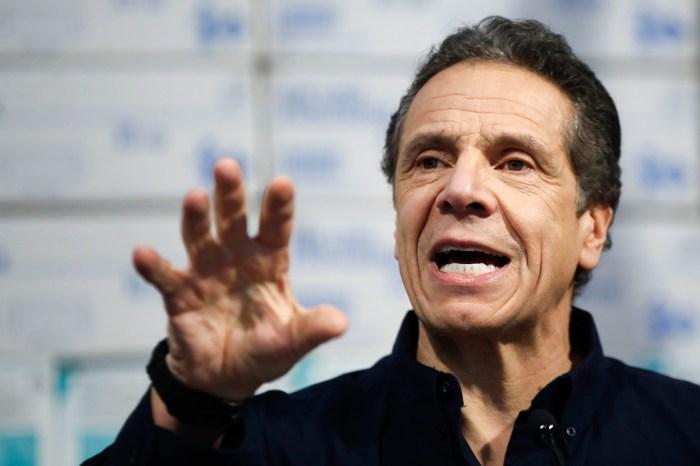
New York consistently holds itself up as the biggest loser in terms of what states give and get. According to the Rockefeller Institute report, New York sent $22 billion more in taxes to the federal government in 2018 than it received back and $116.2 billion more over the past four years.

Andrew Cuomo

New York Governor Andrew Cuomo argues New York is the “number one giver” of federal tax revenue and has been “bailing out red states for decades.”

“We believe this report is essential reading for policymakers and advisors in Congress and the executive when determining “winners” and “losers” in upcoming federal policy debates.,” wrote Patricia Strach, Interim Executive Director of the Rockefeller Institute.

But focusing on “winners” and “losers” in the allocation of taxes is a mistake that sets the stage for even greater polarization that will undermine the country’s strength.

You only need to look at the chaos that ensued under the Articles of Confederation went into effect in March 1781 to see the folly of putting state’s rights over the common good. As George Washington put it, the states needed to abandon “local prejudices and policies” for “the interest of the community.”

What was needed Washington and many other leaders many leaders concluded was a more complex, centralized government under a new constitution formulated at a convention of state delegates.

On Nov. 23, 1786 Virginia’s General Assembly adopted an act making it clear the states had “…to decide the solemn question – whether they will, by wise and magnanimous efforts, reap the just fruits of that independence which they have so gloriously acquired and of that union which they have cemented with so much of their common blood – or, whether by giving way to unmanly jealousies and prejudices, or to partial and transitory interests, they will renounce the auspicious blessings prepared for them by the revolution…”

The Constitution that emerged from the Constitutional Convention in Sept. 1787 was a momentous achievement that set the foundation for a vibrant, unified nation. Complaints about the distribution of federal tax revenue among the states can only undermine national cohesion.

Far better to understand that in a system with progressive taxes, where wealthier people pay more and extra money is redistributed to people in need, states with wealthy residents will give more than they get.

Moreover, as the Tax Foundation wrote in a Special Report, strictly considering whether a state gets as much as it pays in isn’t “a very civic minded view of federal government. Presumably citizens pay federal taxes to provide for the common defense and to support other national programs that benefit the nation as a whole.”

Focusing on the uneven balance of payments just spurs more national divisiveness (as if we don’t have enough already) and draws attention away from America’s need for a commitment to justice and equality.

As the COVID-19 signs say, “We’re all in this together.”


Hypocrisy Lives:  Shemia Fagan’s embrace of union money

fagan

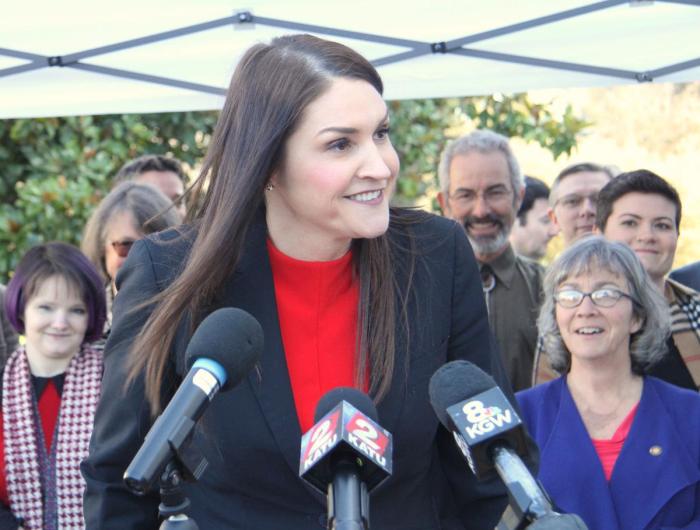
State Sen. Shemia Fagan announcing her entry into the Democratic primary race for Oregon Secretary of State

Rabid liberal Democrats like Secretary of State candidate Shemia Fagan rail against the power of corporations and their donations to political campaigns.

In that vein, she’s a critic of the U.S. Supreme Court’s 2010 Citizens United decision that the government cannot restrict corporations, associations, and labor unions from making independent expenditures in support of or opposition to candidates.

But in a display of raw hypocrisy, Fagan is a big fan of political donations by labor unions, apparently considering union money more virtuous. In fact, union donations  were the lifeblood of her 2020 primary campaign, even though unions represent just 14.4% of Oregon workers.

A late entrant to the Democratic primary for Secretary of State, after Rep. Jennifer Williamson dropped out, Fagan quickly gained the support of unions and amassed a substantial campaign war chest. Public employee unions, in particular, backed Fagan because she voted against Senate Bill 1049, which limited PERS benefits

According to the Oregon Secretary of State, reported union contributions to Fagan’s campaign from when Williamson dropped out on Feb. 10, 2020 to May 15, 2020 totaled at least $796,775.68.

I guess Fagan’s worries about undue influence don’t apply to unions, only to businesses.


Union contributors to Committee to Elect Shemia Fagan

      Feb. 10 – May 15, 2020

  • SEIU – Citizen Action for Political Education – $239,389.86
  • Oregon AFL-CIO – $35,696.16
  • SEIU/American Federation of State, County and Municipal Employees – Oregonians for Ballot Access – $47,500.00
  • AFSCME Local #328 – $200.00
  • International Assoc. of Firefighters – $25,000.00
  • SEIU Local 503, OPEU – $3,825.91
  • Oregon Education Association – OEA PAC – $115,275.00
  • Iron Workers District Council of the Pacific Northwest – $1,000.00
  • Oregon Laborers Political Action Committee – $11,000.00
  • Lane Professional Firefighters Assoc – $1,000.00
  • Local 48 Electricians PAC – $7,500.00
  • Sheet Metal Contractors National Association (SMACNA) PAC – $1,000.00
  • American Federation of State, County & Municipal Employees (AFSCME) – $75,000.00
  • Portland Metro Fire Fighters PAC – $5,000.00
  • National Education Association – NEA Fund for Children and Public Education PAC – $25,000.00
  • Oregon State Firefighters Council – $5,000.00
  • Oregon AFSCME Council 75 – $91,638.75
  • Oregon School Employees Association – Voice of Involved Classified Employees – $25,000.00
  • Plumbers & Steamfitters PAC – $15,000.00
  • Local #1159 FirePAC – $1,000.00
  • SEIU Local 49 COPE Fund – $5000.00
  • Professional Firefighters PAC – $750.00
  • Pacific Northwest Regional Council of Carpenters -$2,500.00
  • Sheet Metal Workers International Association Local 16 -SMART Local 16 PAC – $5,000.00
  • Service Employees International Union Local 503/ American Federation of State, County and Municipal Employees Local 75 – Oregonians for Ballot Access – $47,500.00
  • Oregon State Building and Construction Trades Council – Building Trades PAC – $5,000.00

*All organizations noted above are as identified in campaign finance information provided by the Oregon Secretary of State.


Salem, OR salon owner turning COVID-19 shutdown protest into cash

Lindsey

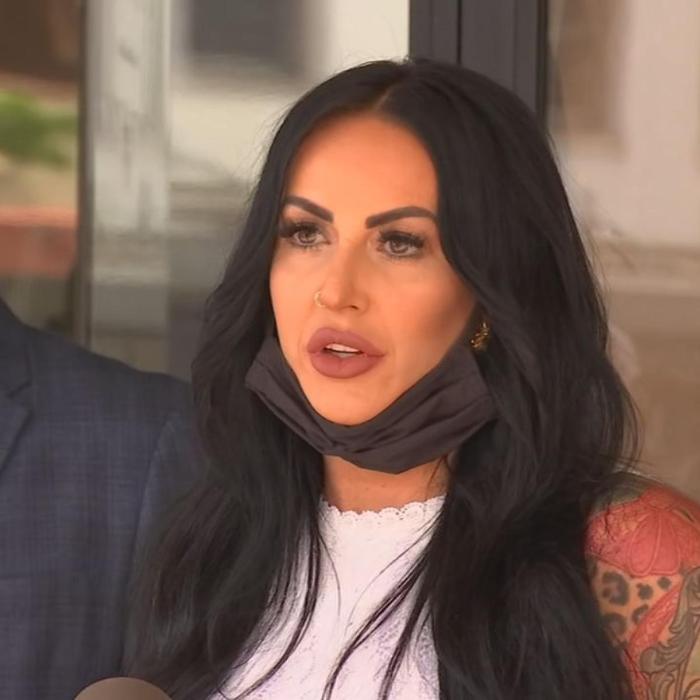
Lindsey Graham (Source: KPTV.com)

Lindsey Graham, operator of Glamour Salon in Salem. OR, has figured out how to make money off her defiance of Gov. Kate Brown’s COVID-19 stay-at-home order.

Graham reopened her salon on Tuesday, May 5, 2020, saying she had to make the move to pay her bills and provide for her family.

Conveniently, she started a GoFundMe account the day before, on May 4, prior to government action in response to her salon’s reopening.

“Our family businesses have been shut down by the government,” the account said. “No income for our family and next to nothing in govt assistance. Please help our family fight for our American rights and save our hard earned dreams. The govt has strong armed us, threatened us, and come after our family. We are taking a STAND and the legal battle ahead of us will be long and tough. We appreciate ALL your support in every way!!”

Graham set the GoFundMe account’s goal at $70,000. As of Friday afternoon, May 28, it had raised $71,070. Ten contributors had given $500 or more, one gave $2000. Not a bad haul. And not only can Graham spend the money pretty much however she wants, but it may not even be taxable income.

On May 14, Graham posted to the account that Oregon OSHA had fined her $14,000 and demanded she close the salon’s doors.

“This is not only unconstitutional, but unlawful and unjust,” Graham posted.
Please share this…..I will be FIGHTING this citation and fighting their case. I’m retaining my attorney to take this to court!!!! The government cannot find their own loopholes to punish me for trying to earn a living.
Please support my cause and help me fight!!!!”

In pleading for financial support from the public, Graham is copying a tactic employed by Shelley Luther, the Dallas, TX owner of Salon à la Mode who was arrested on April 24, 2020 for opening her business despite COVID-19 restrictions.

GoFundMe site to help her went live on April 23, 2020, the day before her arrest.

“Shelley Luther is an American Hero that has decided to resist tyranny by opening her business against an unlawful State Executive Order,” read the description for the Shelly Luther Fund campaign.

A fellow Texan, Rick Hire, said the Woke Patriots organization was behind the campaign. In a 30-minute May 9  YouTube video, Hire says he founded the organization to deal with challenges to constitutional rights and the group picked Luther to be the first beneficiary of a GoFundMe campaign.

The GoFundMe site was a hit right out of the gate. When an initial goal of $250,000 was rapidly surpassed, the goal was raised to $500,000. The total raised now sits at $500,040 and the window for donations has closed.

Who knows? Lindsey Graham may hit the jackpot, too.


After COVID-19, whither Washington Square mall? Pier 1 latest to liquidate.

washsqmallinterior

When J.C. Penney filed for bankruptcy on May 15, 2020, did it put another nail in Washington Square’s coffin or signal a major transformation of the mall?

‘The Washington Square mall was a wondrous thing when it opened. The enclosed site, designed to entice shoppers with large anchors supplemented by smaller scale stores, attracted customers from as far away as Seattle.

The original mall encompassed 1,093,500 leasable square feet and was the largest enclosed shopping center in Oregon. It has a long history of change and renewal.

A 160,000 sq. ft. Meier & Frank store was the first to open for business on August 16, 1973. A 211,900 sq. ft. Sears store came next in October of that year, followed by a 120,000 sq. ft. Lipman’s in November. In May 1974, Nordstrom made its debut with a 108,000 sq. ft. store, followed by an 89,300 sq. ft. Liberty House store in August 1974 and a 210,000 sq. ft. J.C. Penney store in August 1975.

Turnover among the larger stores began within a few years.

  • In 1978, Frederick & Nelson took over the Liberty House store.
  • In 1979, Frederick & Nelson acquired the Lipman’s chain and moved the former Lipman’s space; Mervyn’s then took over the former F&N space.
  • In 2008, Mervyn’s declared bankruptcy and closed all its stores, including the one at Washington Square.
  • In 1991, Frederick & Nelson declared bankruptcy and closed its Washington Square store.
  • In 2005, Mervyn’s closed.
  • In 2008, Dick’s Sporting Goods took over the former Mervyn’s space.

The mall weathered all of these changes and its current owner, Macerich, a real estate investment trust, has been rewarded with average sales per square foot of $1261. But much greater challenges have now emerged, particularly with the mall’s anchor stores, but with some smaller retailers as well.

The Wall Street Journal predicted last week that about 100,000 stores are expected to close over the next five years—more than triple the number that shut during the previous recession. Partly to blame is the jump in e-commerce to 25% of U.S. retail sales from 15% last year, UBS estimates.

“The turbocharged shift to e-commerce is expected to further depress profit margins and accelerate a shakeout in a country that already had too much bricks-and-mortar space for an increasingly digital world,” The Journal said.

It is also looking increasingly less likely that the economic recovery from COVID-19. In a May 17 interview on the CBS show 60 Minutes Federal Reserve Chairman Jerome Powell warned that the economic recovery could take over a year . “We’ll get through this. It may take a while,” Powell said. ” It may take a period of time. It could stretch through the end of next year.”

In the Portland Metro Area, no anchor stores at malls are really safe. On May 6, Nordstrom said it planned to permanently shut 16 of its 116 full-line stores as part of its adjustment to the retail environment during the coronavirus outbreak. The following day, it said it would not reopen its Clackamas Town Center location in Happy Valley, OR after the COVID-19 shutdown ends and that the store will be permanently closed by August, 2020. Nordstrom closed two other Oregon-area stores in 2015 and one in 2018.   Nordstrom stock over the past 12 months is down from $37.46 to $16.41, a 66% decline.

Against this backdrop, consider the situation with many of Washington Square’s stores as the mall remains closed during the COVID-19 turmoil:

searslogo1

 The mall’s current troubles began with the bankruptcy of Sears in 2018 and the closure of its 211,900 sq. ft. Washington Square anchor store in 2019.


pier1

On May 18, 2020, Pier 1 Imports, which was founded in 1962, said it is permanently closing all its 540 retail stores, including one at Washington Square. The stores will reopen after the COVID-19 shutdowns and then proceed to liquidate their merchandise.

The company filed for chapter 11 protection earlier this year on Feb. 17 in the U.S. Bankruptcy Court in Richmond, Va. and had hopes of a sale to an interested buyer, but none emerged. “It is now clear that Pier 1’s future does not involve any brick-and-mortar retail locations,” the company said.

JCrewlogo

Chinos Holdings, J. Crew’s parent company, which also owns Madewell, filed for Chapter 11 bankruptcy protection  in federal bankruptcy court for the Eastern District of Virginia on May 3, 2020.  J. Crew has lost money for six straight years. Like many of its peers, it took it on the chin with the increase in e-commerce. But J. Crew also struggled to deal with $1.7 billion in debt resulting from a leveraged buyout by two private equity firms ( TPG Capital and Leonard Green & Partners) in 2011.

“Like many other retailers, J. Crew and Neiman (Marcus) over the past decade paid hundreds of millions of dollars in interest and fees to their new owners, when they needed to spend money to adapt to a shifting retail environment,” the New York Times reported on May 14, 2020. “And when the pandemic wiped out much of their sales, neither had anywhere to go for relief except court.”

 

JCPenneylogo 

After a long decline,  J.C. Penney filed for bankruptcy on May 15, 2020. The company, which hasn’t booked an annual profit in nine years. said it plans to close an undisclosed number of its roughly 850 department stores and put itself up for sale. The company’s annual net sales contracted 8.1% to $10.7 billion in 2019, following a 7.1% decline in 2018, 0.1% in 2017 and 0.4% in 2016. J.C. Penney’s stock hit a high off $82.23 on March 29, 2007. It started 2020 at $1.12 a share and has been trading below $1 per share for most of this year. It closed on May 15, 2020 at 24 cents a share.

“I don’t think there is a place for J.C. Penney anymore,” Robin Lewis, founder and CEO of The Robin Report, which reports on the retail industries. said to CNBC on May 16, 2020. “Even if we didn’t have this virus … we have been over-stored for half a century in this country.”

In the same vein, an April 2020 report from Green Street Advisors, a real estate research firm, said more than 50% of the department stores anchoring America’s malls are going to close permanently by the end of 2021. “Many malls will now be faced with multiple anchor vacancies, a tough place to come back from, especially in an environment where demand for space is virtually non-existent,” said said Vince Tibone, a Green Street analyst.

The April report was prescient when it said JCPenney in particular was on the edge of a bankruptcy that would probably result in its liquidation.

On May 18, the company said it expects to close about 242 stores — 30 percent of its locations — as part of a restructuring plan.


macyslogo

“With little or no revenues coming in for these non-essential retailers – traditional department stores, fashion, and luxury retailers being the most profoundly affected – many of the most prominent mall-based retailers, which have been struggling for years from falling sales and weighted down by too much debt, are teetering on the brink,” the Robin Report said in April 2020. Macy’s Inc. lost its investment-grade rating from Standard & Poor’s and saw its debt rated junk in February 2020.

The company is now seeking loans to bolster its cash flow, which has significantly decreased as a result of the shutdown, according to a May 7, 2020 regulatory filing. It is also looking to sublease almost half of its Long Island City headquarters in order to retain more of its cash.

Over the past 52 weeks, Macy’s stock has dropped from a high of $23.40 to $5.31 on Friday, May 15, 2020.

 

gaplogo2 

Gap Inc. is the parent company of Gap, Athleta, Banana Republic, Old Navy, Janie and Jack, and Intermix.

Sonia Syngal, CEO of Gap Inc. said in mid-March that the company would likely reopen fewer stores for the flagship Gap brand after the COVID-19 closures are lifted. “We’ll be using this as an opportunity to refashion the company for what we want it to look like over the next 50 years,” Ms. Syngal told the Wall Street Journal in early May 2020.

Market watchers are more cautious, having watched Gap’s stock decline from $17.28 at the beginning of the year to $7.60 on Friday, May 15, 2020, a 56% drop.

“The apparel industry is rattled, and Gap is no exception,” Forbes reported on May 7, 2020. ” A COVID recession will impact the company’s revenues, cash flows, and ability to pay dividends. We estimate that a recession that persists through late Q3/early Q4 2020 can reduce the company’s revenues by 40% from $16.4 billion in 2019 to $10 billion in 2020.”

On April 23, 2020, Gap Inc. warned in a filing with the U.S. Securities and Exchange Commission it may not survive the next 12 months intact. The company said it had suspended rent payments for shuttered stores, which approximated $115 million per month in North America, and was in talks with landlords to defer payments, change lease agreements, or in some cases, terminate the leases and permanently close some stores.

“We will need to take additional actions to both preserve existing liquidity and seek additional sources of liquidity, beyond our currently available cash and credit facilities within the next 12 months as existing cash and cash expected to be generated from operations may not be sufficient to fund our operations,” the SEC filing said.

 

abercrombie3

Abercrombie & Fitch derives the bulk of its revenues from the US, which has been hit hard by COVID-19. The outbreak of the virus has led to a steep fall in demand, which the company’s Q1 2020 results on June 4, 2020 will likely confirm with major drops in revenues across all segments.

“Already struggling with sluggish sales and low gross margin, the company will face significant challenges from store closures,” The Motley Fool, a financial and investing advice company, said in mid-March.

Abercrombie & Fitch, showing it is not immune to the impacts COVID-19 is having on other retailers, has said it’s open to leaving any shopping center while it reassesses its store base. “We’re willing to walk away from any mall at this point. It’s about getting the right store in the right location at the right size,” CFO Scott Lipesky said in March.

Its stock is down from $17.48 at the start of the year to $11.14 at the close on Friday, May 15, 2020.

victoriaslogo

L Brands, parent of  Victoria’s Secret, Pink and Bath & Body Works, might not survive the pandemic after Sycamore Partners, which agreed to buy a 55% stake in Victoria’s Secret in February, tried to cancel the $525 million deal and agreed earlier this month to scrap it. Shares of L Brands have fallen 53% in the past 12 months.

On May 14, 2020, Leslie Wexner, a retailing legend, officially retired after 56 years as head of the company. The New York Post reported that his departure came at a time when his reputation “…has been tainted by sagging sales at Victoria’s Secret; complaints of a culture of misogyny, bullying and sexual harassment at the lingerie peddler; and new revelations about Wexner’s business dealings with convicted pedophile Jeffrey Epstein.”

On May 20, L Brands,, posted a first-quarter net loss of nearly $300 million and reported that net sales fell 37 percent in the quarter to $1.65 billion. Sales at Victoria’s Secret fell by almost 50% half and Bath & Body Works declined 18%.

Victoria’s Secret, which has long positioned itself as a purveyor of elegant and sexy lingerie styles,  has been struggling with changing tastes, declining revenues and a stale image.


LolliLogo

Lolli & Pops candy company filed for bankruptcy in August 2019.  Online sales ceased in February 2019 and the company ceased paying rent to some landlords in April 2019. The company blamed vanishing visitors at shopping malls for its financial troubles. In March 2020, the company was purchased for $2.4 million by an affiliate of TerraMar Capital LLC, which said it planned to diversify the company into e-commerce and wholesale. It is unclear whether TerraMar is succeeding in reviving the company.

harrylogo2

1-800-flowers.com, the parent company of Harry & David, which has operated seasonal stores at Washington Square, said in April 2020 it would permanently close most of the brand’s bricks-and-mortar locations in the U.S. and focus on an e-commerce future.

Harry & David filed for bankruptcy protection in 2011, crippled by debt piled upon it by private equity owners. The company emerged from six months in Chapter 11 bankruptcy protection in September 2011 after the court approved its reorganization plan. 1-800-flowers.com acquired Harry & David Holdings for $142.5 million in cash. The sale closed in September 2014.


anntaylorlogo

Standard & Poor’s ratings say Ascena Retail Group (ASNA), the parent of Ann Taylor, could default in coming months or years. It is expected to face significant challenges as remote work becomes more prevalent in the coronavirus era and the way women dress, particularly professionals, is changing dramatically.

Ascena operates stores under the Premium Fashion segment (Ann Taylor, LOFT, and Lou & Grey), Plus Fashion segment (Lane Bryant, Catherines and Cacique) and for tween girls under the Kids Fashion segment (Justice).

“Ascena…has had five consecutive years of losses as it has struggled to offer the right clothing selection, relied heavily on discounting and maintained stores in less-than-ideal locations,” Bloomberg reported in Oct. 2019.

Ascena recently repurchased some of its debt at below-par prices, which S&P Ratings deemed a “selective default.” Even after the company relieved some of its debt burden with that step, S&P assigned Ascena a credit rating of CCC-, the lowest before default. That was based on the analysts’ expectation of “conventional default or a broad-based restructuring of Ascena’s capital structure in the next six months.” Ascena’s stock is down 83% year to date. 
josABanklogo

Houston-based Tailored Brands Inc., the parent company of Jos. A. Bank (and Men’s Wearhouse), has been showing sales decreases and rapidly shrinking profits. In Its fourth quarter earnings, Tailored Brands saw net sales drop 3% to $691 million while Jos. A. Bank sales dropped 5% to $204.7 million.

For the full fiscal year 2019, on a GAAP basis Tailored Brands reported a loss of $35.0 million compared to operating income of $13.3 million in Fiscal Year 2018.  Mary Beth Blake also resigned as president of Jos. A. Bank in December as part of a reorganization.

Men’s Wearhouse’s acquired  JoS. A. Bank in March 2014 for $1.8 billion. With both retailers now suffering sales declines, Tailored Brands would probably prefer to have that $1.8 billion now.

“(Tailored Brands)…is trying to change course a bit by offering things like jeans and more business-casual attire,” The Motley Fool wrote in Dec. 2019. “But this segment is pretty well saturated by a plethora of brands, so it’ll be tough. Tailored Brands is far from a top stock and faces multiple challenges that all need to be addressed now. Based on its balance sheet, the time to fix those problems is getting shorter and shorter.”

The company’s stock is down more than 70% so far this year.

———————-

Washington Square closed on March 18, 2020 because of the Covid-19 crisis. A reopening date is still not settled. When it does reopen, with so many of its retail tenants at risk, the continuation of the mall as we know it is doubtful. Will Washington Square be able to evolve to suit changing economics and tastes?

Will it be more like this:

futuremall

Or this:

abandonedmall1

The CARES Act will cost Oregon, too: what one hand giveth, the other taketh away

abstract business interior double exposure

When President Trump signed the Coronavirus Aid, Relief, and Economic Security Act (CARES Act) into law on March 27, 2020, the assumption was that the largest-ever economic stimulus package in U.S. history would be a cornucopia of goodies.

But buried within the law are provisions that are likely to actually reduce revenue in Oregon by millions. As the saying goes, what one hand giveth, the other taketh away.

The CARES Act includes several provisions expected to affect state revenue. The largest:

  • Allow the deduction of “excess” losses by non-corporate businesses that would otherwise exceed a threshold established in the Tax Cuts and Jobs Act of 2017;
  • Allow net operating losses for individuals, estates, and trusts to be carried back for up to five years, and delimiting the amount by which these losses may be used to reduce taxable income;
  • Increase the percentage of business interest income that is tax deductible; and
  • Suspend required minimum distributions from retirement funds, allowing some retirees to let their fund balances recover before making distributions and incurring tax liability.

The CARES Act is expected to reduce federal taxable income for tax years 2018 through 2020, thereby reducing Oregon taxable income in each of those years. Taxpayers will be able to amend 2018 and 2019 tax returns in order to benefit from the additional deductions, which will reduce state income tax revenue when the amended returns are processed and a portion of taxes are refunded to taxpayers.

The CARES Act didn’t include financial relief for states struggling through the COVID-19 downturn. Nor did the $484 billion coronavirus relief package Trump signed on April 24.

House Democrats are pushing for another bill that would beef up state and local government finances and help offset some of the losses noted above, but Senate Majority Leader Mitch McConnell and President Trump are resisting. Both said earlier this week that there isn’t yet a need for Congress to pass additional legislation.