The State of the Union: who cares?

Americans are getting bored with President Barack Obama.

A pitifully low number of Americans watched Obama’s January 12, 2016 State of the Union address.

U.S. President Obama waves at the conclusion of his final State of the Union address to a joint session of Congress in Washington

U.S. President Barack Obama waves at the conclusion of his final State of the Union address to a joint session of Congress in Washington January 12, 2016. REUTERS/Evan Vucci/Pool

According to Neilsen, just 31.7 million of 323 million Americans, less than 10 percent, watched the president’s address live on 13 networks and tape-delayed on Univision. For comparison, the AFC Championship football game on Sunday got 42 million viewers.

The rating for Obama’s address was the lowest since Nielsen began recording viewership in 1993. About 53.4 million watched his first State of the Union address on February 24, 2009.

Obama does have one thing to be thankful for. Americans’ lack of interest in his State of the Union address probably wasn’t as bad as viewer disregard for S.C. Governor Nikki Haley’s Republican Party rebuttal.

As Politico put it, “…the rebuttal’s viewing audience is comprised almost entirely of members of the press, who are forced to watch the stupid rebuttal as part of their jobs…”

Penn, El Chapo and Rolling Stone: throwing journalistic ethics to the wind

Mexican photojournalists hold pictures of their murdered colleague Rubén Espinoza during a demostration held at the Angel of Independence square in Mexico City. Photograph: Yuri Cortez/AFP/Getty Images

Mexican photojournalists hold pictures of their murdered colleague Rubén Espinoza during a demostration held at the Angel of Independence square in Mexico City. Photograph: Yuri Cortez/AFP/Getty Images

Rubén Espinosa, 31, a photographer for the Mexican investigative magazine Proceso, was killed in a Mexico City apartment in August, along with four women. Each had been beaten, tortured, and shot in the head.

Espinosa was the 13th journalist working in Veracruz to be killed since Governor Javier Duarte from the ruling Institutional Revolutionary party (PRI) came to power in 2011, according to Article 19, an international organization defending freedom of expression and information.

But what does Sean Penn care about that? His interest is in self-aggrandizement. Tossing humanity aside, he arranged to do a secret, exclusive interview of Joaquín Guzmán Loera, a murderous drug cartel leader known as El Chapo, that was published January 9 by Rolling Stone.

Sean Penn (L) greets El Chapo

Sean Penn (L) greets El Chapo

This is the same paragon of journalistic ethics that published the since discredited story of a gang rape of a student at a University of Virginia fraternity. A report by the Columbia Graduate School of Journalism reviewing Rolling Stone’s pursuit and coverage of that story said the publication didn’t follow “basic, even routine journalistic practice”.

The same criticism applies to Penn’s story, a stream of consciousness essay that reads like something written by a drug-addled Hunter S. Thompson, requiring the reader to suffer through over 4000 words about the derring-do involved in getting to El Chapo before Penn even meets him.

“I take no pride in keeping secrets that may be perceived as protecting criminals, nor do I have any gloating arrogance at posing for selfies with unknowing security men,” wrote Penn. “But I’m in my rhythm.” So why consider “…those beheaded, exploded, dismembered or bullet-riddled innocents, activists, courageous journalists and cartel enemies alike…” who’ve died at El Chapo’s hands? Journalistic glory awaits.

Besides, as Penn wrote, El Chapo doesn’t engage in “gratuitous kidnapping and murder”. He’s “…a businessman first, and only resorts to violence when he deems it advantageous to himself or his business interests.” Well, that explains it.

You might be surprised that, as a former reporter, I’m not too concerned about the ethics of Penn interviewing El Chapo, even though he’s clearly a drug lord who has committed murder and mayhem. Any good reporter would try to do the same.

I also don’t think Penn doing the interview and not advising law enforcement of his contact with Guzman, and where he could be found, is an ethical error.

My gripe is about something Rolling Stone admitted right up front, without any apparent shame: “Disclosure: … an understanding was brokered with the subject that this piece would be submitted for the subject’s approval before publication.”

Jann Wenner, Rolling Stone’s publisher, even told the New York Times. “I don’t think it was a meaningful thing in the first place.”

The problem is that’s a massive breach of journalistic principles.

It also raises legitimate questions about the contents of the article. Wenner said El Chapo didn’t ask for any changes, but how can the reader trust that? Admitting that the subject was given a pre-approval opportunity invites a lot of speculation about the truth.

Wenner compounded the problem by telling the Times, “We have let people in the past approve their quotes in interviews.”

That’s a bad move, too. It’s OK to go back to sources to clarify facts, to avoid making errors, but not to give them quote approval.

Politico argues that pre-approval was no big deal. “It was only common sense for El Chapo to demand story approval lest a geographically revealing detail get folded in and lead to his capture. In other words, the El Chapo story probably would not have been granted without the pre-publication concession—and without having a swaggering celebrity amateur to report and write it.”

Saying it’s OK to grant pre-approval if that’s the only way to get a story done is a cop out if there ever was one. That’s a slippery slope that can justify all sorts of ethical compromises to get a story.

And that’s where trust in journalism is lost.

Gun safety training: another feel-good solution to shooting deaths

Umpqua Community College candlelight vigil

Umpqua Community College candlelight vigil

After every shooting rampage, whether at Umpqua Community College, San Bernardino, or Sandy Hook, voices are raised across the country calling for “something to be done”.

The latest solution to escalating firearms deaths, put out there on Jan. 9 by the New York Times, is government-mandated gun safety training. The fact that it would have little impact on gun deaths, except, perhaps, to make suicides more efficient, is apparently irrelevant.

“…since we’re awash in firearms anyway, we’d be better off if people knew how to use them without hitting anything other than their target,” The New York Times argued in a Jan. 9 editorial.

Sounds good, but according to the U.S. Centers for Disease Control and Prevention, the majority of firearm deaths aren’t caused by bumbling undertrained shooters inadvertently blasting people. Instead, most gun deaths, roughly 6 of every 10, are suicides. This has been the case since at least 1981.

Training potentially suicidal people how to handle a gun better is unlikely to prevent them from blowing themselves away.

As homicides by firearms have been declining, the share of all gun deaths by suicide has been growing.

In 2010, for example, there were 31,672 deaths by firearms, including: 19,392 suicides (61%) compared with 11,078 homicides (35%).

In 2013, there were 33,636 deaths by firearms, including 21,175 suicides by firearm (63 %) compared with 8,454 homicides by firearms (25%).

Mandated safety training of potentially homicidal folks (including criminals, if they are so inclined) is also unlikely to sway them from their murderous intent. And if the New York Times’ objective in calling for required gun safety training is greater accuracy by shooters, does it make sense to insist on homicidal nutcases learning how to aim better?

I’m no gun-rights evangelist, but this push for government-mandated gun safety training to cut down on gun killings sounds to me like an attractive, but flawed and costly, tactic more symbolic than anything else.

If gun control proponents really want solutions, they should be realistic about what tactics will cost in time and money and whether they are capable of actually accomplishing anything meaningful.

The long, slow, agonizing death of The Oregonian

newspaperdeath 

Top veteran reporters leaving. Circulation shrinking. Local bureaus closing. Regional papers consolidating. Daily print editions disappearing. Morale sinking.

It’s come to this at our once-proud and prominent newspaper, The Oregonian.

Founded in 1850 as a four page weekly, its first issue printed in a log shack on SW First and Morrison, The Oregonian has a long and storied history.

The headquarters of The Oregonian from 1892 to 1948.

The headquarters of The Oregonian from 1892 to 1948.

In June 1948, The newspaper moved to a new building on Southwest Broadway.

In June 1948, The newspaper moved to a new building on Southwest Broadway.

Daily newspapers like The Oregonian were once pervasive throughout the United States, with many communities having both a morning and evening paper, and sometimes a weekly local paper as well.

When Advance Publications bought The Oregonian in 1950 for $5.6 million, its daily circulation was 214,916. The Portland Metro Area’s population that year totaled 704,829.

Coincidentally, a significant challenge to the newspaper industry’s business model, dependent on print advertising, also began about this time. Although there’s a tendency today to attribute the decline of newspapers to the Internet, it might better be tied to the advent of television, which sucked away advertising dollars that covered costs and generated profits.

In 1950, five years after the advent of commercial television in the United States, television penetration of U.S. households was only 9.0%. By 1955 it was up to 64.5% and by 1960 87.1 percent. As TV penetration grew, newspapers’ share of ad revenue shrank.

Newspapers commanded 37 percent of all U.S. advertising revenues in 1950. By 1960, that share had shrunk to 31 percent, the first downward shift in newspaper advertising since the depression. During that same 10-year period, TV’s share of total advertising rose from 3 to 30 percent.

I joined The Oregonian as a business reporter in 1987. It was a robust, well-respected paper then, with a proud past and a much-anticipated future. Daily Monday-Friday circulation was 319,624; Sunday circulation 375,914.

When I left the paper 10 years later in 1997 to take a corporate communications job, Daily Monday-Friday circulation was 360,000, Sunday circulation 450,000. We were on a roll.

Much of that success has been attributed to Sandra Mims Rowe, who came on as editor in 1993 and tried to energize the newsroom with a hiring spree, bringing on reporters and editors from around the country. Under her leadership, the newsroom grew from about 280 to more than 400 and distinguished itself by winning five Pulitzers.

But the paper wasn’t able to escape the tumult of the newspaper business during her tenure. By the time she retired from The Oregonian in Dec. 2009, she had to cut staff, salaries and benefits as circulation and revenue declined.

In 2009, The Oregonian’s daily circulation sat at 268,572 and Sunday circulation at 344,950, causing the paper to lose its position as one of the top 25 Sunday circulation papers in the country. That same year, the paper announced a long-term policy that protected full-time employees from layoffs for economic or technological reasons would end.

By 2012, daily circulation sank to 228,599, only slightly higher than circulation in 1950, and the declines have continued.

The Oregonian’s footprint will shrink further later this month when three of its Washington County weeklies, the 143-year-old Hillsboro Argus, the 4-year-old Forest Grove Leader and the 3-year-old Beaverton Leader, will meld into one publication, the Washington County Argus. Their consolidation will mean even less local media coverage and impact.

Meanwhile, talented reporters have been fleeing in droves, some pushed out, others motivated by buy-outs. Some have decamped to other papers, others to corporate and government communications jobs. At the same time the once powerful paper has seen its clout diminish as it has abandoned rural Oregon and 7-day-a-week print distribution.

The Oregonian’s enhanced focus on digital news delivery is showing real signs of life, but it’s not maintaining the paper’s prestige and power. Digital numbers on OregonLive.com are up impressively (6,339,000 unique visitors in Jan. 2015). But with the average visitor to a newspaper website only staying on the site for three minutes per visit, many digital visitors to OregonLive.com are short-termers and aren’t loyal Oregonian readers.

In addition, new digital advertising revenue at newspapers across the country is substantially less than the print revenue that is being lost. In 2005, U.S. newspaper ad revenue totaled $49.4 billion, $47.4 billion from print and $2 billion from digital. By 2014, print ad revenue had shrunk by about two-thirds to $16.4 billion, but digital ad revenue had only grown to $3.5 billion, according to the Pew Research Center.

So here we are. A once mighty paper hollowed out and  humbled. A growing population served by a smaller paper. A weakened paper that no longer drives the daily discussion at the proverbial water cooler (or over a latte). A diminished, editorially impotent presence with a dwindling ability to hold powerful interests accountable.

None of this is good news if you want an educated, informed public in a position to make wise judgments about public policy.

“The way to prevent irregular interpositions of the people is to give them full information of their affairs through the channel of the public papers, and to contrive that those papers should penetrate the whole mass of the people,” wrote Thomas Jefferson in 1787.

That is as true today.

Building bonds: one family’s story

As the optimism of the new year approaches, it is appropriate that we consider the plight of many of our struggling neighbors. In that spirit, I worked recently with Marcy J. Gallegos, a  principal producer and agency broker with Insured by Gallegos of  Hillsboro, OR, to craft a column about a local pregnancy support and parenting education program. I’d like to share that column with you.

Building bonds: one family’s story, By Marcy J. Gallegos

“The family is one of nature’s masterpieces,” said the philosopher, George Santayana. That’s a thought that resonates during the Christmas season.

But like any masterpiece, families must be nurtured, kept healthy and protected from harm if they are to endure.

Rosa Sime-Reyes, 33, grew up in the Dominican Republic and came to the United States with her daughter, Emily, five years ago, following her husband, Emilio who had come two years earlier. The couple now have two more daughters, Lorraine, 3, and Kristen, 6 months and have been renting a modest one-level house on a quiet cul-de-sac in Tualatin.

reyesfamily1

Rosa Sime-Reyes (Center) with two of her children, Lorraine (L) and Kristen (R)

While pregnant with Kristen and taking English classes at Tualatin Library, Sime-Reyes learned a program called Opening Doors might be able to help her get health insurance.

Opening Doors, part of Community Action’s Healthy Families program, is a free program that connects low-income pregnant women with services to help them have healthy babies. One of its services is expediting enrollment in the Oregon Health Plan, the state’s Medicaid program that provides health care coverage for low-income Oregonians. As an insurance broker who handles Medicaid, Medicare and private insurance, I understand how important it is to help vulnerable pregnant women access health care as early as possible.

For Sime-Reyes, signing up for the Oregon Health Plan was quick and easy. She simply explained her family situation over the phone to Opening Doors staff and her application for coverage was accepted.

Healthy Families followed up by guiding Sime-Reyes through her pregnancy, finding a lactation group in Hillsboro and a baby care group in Tualatin for her to join, providing some children’s clothing and diapers and connecting her with a home visitor to help her family thrive.

Healthy Families is both a pregnancy support and parenting education program. It helps pregnant women get pre-natal support and then build strong parent-child interaction and attachment.

Many of the women Healthy Families serves come to the organization’s attention because screeners talk with them in a Washington County hospital after they give birth. If a woman qualifies, the screener alerts Healthy Families. A staff member contacts the woman, explains Healthy Families’ services and offers to help.

Healthy Families’ 11 home visitors build strong relationships with families under their care. For the first six months a home visitor goes to a home once a week. If the family finds employment and a stable place to live, is able to deal with money and health issues, and enjoys decent interactions with their children, the home visitor shifts to twice a month until the new child turns two. After that, visits occur once a month until the child is three.

“Studies show that this investment in children age 0-3 is huge in its payoff long term,” said Beth Dasher, Healthy Families’ program manager in Washington County. “We are making real changes in people’s lives and in the community at large because these children will be more stable and attached and will have tools to draw from when it gets difficult down the road.”

Home visitors are guided by a curriculum, “Growing Great Kids,” which teaches home safety, child discipline, ways to promote positive communications with children and how to break negative cyclical behaviors from their own childhood. “We talk a lot about the parent’s own history, what behaviors they would like to continue, what they would like to stop,” said Dasher.

“The goals are really up to the client,” said Dasher. “What’s really important is the process of learning how to set a goal, how to take steps toward it, how to achieve it, what it takes to be successful.”

What about Sime-Reyes’ goals? “I have so many goals,” she said. “My first goal is to get my U.S. citizenship. That’s why I’m learning English. I also want to be able to take time for my friends, my daughters and my husband. And I want to work outside my home.”


Truth is the 1st casualty

Governments lie.

Even more so when the issue is war.
Obamadebate

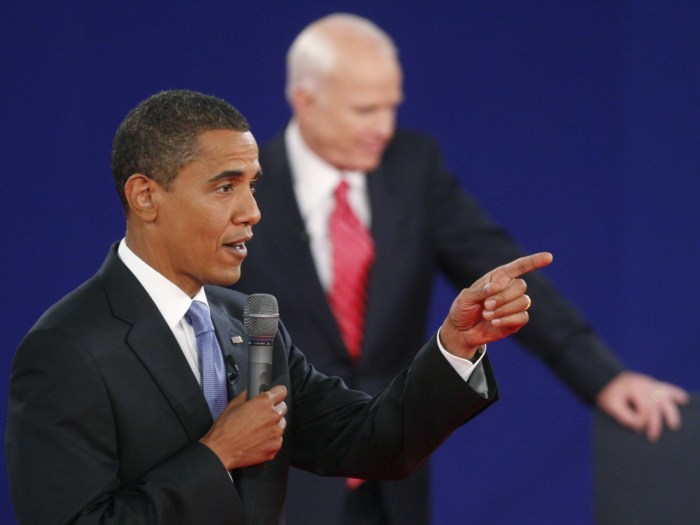
“We will crush al-Qaeda,” Barack Obama insisted during the second presidential debate on Oct. 7, 2008. “That has to be our biggest national security priority.”

At various times, Obama has declared al-Qaeda to be “on the run,” “decimated” and “on their heels”. In Jan. 2014, he was quoted in a New Yorker article likening al-Qaeda to an ineffectual junior varsity team.

But just one week after ISIS carried out the Paris terrorist attacks, a group affiliated with al-Qaeda killed 20 people in Mali.

Then, in early December, al-Qaeda fighters seized two major cities in Yemen as part of its effort to expand its influence in the country.

So much for the collapse of al-Qaeda.

On multiple occasions Obama has also asserted that the last American troops in Afghanistan would return home by the end of his presidency, concluding the longest war in U.S. history. But fighting with the Taliban still rages.

On Dec. 21, a Taliban suicide bomber on a motorcycle slaughtered six American troops and injured two more near Bagram Air Field in Afghanistan. And American troops will still be there when Obama leaves office.

“With control of — or a significant presence in — roughly 30 percent of districts across the nation, according to Western and Afghan officials, the Taliban now holds more territory than in any year since 2001, when the puritanical Islamists were ousted from power after the 9/11 attacks,” the Washington Post reported today.

As Afghan security forces deal with over 7,000 dead and 12,000 injured in 2015,  U.S. Special Operations troops are increasingly being deployed into harm’s way to assist their Afghan counterparts, according to the Post.

But Obama still insists American troops aren’t at war in Afghanistan any more, just “training and advising”.

Of course, the Soviet government wasn’t exactly honest with its people when it sent troops into Afghanistan in 1979 either, or during its next 10 years of war there.

The Soviet Union sent over 100,000 soldiers to fight in Afghanistan, withdrawing only after at least 15,000 of its soldiers (and more than a million Afghans) had been killed.

SovietsAfghanistan

Soviet BMP-1 mechanized infantry combat vehicles and soldiers move through Afghanistan, 1988

Oral testimony from the Soviet soldiers reveals that during much of the war the Soviet government told its people little more than that their children were building hospitals and schools, helping the Afghans build a socialist state and “…bravely protecting the frontiers of the fatherland…in the execution of (their) international duty.”

In fact, there’s a long history of deception in American wars, too.

In 1898, President McKinley said the USS Maine had been sunk in Havana Harbor by a Spanish mine, killing 266 officers and enlisted men and justifying the Spanish-American War. It turned out burning coal in a bunker triggered an explosion in an adjacent space that contained ammunition.

USSMaine

The destruction of the USS Maine

Then there’s the U.S. war in Vietnam.

In 1964, President Johnson ordered retaliatory attacks against gunboats and supporting facilities in North Vietnam after attacks against U.S. destroyers in the Gulf of Tonkin.

Spurred on by Johnson, the U.S. Senate passed the Gulf of Tonkin Resolution authorizing the president “to take all necessary measures to repel any armed attack against the forces of the United States and to prevent further aggression.” Only two Senators, Wayne Morse of Oregon and Ernest Gruening of Alaska, voted “no”.

But reports of the attacks were a lie, as were so many reports on the progress of the war in subsequent years and incursions into Laos and Cambodia.

And so began the tragedy known as the Vietnam War.
VietnamUStroops

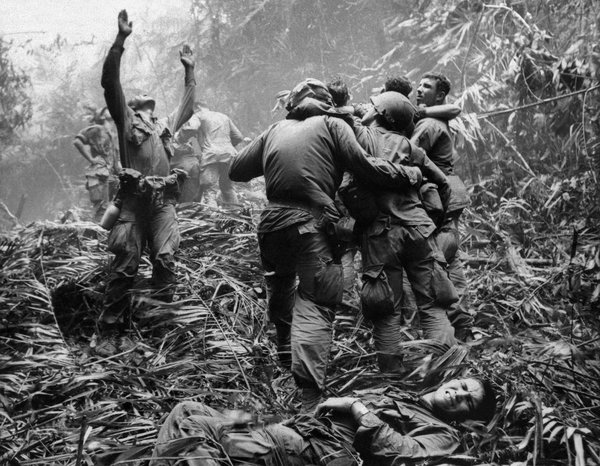
Wounded U.S. soldiers await a medevac helicopter during a war that in time claimed 58,000 American lives..

David Halberstam wrote an often-cited book “The Best and the Brightest” about the overconfident, foolish people who pursued the war.

“The basic question behind the book,” he said later, “was why men who were said to be the ablest to serve in government this century had been the architects of what struck me as likely to be the worst tragedy since the Civil War.” (The term “Best and the brightest “ has often been twisted since then to mean the top, smart people, the opposite of Halberstam’s original meaning)

Years later, Daniel Ellsberg, who made the explosive Pentagon Papers public, said, “The Pentagon Papers…proved that the government had long lied to the country. Indeed, the papers revealed a policy of concealment and quite deliberate deception from the Truman administration onward.”

And then, of course, there were the “weapons of mass destruction” in Iraq.

“We know that Saddam Hussein is determined to keep his weapons of mass destruction, is determined to make more,” U.S. Secretary of State Colin Powell told the United Nations on Feb. 5, 2003. “…should we take the risk that he will not someday use these weapons at a time and a place and in a manner of his choosing, at a time when the world is in a much weaker position to respond? The United States will not and cannot run that risk for the American people.”

powell

U.S. Secretary of State Colin Powell at the United Nations

And so the war began.

As columnist Sydney Schanberg wrote, “We Americans are the ultimate innocents. We are forever desperate to believe that this time the government is telling us the truth.”




Tweedledee. Tweedledum: The two parties spend with abandon.

tweedledumTweedledee

Tweedledee. Tweedledum. This is what we get when the two parties work together, a massive spending spree.

A $1.1 trillion federal spending bill and a $650 billion tax package unveiled today show that neither party gives a damn about holding down spending. It’s not that all the items to be funded are wasteful or unneeded, but the package will push spending above previously agreed limits by $66 billion in 2016 and permanently extend a vast array of tax benefits that will add at least a half-trillion dollars to the federal deficit, once a matter of great concern.

deficit

  • Bowing to pressure on Republicans and Democrats from medical device manufacturers across the county, including in Oregon, anti-Obamacare zealots, and ticked-off unions with expensive healthcare plans, the legislation will postpone for two years (which probably means forever) a 2.3 percent excise tax on medical devices manufacturers, that was expected to raise $29 billion of net revenues over 10 years and a so-called “Cadillac Tax” tax on expensive employer-sponsored healthcare plans, that was projected to raise about $30 billion over 10 years to cover new spending under Obamacare. Then, to add insult to injury, the legislation makes the Cadillac tax refundable when it restarts. The lost taxes will blow a hole in planned funding to cover the cost of Obamacare.
  • The Defense Department will get $1111 billion for new military equipment, including F-35 Joint-Strike Fighters, Black Hawk helicopters, attack submarines and guided missile destroyers.
  • A 40-year-old oil export ban will be rescinded and, in trade, Democrats will get expensive extensions of wind and solar power tax incentives.
  • A research and development tax credit will be expanded and extended permanently.
  • The $1,000 Child Tax Credit will be extended permanently.
  • The Earned Income Tax Credit will be permanently extended.
  • A federal health program for first responders and construction workers who worked at the World Trade Center site after 9/11 and a separate victims compensation fund will be extended at a cost of $8 billion.
  • A National Oceans and Coastal Security Fund will be created to “support work that helps Americans understand and adapt to forces like sea level rise, severe storms, and ocean acidification” associated with climate change.
  • The American Opportunity Tax Credit, an annual credit for tuition and other qualified expenses, will be permanently extended.
  • A $250 annual deduction on qualified expenses of teachers will be indexed for inflation and permanently extended.
  • Five tax credits tied to charitable donations by individuals and businesses will be permanently extended.
  • Funding for the IRS will be frozen, punishing the IRS for targeting conservative groups, but also further limiting its ability to go after tax scofflaws and, this, reducing tax receipts.
  • A $255 per month pre-tax benefit for parking and public transportation expenses will be permanently extended.

But aside from all the spending, Congress did accomplish a few good things.

There will be a pay freeze for Vice President Biden, for example.

Also, earlier this year the dour, stick-in-the-mud Capitol Police said sledding by gleeful children and adults on the snow of Capitol Hill would no longer be allowed. The package asks that the Capitol Police rescind that prohibition so the jollity can resume.

Capitol-Sledding

Wherever you shop for Christmas, it’s the same place

mall

Ever gone into a car dealer and been so put off by the salespeople that you walked out and bought your car at another dealer across town? Chances are that other dealer was owned by the same person.

It’s that way with a lot of retailers today. Different store names, but same person or company behind the curtain.

Take jewelers. I went to Friedlander’s Jewelers in Washington Square the other day looking for a gift. They had something close to what I wanted, but I wasn’t thrilled with the customer service, so I decided to try Kay Jewelers and Zales, also in the mall, and then Jared – The Galleria Of Jewelry in Tigard.

Later, because I’m a naturally curious sort of fellow, I decided to check on who owns these jewelers. Good grief! Turns out all four are owned by the same company, Signet Jewelers, an Akron, OH-headquartered company listed on both the New York and London Stock Exchanges.

Signet operates about 3600 stores in the U.S., U.K. and Canada under a plethora of names, pulling in approximately $6 billion in annual sales.

Its individual brands include all of the following:

  • Belden Jewelers
  • Ernest Jones
  • Friedlander’s Jewelers
  • Goodman Jewelers
  • Gordon’s Jewelers
  • Samuels Jewelers
  • Jared The Galleria Of Jewelry
  • Jared Jewelry Boutique
  • Jared Vault
  • JB Robinson (JBR) Jewelers
  • Kay Jewelers
  • Kay Outlet
  • LeRoy’s Jewelers
  • Mappins
  • Marks & Morgan Jewelers
  • Osterman Jewelers
  • Peoples Jewelers
  • Piercing Pagoda
  • Rogers Jewelers
  • Shaws Jewelers
  • Sterling Jewelers
  • Ultra Diamonds
  • Weisfield Jewelers
  • Zales

The amalgamation of jewelry stores is part and parcel of the homogenization of American retailing. Writers often talk about establishing a “sense of place”, but if you were dropped into almost any mall in the country it would be impossible to know where you were because they are largely identical. They’ve been designed for coherence and predictability, no surprises. Local idiosyncracies have been annihilated by American mass culture and uniformity reigns.


Want to avoid paying Our Oregon’s new taxes? Here’s how.

In its effort to punish Oregon businesses with higher taxes,  Our Oregon got a little too clever in its supposed push for “fairness”.

Our_Oregon_Logo_stacked_400x400

The group, an alliance of unions and other progressive groups, filed initiative measures that would substantially raise corporate taxes. It has to gather 88,184 signatures ahead of a July deadline to get the measure on the November 2016 ballot.

The measure would increase the state’s minimum income tax for larger corporations, requiring them to pay a gross receipts tax of 2.5 percent on their Oregon sales above $25 million. The state currently anticipates collecting $500 million in corporate income taxes in each of the next two years. The Our Oregon measures would raise corporate taxes by an estimated $2.6 billion annually.

But there’s a loophole. Want to make sure your company won’t be hit with the new taxes if they become law? Declare it a benefit company under ORS 60.754. There are already 740 registered benefit companies in Oregon. No reason not to keep them coming.

Good Clean Love is one of Oregon's first registered benefit companies.

Good Clean Love is one of Oregon’s first registered benefit companies.

And a business that registers as a benefit company really doesn’t add much of a burden. All it has to do is designate at least one “benefit governor” on its board, choose a third-party standard to follow, publish an annual report on its website showing how the business met the standards that year.

If Good Clean Love, an Oregon maker of organic sexual lubricants and oils, and Sweet Leaf Cannibis of Springfield can do it, surely a lot of other businesses can.


Trigger warning: college Christmas guidelines

Check out the Christmas celebration guidelines issued by some U.S. colleges.

XMAScyanide-and-happiness

CORNELL UNIVERSITY

University members are reminded to be respectful of the religious diversity of our students and colleagues and are encouraged to use an inclusive approach in celebrating the holiday season. Individuals and units demonstrate this inclusive approach by:

  • Focusing on the winter season rather than a particular holiday
    • Displaying symbols that visually represent holidays of several religions in combination with secular decorations of the season.

Guidelines for inclusive seasonal displays:

Winter Holiday Displays/Decorations that are Consistent with Cornell’s Commitment to Diversity and the University Assembly Guidelines:

  • Snowflakes
    • Trees (in accordance with Fire Safety Guidelines) decorated with snowflakes and other non-religious symbols

Winter Holiday Displays/Decorations that are NOT Consistent with Either University Assembly Guidelines or the University’s Commitment to Diversity and Inclusiveness

  • Nativity scene
  • Nativity scene
  • Menorah
  • Angels
  • Mistletoe
  • Stars at the top of trees
  • Crosses
  • Star of David


THE UNIVERSITY OF TENNESSEE KNOXVILLE


Best Practices for Inclusive Holiday Celebrations in the Workplace

We encourage you to implement the following best practices for inclusive holiday celebrations.

  • Ensure your holiday party is not a Christmas party in disguise.
  • If sending holiday cards to campus and community partners, send a non-denominational card or token of your gratitude.
  • Holiday parties and celebrations should not play games with religious and cultural themes–for example, “Dreidel” or “Secret Santa.” If you want to exchange gifts, then refer to it in a general way, such as a practical joke gift exchange or secret gift exchange.
  • Décor selection should be general, not specific to any religion or culture. Identify specific dates when décor can be put up and when it must come down.
  • Refreshment selection should be general, not specific to any religion or culture.


OHIO STATE UNIVERSITY

Decorations:

  • Individuals or departments may choose to focus celebrations on neutral, seasonal themes. Greenery, white lights, snowflakes, bows (preferably not red or green), and similar motifs convey an inclusive holiday spirit.
  • Decorations and food should be general and not privilege any religion.

It’s a new era, folks.