Microagressions, microassaults, microinsults, microinvalidations : Macroinsanity

“Can we all get along?,” Rodney King said during the 1992 L.A. riots.

Apparently not.

As Voltaire said, “Common sense is not so common.” An increasing number of us seem determined to take offense at just about anything.

The New York times reported today (http://nyti.ms/1pmYMbO) that college students are seeing many slights as “Microaggressions”, the “social justice word du jour” for subtle offenses.

The Times raised the question of whether the issues raised in connection with the word are “a useful way of bringing to light often elusive slights in a world where overt prejudice is seldom tolerated, or a new form of divisive hypersensitivity, in which casual remarks are blown out of proportion.”

It all reminds me of a program a former employer of mine insisted all employees attend called “MicroInequities”. Stephen Young, former Senior Vice President and Chief Diversity Officer at JP Morgan Chase and Co-Founder of a management and consulting firm called Insight Education Systems, delivered the program, essentially telling all of us that dozens of things we said every day were offending somebody in the workplace.

To say the least there was a lot of eye rolling in the audience, with many commenting afterward that Young was taking things to an extreme, almost advocating that people take offense at the smallest perceived slights.

I’m with Harry Stein, at City Journal, who said that while most people feel unjustly treated at times, “most such supposed insults are slight or inadvertent, and even most of those that aren’t might be readily shrugged off.”

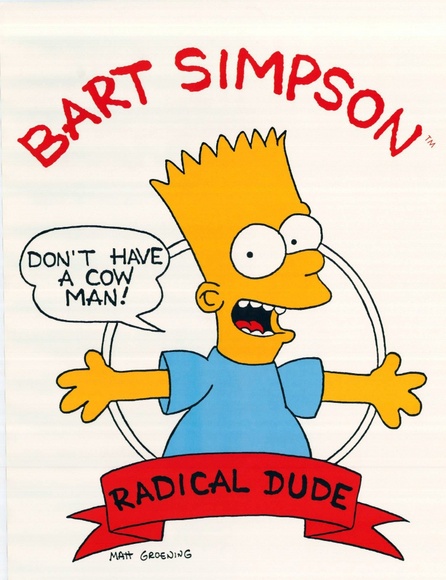
He also challenged the concept of “microaggressions”. Use of the term “suggests a more serious problem: the impulse to exaggerate the meaning of such encounters in the interest of perpetually seeing oneself as a victim,” he said.

bartSimpson

Is it two Oregons: Urban vs. Rural?

“The difference in this country is not red vs. blue,” Neil Levesque, director of the New Hampshire Institute of Politics at St. Anselm College, said in a Wall Street Journal article today. “It’s urban vs. rural.”

The Journal article went on to say:

“In many ways, the split between red Republican regions and blue Democratic ones-and their opposing views about the role of government-is an extension of the cultural divide between rural Americans and those living in cities and suburbs. As Democrats have come to dominate U.S. cities, it is Republican strength in rural areas that allows the party to hold control of the House and remain competitive in presidential elections. …”

A just released Oregon Values and Beliefs survey (http://oregonvaluesproject.org) makes it clear the urban vs. rural divide certainly holds true in Oregon.

Here’s a sampling of some key survey results broken down by regions in the state:

(1) Socially, Oregonians consider themselves:

Liberal
Portland Metro Area: 47%
Central Oregon: 29%
Eastern Oregon: 23%

Conservative
Portland Metro Area: 22%
Central Oregon: 37%
Eastern Oregon: 48%

(2) Oregon spends too much on public services and taxes should be reduced

Agree
Portland Metro Area: 28%
Central Oregon: 29%
Eastern Oregon: 46%

(3) Oregon should increase timber harvests in dense, over-crowded forest stands

Agree, that’s desirable
Portland Metro Area: 48%
Central Oregon: 66%
Eastern Oregon: 67%

Further evidence of the urban/rural split in Oregon is the results of the 2012 governor’s race between Kitzhaber and Dudley. A county-by-county review of the voting results illustrates the point. Kitzhaber carried only 6 counties, with big advantages coming particularly in Multnomah County (70.5% vs. 27.3%), Lane County (56.9% vs. 39.9%),and Benton County (59.4% vs. 38%). The Multnomah County vote was the kicker because of its large, concentrated population, which voted 198,157 for Kitzhaber and just 76,914 for Dudley.
FortRockSunsetByLarryGlothPortlandbridges

11 things Oregonians believe (or don’t know)

1. 50% of Oregonians don’t know Oregon has 2 U.S. Senators.
2. The things about Oregon that Oregonians value most are the state’s natural beauty, opportunities for outdoor recreation, open spaces, clean air and water, its sense of community, its climate.
3. 81% of Oregonians believe the most important public service provided in Oregon is K-12 education.
4. 57% of Oregonians believe environmental protection is more important than economic growth.
5. 63% of Oregonians don’t believe the state’s tax system is fair.
6. 64% of Oregonians believe the state government is wasteful and inefficient with our taxes and cannot be trusted to make good decisions.
7. Oregonians rate subsidies and tax breaks for business attraction or expansion the lowest of 20 different public priorities which necessitate tax support.
8. 70% of Oregonians believe all people should have equal access to a basic level of quality healthcare, but 72% believe people should be held accountable for high-risk behaviors such as smoking, drug use and lack of exercise, through higher insurance premiums.
9. Whether registered as a Republican, Democrat, Independent, Green, etc., a majority of Oregonians in all regions do not consider themselves strongly conservative or liberal on social or economic issues. The highest percentage of social liberals is in the Portland Metro Area (47%); the highest percentage of social conservatives is in Eastern Oregon (48%).
10. 78% of Oregonians are optimistic about their personal future over the next five years.
11. Just 42% of Oregonians believe Oregonians from diverse backgrounds will find common ground and work together to make progress addressing the critical issues facing the state.
TheWonders ofMcKenzieCreekbyShastaOrtwein

Source: 2013 Oregon Values & Beliefs Survey. Executed by DHM Research and PolicyInteractive Research. Sponsored by Oregon Health & Science University, The Oregon Community Foundation, Oregon Public Broadcasting and Oregon State University.

For more information visit http://www.truenorthoregon.org

The Supercalifragilisticexpialidocious Superhypothetical

Is Hillary going to run? Of course. But until she blurts it out officially, the media is having a field day writing speculative articles that seem to be written principally by adoring liberals to keep Hillary in the public eye.

 Image,

Mark Leibovich, author of the D.C dirt-dishing book “This Town”, wrote an unflattering  piece in the New York Times today about Scott Brown’s foray into New Hampshire politics,. He used him as a prime example of “a modern political breed known as the Superhypothetical — those professional non-candidates whose franchises depend largely on people speculating about what they might run for and their own willingness to engage in public indecision about it (all while assuring us, of course, that they are flattered and humbled by our interest).”

Leibovich even managed to comment on Brown’s move across the border from Wrentham, Mass., to his vacation home in Rye, N.H., in December as a reflection of  “a larger understanding of our politics” He points out that it matters not where a candidate actually comes from anymore. “More important, politics now are largely transacted in the nongeographic netherworlds of the media,” he said.

Somehow, however, Leibovich managed not to even mention Hillary, the all-around-best example of this new phenomenon.

If Brown is a Superhypothetical, Clinton is the Supercalifragilisticexpialidocious Superhypothetical, adored by the liberal media and promoted ad nauseum.

Not only that, but if Brown is to be castigated for his move to New Hampshire to run for the Senate again, Clinton was the carpet-bagger extraordinaire when she moved to New York to position herself for a run for the U.S. Senate. After all, Hillary, who grew up in a Chicago suburb, went to college in Massachusetts and Connecticut, then lived in Arkansas until Bill Clinton was elected president, had never even lived in New York. Still she won her New York race for the Senate.

Of course, neither Scott Brown nor Hillary Clinton have anything on James Shields, Oregon’s territorial governor during 1848-49. He subsequently became a senator from Illinois, Minnesota and Missouri, moving to a new state each time he wasn’t re-elected.

Ignore the busybodies

RosenblumIgnore the busybodies.

That’s my advice after learning that Oregon’s attorney general, Ellen Rosenblum, and attorneys general representing 27 other states and territories, have signed a letter to big pharmacy chains, including Rite Aid, Walgreens, Kroger, Safeway and Walmart, calling on them to stop selling tobacco products in stores that also have pharmacies. (http://nyti.ms/1ht1aLl)

“Pharmacies and drug stores, which increasingly market themselves as a source for community health care, send a mixed message by continuing to sell deadly tobacco products,” said Attorney General Eric Schneiderman of New York, a leader of the effort.

Following the line of thinking that it is immoral or contradictory for these businesses to sell tobacco products alongside healthcare products, are the attorneys general as outraged over all these company’s stores also selling tooth-decaying candy, life-destroying alcohol, and snacks like Twinkies that are contributing to an epidemic of obesity? And good grief, what about guns? WalMart sells guns. Talk about something that can ruin your health.

What individual stores stock should be based on customer preferences, not the headline-grabbing antics of state attorneys general eager to impose their views on the marketplace.

XRAY.fm: Brought to you by Portland taxpayers

xray-fm-1000px-screengrab*304XRAY.fm, a new left-wing radio station in Portland, plans to launch on Saturday, March 15th. Portland taxpayers may not know it, but the launch wouldn’t have happened without their generosity.

The station’s backers highlight the support they got from a Kickstarter campaign that generated $103,762 in pledges. What they don’t highlight is how the station got its start by hijacking what was supposed to be “a locally-focused music and arts-information radio station” with start-up funding from a taxpayer-funded program of the Regional Arts & Culture Council (RACC).

Until recently, RACC, which says its grants “provide artists and arts organizations with financial support,” had an Opportunity Grant Program funded by the City of Portland. It was designed to provide grants to Portland-based nonprofit arts and cultural organizations to help meet special opportunities or assist organizations with emergencies that arise during the year.

Phil Busse, director of the Portland-based Media Institute for Social Change and former managing editor of the Portland Mercury, submitted an Opportunity Grant application to RACC in 2012. The application said Busse wanted $10,000 to facilitate “a locally-focused music and arts-information radio station that will be broadcast throughout Portland starting in January 2013.” There was no mention of any plans for the station to focus on left-wing talk shows.

According to the grant application, the Institute was partnering with Common Frequency, a California-based nonprofit that provides technical assistance to community-based and low-powered radio stations. When Reed College abandoned its radio station, Common Frequency acquired it. But the license didn’t provide complete coverage of Portland, allowing only for radio coverage east to west from the Willamette to 82nd Ave, and north to south from the Columbia River to the Sellwood neighborhood.
The $10,000 was to go towards the purchase an FCC license. “The additional license the RACC grant would fund would allow sufficient coverage on Portland’s west side to truly create a city-wide station,” the Institute’s grant application stated.

The RACC Board approved the special Opportunity Grant to the Institute on July 20, 2012.
The Cascade Educational Broadcast Service, a Portland nonprofit working to launch the new station, said its goal was “to create a station that broadcasts new independent music and a plethora of rare historic vinyl by the innovators, but not officially bound by any specific genre descriptor.”

“I can already see the town dancing to the beat of XRAY.FM,” Jeff Hylton Simmons, an early advocate of the station, said in an Awesome Foundation online posting.

Then the music and arts-information radio station got hijacked.

In November 2012, Portland’s KPOJ-AM 620, a welcoming home to progressives, shifted to Fox Sports Radio 620. Previously, KPOJ had featured a three-hour morning show with an outspoken progressive host, Carl Wolfson, along with progressive talk shows featuring Thom Hartmann, Randi Rhodes and Mike Malloy.

Local progressives responded with fury to KPOJ’s format shift. BlueOregon, a blog describing itself as “the water cooler around which Oregon progressives will gather”, initiated a campaign to collect signatures on a petition aimed at saving progressive talk radio on KPOJ. But KPOJ and its owner, Clear Channel, didn’t yield.

So the new music and arts-information station championed by Busse, will, instead, feature progressive talk.The station’s website makes it clear that it’s primary objective is not music, but to be “a progressive, independent radio station.”

XRAY.FM will embrace the “mullet model”, as the station’s Facebook page once put it, “business in the front, party in the back.” Programs would focus on progressive talk during the day and relegate music to the night.

Talk show hosts on the station will include Carl Wolfson and Thom Hartmann, both well-known progressives, as well as Adam Klugman, also formerly with KPOJ, who describes himself as “the perfect host for a radio talk show dedicated to fanning the flames of 21st century progressive populism.”
Jefferson Smith, co-founder of the Oregon Bus Project and a onetime Democratic legislator, has also signed on as senior advisor on board development and community engagement and will be offering a show, Thank You Democracy.

RACC says its OK with the station’s shift to progressive talk. “We are satisfied that XRAY.FM is delivering strong local music programming and content as described in their grant proposal to us,” Jeff Hawthorne, RACC’s Director of Community Affairs, wrote in an e-mail to me. “It appears that the applicant is fulfilling its artistic mission as described (by the Cascade Educational Broadcast Service). Whether the station also delivers other types of content wouldn’t preclude our investment in arts programming.

How about you? Want an Opportunity Grant from RACC for a radio station featuring conservative talk shows? Sorry. The Opportunity Grants were a victim of Portland’s 2013-2014 budget cuts.
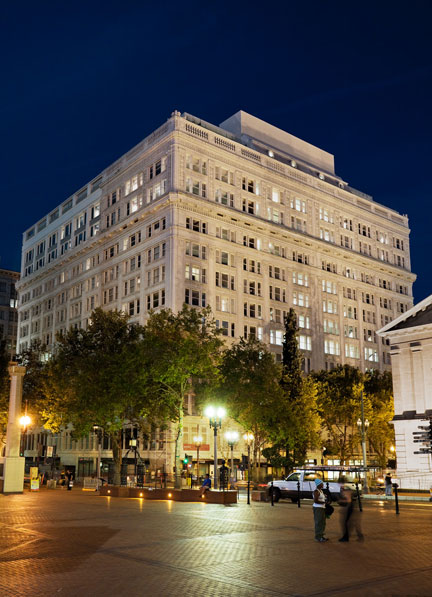
Only in Portland: $6.7 million loss on hotel investment portrayed as “a financial success” by Portland Development Commission

The Nines Hotel

The Nines Hotel

The Portland Development Commission (PDC) is preparing to write off $6.7 million owed on loans to construct The Nines Hotel in downtown Portland, according to the Portland Business Journal. The write-off would occur by the PDC accepting $11.5 million to repay an $18.2 million balance still due on four loans made by the PDC for The Nines project.

The hotel hasn’t made regular payments on the loans since 2009, when the PDC agreed to let the business pay as its cash flow allowed.

Still, PDC tried to make the deal sound like a good thing. “We see this project as a financial success,” Lisa Abauf, PDC’s Central City manager, told the Business Journal.

Only in Portland could a big loss of taxpayer money be big gain.

Wait for the same thing to happen with the Oregon Convention Center hotel championed by Metro when rosy predictions of its financial success are proven wrong.

A truly depressing visit to a Barnes & Noble store

In the 1998 movie “You’ve got mail”, Meg Ryan, the owner of a small, neighborly bookstore, feared the consequences of a new colossal and impersonal big box bookstore opened nearby by Tom Hanks.

Maybe she should have waited a decade.

Then she’d have seen a seen a seismic shift, with big-box book stores threatened on every front. That threat is vividly on display at the Barnes & Noble store at Bridgeport Village in Tigard, which seems to be giving up on the old-fashioned printed word.

On a recent visit to the store, I was first confronted with a brightly lit space featuring not newly-released print books, but the Nook eReader, released in the U.S. in the distant past of November 2009.

After passing through the Nook display, I anticipated racks of books that were there when the store was a Borders superstore. Instead, I encountered a large area that felt like I was back at Woolworth’s, a five-and-dime chain that flourished in the 1900s before succumbing to competition in 1997.

Spread around the space were displays for “greeting cards,” “stylish stationary and groovy gifts,” “quirky and cool gifts,” candles & scents,” and “lunch bags”. No print books in sight.

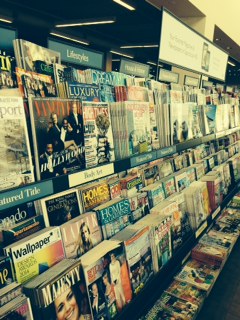
Surely there would be books around the corner, I thought. Nope. That space is occupied by the Barnes & Noble Café.  How about beyond that? No books there either. That’s occupied by racks of magazines, from Psychology Today, US and Vanity Fair to Comic Heroes, Buddhadharma and Clean Eating.

Rows of print books were only in the middle of the first floor, adjacent to an escalator with a “Temporarily out of order” sign. Prescient perhaps.

I took the elevator up to the second floor expecting an expansive area crammed with books. Again there were rows of print books in the middle of the floor, but also a large space featuring “Building,” “Learning” and “Arts & Crafts”. Filling the space were LEGO kits, kid’s toys, Sparkle Tattoos, Feather Fashions, a Perfume Science Kit and venerable games like Twister, Sorry and Clue.

All of this doesn’t bode well for Barnes & Noble’s once mighty print book and magazine retail stores.

Those stores, which have been generating most of the company’s profits, have been dealing with a slow decline for years. Revenue from retail stores in the third quarter ending Jan. 25, 2014, for example, fell 6 percent to $1.4 billion. Revenue in stores open at least one year, a key retail metric, fell 4.9 percent.

All this despite the bankruptcy of Barnes & Noble’s principal competitor, Borders, in 2011.

This is consistent with the numbers on printed book sales at retail stores across the country. Government statistics show that overall bookstore sales have been treading water since 2003, with printed book sales through retailers taking a big dip in 2011, 2012 and 2013.  Meanwhile, eBook sellers, which offer a wider selection and lower prices, continue to grow.  Even Barnes & Noble’s former CEO William Lynch told a Bloomberg reporter he read his books on a Nook. “I don’t really read physical books that much anymore,” he said.

The market for print magazines, the other big print section of the Barnes & Noble store, isn’t booming either. Single copy sales of print magazines dropped 11, 9, 8, 9 and  8 percent annually during 2008 – 2012.

The economic picture for print magazines is gloomy, too. Total ad pages for the 211 magazines tracked by the Publishers Information Bureau in 2012 fell 8.2 %, to 150,699 for the year – a substantially sharper drop than the 3.1% drop seen in 2011.

 Maybe it won’t be long before Barnes & Noble has to close the book on its retail print book and magazine stores.
ImageImageImageImage

The Oregon Convention Center Hotel: Let the people decide

It’s a classic government argument to justify dumping dollars into a construction project. “It will mean JOBS.” How can you be against jobs?

In the case of the proposed government subsidies for a convention center hotel in Portland, Metro President Tom Hughes has gone even further, arguing at a 2013 Labor Day picnic sponsored by the Northwest Oregon Labor Council that hotel critics are engaging in “class warfare” to “keep families from putting food on their table.”
Good grief! What’s next, accusing critics of  “taking food out of the mouths of babies.”

Actually, what was next was a devious ruling from the Multnomah County elections department that critics can’t go to the county’s voters to seek to overturn the Multnomah County Commission’s approval of taxes to go towards the hotel’s construction.

“The initiative and referendum process is reserved to the people of the county relative to the legislative acts of the Board of County Commissioners,” said Multnomah County Elections Director Tim Scott. “The subject of the Petition filed… relates to the exercise of the Board of County Commissioner’s Executive and Administrative powers.”

“I want to build a hotel,” Hughes said at the union Labor Day picnic. “I want it to be built by union workers, and I want union workers running it.”

And he wants it so bad that he doesn’t want citizens voting on it, calling the decision of critics to seek a public vote “short-sighted and selfish”. A public official is opposing the public having a say.

That reminded me of a statement made by Iroquois Indians to the English in the mid-1700s when they felt the English were not listening to their deep concerns: “You ask us…to have faith in you…But how can we have faith in you and believe in you when by the very actions you have taken you have plugged up our ears and thrown sand in our eyes and sewn our lips together?”

Hughes even fell back again on the jobs mantra, this time upping the ante by throwing in a taunt that the critics didn’t care about minorities. Failure to go ahead with the hotel deal would harm “members of the minority and historically underserved communities of North and Northeast Portland,” he wailed.

The validity of Scott’s decision is now being considered by the Multnomah County Circuit Court. Hopefully, it will do the right thing and let voters have a say.


Redefining “reporting” – the erosion of journalistic integrity by Metro

Metro is misusing the term "reporter"

Metro is misusing the term “reporter”

Traditional journalists have long been defined by their independence and integrity, beholden to no one but the public, producing the news without fear or favor.

But lately, with trust of American media already at an all-time low, media are being complicit in their own decline, undermining their authenticity and trustworthiness by allowing publicists to pose as reporters and blurring the line between editorial content and paid advertising.

One of the more egregious abuses of the journalism standard is at Metro, the Portland area’s regional elected government, where a former Hillsboro Argus news writer pretends to be a “reporter” providing “objective, written news coverage” of Metro. Metro created the position in 2010, insisting that the new hire would provide “objective, written news coverage” of the agency. The “reporter” would get style, spelling and other editorial support, but could decide what topics to pursue and would not have his or her work edited for content.

The eventual hire, Nick Christensen, came from the Hillsboro Argus, where he had covered Metro and western Washington County. Pror to that he served as managing editor of the Summerlin Home News near Las Vegas and as a reporter at the Las Vegas Sun.
Now reporting to Metro’s Communications Director, Jim Middaugh, Christensen is referred to as “Metro News editor” and as a “news reporter” for Metro on the agency’s website.

Access by a true reporter to the inner corridors of power can translate into aggressive, groundbreaking, fiery media stories, but it’s not likely that Metro’s in-house “reporter” will produce such stories. It’s clear from a review of his prosaic, process-oriented writing to date reveals that he’s not going to be a Woodward or Bernstein exposing seamy government practices or, for that matter, an investigative reporter in the tradition of the journalists at Willamette Week who exposed Neil Goldschmidt’s rape of a 14-year-old babysitter.

Instead, Christensen’s stories are carefully crafted press releases masquerading as independent news reporting. Metro even asks, “In the interest of disclosure to readers”, that media attribute content from Christensen‘s (stories) to him and identify him as a news reporter for Metro.
Making things worse, local media, including the Portland Business Journal, Willamette Week and the Portland Tribune have bought into Metro’s ruse, frequently citing Christensen’s comments as those of a reporter. This even though Middaugh has admitted that Christensen’s work is “definitely public relations”. Middaugh has justified Christensen’s identification as a “reporter” on the basis that government has a responsibility to keep people informed in the face of public cynicism, apparently unaware that misleading the public feeds that cynicism.

Christensen’s stories are, let’s be honest, the equivalent of advertising disguised as news. In that respect, he fits right in with the deliberate blurring of the divide between advertising and editorial content that’s going on across the media landscape, eroding public trust in journalism.

In case you haven’t noticed, digital and print media are increasingly featuring sponsored content, or “native advertising” created or developed by a business or special interest seeking to influence viewers.

In a prominent case, The Atlantic magazine found itself in the middle of a reputation debacle in January 2013 when it featured a native advertisement package submitted by the Church of Scientology which, though identified as “sponsor content,” looked otherwise like a regular story.

The Internet exploded with negative comments, some criticizing The Atlantic for promoting the controversial Church of Scientology, but more for allowing paid advertising to be subtly disguised as editorial content.

To put it simply, the news business is slowly being corrupted by practices like native advertising and media’s willingness to go along with things like Metro’s attempt to pass Christensen off as a reporter. If it isn’t controlled, readers’ trust will be lost.

So, let’s all get on the same page here and call a P.R. guy a P.R. guy. For Metro, that would be good P.R.