During World War II, President Roosevelt authorized the military to forcibly relocate people of Japanese ancestry from the West Coast to inland camps.
Manzanar War Relocation Center near Lone Pine, Calif.; it operated from March 1942 to Nov. 1945. Some 10,000 people were confined there during this time.Resistance to the incarceration at Manzanar soon led to a prison uprising that the Army put down by shooting 11 prisoners, killing two.
In April 1942, officials posted Civil Exclusion Orders No. 25 and No. 26 on telephone poles and store windows throughout Multnomah County. A few weeks later, Civilian Exclusion Order No. 49 was posted in Hood River. The orders gave Japanese-Americans only a few days to put their affairs in order before they had to report for evacuation.
On May 5, 1942, Japanese-Americans in Military Area No. 1 reported to the Portland Assembly Center, leaving their pets, possessions, and lives behind. The center—built on the site of the Pacific International Livestock Exposition—was surrounded by barbed wire, watchtowers, and military guards armed with machine guns. The center had a peak population of 3,676.
Those living in Military Area No 2, including the Japanese Americans in Hood River, were sent by train to the Pinedale Assembly Center in California’s San Joaquin Valley, a temporary location until later transfer to permanent internment camps.
Now President-elect Trump and his coterie of illegal immigration hardliners want to use the military again and put arrested immigrants in the country illegally in camps run by the Homeland Security Department.
Will he follow through with his threats? Count on it.
“Trump 1.0 was a test for the system, but it was also a trial for an inexperienced leader who had the inclination of a wrecking ball but often lacked the capacity or the cadres to follow through,” Susan B. Glasser wrote in the Nov. 21 New Yorker. “Trump 2.0 is about an all-out attack on that system by a leader who fears neither Congress nor the courts nor the voters whom he will never have to face again.”
During the Republican primary campaign, The New York Times reported that Trump’s top immigration policy adviser, Stephen Miller, said military funds would be used to build “vast holding facilities that would function as staging )enters” for immigrants as their cases progressed and they waited to be flown to other countries.
Earlier this month, Tom Fitton, who runs a conservative group, Judicial Watch, wrote that Trump’s administration would “declare a national emergency and will use military assets” to address illegal immigration “through a mass deportation program.” Trump responded on his social media platform, Truth Social, reposting Mr. Fitton’s post with the comment, “TRUE!!!”
On Monday, Trump confirmed that he planned to declare a national emergency to carry out his promise to use the military in his mass deportations.
Trump has also threatened to use the Alien Enemies Act of 1798 – which allows presidents to deport citizens of an “enemy nation” without the typical proceedings – as part of his mass deportation plans.
Thomas Homan, a contributor to the Heritage Foundation’s controversial Project 25 and Trump’s proposed Border Czar, told Fox Business Network, “They’ll be used to do non-enforcement duties such as transportation, whether it’s on ground or air, infrastructure, building, intelligence.” Horman has also said transportation and supply assets from the Department of Defense, including military planes, could be used.
Stephen Miller, Trump’s incoming deputy chief of staff for policy, has also floated the idea of “deputising” the National Guard to carry out large-scale raids and detentions. The military could also be dispatched to the southern border with “an impedance and denial mission,” Miller has said.
“You reassert the fundamental constitutional principle that you don’t have the right to enter into our sovereign territory, to even request an asylum claim,” Miller said at the Conservative Political Action Conference (CPAC) earlier this year. “The military has the right to establish a fortress position on the border to say no one can cross here at all.”
No matter how Trump plans to use the military, the move is likely to bring an avalanche of legal challenges.
Aaron Reichlin-Melnick, a senior fellow at the American Immigration Council, said on Monday that under US law, presidents may declare a national emergency and exert emergency powers only in specific situations. “And ‘use the military for deportations’ isn’t one of those specific things,” Reichlin-Melnick wrote on social media.
Anthony D. Romero, executive director of the American Civil Liberties Union, issued the following statement: on Nov. 18:
“We are crystal clear that the next Trump administration will do everything in its power to make mass deportation raids a reality. As we ready litigation and create firewalls for freedom across blue states, we must also sound the alarm that what’s on the horizon will change the very nature of American life for tens of millions of Americans.”
In 1983, the bipartisan Commission on Wartime Relocation and Internment of Civilians reported that the internment program was a “grave injustice” driven by “race prejudice, war hysteria and a failure of political leadership.” In 1988, President Ronald Reagan signed the Civil Liberties Act, which offered a formal apology to surviving victims.
It’s hard to believe all this current Trump-inspired turmoil is what the 76,744,608 people who voted for Trump this time around wanted.
UPDATE 02/02/2025: The New York Times reported today that the Trump administration has ended Temporary Protected Status, or T.P.S., for more than 300,000 Venezuelans in the United States, leaving the population vulnerable to potential deportation in the coming months, according to government documents obtained by The New York Times. “The Trump administration’s attempt to undo the Biden administration’s T.P.S. extension is plainly illegal,” said Ahilan Arulanantham, who helps lead the Center for Immigration Law and Policy at the U.C.L.A. School of Law. “The T.P.S. statute makes clear that terminations can only occur at the end of an extension; it does not permit do-overs.”
——————————————————-
President-elect Donald Trump has made it crystal clear.
America’s “immigration crisis” is a “massive invasion” spreading “misery, crime, poverty, disease and destruction to communities all across our land” and the nation’s cities are being “flooded” by the “greatest invasion in history” of undesirables from “every corner of the earth, not just from South America, but from Africa, Asia, Middle East,” Trump bellowed at the Republican National Convention in July 2024.
One action Trump plans to take in response to the “invasion” is to cut back on the Temporary Protected Status (TPS) program. Set up in 1990, the program gave the federal government the ability to grant work permits and deferrals from deportation to nationals of any designated nation going through or recovering from natural or man-made disasters.
If you recall the uproar over unfounded claims that Haitians who live and work legally in Springfield, Ohio, were eating their neighbor’s cats and dogs, those Haitians are TPS holders. In an interview with NewsNation, Trump said the influx of migrants in Springfield “just doesn’t work” and “you have to remove the people; we cannot destroy our country.”
To say the least, the fate of those in Oregon with TPS will be precarious, too, under the upcoming Trump administration.
I asked Oregon’s Office of Immigrant and Refugee Advancement how many people in Oregon are here under the Temporary Protected Status program, but they never responded. But I located a report by the Congressional Research Service (CRS) on the TPS topic. According to the CRS, as of March 31, 2024, there were an estimated 2,705 individuals with TPS in Oregon, fewer than the 9,500 in Washington, but more than the 510 in New Mexico. The current number in many states is likely higher now because the number of TPS individuals in the United States has increased by about 150,000 since March.
TPS offers qualifying individuals already in the U.S. work authorization and a temporary legal status to remain in the country if their home country is determined unsafe. TPS offers up to 18 months of relief to qualifying individuals based on the status of that country. For example, the TPS program is scheduled to end in March 2025 for El Salvador and in April 2025 for Sudan, Ukraine, and Venezuela.
TPS designations can be terminated prior to expiration with 60 days notice. TPS status can also be extended by the Department of Homeland Security. For example, on Oct. 17, 2024, the department extended through Aug. 3, 2025, the validity of certain Employment Authorization Documents (EADs) issued to Temporary Protected Status (TPS) beneficiaries under the designation of Haiti.
Since 1990, successive Republican and Democratic administrations have largely automatically renewed certain key TPS designations
The impact of Trump’s plans on current TPS holders could be calamitous. That’s partly because the number of people in the United States under TPS exploded under President Biden.
In 2020, TPS protected about 330,000 people from 10 countries who would otherwise be subjected to disease, violence, starvation, the aftermath of natural disasters, and other life-threatening conditions. The largest group of TPS recipients was from El Salvador (195,000 people) followed by Honduras (57,000 people) and Haiti (50,000 people).
Other countries with TPS holders included Nepal (8,950 people), Syria (7,000 people), Nicaragua (2,550 people), Yemen (1,250 people), Sudan (1,040 people), Somalia (500 people), South Sudan (84 people), Guinea (930 people), and Sierra Leone (1,180 people).
With President Biden’s term winding down, there are now over 1 million immigrants in the United States under TPS status. Qualifying individuals include people from 16 countries, with Venezuelans, Haitians and Salvadoreans the largest groups of TPS beneficiaries.[1]
Under the Biden administration, new TPS designations have been issued for six countries (Afghanistan, Cameroon, Ethiopia, Myanmar [also known as Burma], Ukraine, and Venezuela), and extended for ten others (El Salvador, Haiti, Honduras, Nepal, Nicaragua, Somalia, South Sudan, Sudan, Syria, and Yemen). The government has also granted or extended a similar protection, deferred enforced departure (DED), for people from Hong Kong and Liberia, with an estimated 3,900 and 2,800 covered respectively.
If a TPS designation ends, beneficiaries return to the immigration status that the person held prior to receiving TPS, unless that status has expired or the person has successfully acquired a new immigration status.
If the Trump administration is aggressive in ending the TPS program, its beneficiaries in Oregon and elsewhere would return to being undocumented at the end of a TPS designation and become subject to removal.
“It’s possible that some people in his administration will recognize that stripping employment authorization for more than a million people, many of whom have lived in this country for decades, is not good policy” and economically disastrous, Attorney Ahilan T. Arulanantham, a teacher at the University of California, Los Angeles School of Law, recently told PBS News. “But nothing in Trump’s history suggests that they would care about such considerations.”
[1] Countries Currently Designated for TPS. Select the country link for additional specific country information.
So much for expecting lawyers to be truthful and regulate their own.
The Oregon State Bar’s General Counsel has decided that its member lawyers are not engaged in unethical conduct when they assert to clients that their selection as “Lawyers of Distinction” by a Florida-based business is reliable evidence of their legal skills and achievements, despite the fact that “Lawyers of Distinction” is nothing more than a pay-for-play outfit with just a virtual office.
Apply, pay the annual membership fee and you’re in. It’s like a diploma mill, an outfit that claims to be a higher education institution, but only provides illegitimate academic degrees and diplomas for a fee.
The OSB’s decision to allow its members to mislead clients is an egregious display of malfeasance. It’s straightforward dishonesty, deceit and misrepresentation, prohibited in the Oregon Rules of Professional Conduct (as amended effective January 1, 2024) for Oregon attorneys.
On Oct. 9, 2023, I filed a complaint with the OSB asserting that a number of Oregon lawyers are misrepresenting their credentials by asserting that their selection as “Lawyers of Distinction” is evidence of their legal skills and achievements. On Feb. 17, 2024, I filed a second, more detailed complaint and followed up with an email asking whether the association intended to respond.
On May 20, 2024, Linn Davis, Assistant General Counsel and CAO Attorney, sent a response saying he found no reason to pursue any charges of professional misconduct by Oregon lawyers.
“You expressed concerns that Oregon lawyers are improperly using membership in “Lawyers of Distinction” to advertise their services,” he wrote in an email. “Lawyers of Distinction” appears to be a marketing firm that uses some criteria to determine what lawyers are eligible for promotion. Listings on the “Lawyers of Distinction” site include a statement regarding the criteria for promotion and a link to apply for consideration. I lack any sufficient basis for believing the statements there to be false regarding the organization or the significance of membership. I also lack evidence that any particular lawyer in Oregon has utilized this marketing tool in a misleading manner. I conclude that there is no sufficient basis to warrant a referral of your concerns to Disciplinary Counsel. Because I find no sufficient evidence of professional misconduct, I will take no further action on this matter.”
WHAT?
Davis couldn’t find any information that challenges the legitimacy of Lawyers of Distinction?
And OSB’s General Counsel, agrees with Davis, as Nik Chourey, Deputy General Counsel, said in an email to me: “ In this instance, I do not find sufficient evidence of ethical misconduct to warrant further investigation by disciplinary counsel. Further, I agree with the reasoning set forth in the Client Assistance Office’s letter dismissing this complaint.”
Give me a break! Where did these folks go to law school?
The Lawyers of Distinction website says :
“…Members have been selected based upon a review and vetting process by our Selection Committee utilizing U.S. Provisional Patent # 62/743,254. The platform qenerates a numerical score of 1 to 5 for each of the 12 enumerated factors which are meant to recognize the applicant’s achievements and peer recognition. Members are then subject to a final review for ethical violations within the past ten years before confirmation of Membership. Nomination does not guarantee membership and attorneys may not pay a fee to be nominated. Attorneys may nominate their peers whom they feel warrant consideration. The determination of whether an attorney qualifies for Membership is based upon the aforementioned proprietary analysis discussed above.”
Phew! Sounds complex and rigorous.
Don’t believe it.
It’s a scam.
Want evidence?
Some lawyers at the Davis Law Group in Seattle nominated Lucy, the office’s 5-pound teacup poodle, and paid the membership fee. Lucy didn’t go to law school, but she passed her state ‘bark exam” the law firm said, had been recognized by the legal community as a ‘top dog’ and was a member of the King County Bark Association.
Lucy, A Lawyer of Distinction
Lucy, recipient of a “Juris Dogtor”, was accepted. Lawyers of Distinction even sent Lucy a plaque naming her one of the top 10 percent of attorneys in the country and congratulated her on Twitter. Suffice it to say, Lucy was thrilled.
As for OSB’s assertion that it lacked evidence that any particular lawyer in Oregon has utilized this marketing tool in a misleading manner, are they blind? Do they not know how to search websites?
All OSB needed to do was check out the Lawyers of Distinction’s website and the websites of Oregon lawyers who are members.
For example: Casey Baxter, the founder of Baxter Law, LLC in Bend, lists “Lawyers of Distinction Award” under HONORS & AWARDS on his website; Portland DUI lawyer Andy Green features the Lawyers of Distinction logo on his website; Tammi Caress, the Principal Owner of Caress Law, PC in Portland, has the logo on her firm’s website, too. .
The Oregon Rules of Professional Conduct (as amended effective January 1, 2024) for Oregon attorneys is explicit about how attorneys must communicate about themselves:
Rule 7.1 A lawyer shall not make a false or misleading communication about the lawyer or the lawyer’s services. A communication is false or misleading if it contains a material representation of fact or law, or omits a fact necessary to make a statement considered as a whole not materially misleading.
Rule 8.4 It is professional misconduct for a lawyer to…engage in conduct involving dishonesty, fraud, deceit or misrepresentation that reflects adversely on the lawyer’s fitness to practice law.
An Oregon attorney claiming he or she is a exceptional because of membership in “Lawyers of Distinction” is clearly making “a false or misleading communication” and engaging in “professional misconduct” involving “dishonesty” “deceit” and “misrepresentation”.
According to the Florida Division of Corporations, “Lawyers of Distinction Inc.” is a private for-profit company with a principal address of 4700 Millenia Boulevard, Suite 175, Orlando, FL 32839. Securing such an office requires a payment for a “Platinum Plan” of $69 a month and for a “Platinum Plan with live receptionist” of $194 a month.
Robert B. Baker, at the same address, is listed as the Owner in the company’s 2023 Annual Report.
But don’t go visit the office address expecting to be ushered into a space with a clean, modern aesthetic that communicates success. The address is only a virtual office you can buy on a “Platinum Plan” for $69 a month or on a “Platinum Plan with live receptionist” for $194 a month.
Robert “Robbie” Brian Baker, a member of the Florida Bar (Bar #992460), is also the founder and owner of Baker Legal Team at 2255 Glades Rd., Ste 330-W, Boca Raton, FL 33431. According to the Baker Legal Team website, he has a degree from Boston University School of Law in 1989 and a B.A. from Ithaca College. He began his career, the website says, as a prosecutor working as an Assistant District Attorney in Kings County, New York.
As an aside, the firm’s website has the chutzpah to highlight that it’s a member of Lawyers of Distinction.
If the OSB is honestly committed to accountability, excellence, fairness, and leadership in the legal profession as it claims, it needs to stop trying to dodge its obligations. It needs to insist that its members halt falsely advertising themselves as Lawyers of Distinction or holders of other unearned accolades.
All you Portland voters. Remember how you voted 58.1% to 41.9% on Measure 26-228 to switch to a ranked choice voting (RCV) system for the Portland City Council?
“In the end, we saw monumental wins that will change the landscape of our local democracy and advance opportunity for communities of color,” enthused the Coalition of Communities of Color after the vote.
“Portlanders made history by demanding a government that is effective, accountable and representative,” said Debra Porta, co-chair of the Charter Commission, which initially recommended voters consider the sweeping changes .
“The passage of Measure 26-228 is an historic step towards a democracy that truly gives all Portlanders a seat at the decision making table and a government that meets their basic needs,” said Sol Mora of the group Portland United for Change, which advocated for the measure. “This victory was powered by the people for the people.”
Well, supporters got what they wanted. But while Measure 26-228 required mote than 50% yes votes in Portland to pass, the 12 new city councilors elected under the the quirky new system didn’t need 50% to win in the 4 new districts.
This is how the RCV reform proposal described the system:
“If no candidate receives a majority of the vote in the initial round, subsequent rounds are counted in which (i) candidates retain the number of votes counted for them in the first and any subsequent rounds that already occurred; and (ii) the candidates having the fewest votes are successively eliminated in rounds and their votes are counted as votes for the candidates who are ranked next on the ballots that had been counted for the eliminated candidates. The process of eliminating candidates and transferring their votes to the next-ranked candidate on ballots repeats until a candidate has a majority of the vote.”
The Councilors of each district were elected using a proportional method of RCV known as “single transferable vote” (STV). In this system, voters rank the candidates and if a candidate gets more votes than needed to be elected the extra, or surplus, votes get transferred to the voter’s next choices. The charter reform proposal was so convoluted it took almost 300 words to explain how it would work (See below for complete text).
Under this system, a candidate running for a seat in a multimember district could win a position on the Council with as little as 25% of the vote, or maybe even less.
And that’s exactly what happened.
Eleven of the twelve Councilors were elected with 25% of the vote in their district. One newly-elected Councilor, Jamie Dunphy in East Portland’s District 1, was even elected with just 22.8% of the vote.
District 1’s three final winners were Candace Avalos, Loretta Smith and Dunphy. In the 1st round, Avalos was the first choice of just 19.4% of the vote, Smith was the first choice of 13.1% and Dunphy was the first choice of 11.9%.
One consequence of all this is that the newly elected Councilors may be able to remain in office by consistently satisfying just that small segment of eligible voters and ignoring those who are disenchanted with their performance because it would require 75% of voters to vote against the entrenched councilor to remove him or her.
As Tim Nesbit, a former chief of staff to former Democratic Governor Ted Kulongoski and a critic of the ballot measure before its passage, wrote in the Portland Tribune, “This will be a ‘welcome to the Hotel California’ for candidates who seek office in the first council election to follow. It will be easy to check in to the council, but much harder to be forced to leave.”
Charter reform’s explanation of how “single transferable vote” (STV) would work:
“Councilors of each district are elected using a proportional method of ranked choice voting known as single transferable vote. This method provides for the candidates to be elected on the basis of a threshold. The threshold is determined by the number of seats to be filled plus one, so that the threshold is the lowest number of votes a candidate must receive to win a seat such that no more candidates can win election than there are seats to be filled. In the initial round, the number of first rankings received by each candidate is the candidate’s vote count. Candidates whose vote counts are at least the threshold are declared elected. Votes that counted for elected candidates in excess of the threshold are called surplus. If fewer candidates are elected in the initial round than there are seats to be filled, the surplus percentage of all votes for the candidates who received a surplus are transferred to the next-highest ranked candidates in proportion to the total numbers of next-highest rankings they received on the ballots that counted for the elected candidate. If, after all surpluses have been counted in a round, no additional candidates have a vote count that is at least the threshold, the candidates with the lowest vote counts are successively eliminated in rounds and their votes are counted as votes for the candidates who are ranked next highest on the ballots that had been counted for the eliminated candidates, until another candidate has a vote count that is at least the threshold or until the number of candidates remaining equals the number of seats that have not yet been filled. The process of transferring surpluses of elected candidates and eliminating candidates continues until all positions are elected.”
“The American people have given Donald Trump ultimate power,” says Paul Glastris, editor in chief of the Washington Monthly, “They’re going to get the Trump agenda, good and hard.”
America’s “immigration crisis” is a “massive invasion” spreading “misery, crime, poverty, disease and destruction to communities all across our land” and the nation’s cities are being “flooded” by the “greatest invasion in history” of undesirables from “every corner of the earth, not just from South America, but from Africa, Asia, Middle East,” Donald Trump bellowed at the Republican National Convention in July 2024. “They’re coming from prisons. They’re coming from jails. They’re coming from mental institutions and insane asylums. We have to stop the invasion into our country that’s killing hundreds of thousands of people a year.”
Did you miss Trump describing migrants as “vermin” who would “poison the blood of the country”? How about when he said in 2023 that some South American countries were deliberately emptying their “insane asylums” and “mental institutions” to send the patients to the United States as migrants.
You likely didn’t miss Trump’s solution? “Carry out the largest deportation operation in American history” the Republican platform said in “one of a series of bold promises that we will swiftly implement” Trump promised. Huddled masses, yearning to breathe free? Not in Trump country. Deport ’em all.
Easier said than done.
First, let’s talk about numbers.
In 2021, when Joe Biden took office, the figures thrown around for the number of undocumented/illegal/unauthorized/ (whatever word you choose) immigrants in the United States varied by a million or so. The Migration Policy Institute (MPI) put the number at 11.2 million. The Center for Migration Studies said there were approximately 10.3 million.
Curiously, much of the media coverage of the immigration situation today continues to use the 11 million figure, despite the upsurge in border crossings. That may be a sign of lazy reporting, purposefully misleading numbers for ideological reasons, different collections methods or confusion over how to count migrants.
Trump’s numbers have been all over the map. In March 2024, he said 15 million migrants had crossed into the United States border over just the past two years. In August, he said 10 million had come across the border since Biden took office. In later election rallies, he cited a 20 million crossings figure during Biden’s tenure as president. .And in his one televised debate with Kamala Harris he claimed 21 million migrants were crossing the border every single month.
One number often used to track migrants is “encounters” with migrants, including people who tried to cross into the US illegally and people who tried to enter legally but were deemed inadmissible. According to the Border Patrol, since Biden became president in January 2021, there have been more than 10 million encounters, about 8 million of those at the southwest land border with Mexico, up from 2.4 million encounters during the Trump administration. The number is not, however, a reliable count of people who stay in the US. Some are sent back and some are counted multiple times from multiple attempts to cross the border. The encounters number also, obviously, do not count those who manage to slip across the border and escape undetected.
Compounding the numbers problem, the Wall Street Journal reports that Trump wants to “revoke deportation protections from millions of immigrants, including tens of thousands of Afghans evacuated after the fall of Kabul and hundreds of thousands of Ukrainians allowed in after the Russian invasion.”
Whatever the accurate number, it’s one hell of a lot of people, about equal to the entire population of Georgia.
How exactly does Trump plan to deport them all?
Is he going to demand that the military, the FBI, the Border Patrol, local police, the whole shebang of law enforcement, round them up and put them in detention centers?
On Nov. 18, The New York Times reported Trump had confirmed that he intended to declare a national emergency and use the U.S. military in some form to assist in his plans for mass deportations of undocumented immigrants.
The Times said Trump used his social media platform, Truth Social, to respond to a post made earlier in November by Tom Fitton, who runs the conservative group Judicial Watch, and who wrote that Mr. Trump’s administration would “declare a national emergency and will use military assets” to address illegal immigration “through a mass deportation program.” At around 4 a.m. on the 18th, Mr. Trump reposted Mr. Fitton’s post with the comment, “TRUE!!!”
Trump’s top immigration policy adviser, Stephen Miller, told the Times earlier in 2024 said that military funds would be used to build “vast holding facilities that would function as staging centers” for immigrants as their cases progressed and they waited to be flown to other countries. The Homeland Security Department would run the facilities, Miller said.
Is he going to commandeer railroad lines, planes and riverboats to ferry them to the Mexican border?
How’s Trump going to pay for this massive deportation program? The American Immigration Council, an admittedly pro- immigrant group, says the cost of deporting 13 million immigrants in the U.S. illegally could cost $968 billion over a little more than a decade.
Then there are the courts. Do Trump’ and his henchmen expect the American Civil Liberties Union and immigrant advocacy groups to forego court battles if Trump again tests the bounds of his legal authority. The ACLU’s website already promises, “Starting on day one, we’re ready to fight for our civil liberties and civil rights in the courts, in Congress, and in our communities. We did it during his first term – filing 434 legal actions against Trump while he was in office – and we’ll do it again.”
Of course, no matter what Trump wants to do, not all countries will be willing to accept the return of their citizens. Trump faced that problem in his first term.
In a 2016 speech in Phoenix, Trump said, “There are at least 23 countries that refuse to take their people back after they’ve been ordered to leave the United States, including large numbers of violent criminals. They won’t take them back. So we say, ‘Okay, we’ll keep them.’ “Not going to happen with me, not going to happen with me.”
Not so fast, Mr. Trump. U.S. Immigration and Customs Enforcement (ICE) defines any country that fails to cooperate with the U.S. immigration removal process as “recalcitrant”. According to ICE, “Uncooperative countries significantly exacerbate the challenges presented to ICE by the U.S. Supreme Court’s decision in Zadvydas v. Davis, 533 U.S. 678 (2001). In this case, the Supreme Court ruled that: With narrow exceptions, noncitizens with final orders of removal — including noncitizens determined to pose threats to the community or considered flight risks — may not be detained by ICE beyond a presumptively reasonable period of six months if there is no “significant likelihood of removal in the reasonably foreseeable future”.
The Trump administration may also encounter enforcement resistance from so-called “sanctuary” jurisdictions across the country, which include: Alameda, Berkeley, Fremont, Los Angeles, Oakland, San Francisco (county and city), San Mateo County, Santa Ana, Santa Clara County, and Watsonville in California; Boulder and Denver in Colorado; King County, Seattle, and Walla Walla County in Washington; Portland in Oregon; and even Washington, D.C. The Los Angeles City Council has already voted to prohibit city resources from being used for federal immigration enforcement.
“Americans are being squeezed out of the labor force and their jobs are taken,” Trump said at the Republican Convention. “By the way, you know who’s taking the jobs, the jobs that are created? One hundred and seven percent of those jobs are taken by illegal aliens.” But not all employers will likely be cooperative in immigrant sweeps. The Pew Research Center estimated that unauthorized immigrants represented about 4.8% of the U.S. workforce in 2022. About two-thirds of U.S. crop-farm workers are foreign-born, for example, and 42% aren’t legally authorized to work in the country, About two-thirds of U.S. crop-farm workers are foreign-born, and 42% aren’t legally authorized to work in the country, according to a Labor Department report.
“Implementing Trump’s (deportation) plan would be a logistical nightmare and social tragedy, with consequences reverberating beyond the deportees and into the lives of over 20 million people living in mixed-status households, including 5.5 million U.S.-born children suddenly missing one or both parents,” the Center asserts.
Then, no matter how individuals voted, there’s the question of how Americans across the board are going to respond to Trump’s draconian deportation program once it hits their neighborhood. I expect there will be a backlash. I couldn’t put it better than Yascha Benjamin Mounk, Associate Professor of the Practice of International Affairs at Johns Hopkins University’s School of Advanced International Studies. In a post-election podcast conversation with American political scientist Francis Fukuyama, Mounk said:
“When you have very lax policies and high levels of illegal immigration, people say, “clamp down, we want to close the border,” and the moment you start doing the things you actually need to do to clamp down, they start to say, “well, hang on a second, I didn’t want this kid to die. I didn’t want those kids to be separated from their parents. I didn’t want this particular member of the community, who’s been here for 25 years and who seems like a very good and reasonable person, to suddenly be taken and sent back to where they came from.” And so I think even on that issue, which was a winning issue of Trump’s and which he clearly has a popular mandate…he may quite quickly lose public support, nevertheless.”
By William H. MacKenzie, 2026 (Lyman Hall High School, Class of 1962)
Introduction
Wallingford, Connecticut is my home town.
My father, William Neal MacKenzie, my mother, Edith Irene Hoit, my three sisters, Mary, Margaret and Elizabeth, and I all grew up in Wallingford . Our family lived in multiple homes in Wallingford, every single one of them on North Main Street in Wallingford. All but my mother began our schooling attending the North Main Street School. Built in 1871, the school was the pride of the town’s citizens from its inception. “From its prominent position, this handsome building may be seen from some distance away, while out of its windows in almost any direction a magnificent view of the town is obtained,” said the “Souvenir History of Wallingford, Connecticut, 1895“
North Main Street School
In 1998, at the age of 85, my father still remembered many of his teachers from when he attended North Main Street School during 1918 – 1926: Miss Mable and Miss Roach in kindergarten; Miss Gilbert in 1st grade; Miss Thomas in 2nd grade; Miss Myers in 3rd grade; Miss Yale in 4th grade; Miss Corcoran in 5th grade; Maggie Burns in 7th grade; Josephine Ryan in 8th grade. And the principal was Pat McGroaty, he added.
I was in 1st grade when I attended North Main, so I don’t recall much. My main recollection, a lasting wonderful memory, is pulling a long rope in the entryway to ring a bell ensconced in a campanile above the top floor of the building. I did a fact check to confirm that such a bell and rope actually existed.
I wrote about all this in a lengthy history of my family in America that I began to compose during the 2020 – 2023 Covid pandemic when I had a lot of time on my hands. That history began in 1833 when a young William McKenzie departed for America from the port of Greenock, Scotland on the ship “Moscow”, a 461-ton, 80 HP Iron Screw Steamer.
As I got deeper into researching my family history, I found myself wanting to know more about not only North Main St. School, but also the evolution of public education in Wallingford. Once I began digging, I just kept going. This story, covering the time from settlement to today, is the result.
A lot of the history of Wallingford’s public schools is spotty, particularly the early settlement years and the colonial period. Even some of the more recent written history is limited, so there are omissions and possible errors in my review. I’ll be grateful if you let me know of reliable information that can fill in gaps or correct errors.
Chapter I – The Early Years
Wallingford’s commitment to education truly began in the beginning.
From its founding, “the schoolmaster has been found on the border line between savage and civilized life, often in-deed with the axe to open his own path, but always looked up to with respect, and always carrying with him a valuable and preponderating influence,” Charles Henry Stanley Davis wrote in History of Wallingford, Conn. From its Settlement in 1670 to the Present Time, published in 1870.
“Next to the minister, ruling elder and magistrate, he was regarded with the profoundest respect; and when he walked through the village, or rambled in the fields, with his head bowed down in meditation upon some grave moral question, or solving some ponderous sum, the boys dared never pass him without pulling off their hats.”
Details on the earliest years of public education after the initial settlement of Wallingford, which was established in 1667 and incorporated as a town in 1670, tend to be bits and pieces of the historical record recovered from multiple sources.
Even with fragmentary information, however, it is clear that the demand for early education was reinforced by the Protestant emphasis on the written Word and a desire to prepare children for opportunities in a fast-growing nation. As The Curious Dawn of American Public Schools put it, “There was widespread insistence that a literate and numerate (population) made better citizens and neighbors, thereby strengthening the new Republic.”
This commitment to education was particularly evident in New England. Progress was limited, however, partly because only basic literacy and religion were mandated and so little funding was provided.
Education scholar Carl Kaestle wrote of the state of schooling in New England even as late as the American Revolution: “Nowhere was schooling entirely tax supported or compulsory…. Even the oft-cited Massachusetts school laws of the seventeenth century had insisted only that towns maintain schools, not that they had to be free.”
Still, Connecticut passed an “Act for Educating Children” as early as 1650: “It is therefore ordered by this Courte that every Townshipp within this jurisdiction, after the Lord hath increased them to the number of fifty householders, shall appoint one within their town to teach all such children as shall resort to him, to write and read, whose wages shall be paid either by the parents or masters of such children, or by the inhabitants in general.”
The Act enumerated two principles that remain the basis for Connecticut’s educational system. The first is that the state should compel parents and those who control children to educate them. The second is that public money, raised by taxes, could be used to pay for education.
The Act emphasized the importance of common schools, initially driven by the need to counter threats to Christian thought and behavior. One section of the Act stated:
“It being one chiefe project of that old deluder Sathan to keepe men from a knowledge of the Scriptures, as in former times keeping them in an unknowne tongue, so in the latter times by perswading them from the uce of Tongues, so that at least the true sence and meaning of the originall might bee clouded with false glosses of saint seeming deceivers, and that learning may not bee buried in the grave of or Fore-. fathers, in church and common wealth, the Lord assisting our endeavors.”
“The act was Connecticut’s first step toward socialization through education, directing parents to ensure their children could read and comprehend the laws they were expected to live by,” the Connecticut Explored noted. “
Subsequent legislation passed by the state during the next two centuries established a variety of loosely enforced age restrictions and financial penalties to be paid by parents for poor attendance. Enforcement of schooling, however, was inconsistent. Many children—some of them as young as 3rd graders—left school to work, and it wasn’t until 1900 that the state set a minimum age of 14 for children to work in non-agricultural jobs.
Schooling of some sort was probably made available in Wallingford as soon as the Congregational Church was established there in 1672. But, according to a History of New Haven County, it wasn’t until Nov. 27, 1678 that a town meeting voted to pay for a schoolmaster:
“The towne complyed with what ye select men motioned & consented for ye incouragement of such a schoolemaster as ye select men shall approve of to alow ten pounds a yeare and three pence a weeke for all schollers males or females from six to sixteene years ould so long as they goe to schoole.”
The History of Wallingford, 1669-1935, by Clara Newell, John Cottrill and Clifford Leavenworth, Jr., theorized thatfor the next 17 years, children were taught in the homes of a schoolmaster or a respected woman in the community because no vote was taken to build a schoolhouse during those years.
According to Wallingford in 1811-12, in Nov. 1680 the town “agreed to pay from time to time two thirds of the expense of supporting a school, with instructors to be paid 40/ p° a month.” Still, it wasn’t until 1697 when it was decided that a “school should stand in the street between john Moss’s and Joshua Culver’s”. And it wasn’t until 1702 that a room was hired to be used for schooling and a small schoolhouse was erected near the center of town.
“The early schools were somewhat rude, and we may smile at their evident defects,” Davis wrote. “But the world had never yet seen such men so poor that they could not build a hut twenty-four by thirty feet, so harassed and periled by a savage war that they went to their Sabbath worship armed with muskets, while night and day their little village was guarded by block houses and patrols; and yet in that deep poverty and from their first day in the wilderness nobly sustaining the preaching of the Gospel and schools, virtually free to every child among them.”
Subsequent actions in Connecticut and Wallingford, gathered from a variety of sources, including those noted above and A History of Wallingford 1669-1935, Compiled for the Connecticut Tercentenary Celebration 1635-1935, by Clara Newell, show the evolution of local education, though the individual items are sometimes contradictory and some actions do not appear to have been followed through. For example, as early as 1650, Connecticut had passed an “Act for Educating Children” which was intended to ensure that children could read and comprehend the laws Connecticut expected them to live by, but it had minimal impact. Subsequent developments in Wallingford included:
1677 – The General Court gave local towns broad discretion over what portion of their taxes had to be allocated to schools.
1678 – The first discussion of schools in a Wallingford town meeting was on November 27th of that year when the townspeople agreed to the “…encouragement of such a schoolmaster as the Selectmen shall approve, & to allow 10 pounds per + 3 pence for each scholar, for all schollers males or females from six to sixteene years ould so long as they goe to schoole.”” Children from 6 to 16 were expected to attend. Apparently, a room was hired for this purpose, because it was not until 1702 that the town voted to build a schoolhouse.
1679 – According to a 1935 pamphlet, History of Wallingford, 1669-1935 : comp. for the Connecticut tercentenary celebration, Wallingford , Wallingford agreed to pay Ensign Samuel Munson, the town drummer and the man whose home was used for “meeting”, for keeping school in the last quarter of the year. The payment was to be 1/2 in wheat and 1/2 half in Indian corn, with payment by rank: Upper Rank – 1 shilling, 8 farthings; Middle Rank – 1 shilling, 3 farthings; Lower Rank – 10 farthings.
1680 – The agreement with Ensign Munson was suspended because Ensign Munson’s house was at one end of town and it was felt that it would be too difficult for the little children to walk to his house in the winter.
1680 – Mr. Elijah Preston agreed to teach such children as should be sent to him for four months for ten pounds, and he “to find house-room, and the schollors wood.” The town agreed to pay two-thirds of the expense of supporting a school, with instructor’s wages at 40 pence a month.
1684 – Eliasaph Preston, was hired as a teacher (lasted for 6 months or less). The town granted £10 to the teacher out of the public treasury and required the pupils to pay £$ in addition.
1687 – The town agreed to build a school & provide £5 for the construction. Two years later, the town saw fit to allow Nathaniel How 4 pounds for a building, but it’s not clear that a building was constructed.
1691 – The town, which consisted of 73 families and about 400 inhabitants, voted that all the money for schools should be raised from those who sent children to school.
Oct. 4, 1693 – The town voted to give all the land lying between the old country road and the old mill, including the mill-pond, for the use of a school.
Dec. 15, 1693, John Parker and Joseph Thompson were chosen to be a committee with instructions to employ a teacher; and £6 were appropriated for the maintenance of the same, part in winter, and part in summer.
1694 – The town gave £6 to schools.
1695 – A school committee of Eleazer Peck, John Parker and John Moss was authorized to hire a man to teach in the winter and a woman to teach in the summer and £6 were given for the use of schools.
1696 – £6 were appropriated to schools.
1697 – The care of procuring a school teacher “as cheap as they could” and to enquire about building a school-house was given to the town’s selectmen. According to Davis’ History of Wallingford, the town also decided in December of 1697 that a 20 X 14 schoolhouse should be constructed at the town’s expense on the street between the properties of John Moss and Joshua Culver, but it doesn’t appear that the schoolhouse was built. In a sign of the times, even though education was valued, some old habits persisted. The year 1697 saw Winifred Benham, the wife of one of Wallingford’s founders, Joseph Benham, and their daughter, 13-year-old Winifred Benham Jr., accused of witchcraft. The judges were Robert Treat , an English-born politician who was then serving as the governor of Connecticut , and William Jones, Deputy Governor. They were acquitted in the last witch trial in Connecticut Colony, according to Wallingford’s Historic Legacy by Beth Devlin, Dawn Gottschalk and Tarn Granuicci.
1698 – It was voted that each pupil should pay a penny a week for schooling.
1702 – It was voted that a schoolhouse of about 20 ft. square be built, they having hitherto hired a room for that purpose. The first financial aid from the General Assembly was approved, based on 40 shillings per 1000 pounds of property value. The Town Constables were to deliver the funds to the school committee, and they were to use it for maintaining a school.
1711 – The School Committee was composed of Captain Merriman, Samuel Munson Sr. and John Ives. A general school tax was laid upon all children between the ages of 6-16 living within a mile and a half of the schoolhouse. It was voted that 50 acres of land be acquired for the use and benefit of the schools.
1711 – Henry Bates was hired to be the schoolmaster; His letter to the School Committee accepting the position said:
“Gentel Men, upon second consideration I doe hereby propose that ye towne for incouragement will be pleased for to make sure and confirme to me fifty acres of land whar I shall care to take it up whar it is not already taken up, and let me have the improvement of ye old mill pon so called and all other lands that belong to the scool and fifty pounds a year for ye time we shall agree upon, the towne appointing a commity to agree with me and all those that sends children to cast in their mite towards purchasing a home sted and upon condition I may by yours to serve.” Henry Bates
1713 – John Moss, Jr. and Samuel Culver were detailed to see that the teacher “kept his hours.” It was also voted that all children who go to school shall pay 2 shillings a head, with additional funds raised by “rates,” or taxes, if you will.
Dec. 24, 1713 – The town voted “ money conserning ye scool.”
Dec. 29, 1713 – It was voted that “all children between the ages of six and sixteen that reside within a mile of the schoolhouse, whether they go to school or not, and those who attend one week shall pay for half a year.” John Moss and Samuel Culver were appointed to see that the teacher keeps his hours.
1714 – It was voted that all the children who go to school shall pay two shillings a head, and all the rest to be paid out of the town treasury.
Dec. 19, 1715 – The following petition was presented at town meeting by JOHN HOTCHKISS, JACOB JOHNSON, JOSEPH PARKER, JOHN DOOLITTLE.”: “The farmers residing on the west side of the river, to the town of Wallingford humbly show, that your neighbors have for some considerable time many of us dwelt remote from the town and under great disadvantage as to the great duty of educating our children, and the time allowed we wil keep a school according to law, and the bounds we desire is that West of the River as high as Timothy Tuttles and Timothy Beache’s, and we hope that you will grant our request, in consideration whereof we subscribe friends and our names.” The request for a separate school to serve the children on the west side was granted and the town was divided into two school districts that year, one on the east side of the river and one on the west side.
1719 – The town voted to have three schools, one over the river two months, and in the north part near Samuel Andrews’, one month. A school was started in the “Andrews Neighborhood”. (Another source said a northern school district was approved at the new Samuel Andrews property in 1717 and was to be run for a month)
1720 – It was decided that “every scholar that enters the school between the twentieth of September and the last of April, shall each SCHOOLS. 315 bring half a load of wood, and if they fail, then they shall pay a fine of sixpence, to be looked out for by the committee.”
1721 – On January 10, 1721, the town gave Mr. Bates, the schoolmaster, liberty to sit in the first pew in the front gallery of the new meeting-house.
April 25, 1721 – The town determined that ” the farmers on the west side of the river, and the north farmers shall have the proportion of our schools, and this vote shall stand until the town see cause to alter it; a committee was chosen to see that it was carried out.
December 1722 – One farthing was added to the pound for the benefit of teaching at the farms such as could not comfortably come to the town to the school, they paying poll money, the same as those attending in town.
1724 – The Connecticut General Assembly voted that the management of the schools shall be transferred to school societies. It was decided that a new one-room schoolhouse should be built in Wallingford in the lane where the old pond was; to be twenty-five feet long and twenty feet broad. Local residents Lieutenant Moss, Sergeant Nathaniel Curtis and Henry Turhand were chosen to build the schoolhouse near the residence of Elijah Hough. The school opened in 1725. Lyman Hall, who later signed the Declaration of Independence, attended the school. The building had stood for about 100 years when it was replaced by the South Main Street School.
(Note: By 1899, there were 1,110 one-room school houses in Connecticut, but then they began to slowly disappear. By 1921, only 653 remained and by 1956 there were only 23 in existence throughout the state)
By 1765, when Britain passed the Stamp Act, which imposed a tax on legal documents, newspapers and other paper products, Americans were a highly literate population.
J. William Frost, in Connecticut Education in the Revolutionary Era, gave insight intohow education was part of the social fabric of colonial life and presented the notion that an educated colonial population was a driving force of the Revolutionary War.
It was during the revolutionary years that a number of academies began to operate in Connecticut, including in Wallingford. Earlier, Benjamin Franklin had used the term “academy” in his Proposals for the Education of Youth issued in 1749. The tract included Proposed Hints for an Academy for those interested in such efforts in Philadelphia.
One of the earliest and best of the Connecticut academies was Greenfield Hill in Fairfield during the late 18th century. Founded by Rev. Timothy Dwight, a future president of Yale, the school attracted male and female students from across the United States, earning a high reputation for its advanced curriculum.
In 1809, a Stratford Academy opened in Wallingford with 45 scholars and curriculum that included Greek, Latin, English grammar, and other courses, according to an 1893 federal Bureau of Education report on the History of Education in Connecticut.
Religious traditions tied to an emphasis on Bible reading, practical needs for record-keeping and communication, and widespread home-based education and schooling, had all played a part. The result? By 1760, it is believed 90% of New England’s white male population and 48% of its white female population was literate. “In the mid-17th century, Connecticut was considered the most literate place on earth,” according to Connecticut Humanities, an affiliate of the National Endowment for the Humanities.
Samuel Adams of Boston, who helped rally opposition to the Stamp Act, had attended Boston Latin School and earned both an undergraduate and graduate degree at Harvard College. In his thesis he had argued, “Whether it be lawful to resist the supreme magistrate, if the commonwealth cannot be otherwise preserved?”
“Adams produced page after page about new offenses, new crimes, new injustices,” historian Stacy Schiff said in Ken Burns’s documentary, The American Revolution. “In. terms of masters of communication, Samuel Adams was really up there.”
In a November 1772 letter to a friend, James Warren, Adams said his intent was “to keep the attention of my fellow citizens awake to their grievances”. America’s population, including the residents of Wallingford, a decidedly patriot town, likely devoured Adams’ writings as well as the writings in most of the country’s weekly newspapers and the persuasive work of pamphleteers.
Many also surely read Thomas Paine’s pamphlet, Common Sense, which advocated independence from Great Britain and sold half a million copies by the end of the revolution. Wallingford’s close proximity to New Haven, and Yale College, one of only nine “colonial colleges” chartered before the American Revolution, also likely reinforced its commitment to education.
(Note: My father, William Neal MacKenzie, who was chairman of Wallingford’s Constitution Bicentennial Committee in 1988, discovered that, although Wallingford’s residents were strong patriots and overwhelmingly pro-independence during the American Revolution, Wallingford’s delegate to the Constitutional Convention voted against endorsing the proposed constitution on January 9, 1788. He feared a rise in farm property taxes, domination by the mercantile class and the loss of rural rights by farmers. Nevertheless, the 12-year-old state was the fifth of the original 13 states to accept the constitution and the amendments which comprise the Bill of Rights. To rectify the situation, on June 17, 1987, 200 years after the final draft of the document was submitted for evaluation, MacKenzie assembled some town councilors at the Wallingford Public Library to act out a signing endorsing the constitution. Pen in hand, Albert Killen, Chairman of Wallingford’s Town Council, asked, “Are there any Tories here?”)
(Note: George Washington passed through Wallingford on June 29, 1775. He stopped to eat at a local inn which once stood at the corner of Main and Center Streets and visited the Nehemiah Royce House, a saltbox house built in 1672. Recently appointed Commander of the Continental Army, he was traveling from Philadelphia to Cambridge to take command of the army, which was besieging the British-occupied city of Boston. Washington traveled with his aides, including Major General Charles Lee. The British army never entered Wallingford during the revolutionary war, but many of its residents served in the Continental army. One who served throughout the war was John Mansfield (1748 – 1823) who was born and raised in Wallingford. A story about his role in the war is included in the Jan. 15, 2019 Revolutionary War Journal. After joining the Continental Army, he fought in multiple battles, including in New York, Quebec and Yorktown. He was discharged from the army in June 1783 and returned to farm in Wallingford. He died on June 1, 1823, and was buried at Center St. Cemetery. His June 10, 1823, obituary in the Connecticut Herald said, “poor in purse, but rich in honor, he returned to his family, and by strenuous exertions, succeeded in accumulating a small property. He sustained through life the character of an industrious, honorable, upright man, died lamented by all the friends of worth who knew him.”)
Connecticut’s most unusual education-related law affecting Wallingford and other communities was tied to the Western Reserve (aka New Connecticut, or the Connecticut Western Reserve). This was a portion of land claimed by the Colony of Connecticut under its 1662 royal charter, and later by the state, in what is now the northeastern region of Ohio. The royal charter granted land claims to the colonies westward to the mythical “South Sea”. After the Revolutionary War, Connecticut relinquished its claim to most of the territory but retained ownership of an eastern portion south of Lake Erie.
In 1795, Connecticut passed a law prohibiting ecclesiastical involvement in school affairs., according to the Connecticut General Assembly’s Office of Legislative Research. That law also gave responsibility for overseeing district schools to selectmen or school committees.
That same year, the Connecticut legislature voted to sell its land in the Western Reserve. William Stowell Mills wrote in The Story of the Western Reserve of Connecticut that the land was initially sold to 48 different buyers and that on Sept. 5, 1795 they organized themselves into the Connecticut Land Company. The Company then sold the land at the rate of forty cents an acre, generating $1.2 million for the state, the equivalent of $299.8 million today.
In Pillars of the Republic, Carl Kaestle wrote that the interest earned by the state’s $1.2 million was distributed to communities to cover teachers’ salaries at local public schools. Local school areas were free to raise additional funds by taxes or tuition. “Although payments from the funds provided only a small part of total school costs, state assistance probably encouraged the upward trend in enrollment,” along with an increasing focus on female education, Kaestle wrote.
“These trends were reinforced, no doubt, by the value placed on educated citizenship in a Protestant republic, the value placed on literacy, in a society characterized by more written communication, easier travel, and more complex economic networks, and by the value placed on discipline, in a volatile society whose leaders were attempting to reconcile political liberty with mobility, ethnic diversity and expansive capitalism,” Kaestle added.
There was also early evidence of a connection between growing support for public education and what has come to be called the American Dream.
“By means of the public schools, the poor boy of today, without the protection of father or mother, may be the man of learning and influence tomorrow; and he may accumulate and die the possessor of tens of thousands; he may even reach the highest station in the republic, and the treasures of his mind may be the richest legacy of the present to the coming generation,” wrote John Davis Pierce (1797-1882).
In 1794, George Washington Stanley, who had been born in 1775 in the Stanley House on Christian Street according to Wallingford historian Clara Newell, opened the first private school in Wallingford (The Choate Rosemary Hall campus now includes the Squire Stanley House, which has been moved 300 ft. back from Christian Street. According to the Fall ’24 Choate Rosemary Hall Bulletin, the western part of the house dates to the 1690s, while the Eastern wing was added in 1770. It became the first headmaster’s residence for the Choate School in 1896-97.)
Stanley, at that time a graduate of Yale and a judge in the local court, advertised in the “Connecticut Journal” that “The subscriber has opened a school in Wallingford for the purpose of instructing young ladies and gentlemen in the Latin, Greek and English languages, arithmetic, geography, composition, etc. Tuition will be low and no endeavor wanting to give satisfaction.”
One year after Stanley’s school opened, a Mrs. Hall and her daughter opened a private school directly across from the Stanley House in a building that had been the parsonage of the Rev. Samual Andrews pastor of the Episcopal Church. The Halls did not, however, open their school to boys and girls. Instead, they advertised “a boarding school for young ladies which will be taught tambour work, embroidery and fine needle work, also reading, writing, arithmetic and geography.” The Hall’s house later became Choate property and was removed for the construction of other Choate buildings.
Chapter II – The Muddy River School
The Muddy River School, also sometimes referred to as the East Farms or District 8 School, was built in Wallingford in about 1810 at the foot of Whirlwind Hill where the MacKenzie Reservoir now beckons ducks, geese, swans, turtles, and hopeful fishers.
Carol Bryner (neé Crump), a long-time Wallingford resident, wrote an article about the one-room Muddy River Schoolhouse. The school sat on the same spot until 1932 when plans were made to dig a new reservoir that would flood the school site. I include her entire article here:
“For a hundred and twenty-two years this one-room school saw Wallingford school children come and go. As many as thirty students at a time from kindergarten to sixth grade spent their days in the company of one hard-working teacher, learning to read and write and cope with all the hardships and joys of wooden desks, chalkboards, and a single stove to provide heat in the winter. For at least a year, Janet, my mother, was one of those students. In a 1923 photo of the school, teacher, and students, she’s the sixth child from the left, her dark hair framed by the school doorway.
In 1861 or 1862, my great-grandmother Lydia Jane Hart came over the Totoket Mountains from Durham, Connecticut to be the teacher. Because the Hall farmland was on the uphill slope above Muddy River, I imagine my great-grandparents meeting for the first time somewhere on Whirlwind Hill. William and Lydia married in 1863, ending Lydia’s career as a teacher but beginning another generation of Muddy River schoolchildren.
In a 1998 Meriden Record article about the school, my mother, Janet Hall Crump, said, “I was pretty young, but I remember the fun things like Christmas time when we would decorate and all the parents would come,” she said. “I’m so glad I had that one year. It’s a rather interesting experience when you’re in a one-room schoolhouse. I am so glad I had that experience.”
But the year at the school that my mother remembers was a short-lived one. In January 1924 my great-grandmother Lydia recorded news of Janet and the school:
Friday, January 4, 1924 – “A nice bright morning. Snow gone – no more sliding until more snow and ice come. Agnes has taken the children to school. Janet is at home. She has taken a notion she doesn’t want to go any more. Her mother is going to let her stay home until Spring.” – Lydia Jane Hall
Wednesday, March 19, 1924 – “Nice day – warmer, more like spring. The children have been to school. Agnes has gone to bring them home. Janet is at home this winter. Goes to school next fall. She is as quick to learn as the others. She likes her daddy and likes to be out of doors with him.” – Lydia Jane Hall
It must have been hard for my grandmother Agnes, who made such effort to get her children to school, dance lessons, music lessons, etc., to just let my mom stay at home for this half year. But it was such an important time for Janet. She never forgot the joy of being the “only child” for a few hours each day, of having her daddy all to herself, and of being a part of the daily farm routine.
Later on, as a mother herself, she occasionally let my brother and me stay home from school when important things happened on the farm. My brother remembers being allowed to take “sick” days when heavy equipment was working nearby so he could watch the machines in action. And I often begged to stay home so I could go to the farm kitchen to watch my grandmother do the washing.
My mother did go back to school, but not to this little building at the foot of the hill. In the fall she joined her brother and sister at the school in town. She was a good student, and she graduated from Lyman Hall High School.
(A 1906 Acting School Visitor Report includes an item about the Muddy River School, referring to it as “East Farms School”, noting that with its initial construction having occurred almost 100 years earlier, the school should be larger, better located and better-built:
“In District No. 8, East Farms, there still stands in a somewhat romantic place the old school building which has for long served as an excellent purpose, and which might be made with some fixing and care to serve some generations more. There are a goodly number of children there, many of foreign birth or parentage, who as the world goes, will soon help to make up the future citizens for this rapidly growing town, and expediency as well as duty requires that they should have as good school privileges as can be afforded them.
The school building for that district deserves another and a better location, and judging by the numbers attending there during the year just closing must have at no distant day more ample and better building. The present building is close by the road-side, where it is a task to keep things both within and without tidy and nice, which are desirable things in fitting the coming generation for many of the duties of life fast pressing upon them.”)
In 1932, instead of tearing down the Muddy River Schoolhouse to make way for the dredging of the reservoir, the town of Wallingford gave the building to Oscar Williams, a farmer living on nearby Williams Road. (Another source says the building was given to the Williams brothers, Oscar, Shelton and Wright, on the condition they move it) Oscar hired Fred Audisio (who was paid in eggs since Oscar Williams raised chickens) to put a chain on the building and drag it up Williams Road to his farm where it sat mostly intact until 1998.
It was then donated to the Wallingford Historic Preservation Trust and disassembled for storage by Trust members and The Glastonbury Restoration Co., which specializes in the restoration of period structures. On August 21, 1998, the final pieces of the school were packed on an 18-wheeler tractor trailer truck. The plan was to move it to the Trust’s Blakeslee House property at the corner of Research Parkway and Route 68 in Wallingford and reassemble it there, but as of 2026 that has not happened. (Perhaps the Trust can be motivated to follow through now as a rebuilt school would be a strong reminder of Wallingford’s educational history.)
The earliest depiction I’ve seen of the schoolhouse is a watercolor by Mary E. Hart (or possibly a copy of her painting made by Melissa Hall) that hangs in my parents’ dining room on Whirlwind Hill. For me this discovery was like having a ghost step out of the past and say “howdy!” In the painting, done around 1860 or 1870, the school still has white clapboards. Next to the schoolhouse is the bridge over the river at the bottom of Whirlwind Hill. In the background, on the far side of Muddy River, the painter has brushed in the lush spring blooms of the Hall orchards.”
“Muddy River Schoolhouse,” Mary E. Hart, watercolor
In August 1998, Kathryn M. Giannotta (Kathryn Malchiodi when she attended Muddy River) wrote an article for the Meriden Record-Journal recalling her attendance at the school for grades 2, 3 and 4 in 1918, 1919 and 1920, She wrote, in part:
“Most of the pupils lived within a 1-mile radius and, for the most part, were children of farmers in the East Wallingford area. We walked to and from school and always carried our lunch, placing our milk, propped with stones, in the adjacent Muddy River brook.to keep it refrigerated until lunch time. Our daily sessions could be happened to one big happy family of younger and older brothers and sisters, ranging in age from 6 through 14 years in grades 1 through 8 respectively.
Each day always began with the Lord’s Prayer and the salute to the flag. The teacher would then proceed to teach a lesson to a group of the same age while all the other groups would busy themselves with lessons taught and assigned previously. We learned to help one another , especially the older pupils assisting the younger ones.”
The paper later commented on the preservation of the school, “Would that an atmosphere of respect for learning and learners could be preserved as well as the building in which it flourished.”
Chapter III – The 1800s
By 1800, Wallingford’s population had grown to 3,214 and shifts in settlement made the change of location of many schoolhouses necessary, according to the History of New Haven County, Connecticut.
One change occurred in Yalesville, an unincorporated village within Wallingford that was originally called “First Falls”. A Committee to locate a mill at the first falls on the Quinnipiac River between Wallingford and Meriden, CT was held in September 1686. In 1704 the mill was sold to William Tyler, and the community became known as “Tyler’s Mills”. About 100 years later, the mill and surrounding lands were sold to Charles Yale and the village was renamed Yalesville in 1808.
A Yalesville school house was originally built on the east side of the river. According to the Meriden Record-Journal, the location was changed about 1800 when the school district was enlarged and a one-room schoolhouse typical of the period was constructed in Tyler’s Mills, at the northwest corner of today’s Church and Hanover Streets. Children as young as 3 years old attended the schoolhouse. That structure was moved up the hill to the Haller property at some point and later moved to the back of the property and used as a workshop and storeroom.
In 1837, the school district purchased a new location on Church Street and built a two-story wooden building, which was torn down to make way for the brick elementary school that was built on the same site in 1948.
A second schoolhouse was then built on the site and two teachers employed there. The building became part of a home owned by the Singer family after another elementary school was built in 1874 on land purchased for $1,400 in 1873.
Another school that opened in Wallingford in the early 1800s was a one-room North Farms School on Barnes Rd.
North Farms School
There was also the one-room Cook Hill School built about 1725. Another one-room Cook Hill School (below) on the northeast corner of Cook Hill and Schoolhouse Rds. later replaced it and was, itself, closed in 1935.
The Cook Hill one-room schoolhouses were typical of thousands of one-room schoolhouses that once educated New England children. Small, utilitarian buildings, they usually lacked plumbing and electricity, an outhouse usually stood out back, as did a woodshed for the wood-burning stove that heated the school, which was otherwise cold and dim.
The 2nd Cook Hill School
A student’s recollections of attending the 2nd Cook Hill School in 1925, found in the archives of the Wallingford Public Library, is below:
In 1810, a census showed Wallingford had 2325 inhabitants, of which 1152 were white males, 1147 were white females, 22 were residents of color and 4 were slaves.
According to George Washington Stanley in Wallingford in 1811-12, there were nine district schools in operation that school year, excepting about one month in the Spring, and the same term in the Fall. Wages of male instructors were from 15 to 18 dollars per month including board; wages of female instructors, one dollar per week exclusive of their board.
The schools were supported in part by public money appropriated by the State for that use and partly by the interest of about 900 dollars belonging to the School Society, being what remained of an ancient appropriation for that purpose. The deficiency was paid by the parents.
Spelling, reading and writing were the branches of education usually taught in the district schools; arithmetic, grammar and geography were sometimes, though rarely, introduced.
While Wallingford was moving ahead with the establishment of public schools, a group of Wallingford townspeople particularly eager for their children to be educated organized in 1809 to establish a private school. The names of the key founders were well-known people whose last names still resonate in Wallingford today, including Merriman, Hall, Cook, Doolittle, Yale, Beach, Dickerman, Tuttle, Whittlesey and Stanley.
Organization subscriptions taken out by local residents who promised to pay for the number of shares they wished to buy , noted that certain inhabitants of the town were “animated with an ardent desire to afford to the youth of the town a means of instruction and thereby promote the welfare of society and thus interest resputability of this town.” On Dec. 25, 1809, the subscribers met at the house of the Reverend Joshua Bradley for the purpose of “adopting such measures as considered expedient to accomplish the object.”
According to town historian Clara Newell, the paid up subscribers were called “proprietors of Union Academy” . Students were charged one cent a week and proprietors paid 37.5 cents a share.
Newell wrote that Union Academy was incorporated at Wallingford May 12th, 1812. The school building was erected on land owned by Porter Cooke on the north side of a new road, Academy Lane, and the school opened later that year. The stock of the corporation consisted of 250 shares at $5 each. In view of the fact that Porter Cook, who had been born in Wallingford on July 27, 1760, had donated the land on which the academy stood, he was given stock for the value of the same—$137.50. The first principal was Rev. Joshua Bradley, who, aided by “a lady assistant”, served in that post until 1818, when the student body was at 45.
(Note: Porter Cook’s home, built in 1789, still stands at 38 North Elm Street in Wallingford . He wrote in his diary: “In 1789, Octrober 3, Saturday my new house on Lower Town St. was raised. Samuel Doolittle of Pond Hill hued and fraimed the house, and Timothy Carrington and his son Lemuel clapboarded and shinggled the house. Col. Isaac Cook dighed the sellar wall, Zebilon Potter of this town near Tyler Cook’s East, North of this Town, made the brick. Trobridge and Jordan of New Haven put up my chimney, topt it of in eight days. (Up to Oct. 29, 1790, bill brout [mispelled “brought”] in and settled [for] $17.00). Captain John Mansfield of Wallingford did the inside work, with them and Abel Mansfield, son to John Mansfield.“)
Porter Cook’s home, 1789
Despite the evident early commitment, Union Academy was short-lived, operating only until 1833, when, according to Newell, the proprietors “became tired of their institutional duties and it was voted that the building be sold at private or public auction.” The building and land were sold in November 1833 to a Mr. Street Jones for $337.50.
In the mid-1850s, the former school building was moved to South Main St. In 1867 it was moved again from South Main St. to 148 Fair Street, where it still stands as a residence.
The old Union Academy building, now a residence at 148 Fair St. in Wallingford
At an undetermined date in the 1800s, a two-room unpainted Parker Farms School valued at about $1000 also opened in Wallingford, just north of today’s Gaylord Farm Rd. on the east side. The Parker Farms area was originally settled by farmers John and Hannah Parker. He died in 1711, his wife in 1736.
Students at Parker Farms School(undated)
The school typically enrolled about 22 students, both boys and girls. According to town historian Clara Newell, it had two entrances, one for boys, one for girls. A small library room adjoined a large main classroom with a wood-burning stove in the middle in the initial years, later supplanted by a cylinder-type coal burning stove on one side of the room that was regularly attended to by the boys. In at least the later years, wooden desks were nailed to the floor. In the front of the classroom was a large chair and desk for the school’s sole teacher, Mrs. Alice Holmes Bullock, who had been born and raised in Wallingford and became a fixture in Wallingford education. In the winter, Mrs. Bullock helped the children warm their lunch sandwiches and beverages on the stove.
Although it sounds too strenuous today, Newell wrote that Mrs. Bullock, who previously taught at the Muddy River School, lived in Yalesville, and took a horse-drawn trolly every school day to Woodings Pond and then walked four miles to the Parker Farms School, even in the mud, snow and slush that was common. After teaching at Parker Farms for four years, she taught at other Wallingford schools for five years, took time off to marry and raise three sons, and then returned to Parker Farms for 12 more years, during which she taught some children of her original students. After 1926, she was in constant demand as a substitute teacher at the old Yalesville School for many years. She also served on the Wallingford Board of Education for six years in the 1940s. She died on January 16, 1961.
In 1934, Leroy Worthington, who had attended the one-room school in 1919, and his wife Dorothy, bought the abandoned and dilapidated school building at 300 Parker Farms Rd. in a public auction and restored it. Later, when they had a child, Worthington built a second floor with two bedrooms. When his parents grew old he put on an addition for them.
The original Parker Farms School, as remodeled by Leroy and Dorothy Worthington, in 1987.
In 1822, Wallingford’s School Committee was instructed to “inquire into the propriety of constituting a school of a higher order (a high school) & if they think it expedient, they will warn a meeting for that purpose.” A committee of 5 was appointed, but nothing came of it. It wasn’t until almost 50 years later that the subject of a “a school of a higher order” was again brought up and finally acted upon. (There were no public high schools in Connecticut until the 1840s and even by 1900 there were only 77 in the state.)
In 1824 , the 2-room South Main St. School, also known as the Sixth District School, was built to replace the structure built in 1724 that Lyman Hall had attended. Rather than demolish the old school building, it was rolled down to South Colony Street and used as a residence for many years. The new 2-story wooden school served about 60 students.
South Main Street. School
The school was built opposite what is now the Wallingford Historical Society home at 185 South Main St.
(Note: Many years later the school played a part in a dispute between the town and a local resident that showed how aggressive towns can be in education matters. In 1892, a town-appointed committee recommended that the town acquire some additional land in the rear of the school owned by a Mrs. Francis Kendrick. She rejected the town’s offer of $500; she wanted $800. The town countered with an offer of $300, which she also rejected. So the town went to the Superior Court to take the land upon payment of “just compensation”. I guess, even back then, “You can’t fight City Hall” applied.)
Another school, the one-room Tyler Mill School, about 1/3 of a mile north of Woodhouse Ave, was built at the south end of Tyler Mill Rd. in 1836, according to Tyler Mill Trails: A Guide and Natural History, a MA thesis submitted to Wesleyan University by Lisa M. Toman in 1999. The school served children from the age of four to fifteen. One of the teachers there was Emma Harrison, a great aunt of Bob Beaumont, a president of the Wallingford Historical Society. In September 1907, the Meriden Daily Journal reported that the school “is closed permanently”.
On Nov 9, 1867, about two years after a Central School District was formed, a committee was appointed to purchase a suitable site for another new school. The committee, consisting of Samuel Simpson, Augustus Hall, John C. Roach, and Almer I. Hall, reported it had selected a site with 200 ft. of frontage on Colony St. near Church St, but couldn’t agree on a price with the property owners. The superior court appointed 3 men to appraise its valuation and the land was acquired at the appraised value.
On June 28, 1868, $7500 was appropriated to erect a four room brick school. Rapid growth in the community led to building an addition in 1887, and again in 1894. Making it a 12-room school. In 1895, children were admitted at the age of 5 years, and were taught in the primary, intermediate and grammar grades.
On June 28, 1868, a vote was passed that the “sum of $7,500 be appropriated to build a four-room brick school house. The lot for the school cost the city $3,784. Samuel Simpson, chairman, D. W. Fields and William T. Beach were appointed to a building committee for what became the Colony Street School. The building was the town’s first multi-story brick schoolhouse, quite a departure from the earlier on-room schools.
The rapid growth of that area of town made it necessary to build an addition to the building in 1887, and again in 1894, making it a handsome brick structure containing twelve rooms with all the modern advantages for teaching. Rapid growth in the community led to building an addition in 1887, and again in 1894. Making it a 12-room school. In 1895, children were admitted at the age of 5 years and were taught in the primary, intermediate and grammar grades.
In Oct. 1867, a committee consisting of Samuel Peck. Samuel Simpson, E. H. Ives, Augustus Hall and John C. Roach was appointed to select a site for yet another school, this one to be more centrally located. The committee ran into some difficulty selecting a proper site, but a local resident, Moses Y. Beach, solved the problem. On June 11, 1868, Beach donated a 3.7-acre tract of land at the intersection of N. Main St. and Christian St. for the school.
Moses Yale Beach
Beach is reported to have at one time before the Civil War considered donating the land and paying for construction of a high school on the site, but the onset of the war and his personal ill health influenced his decision not to proceed.
Moses Yale Beach was born in Wallingford in January 1800. A July 21, 1868 obituary in the New York Times, a copy of which is included at the end of this post, said, “His father was a plain farmer and gave him an ordinary education.”
As a young man, he invented a rag-cutting machine and a gunpowder engine. His hands-on ingenuity would be critical to future investment success in the penny-paper industry. In 1835, he acquired an interest in the New York Sun, then small in size and circulation. In 1838, he became sole proprietor. when he bought the paper from his brother-in-law, Benjamin Henry Day, for whom he had been working as production manager. The Sun‘s chief competitor in the penny-paper field was theNew York Herald. A history of The Sun , which made Beach wealthy, shows innovation in both content and production.
The two rival papers used ingenious means to accelerate the acquisition and distribution of news—The Sun even kept carrier pigeons in a special house atop its building. Journalism costs escalated, especially during the Mexican War. In response, Beach’s entrepreneurial idea proved to be historic. In a meeting at The Sun, editors of a few New York newspapers established the Associated Press to cooperate in securing the news. Beach has since been credited with starting the Associated Press. In 1848, he turned the New York Sun over to his sons, Moses Sperry Beach, and Alfred E. Beach. See a sample Broadside from 1847 here.
Historian Edward Pessen reviewed its cultural significance InMoses Beach Revisited: A Critical Examination of His Wealthy Citizens Pamphlets. Pessen noted that Beach believed a new aristocracy based on wealth and power was forming in the U.S. which was becoming more stratified, with wealth becoming more concentrated in the hands of a relative few. Pessen wrote:
Moses Y. Beach was born in Wallingford, Conn., his grandfather and father being the first settlers and largest landholders in that section. He is a connection on his mother’s side of Elihu Yale, Esq, founder Yale College, and for many years Governor of east India Co. At an early age he apprenticed to the cabinet making business, in Hartford Conn., where,by over work, and working nights, managed to save, by the time he had attained his eighteenth year, $400, with which he purchased the remainder of his time, and commenced business on his own account in Massachusetts, Soon after he married and has since then, passed through the rough and varied scenes of a business life. After commencement of the Sun newspaper, he purchased Mr. Wisner’s interest, being one-half, paying for the experiment $5200. As soon as he found this to be a safe and permanent business, he bought out his partner, for which he paid $19,900. From this point, his star, or rather Sun has been steadily in the ascendent, and now we find him the publisher of the most extensively circulated paper upon the globe, and the principal stockholder in four Banks, all in good standing, and prosperous, besides doing under his own name large amounts of banking. For assistance in his unparalleled business, he has the service of five sons, brought up in active life under his own eye and who may yet prove “chips” of the old block.”
In his retirement, Beach was an active supporter of education in Wallingford, giving many awards and books to students for meritorious scholarship and good comportment. In the early 1850s, he paid to have a Liberty Pole erected in the middle of the Main and Center intersection in Wallingford and later spearheaded raising over $100,000 to aid the Union cause in the Civil War.
“His ability, kind disposition and generous liberality caused him to be admired and loved wherever he was known,” his New York Times obituary concluded.
Moses Y. Beach’s former home at 836 N. Main St., Wallingford. The luxurious Italianate villa , built in 1850 at the direction of famed architect, Henry Austin, once stood three floors above 86 North Main Street.
On Oct. 25, 1867, a Town Meeting voted in favor of construction of the North Main Street School on the land donated by Beach and appropriated $25,000 for that purpose. The committee named to oversee the construction included Samuel Simpson, James B. Campbell, R. H. Cowles, Dr. B. F. Harrison, A. I. Hall, James M. Leavenworth and R. R. Bristol.
Before the end of the year, the state passed a law that “no person shall be denied admittance to and instruction in said [public] schools on account of race or color.”
At the beginning of 1868, Wallingford District Schools included:
Dist. 1 (Cook Hill) several hundred feet north of Mansion Rd. on the west side of today’s Schoolhouse Rd.
Dist. 2 (Parker Farms) just north of today’s Gaylord Farm Rd. on the east side. (it was later moved south & converted to a residence, which the Worthington family lived in for many years.
Dist. 3 (Yalesville) at roughly the same site as today’s Mary Fritz School.
Dist. 4 (North Farms) on old Barnes Rd across from Northup Rd.
Dist. 5 (just known as Dist. 5) located on the southeast corner of N. Elm & today’s Hillhouse Ave.
Central (formerly Dist. 6) [South Main Street], (diagonally across from the Historical Society).
Dist. 7 (The one-room Pond Hill School on the north side of today’s Pond Hill Rd.), east on Durham,
Dist. 8 (Muddy River) at the foot of today’s Whirlwind Hill Rd.
Dist. 9 (Northeast Farms) on the north side of today’s Durham Rd.
Dist. 10 (Tyler’s Mill) on the east side of the road about a 1/3 of a mile north of Woodhouse Ave.
Joint District (A tiny tract of land on the Southeast corner of town)
1868 Map of Wallingford School Districts
According to town historian Clara Newell, the schoolhouse in District 9 stood not far from the home of farmer Neal Young and the children attending the school came from the families of Merriman, Darrow, Andrews, Tyler, Morse, Hall, Howe, Lucas, Hull and others. Hiram Merriman, the School Society committeeman for the district, outlined the district in clear language for the time as being “bounded on the north by the fourth district from the north east corner of William Asaph Hall’s land to the Booth House, so called, from thence to the northeast corner of Hezekiah Barthalomew’s Bishop Lands, from thence to Middletown and Durham town line, east on Durham, south on the eighth district, west on the fifth and sixth districts.” The Joint District, in contrast, served just three families of Cookes and Tobins.
During 1867-1868, Wallingford built the Cottage School on Quinnipiac St. a short distance from the New York New Haven & Hartford railroad station. The school had two teachers and served about 120 students in grades 1-3. One source said Miss Lu Lu (Lucy) Allis was a teacher there for all 45 years of its existence. Another source said Miss Allis taught there for 38 years, then went to teach at Washington School for another 6 years.
The Cottage School
The school was built for $3500 on a 162 – 200 ft lot purchased for $750. Approximately 120 students from the town’s western district were typically taught there in grades 1-3 by two teachers, though at one point it reached 155 students.
"The Cottage School is appropriately named from its style of architecture,- being of  the Swiss cottage pattern," noted Souvenir History of Wallingford, Connecticut, 1895. "This school is located on Center  street a short distance from the station of the New York, New  Haven & Hartford Railroad. Generous playgrounds surround this well attended school, and the building is pleasantly situated. The pupils of this school are those of younger ages, and are embraced in grades one, two and three. Two efficient teachers are employed and the school is admirably conducted and perfectly ventilated and heated."

 Wallingford’s plan and general layout was mostly the work of John Moss, John Brockett and Abraham Doolittle, all of whom had signed the Wallingford Covenant. The general plan of Wallingford Center grew under the hands of these three men, all of whom located in the southern end of the new village. A cart path of six rods broad , running north and south along the ridge of the village site, about a mile east of the Quinnipiac River, served for years as the main artery of the village. It was called “long highway” or “upper street” and is the present North and South Main St. (I grew up at  419/421 North Main St. and 222 North Main St.)

The site of Wallingford's first elementary/high school  on North Main Street had once been the location of the town's first Episcopal Church.

On Sept. 4, 1869, a North Main Street School construction committee was ordered to proceed and bonds were issued in the amount of $30,000 for a new school. Preliminary plans for the North Main St. School were laid at a meeting in the Baptist Church on N. Main St., with the drawings  presented by the Rev. E. Gilbert, and a building committee was named.
That same year, a new 2-story Yalesville School was built. Painted green by the 1930s, it became known known as the “Old Green Jail” by the students until 1949, when the first brick Yalesville School was built.
The North Main Street School was completed in 1871 at a final cost of $31,896.73. The new school was 70 feet by 80 feet, had a basement half out of the ground, two stories clear and a mansard story with a bell inside.
North Main St. School, 1875
North Main Street School classroom, 1908
The school was heated with huge boilers stoked with coal and coke, resulting in cinders frequently covering the school’s playing fields. To ensure safety, it had tall iron fire escapes from the third floor down to the ground that were frequently tested in fire drills.
The 4-story mansard-roofed structure began operating with 3 teachers and a principal. Each teacher was responsible for 50-60 students, while the principal had about 40.
On Aug. 9, 1878, the deadliest tornado ever to strike the state of Connecticut, and the second deadliest ever in New England, struck Wallingford, killing 30 people (some reports say 29, others 34). It destroyed 40 houses, the Community windmill and brick factory, the wooden Catholic Church and the top 2 ½ floors of the North Main St. School.
“This stately brick building seems to be a heap of ruins, both upper stories are gone, and a part of the second story is torn away,” wrote John B. Kendrick in Wallingford Disaster. “This was a beautiful structure and far the most prominent building in town.”
An 1878 pamphlet by John Kendrick, History of the Wallingford Disaster. described in gruesome detail the tornado and its impact on the town, including the school.
Town historian Clara Newell wrote of one resident’s experience with the tornado: “One injured woman said, I did not know whether to laugh or to cry; pigs were whirling in the air, cows were flying as if they had wings, and doors and furniture went by us and over like lightening. What did you think it was, she was asked. What could we think but the end of the world. Another woman said, we thought it was the day of judgement.”
North Main St. School after the tornado
The Colony Street School referenced earlier played a part in the days following the tragedy. The Wallingford Post reported that some of the dead (12 children were killed) were taken to the school and placed across the desks. A funeral Mass was then celebrated from a rude alter erected at the front of the building, after which the procession moved to the Catholic cemetery on Colony St.
Following the disaster, the upper part of the North Main Street school was renovated at a cost of $8500 and remodeled to house the community’s first public high school. (Connecticut’s first publicly supported high school had been established in Middletown in 1840) (It was not until 1899, that the modern compulsory attendance law was passed ordering all students between the ages of seven and sixteen to be in school.)
Post card of the renovated North Main Street School. Date unknown; likely late 1880s or early 1890s.
After the North Main Street School renovation, the school contained 11 rooms, nine for grammar school students and two for the high school.
It is worth noting a this point that although the town aggressively advocated schooling, actual attendance varied widely. An 1890 article in The Journal newspaper noted that school attendance by the 1,404 children between the ages of four and nineteen varied widely by district, with average attendance of eligible students running at 50% at Cook Hill, 66% at Parker Farms, 83% at Yalesville, 69% at North Farms, 76% at Central, 50% at Pond Hill, 74% at Northeast Farms, 81% at Tyler Mills and 76% at East Farms. “An apathy much to be deplored still continues to exist in some of the outside districts,” the paper observed.
By 1891, the Wallingford High School student body was made up of 23 girls and 10 boys. In the 80s and 90s, there were no diplomas or formal graduation; the students just finished school. This changed by the early 1900s, when graduation was held at Wilkinson’s Opera House on the 3rd floor of the old Dime Savings Bank Building in the town’s center.
“From its prominent position, this handsome building may be seen from some distance away, while out of its windows in almost any direction a magnificent view of the town is obtained,” noted “Souvenir History of Wallingford, Connecticut, 1895“
“The grounds surrounding this building, ever well kept, are objects of much comment by strangers visiting Wallingford, which is not to be wondered at when it is stated that few college buildings have a greater amount of lawn, walks or more beautiful trees surrounding them,” the Souvenir History continued. “The scholars privileged to attend this school are indeed fortunate, for who shall say that more progress is not made in a school in such a healthy atmosphere than in a building surrounded by the noise and bustle of a large city?”
The first effort to grade the District’s schools occurred in 1871. In 1872, public tax support and state aid was extended to high schools.
In 1874, Yalesville’s one-room schoolhouse was converted to a residence and the Yalesville Grammar School, a 2-story frame school with a vestibule extension, was built for $9,000 on a 3-acre plot on the south side of Church St. near the site of the old school.
After just 20 years, the school was deemed unsafe, leading the town to repair it and build an addition for $13,000. More repairs and another enlargement were made in 1894 for $6,000.
“The Yalesville school is well equipped and evidence of local pride and thorough organization is everywhere present,” the superintendent of Wallingford schools reported to the Board of School Visitors twelve years later, according to an Oct. 1906 Meriden Journal. “The spirit of the school is fine. Harmonious working with a supervising superintendent ought to cause us all to take as great pride in the Yalesville school as in any school of the township.”
In 1884 – 85, Wallingford built the Simpson School on East Center St. on land donated by a prominent resident, Samuel Simpson.
Resembling a private home, the wooden Simpson School, located near the Simpson, Hall & Miller factory, was attended by children living in the vicinity for grades 1-3. The one-room school was so small it accommodated just 38 students for about 40 years. After 3rd grade, the students shifted to North Main St. School for the remainder of their elementary school years. The third grade was discontinued after two years.
The Wallingford Post recorded that the first teacher at the school was Miss Belle Beers, followed by Miss Mary A. Martin, Miss Alice Holmes and Miss Jessie B. Martin, who stayed on as the school’s only teacher for the next 30 years. She then transferred to the Simpson School where she continued teaching first grade until her retirement in June 1939.
In 1887, a more complete grade system was established in Wallingford’s schools and on June 14, 1888, a revised course of study was adopted requiring about 10 years to complete. It included classical studies in high school. About 900 students were registered in the entire school district the following school year.
Rapid growth in the community (by 1890, the town’s population had increased to 6,584) led to building an addition to the Colony Street School in 1887 and again in 1894, when repairs and an enlargement were made for $6,000, making it a 12-room school. In 1895, children were admitted at the age of 5 years, and were taught in the primary, intermediate and grammar grades.
By 1895, instruction provided at each of the schools in Wallingford’s Central school district was enhanced by the teaching of music and drawing taught by special instructors of marked ability, who at regular intervals divided their attention among the stools.
Wallingford was confident of its educational success.
"Wallingford points with just pride to its excellent schools, the subject of educating its young being uppermost in the minds of its residents," Charles Bancroft wrote in 1895 in a Souvenir History of Wallingford, Connecticut. "The school government is composed of men well qualified to look after the educational interests of the town, and additions to the branches of study are made at the beginning of nearly every new term. Competent teachers only are employed, and it may be said that the scholars of the Wallingford public schools are well above the average schools of the commonwealth. It may be said that the scholars of the Wallingford public schools are well above the average schools of the commonwealth”
The town’s pride and joy, the rebuilt North Main St. School, had 12 teachers, nine rooms for the lower nine grades and three for high school. that year. “The scholars graduating from this school are in reality prepared to enter college,” the Souvenir History said.
In 1896, the Central School District bought two parcels of land, one from Jacob Joab and one from Henry B. Hall, for a Whittelsey Avenue School at the corner of Whittelsey Avenue and Ward St. The school opened in 1897 with the first floor occupied by grades one through six.
According to a June 23, 1906 story in the Meriden Journal, on the northeast corner of the school grounds was a large stone where a local minister preached to a company of just arrived settlers more than a century ago. A penny collection by the new school’s students was planned to mark the stone with a suitable tablet.
The Wallingford Post reported “…the average taxpayer wondered if the twelve-room structure would ever be filled”, but in 1898 the extra classrooms on the second floor were occupied and even some basement space was put to use.
Whittelsey Ave. School
.The Whittelsey family had deep connections to Wallingford. The Rev. Samual Whittelsey, the second pastor of the Second Church of Christ, Congregational, was ordained colleague pastor with the Rev. Samuel Street in 1710 and became sole pastor in 1717. The town so respected Whittelsey that in 1712 it built a two-story house for him on a six acre lot that later became the site of Lyman Hall High School. Through the years the site became the home of Jared Potter Whittelsey who erected a mansion on the grounds that was the showcase of the town until Moses Y. Beach built his mansion on North Main Street. in 1850. Whittelsey died in his mansion in 1869.
According to town historian Clara Newell, in 1907 a member of the School Board brought to a town meeting a petition signed by 75 citizens asking the town to establish and maintain a high school. A committee of five was chosen by ballot to to look into the project . Two years later, in 1909, an effort was made to secure an appropriation from the town to equip and maintain and teach domestic science in the top floor of the North Main Street School, but the motion was tabled by a vote of 67 to 36. It wasn’t until 2015 that land was acquired on South Main Street for a completely separate high school.
Chapter IV – Child Labor and Education
Mammon cries hoarsely: “Don’t waste the time of the machine; the machine is precious. Do not hesitate, however, to waste the children; plunder them, pillage them: they are plentiful, they are cheap!”
Children in Bondage: A Complete and Careful Presentation of the Anxious Problem of Child Labor – its Causes, its Crimes and its Cure, 1914
Like other significant factory towns in Connecticut, Wallingford had to deal with the challenge of keeping children in school when the pull for work was strong. As Wallingford grew, that challenge continued well into the first half of the 20th century.
Children helping out on farms was common practice in Wallingford for generations, and schools tried to work around the demands that imposed, largely because industry was a gospel preached to both the young and old, but the Industrial Revolution changed everything. As A Study of the Early History of Child Labor in America put it, “The point which is to be emphasized is that child labor was believed in as a righteous institution, and when the transition to a factory system was made, it was almost inevitable that this attitude toward children’s work should be carried over without any question auto whether circumstances might have changed.”
In May 1813, Connecticut was the first state to enact a child labor law requiring employers to provide some schooling in reading, writing, and mathematics and employers became responsible for the moral instruction of child laborers, but the law didn’t address minimum ages for workers. .
Patrick Mahoney wrote in Child Labor in Connecticut, ” Factory owners typically favored children as a staple of their workforces—they believed them to be more manageable and cheaper than adult laborers. But while the employment of young workers was economically advantageous to factory owners, reformers viewed the system as a form of exploitation.”
A history of child labor in the United States published in 1917 by the U.S. Bureau of Labor Statistics asserted that, rather than being based on a desire to eliminate the poor conditions children toiled in, the movement against child labor was initially fueled by concerns over the lack of education the toiling children received. The New England breed of Puritanism believed both in a strong work ethic and that salvation was achieved through a good understanding of the Bible. The latter belief, of course, required that children be able to read. Secularists similarly valued education as a fundamental necessity to achieve an educated citizenry; to Secularists, education was fundamental to democracy.
In May 1813, Connecticut became the first state to enact a child labor law that did not address the minimum age of workers, but did require employers to provide some schooling in the areas of reading, writing, and mathematics. Additionally, owners became accountable for the moral instruction of their young employees, with the requirement that all working children engaged in religious worship.
In 1824, state civil authorities in areas where factories and other manufacturing firms operated began to establish groups known as “boards of visitors.” The state required members of these boards to visit workplaces and ensure that employers complied with the provisions of the act of 1813. If found in violation, factory owners faced fines of up to $100.
“The few laws in the interest of children passed before (1842) were religious or educational rather than labor laws”, a paper by Alba M. Edwards on The Labor Legislation of Connecticut pointed out. “They were prompted by interest in the child’s spiritual and moral welfare, and not by any interest in its physical welfare, or by an appreciation of its rights or of the duty of society to it.”
Still, even though the State Board of Education had a deep interest in child labor, there was ” an almost utter lack of interest on the part of the general public”, Edwards wrote. The result? The 1870 census found that 1 out of every 8 children was employed, with the rate increasing to more than 1 in 5 children by 1900. “Children were seen as a resource, rather than a drain, to many parents who were struggling financially,” noted a U.S. Bureau of Labor Statistics study, History of child labor in the United States—part 1: little children working.
National statistics on child labor in 1880 showed that the labor force participation rate of children aged 10 to 19 was 43.1% among white males and 13.1% among white females. The rate among foreign-born children exceeded that of their counterparts born in the U.S. by about 9 percentage points among males and 16 percentage points among females.
In 1890, the Connecticut Bureau of Labor Statistics reported that there were 3,085 children (boys under 16; girls under 15) employed in all industries in the state in 1890.
New England factory owners typically favored employing children as a staple of their workforces because they saw them as more manageable and less costly than adults. At the same time, reformers saw the system of child labor as a form of exploitation.
In 1894, the Annual Report of the Bureau of Labor Statistics of the State of Connecticut, noted the conflict between child labor and all-important citizenship. “Our form of government presupposes intelligence on the part of the many who govern — the “citizens, and the schools were established to train prospective citizens for the discharge of the duties of citizenship,” the report said. “Remembering the importance of those duties, the further proposition that the best and greatest possible use be made of the means of training for citizenship needs no supporting, argument. The longer the child can be kept at school — consistent with his growing obligation as a worker in the public hive — the better citizen he is likely to become… To permit any number of children — even a small number — to grow up in ignorance, is an injustice to the children, for which the State may pay dearly.”
By 1900, 24 states, including Connecticut, set the minimum age for non-agricultural jobs at 14 and strictly limited the working hours of those between 14 and 16 years of age. Still, at the start of the 20th century, laws concerning the employment of children were rarely enforced or nonexistent. That likely meant child labor was still common in Wallingford, particularly in industries like the rubber and silverware factories, as many families relied on the income of working children.
Still, there were critics. On August 4, 1902, the Hartford Courant ran an opinion piece on the decision by the United States Cotton Duck Corporation, which managed the 700-employee Greenwoods Co. cotton duck mills in Connecticut, to close their operations because restrictions on the use of child laborers were too burdensome:
“If the report as received here is correct about the removal of the cotton duck mills from New Hartford, it is a most discouraging and discreditable sign of the times and of the greed of the hungry dollar. The statement is made that the company has been doing fairly well, but that the laws of Connecticut which forbid employing children below 14 years of age interfere with the hiring of young and cheap help, and therefore it is deemed advisable by the non-resident trust management to go south where there are no such laws and where the children can be secured for practically nothing and kept in the mill instead of being sent to school. Who cares what becomes of the children themselves? Thus an old and the central and vital industry of one of our fine old Connecticut towns is to be extinguished because ignorant children in the south are allowed to go to the devil instead of being compelled to school and learn something.”
In Child Labor in the United States, Robert Whaples noted that the use of child labor early in the century sparked considerable controversy. ” Much of this ire was directed at employers, especially in industries where supervisors bullied children to work harder and assigned them to dangerous, exhausting or degrading jobs. In addition, working-class parents were accused of greedily not caring about the long-term well-being of their children. Requiring them to go to work denied them educational opportunities and reduced their life-time earnings.”
As Samual McCune Lindsay, Secretary of the National Child Labor Committee, argued in 1907, “In our present-day industrial system, the rights of childhood are being invaded and nullified in no more important and unnecessary manner than in the widespread prevalence of child labor. Why have schools at all, and why pass compulsory education laws, if at the same time we permit the employment of children of school age and thereby create conditions which tempt employers, parents and children alike tome both schools and laws of no avail.”
Some of the controversy related to child labor revolved around the increasing presence of new immigrants and their children, many without the education and finances of earlier waves of immigrants, who often were anxious to work to get a foothold in their new country.
Between 1870 and 1920, over twenty-five million immigrants arrived in the United States. “Often earlier immigrants… worried that the arrival of even more immigrants would result in fewer jobs and lower wages”, according to Immigration and the Changing United States. This worry occurred despite mountains of research showing that immigration had minimal impacts on wage inequality of native Americans.
Alan Taylor, writing in The Atlantic in 2015 about child labor 100 years earlier, noted that photographer Lewis Hine had been employed in 1908 by the newly-founded National Child Labor Committee (NCLC) to document child laborers working as a cheap, sustainable labor force and their appalling workplaces nationwide. “His well-made portraits of young miners, mill-workers, cotton-pickers, cigar-rollers, newsboys, pin-boys, oyster-shuckers, and factory-workers put faces on the issue, and were used by reformers to raise awareness and drive legislation that would protect young workers or prohibit their employment.”, Taylor wrote.
Lewis Hine documented the challenge of children having to learn or earn.
In June 1911, the Meriden Record-Journal, which served Meriden and Wallingford, reported on remarks by Charles N. Hall, an agent of the Connecticut State Board of Education, on the negative impacts of child labor on educational success. “The child labor situation is getting worse all the time in this state,” he said. ‘It is really pitiful to see the condition of some of the homes that make it necessary for the children to leave school and work. In many cases, the father is at home cannot find work, while the children of the family are working.” One result was children having to repeat grades because of missing so many school days.
Hall argued that in some cases factories preferred child labor, regardless of its impact on schooling, because children were paid less than adults. “It is getting so here that a demand for child labor has been created and is steadily increasing, making it necessary for the parents to stay at home while the child works. I know for a fact that some employers would rather employ children rather than adults because the labor of children is cheaper and it will pass for manufacturing purposes.”
A Connecticut law requiring employment certificates for each position went into effect on September 1, 191 1. It prohibited the employment of children under 14 in any mechanical, mercantile, or manufacturing establishment, and required that children under 16 employed in such establishments shall be provided with certificates issued under the authority of the State board of education.
If not at work on an employment certificate, a child between 14 and 16 years of age was required to attend school. A 1920 study of employment-certificate records noted, however, that there was no adequate provision made by school authorities in Connecticut for taking care of such cases. “From the point of view of the educational authorities it is an administrative problem of considerable difficulty to determine…how long unemployment may last before the child is required to report at school,” the study observed “Furthermore, it is difficult to keep track of these unemployed children and troublesome to have them in the regular classes in school.”
Although employment certificates seemed to endorse child labor, public schools made a special effort to educate children about the downsides of child labor. In Meriden, for example, a period was set aside on Child Labor Day in 1917 ( Jan. 29) at the grammar and high schools to teach children about the value of remaining in school until 16 years of age. Pamphlets describing the conditions in factories and shops where children were employed , and facts and figures on the benefits of education, were read to the children.
The debate over child labor was still percolating in 1920 when the Meriden Journal hailed a Lyman Hall High School senior, identified as “Miss Doehr”, as the winner of a speaking prize contest for a presentation titled “The American Girl’s Inheritance”. Doehr’s speech, reprinted its entirety, emphasized that the aims of American women included “to procure humane legislation for the protection of the weak” and “to alleviate child labor”.
That same year, the Meriden Journal reported that Dr. Rockwell Harmon Potter, accompanied by a representative of the National Child Labor Committee, would make a local presentation “to show the young people of Connecticut towns and cities just how much they eventually gain by continuing their schooling after the legal limit has been reached.” The paper noted that the average earnings of a child who goes to work at the age of 14 was just 44% as much as the average earnings of young men and women who left school at 18.
Still, it wasn’t until 1938, after several stalled attempts in Congress, that the Fair Labor Standards Act passed in Congress with provisions that began to seriously address the child labor problem and lessen the concerns of educators.
Many economic historians have concluded, however, that the 1938 legislation wasn’t the primary reason for the reduction and virtual elimination of child labor between 1880 and 1940. Instead, they point out that industrialization and economic growth brought rising incomes, which allowed parents the luxury of keeping their children out of the work force.
“In addition,” Whaples argued, “child labor rates have been linked to the expansion of schooling, high rates of return from education, and a decrease in the demand for child labor due to technological changes which increased the skills required in some jobs and allowed machines to take jobs previously filled by children.”
Chapter V – Reform Schools
I’d be remiss if I didn’t note that while efforts were being made to broaden public school educational opportunities for young people in Wallingford, a separate effort was underway in the late 1800s and early 1900s to deal with the education of so-called wayward youth from Wallingford and other Connecticut towns.
To some extent, the reform school movement was driven by the belief that education was a preferable alternative to criminal behavior. As an 1894 Report of the Bureau of Labor Statistics of the State of Connecticut later observed, “The assumption of our laws is that the highest intelligence is the highest good of the entire people. Ignorance is dwarfing to the individual and dangerous to. society. It is wiser economy to sustain the common school than the reform school, the normal school than the house of correction, the college than the penitentiary.”
“No .distinction of outward condition, whether it be of wealth or poverty, of birth or race, can be allowed to interfere with the purposes of the State,”the report said. “She claims the right and responsibility of providing a good common school education for every child within her borders, at the public expense. She starts them all upon the highway toward useful and honorable manhood and womanhood.”
Until 1816, Connecticut children who committed offenses were generally treated as adult criminals. According to a 2004 research report by the Connecticut Legislature’s Office of Research, they were incarcerated in Newgate Prison at a copper mine in East Granby, Connecticut or county jails, placed in workhouses, publicly whipped or placed in stocks, branded, or executed. In 1816, the legislature eliminated all forms of punishment other than imprisonment and fines, though it wasn’t until 1917 that the first law differentiating children and adults for the purposes of trial and detention (confinement) was enacted by the Connecticut legislature. .
In 1850, New Haven citizens petitioned the legislature “to establish in New Haven County, which included Wallingford, a House of Reformation for juvenile offenders under fifteen years of age. In 1851, Governor Thomas Seymour endorsed the idea of a state reform school in his annual message to the Connecticut General Assembly.
The State Reform School for boys opened on March 1, 1854 in Meriden, CT, adjacent to Wallingford.
“The first boys were received in 1854; and up to April i, 1870, 1515 had been received,” according to History of Wallingford, Conn., from its settlement in 1670 to the present time, including Meriden. “They are many of them filling situations now as valuable citizens in almost every State of the union. The boys are taught in all of the branches usually taught in the common schools. The classes will compare favorably with the classes in any of the schools of the State. The citizens of the State may well be proud of this noble Institution. It is one of its noblest chanties ; no effort which the State can make in the right direction to improve its citizens can be wasted ; and to take vicious boys and educate them to be good citizens, is worthy the best efforts of the State.”
The name was changed to the Connecticut School for Boys in 1893. By that time, the school provided vocational training as well as moral and academic instruction, including six hours of labor, four hours of schooling, at least nine hours of sleep, and five hours for “devotional exercise, miscellaneous duties, and recreation. The school’s punishment philosophy called for graduated sanctions that began with denying recreation and rose, “when absolutely necessary,” to beating, according to a Report of State Reform School Trustees,” Connecticut Legislative Documents, 1856.
The original authorization said the reform school would be for the “instruction, employment, and reformation of juvenile offenders.” A research report by the Connecticut Legislature’s Office of Research said the act establishing the school “required boys to be instructed in piety and morality; useful knowledge as appropriate to their age and capacity; and some vocation, either mechanical, manufacturing, agricultural, or horticultural. The trustees could discharge boys they believed had reformed, apprentice boys to farmers and mechanics, and remand incorrigible boys to the county sheriff or town constable for placement in prison, jail, or a workhouse.”
Initially, the boys worked six hours a day, spent four in school, prayed, played, or performed incidental duties for five hours and had nine hours for sleep.
The Connecticut School for Boys, 1930
While the Connecticut School for Boys was portrayed as an uplifting, civil, well-meaning institution, over time the perception grew that it was much less charitable and that the boys were disruptive. In 1880 the Meriden Daily Republican noted, “The impression prevails in the community, doubtless fostered by the past management of the school, that is a juvenile prison.” In 1880, one Connecticut paper reported, “A few years ago a spirit of insubordination permeated the institution ‘from garret to cellar and it was no exaggeration to say that he was either a brave or reckless officer who dared to go about the school unarmed.”
Boys at the school who behaved had opportunities for temporary return to the community, though that didn’t always end well. As the The Journal newspaper noted on March 19, 1898, “John Conners, of 36 Sheldon Street, has been out of the State school on probation. He has not been a good boy and yesterday was arrested. He will be returned to the institution.”.
In 1866, petitions were presented to the Connecticut legislature praying for the creation of a school for young girls similar in its general design to The Meriden School for Boys. Statements in support of the school asserted that there were large numbers of young girls found in the streets of New Haven, Wallingford and other cities and in all parts of the state — in circumstances of desertion, vagrancy, and great exposure.
In 1868, the state legislature approved the plans for a Connecticut Industrial School for Girls, which opened in Middletown, CT serving “Wayward children” between the ages of 8 and 16. “The House of Refuge is not a prison, but a school, where reformation , and not punishment, is the end,” a report said. The institution housed its first resident at the end of that year.
The superintendent, S. N. Rockwell, wrote of Christmas Day at the school in 1974: “All on the premises have been very busy in preparations for the celebration of this day for a week past, in every interval from regular duty in the usual routine. Many very liberal donations have been sent in from citizens of Middletown, also from Hartford and Wallingford.”
Within five years, the school began to raise money for a new cottage to house an overflowing population of girls from Wallingford, Norwich and Saybrook, according to a 1992 Wesleyan University thesis, “Neglected, Vagrant, and Viciously Inclined: The Girls of the Connecticut Industrial School, 1867 -1917” by Sarah A. Leavitt. “Everyday life at the Connecticut Industrial School for Girls was divided between meals, academic schoolwork, vocational training, recreation, and prayer,” Leavitt wrote. “They received hearty doses of Christian moral instruction, schooling, and training as housewives,” according to the Connecticut State Library.
The moral instruction was considered particularly important because throughout its early years the school primarily incarcerated the poor. “The industrial school did not incarcerate children of the middle or upper classes, which proves that their system of incarceration was biased against the poor,” Leavitt wrote.
Academic education was a key element of incarceration, occupying half of each day for the inmates well into the 1900s, Leavitt wrote. “Taught in subjects as varied as bookkeeping, composition, and neatness, the girls leaned spelling and conquered science and math as well.The school experienced rapid growth from two cottages at its founding to eight cottages by 1917.”
The 12th Report of the Board of Directors of the school, submitted in 1882, commented on its efforts to instruct both young and older girls. “A new arrangement has been recently adopted in the School from which we expect great advantage. There are always a certain number of the larger girls whose education has been so utterly neglected before they come to us that they are necessarily classed with the very smallest. They thereby become discouraged, and it is practically impossible in our full school rooms to give them that large share of individual attention which they require. These have been formed into two evening classes under pupil teachers, to their own great delight and with every promise of their much more rapid advancement.”
The 1882 report noted that the daily school session was three hours, from 2:30 pm to 5:30 pm. two till half – past five o’clock. “Only the rudiments of a practical education can be attempted,” the Report said. “The girls need to be taught reading, writing, spelling, and a sufficient amount of arithmetic to enable them to keep their own accounts.” The frustrations were great. “Many committed here at advanced ages are sadly deficient in the first principles of book lore, while others whose knowledge of reading and arithmetic entitles them to enter advanced classes, are lamentably ignorant of matters which others in early childhood are taught at home,” the Report said.” One in the principal room did not know in what State she lived ; another, in what town ; others can’t tell the time of day by the clock.”
The typical day’s school exercises were described as:
Monday -Writing, Arithmetic, Spelling, Reading and History.
Tuesday-Singing, Arithmetic, Spelling, Geography and Grammar.
Wednesday Arithmetic, Spelling and Reading.
Thursday Writing, Arithmetic, Spelling, Geography and History.
Friday–Singing, Arithmetic, Spelling, Reading and Grammar.
Saturday—Singing, Bible Lesson and distributing Library books.
Expressing a frustration not unknown by today’s teachers, the Report said, “With some this ignorance is the result of indifference. Unless compelled, they will not study, and they necessitate a teacher to repeat the same things day after day.”
A story in the Wesleyan Argus , Wesleyan’s student newspaper, notes: ” Immigrant status was a key factor in how likely a girl was to end up in the Industrial School. Irish, Italian, German, and later, Russian, girls made up large sections of the school’s inmates. Their presence, along with the rationales recorded as the reason for their institutionalization, suggests that the school was not imagined simply as a solution to poverty; its founders perceived societal ills like prostitution and theft as grounds for institutionalizing girls and young women. The school was also a way to remove children from what was seen as the corrupting influence of immigrant neighborhoods.”
Some sociologists have castigated the reform schools for women. Mimi Abramovitz, in Regulating Women’s Lives: Social Welfare Policy from Colonial Times to the Present, asserted that many quickly “deteriorated into warehouses …. becom[ing] places to hold those segments of the population viewed as troublesome and dangerous to the wider social order. On the other hand, Nicole Rafter, in Partial Justice, asserted that reform schools for women were ‘anti-institutional institutions” that shed features of the penitentiary in favor of those associated with the common school and the home.
In 1921 the state of Connecticut took over the school and on July 22 changed the name to Long Lane Farm. At that point the school was housing 195 girls, with another 195 out on parole. In 1976 the State Reform School for Boys at Meriden merged with Long Lane.
Connecticut Industrial School for Girls in the early years
Chapter VI – The 1900s
The 1900s brought another burst of school expansions and new schools, though significant number of children still avoided school. In 1900, just 78 percent of all American children between the ages of five and seventeen were enrolled in schools; by 1910, that percentage had increased only slightly, to 79 percent. And the amount of time the average student spent in school was much less than it is for students today. For example, in 1905, the average school year was only 151 days long and the average student attended school for only 105 of those days.
Despite the push to improve the nation’s educational standards during the early 1900s, very few students advanced beyond grade school. In 1900, only 11 percent of all children between ages fourteen and seventeen were enrolled in high school, and even fewer graduated. Even by 1910 that percentage had improved only slightly. By the end of the decade, the average number of school years completed by Americans over the age of twenty-five was only slightly more than eight, according to Encyclopedia.com.
In Wallingford, some private schools emerged, but they had little impact on public school enrollment. For example, the Phelps School for Girls, a small boarding and day school, had only three girls in the graduating class of 1905 and five in the graduating class of 1904.
In any case, the school sold its site, the Judd Mansion, to the town in 1916 and moved to a site at Mt. Carmel in Hamden, Connecticut. Judge William Gardner Choate founded The Choate School for boys in Wallingford in 1896, but it grew primarily as a boarding school, so it also had little impact on public school enrollment in the town.
As the turn of the century had approached there were calls for a reformed public school system driven largely by inequalities between districts. “The district system of management is not fitted for the3 schools as they now are and as they will continue to be in the near future,” said a letter writer in the Record Journal in 1898. “The centralization of the population has often brought the wealth of a town within the limits of a single district, as it has in Wallingford, and the result has been to provide there children of that district with all the advantages of a modern city school, while the rest of the town has had to get along with the same schools they had eighty or ninety years ago.” Bringing all the local schools under one system was the way to go”, the letter said.
The original North Farms School, a one room schoolhouse which celebrated its 100th birthday in May 1903, burned down and was replaced by a new 2-room school with two teachers on the same site. The new school, which cost the town $1,200 plus $100 for furnishings, opened on Sept. 8, 1902.
2nd North Farms School
Students in the 5th and 6th grades used one room of the new school and students in grades 1-4 used the other room.
A 1906 Acting School Visitor Report said of the school:
“Here the building is comparatively new, and in excellent condition; and it is surrounded with an ample playground away from the street, which is a feature desired for all the schools. The building has two commodious rooms. In one of these were enrolled 15 pupils under the charge of the person who has so successfully conducted that department for several years and where the last year were enrolled, among others, seven eighth grade pupils. In the other room were enrolled about 18 younger pupils, where excellent work was accomplished.”
In 1961, the Meriden Record-Journal featured a story about Miss Jennie Kelly who taught her first class at North Farms School in 1911, then taught at Whittlesey Avenue School and retired as principal at the Yalesville School after 50 years of education work.
As late as 1906, an Acting School Visitor Report said the Cook Hill School building was still “found to be in good condition” and “The school; had a goodly number of pupils, many of whom were of foreign birth, or of foreign extraction, but very good results were produced.”
In 1906, when it was determined that the Cottage School at the southeast corner of Quinnipiac and Washington Streets would not be sufficient for the growing number of children in Wallingford west of the town’s railroad tracks, the town closed the school and built the Washington Street School. (The Cottage School building was auctioned off by the Central School District on August 30, 1913 to a William Hassett for $425 and remodeled into a residence.)
The first step in realizing the new school occurred on April 20, 1905 when the Central School District unanimously approved erecting an eight room brick building on Washington St. or on the Cottage School property to serve as a grammar school.
On Sept. 15, 1905, a brief notice in the Meriden Journal announced, “The name of the new school house will be Washington Street School House”. On Sept. 16, a Journal article noted that the Central School district special building committee had voted the previous day to accept sealed proposals for the new school until the evening of October 10. The resulting bids were, however, so far above the amount set aside by the committee that all the bids received were rejected and it was determined another meeting would need to be scheduled to consider next steps.
After more reasonable bids were received, construction of the new school began on Dec. 14, 2005. The contract called for completion of the building by August. 1, 2006, but classes at the new school didn’t start until October 29, 2006 under the direction of Principal James W. MacGroty of Dover, N.H.. His annual salary was set at $800. In a sign of the changing times, the new Washington Street School was chosen to be one of four local schools to have a telephone installed. “These telephones are to be used for school purposes only”, the Meriden Journal reported. Attendance at the school its first week totaled 365 students.
Featuring a tuned school bell made by the Meneely Bell Works of West Troy, NY, the Washington Street School served the southwest part of Wallingford.
From 1906 to 1912, the school served students in kindergarten through grade 5. In 1912, with the town’s population increasing, the number of classrooms for students in grades 1-4 were doubled to eight and grades 6 and 7 were added. In 1920 the 8th grade was added, making it a full kindergarten to 8th grade school.
Meanwhile, a 1906 Acting School Visitor Report spoke highly of the Yalesville Grammar School that had been built in 1874:
“With a wise and energetic Principal, encouraged by a Committee deeply interested in the welfare of the school, and supported by an excellent corps of teachers, who in general warmly seconded her in carrying out her behests, most excellent work was secured, and a number of children passed the examinations for entrance to the High School in the Borough. The buildings and grounds are kept in good condition, and everything betokens the interest and encouragement of the community.”
The same report was less complimentary about the Pond Hill School:
“In District No. 7, Pond Hill, the school building and furnishings remained in the usual dilapidated condition. But by dint of the exertion of the teacher things were kept in as cleanly and orderly way as possible, and she brought into play such energy and skill, that to all appearances, good discipline was maintained, and excellent work accomplished; much better than has been shown there in some time. In the opinion of the Acting Visitor, steps should be taken either to erect a new, and more commodious schoolhouse located at greater distance from the public highway, or at least to move back and reconstruct the present one.”
The school was not moved, however, nor was a “more commodious schoolhouse” built. Instead, the school closed in 1918, according to the August 1924 “School Committee & Superintendent of Schools Annual Report”.
Broad criticism of Wallingford’s schools surfaced, however, in a Sept. 1907 report by District superintendent Clinton S. Marsh to the Board of School Visitors that was printed in the Meriden Record-Journal with the headline, “Naked Truths About Schools”.
The report noted: “The Parker Farms (school) toilets need attention and the building is not excellent; The buildings of the Cook Hill, Pond Hill, East Farms, Tyler Mill and Northeast Farms districts are so poor in quality and equipment that should be condemned”, the report said. “All are perched by the roadside without playgrounds, cheap in construction, dilapidated in condition, and having furniture inadequate and unfit for use.” The report went on to note that the schools in the country districts were poor, teacher turnover from year-to-year was high, local residents were unwilling to tax themselves, the superintendent had no authority in the selection of teachers, properly equipped teachers were hard to secure and the laboratories and library in the town’s high school “are both below mediocrity”.
Marsh’s report went on to complain that low pay for teachers,”something less than $7.50 per week”, meant that “only teachers of small education and experience and no professional training are willing to engage to teach in these schools.” In criticisms similar to what are expressed even today, the report went on to say, “children are going through the form of attending school without receiving the advantage of even a common school education” and “teachers even give their meager salaries for school supplies for the children”.
The Tyler Mill school closed after the 1906-1907 school year, when its student population had dwindled to 13 students. The Town of Wallingford now owns the property formerly occupied by the school as part of the Tyler Mill Preserve / Muddy River Recreation Area, open space that spans roughly 1,500 acres of forest and fields surrounding Tamarac Swamp, bifurcated by the Muddy River.
The Tyler Mill school building is long gone, but a shallow cellar hole from the school was still visible as late as 1999, according to Toman.
By the 1911-1912 school year, the North Main Street School, under Principal Harry Eugene Nickless, had 9 teachers and 221 students occupying the upper floor high school, three teachers and 115 students in grades 1-3, and an unknown number of kindergarten students.
The graduation ceremony for the high school class of 1912 took place at Wallingford’s Opera House. The event featured a chorus singing “March of our Nation” and a student debate on the topic “Resolved: That Moving Pictures Are Beneficial” .
Preparing for June 1912 graduation (The New Haven Union, June 16, 2012)
That same year, according to an Annual Report of the Board of School Visitors and Superintendent of Schools of Wallingford, CT for the Year 1911-1912, Wallingford’s other public schools enrolled the following:
Whittlesey Avenue School – 634
Simpson School -34
Colony Street School – 567
Washington Street School – 504
Yalesville – 208
Cooke Hill – 15
Parker Farms – 27
North Farms – 35
Pond Hill – 20
East Farms – 44
Northeast Farms – 32
The New Haven Union reported that total enrollment in Wallingford’s public schools was 1871 in the 1912-13 school year and 1,933 in the 1913-14 school year. “This increase of pupils in all grades has occasioned some confusion, especially as two of the smaller buildings were closed owing to the completion of the large addition to the Washington Street School,” the paper reported. “When it was ascertained how the classes were crowded, the South Main Street School was reopened and the second grade of the Whittlesey Avenue School transferred to that building.”
School officials were hopeful that the opening of a new parochial school I year ahead, which was projected to enroll 400 students, would help alleviate some of the pressure on the public school system. At the same time, on Sept. 14, 1913, The New Haven Union cautioned that a new high school was “absolutely necessary” because “the building is an antiquated affair” and “the classrooms this year are crowded”. The paper noted that the school had originally been constructed just for grammar school students, but by 1913, the two upper floors were being used for high school. If action wasn’t taken soothe grammar students would have to find a new home.
“Now if the time to call a special town meeting and vote to purchase a tract of land and build an up to date high school building,” The New Haven Union said. “Something has simply got to be done, and that right speedily. it mistime for Wideawake Wallingford to awaken to the fact.”
South Main St. School was used until about 1916. The Central School District Committee then took on the task of selling the property for not less than $5,500. Edward H. Backus, who emerged as the buyer, demolished the old school in 1921. Found in the waste were a copy of the New York Times from 1857 and a copy of the New Haven Palladium newspaper from 1866. In October 1921, the C.F. Wooding Co. broke ground at the site for an $18,000 – $20,000 eight room home with sun and sleeping porches for Mrs. Emily Backus.
During 1918-1919, influenza, or what was commonly called the Spanish Flu, severely interrupted schooling in Wallingford and throughout Connecticut. It first appeared in New London, Connecticut in the eastern part of the State on or about September 1, 1918, when several cases of the disease were reported by the naval hospital there.
While the disease was primarily introduced into New London by ships arriving there from abroad after the end of WWI and by men from the Boston Navy Yard, numerous centers of illness developed in different parts of the State, with the source traced to other military establishments.
Some early media coverage downplayed the seriousness of the disease. On September 12, 1918, for example, the Meriden Record- Journal reported, “Spanish Influenza, although short-lived and of virtually no permanent serious results, is a most distressing ailment which prostrates the sufferer for a few days during which he suffers the acme of discomfort.” State officials also initially minimized the seriousness of the outbreak. “The health officials especially desire to emphasize the point that the greatest danger from the epidemic comes from attempts to worry along with it instead of going to bed,” the Meriden Journal reported on Sept. 18, 2018. That attitude quickly shifted to alarm.
The epidemic as a state-wide phenomenon lasted from September 14 to November 30, 1918, with recrudescences in December 1918 and January 1919, according to Statistics of the 1918 Epidemic of Influenza in Connecticut from the Department of Public Health, Yale School of Medicine. The cost in lives – about 7,700.
The towns affected early on by what developed into a serious communicable disease outbreak included Wallingford, according to a March 1920 article in The Journal of Infectious Diseases. “We must go back to records of bubonic plague to find a parallel for the conditions which existed in many Connecticut communities during the height of the epidemic,” the Journal said.
On Oct. 4, 1918, the Meriden Journal reported that an emergency call for doctors and nurses had been made by the state Board of Health because of the epidemic of influenza sweeping the state , particularly in Wallingford, where a temporary hospital had been established.
By mid-October, there were 70,000 cases of Spanish Flu in Connecticut, according to the state Health Commissioner, including 1,500 in Wallingford.
A Spanish Flu triage site ; Connecticut Historical Society.
“The appalling ravages of Spanish Influenza in this country are perhaps best realized by the statement recently made that more deaths have resulted in little more than a month from this disease than than through our whole eighteen months of participation in the battles of the European War,” said an advertisement for a medical inhaling device in the Meriden Journal on December 20, 1918.
According to a 2010 public health report, Better Off in School, the nearby city of New Haven, CT, where the attendance rate at public schools was 92.6%, decided not to close its public schools during the epidemic, choosing intensive medical inspections and isolating sick children quickly instead. The record indicates there was little community resistance. Officials discussed closing schools several times, consistently came around to the view that children would be safer in the well-ventilated schools where physicians and nurses worked full time to identify sick children and send them home for proper care.
Wallingford, on the other hand, made the more aggressive decision to suspend operations at all of its schools during the peak of the epidemic.
By the time the epidemic was over, approximately 8,500 people had died from the Spanish Flu in Connecticut, with high mortality among young children.
The original Yalesville Elementary School building was built in 1925. A replacement was built in 1968 to serve a growing population. The school was closed in 1987, but was reopened in 1996 and enlarged to nearly triple its original size. Planning consultants said the increases in enrollment stemmed from an “echo baby boom,” the result of baby boomers having babies.
Yalesville Elementary in 1948
In 1924, the Muddy River School Carol Bryner wrote about closed and the students shifted to the North Farms School for the 1924-25 school year.
In 1934, Wallingford’s Board of Selectmen considered the sale of land and buildings of four antiquated and unused rural town schools: North Farms School, Northeast Farms School, Cook Hill School and the Parker Farms School. The North Farms Parent-Teacher Association had earlier protested to the town Board of Education the proposed closure of their school “as an economy measure” and the Board’s dismissal of the two teachers there , Miss Askam and Miss Krall, “who have given wonderful satisfaction as teachers”.. (mtg scheduled for Aug. 9, 1934)
The two-room Parker Farms school, built in the 1800s, held on into the 20th century.
By 1933, however, Parker Farms was long past its prime and was closed. It was sold two years later to a private party (Two newspapers reported the sale. One said it sold for $350, the other said it sold for $375). Just as some abandoned churches today are being transformed into private homes, the Parker Farms school was moved south and converted to a residence. The Worthington family lived in the residence for many years with the address of 300 Parker Farms Rd.
In 1935, the 2nd one-room Cook Hill school, the last one-room school in Wallingford, also closed and was sold for $75 to a private buyer.
On April 17, 1937, the 50 by 20 ft. North Farms School was sold at public auction.
The Colony Street School continued to operate until almost mid-century, closing in 1949, shifting its students to the new Moses Y. Beach School the following school year.
8th grade class at Colony Street School in 1946
Chapter VII – More Growing Pains
As the Wallingford school district grew and the mix of students changed, interest in ensuring that all students embraced patriotism grew.
Students had begun saying the Pledge of Allegiance before the American flag in 1892. In its original form it read: “I pledge allegiance to my Flag and the Republic for which it stands, one nation, indivisible, with liberty and justice for all.” In 1923, the words, “the Flag of the United States of America” were added, revising it to “I pledge allegiance to the Flag of the United States of America and to the Republic for which it stands, one nation, indivisible, with liberty and justice for all.”
In 1954, in response to the Communist threat of the times, President Eisenhower encouraged Congress to add the words “under God”, modifying the Pledge to read “I pledge allegiance to the flag of the United States of America, and to the republic for which it stands, one nation under God, indivisible, with liberty and justice for all.” In 1942 the Supreme Court ruled students could not be forced to recite the Pledge.)
The Wallingford School District further promoted its patriotism and New England roots by ordering that the American flag be raised in every school room on the last day of school before designated holidays and on an exhaustive list of special days, making sure that the students were taught the significance of each day.
Flag Flying Days
Oct. 12 – Discovery of America
Oct. 17 – Surrender of Burgoyne
Nov. 14 – Sherman’s March to the Sea
Dec. 2 – Monroe Doctrine
Dec. 20 – Capture of Savannah
Feb. 6 -France acknowledges US independence
March 10 – Treaty with Mexico
March 21 – Perry’s Treaty with Japan
April 19 – Battle of Lexington
April 30 – George Washington Inaugurated
May 13 – Founding of Jamestown
June 6 – Nathan Hale born
June 14 – Flag Day
June 17 -Battle of Bunker Hill
In a sign of the school district’s increasing attention to broader aspects of securing an adequate education for the town’s children, a Sept. 5, 1911, meeting of the Board of School Visitors focused on the problem of too many students failing to achieve sufficient academic success to move on to the next grade, requiring that they repeat a grade. The failure to progress on schedule was referred to as “retardation”.
“A study of conditions in our schools shows that we are like many other school systems with respect to retardation,” the Board of School Visitors reported. “In round numbers one-half of the pupils in school last year had been in school longer than the normal time requires to reach
the grade in which they were; they had been retarded by repeating one or more years somewhere in the course.
Some of this repetition is necessary but whatever can be saved should be. An extensive study of this subject in the case of more than 200,000 children in thirty towns and cities throughout the country shows that the public schools in these places is costing about a half million dollars a year more than they would if each pupil moved on at a normal rate through the. grades. In our own town the cost for this item of expense is about $6,000.00 per year.
The financial aspect of this subject is clear enough. It is an expensive process to re-educate our children. We must promote as many as is consistent with good scholarship and efficiency, not only on account of the expense of retardation, but for the greatest good of the greatest number of pupils.”
The Board concluded that “irregular attendance” and “tardiness” of students were a principal cause of retardation, that parents were responsible to a considerable degree and that “truant officers” were necessary to enforce attendance.
The Board further asserted that the ill health of too many students was a cause of problems with attendance and tardiness. In specific language, the Board said enlarged adenoids (a patch of lymphoid tissue that sits at the very back of the nasal passage) and swollen or infected tonsils were a primary concern. “Children with poor teeth require a longer time to complete a course of study than those with good teeth,” the Board added.
To deal with the issue of ill health among students and minimize epidemics, in October 1912 the town approved instituting a program of “medical inspection” in the public schools and the Board appropriated money to hire a travelling school nurse to supplement the work of physicians.
The duties of the nurse, the Board outlined, were:
“a. To aid and advise the teacher in the work of medical inspection, and to act in emergency cases until the doctor arrives.
b. To follow up children excluded on account of minor contagious diseases, such as scabies, impetigo, pediculosis and ring worm. Children excluded because of these diseases often receive no medical attention at home and return to school only to be excluded again. The experience of New York and other cities was that the aggregate of absence for this cause alone was enormous until nurses were introduced. This has led to one of the greatest services which the nurse can render, namely:
c. To visit the home, and, by conferring with the parent, either show her how to treat the case, or influence her to put the children under the care of the physician. These home visits are wonderfully beneficial, even to the rest of the members of the family, as well as to the pupil. The nurse is the most efficient link between the home and the school. Her work is immensely important in its direct results, and very far reaching in its indirect influences.
d. To assist the inspector in keeping records of each case, sending notices and relieving him of clerical work.”
A letter to parents explained the scope of work the Board expected to be performed in the schools with medical inspections:
“The objects of Medical Inspection of school children are:
Detection of communicable diseases and prompt exclusion of pupils to prevent epidemics.
Detection of ailments or troubles, not communicable, but likely to interfere with school progress.
Furnishing effective communication between school and home, to the end that the health of the children may be improved and the attendance record and progress and efficiency of the schools be increased.
At the appointed hour of the visit of the Medical Inspector the following described children who should be ready for inspection:
(1) Children who have returned to school after absence from illness or from unknown cause.
(2) Children who show signs of being in ill health, or suffering from contagious disease.
(3) Children returning to school after having been excluded by the Inspector.
By the beginning of the 1912-1913 school year, Wallingford’s public schools were bursting with students, continuing a long population growth spurt. Acccording to the Sept. 14, 1913 New Haven Union, registration in the town’s Central School District totaled 1,943
North Main Street: High School – 249; Grades K-8 – 127
Colony Street: 455
Whittlesey Avenue: 588
Washington Street: 488
Simpson: 36
The problem of an increase in students at all grades was compounded by the closure of two of the smaller schools upon completion of a large addition to the Washington Street school. When it was determined that classes across the board were crowded, the South Main Street school was reopened and the second-grade class at the Whittlesey Avenue school was transferred to South Main Street.
There was hope that the opening of the Holy Trinity parochial school would alleviate some of the pressure on the public schools by siphoning off about 400 pupils, but that wasn’t expected to occur until the next school year. “School authorities explain that they are looking forward to this new building with delight for it means the Central school district will not have to build another school, or add to the present equipment right away,” The New Haven Union reported on Sept. 14, 1913. Moreover, the new Holy Trinity school would not have to lead to closure of the Colony Street school, as some feared.
On the other hand, it was clear, the paper reported, that a new high school was absolutely necessary. “The classes there (on the top two floors of North Main Street School) this year are crowded. The building is an antiquated affair, although remodeled two years ago by the placing of large windows on all floors. It will do for a grammar school for some time to come, but is out of the question for high school purposes. And yet the people of Wallingford do not take action and the matter is left to drift along without notice.”
The paper urged the town to call a special town meeting, vote to purchase a tract of land and build an up-to-date high school building. “The high school question has now reached such a stage something has simply got to be done, and that right speedily,” the paper said.
The Holy Trinity parochial school, originally staffed by the Sisters of Mercy, did open to educate Catholic children as a parish school in 1913 under the leadership of Father John Carroll, relieving some of the pressure on Wallingford’s public schools for a while, but a new high school was not built speedily.
Chapter VIII – The Immigration Challenge
“The history of American immigration is a series of experiments in integrating newcomers into shared prosperity. When we get immigration right, immigrants flourish and the country grows stronger.” Roland Fryer, Professor Economics at Harvard
Wallingford’s the Board of Visitors asserted that a primary cause of retardation, students failing to achieve sufficient academic success to move on to the next grade, requiring that they repeat a grade, was “…the presence of a large number of pupils from non-English speaking homes.” The problem was particularly acute, the Board said, with older foreign children who were further behind and whose presence in the classroom caused “injury” to other students.
The increase in non-English-speaking pupils was driven by a wave of immigration in the United States. The majority of the European immigrants in the nineteenth century were unskilled or inexperienced in industrial work, according to Curriculum Units by Fellows of the Yale-New Haven Teachers Institute. The same was true of conditions for non-skilled immigrant families. The father couldn’t earn enough to adequately support his family, forcing his wife and children into the labor force to make ends meet, often at the lowest possible wages employers could pay them. In the city of New Haven, adjacent to Wallingford, over 40% of the workers were women and children in the 1860s.
At the turn of the 20th century, residents within a generation of arriving in America made up about one-third of America’s total population. But in the early 2oth century, Connecticut witnessed the arrival of large populations of southern and eastern European immigrants, complementing the primarily northern and western Europeans who came to the United States in the middle of the 19th century. In particular, Connecticut became the home of a vast new populations of Italian, Polish, and French Canadian immigrants who contributed to a reinvention of the state’s cultural identity. In 1870, American-born residents had made up 75% of Connecticut’s population. By the time of WWI in 1914, that figure dropped to just 35%.
“The concentration of immigrants in Connecticut, as well as in the entire Northeast, came largely from a rise in industry that brought about the urbanization of local populations,” according to ConnecticutHistory.org. “Connecticut proved a particularly attractive draw for newly arriving immigrants because of its expanding manufacturing base. Many young immigrants sought factory work and the state’s prosperous industries afforded them abundant opportunities for employment.”
“The weaving of these lives into the national fabric is one of the most important and transformational achievements in our country’s history,” Ezekiel Kweku wrote in the New York Times in a story about what it meant to be an American. The immigrants also bolstered the United States economy.
More recent studies studies of U.S. Census Bureau data reveal that immigrants (including refugees) may usually start out in poverty when they come to the U.S., but they tend to catch up quickly, They have high rates of entrepreneurship and over time produce more in tax revenues than they receive in government benefits, census data studies reveal. And the longer refugees reside in the U.S., the more their demographic and economic situations tend to mirror the nation as a whole.
Kweku wrote that there has been a tendency to see the process of Americanization as automatic, an inevitable consequence of people living close to each other, intermarrying and having to intermix and consolidate out of daily necessity, but that was not entirely the case.
“These processes did all play a part, but they don’t tell the whole story,” Kweku wrote. “The hammering together of an American people out of this European diaspora was seen at the time as an urgent national project. Civic society, business and the government all mobilized to inculcate American culture, language and values. The project’s most powerful force was the rapidly expanding public school system, an incubator for national identity in the children of immigrants and natives alike.”
Sometimes school systems encountered resistance. Oscar Handlin, a prominent immigration historian, noted that some immigrants resented the efforts of institutions focused on “improving” them and saw the pressure as dehumanizing and patronizing, but the push for an unhyphenated American identity was strong and wore down much reluctance, .
In Wallingford, the school board supported special classes for underperforming children, individual help for students by regular teachers, and summer classes for some students to supplement the regular school year.
The Board cited the success of summer school programs in 1911 and 1912 attended by students who were in danger of not moving up to the next grade level. About 50% of them did well enough to secure a promotion to the next grade. An added benefit of the summer programs was that half of the cost was picked up by parents.
The school district also operated Evening Schools to help with retardation and the influx of foreign non-English-speaking students.
Immigration to the United States had peaked in 1907, with 1.3 million people entering the country through Ellis Island alone. Evening schools had been in place in the 1800s, principally to educate working children, but in the 1900s, particularly as more immigrants were of Eastern European origin, many began to shift toward providing the children of foreign-born parents and adult immigrants with the basic elements of English education and to preparing them for citizenship. WWI also propelled many school districts to run the evening schools as “Americanization” projects.
“One of the most far reaching and effective schools supported by the town is the Evening School,” Wallingford’s Superintendent of Schools, Clinton S. Marsh, reported in Sept. 1907. “The young men and women attending these schools are earnest in their efforts to attain the language of America and to understand its laws and duties of citizenship as well as to acquire greater proficiency in the elementary branches. If these ends are accomplished, both the student and their posterity will become better American citizens.”
The 1906-1907 Evening School ran in the Whittlesey Avenue School for 75 sessions from Nov. 26, 1906 to March 18, 1907. The entire enrollment was 138, with average attendance of 68.
Concern about immigration to the United States in this period was widespread. In 1907, Congress had created the Dillingham Commission in an effort to find a compromise between proponents and opponents of immigration.
In 1911, the Commission produced the most extensive investigation of immigration in the history of the country, an exhaustive 41-volume study of the issue. Five of the volumes focused on “The Children of Immigrants in Schools”. The data in the school volumes is numbingly comprehensive.
“The purpose of the investigation was to determine as far as possible to what extent immigrant children are availing themselves of educational facilities and what progress they make in school work,” the report said.
The investigation was conducted in 1909 in the public schools of 30 cities. Wallingford was not among the towns examined in detail, but the kindergarten and elementary public and parochial schools in Meriden, Connecticut, adjacent to Wallingford, were. There were 4,014 students in Meriden’s public schools on the Dec. 1908 day the Dillingham researchers did their work. Of those, 3435 in Kindergarten-Grade 8 were studied by the Commission. One finding: 54.9% of the students were children of foreign-born fathers.
The Commission’s report paid special attention to the “retardation” of pupils, worried that the children of foreign-born fathers were falling behind. As noted earlier, these were students who were 2 or more years older than the normal age for their grade.
In a study of a select group of the schools studied (not including Wallingford or Meriden), the Commission found: “Among pupils who are children of foreign-born fathers, 40.4 per cent are retarded. The percentage retarded is 27.3 among children of foreign-born fathers who belong to English-speaking races, and 43.4 among children of foreign-born fathers who belong to non-English-speaking races. The percentage retarded is 28.1 among children of native-born white fathers and 66.8 among children of native-born negro fathers.”
The final report of the Dillingham Commission proposed “as far as possible” keeping out aliens who “by reason of their personal qualities or habits, would least readily be assimilated or would make the least desirable citizens”.
Wallingford’s Superintendent of Schools, Alfred B. Morrill, reported to the Board of School Visitors that in 1910-1911 and 1911-1912 Wallingford’s Evening Schools served:
1910-11
1911-12
Total registration
132
233
Average attendance
92
179
English-speaking pupils
94
161
Non-English-speaking pupils
46
72
Native-born pupils
81
75
Foreign-born pupils
65
52
Average age
19
19
Countryof Origin
1910-11
1911-12
Sweden
0
1
Greece
0
2
France
0
1
Italy
16
32
Russia
18
33
Austria
14
30
Canada
6
4
Germany
5
0
Hungary
6
39
The evening school curriculum was broad, including Reading, Writing, Arithmetic, Spelling, Geography, American History, Bookkeeping, Composition, English, Civics, Drawing, Cutting and Sewing.
Interest in an expanded curriculum for recent immigrants was accompanied by recommendations for changes in the courses of study across the board and greater attention to the general welfare of students.
The Superintendent of Schools recommended changes in the courses of study be instituted to broaden the appeal of school. “Courses of study should be diversified from the seventh grade on through the High School, and such courses as sewing, dressmaking, cooking, shop work, gardening, should be offered to those who wish to take them,” he said.
He added that there was a growing need overall for the schools and the community to pay attention to the welfare of children, for a more enlightened and humane approach to childhood that prepared children for a satisfying life. “…the world-wide interest in playgrounds, child study, juvenile courts, medical supervision, and child hygiene will eventually issue in better treatment of children in the home and at school,” he said.
Chapter IX – Continuing Growth Stresses North Main Street School
By 1908, the number of high school students attending the North Main St. School had reached 182. The Director of High Schools for Connecticut, Professor Gregory, said there was a need for better high school accommodations in the town and recommended “that a new high school building be provided and equipped with study rooms, library, laboratories, commercial rooms, etc.”
In 1911, Gregory repeated his criticisms, noting, “The lack of equipment in the high school, the need of space to relieve the badly crowded laboratory, the need for a general session room, more and better class-rooms, as well as a school library, is evident. Plans for relieving the congestion have been discussed, but no tangible results have been obtained.”
In 1914, a town meeting voted to create a “Committee of 15” and ordered it to consider the need for a new high school. The Committee consisted of the Board of School Visitors, the Committee of the Central School District, the Superintendent of Public Schools and five additional townspeople.
By Sept. 1915, the town’s high school population had grown to 325 and there was general agreement larger facilities were desperately needed as the school superintendent predicted Wallingford should expect 700-800 high school pupils before long.
The Meriden Record-Journal reported, “A few years ago many parents believed after a child had graduated from the grammar grade he was ready for the factory or other line of employment. The high school was looked upon as a luxury for those who could afford it and those intending to go through college. Soon it became apparent that the child who had received a high school education was receiving a better filled pay envelope, was getting along faster in his life work, and then several parents in Wallingford began sending their children to the ‘commercial colleges’ in nearby cities.”
At the start of the 1915-16 school year, the list of complaints about the North Main St. School the school was growing longer. They included allegations of poor lighting, inadequate laboratories, no library, no drawing room, no assembly hall that could accommodate the entire school, and a lack of adequate study rooms.
The school superintendent predicted Wallingford should expect 700-800 high school pupils before long and there was general agreement larger facilities were desperately needed. “A few years ago many parents believed after a child had graduated from the grammar grade he was ready for the factory or other line of employment,” the Meriden Record-Journal reported on Sept. 22, 1915. “The high school was looked upon as a luxury for those who could afford it and those intending to go through college. Soon it became apparent that the child who had received a high school education was receiving a better filled pay envelope, was getting along faster in his life work, and then several parents in Wallingford began sending their children to the ‘commercial colleges’ in nearby cities.”
The “Committee of 15” presented its report in September 2015.
“The removal of the high school from its present location, the development of the North Main street building as a grade center, and the location of the high school at the center of town are so vital for the future development of the schools of Wallingford for the next quarter century, if not for all time, that your committee strongly urges these features of its report,” the committee declared.
A new high school, the committee said, would also free up space for the growing elementary population at the North Main St. School and “put off the building of a new grammar school for ten years”.
The community seemed solidly behind the urgent need to build a new, more modern and larger high school, but the action stalled. It may have been partly due to the fact the town’s finances were strained at the time. The town was also less solidly behind the project than presumed, leading to the defeat of a measure that would have authorized funding for construction.
As a result of the failed vote, the town continued to use the old, hazardous high school building for another year.
In 1916, however, a second vote succeeded, and in October 1915 a new “Committee of five” , all of whom had been members of the “Committee of 15”, was appointed to investigate potential sites and recommend one. Following the report of that committee three weeks later, Wallingford residents voted to build a new high school.
A local resident, Marcus E. Cooke, offered the town nearly two acres of land on East Center Street for the new high school, but on Nov. 3, 1915, at Wallingford’s annual town meeting a substantial majority of residents voted to acquire the so-called Hassett-Prior property on South Main Street for a new high school, instead. (A history of Wallingford, 1669-1935 asserts that the property purchased for the new high school was “Whittlesey and Judd property on So. Main Street”, that the Judd house on the property was left standing , but that another house on the site was moved to Whittlesey Ave.)
An appropriation of $25,000 followed the vote and a building committee of ten was appointed. “Smiles and sighs of relief and elation were then in evidence,” the Meriden Journal noted. William Hassett said that if the town was “financially inconvenienced” by the cost, he would accept town notes at 5%. It was then left for the building committee to report in December on plans and specifications.
The town bought the property for $25,000 on Dec. 23, 1915. Architect John T. Simpson of Newark, New Jersey drew the plans and the Lewis Miller Company of Meriden was selected to construct the building. The total cost came to $226,000. The prominent Classical façade features two story columns in the Ionic order, a heavy frieze and architrave, three arched entryways capped with keystones and slightly recessed flanking wings.
On February 1, 1916, a meeting of town residents approved a school design submitted by John T. Simpson of Newark, New Jersey by a vote of 396 – 90, rejecting a design by the firm of Brown and von Beren of New Haven. In initial presentations at the meeting, Simpson explained that his design would create a school that looked like the letter E that “could be doubled in capacity by additions to either of the ells (wings) without injuring the beauty of its appearance”.
An influential speaker in favor of the Simpson plan was George C. St. John, Headmaster of the Choate School, who “argued heroically and tellingly…for the Simpson plan” according to the Meriden Record-Journal. The Record-Journal also noted the meeting went on so long that an exasperated David Ross Esq. burst out that he wanted to know why they couldn’t vote ‘”without chewing the rag all night.”. That promptly led to a final vote for the Simpson plan and authorization for the town to borrow up to $125,000 for construction of the new high school.
At a special town meeting on Aug. 17, 1916, it was agreed to name the new school Lyman Hall High School after Lyman Hall, who had been born in Wallingford in 1724, attended a schoolhouse on South Main Street, lived in Wallingford and signed the Declaration of Independence. “The opportunity of “revering and honoring a great man might be envied by almost every other town in the country,” the Meriden Journal effused on Aug. 7, 1916. “Few indeed are those places which may claim the honor which Wallingford has and this enviable position can only be assumed with due reverence and patriotic spirit.”
When the new high school school was completed in 1917 and named Lyman Hall High School, some local critics suggested naming it Wallingford High School instead. Some malcontents prepared to urge the town selectmen to rescind the decision to name the school after Lyman Hall, but the Wallingford School idea went nowhere and the Meriden Journal panned rescinding the Lyman Hall name. “It is only a bunch of soreheads who would propose such a thing” the Journal opined.
The Meriden Journal later made an effort to make it clear the honor of naming the school after Lyman Hall belonged with a Wallingford Judge John G. Phelan, not to any others who might be laying claim to the honor.
I’ve always taken pride in the fact that I am a descendent of Lyman Hall, so the naming of the high school after him has special resonance with me.
Charles H. Tibbets, a prominent resident of Wallingford, started a movement for a special day of commemoration to celebrate the new school. In Nov. 1915 he wrote to the president of the Chamber of Commerce urging such a celebration and the proposition was widely endorsed by local business leaders. After deciding against a week of festivities, local townspeople voted to hold a special one day event.
A suggestion by Mrs. William H. Goddard, a member of the Daughters of the American Revolution organization, that the day be Oct. 19, the anniversary of Lyman Hall’s death, was adopted.
In September 1916, 300 engraved invitations went out across the country to a dedication and laying of a corner stone ceremony for the new high school on October. 19, 1916. “Thus will you help us celebrate the memory of a Statesman, Patriot, and a Signer of the Declaration of Independence,” the invitations said. When the cornerstone was installed it contained local newspapers, the state manual, reports of the town, and borough, reports of the electric light plant, the names of the 11 persons on the high school building committee, an account of the needs of the high school program of the exercises of the day and coins from 1916.
Town leaders enthusiastically endorsed making Oct. 19 a full day of celebrations, including holding a massive parade that would be advertised all over the state, asking local factories to close the entire day and decorating public buildings and places for the occasion. Two banners were raised at the corner of Colony and Center Streets and the corner of Main and Center Streets announcing to the traveling public that “Wallingford’s Greatest Day for Wallingford’s Greatest Man” would be held on October. 19. Banners were also hung proclaiming “Wallingford, the birthplace of American liberty and of Lyman Hall”.
The new high school cost $185,000. Although an Oct. 1916 Record-Journal story said the school would be ready for occupancy in March 1917, it didn’t open until Sept. 10,1917.
Over time, its traditional curriculum expanded. Band and musical appreciation was added in 1931 and in 1941 parts of the school were remodeled to add more practical arts rooms. WWII also brought greater attention to the role of education in spurring patriotism. Charles E. Elkema, Superintendent of Schools, was said to work under the theory that “one of the principal responsibilities of the school is to see that the democratic way of life is perpetuated”. The school also assumed a greater role in helping students prepare for vocations, leading to a new metals shop, mechanical drawing laboratory, remodeled home arts department and a division focused on retail sales.
Built to provide for 600 students, enrollment rose to 850 in 1947, making it necessary to provide double sessions, which meant two 4 hour sessions each day.
In 1950, the school had the honor of hosting President Harry S. Truman, who spoke to a crowd from the school’s front steps during a whistle-stop tour of Connecticut.
A photo of the 1950 Truman event held in front of the school.
The Lyman Hall school on South Main St. later became the Robert Early Jr. High School and then the Robert Early Middle School. In 1988 it was converted to Wallingford’s Town Hall.
If you walk around the building today, you will note “Boys” carved above an entry door on the south side and “Girls” carved about an entry door on the north side, a throwback to the days of the High School. Lyman Hall served as the town’s first freestanding high school for 40 years.
After WWI, Wallingford’s population continued to grow, as did the demand for expanded schooling.
To deal with the geographically expanding school population, Wallingford initiated its first school bus in 1923. Owned by Elmer Rose, it was essentially a modified truck with a roof and curtains at the windows to keep out the snow and rain. Blankets were added in cold weather. If there was too much snow, an open-air two-horse sled with runners was employed, with its floor covered in hay.
Wallingford’s 1st school bus (Courtesy of Wallingford Historical Society/Bob Beaumont)
In Feb. 1926, 22 bids were submitted to the town school committee for construction of a new school on the site of the current Simpson School on E. Center Street. Each floor was to contain six classrooms, coat rooms, boys’ and girls’ toilets, teacher accommodations and supply rooms. Loucks & Clarke submitted the lowest bid, $49,987.
The existing Simpson school on the site, a 2-room frame building, was to be moved to a new site on E. Center St. where it would be used by athletic teams from the high school for storage for another 25 years until was removed in 1950 to provide additional recreational facilities for children. The new school, described by the Meriden Record-Journal as “a handsome, thoroughly modern school building” that would offer kindergarten and grades 1-6, was expected to be ready to open for the fall term in September 1926 and to serve 175-200 children. Ralph S. Stevens, who was completing his degree at Brown University, was appointed principal. The school was built with the expectation that another floor of six rooms could be added in the years to come if the necessity arose.
The town appropriated $70,000 for the new school to cover the land, building, plumbing and heating and moving the current school to a new site.
With the population of Wallingford passing the 15,000 mark and the opening of the new Simpson school in September 1926, the number of teachers in the district reached 92 and the annual cost of operating Wallingford’s schools reached $200,000, up from $195,000 the previous year.
School Superintendent H. Morton Jeffords reported that as of November the district had enrolled 2,722 students for the 1926 – 1927 school year, compared with 2,674 the previous year. Washington St. School led with registration of 561 students, followed by Whittlesey Ave. School – 438, Colony St. School – 422, North Main St. School – 345, Simpson School – 191, the high school – 433, outlying districts (North Farms, Northeast Farms, East Farms, Cook Hill Parkers Farm) – 105 and the Yalesville school – 227. The Holy Trinity (Catholic) School enrolled about 500 more.
The new Simpson School
On Feb. 6, 1934, the town Board of Education voted to dispose of the Northeast Farms School on the north side of today’s Durham Rd. The school closed in 1935 was sold to a private buyer for $75.
The original Parker Farms School building, which had been vacant for two years, was sold at auction in April 1935 as well (one newspaper said it went for $350; another that it sold for $375). It was subsequently converted into a residence at 300 Parker Farms Rd. A home with that address is still at the site.
The North Farms School, which closed at the end of the 1932-33 school year after strong objections from local residents, and then sat vacant for several years, was later auctioned off.
By 1947, concern was growing that the town’s high school was not sufficient. Local resident Neal MacKenzie argued that the current high school was simply inadequate. “Our high school was built in 1917 to accommodate 350 students,” he said in an opinion article in the April 30, 1947, Meriden Record. “within 15 years the building was inadequate – overcrowded to the point where double sessions were necessary.The high school now accommodates about 850 students. By 1960 there will be 1300 students.” Mackenzie observed that the classrooms were overcrowded, service and administration rooms were “exceptionally bad” and the library was “merely an apology”.
“How much longer are we going to subject our children to such conditions?,” he asked. Quite a while longer, it turned out.
On October 4, 1948, a new $400,000 Yalesville School with eight classrooms that was designed to accommodate 410 students, was ready for occupancy. A kindergarten opened at the school about a month later. A 3-hour open house on March 6, 1948 hosted by the principal, Elizabeth Kirtland, attracted an astonishing 2,500 people from Wallingford and surrounding towns. .
In April 1949, School Superintendent William H. Curtis submitted a report to the Board of Education on the growth of the school population and the need for new school space. Given a diminishing school population in the Colony Street School area, he urged the construction of a new 20-room elementary school on North Main Street.
On May 4, 1949, preliminary plans of the new school were approved at a joint meeting of the Boards of Education and the elementary school building committee. The plans covered the type of building, location, size of classrooms and general layout.
In 1949 the Colony Street School, which had been built in 1868, added to in 1887 and again in 1894, was closed and the students were re-assigned to the new Moses Y. Beach elementary school on North Main St., Recommendations for the new consolidated school had been made in 1946 because the old Colony Street and North Main Street school buildings, which were 79 and 62 years old., were outdated.
A recommendation for construction of a new school that would consolidate the students at Colony Street School and North Main Street School was made by the State Department of Education in 1946 after a statistical study of the local school system. The Colony Street School, built in 1887, was situated on just 1 1/4 acres and was considered poorly located for school purposes. On the other hand, North Main Street School was on a 3.7 acre site, the site could be expanded by acquiring additional land to the north and west, and the site was well located for school purposes. A state survey in 1948 also determined that both the Colony Street and North Main Street. schools had deteriorated to the point of being potentially dangerous for occupancy.
In April 1949, Schools Superintendent William H. Curtis, in a report to the Board of Education, recommended that a new North Main Street School be “be made a reality immediately” given the changing school-age population and its geographic distribution. He speculated that the town’s kindergarten through grade 8 student population would be approaching 2,400 by about 1956.
The contentious politics that emerged over the naming of the replacement for the old North Main Street School, which was likely unanticipated at that point, is reviewed in some detail later in this article as it was covered extensively in the local press.
In April 1949, Curtis unexpectedly questioned whether siting the new elementary school on the old North Main Street. site made sense. For one thing, he said, the land at the North Main Street School site, even with some additional acquisitions, might not be suitable for a new 20-room school. He added that population shifts might justify another site, particularly with growth in the combined areas of North Farms,East Farms and Pond Hill. His suggestions were not, however, pursued.
In May 1949, Curtis estimated the new elementary school, which would consist of 20 schoolrooms, a large auditorium, a cafeteria, plus teacher and administrative quarters, could be built for about $750,000 and that if a proposed state aid bill allocating towns 40% towards new school building programs was approved, Wallingford’s share would be about $350,000. The next step, he said would be starting construction of a new Wallingford high school in five to eight years.
On June 28, 1949, Wallingford’s electors passed an $800,000 bond issue for construction of the new elementary school. Architectural drawings for the school were done by Carl J. Malmfeldt and Associates of Hartford.
A Special Elementary School Building Committee Appointed to oversee the construction of the new school consisted of Archie G. Prisk, Edward P. Gannon, William Neal MacKenzie, Mrs. C.F. Thompson, Leslie B. Rundle, Chairman of there Wallingford Board of Education, and William H. Curtis, Schools Superintendent.
The School Building Committee held a public opening of bids by contractors to build the new school at the Lyman Hall High School auditorium on Nov. 9, 1949. The winner from 13 bids was W.J. Megin Inc. of Naugatuck, CT with a bid of $655,555. The company projected it could complete the job in six months.
Prior to the new school’s construction, it was referred to as the North Main – Colony Street Consolidated School. At one point, after an October. 4, 1950 vote by the Board of Education, the new school was simply going to be named North Main Street School again, but some local citizens objected.
Mrs. Clara L. Newell, a town historian who had written “Wallingford 1669-1935 Connecticut Tercentenary Celebration” published in 1935, advocated vociferously for the name Moses Y. Beach School. In a letter to the editor published in the Meriden Record-Journal on October. 10, 1950, Newell laid out in detail who Beach was, what he accomplished in his life and why, as the donor of the land on which the old North Main Street. School sat, he deserved to have the new school named after him.
In a passionate plea, Newell wrote: “He died the same year he gave the privilege of erecting a school on his property, too soon to learn that his town did not honor him by giving his name to the. building. For 80 years this unwarranted slight has been maintained and now that an opportunity is presented to rectify a past abuse, shall we stand idly by and allow the Beach name to pass out of his town forever?”
In support of her position, Newell cited a legal deed drawn up in 1868 and filed in Volume 56,519 in the town vaults, and signed by Moses Yale Beach, with the following statement:
“Moses Y. Beach to the Central District Committee. William Y. Beach (his son)Samuel Simpson and John Roach, their successors in office forever, provided provisions herein are duly observed:- A certain tract of land situated in said town near where the Episcopal Church formally stood, bounded S. and E. by Highway, N. in part by Mrs. O.C. Andrews and in part by Patrick Kane, W. by Patrick Kane, being the same tract of land bought by me of John Atwater April 25, 1862, and recorded on page 237 , book 53, Wfd. Land Records, provided that said tract of land shall ever hereafter be used for school purposes only. That the town of Wallingford shall share equally in the said tract should it desire hereafter to erect a public high school there on, that the said releasor shall retain sole custody and use of said tract until a district school building is ready for occupancy, and then be allowed to remove the dwelling house now standing thereon. In case of non-compliance with the above provisions said tract to revert to said releasor, his heirs and assigns.”
The paper followed up the next day with an editorial supporting Newell’s proposal.
“Moses Beach’s philanthropies, his devotion to his home town, and it (sic) people, his forward-looking interest in good causes, entitle him to a belated recognition at the hands of present residents of the community he loved,” the editorial said. “Those who are the heirs of his generosity have it within their power now to honor his memory…We trust that the (school) board will revise its judgement, and that the new school will be officially the Moses Yale Beach School.”
On Nov. 4, 1950, Newell kept up her naming crusade with another lengthy submission to the Meriden Record-Journal:
“I feel very strongly that the ten members of the Board of Education have overstepped their authority in forcing the townspeople to accept a name for the school that may not be the desire of of our 10,000 legal voters,” Newell wrote. “Right now politics hold the fort and one cannot hope for rational thinking until the atmosphere is cleared of smears and prejudice. Our children are taught ancient and modern history, but not local,” she went on, elaborating at length on all the people who had played crucial roles in Wallingford’s growth and success over the years. In asking that our new school be named for him (Moses Y. Beach), I have but the one thought, Justice.”
According to the Nov. 21, 1950 Wallingford Post, four prominent local men also went on record in support of the name change to Moses Y. Beach School: Rotarians Dr. George Craig and James S. McGaughey, Mr. Emerson Leonard and William Stevens. They described Beach as an honorable man and that something should be left of his heritage as he had given the land for the school.
The Board of Education was, however, unwilling to budge, flatly refusing to even consider rescinding their previous vote to retain the North Main Street School name. That left disgruntled residents with only one option, securing the signatures of 20 electors and submitting them to the Board of Selectmen to call a special town meeting to consider renaming the school.
On November 6, 1950, 36 registered voters of Wallingford petitioned the town’s Board of Selectmen to call a special town meeting within two weeks to consider the naming of the new school: “We, the undersigned voters of the town of Wallingford, petition that a Town Meeting be held within the next two weeks for the discussion and naming of the school on North Main Street”. Superintendent of Schools William H. Curtis told the Board he had also received numerous telephone calls and personal entreaties on the controversial subject.
The special town meeting was held on November 20, 1950 in the auditorium of Lyman Hall High School. Mrs. C. Burton Backes began the meeting by offering a motion to name the school Moses Y. Beach School. Maurice F. Lynch, chairman of the Board of Education, then took to the floor to clarify that the board had no objection to the town’s residents considering a different name for the new school. Town Counsel Robert P. Billings spoke up next, saying that inasmuch as the town had the authority to appropriate money and decide on a site for the school, it was his opinion that it also had the authority to name school buildings. Dr. George H. Craig then spoke in favor of the Beach name, pointing out that the Beach family was one of the original planters of the Wallingford colony.
Residents at the meeting finally voted 96 – 37 to name the new school after Moses Y. Beach, instead of retaining the old North Main Street School title as the School Board had initially proposed. The renaming of the school was protested by a Board of Education member, James E. Bunting, who questioned the authority of the people to override previous action of the school board, but his protest was overruled.
As a side note, left unmentioned by most of the proponents of renaming the school after Moses Y. Beach was one of Beach’s most important contributions, the creation of the Associated Press, an independent global news organization that produces news reports that are distributed to its members. Having spent 10 years of my professional career as a business/politics reporter at The Oregonian newspaper published in Portland, Oregon, I noticed that omission.
According to “The Sun,” The News Media and the Making of America, 1730-1865”, penny papers like Beach’s The Sun in New York City competed with established papers and with one another. They all sought the most current news and their news gathering methods became increasingly aggressive. To beat their rivals, New York newspapers used fast harbor sloops, special pony expresses, and even carrier pigeons to shave a few hours off the time needed to get news from Europe and Washington, D.C.
In 1846, with the start of the Mexican-American War and the early development of the telegraph, timely information became significantly more costly, and the highly competitive newspapers were drawn into something new: cooperation. Beach organized the leading newspaper publishers of New York to pool their resources to get the war news. The original members included, in addition to the Sun, the Herald, the Tribune, the Courier and Enquirer, the Journal of Commerce, and the Express. This informal group gradually evolved into the New York Associated Press (NYAP), which became a formidable news monopoly in the late nineteenth century. The power of the NYAP was eventually broken by a rival group of Chicago newspaper publishers known as the Western Associated Press. Under their leadership, a new national press cooperative was formed in 1892, known simply as the Associated Press.
Moses Y. Beach’s New York Times Obituary, published on July 21, 1868 and provided at the end of this post, revealed much more about his life, which was a topsy-turvy affair of ups and downs that would sustain a thrilling novel. As another aside, it was Beach’s The Sun that printed an article titled “”Is there a Santa Claus?” on September 21, 1897. The article was a response from editor Francis Pharcellus Church to an 8-year-old girl named Virginia O’Hanlon, who had written to the newspaper to ask if Santa Claus was real. The article contained the famous line, “Yes, Virginia, there is a Santa Claus.”
The last session of the old North Main Street School that had once been the town’s crown jewel was held on Friday, May 26, 1950. The students were transferred to the Colony Street School building for afternoon sessions during the 17 days remaining of the school year. “When the last session is held…there will be many a feeling of nostalgic regret among the thousands who have taught, attended or sent their children to the uptown landmark,” reported the Meriden Record-Journal on May 24, 1950. “The building, with its old style bell, sounded by means of a rope, dates from 1870.” As I noted at the start of this article, I still remember pulling that rope.
A souvenir history of Wallingford published before the school’s closing conveyed the town’s pride in the old school with florid comments on its style, beauty and elegance:
“The North Main Street School, known as the ‘high school’, is one of the old landmarks of the town, standing commandingly on the brow of the hill at the corner of Main and Christian Streets. From its prominent position, this handsome building may be seen from some distance away, while out of its windows in almost any direction a magnificent view of the town is obtained. The grounds surrounding this building, ever well kept, are objects of much comment by strangers visiting Wallingford, which is not to be wondered at when it is stated that few college buildings have a greater amount of lawn, walks or more beautiful trees surrounding them. The scholars privileged to attend this school are indeed fortunate, for sho shall say that more progress is not made in a school in such a healthy atmosphere than in a building surrounded by the noise and bustle of a large city.”
When being prepared for demolition, the cornerstone of the old North Main Street School was opened on June 20, 1950, revealing a zinc lead alloy box containing a paper dated 1867, old buttons and a small wooden cross. Water had seeped into the box and affected the contents, so the paper was illegible. Coincidentally, on that same day the Wallingford Education Association approved raising the minimum annual salary of teachers with a bachelor’s degree in the local public schools to $2400, an amount comparable to other school systems in the state.
When the new Lyman Hall High School opened, the old North Main Street School reverted to an elementary school of eight grades and a kindergarten. Two rooms on the third floor, former home to the high school, were combined into one large room to serve as a combination auditorium, library and art room. The old familiar bell in the belfry tolled sorrowfully for the last time on May 29, 1950.
“On Memorial Day (May 29, 1950), scores of old-time pupils gathered to bid farewell to the 80-year-old building, tearfully watching the demolition,” Town Historian Clara Newell wrote in the Meriden Record-Journal of August 9, 1961. “On this historic bit of ground, many of our finest citizens learned how to later govern our town. Many of our patriots, musicians, writers, lawyers, bankers and mothers of men, spent years here acquiring the rudiments of life which later gave them power to help build the Wallingford of today.”
Newell also wrote a heartfelt poem on the loss of the school, which she had attended 60 years earlier:
Meriden Record Journal, May 31, 1950
(Date on clipping is in error)
Along with a slew of townspeople, my father and I accessed the old school before its demolition to carry away mementos. We walked away with my 1st grade classroom desk, which my son later refinished and I still have in my home.
My 1st grade classroom desk from North Main St. School
In June 1950, Colony Street School ceased operating, though the building was retained by the Board of Education for use in the event of an overcrowding emergency in other schools and a need to avoid double sessions in elementary schools.
In mid-1950, when only about 50 percent of American children graduated from high school, Superintendent of Schools William H. Curtis told the Board of Education double sessions might be required in all the town’s elementary schools unless a new high school was built within the next three years. An addition to the Simpson school or a completely new school on the east side of town might also be necessary within a few years, he said.
In August 1950, just prior to the opening of the new school, Superintendent Curtis estimated total enrollment in Wallingford’s public schools would reach 2,500 in the coming school year., reflecting a beginning of an influx of children who were war babies. All of the increase inrom the previous school year was in the elementary grades.
Moses Y. Beach school opened in September 1950, operating on double sessions for the first few weeks because construction was not complete. The idea was that until a new high school became a reality, Moses Y. Beach would serve students up through the 8th grade. Probably to the dismay of Clara Newell and others, from the outset, the students simply referred to their new school as “Moses Y”. A dedication ceremony was held in January 1951. By the start of 1952, enrollment was already at 697 students, 47 over what it was designed to accommodate.
On February 5, 1952, a framed copy of the deed giving the school site to the town was presented to the school during an open meeting of the School Board. It was accepted by Superintendent of Schools William H. Curtis. The Meriden Record-Journal noted that the framed deed was “to be placed the in the building where the school children might see and revere their benefactor”.
The school was still in use in 2025, serving students in pre-kindergarten through 2nd grade. and looking almost as when it was new.
Moses Y. Beach School
(Note: On Sunday Nov. 26, 1950, not long after Moses Y. Beach School opened, Wallingford First Selectman, Edward H. Leonard and Warden Thomas P. O’Neil participated in ceremonies marking the conversion of Wallingford’s telephone exchange from placement through local operators to dial operation. (Can any of you remember your old word/number combination? ) Leonard made the first dial call seconds after the first scheduled cutover at 7 AM. New directories had been delivered to all phone customers by the Southern New England Telephone Company and complete instructions on making dial phone calls had been given to all local subscribers. It took another 13 years before AT&T’s Bell System put the first push-button telephone into service trademarked as “touch-tone,” which replaced the rotary dial.)
A 1951 guide on how to use a rotary dial telephone
in early 1952, there were rumors that the Board of Education would ask for a town meeting to approve expenditures for additions to existing elementary schools, yet another elementary school, or even two new schools . there was some resistance, however, until consideration of the impact of new Yalesville homes. The elementary School Building Committee, consisting of Neal MacKenzie, Mrs. Clifford F. Thompson and Archie Prisk, noted that expanding the Yalesville School was an option because it was designed so that seven rooms could be added without installing a new heating system. There was also concern about the willingness of taxpayers to absorb any tax increase which would come with the. building of another new school.
In 1953, the Colony Street School, which had been built in 1887, was abandoned.
Attention then turned to the construction of a new Parker Farms Elementary School, but controversy erupted over how long it would take to get it up and running. Some doubters argued that temporary measures were needed bridge the gap between the closure of the Colony Street School and the opening of Parker Farms. The Wallingford Board of Education proposed the construction of seven temporary “little red schoolhouses” with basements that could accommodate about 350 children in what was called the Parkview Development as a temporary measure until Parker Farms was built, assuming that could take up to two years. Basic requirements and recommendations for the schoolhouses were even submitted to Veggo Larsen, a New Haven builder. Larsen responded with an estimate that the cost of building the seven schoolhouses would be $85,750 and that it would then cost another $2,500 to convert each schoolhouse into a residence after they were no longer needed.
Third Selectman Clifton Y. Lane, motivated by some citizen opposition to the seven little schools idea, proposed that Colony Street School, which at that time hadn’t been used by elementary students for the past two years, be utilized again as an interim measure. Some citizens said they had been told by a state Board of Education expert that it would cost $90,000 to renovate the school for re-use, while a local official estimated the work could be done for $30,000.
In an effort to clarify the situation, First Selectman Edward H. Leonard released a study by the State Board of Education on re-use of Colony Street School and requested figures on the cost of constructing seven one-room schoolhouses and the cost of renovating Colony Street. As a result, the community was told that the Hartford contractor who had built the Yalesville Elementary School could build the new elementary school within eight months and eliminate the need for any temporary structures. (NOTE: Fire ravaged the old Colony Street School structure in 1956 and the portions not damaged were razed to eliminate a potential hazard.)
On February 24, 1953, the Board of Education voted to rescind the motion favoring the erection of the seven little schoolhouses. On April 30, 1953, a School Committee voted to approve construction of a $500,000 13-room school in the Parker Farms District using the same general plans as for the $400,000 Yalesville elementary school. Members of the School Committee included Archie Prisk as chairman, Neal MacKenzie, Mrs. Gilbert Kelman, Mrs. Clifford Thompson and Mr. David Ferguson. Expected capacity of the Parker Farms School would be 410 pupils, according to Superintendent of Schools William H. Curtis.
The need for the new Parker Farms school was evident. At the time of the construction approval, the growing population of the Parker Farms area had already sent the Yalesville elementary school into double sessions and it was predicted that by the opening of school in the fall there would be enough children in the district to demand a triple session.
On May 15, 1953, the Wallingford Board of Finance approved $17,000 for the purchase of land for the new Parker Farms Elementary School site and on July 24 the Board of Finance approved an appropriation of $500,000 for the school. The Board of Finance then approved a $500,000 appropriation for the school on July 24, 1953. On Nov. 4, 1953, the Board of Education approved plans for the new school on Wallingford’s west side, off North Turnpike Road. Bids went out for the school on Nov. 20, 1953.
In a sign of the times during the Cold War, that most Americans have forgotten, the building committee included an $18,000 bomb shelter in the plan.
Speaking at a School Board meeting in favor of installing the bomb shelter, Civil Defense Director Charles F. Trowbridge said Wallingford was in the bombing “danger zone” and that it was near centers of high population, had two target factories was adjacent to another and was near the marshaling yards of the New Haven Railroad. Trowbridge repeated his warning at a town meeting. “Children in present day schools are sitting ducks” for an atomic bomb attack, he said. “If a bomb should burst over Moses Y. Beach School, the school would disappear in a twinkling and the children would be burned to a crisp.”
“Personally, I think that all public buildings should have shelters,” said Maurice V. Lynch, Chairman of the School Board. “If one student’s life is saved, the Parker Farms School shelter will have been worthwhile.”
Adding a bomb shelter was, however, contentious. The Meriden Record-Journal described a January 29, 1954 Town Meeting on whether to approve spending $8,000 toward a shelter as “a heated debate” during which “the argument before the vote was often fiery”.
The critics by and large asserted an attack by Russia was improbable, that any attack, if it did come, would probably be at night when the school was unoccupied and that if bomb shelters were needed in the town there would be better placed in more centrally located areas for the entire community. Some critics also argued that if the Parker Farms School was given a bomb shelter, other sections of the community would seek similar shelters, and that would entail huge expenditures by the town.
Resident Gilbert Kelman argued against adding a bomb shelter, saying that if an attack occurred he would rather have his children with him. Another resident, George Bennett, supported the shelter, saying, ” If an attack comes during school hours, let’s be ready for it. If it comes outside of school hours, there should be sufficient warning to lead the children there.” Peter Hale, another resident, argued building a bomb shelter at the school would be an excessive cautionary measure, adding that only one other town in the state, Southington, had built a bomb shelter at one school. (There is no record of a bomb shelter at a Southington school, but Hartford Public High School in Hartford, CT included a bomb shelter when it was built in 1963. )
In the end, the Town Meeting voted 24-23 in favor of appropriating the additional $8,000 to build the bomb shelter at Parker Farms.
(Note: The issue of bomb shelters at Wallingford’s schools resurfaced in 1960 when Charles Trowbridge, the town’s Director of Civil Defense, pushed for bomb shelters at all local schools, starting with the East and West side junior high schools and an elementary school. Trowbridge estimated an average of $100,000 for each shelter and said he would seek to have the issue come before a Town Meeting. Trowbridge recommended a referendum vote, under the direction of the Board of Education, open his proposal, but the Board of Selectmen disagreed and voted to submit the issue to the Board of Finance. In May 1960, the Board of Education voted to ask for a town referendum vote on whether to build bomb shelters for protection against atomic fallout at three proposed schools. Before voting against the referendum, Board member Timothy Cummings questioned the wisdom of just trying to protect students. “What are we going to do with 1,000 orphans,” he asked. One added note: On August 25, 1961, Paul S. Caron of 48 Laurel Drive became the first Wallingford resident to receive a building permit from the town’s Building Department to construct a family-type fallout shelter in the basement of his home. In October 1961, the Wallingford Chamber of Commerce went so far as to work with a local construction firm, C.F. Wooding Co, to build a typical simplified model bomb shelter that would meet with the approval of state Civil Defense officials as an informational exhibit on the lawn of the Armory building on North Main Street. )
On May 28, 1953, a small group of electors gave unanimous approval to the construction of the new Parker Farms Elementary School. On August 4, 1953, a Town Meeting authorized a $500,000 bond issue for the school. Plans for the school were approved by the Board of Education in November 1953.
An invitation to bid on construction of the Parker Farms Elementary School was published on November 26, 1953. The initial low bid for the school’s construction from Wadhams and May Co. of Hartford was a surprise, coming in at $466,768. That was about $30,000 higher than the Building Committee had hoped for, leading to a request to the architects that they review the plans to look for possible cost cuts. In the end, the contract was awarded to Wadhams and May for $440,768. The accepted bid did not include the cost of a bomb shelter, estimated by Wadhams and May at $17, 486, for which funds were later allocated, despite some unexpected strong opposition from residents who didn’t think the expense was justified.
The original goal was to finish building the new school, just a few blocks from the original Parker Farms schoolhouse, by September 1954, but the construction company missed the goal by about three months. It finally opened its doors on an 18-acre campus to 445 pupils on January 3, 1955 under Principal John L. Westervelt. Despite earlier efforts to hold down expenses, the final cost of the school came in at $519,320.50.
Parker Farms Elementary School
Because of a delay in the opening, a two and one-half month double session at the Yalesville School had been necessary. Students in the Cook Hill, Parker Farms and Yalesville areas assigned to the new school attended the Yalesville school in afternoon sessions during the interim period. The January 3 opening of Parker Farms School meant relief for the Yalesville double sessions.
The new school consisted of 18 basic classrooms, 2 kindergartens, an auditorium-gymnasium, a cafeteria and kitchen, an administrative unit, a teacher’s room and the bomb shelter. Staff consisted of 20 full-time teachers, 8 part-time teachers of art, music and physical education and one part-time nurse.
The school was designed to meet the needs of 410 students in grades kindergarten through six, but Wallingford was growing so fast an addition was needed before it was even completed. In September 1954, Wallingford’s Board of Finance passed a resolution and forwarded it to the Board of Selectmen recommending an appropriation to do preliminary planning by a new elementary school building committee for additions to either Parker Farms School or the Yalesville School. On Nov. 29, 1954, a town meeting at the Lyman Hall High School voted to approve a $188,000 grant for a seven room addition to the Parker Farms school, plus a library and a teachers’ room, to be built in a wing to the west of the existing school.
The decision to add to Parker Farms, rather than building an addition to the Yalesville School, was influenced by: (1) a lack of extra land at the Yalesville school; (2) drainage difficulties at the Yalesville school; (3) construction material and machinery was already at the Parker Farms site; (4) the speed of construction was expected to be faster at the Parker Farms site, and (5) an expectation that additional construction at Parker Farms School could be accomplished for about $100,000 less by using men, material and plans already at the site. .
Carl J. Malmfeldt and Associates of Hartford, which had designed the new school, took on the task of also designing the addition. The addition increased the school’s capacity to 640 students. Members of the elementary school building committee also presented a request for $7500 to prepare preliminary plans for a seven room addition to Simpson School. An early estimate of the cost of that project was $280,000.
In October 1955, a report to the Wallingford Board of Education by Superintendent William H. Curtis made a plea for a master plan for the next 8-10 years, predicting that “a tremendous upward swing of the birth rate plus the large number of people moving into the community who have children of primary grade age” would cause school enrollment to swing to well over 7,000 by 1965, up from 3,717 in 1954, Curtis said.
Curtis added that the Lyman Hall High School on South Main St. would soon not be adequate for all the students then in junior high school.
Chapter X– Another New High School — and More Warnings
In 1945, Wallingford’s total school population was 2,000.
In 1946, a Wallingford citizens committee investigating the town’s education building needs recommended building the new Yalesville and Moses Y. Beach elementary schools and, in five to eight years, a new high school. A town meeting approved that recommendation in 1947.
In March 1952, the Board of Education sent a letter to the town selectmen requesting that a town meeting be called to move ahead with the 1946 recommendation that a new high school be built, that a school building committee be authorized to prepare preliminary plans and that $50,000 be made available to the committee to pursue its work. The committee also received approval to file for state aid to build the new school. The $50,000 expenditure was approved at an April 14 town meeting.
Schools Superintendent William H. Curtis predicted the new school would cost $2 – 3 million. He also predicted enrollment at the new school would be 1,032 at the start, 1,668 in 1960, 2,000 in 1961, and 2,100 in 1962. A.E. Allen, Chairman of the High School Building Committee, said “We’re talking in terms of $4 million” and downplayed the possibility of building a new school for $2 million. “It’s impossible to get along on any $2,000,000,” he said. “You can kid yourself into a low figure if you want to, but this committee won’t go along with it.”
Allen also predicted that groundbreaking would occur about February 1954.
Meanwhile, Superintendent Curtis had more concerning predictions. In September 1953, he said that even with the addition to Simpson School Wallingford might need yet another elementary school to the east within five years because of “pyramiding” enrollment figures and overcrowding in existing schools. Enrollment estimates showed a total figure of 4,671 students in 1957, a 1,239 student increase in just four years over current enrollment of 3,432. He urged the Board of Education to get ahead of the need.
A sidewalk poll by the Meriden Record-Journal of Wallingford townspeople in October 1953 asked, “Do you think the town of Wallingford needs a $4 million dollar high school?” Support for a new high school was still strong, though there were concerns about the cost.
That same month, John Daley, a member of the High School Building Committee, argued building a less expensive, smaller school or starting with a smaller school and building additions over time would make no sense. The Committee contended that building a school piecemeal, such as a building for a thousand pupils at first and then more later, would would be inadequate and much more expensive than to build a school of proper size at one time. “It would be folly to build a 1,000 pupil school now,” Daley said. “We’d have to build an addition in 1956 and again in 1958.”
Criticism of the proposed school site at that point made no sense either, Daley said. “The site was determined at a town meeting in 1948. It had nothing to do with the present controversy.” A total of 92 acres had been bought by the town in 1947 for an eventual new high school.
In November 1953, Wallingford resident Bill Kantor enthusiastically endorsed building a new high school. “The grand list is increasing,” he said in a letter to the Meriden Record-Journal. “It will increase more. Build now and let Wallingford have something to ‘crow’ about. Support your greatest civic effort in 50 years.”
That same month, School Board member Helen MacKenzie Barnes wrote a lengthy letter to the Record-Journal insisting that opening a new high school quickly was critical and that endless arguments on the topic were unwise. “Business will leave Wallingford and families move away if we don’t act and act fast,” she wrote. “The added buying power of all the new families in town, plus the attraction of new businesses to Wallingford, will be bound to help keep taxes keep pace with growth if we don’t ‘bog down’ and get satisfied with the status quo , or erect something only half-way suiting our needs.”
November 1953 also saw the appearance of a proposal by the Rev. Arpad Peretz that the differences between the High School Building Committee and the Board of Finance be settled by arbitration by a”representative town meeting” consisting of 24 members, eight from each of the town’s three districts. Together, they would be charged with working outa compromise solution that would not be detrimental to the town.
On March 15, 1954, A.E. Allen, chairman of the Building Committee of the Wallingford Board of Education, presented to a town meeting the complete report and recommendations of the committee for a new $3.5 million high school. The town had purchased the 92 acre property for the new school on Wallingford’s South Elm St. in the Pond Hill District in 1947 for $27,500, Allen said.
The Building Committee consisted of Allen, John E. Daly, John E. Fitzgerald, Nora Trowbridge, and R.F. Wooding. The committee had started its work in July 1952. It spent 17 months studying 16 citizens reports with school staff and advisors to get the opinions of local industry, farmers, businesses and civic groups. prepared a questionnaire that was sent out to architectural firms, and interviewed architects.
The committee hired Charles A. Maguire Associates, the educational consulting firm of Engelhardt, Engelhardt and Leggett and Boyce Engineering. It also visited schools around the state. “The figures are here – the children are here – the situation is serious, and if we do not face up to it now, this thing will explode in our faces,” Allen said.
In February 1954, Madeline F. and G. Randolph Erskine wrote a letter to the Editor at the Meriden Record-Journal endorsing a $4 million dollar high school, arguing that the additional tax burden on residents would be reasonable. “With our present grand list, a family whose assessment was $7,500 would pay $36 additional in 1955,” they wrote.
That same month, Maurice V. Lynch, Chairman of the Board of Education, argued strongly that a new school capable of handling 1,000 students would not meet the towns needs and that a new school capable of handling 1,500 students was essential.
The Wallingford Board of Finance, on the other hand, sent a letter to the Meriden Record-Journal in which it tried to put a damper on the new school project, asserting it would mean too heavy a tax burden on residents if approved.
The Board cautioned that the tax increase likely if the new high school moved forward would not be the only tax increase in the pipeline. It noted that other school enhancements were also coming based on enrollment expectations, including: repairs to existing schools; an addition to either the Yalesville School or the Parker Farms School; refunding of the addition at Parker Farms; an addition to Simpson School or a new elementary school in the eastern part of town; a new junior high school; or an addition to the existing Lyman Hall High School; an increase in the overall educational budget; and increased maintenance costs new elementary and secondary schools.
As of March 16, 1954, petitions containing a total of 842 signatures had been filed with the town clerk calling for a referendum on a new high school on March 23, far more than the 200 signatures required to hold a referendum. Wallingford residents would be able to vote if they had either personal property assessed at $500 or real estate assessed at $1,000.
Items to be voted on in the referendum included a $4 million school with a pool and tennis courts or a $3.5 million high school without a swimming pool or tennis courts. The referendum allowed only for a yes or no vote on each option.
On March 16, the Meriden Record-Journal editorialized on the importance of a new high school to Wallingford. “Wallingford needs a new high school desperately; there is no doubt of that” the paper said. “The question is simply how big a school shall be built, and for how many pupils. Here, too, foresight is better than hindsight, and a policy which turns out to be penny wise but pound foolish will handicap Wallingford for years.”
At a March 16 meeting, one attendee, Robert McKean, charged the Building Committee with “attempting to shackle prosperity” with its $3.5 million building proposal and resulting tax increases. Another attendee, Ruth Clifford, rejected accusations that many residents were “transients” who would leave Wallingford if their taxes went up for a new school. “We came here because we thought Wallingford had promise, and we intend to stay here,” she said. “We’re here to build our future, not here today, gone tomorrow.”
The day before the vote, John J. Collins, a supporter of the $3.5 million proposal, wrote a letter to the editor of the Record-Journal taking to task some of its critics. “It is amazing how so many responsible people are ‘grinding an axe’ in this dispute, letting personal, racial, religious and educational background form their opinions toward voting for or against the proposal.
As the climactic vote approached, Building Committee Chairman A.E. Allen was asked what committee’s plans were if the referendum failed. ” If defeated, we start all over again”, he replied.
The town referendum on building the new high school took place on March 23, 1954.
A.E. Allen was optimistic. Edward Goodrich, Chairman of the Board of Finance, expected defeat. “As a member of the Board of Finance, elected to office, I have seen it my duty to reject the Building Committee’s proposal due to the heavy tax load it will provide,” he said.
To the dismay of supporters, voters defeated proposals for both a $3.5 million and a $4 million high school. Uncertain economic conditions at the time and concern about the cost of the school were blamed for the defeat, as well as the debate turning into malicious conflicts and personal attacks and name-calling between individuals on both sides..
A total of 4,814 electors and qualified taxpayers voted. The $4 million proposal, with the swimming pool and ten tennis courts, was roundly rejected with 3,527 “No” votes and just 851 “Yes” votes. The $3.5 million school proposal was defeated by 844 votes, largely because of a heavy “No” vote in the Third (downtown) District.
After the vote, Warren Breckenridge, a member of the Board of Finance, called for a unity of purpose and an end to the bickering over the school. He asked that “everyone forget ruffled feelings and, instead, intelligently put their collective shoulders to the wheel and give Wallingford a high school soundly planned, within our budget and and of which we need not feel ashamed”.
So much for that.
In April 1954 Superintendent of Schools William H. Curtis warned that if a new high school wasn’t built by 1957, double sessions at all the town’s schools would be a certainty, even with the Parker Farms and Simpson School additions.
Curtis noted that an enrollment of 850-900 students was already expected at Moses Y Beach in the next school year, while the school had a capacity of only 640. Space needs at other elementary schools in Wallingford were as bad or worse, Curtis added. At Simpson School, for example, an art room, a lunch room and even a coal bin had been converted into classrooms to take care of 299 pupils, Curtis said. “There are no more rooms, even coal bins, that can be converted into classrooms”, he said. Yalesville was stretched, too, Curtis said. Even after the Parker Farms students finally got to attend their own school next year, Yalesville’s enrollment would be 514, while the school’s capacity was 410.
That same month, however, the Board of Finance instructed the Building Committee, “We need a new high school. We realize that. Put up something for $2 million. In four or five or six years, if another school is needed we’ll build another.”
The Meriden Record-Journal noted that the possibility of telescoping the $3.5 million proposal down to a $2 million scale initially seemed insurmountable to members of the Building Committee.
In April, however, the High School Building Committee asked the Board of Education for approval of just that, a $2 million high school. “We have to face reality,” said committee chairman, A.E. Allen, who added that the revised proposal was essentially an effort to avoid further bickering and get construction started.
The $2 million figure meant:
Adjustment of auditorium, gymnasium and cafeteria facilities to match fewer students; Fewer rooms for fewer pupils. A 58-room school was cut by 20 rooms; a school for 1,500 pupils was cut to a school for 1200 pupils (Even though A.E. Allen said enrollment predictions still pointed to almost immediate double sessions in a school designed for 900 – 1,000 students and the Board of Education was told school district enrollment predictions were “ultra conservative”);
Square feet per pupil was cut from 112 to 109.
Less expensive materials would be used, even though that would mean higher maintenance costs in the future.
Less outdoor areas for athletic and play fields.
Less and cheaper equipment.
Letters to the editor in the local paper before a referendum vote reflected a split in public opinion. Some who opposed a new high school argued that the town’s population was more likely to shrink than grow because of imminent business declines, obviating the need for an expensive new school. Others argued that the population of school-age children, in particular, was likely to grow.
Some critics claimed the planned new high school was too extravagant and would have too many empty classrooms. Some opposed the proposed site. Some argued for the erection of a smaller new school in the central part of town; Others advocated two smaller new high schools would be better than one big one and would result in substantial savings. One writer, identified only as “A Teacher in the Elementary Schools” , wrote an impassioned letter asserting his support for a new high school was simply based on two factors, “my intense love for Wallingford and for education”.
In a second referendum in May, however, a pared-back $2.6 million 1,200 student high school went down to defeat as well, though by just 37 votes, as did a $2 million 900-1000 pupil proposal, by 275 votes.
Meriden Record-Journal, May 28, 1954
The second loss led to rumors the High School Building Committee members, who attributed the defeat to “confusion” and “misinformation”, were considering resigning in frustration.
One consequence of the second defeat was a proposal by some critics of the new high school to use the Judd Mansion as a temporary adjunct to the old Lyman Hall High School on South Main Street. The Building Committee for the new high school examined the Judd Mansion in February 1954, but Superintendent of Schools William Curtis said the cost to remodel the building to make it suitable for classrooms would be prohibitive and, in any case, no funds were available for a remodel.
The opposition also raised the possibility of the town buying several homes on Prince Street and South Whittlesey Avenue in Wallingford as a means of providing an addition to Lyman Hall.
“It should be fairly obvious that the chain of events in planning for the construction of a new high school some time ago to the present state of of confusion and unsolved direction is not easy to evaluate for practical purposes,” the Meriden Record-Journal wrote after the May vote. “Where do we go from here?”, the paper asked.
For a while it looked like a stalemate that threatened the entire school system.In October, Maurice Lynch, chairman of the School Board, warned that it might take triple school sessions to awaken residents to the urgency of the situation. and local resident George Farnam charged that Wallingford schoolchildren were already being “shortchanged by double sessions, only getting a half-education”.
But in September, at what was described as “a history-making meeting”, members of the Board of Finance, the Board of Selectmen and the Board of Education agreed to work with the Building Committee in preparing yet another draft of school plans, this one accompanied by a $244,188 federal government grant and the possibility of additional state aid.
A town meeting was scheduled for Nov. 4, 1954. That meeting, attended by 300 townspeople, led to a unanimous vote approving a new plan for a 130,000 sq. ft. 1,200 pupil high school on North Elm Street by 1957 (although, an enrollment prediction was for 1,444 students by September 1957 and 2,000 within 10 years). Town Counsel Robert Billings moved that Article 1 of the town meeting calling for the expenditure of $2.2 million on the school and providing for the South Elm Street site be passed. It was, unanimously.
Meriden Record-Journal, Nov. 5, 1954
In September 1955, the town announced that the low bid for the new high school was $2,236,004. A construction contract with Wadham & May Co. was signed on October 7. A stainless steel shovel turned the first ground for construction on October 17, with an expectation the work would be completed in 560 days and the job would be finished on or about April 30, 1957.
By the end of August 1956, construction was well underway, and it was expected that the new school would be ready in time for the opening of school in Sept. 1957 , but the school’s name had yet to be decided. It was anticipated, however, that either the new high school or the old one, which was set to become the town’s first junior high school, would retain the Lyman Hall name. On March 19, 1957, the final decision was made by the Board of Education that the new school would continue to be named Lyman Hall High School and that the former high school on South Main Street would become the Robert E. Early Jr. High School after the school’s first principal.
Curtis noted that an enrollment of 850-900 students was already expected at Moses Y Beach in the next school year, while the school had a capacity of only 640. Space needs at other elementary schools in Wallingford were as bad or worse, Curtis added. At Simpson School, for example, an art room, a lunch room and even a coal bin had been converted into classrooms to take care of 299 pupils, Curtis said. “There are no more rooms, even coal bins, that can be converted into classrooms”, he said. Yalesville was stretched, too, Curtis said. Even after the Parker Farms students finally got to attend their own school next year, Yalesville’s enrollment would be 514, while the school’s capacity was 410.
In October 1954, enrollment in the entire Wallingford school district was 3,717. By October 1955, that had increased to 3,894 and the expectation was that it might well grow to 4,000 at some point during the 1955 – 1956 school year. Looking further ahead, projected enrollment could be well over 7,000 by 1965, said Superintendent of Schools William H. Curtis in an October 1955 report to the Board of Education.
On Oct. 25, 1955, in a report to the Wallingford Board of Education, Superintendent of Schools William H. Curtis noted that enrollment in Wallingford’s public schools as of October. 1, 1955 was 3,894 and could well reach 4,000 before the end of the 1955 – 1956 school year and 7,000 by 1965.
In February 1957, continuing growth in Wallingford’s student population led the elementary school building committee to authorize architects to proceed with plans for two new elementary schools. The New York firm of Ketchum, Gina & Sharp was expected to complete blueprints for the schools toward the end of May, with groundbreaking expected in July.
Meanwhile, all was not well with the conversion of the old Lyman Hall High School to the Robert Early Junior High School. The Board of education had planned to open the new junior high by November 1, 1957, but delay after delay pushed out that goal.
Initially, the plan had been to open bids for the renovation on July 9, 1957, but delays attributed to the preparation of mechanical and electrical specifications pushed that out to July 16. Then, when the bids were all opened, they were all well above what the School Board had hoped or allowed for. After doing all the cutting and trimming they thought reasonable, they were still at least $40,000 over budget., requiring conversations with the Board of Finance. But that took time.
The new Lyman Hall High School, built on a 39-acre campus at 70 Pond Hill Rd. in southeast Wallingford, opened on Sept. 5, 1957 with Langdon D. Fernald as principal. Junior high school students were part of the mix because the old Lyman Hall High School, renamed Robert Early Jr. High, wasn’t yet ready for occupancy. An assembly bell rang at 7:57 AM. The junior high pupils were told to report to the gymnasium, high school students to the auditorium. The new school was officially dedicated on Dec. 1, 1957.
On June 19, 1958, the new high school held its first graduation ceremony for 167 seniors before a crowd of more than 1000 parents, friends and school personnel. Of the graduates, 111 went on to further education and 24 joined the armed forces.
(NOTE: After all the turmoil over the size and cost of the new Lyman Hall High School, and settlement on a 1,200 student capacity, in 1966 the Town Council found itself taking a hard look at a $1.5 million expansion of the new school to accommodate a 1,500 student enrollment. The proposed expansion included a $409,000 academic wing, a $138,000 cafeteria/kitchen project, a $70,000 library/learning center and $250,000 in additional physical education facilities. Estimated state aid was $533,000, leaving the town’s cost at $881,000. Councilman Maurice Lynch, perhaps with a slight smirk, observed that had the original plans for the new school been accepted, the town would not find itself faced with additional expenses for the expansion. The expansion project was completed in 1971. Another expansion, adding a new gymnasium and a new wing of classrooms, was completed in 1999.)
In the end, the new junior high school was not completed until 1958. It opened its doors for the 1958-1959 school year with A. Raymond Mahan of Wallingford, former director of adult education, as principal.
Meanwhile, the pressure on the entire school system from a growing Wallingford population of school-age children continued.
The 1958-59 school year began on Sept. 4,1958 with an enrollment of 5,660 students at 10 schools, with several hundred later registrations expected to add to the total:
Lyman Hall High School 1303
Robert Early Junior High School 480
Moses Y. Beach School 617
Parker Farms School 583
Simpson School 402
Washington School 309
Whittlesey School 458
Yalesville School 351
East Side School 612
West Side School 534
In February 1959, the Board of Education learned that to avoid split sessions in the district the community would need a little more than a new school each year to keep pace with the mushrooming school population expected over the next ten years. Superintendent of Schools William Curtis hinted at what was coming when he informed the School Board that even with the new junior high school, junior high students would have to go on split sessions by September. Moreover, another elementary school, and maybe two, would be on partial split session by September, there would be split sessions at the secondary level one year later and more the following year in the elementary schools.
Later that same month, the Board of Education voted unanimously to put all junior high school students back on double sessions as a stop-gap measure until completion of the new junior high school on Hope Hill Road that was expected to open by 1961. Superintendent of Schools William Curtis also announced that Robert Early Junior High School, with a capacity of 450 students, was already overfilled with 487 and that Lyman Hall High School was nearing capacity.
Curtis noted that all the town’s schools were making best use of all available space. Moses Y. Beach, for example, was using a shower room for a classroom, Whittlesey Avenue School was utilizing three basement rooms and all the schools except the new Highland School were using libraries for instruction.
In September 1958, the Board of Education voted to name the new school on the east side of Wallingford the Rock Hill Elementary School and the new school in Wallingford’s northwest corner overlooking Sheehan High School the Highland Elementary School. Donald Rogers was named the first principal of Highland School.
On Aug. 4, 1959, the Rock Hill School Building Committee postponed acceptance of the school because, of all things, after an inspection of the grounds the committee deemed the grass lawn unacceptable. because it was “nothing but weeds”. The committee, which decided to hold back $3000 from the contractor until the situation was resolved, said it would make another inspection in the fall after a few cuttings and waterings.
Rock Hill School finally opened in September 1959 under the leadership of its first principal, Raymond A. Allen Jr., but the school’s fifth and sixth graders were immediately forced into double sessions because of an increase of students in those grades. Superintendent of Schools Frank Donovan warned that should new housing development or a new population upswing on the east side of town occur, more classes at Rock Hill would need to go on double sessions. (At the same time, Robert Early Junior High went on double session for all grades because of an influx of several hundred students from the elementary level to junior high grades).
An item of note. That same September, the Wallingford Education Association, approved a teacher’s salary schedule that would take effect in September 1960 ranging from $4,200 a year for beginning teachers to a maximum of $7,000 for a teacher with 12 years experience, with a $500 differential for teachers with a PhD.
Within the next eight years, in order to keep pace with population growth, the town would need a third junior high school, a new high school, and other elementary schools, Curtis warned the School Board. “The picture is far from pleasant,” he said, and the cost would be “staggering”.
In January 1961, the Board of Education approved preliminary plans drafted by the architectural firm of Malmfeldt Associates of Hartford for an addition and renovations to the Washington and Whittlesey elementary Schools at an estimated cost of $692,693. The School Building Committee’s plans for both schools called for the construction of 6,700 sq. ft. additions that would be ready for the school term beginning in September 1961. The town expected to receive $145,000 from the state for the projects, with $75,345 being applied to the Washington School project and $70, 219 to the Whittlesey School project.
The Building Committee received bids for the renovation plans on September 12, 1961. The lowest bid for the work on both schools, $487,950 ($260,463 for the work at Washington School and $$229,849 for the work at Whittlesey School) came from Joseph Barba and Sons of New Haven.
The bids included the cost of razing five houses on the property acquired by the town for the Washington School work and two houses on the property acquired for work on the Whittlesey School. The architect for both projects was Malmfeld Associates.
In February, Superintendent of Schools Frank Donovan followed up on Curtis’ remarks, telling the Board of Education that the local school system would have an approximate enrollment of 9,267 by 1964. Wallingford’s ongoing efforts to prepare for that population was illustrated by this photo taken by the Meriden Record-Journal in late November 1961:
Because it is relevant to school developments in subsequent years, it is useful to know that on June 4, 1957, Wallingford voters approved a consolidation of town and borough governments, leading to a June 1961 referendum on a proposed charter. At stake in the referendum was a choice between there adoption of a new town charter calling for a Mayor/Town Council form of government versus retention of what was called a Representative Town Government/Selectmen form of government. established by a majority vote of the electorate in 1957 through the merger of the former Borough of Wallingford and the town government.
Opponents of the Charter were known as the Committee to Retain Representative Town Government, proponents as Citizens for the Charter. A total of 14,665 residents were eligible to vote on the matter. On June 6, 1961, the pro-charter group won by a vote of 3,035 – 2,516. After a 9-person Town Council was elected from a field of 12 candidates on Nov. 7, 1961, the new Council then chose its chairman. The new charter went into effect on January 2, 1962.
Chapter XI – The Evolution of Lyman Hall’s Vo-Ag Program to Agricultural Science and Technology Education
Wallingford was late in the effort to incorporate vocational agriculture instruction into its high school curriculum, but it eventually caught up with and surpassed much of the rest of the state. Appreciation is due here to Ms. Rebecca Rose, Agricultural Science Director at Wallingford’s Agricultural Science & Technology Center, for her assistance with what follows.
Agricultural high schools have a long history in Connecticut. According to a February 2024 report by the Connecticut State Board of Education, the first attempt to create an agriculture high school, the Litchfield Agriculture High School, was in 1832, but the idea never went beyond the planning phase. The Cream Hill Agricultural School was established in West Cornwall, Connecticut in 1845, but it closed in 1869.
The Storrs Agriculture School was founded with 13 students in 1881. It remained open until 1893, when it became the Storrs Agriculture College, the predecessor to the University of Connecticut.
The February 2024 report by the Connecticut State Board of Education asserted that by 1910, agriculture was being taught in the high schools of 20 Connecticut towns.
In 1917, the United States Congress passed the Smith-Hughes Act, which provided financial and professional assistance to develop and fund agriculture and home economics programs nationwide. In 1917, Connecticut established vocational agricultural departments in New Milford, Winsted, and Middletown. By 1920, state-aided vocational courses were also established in Simsbury, Woodbury, Washington, Killingly and Thompson.
Between 1920 and 1939 state-aided vocational agriculture courses were added to the high schools in Guilford, Southington, Willimantic, Newtown, Thompsonville, Glastonbury, North Stonington, Suffield, Woodstock, Housatonic Valley, (now Regional School District 1) and Norwich Free Academy in Norwich.
In 1955, the Connecticut General Assembly established a regional pilot program for an agriculture high school in Middletown and in 1958, Rockville High School in Vernon was awarded a regional agriculture center.
In the 1958-1959 school year, Arthur Sherwood, a University of Connecticut graduate, initiated Wallingford’s first Vo-Ag program at Lyman Hall High School on Pond Hill Rd., where he taught one class of 10th, 11th and 12th graders. In the first half of 1959, he also taught a practical horticulture course as part of the town’s adult education program. Enrollment was open to all local residents without charge. The next school year, 1959-1960, he expanded his high school program to two classes.
In 1959, the state legislature passed, and Governor Abraham Ribicoff signed, Senate Bill 723. The bill provided for the establishment of two regional centers each year for the next eight years, 16 in total, in various communities throughout the state that would offer programs in vocational agriculture.
On June 15, 1959, the Wallingford School Board created a committee to ask the state to consider Wallingford as a site for one of the new Vo-Ag centers under Senate Bill 723, in the hope that Wallingford’s facility could be completed by September 1960.
In October 1959, the State Department of Education formally approved Wallingford as the site for one of the new Vo-Ag centers. On November 20,1959, the Meriden Record-Journal reported that a Town Meeting had voted an appropriation of $150,000 to build and equip a separate Vo-Ag building on the grounds of Lyman Hall high and approved a five-man building committee to carry out the program. The building would provide space for a greenhouse, laboratory, machine shop and classrooms. The entire cost of the new Regional Vocational-Agricultural building was expected to be reimbursed by the state. Once in operation, the state would also equip and maintain the building and provide the instructors, the paper said.
Arthur Sherwood was expected to put in charge of the expanded Vo-Ag program when it began operation.
On January 6, 1960, Wallingford selected the architectural firm of Charles McGuire Associates of Providence, RI to design the Vocational Agriculture Center and on January 13 the company signed a contract. On March 1, 1960, the Board of Education approved final plans for the Center, after being assured the State Department of Education had approved them.
Civitello Construction Co. of New Haven began building the $140,000 Vo-Ag center, ($ 115,000 for the building, $25,000 for equipment) with a 40 X 80 ft. farm shop furnished with the most recent farm machinery, green houses, classrooms and storage areas, still expecting the facility would be ready for a September 1960 opening.
With the state reimbursing Wallingford for the entire cost, the new Vo-Ag center opened in September 1960, serving students from Wallingford, Meriden, New Haven, North Branford, Hamden and North Haven. Sherwood stayed on as Director. The building and equipment were town property, but teachers’ salaries were paid by the state.
As many as 70 students had been expected to join the Vo-Ag program at the start, but only 34, including one girl, attended Vo-Ag classes in the building in the 1960-1961 school year that began Sept. 8. They were taught by Sherwood and Vernon K. Cleaves, a new teacher from Sherman Mills, Maine. Cleaves had graduated from the University of Maine with a Bachelor of Science degree in agricultural economics and farm management, after which he had taught agricultural courses for eight years at Sherman High school.
Sherwood stayed with Wallingford’s Vo-Ag program for the next five years, Cleaves for the next 30.
“In the past, almost anyone could run a farm,” the Meriden Record-Journal opined. “Now farming and allied fields are becoming a highly organized scientific business, full of specialization and mechanization. The production, management and marketing problems with farmers require new knowledge and training.”
The Vo-Ag program at Lyman Hall was offered in a three-year sequence, beginning in the 10th grade. Students, working in units of study, covered a core class each year and then various electives. A unit covered either four or six weeks of study with classes meeting six times per schedule cycle, or two more than an academic high school subject, which allowed time for lab work.
Agriculture I, II and III included such subjects as animal and soil science, farm mechanics, horticulture, dairy, field crops and farm management There were also electives, from greenhouse work to welding, poultry and livestock. The students also carried on a supervised farming program in the summer months and were enrolled in the Lyman Hall Chapter of Future Farmers of America (FFA). Sherwood also hoped to offer adult courses that year in dairy, horticulture and welding.
The progress of Wallingford’s vocational agriculture program was evidenced at the state FFA Convention in July 1960 when several students from the program were honored, with awards for achievement in safety, farm electrification, farm mechanics, soil and water management and horticultural enterprise.
As the Wallingford program grew, the 19,000 sq. ft. Vo-Ag building, which had been built to accommodate75 students, struggled to handle 213 students in 2004. That was expected to increase to 250, with a waiting list, the next school year.
In mid-May 2004, the Board of Education’s Operations Committee held what it called “a preliminary discussion” on whether it wanted to move forward with a 75,000 sq. ft. $40 million Vo-Ag facility at Lyman Hall. The Meriden Record-Journal wrote that the town had to decide by the end of June whether to advance if it wanted to ensure 95% state funding for the project.
That would mean it had about 45 days to file an application to the state for grant money, form a building committee, approve schematic designs and agree to pay for its 5% share. In December 2004 the application would go the Legislature’s General Assembly for approval. If approved, the school district would have to wait a year before it would receive authorization to proceed.
Lyman Hall’s then Assistant Principal David Bryant said the current 40-year-old Vo-Ag facility was serving about 100 more students than it was designed for. “We are in desperate need of new space,” he said.
Bryant and Vo-Ag’s Director, Wilford Schultz, elaborated on why Vo-Ag programs were still relevant and worthy of attention in the new century, as they shift from teaching the basics of farming to professional careers in the agriculture industry. “When I came to this town you either lived on a dairy farm or worked on one,” Schultz said. “We’re a little more focused on science now.”
Spurred on by Bryant and Schultz, the Operations Committee voted unanimously to send the matter to the full Board of Education, while recognizing that, in the end, the project’s fate would rest with the Town Council. The Operations Committee Chairwoman Valerie Ford was optimistic that the prospect of state support for 95% of the project’s funding, plus tuition from out-of-district students, would be a convincing argument. “It might not be a slam dunk, but once they see 95%, I think it’s a no-brainer,” she said.
Although there was some trepidation about moving ahead so quickly with a multi-million -dollar proposal, on June 22, 2004, the Town Council voted unanimously to allow the Board of Education to seek a state grant for 95% of the cost of a new Vo-Ag center at Lyman Hall High School that could accommodate 340 students.
Preliminary designs by Jeter, Cook and Jepson Architects of Hartford, CT showed the 73,500 sq. ft. facility could be constructed for $27.9 million, far less than the $40 million initially envisioned, while still being a superior site. “We have the best Vo-Ag department program in the state of Connecticut and, therefore, we should have the best facility in the state of Connecticut,” said school Superintendent Dale Wilson.
On June 27, 2004, the town Council held a public hearing to discuss a proposal to spend $2 million to pay an architectural firm to design the new Vo-Ag building.
The upgraded facility was expected to be able to upgrade its curriculum from five specializations (animal production, animal technology, plant science, wildlife biology, agricultural mechanics) to eight, adding biotechnology, food science and aquaculture. The agricultural-mechanics program would go from having no home at all to its own classroom with a 10,000–ton tank for wastewater collection and a large workshop where students could balance welding, plumbing and other specialties in separate stations. “By the time you finish your four years, you’re like a jack of all trades,” instructor Patrick Donnellan told the Record-Journal.
By late 2006, the target date to begin construction was Sept. 2007 and the hoped-for completion date was January 2009. Wallingford’s Planning and Zoning Commission approved the project plans on March 12, 2007, but then another roadblock surfaced. The building design exceeded the state’s space guidelines because it required more sq. ft. per student than regular school facilities. Without a “space waiver” the state’s reimbursement rate would have dropped from 95% to 77%.
The state took until November 2007 to grant the “space waiver”, further delaying the start of construction.
The state grant for the facility stipulated that the Vo-Ag program be expanded over eight years to include four more teachers and 120 more students, bringing the current student body of 220 to 370. That was “a commitment it must honor despite otherwise penny pinching during tight budget years,” the Meriden Record-Journal reported. “And the town’s $1.4 million investment will be well worth it considering the program will bring in hundreds of thousands annually in tuition fees from nine area municipalities who send students to the regional program.”
The project’s building committee, chaired by Jim Vitale, initially hoped construction, preceded by moving a Vo-Ag barn on the site, would begin on August 15, 2008, and be completed in 18 months. A groundbreaking ceremony for the new center, however, was delayed until Sept. 5, 2008.
Groundbreaking for the new Vo-Ag building
That same day, Expert House Movers of Maryland carefully inched an existing Vo-Ag storage barn to its new location on dollies.
Moving the Vo-Ag storage barn.
Construction of the new building began under the supervision of a construction manager, Konover Construction Corp. (Later renamed KBE Building Corp.), owned by Wallingford native, Michael Kolakowski.
In February 2009, Vernon K. Cleaves, Vernon E. Cleaves’ father, signed the final steel beam at the top of the new Vo-Ag building in a small ceremony called “topping off”, which brought together in an informal celebration the people who had worked on the project.
The center was completed near the end of 2009.
The Vernon E. Cleaves Agricultural Science & Technology Center
Classes were supposed to start in the new building on Jan. 4, 2010, but extra time was required for a moving company to transport materials, including live animals, into the new facility. The program held its annual Vo-Ag Fair at the site in May 2010.
Milliejane Olyncin, 2, visits with Huck, a Saanen goat at the annual Vo-Ag Fair at Lyman Hall High School in May 2010.
“I love the new building,” Bianca DeLuca, an aspiring zoologist in equine science, told the Meriden Record-Journal. “It’s well-deserved. We do so much and I honestly believe we deserve it.”
Bianca DeLuca, 2010
The facility included greenhouses, animal rooms, an aquaculture lab, a barn and indoor riding ring and had classrooms dedicated to Wildlife Biology, Plant Science, Food Science, Animal Science/Equine Science, Animal Tech, and Agricultural Mechanics/Turf Management.
Some departments moved into spaces three to five times their previous size. Ag-mechanics went from no real home at all to its own classroom overlooking a large workshop where students could balance welding, plumbing and other specialties in separate stations.
Wildlife biology, where juniors and seniors participated in outdoor projects, such as whitetail deer management, on a 22-acre property, included first ever adjoining science labs. Food Sciences got its own lab and a full kitchen for students to study the latest in product preservation and food production. The plant science wing of the new building included space to display student-made arrangements. The sales entrance included a retail counter and cash register. An equine science wing could hold up to four large horses with indoor and outdoor pens.
The space within Lyman Hall previously used by the Vo-Ag program shifted to other uses.
The new Center was truly a new start. As Wilford Schultz, Chairman of the department, who spent almost 46 years with the program before retiring in January 2010, said, “Vo-Ag is no longer cows and plows; it’s science.”
In December 2018, Wallingford’s Board of Education, at the request of the Lyman Hall agricultural department and the school’s administration, voted to name the vocational-agricultural center in memory of Vernon E. Cleaves, an agriculture student who graduated in the mid 1970s and died at the age of 29 of leukemia in 1987. His father, Vernon K. Cleaves, served as chairman of the agricultural education department from 1965 to 1990.
Vernon K. Cleaves said he and his wife, his son’s wife and the entire family “are totally honored and thrilled” by the decision to name the agricultural center for his son.
When the new Center opened in 2010, its five faculty served 210 students. By 2025, the facility served 300 students from the towns of West Haven, East Haven, Branford, North Branford, Wallingford, Hamden, Meriden, Cheshire and North Haven. The expectation was that the new center wouldn’t reach capacity for at least another eight years.
Every student in the program develops a Supervised Agricultural Experience (SAE) project. These allow students to apply what they have learned in the classroom in a real-world setting, such as Vegetable Production, Landscape Management, Poultry Production, Outdoor Recreation, Ag Mechanics Repair & Maintenance and Nursery Operations.
Graduates pursue a variety of career paths, including direct employment in fields like animal systems, natural resources, or food processing and entrepreneurship.
Some of the graduates pursue further education, with students attending such institutions as the University of Connecticut, SUNY Cobleskill, the University of Vermont, Johnson and Wales University and Unity College, leveraging skills from classroom learning, FFA leadership, and hands-on Supervised Agricultural Experiences (SAE).
Looking ahead, the integration of the Agricultural Science & Technology Center into whatever Wallingford decides to do with its high school consolidation plans will be the next challenge.
Chapter XI I – James H. Moran Sr. Junior High School/Middle School
Originally referred to as simply the West Side Junior High, and described as “ultramodern”, the James H. Moran Sr. Junior. High School was designed by Ketchum & Sharp Architects for a site on the former McNally property on Hope Hill Road. A After 20 months meetings, interviews and school tours, the School Building Committee released an architect’s rendering of the school in November 1959. The final architect’s blueprints were presented to the Board of Education for approval on May 9, 1960.
Meriden Record-Journal Nov. 21, 1959
The initial budget set by a Town Meeting was $1,889, 490, with about $840,000 of that coming from the state. The construction contract was originally awarded to The New England General Construction Co. of New Haven, but on June 22, 1960 the company surprised Wallingford when it asked to withdraw its bid because of an error in its calculations. After approval of its withdrawal, the contract was awarded to P. Francini & Co. Inc. of Derby, CT in June 1960 for $1,526,750, The Building Committee also noted that school would be eligible for $800,000 of state aid. The school was officially named the James H. Moran Sr. Junior High School by the Board of Education on April 17, 1961 (Apparently without any concern that it would be the Moran Sr/Jr high school).
The plan was to complete construction so the school was ready for classes on September 7, 1961 (when a total of 7,150 students were expected to enter the classrooms of Wallingford’s public schools), with an additional 80 days allowed for completion of the auditorium and cafeteria. The opening was delayed by 50 days, however, because of a labor strike and adverse weather. That meant double sessions for students at Lyman Hall for a period, Senior high school students attended school from 7:30 am to 12:35 pm, while junior high students attended school from 1pm – 5:30 pm.
The school, with 1,000 steel lockers recessed in the walls, was rated for a capacity of 1,200 students. When it opened on November 13, 1961 with James P. Quinn Jr. as Principal, it welcomed about 1,000 students, all holding a 26-page orientation handbook, to a mixture of 31 large and small classrooms, two arts and crafts rooms, two industrial arts rooms, eight science rooms , two homemaking rooms, a library, a music room, two special education rooms and a gymnasium.
For many of the students it was their first attendance at a morning session as they had previously been attending double sessions at Lyman Hall High School in the afternoon.
After the successful Moran Junior High opening, the building committee turned its attention to construction of a new junior high school on the East Side, which was expected to be nearly identical to Moran with the exception of not having an auditorium.
The building program was driven by Wallingford’s burgeoning population, which had expanded by 76.2 % between 1950 and 1960, from 16,976 in 1950 to 29,920 in 1960. That had meant the construction of three new elementary schools and a new high school, plus additions to two elementary schools, during the decade.
On March 28, 1961, Wallingford’s Selectmen accepted a report of a school building Committee calling for a $1,759,000 expenditure for the new East Side junior high school. On April 24, 1961 the Board of Finance approved a smaller bond issue of $1,650,000 because it looked like the bond issue for the similar West Side Junior High School would show a surplus that could be applied to the East Side school. A Representative Town Meeting approved a $1,650,000 appropriation on May 4, 1961.
Approval of the East Side bond measure came despite an attempt to postpone the plan for that school in favor of an elementary school in the Cook Hill area. Superintendent of Schools Frank Donovan opposed that proposal, arguing that it would throw a monkey wrench into the Board of Education’s long-range school construction plans and that delay in the existing school construction program would mean double sessions at several schools.
On February 14, 1961, the Board of Education gave its final approval to the plans for the construction of the East Side school and on May 4, 1961, a Town Meeting approved the bonds for the school. The 75,000 sq. ft. school, to be built on town-owned land on Pond Hill Road, was to be designed for 1,000 students.
On May 8, 1961, Superintendent of Schools Frank V. Donovan raised the need for even more school space, telling the Board of Education that a town meeting would soon be notified of the need to appoint a building committee to plan for the construction of Wallingford’s second high school. At the same time, however, the town’s attorney, Theodore Lendler, Chairman of the Board of Finance, projected that the town’s aggressive school building program would taper off in 1975, based on population trends.
To the surprise, and delight, of the School Board, in June the low bid for the East Side school, designed by the architectural firm of Ketchum and Sharp, came in from the P. Francini Construction Co. of Derby, CT at $1,279,750.
In April 1961, Superintendent of Schools Frank J. Donovan had recommended that henceforth all new schools be named along geographical lines, rather than being named after individuals. He argued there were so many local people who had contributed to education that singling out a few failed to recognize the contributions made by others. (Ironically, he made the suggestion at a Board of Education meeting at the Moses Y. Beach School.) His suggestion was ignored, however, when it came time to name the new East Side Junior High.
Only about two weeks before the school was set to open, the Board of Education engaged in a lively and lengthy debate about the school’s name. More than a dozen names were put forward and a stalemate seemed possible until Emanuel Angelos offered a suggestion to Mrs. A.E. Allen, who then repeated it to the Board: Dag Hammarskjold. Hammarskjold, a diplomat and winner of the Nobel Peace Prize, was serving as the second Secretary-General of the United Nations when he died in a tragic plane crash in September 1961. (Questions about the circumstances of the plane crash persist.)
“What apparently had been only as a random shot became a fait accomplis (sic) a moment later when, noting the board’s reaction, Angelos preserted (sic) his proposal in the form of a motion,” the Meriden Record-Journal reported. “Mrs. Allen seconded it and the board endorsed it unanimously.”
And that was that.
An aggravated Town Historian Clara Newell later took exception to the school name choice, saying she might be censured for objecting, but arguing for the name of a local citizen who had contributed to the town’s welfare. “Reports that the name of Hammarskjold was offered on the spur of the moment by a flip of the tongue in a side jest at a Board of Education meeting, taken up and voted through without serious debate is, I deem, a misdemeanor which warrants criticism,” she wrote in a letter to the Record-Journal that named dozens of more worthy local people with strong connections to the town’s history.
Newell urged the Board of Education to reconsider. Her plea fell on deaf ears.
But after all the controversy over the school’s name, just as Moses Y. Beach School came to be called “Moses Y”, Dag Hammarskjold came to be referred to by students as simply “Dag”.
By the way, the same night the Board of Education decided to name the new East Side junior high after Dag Hammarskjold it also ignored the superintendent’s advice and decided to name the Pond Hill elementary school after Evarts C. Stevens, a local industrialist and school board member, even though his name had not been placed in nomination previously. Mrs. Stevens assisted in the laying of the cornerstone at the school in December 1961. The school was scheduled to open at the start of 1962.
On September 6, 1962, about 600 children filed into classrooms at the new Dag Hammarskjold Middle School. There were still some finishing touches to be done, “but basically it is finished and it is a beautiful school indeed,” said its principal, Philip v. D’agostino. The school formed the northern apex of an educational triangle including the Evarts E. Stevens Elementary School to the east and Lyman Hall High School to the northwest.
The breakdown of registrations at the beginning of the school year was: Moses Y. Beach – 574; Highland – 649; Parker Farms – 628; Rock Hill – 568; Simpson – 388; Evarts C. Stevens – 628; Washington – 341; Whittelsey – 317; Yalesville – 400; Dag Hammarskjold (elementary) – 71; Moran (elementary) – 304; Robert Early Junior High – 359; Dag Hammarskjold Jr. High – 516; Moran Junior High – 528; Lyman Hall High School – 1,147.
Total figures in the elementary and secondary schools were 4,868 elementary, 1,382 junior high and 1,147 in senior high, for a system wide total of 7,397. Superintendent of Schools Frank Donovan predicted total enrollment in the upcoming 1962 – 1963 school year would exceed 7,500.
But despite all the school construction in recent years, one member of the Board of Education noted that the Highland and Parker Farms Schools were already on the verge of double sessions and School Superintendent Frank Donovan said that on the basis of current growth statistics there could be more than 410 elementary age school children in the Cook Hill area by 1964.
Chapter XIII – And the Beat Goes On
In 1957, a $430,000 addition to the Simpson Elementary School including eight classrooms, an auditorium/gymnasium, a health room, a teachers room and an administrative space was dedicated. That was accompanied by renovation of the original building, including a new kitchen and cafeteria The addition provided for two morning and two afternoon kindergartens, three first grades and three second grades.
The June 9 dedication ceremonies brought back a lot of memories for Jessie Martin of East Center Street, who attended the ceremony. For nearly half a century, starting in 1895 when Simpson was a one room schoolhouse and she was the only teacher, Martin had dedicated her life to children at Simpson. In 1926, she became the first grade teacher at the new Simpson School and stayed in that position until retiring in 1939.
Jessie Martin, sitting at a first grade desk at Simpson School in 1957 with the school’s principal (L) May Coyle. Meriden Record-Journal, June 10, 1957.
In 1973, the School Board voted to close Simpson School the following year, despite the opposition of parents and teachers, allowing for a probable reopening at a later date. Superintendent of Schools John T. MacDonald had testified earlier at a City Council meeting that the school should not be totally abandoned because of a possible upswing in enrollment.
(Note: In April 1974, optimism reigned when Wallingford’s Youth Center re-opened in leased space in the newer wing of the then-closed Simpson School. The Center’s shift to the school had been endorsed by Wallingford’s Mayor Rocco J. Vumbaco in January. Initially based in a local store, the Youth Center had moved to the basement of the town’s old railroad station in 1972, then closed in December 1974 when a federal grant supporting it ended in November. Enthusiasm over the Youth Center at Simpson waned, however, because of disruptive behavior by teens and damaging break-ins. On May 13, 1975, the Center was closed because of vandalism and poor supervision. In July, a decision was made to continue the closure because a freeze in federal funds prevented the hiring of a new youth coordinator. The previous coordinator had been dismissed for failing to properly supervise the Center, leading to vandalism and unruly behavior by youths.)
In October 1974, Superintendent of Schools Jerome F. Melvin recommended that, because of declining birth rates and an apparent drop of in-migration to the school system, the Simpson School not be reopened, that Washington Street School be turned over to the town no later than December, that Whittelsey school be closed at the end of the 1975-76 school year and that Robert Early Middle School be closed and turned over to the town by September of 1977 or 1978.
On Nov. 20, 1961, the Board of Education voted to request the Board of Selectmen purchase 25 acres of land on Schoolhouse Rd. in the Cook Hill area for $25,000 as a site for a new elementary school that would accommodate 410 pupils, but be expandable.
The year 1961 also saw the completion of a $1,526,750 West Side Junior High School. Initial plans were for the school, also to be built by the Francini Construction Co, to open at the start of the 1961 – 1962 school year in September, but the opening had to be shifted to November.
On April 13, 1964, the Board of Education voted 4-3 to name a new school at 57 Hall Road, which was designed by architect Walter H. Crabtree, Cook Hill School.
The $600,000 school officially opened on Sept. 10 of that year, with Frank Soldan as principal, followed by formal dedication ceremonies on Nov. 22. The school was built to accommodate 700 students, substantially more than those taught at the original one-room schoolhouse. Classes at the new school included two kindergarten classes, four first grades, four second grades, three third grades, three fourth grades, two fifth grades and two sixth grades. In the 2024-2025 school year, the school served about 375 preschool-grade 2 students.
Cook Hill School
February 1968 brought the distribution of a 124-page “Plan of Development” by town planner, Ernest Gonzales. “Not the least of the items certain to arouse the interest of property owners is the projected location of eight additional public schools during the town’s continued growth and development,” the Meriden Record-Journal reported on Feb. 15, 1968. At that point, Wallingford already had 10 elementary schools, 3 junior high schools and one high school. In addition, the Pond Hill Elementary School would soon be ready for occupancy, a new west side high school (Mark T. Sheehan High School) was under construction and work had begun on an extension of Lyman Hall High School, which was scheduled to handle up to 200 more students.
In late 1968, the old Pond Hill School was succeeded by a modern Pond Hill Elementary School at 299 Pond Hill Road on Wallingford’s East Side. After the firm of Russell, Gibson and von Dohlen was picked as the architect of the school in December 1966, the Hartford firm of A.F. Peasley, Inc. won the job to build the school with a bid of $851,243. Money initially appropriated for the school totaled $989,800; the total cost came in at $983,000. An official dedication took place on Nov. 10, 1968.
The school now serves students living south to the North Haven town line, north to Marshall and Ward Streets, east to the North Branford town line and west to East Street. It currently serves students in Grade Three through Grade Five.
Pond Hill Elementary School
When the school opened, with Francis A. Franklin as principal, Wallingford welcomed an estimated 9,173 pupils in kindergarten through 12th grade (one-fourth of Wallingford’s population), who were greeted by approximately 500 teachers. The enrollment figure surpassed the previous school year’s 8,795 students by 378. Projected enrollments were: Washington Street School: 315; Yalesville: 341; Simpson: 376; Whittlesey: 397; Pond Hill: 474; Early Jr. High: 488; Parker Farms: 493; Cook Hill: 515; Rock Hill: 546; Moses Y. Beach: 576 (It’s initial projected enrollment was 699. which put the school enrollment 113 pupils over its projected capacity of 586. That necessitated the School Board’s transfer of all kindergarten through 6th grade pupils from a North Elm St. Extension, North Farms Rd. and Barnes Rd. areas to Rock Hill School and the transfer of all 6th grade pupils from Moses Y. Beach to Dag Hammarskjold Jr. High); Stevens: 577; Highland: 590; Dag Hammarskjold Jr. High: 779; Moran Jr. High: 827; Lyman Hall High School: 1,672.
Taken all together, 1968-69 enrollment was projected to have quadrupled since 1949, with the average school population increasing by 367 students each school year.
In addition, 1968 saw the completion of a million dollar addition to Lyman Hall High School’s academic wing and cafeteria and the signing of a contract for a second town high school.
In the 1960s, Wallingford experienced a period of growth and transformation as part of the post-World War II suburban expansion. The town experienced an influx of residents, particularly young families, and the development of new housing and infrastructure. In 1950 its population was just 16,976. By 1960 that had jumped to 29,920 and by 1970 to 34,971.
When the 1970 – 1971 school year began in September 1970, projected enrollment in Wallingford’s 15 schools totaled 9,258. Individual school enrollments were: Lyman Hall High School – 1,792; Moran Jr. High – 781; Hammarskjold Jr. High – 781; Early Jr. High – 460; Moses Y. Beach – 520; Washington – 340; Whittlesey Avenue – 406; Simpson – 350; Yalesville – 372; Parker Farms – 499; Rock Hill – 537; Highland – 610; Stevens – 550; Cook Hill – 507; Pond Hill – 471; Moran Elementary – 144; and Hammarskjold Elementary – 81.
Reflecting Wallingford’s population growth, in December 1970 the Assistant Superintendent of Schools, Frank Soldan, told the Board of Education it would need to consider an addition to the Yalesville Elementary School or build another school in the next three years if school enrollment continued to increase at the present rate. Soldana said 100 new students could be accommodated art the present elementary school in the next two years.
When Wallingford’s 15 public schools opened in Sept. 1971, total enrollment was estimated at 9,258 students, according to Superintendent of Schools, Frank Donovan. Lyman Hall had the largest school body, at 1,792.
In 1969 – 1971, to cope with its growth, Wallingford built a second high school at 142 Hope Hill Road on a 44.5 acre campus on Wallingford’s west side.
The cost of this school? $8,050,000 with an estimated $3,400,000 of that covered by the state. Bids had been solicited from 23 Connecticut construction companies, but only two bids had been received.
This time around, there was little public opposition to the cost. On November 17, 1978, Wallingford Mayor signed an ordinance passed by the Town Council the previous week appropriating $8,050,000 for construction of the school. some opposition to the cost had been voiced at the previous week’s public hearing, but most residents expressed support for the new $8 million school.
Dozens of suggestions were put forward during a school name selection process, including: Dr. Mark T. Sheehan ,a prominent local physician; Raoul Lufbery, a former Wallingford resident with a distinguished flying career in WWI; Robert Wallace, founder of Wallingford’s celebrated Wallace Sterling Silver Co.; Clara Newell, a prominent town historian; and former Chief of Police, Edward J. Loughlin. The Record-Journal called for the school to be named after Dr. Sheehan, who came to Wallingford at the age of five in 1890, had practiced medicine there for 60 years and had served as Borough Health Officer since 1919.
In the end, the school, designed by the Bridgeport architectural firm of Lyons and Mather and built by the construction firm of Oneglia and Gervasini, was named after Dr. Sheehan, the first living person to receive such an honor from the Wallingford school board.
As for the location of the new school, the School Board was initially in favor of acquiring what was called the McNally property on Hope Hill Road. That won the approval of the Planning and Zoning Commission, but the Commission was then advised of the availability of several other parcels. One suggestion was to use the remainder of the Moran Jr. High School tract for the school structure itself and then locate the school’s recreational areas on the McNally property, but that idea was quickly dismissed. Another option was the so-called Wallace property off Parker Farms Road. When the Town Council decided to seek appraisals of the McNally and Wallace properties, an exasperated Councilman Maurice Lynch commented “It’s been a year and a half since the building committee was appointed and they still haven’t got place to put the school”
After an extended delay that some said cost the city a substantial sum, the choice was made to build on the McNally property on west side of Hope Hill Road opposite the Moran Jr. High School.
In April 1970, Wallingford Mayor Joseph Carini announced that the town would receive $2,678,000 from the state to be applied to construction of Sheehan High School. The town had applied for a $3,243,800 grant for the construction phase of the $8 million dollar school and $83,683.20 for acquisition of the McNally property.
In October 1970, the High School Building Committee was told construction of the school, which was being built to support 1,500 students and capable of expansion to support 1,800, was expected to be completed and turned over to the town by February 1971. Superintendent of Schools Frank Donovan said there were no plans to occupy the school at that time, however, because the cost to taxpayers of transferring students from Lyman Hall High School in the middle of the school year and hiring the staff of teachers for Sheehan would be excessive. Instead, he expected Sheehan to open in September 1971.
Mark T. Sheehan High School
Sheehan High School was designed to accommodate about 1,500 students and allowed for expansion to handle 1,800. In Dec. 1970, Wallingford’s Superintendent of Schools, Frank Donovan, projected enrollment would reach 1,095 in its first year and grow to 1,436 by the 1979-1980 school year. He also projected enrollment at Lyman Hall High School would total 1,445 in 1971-1972 and then steadily increase over the next ten years, eventually reaching 1,532 students.
The Wallingford Board of Education formally accepted the new $8 million Sheehan High School on August 16, 1971. The school, with its Olympic-size swimming pool and planetarium, opened in Sept. 1971 under the leadership of Principal Paul Marinella, formerly assistant principal of the Hartford Public High School. Sheehan’s total enrollment on opening day was 1,129. Total enrollment at all of Wallingford’s public schools at the start of the 1971-1972 school year was 8,765, a 493 student reduction from the enrollment of 9,258 the previous school year. Enrollment at Lyman Hall High School at the start of the year was 1,351.
A school dedication ceremony on Oct. 17, 1971 featured remarks by the school’s namesake, 86-year-old Dr. Mark T. Sheehan, who received three standing ovations, and by one of Connecticut’s U.S. Senators, Abraham A. Ribicoff.
In 1974, there were some calls for the Simpson School, closed following the 1972 – 1973 school year, to be reopened, but Superintendent of Schools Jerome F. Melvin rejected the idea, recommending that it stay closed because of declining birth rates and an apparent drop of in-migration to the school system. Melvin also suggested that Washington Street School be turned over to the town no later than December, that Whittelsey School be closed at the end of the 1975-76 school year and that Robert Early Middle School be closed and turned over to the town by September of 1977 or 1978.
In October 1978, Wallingford tore down the 72-year-old Washington Street School five years after it had closed due to declining enrollment. The property was designated a future site of 30 elderly housing apartment units, backed by a $567,000 grant from the state to the Wallingford Housing Authority, after a proposal to turn the old school into a satellite of Meriden’s Wilcox Technical School fell by the wayside.
Demolition of the Washington Street School
Wallingford Post reporter Mabel Dale wrote about how some local residents shed a tear at the loss of their adored neighborhood school. “It was not a fancy institution,” Dale said. “There was no school bus, no cafeteria, no labs or library. The neighborhood was neither elegant nor run-down. It was populated largely by families of Polish, Italian, Hebrew, Hungarian descent. The hard-working parents cared about their children and how to bring them up.”
The last principal, John Masselli, reminisced about how most of the students walked to school, solidifying its neighborhood feel. “Ninety-nine percent of the kids went home for lunch every day at noon,” he said.
Portions of the old school, with a combination auditorium/gymnasium plus adjoining office space, were retained for use by the community as recreational facilities. Wallingford Mayor Rocco J. Vumbaco saved the buildings by promising officials with the Department of Community Affairs the town would maintain them, including paying for their heat and electricity.
The second Simpson School also closed in the late 1970s. Various Town Councils tried to come up with various plans fore the property, but nothing was ever finalized. The former school was finally demolished in 2005 and the property sold to the LaRosa Building Group of Meriden for $100,000 after years of deterioration. Its demolition made room for Simpson Village, a 55 and older condominium housing complex constructed by LaRosa at 701 Center St.
(Note: In 2004, Wallingford Mayor Jim Vumbaco had announced the formation of a study committee to delve into building a casino on the Simpson School site. “Vumbaco said the study would would have little effect on plans to developer the property for senior housing, noting that blue-haired older women presently live at the slot machines at (the Foxwoods Resort Casino) at Ledyard (CT),” the Meriden Record-Journal reported on Jan 2, 2005.)
In 1982, the Wallingford School Board closed Whittlesey School and transferred it to the town, which subsequently established a committee to negotiate a lease with interested parties.
The Heritage Baptist Temple Inc. of Yalesville took possession of the building on August. 13, 1982 when the Rev. Stephen Baker signed a lease through June 1983, with an understanding that the church would be given priority should the building be leased for another year, and paid Wallingford $1. Under the lease, the church agreed to pay for utilities, maintenance of the interior of the building and repairs to the building’s boiler. The town was generally pleased with the lease because it would no longer have to pay the $17,108 annual cost of operating the building, although the mayor, Rocco J. Vumbaco, had said he didn’t favor the town accepting responsibility for the building during the lease , fearing it could burden the city with unanticipated costs. The church obtained an option to buy the property and the town retained the right to reclaim the building if another use was desired.
(Note: On Aug. 20, 1982, the Meriden Record-Journal reported that the Connecticut Civil Liberties Union (CCLU) was investigating the lease between the town and The Heritage Baptist Temple Inc. A spokesman for the group told the paper a “preliminary investigation suggests a First Amendment Violation”. The CCLU was then involved in a New Haven, CT court case on behalf of residents who objected to the sale of the local Roger Sherman School to Gan Inc., a Jewish day school, for $1. Wallingford’s Town Council Chairman had mentioned a possible problem with renting a public building to a church at an August Council meeting, but no further discussion on the point ensued, the Record-Journal said. On Aug. 25, the Record-Journal reported that CCLU Legal Director Martha Stone and CCLU attorney Shelly Geballe subsequently wrote a letter to the town council, Mayor Vumbaco and Town Attorney Brian FarrFarrell saying, “We wish to address to you our grave concerns about the constitutionality of this lease agreement”. The dispute was ultimately settled out of court. In 1994, the town of Wallingford and Heritage Baptist Church revised the lease agreement. The church agreed to: relinquish its right of first refusal to purchase the land; pay the town an increased annual rent for the property; make a one-time payment to the town for the past use of the property. Heritage Baptist Academy, which had been operating out of a portion of the LaSalette Catholic Seminary in Cheshire, CT, serving 42 students, started offering classes at the old Whittlesey School site in grades pre-kindergarten-12 on August. 24 with about 100 students. It purchased the school building and property in 1984.)
On May 26, 1983, the Wallingford Board of Education voted 5-4 to close Parker Farms School. It officially closed on June 14 and the 201 students who attended the 28-year-old school were split between Cook Hill, Yalesville and Highland Elementary Schools.
The decision was not easily accepted by some. First, the Parker Farms PTA filed a complaint with the state Department of Education, which dismissed the complaint. Then the parent’s group filed a petition for a recall of four members of the Board of Education who had voted for the closure. The move resulted in two of the board members being recalled. The Meriden Record-Journal said it was the first such successful recall in the history of Connecticut. Nevertheless, the closure moved forward.
Meanwhile, an 1985, a consultant recommended to the Board of Education that because of declining enrollment at both Lyman Hall and Sheehan High Schools, either Lyman Hall should be closed or both enlarged to include eighth graders. Superintendent Frank Soldan chose, however, to keep both schools running in the same direction, for at least the next five years while keeping the door open for action if enrollment declines became significant. At the end of the 1990-91 school year, Soldan said, a decision should be made on whether to keep both schools open or consolidate both into one.
On May 6, 1986, the Board of Education met with about 65 residents to hear comments on Soldan’s recommendation to close Yalesville Elementary School, with its 14 classrooms, and reopen Parker Farms School, about two miles down the road, The theory was that Parker Farms, with seven extra classrooms, would free needed space in the overcrowded Moses Y. Beach and Cook Hill elementary schools.
When the day came for Yalesville School’s closure, the sadness among its students and their parents was evident. “I don’t like that they are closing the school,” said fourth grader Brian Hanson. “I’ve been here since kindergarten and I wanted to finish here. But at least all my friends will be going with me.”
On the other side, Corrine Sommo, a parent who had supported refurbishing Parker Farms, was exultant. “It is an impossible dream,” she said. “We fought so hard and we were so vigilant and it was worth it because we got a brand-new school.”
Renovation of Parker Farms, with the firm of Kaestle Boos Associates Inc. as the architect and C.F. Wooding Co. as the construction manager, began in September 1986.
In mid-December 1986, warnings surfaced that the renovation was going slowly. C.F. Wooding said the school might not be ready to reopen by Sept. 1,1987 because of “uncontrollable circumstances” related to town funding procedures and state-required approvals of construction plans. If the work was not completed by Sept. 1, it was expected that classes would need to be continued at Yalesville for a period and students transferred later.
Thankfully, when September 1, 1987, arrived, the refurbished Parker Farms was ready enough to be occupied by the 443 students who showed up for their first day at the school. There were , however, a number of kinks still to be worked out. The gymnasium was filled with crates, chairs and other items, there were no shelves for the books stacked on the library’s floor, and some classrooms had no chairs or desks. But adjustments were made and optimism prevailed.
Meriden Record-Journal, Sept. 2, 1987
Initially projected to cost about $2 million, in the end, the “new” school cost Wallingford nearly $3 million, $2.6 million in actual construction costs and $375,000 in bonding fees. Back in use, it was re-dedicated on Dec. 13, 1987.
The prospect of renewed school district adjustments surfaced again in 1988.
On April 25, 1988, Wallingford’s Board of Education vowed to come up with a plan to solve a problem with the underutilization of the town’s two high schools, likely by reducing the high schools to one, and potential crowding of its elementary schools. In December, however, no high school decision had been made and the chairman of a panel overseeing a$1 million vocational agriculture addition to Lyman Hall. said he refused to spend the money until questions concerning school reorganization were resolved. Schools Superintendent Robert Nicoletti said he planned have a detailed reorganization report ready by mid-January 1989.
On December 12, the Meriden Record-Journal ran a lengthy editorial supporting the chairman. “There’s nothing very logical about grafting an expensive high-school addition onto a building that soon may not need it,” the column said. ‘It’s decision time in Wallingford on the high-school question. Nicoletti and the school board need to sell this proposal to the public, to get the facts out, to explain why it may make sense to eliminate a high school when elementary-school enrollments are increasing, when a town-building moratorium based on sewer plant capacity will soon be resolved presumably leading to more subdivisions and new schoolchildren, and when past closings of schools have proved to be mistakes.””
In 2010, the Vernon E. Cleaves Agricultural Science and Technology Center opened at Lyman Hall High School, hosting classrooms dedicated to Wildlife Biology, Plant Science, Food Science, Animal Science/Equine Science, Animal Tech, and Agricultural Mechanics/Turf Management classes. The facility includes greenhouses, animal rooms, a aquaculture lab, and a barn and indoor riding ring.)
The Vernon E. Cleaves Agricultural Science and Technology Center
In Sept. 2016, the Wallingford Town Council voted unanimously to rename Yalesville’s elementary school in memory of Mary Fritz, a Democratic state representative of the 90th district for 32 years, a Wallingford Board of Education chairwoman and a local teacher who had died in July 2016. The school officially adopted the new name In August 2017 on the first day of school.
Chapter XIV – Kindergarten Evolution
Wallingford began offering schooling to kindergarteners at least in the early 1800s.
Earlier in this report, Carol Bryner (neé Crump), a long-time Wallingford resident, noted that the town built the Muddy River School at the foot of Whirlwind Hill about 1810. “For a hundred and twenty-two years this one-room school saw Wallingford school children come and go,” she wrote. “As many as thirty students at a time from kindergarten to sixth grade spent their days in the company of one hard-working teacher.”
In 1824, Wallingford built a wooden 2- story 2-room South Main St. School for about 60 students with a kindergarten on the first floor and a primary grade on the second.
South Main Street. School
Another Wallingford school, built in 1836, The Tyler Mill School, also served children from age 4 to 15, suggesting it too served kindergarten-age students, although likely not as a separate program.
Nevertheless, “The kindergarten centennial. 1837-1937. A brief historical outline of early childhood education”, a 1937 publication of the U.S. Association for Childhood Education, claims the first kindergarten in America was established in Watertown, Wisconsin in 1856 by Mrs. Carl Schurz and was maintained by her until the fall of 1858. This kindergarten was, however, only for German-speaking children and was probably a private one.
The same publication said Elizabeth Palmer Peabody opened the first kindergarten in America for English-speaking children in Boston in 1860. Peabody’s interest in establishing the kindergarten grew out of her being a house guest with Mrs. Schurz in the home of a mutual acquaintance near Boston and learning about the new system of education there.
It is also widely reported that the first public kindergarten in the United States was established by a Susan Blow in September 1873 at the Des Peres School on Michigan Avenue in St. Louis, Missouri. The Board of Public Schools in St. Louis, Missouri, agreed to provide a room in the school and to pay a teacher’s salary. Blow oversaw this experimental kindergarten for 42 children and trained its teachers.
Blow, who grew up in St. Louis, drew her inspiration from Friedrich Froebel, a German educator who founded the first kindergarten (meaning “children’s garden”) for children ages 3 to 6 in 1839. Froebel believed children were not miniature adults, ready for the rigors of normal primary school, but were still intelligent and able to grasp lessons on self-control, interdependence, harmony, and cooperation.
“People think the child is only seeking amusement when it plays. That is a great error. Play is the first means of development of the human mind, Its first effort to make acquaintance with the outward world, to collect original experiences from things and facts, and to exercise the powers of body and mind.” Friedrich Froebel
That. changed with the work of Susan Blow. When Susan Blow’s work proved successful, the St. Louis School Board opened two additional kindergartens in 1874 also under her supervision and control. From that time, they were established as fast as teachers could be trained to take charge of them. At the end of five years there were two in nearly every first-grade public school in the city.
Whenever the earliest public kindergartens in America were established, their presence multiplied in the late 1800s and early 1900s.
“In the mid-1800s, when it was new, kindergarten was a radical educational reform,” observed a 2025 report by the Center for the Study of Child Care Employment (CSCCE). “Kindergarten was about children learning through play; it was about story time, building with blocks, and children drawing, singing, and playing together.”
The whole kindergarten concept was still so new for many Americans that in order for broader audiences to learn what a kindergarten actually was, a model kindergarten exhibit at the 1876 Centennial Exhibition in Philadelphia provided the opportunity for thousands of visitors to observe the new educational approach in action. The Columbian Exposition in Chicago in 1893 also featured two kindergartens where visitors watched the young children and their teachers.
(Note: A kindergarten exhibit at the Columbian Exhibition’s Children’s Building is a story of its own. The building was not in the original plan for the Exhibition, but a group of women pushed for it. Relying initially on contributions to build it, contributions came in slowly. The Friday Club of Chicago, a social and literary association mostly comprised of young women, became interested in the enterprise’s success. They arranged a Bazaar, which was held in the house of Mrs. Potter Palmer (Bertha Honoré Palmer), President of the Board of Lady Managers, and realized therefrom $35,000 ($1 million today). Children from all over America assisted in raising money by employing bazaars, musicals, dramatic entertainments, and subscriptions, in some cases as high as $1.00 ($30 today). The Children’s Building was meant to be “for the little folks, from the tiniest cradle on the second floor to the playground on the roof.” The second floor of the building housed a model Kindergarten under the management of the International Kindergarten Association.)
On Oct. 17, 1890, the Meriden Daily Republican reported “Charles D. Hine, secretary of the State Board of Education, presented to governor Bulkeley, his report for the year 1889-1890. The report pointed out that Connecticut “was the first to recognize the propriety of admitting kindergartens to the public school system. They are proving very useful and have come to stay and grow”.
On July 16, 1891, The Journal wrote that there were 20 schools in Connecticut with kindergartens. On May 26, 1892, the Meriden Weekly Republican reported that there were then 44 kindergartens in Connecticut, including “27 maintained with public money” .
In 1892, Andrew S.Draper, Superintendent of the Cincinnati, Ohio school system, wrote a brief but influential article in the Journal of Education, The Duty of the State in Relation to the Kindergarten. “If there is any educational movement we ought to have, it is a decided movement for strengthening and developing the most elementary work, putting it upon a purely scientific basis,” he wrote. “The old idea was that were to teach pupils what and how to remember. Now we are teaching them how to act upon their own account…The corner stone of the new system of education os the habit of original investigation.”
The kindergarten situation in the United States subsequently changed dramatically. By 1912, there were 7,557 kindergartens in the 48 states and the District of Columbia, nine out of ten public, representing a nearly six-fold increase over two decades. Meanwhile, the number of children attending kindergarten increased more than five-fold, from 65,296 in 1892 to 353,546 in 1912.
In an 1896 presentation at the Thirteenth Annual Session of The National Conference Of Charities And Correction in St. Paul, Minn., Constance Mackenzie talked of how the past 13 years had been memorable for the free public kindergarten movement in the United States. She noted that prior to that time, “…the work was largely private, experimental, and within the limits of the well-to-do classes.”
The Souvenir History of Wallingford, Connecticut, 1895 noted that kindergarten was “…where remarkable progress is made in developing the minds of the little tots attending, some of them scarcely out of their mother’s arms.” At first they were primarily half-day programs, but over time most migrated to a full-day.
Consistent with Connecticut policy, Wallingford doesn’t have compulsory kindergarten, but does offer kindergarten classes to all students and, beginning with the 2024-2025 school year, requires children to turn 5 by September 1st to start kindergarten the following fall. Parents are not legally required to enroll their child in kindergarten at the age of 5. They may elect to enroll their child at age 6 or 7, but if they choose to do so they must go to their local school district and complete an opt-out form.
By 2014, Wallingford was one of only about a dozen school districts in the state offering only half-day kindergarten and pressure was growing to expand to full-day programs. During the school district’s budget process that year, numerous parents attended meetings to show support for initiating full-day kindergarten, and the Board of Education narrowly approved a full-day kindergarten plan, along with a $66 million school budget, but the board later concluded it couldn’t move forward with the kindergarten initiative due to a lack of funding from the town.
The debate continued into 2015.
In January 2015, Superintendent of Schools Salvatore Menzo said moving to full-day kindergarten would require an additional $421,500 in the schools budget.
On February 6, 2015, Connecticut Governor Dannel Malloy proposed mandating full-day kindergarten across the state by the 2017-2018 school year. The idea was supported by many parents, but Joe Cirasuolo, executive director of the Connecticut Association of Public School Superintendents, was hesitant, arguing it would be “a major unfunded mandate.”
Later that same month, Wallingford’s Board of Education voted to send Mayor William W. Dickinson Jr. a $98.3 million budget for the 2015-16 school year, a 4.88 % increase over the current school year, that included funding for full-day kindergarten, at a cost of $304,500, which the Board considered a priority. Dickenson subsequently reduced the request and the Town Council ultimately approved a town budget that included $96.9 million for schools.
In March 2015, Wallingford School Superintendent Dr. Salvatore Menzo said he would not support cutting existing staff and programs to pay for full-day kindergarten. Councilor Christine Mansfield also cautioned that the Town Council had to consider school funding in the context of all other spending. “It’s such a balancing act,” she said.
Town Council Chairman Vincent Cervoni agreed with Mansfield . Town Counselor John LeTourneau said a full-day program was likely inevitable in any case because of Connecticut Governor Dannel P. Malloy ‘s initiative to make full-day kindergarten a requirement by the 2017-18 school year. LeTourneau questioned, however, whether a full-day program was needed for every student.
In mid-April 2015, a Town Council workshop for the Board of Education’s budget was dominated by a lively and at times contentious discussion of switching too full-day kindergarten funding, which the Town Council said would cost an additional $304,500.
Councilor John Sullivan argued that 2 1/2 hours of kindergarten was not enough time for children to get what they needed. “Full-day kindergarten is a rock-solid investment that we need,” he said. “It’ll improve graduation rates down the road and we may not see the payoff for a little while, but I think we will.”
Things got testy when Councilor Craig Fishbein questioned whether a full-day kindergarten program was necessary and would benefit students. Superintendent Frank Menzo responded that a full day would provide more time for learning and addressing the social and emotional aspects of learning.
Menzo added it could help address wellness issues, such as teen pregnancies. “How can another half-day of kindergarten prevent someone from having a child?”, Fishbein responded caustically. At another point in the discussion, things got more ill-tempered when Sullivan noted Fishbein didn’t have children in the school system, suggesting his opinion carried less weight. “Just because I don’t have kids in the school system doesn’t mean what I have to say should be discounted,” an irritated Fishbein replied.
Councilor Mansfield closed out the discussion expressing concern about the need to exercise budget discipline so as not to burden already financially stressed families in Wallingford with higher taxes. “There has to be more sharpening of pencils,” she said. “One out of five families can’t pay $3 for their children to have lunch in our town. I’m just concerned for every budget item we have here we kick another family into needing state aid for lunch.”
Finally, in May 2015, the Town Council voted to adopt a $155.73 million budget that increased the tax rate by 0.58 % and included funding for full-day kindergarten starting with the 2015-2016 school year.
In the summer of 2015, the school district sent out an “Education Connection” newsletter informing residents:
“It is official! Wallingford will be moving to Full Day Kindergarten beginning in August 2015.
After almost two years of an Early Childhood Exploratory Committee, facilitated by Assistant Superintendent Shawn Parkhurst, the Wallingford Board of Education was presented with a formal report on December 8, 2014. At this meeting, the Board voted unanimously to move forward with full day kindergarten. A copy of this presentation/report can be found at the following link: http://www.wallingford.k12.ct.us/uploaded/faculty/kveilleux/kreportrevisedword12-8-14final.pdf
With the move to Full Day Kindergarten our students will gain valuable instructional time. Academic instruction will increase to 220 minutes daily, specials such as art, music, physical education, library and computer will increase to 45 minutes and social development opportunities will increase to 85 minutes daily. The overall gain is 200 minutes daily of teacher/student contact. This will be integral in preparing our students to meet the changing curriculum demands.”
The District was effusive in highlighting what it saw as the highlights of a full day kindergarten:
Students in full-day kindergarten programs exhibit more independent learning, increased classroom involvement, reflectiveness and improved productivity when working with peers
Common Core State Standards require all students to meet the same levels of proficiency at the end of kindergarten regardless of their participation in full-day or half- day program or no kindergarten program at all
Full-day kindergarten allows for a more consistent schedule for children and reduces the ratio of transition time to classroom time, also reducing stress
Reductions in retention, remediation and referrals to special education
Teachers have more time for elaboration as skills develop and more flexibility to personalize the learning experience
Second language learners and students from low-income families show increased gains in literacy and language skills than similar students in a half-day program
Full-day kindergarten provides increased opportunities for young children to develop and strengthen foundational skills necessary for long term success in school and lifelong learning
Full-day kindergarten programs promote children’s success in reading and mathematics regardless of race or income
In order for students to sustain the academic and developmental gains made in preschool, young children need the continued support of a high-quality full-day kindergarten program
A full-day program allows the district to include play-based learning in instruction
A full-day program allows for a better transition to first grade
With more time, teachers are able to pull students into small work groups more frequently
There is greater emphasis on self-regulation and executive functioning during a full-day program
Full-day kindergarten provides for a schedule that allows a learning environment to not be rushed
A full-day kindergarten program provides 900 hours of actual schoolwork.
With all-day kindergarten in place, Wallingford is now faced more than ever with deciding what kindergarten should be. As the list above shows, the District’s rationale for expanding the school day is ambitious, so ambitious it risks overselling the benefits.
The growth in publicly funded kindergartens over the years has often been accompanied, however, by a change in focus away from the play Friedrich Froebel had advocated. “Today,” the Center’s report noted, “kindergarten is associated with homework, worksheets, and learning to read.”
In November 2025, The New York Times ran an article, America’s Children Are Unwell. Are Schools Part of the Problem? describing preschool-12 education as an increasingly high-stress-endeavor, making school itself a major source of stress and anxiety with excessive demands on performance in higher grades trickling down into younger and younger ages. This has included an emphasis on reading by the end of kindergarten, even though many early childhood experts believe that not all children are developmentally ready to read at that age.
“With each new wave of reforms, the tenor of kindergarten changed,” the article said. “Rote lessons in math and reading crept into classrooms, even though experts say young children learn best through play. Researchers discovered that in the span of about a decade, kindergarten had suddenly become more like first grade. Preschool was not far behind, as even toddlers were expected to stay still for longer stretches of time to imbibe academic lessons. This again defied the consensus among early childhood experts. Children, parents and teachers struggle through this mismatch daily.”
“We’re not aligning the developmental needs of kids with the policies and practices that go on daily with schools,” said Denise Pope, senior lecturer at Stanford University and co-founder of Challenge Success, a nonprofit group that works with schools to improve student well-being.
By the way, The word kindergarten means “garden of children,” a beautiful metaphor for what happens there—children growing like flowers and plants, nurtured by a positive environment with good soil, rain, and sun, as well as an attentive gardener.
The most controversial issue as of 2025 is consolidation of Wallingford’s two high schools.
In the late 1980s, then-School Superintendent Robert Nicoletti suggested that population shifts justified: shifting West side high school students then attending Sheehan High School to Lyman Hall High School; converting Sheehan into a middle school; moving the fourth and fifth grades into the middle schools; and moving grades seven and eight into Sheehan.
The proposal, however, encountered swift and fierce resistance. “(Nicoletti) got ragged all over the place on that,” town historian Bob Beaumont told the Meriden Record-Journal. “It was a legitimate consideration, but he got hammered all over the place.”
Town Councilor Robert Parisi recalled a meeting shortly after Nicoletti’s plan was made public.”Our high schools are almost sacred,” he said. “There’s such deep traditions … It’s very, very sensitive ground. We better walk very cautiously if we go through that.”
In 2007, the Meriden Record-Journal said a state report showed that student enrollment in Wallingford’s public schools was continuing to decline, with a glaring drop at Moses Y. Beach School, and that action was needed to deal with the problem..
The state’s most recent Strategic School Profile, documenting the 2006-07 school year, showed that enrollment dropped 3.3 percent over the previous five years. The document projected that the student population would decline by 7.7 percent, or about 533 students, by 2011. Among the town’s 12 public schools, Moses Y. Beach had seen the sharpest student decline, with the school’s enrollment plummeting 17.1 percent in the past five years, according to the profile.
The school district was not prepared, however, to consider redistricting, preferring to direct children who lived at a future 65-home subdivision planned for North Farms Road to Moses Y Beach. The town had approved the subdivision in September 2007 and construction was expected to beginning 2008.
While acknowledging the trend at Moses Y. Beach, the school board downplayed projections about the future, believing that that just a couple of new housing projects could significantly offset the anticipated decline in student numbers. Still, the enrollment erosion continued , with the 2009 numbers showing a slide in enrollment of about 400 students in the past five years, a 5.3 percent drop, with the greatest impact at the elementary school level.
The decline was not enough, however, to require any specific cuts to the Wallingford Public Schools budget, which accounted for $84 million of the town’s $140 million budget. If the decrease had been in one grade, 400 fewer students could have meant eliminating 20 teaching positions, but the drop was spread out across 13 grade levels and 12 different schools, lessening its impact.”When that’s out of 6,700 (students) and spread K-12, that has little impact,” Superintendent Dale Wilson said. “It’s happening at the elementary level and it’s slowly moving up to the middle school and high school.”
The consolidation issue surfaced again in 2014 when Wallingford Mayor William W. Dickinson Jr. said in a January speech that the town might have to consider consolidating its two high schools into one if enrollment trends continued. After the speech, school officials said they had no idea the mayor planned to mention consolidation publicly and added that even their long-range plans didn’t call for closing a high school.
In 2015, school officials said they would be open to conducting a formal consolidation study, but emphasized the town was far from having to combine the middle or high schools. A town steering committee recommended the Board of Education conduct a School Facilities Master Plan to prepare for anticipated changes in enrollment patterns and educational programming and to assist in aligning school facilities with projected need.
In an email to the Meriden Record- Journal, School Superintendent Salvatore Menzo wrote he thought a formal analysis was a good idea. “Being informed would be the best course of action for long term planning,” he wrote. “It would provide an external opinion to assist in establishing next steps.”
Prior to creating the draft list of recommendations, the consulting firm hired to help the town update its plan said the town should consider a “study of consolidation options for middle/high school facilities.”
Still, though, there were doubts about the need for any near-term consolidation efforts. “I would think you’d need to see a 40 to 50 percent further decrease in enrollment to even make consolidation practical,” said School board member Chris Shortell. “… I think given the current numbers, we’re a long way from it.”
In 2018, continuing demographic changes in Wallingford led to a high school Restructuring Study of the middle and high schools in by Milone and Macbroom Inc., Silver, Petrucelli & Associates and Ed Arum Associates.
Lyman Hall High School’s student population was projected to decline 19% overall out 10 years (2018-2028) and the student population at the town’s other high school, Mark T. Sheehan, was projected to decline 23% overall out 10 years (2018-2028).
The restructuring study laid out three scenarios:
Scenario 1 – Execute 3-Year Maintenance Plan
Proposed $17,290,297 in needed upgrades to provide for identified facility capital needs
Additional $1,500,000 recommended to address security needs
No changes in programming
Scenario 2– Renovate-As-New Middle Schools and High Schools
High Schools renovated as new
Address capital needs at Middle Schools
Estimated cost – $77,664,33
Scenario 3- Renovate-As-New Middle Schools, One Renovated High School
Convert the town’s Dag Hammarskjold middle school to Central Office, IT, Special Ed, Alternative Education, Adult Ed, etc.
Consolidate the town’s James H. Moran middle school and return it to Town
Lyman Hall renovated as district-wide high school
Mark T. Sheehan high school renovated as district-wide middle school
Estimated construction costs of $119,669,915
As in the past, local opposition to consolidation emerged immediately, with a change.org petition circulating in November 2018 opposing the creation of one middle and one high school in the town. “Our residents, parents and STUDENTS do not want this for our town,” the petition said.
In December 2018, several hundred people turned out at a two-and-a-half hour public hearing at Lyman Hall High School to tell the Board of Education’s Operations Committee they liked the district’s current format of two high schools and two middle schools. The audience for the meeting included about 150 unionized teachers from the district, most of whom urged the board to maintain the status quo in the district rather than building new schools and closing some facilities. The teachers, wearing bright red shirts reading RedforED, said keeping things as-is was the least expensive option for taxpayers and kept neighborhood schools in place. The school board subsequently took consolidation of the middle schools off the table that month.
In May 2019, the school district did an online and paper public survey in English and Spanish on restructuring of the town’s middle and high schools, with plans to share the survey results with the Board of Education and the public in August.
Questions asked survey-takers to rank the importance of factors like educational programming, facility conditions, reputation, cost and traditions, such as the high school sports rivalry. Users were asked which option they preferred and why they didn’t choose the other ones.
Some local residents questioned the wisdom of the survey. “In the case of the Wallingford public schools, the Board of Education has not shown that it has required the sort of investigation a CEO might do,” said a June 6, 2019 opinion column by Mike Brodinsky, a former Wallingford town councilor in the Meriden Record-Journal. ” It has some consultants, but they are not educators. Nor has the board made any recommendation. It’s fair to ask, therefore, whether a public opinion poll is being substituted for due diligence. If…measurable increased educational achievement is not the point; and if savings because of declining enrollment is not the point either; we should hear more from the board. But as it now stands, this survey and the board seem to evade all the important issues.”
When the results of the survey were released in August 2019, 35 percent of respondents favoredconsolidating Sheehan and Lyman Hall into one high school and renovating the district’s two middle schools. In 2018, the school board hired consulting firm Milone & MacBroom – which merged with international consulting firm SLR in January 2020 – to perform a facilities study of the middle and high schools by reviewing enrollment trends, school programming and building information to make recommendations on the best use of the secondary schools.
The planning process was interrupted, however, by the COVID pandemic. Though initially discovered in Wuhan, China, in late 2019, it entered the conversation in the U.S. in January 2020 when the first U.S. case of COVID-19 was reported in the state of Washington. In March 2020, the World Health Organization (WHO) officially declared the COVID-19 outbreak a pandemic . It wasn’t until May 2023 that WHO declared an end to the COVID public health emergency,
Still, in March 2021, in the midst of the pandemic, the Operations Committee of Wallingford’s Board of Education voted 8-1 to approve a preliminary feasibility study for a new combined high school on the present site of Lyman Hall High School. This came after Superintendent of Schools Dr. Sal Menzo urged the Board’s Instructional Committee to address the option of one, new high school to serve the entire town before contemplating any other renovation plans.
The Meriden Record-Journal reported that Menzo, weary from the challenges of a year of pandemic schooling, said, he was prepared to move ahead with consolidation. “The pandemic, for me personally, has solidified any doubt I may have had,” he said. “One high school is really what we need to investigate deeply and put in place. I know it may be the kiss of death for my tenure . . . but it is becoming more and more challenging to run two high schools academically.”
The head of the local teachers union, Anne Varrone-Lederle, responded by criticizing Menzo and the Board of Education, Numerous teachers had raised concerns, she said, including:
losing the community feel by moving to a large school
losing the most vulnerable students in the crowd
the difficulty every student would have in finding a trusted adult in a large consolidated high school
a higher teacher-to student ratio in one school
a loss of scholarship opportunities
more competition for places in the arts, sports and other activities.
Varrone-Lederle said a survey conducted by the teachers’ union asked 135 high school certified staff members, teachers and others who held professional credentials which high school model they believed would best serve the students of Wallingford. The current two high school model was favored by 62.2 percent, she said. “The teachers and our community members indicated a couple of years back that they did not choose one consolidated high school and yet, the question is back again, Varrone-Lederle said ” … Stakeholders gave their opinions. Were they ignored?”
While the arguments continued, in 2022, a Wallingford Public Schools Facilities Master Planning Study took another look at school enrollment and concluded Wallingford’s public school population peaked at 9,042 students in 1970. A downward trend then began that reduced total enrollment to 5,894 in 1985, before rising again over the next 17 years to 7,205 in 2002. Enrollment then began another decline over the next 22 years to 5,298 in 2022. The study projected a continued slow decline to 5,140 students ten years out in 2032.
Despite pressure from the teachers union, on February 27, 2023, the Board of Education finally voted 8 to 1 to recommend to the Town Council consolidating Lyman Hall and Sheehan High Schools on the Pond Hill Rd. site of the current Lyman Hall High School. The vote seemed to put an end to the life of Sheehan, effusively praised by School Board member, Charles Kingsland before its 1971 opening as “a beautiful school in a tremendous location”. Superintendent of Schools Danielle Bellizzi said that left it up to the Town Council to approve the consolidation plan before the town could put the design out for bid and apply for state funding.
Bellizzi wrote to parents after the approval that the decision was made after years of research and deliberation and was based on studies and input from community stakeholders. The new high school would be about 300,000 square feet and cost $216.06 million, with $122.68 million of that coming from the town. The Town Council would still have to approve the project before the town could put the design out for bid and apply for state funding.
Defending the 8-1 vote as well-considered, Board of Education chair Tammy Raccio said, “Over the past five years or so the BOE has been studying school facilities,. We have met with the State and consultant multiple times. Additionally, we’ve held public hearings to share data, hear concerns, and gather questions. We also took feedback from surveys sent to residents (in their electric bills) and collected surveys at many locations around town. All information was considered.”
In March of 2023, the Board of Education presented information to the Town Council, including: ● Outcomes from the Facilities Studies ● Outcomes from the Enrollment Study ● Timeline of the Project ● Board of Education Vote for One Consolidated High School. Design Phase – 18-24 Months; Construction Phase – 30-36 Months; Estimated New High School Opening, Fall, 2031
The decision to create one new high school came with widespread recognition that the decline in school enrollment in Wallingford was here to stay.
Districts large and small in urban and rural areas across the country are considering school closures and consolidations as they confront enrollment drops that have accelerated in recent years. And there’s no sign of the trend reversing, according to David DeSchryver, the senior vice president and co-director of research at Whiteboard Advisors, a communications, research, and consulting firm.
District leaders would be best served by “engaging the community in difficult but necessary conversations” about potential closures, being transparent about the options they’re considering and why, and the likely path forward for displaced students,” DeSchryver said.
In Boston, district leaders unveiled a long-term facilities plan in early 2024 detailing that as many as half of the city’s public schools could close in coming years because of declining enrollment.
Late last year, the Jackson, Miss. school board voted to close 11 schools and merge two more — a drastic move required because some schools on the list had lost 30% or more of their students since 2018.
Shrinking student enrollment in New Haven, Connecticut, adjacent to Wallingford, is also forcing discussion of closing some of its aging and under-utilized public school buildings. The district has lost 3,100 pre-K-12 students since the 2016 – 17 school year and projections are for an additional decrease of an estimated 1,740 students over the next ten years.
But any expectation that the consolidation debate in Wallingford was over was premature.
On March 28, 2023 , before the town council heard both sides of the consolidation debate during a scheduled council meeting, parents and students held signs outside of Wallingford Town Hall opposing the consolidation plan. “Kids’ opportunities will really be diminished by having one high school”, parent Melanie Rossacci told the Meriden Record-Journal. ““You can’t have 10 sports captains. You can’t have two presidents of student council. You can’t have multiple leadership opportunities. They will be reduced.”
During the Town Council meeting, the school board argued consolidation would save money on renovations, address declining enrollment across the district and allow for more educational opportunities like electives and expanding programs.
As the meeting wound down, one city councilor made a motion to have the town council recommend the Board of Education not pursue any plans for a consolidated high school, but the motion failed. The meeting was adjourned shortly after with no decision made.
Persistent public interest in the consolidation issue made it one of the most popular questions candidates running for office in Wallingford in the Nov. 2023 election heard, “Where do you stand on the Board of Education’s proposed consolidation of the town’s two high schools into one larger high school?”
Riley O’Connell, the Democratic candidate for mayor, said he opposed the consolidation plan. “There are too many unanswered questions for me, such as finding a suitable location, figuring out transportation across our 40-square-mile town, and most importantly guaranteeing the student-teacher ratio would remain the same,” he said.
Republican mayoral candidate Vincent Cervoni said he wasn’t in favor of the plan as presented by the Board of Education. “”I do not believe that the neighborhood where Lyman Hall is located can support double the traffic during school commute hours,” Cervoni said. He also worried about long commute times for some students and expressed concern that the debt service which would be required to build a new school would be difficult to handle without a significant tax increase.
Board of Education Chairperson Marla Roscoe said she wanted the project to move forward because the two high schools were getting “beyond their useful life.”
“Our students really do deserve the safest environment and the most supportive environment for education,” Roscoe said. “Whether that is the consolidation or renovation of the two high schools, I’m just interested to move the project forward because it’s sort of the start to all of the projects that need to be done across our 12 schools in Wallingford and that’s just really important to me.”
The continuing often rancorous debate led Town Council Chairman Joseph Marone to say in March 2024 that the consolidation project was “dead in the water” and he didn’t see a path forward due to a lack of public support.
Joseph Marone
“I think that for the Board of Education to just say ‘We want to do it,’ and then drop it in the Town Council’s lap is a little disingenuous,” Marone said. “They need to get some other stakeholders behind the idea before they come to us, looking for us to spend money. There are many teachers, parents and students that aren’t on board.”
The entire contretemps reminded some residents of the West Side Senior High School Building Committee’s efforts years ago to shepherd the plans for the Mark T. Sheehan High School through to its 1970 completion and beyond.
In August 2024, the New Haven Register reported that “disagreements over the current state of the schools had become more pronounced after years without significant school renovations due in part to former Mayor William Dickinson Jr.’s emphasis on reduced town spending to limit the tax burden for residents during his 40-year term.” District officials were looking to collaborate with new Mayor Vincent Cervoni on a 10-year plan for scheduled maintenance projects across the district that had been identified as the most critical, the Register said.
School officials told the Register that major renovations to the middle schools were not likely to occur soon because the high school consolidation project was the administration’s priority. Marla Roscoe, chairperson of the Wallingford Board of Education, said a complete rebuild or renovation of the two middle schools would be disruptive to the students, who would then likely experience the same disruption as work transitioned to the high school level.
“There are updates and improvements identified in the 10-year plan for all 12 schools, including the middle schools,” Roscoe said. “In terms of a full rebuild or renovation for our middle schools, that has not currently been voted on by the board as the focus has been the high school level. If middle schools were tackled first, that same cohort of students affected by construction in middle school would also face construction in high school. We wish to avoid this large disruption, as it is not what’s best for students.”
But it wasn’t until December 2024 that the first preliminary draft for the consolidated high school project was presented to the school board, offering a detailed glimpse into the project initially approved over a year earlier.
Colliers, an investment management company that was overseeing all the coordination of the project on behalf of the school district, said the reimbursement rate from the state through grants and other programming was expected to be around 44.28% of the overall cost, with the district having to front the rest of the bill. Colliers recommended that the district file a grant application to the state in June 2026.Should the school project pass a referendum – if one was held – it anticipated that the design phase would take an estimated 18-24 months, and construction between 30-36 months.The school would house the combined populations of both high schools, around 1,600 students.
Still, community division on the consolidation remained. Some residents criticized the amount of money that the schools had spent on consultants to discuss the project over the years, $245,260 in total. Some residents also noted that, according to a survey taken in 2018, only a little over 30% of residents were in support of the one high school at the time, leading to continued questions as to why the district was continuing ahead with the project when – at the time of the public survey – more were in support of renovating the buildings to a new, modern condition.
“This entire process, as led by the board of education, has been riddled with missteps,” said City Councilor Samuel Carmody. “Time and again, opportunities to meaningfully engage the community have been overlooked. Parents, educators, and residents have expressed deep frustration – and not because they oppose progress, but because they feel excluded from decisions that will profoundly impact their live … transparency in this process is not optional, it’s an obligation.”
In February 2025, with the school consolidation issue still percolating, Caroline Raynis, a member of the Wallingford Board of Education, took to the Meriden Record-Journal to express her frustration with the years and years of delay. “In my opinion, the Wallingford Board of Education needs to immediately consider a contingency plan should the high school consolidation project prove to be the “dead in the water” plan that was previously foretold,” she wrote. “For the sake of the children whose educational experience has not improved during the multi-year deliberations that have taken place without a site — they deserve such a contingency plan, and closure (finally). Let’s not be sitting two years from now with no property identified, and no plan for maintenance and renovation.”
On Feb. 6, 2025, the Meriden Record-Journal reported that Board of Education members were STILL decrying “…what they see as a lack of public input and transparency as officials look to consolidate its two high schools into one”. Some Board of Education members told the paper there wasn’t enough community buy-in and input on the process and that had lead to considerable public discontent and confusion on the status of the project. Board member Maureen Reed expressed concern about continued spending on the consolidation project when a site for the new school still had not been picked.
By the time of an April 23, 2025 school district-hosted forum community to provide input on the proposal for one new 338,300 sq. ft. high school, no decision had yet been made on whether to build at one of the two existing high school sites or an entirely new location. Superintendent Danielle Bellizzi said other sites were being considered, but none had been discussed publicly because of concerns about prices suggested by the current owners.
That, of course, generated expressions of concern by local residents saying there was no point in moving forward on there consolidation process unless it was clear where the new school would be located.
Roxane McKay, a Board of Education member from 2005-2019, suggested consideration be given to splitting the new building between two campuses which would offer different programs. Other attendees raised yet again concerns about consolidation limiting opportunities for participation in sports and extracurricular activities, as well as the need for new facilities to support career paths other than 2 or 4-year college attendance. .
Despite the continuing debate, the consolidation process has been moving forward.
On May 16, 2025, Bellizzi sent to local families, school staff and community members a Question and Answer (Q&A) document based on the most frequently asked questions and key topics discussed at community forums. The document included essential information regarding instructional programming, facility design priorities, student capacity, community use of the building, and other aspects related to the planning of the new high school.
In late July 2025, Marla Roscoe, chairperson of the Wallingford Board of Education, assured me in an email that “the issue is still very much in process.”
Marla Roscoe
” The board’s prior vote for consolidation still stands and we approved the Ed Specs for a potential consolidated high school at our last meeting this past Monday (August 28, 2025). We have also been simultaneously evaluating the viability of potential land sites which includes ecological testing. We are looking forward to obtaining those viability results in the near future. “
Chapter XVI – Education Issues Continue to Boil
While Wallingford’s school system continues to grapple with high school consolidation, it is also facing new controversies.
In January 2025, national politics surfaced as an issue for the school district when Superintendent Danielle Bellizzzi issued a statement putting forward the district’s stance on the presence of U.S. Immigration and Customs Enforcement (ICE) officers on school grounds. After taking office on January 20, 2025, President Trump had announced an end to a federal policy that restricted ICE enforcement actions on the grounds of schools, churches and healthcare facilities.
“We want to reassure you that our schools are safe places for all students, regardless of immigration status,” said Bellizzi’s statement. “ICE officials are not permitted rot enter our schools or access student information without proper legal authorization, and we are committed to upholding this protection.”
Bellizzi added that the Family Educational Rights and Privacy Act protected families and their identifiable information through records about immigration status and wouldn’t be shared with anyone without parental consent or judicial order.
Still, the June detainment of a Maloney High School senior student by ICE in Meriden just days before his graduation put Wallingford students, teachers and faculty on edge.
Residents who gathered at community forums in April 2025 to provide input into the proposal for one high school put significant focus on one question: where would a consolidated school be located? Though the plans call for a 338,300 square foot building, a site had not been determined. No decision has been made on whether it would be located at one of the two existing high school sites or another location.
Roxane Mckay, who served on the board of education from 2005 to 2019, said the board should consider out of the box solutions if geography was an issue with the project, that the district could consider splitting the new building between two campuses that offered different programming needs. She said stagnancy had plagued the project for years, as it remained a topic of conversation back when she sat on the board, and felt there had been little meaningful progress since then, which would only make the school more expensive in the long term.
June 2025 also saw some community consensus on essential items at the new consolidated high school. Although the potential location of the new high school still hasn’t been announced, after a series of community forums in April and May, school board members put together a list of “non-negotiable” items for the new school. These included a performance stage, an additional counseling room and a swimming pool. School Board members unanimously supported adding a pool even though plans were also underway for an expansion of the aquatics center at the local YMCA and the town council’s approval of$10.5 million plan to demolish and completely overhaul the town’s Community Pool, five years after it was closed during the pandemic .
In another education-related development, in 2021, town officials began working on a plan to change the use of the local train station, located between Quinnipiac Street and Hall Avenue, near Johanna Manfreda Fishbein Park – into commercial space to attract more interest from developers in the lower downtown area.
Wallingford train station
The 13,480-square-foot train station was built in 1871 by the Hartford & New Haven Railroad. (I remember boarding the train there in the early 1950s for a Cub Scout pack trip the Bronx Zoo in New York) It was added to the National Register of Historic Places in 1993.
In 2022, Wallingford was providing the train station to the Board of Education for Adult education and other programs when the town sought an architectural and engineering consultant to explore the building’s potential re-utilization.
As with the school consolidation debate, what to do with the adult education program moved at a glacial pace. Although $198,000 was included in the school board’s budget proposal for the 2022-23 school year to cover the possibility of renting another space for Adult Education, no alternative location for Adult Education had been proposed by town or school officials a year later. Wallingford Public Schools Superintendent Danielle Bellizzi said “all conversations” regarding moving Adult Ed out of the train station where ” in the very preliminary stages… Any speculation about a new location or timeline would be premature.”
Various ideas surfaced for siting the adult education program over the coming years. At one point school officials suggested they would be interested in moving it to the town’s former Armory building on North Main Street after the police department moved into new facilities on Barnes Rd. Another suggestion was that the program be moved to the Mark Sheehan High School if the School Board moved forward with plans to consolidate the town’s two high schools on the Lyman Hall High School campus.
With the adult education program serving 315 students from 46 countries in 2024, according to the program’s director, Anthony Mangiafico, it was essential that they have suitable space in an appropriate location. In February 2024, Mayor Vincent Cervoni insisted there would be no concrete plans approved to develop the train station unless there were assurances as to where the adult education program would go first.
Cervoni added that adult education was an important investment for the town, particularly because of its importance in the lives of low-income residents and the opportunities it afforded them. Mangiafico added it was important than ever to support the growing needs of adult education programs with the shifting demographics of the community. “More and more immigrants are moving into Wallingford,” he said.
In the end, it took until August 2025 for a new home for adult education to be established. In 2024, the town paid $4.1 million to acquire 4 Fairfield Blvd., a 45,320-square-foot commercial/industrial building located on 3.59 acres directly across from the Wallingford Parks and Recreation Department. The town planned to renovate the building to serve as the new home for its school administrative offices, the board of education, adult education and Wallingford Transition Academy, a special education program.
Wallingford Adult Education moved into its new space in late August, ahead of the semester’s Sept. 8 start, with individual classrooms outfitted with modern teaching equipment. The facility has four classrooms and a conference room, up from three classrooms at the train station, digital whiteboards and carts full of Chromebooks for every classroom. Anthony Mangiafico, the director of Wallingford Adult Education (WAE) estimated about 250 students would attend the adult education program in the new location’s first semester.
Evidence of some movement on the consolidation front surfaced on November 29, 2025 when the Meriden Record-Journal reported that the Board of Education had identified a viable site for one new high school and was allocating $5000 – $10,000 for a transportation study, but the Board kept the site details confidential. Board Chair Marla Roscoe said the board was informed of the site selection on Nov. 24.
The never-ending story continued at an April 8, 2026, town council meeting when growing frustration surfaced over the pace of the district’s plan to consolidate the town’s high schools into one. When some residents urged town and school officials to take action and make a decision, Lyman Hall High School Principal Joseph Corso said he was frustrated, too, that the process has stretched on for a decade and he called for urgent action. “We’re 10 years deep into this,” Corso said. Corso supported a single high school but, above all, wanted a decision, one way or the other.
Lyman Hall High School Principal Joseph Corso
Superintendent Danielle Bellizzi told the Town Council the option the board of education selected – a new single high school – back in 2023 was estimated to cost $411.65 million, with $221.3 million coming from the town and $189.4 million from the state. She said the district had also completed a transportation study for an identified viable site, but the enrollment and transportation studies would need to be updated because of continuing delays and the town council would ultimately need to approve funding for the project.
News reports said the district was aiming to secure that approval in time to schedule a referendum for May 2027 and to apply for state grant in June 30, 2027. That timeline would put completion of the new high school around 2032, according to school officials.
If consolidation didn’t move forward, Bellizzi said, the district would need look again at renovating both the existing high schools, as well as middle and elementary schools. District officials said it would cost $426 million ($198.8 million for Lyman Hall and $227.3 million for Sheehan) to renovate the existing high schools, more than it would cost to build a new consolidated high school.
Town Council Chair Vincent Testa said he understood residents’ concerns and was committed to moving the process forward.
On April 23, the School Board voted 7-1 to approve spending $25,000 to extend a contract with an architecture firm, Colliers Project Leaders. By that point, the district had already spent $320,000 on projects related to the project, with another $250,000 – $300,000 still anticipated to complete the remaining studies.
On May 6, 2026, the Meriden Record-Journal reported that Wallingford’s town attorney was in negotiations with a property owner to buy an as-yet undisclosed possible site for a single new proposed high school to replace Lyman Hall and Sheehan. “If the owner and town attorney come to an agreement, then it will go to Town Council for their approval,” said Board Chair Michael Votto. The Record-Journal reported that the location of the parcel had not been announced to protect the ongoing discussions. The fact that the town was negotiating to buy a new piece of property for the consolidated high school suggested that neither the Lyman Hall site nor the Sheehan site were likely to be the location of the new school, opening questions about the future of both those sites.
Controversy over the proposed site seems, however, to be continuing. Board of Education Secretary Caroline Rayniss said, for example, she didn’t agree with the proposed site. “I can’t continue to vote for project when I don’t agree with the site,” she said.
And the beat goes on.
_______________________________________________
Obituary of Moses Y. Beach, New York Times, July 21, 1868
MOSES YALE BEACH died suddenly Sunday morning at Wallingford, Conn., where he was born, Jan. 7, 1800. His farther was a plain farmer,, and gave him an ordinary education. In 1814 he was apprenticed to a cabinetmaker in Hartford, Conn, whom he served for four years, and then, purchasing his freedom, went into the cabinet business on his own account at Northampton, Mass. He was unsuccessful in this business, gave it up, and moved to Springfield. Here, while casting around for employment, he conceived the idea of making a gunpowder engine for propelling balloons, His efforts in this direction were unsuccessful, and turning his attention next to the stream navigation of the Connecticut River, between Hartford and Springfield, he dev used a plan for taking a seamer over the falls at Enfield, but not having sufficient means to make the necessary experiments, he was compelled to forego his efforts. His idea was, however, afterward carried out by other parties with success. He next devoted his attention to the invention of a rag-cutting machine, which has since come into General use. MR BEACH, however, never received a dollar from his invention. It is said that he revealed his idea to others before he obtained a patent, and thus lost the fruits of his investigations. He removed to Ulster County, New York, and obtained an interest in a large paper mill. For six years he made money, and art the end of that period, was a wealthy man, but he imprudently embarked own hazardous speculation, and at the end of the seventh year had lost his entire fortune. In the meantime he had married the sister of MR DAY, proprietor of the New York Sun, then a very small newspaper, both in the size of its sheet and in its circulation. In 1835, MR BEACH removed to this city, and becoming connected with his brother-in-law in the management of the Sun, soon made that paper a fortune in itself. Afterward he assumed the entire control of the journal, and it continued to prosper until , in 1857, he retired from business. Meantime, he engaged successfully in many financial enterprises, and he soon became wealthier than he had been before. During the war with Mexico, MR BEACH was sent to that country by the Government for the purpose of negotiating a peace, but did not accomplish that object, on account of some perfidy on the part of the Mexicans. After retiring from business, MR BEACH returned to his native town, Wallingford, and has resided there ever since. He was the founder of the Associated Press, and continued until his last hurt be interested in its success. Meantime, by many acts of liberality and public spirit, he endeared himself to his fellow towns-men by whom his loss is deeply felt. Although not himself a professor of religion, he contributed largely to the support of the schools of the various denominations in his native place and in the vicinity. A few years ago he was stricken with paralysis , and has since been a constant sufferer. It was by this disease that he was finally carried off in the 69th year of his age. He was twice married and leaves five sons, MOSES S., HENRY, ALFRED, JOSEPH and WILLIAM, and one daughter. His ability, kind disposition and generous liberality caused him to be admired and loved wherever he was known.
“The sexual revolution obviously succeeded in its aim: more freedom”, writes Rob Henderson[1], who publishes a newsletter on human nature. “But many people conflate liberation with happiness and, sadly, the world doesn’t work that way,” Women are freer today, he argues, but they are less happy.
It’s the same with access to information. We all have access to much more information today, both free and paid, but it’s debatable whether we are better informed.
When I was a kid in a small Connecticut town in the 1950s, we got our news facts from the Meriden Record newspaper delivered in the morning and the New Haven Register newspaper delivered in the afternoon. In the mail, we got weekly issues of the magazines U.S. News & World Report, Life and Time and monthly editions of the National Geographic and Reader’s Digest.
We also listened to radio, mostly station WTIC out of Hartford. In the early 1950s we got a black and white TV (We didn’t get a color TV until the 1960s) and started watching evening news shows.
Those were the days, my friend. We thought they’d never end.
We thought that was plenty to connect us with local, national and world news.
But the internet proved us wrong, at least with respect to the volume and variety of available news. Where news used to come out of a straw, now it’s spewed out of a bullhorn. It’s turning us all into nervous wrecks.
As Tom Slater, the editor of Spiked put it, with the deluge of commentary out there, “We are riven by ‘culture wars’ and hot-button topics that no one cared about five minutes ago.”
We’re smothered in a torrent of news 24/7 from a fragmented media environment, much of it of dubious veracity.
A clear majority of U.S. adults (86%) say they at least sometimes get news from a smartphone, computer or tablet, including 57% who say they do so often, according to the Pew Research Center , and a high number still get their news from television. Americans turn to radio and print publications for news far less frequently. In 2024, just 26% of U.S. adults say they often or sometimes get news in print, the lowest number Pew’s surveys have ever recorded.
There are several different pathways Americans use to get news on their digital devices, Pew says. News websites or apps and search engines are the most common: About two-thirds of U.S. adults at least sometimes get news in each of these ways. A little more than half (54%) at least sometimes get news from social media, and 27% say the same about podcasts.
Younger people, in particular, get their news from digital devices, with 86% of people ages 18-29 and 72% of people ages 30-49 preferring digital devices as their news source.
But is the wider availability of news making us all smarter, better informed, more responsible participants in the dialog of democracy?
In a recent essay in The New Yorker, staff writer Adam Gopnik wrote that “the Internet age and the era of social media has led not so much to engagement as enragement, with algorithms acting out addictively on tiny tablets.”
“The aura of the Internet age is energized, passionate, and, above all, angry,” Gopnik wrote. “The democratic theorists of old longed for an activated citizenry; somehow they failed to recognize how easily citizens could be activated to oppose deliberative democracy.”
The deluge of information posing as news has also left us in a constant rush, buried in misinformation and outright lies unchecked by gatekeepers like the editors of yore. As Hamish McKenzie, a co-founder of Substack, puts it, “With few exceptions, the media power brokers of yesterday now oversee a series of properties with dwindling reach and a limited ability to convince anyone of anything,”
One result – a growing lack of trust in all media.
The just-released Trust in Media Survey results from Gallup “leave no doubt that members of my profession are officially America’s lowest life form,” Gopnik wrote.
The Gallup survey asked:
In general, how much trust and confidence do you have in the mass media — such as newspapers, T.V. and radio — when it comes to reporting the news fully, accurately, and fairly — a great deal, a fair amount, not very much, or none at all?
A great deal 7
Fair amount 25
Not very much 29
None at all 39
That’s 68% saying they have “not very much” or “none at all” trust and confidence in mass media., which includes newspapers, magazines, radio, television, and the Internet.
In the current political environment, the fragmentation and declining reliability of the mainstream media has led to a decline of its influence.
“One of the contradictions of the social-media age is that we can follow the campaigns incredibly closely—tracking every movement in the polls, listening to every concerning Trump remark—but somehow this flood of content makes us feel even more distant from the process, and less empowered,” Jay Caspian Kang, another staff writer at The New Yorker, asserts. “…the proliferation of content has actually weakened the mainstream media’s influence on voters, many of whom have moved on to alternative outlets of news and commentary.”
And those alternative outlets are often little more than collections of conspiratorial rubbish, like the manufactured news that Hillary Clinton was running a pizza-restaurant child-sex ring, accusations that FEMA prevented Florida evacuations in the recent hurricanes and claims that funding for storm victims was instead given to undocumented migrants. And all of this is reinforced by the echo chambers online news consumers occupy.
“It used to be in this world that people could at least agree on the same set of facts and then they could debate what to do about those facts.,” says writer, Steven Brill. “We’re at a point where nobody believes anything. Truth as a concept is really in trouble.”
That has led to a widespread feeling of disappointment in America and its institutions.
Author and theater critic, Hilton Als, wrote of Joan Didion’s “romance with despair.” That’s where we are. Wallowing in such gloom can’t be good for this country.
[1] Rob Henderson is the author of “Troubled: A Memoir of Family, Foster Care, and Social Class.” A veteran of the U.S. Air Force, he holds a B.S. from Yale and a Ph.D. in psychology from the University of Cambridge (St. Catharine’s College).
Republican incumbent Lori Chavez-DeRemer and Democratic challenger Janelle Bynum are at each other’s throats in Oregon’s 5th Congressional District race
At recent debates on KOIN TV in Portland and KTVZ in Bend, each candidate asserted that their opponent couldn’t be trusted. Bynum worked hard to tie Chavez-DeRemer to Republican presidential candidate Donald Trump and the conservative Republicans in the House. Chavez-DeRemer, in turn, attacked Bynum for supporting Measure 110, the drug decriminalization measure later amended by House Bill 4002 in the face of public backlash against the measure.
No question, Bynum is a flaming liberal. In September, House Minority Leader Hakeem Jeffries showed up in Portland to bolster her campaign. Par for the course, he accused Chavez-DeRemer of being aligned with extreme MAGA Republicans and Donald Trump., who Democrats portray as an imminent threat to democracy.
In contrast, Chavez-DeRemer works hard to portray herself as a moderate. She was ranked the 29th most bipartisan House member, and the most bipartisan Oregon member of the House, in an analysis released in May 2024 by the Lugar Center and the McCourt School of Public Policy at Georgetown University. But she has endorsed Trump’s return to the White House, has praised the Supreme Court ruling that overturned Roe v. Wade and has voted for a number of bills critics claim support the MAGA agenda.
The high-profile race is being run in a swing district created when the Legislature changed the district’s boundaries in 2021so it included a presumably more Democratic Bend. The race is now one of just a few that could decide who controls the U.S. House of Representatives.
So what to do if you are in the middle?
If Trump wins the White House, a vote for Chavez-DeRemer increases the likelihood that the House will stay in Republican hands. The Democrats now have a majority in the Senate but current thinking is that the Republicans have a high probability of retaking control with a net gain of two seats or by winning the presidential election along with a net gain of one seat.
A particularly endangered Democrat is Senator Jon Tester of Montana, who trails his Republican challenger, Tim Sheehy, a wealthy Republican businessman. Polls suggest he’s toast because of the changing demographics of the state. Republicans are also expected to flip West Virginia — where Joe Manchin is retiring- in the face of competition from Republican Governor Jim Justice .
Of course, Democrats are still hopeful they can hold onto critical Senate seats in states like Ohio and Arizona and there are signs of weakness in Republican Senator Ted Cruz’ s race against Democratic challenger Colin Allred.
But if Trump wins, and the Republicans can hold on to the House and retake the Senate, that clean sweep would give Trump and his MAGA allies an opportunity to govern with impunity. If that’s not what you want, your best choice might be to vote for Bynum , even if you lean conservative, to increase the likelihood the Democrats will at least control the House and be in a position to block the more unpalatable elements of Trump’s MAGA agenda.
Portland-based Northwest Natural is already grappling with efforts by climate activists to phase out natural gas use in Oregon homes in favor of electricity and a misguided Multnomah County lawsuit alleging the company is responsible for a ”substantial portion” of greenhouse gas pollution in Oregon. Now it has another problem – concerns about ballooning CEO compensation.
With all the racket going on in the world and Oregon these days, it can be hard to focus on seemingly small things like this, but the soaring level of executive pay and the country’s increasing economic inequality are worth paying attention to.
Richard G. Reiten, President and Chief Operating Officer of Portland General Electric Company (PGE), was selected to run Northwest Natural In 1996. I remember that appointment because I wrote about it as a reporter at The Oregonian. “The president of Portland General Electric is switching to gas” was the story lead on Nov. 6, 1995.
In 1997, Reiten’s first year as president and CEO of Northwest Natural, his compensation totaled $496,888 (Salary: $367,500; Bonus: $115,200; Other Compensation: $14,188).
Reiten, 63, was succeeded by Mark S. Dodson on January 1, 2003. His 2003 compensation totaled $662,396. (Salary: $390,000; Bonus: $250,000; Other Annual Compensation: $1,585; Other Compensation: $20,811).
Gregg S. Kantor succeeded Dodson as CEO on Jan. 1, 2009. His 2009 compensation leapt to $2,175,300 (Salary: $446,000; Bonus: $234,800; non-equity incentive plan: $330,200; Option Awards: $136,500; Change in pension value and nonqualified deferred compensation earnings: $994,400; Other compensation: $33,400).
Kantor was succeeded by David H. Anderson, who became CEO in August 2016. In 2017, his compensation totaled $3,537,654 (Salary: $641,700; Bonus: $173,300; Non-equity incentive plan: $437,700; Stock Awards: $834,900; Change in pension value and nonqualified deferred compensation earnings: $1,000,000; Other compensation: $58,300).
In 2023, Anderson’s compensation again totaled $3,537,654 (Salary: $830,000; Bonus: $328,145; Stock awards: $1,449,015; Non-equity incentive plan: $475,855; Change in pension value and nonqualified deferred compensation earnings: $404,515; All other compensation: $50,124. That’s $9692.20 a day.
All this despite the fact Northwest Natural, despite its local prominence, is actually a relatively small company, with just about 1200 employees and net income in 2023 of $93.9 million.
In May 2024, Northwest Natural announced that Anderson would retire on April 1, 2025. The Board of Directors designated Justin B. Palfreyman as the successor to Anderson. Palfreyman’s expected compensation was not disclosed.
So how would you have done if you’d invested in Northwest Natural in 1997, when Richard Reiten became CEO?
Northwest Natural stock hit a peak price of $70.88 in 2019, but has since slipped to $38.88 on Oct. 7, 2024. If you had bought a block of shares at the start of 1997 and sold them almost 28 years later on Oct. 7, 2024, you would have realized a total gain of just $15.13 per share or 64%.
If you invested $100 in the S&P 500 at the beginning of 1997 and reinvested all your dividends, you would now have about $1,173.11. This is a return on investment of 1,073.11%, or 9.40% per year. Even adjusted for inflation, the $1,173.11 nominal end value of the original $100 investment would have a real return of roughly $498.12 in 1997 dollars, or an inflation adjusted return of 498.12%.
It looks like Northwest Natural’s shareholders haven’t done quite as well as its CEO’s.
In all the turmoil and media attention focused on Portland’s new ranked choice voting election in November, much of the focus has been on the contest for mayor.[1]
Why?
The next mayor is going to be a eunuch. No, I don’t mean a castrated man. I mean the word metaphorically, in the sense an ineffectual or powerless person.
It’s the new 12-person City Council that will have the power to enact laws. The new mayor won’t even sit on the City Council or vote on council items (except to break a tie). The mayor, and the new city administrator, who will be appointed by the mayor with council approval, will be in charge of carrying out City Council actions and crafting the city budget.
The mayor will also be tasked with appointing a city administrator, city attorney, and police chief, but that will also be only with the City Council’s approval. And to top it all off, the mayor won’t have veto power over council decisions.
The mayor will serve more as a $175,463-a-year figurehead than a legislator,Tate White, a member of the city’s government transition team, told OPB earlier this year.“They’re going to be partnering with other jurisdictions, they’ll be standing at press conferences, they’re going to be the people meeting with representatives from sister cities when they come and visit, it will be far more ceremonial,” she said.
But don’t count on the new 12-person City Council, with three representatives per four new geographical districts and only one staff person for each City Council member, to be all that cooperative, efficient or effective. It might be more functional than New York City’s 51-member City Council, but likely not much. After all, a City Council member can be elected with as little as 25% + 1 votes, so their constituencies will be pretty damn small.[2] One consequence could be a Councilor able to remain in office by consistently satisfying just that smaller segment of eligible voters.
Jeff Jacoby, an award-winning columnist for the Boston Globe, calls the ranked choice voting process “democracy on the Rube Goldberg model”, where ideas that supposedly simplify people’s lives wreak havoc instead.
[1] Mayoral candidates include three current members of Portland City Council: Rene Gonzalez, Mingus Mapps and Carmen Rubio. Others running are: Saadiq Ali, early childhood educator Shei’Meka As-Salaam, inventor James Atkinson IV, REAP youth advocate Durrell Kinsey Bey, financial advisor Nancy Congdon, Yao Jun He, advocate for the unhoused and community activist Michael O’Callaghan, artist and performer Liv Osthus, city hall veteran and green energy advocate Marshall Runkel, owner and president of TITAN Freight Systems Keith Wilson and maintenance supervisor Dustin Witherspoon.
[2] Charter reform’s explanation of how “single transferable vote” (STV) will work:
“Councilors of each district are elected using a proportional method of ranked choice voting known as single transferable vote. This method provides for the candidates to be elected on the basis of a threshold. The threshold is determined by the number of seats to be filled plus one, so that the threshold is the lowest number of votes a candidate must receive to win a seat such that no more candidates can win election than there are seats to be filled. In the initial round, the number of first rankings received by each candidate is the candidate’s vote count. Candidates whose vote counts are at least the threshold are declared elected. Votes that counted for elected candidates in excess of the threshold are called surplus. If fewer candidates are elected in the initial round than there are seats to be filled, the surplus percentage of all votes for the candidates who received a surplus are transferred to the next-highest ranked candidates in proportion to the total numbers of next-highest rankings they received on the ballots that counted for the elected candidate. If, after all surpluses have been counted in a round, no additional candidates have a vote count that is at least the threshold, the candidates with the lowest vote counts are successively eliminated in rounds and their votes are counted as votes for the candidates who are ranked next highest on the ballots that had been counted for the eliminated candidates, until another candidate has a vote count that is at least the threshold or until the number of candidates remaining equals the number of seats that have not yet been filled. The process of transferring surpluses of elected candidates and eliminating candidates continues until all positions are elected.”
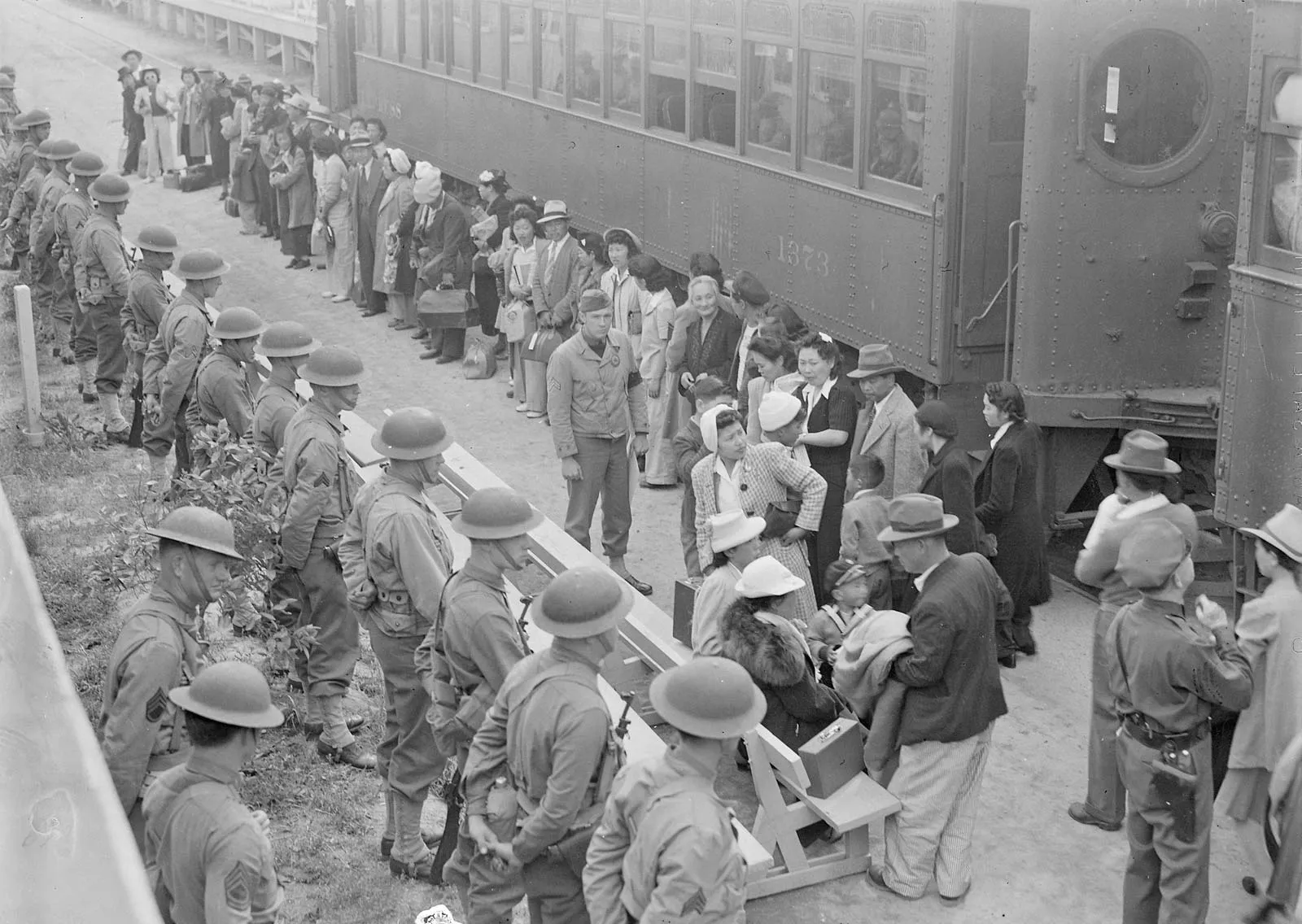











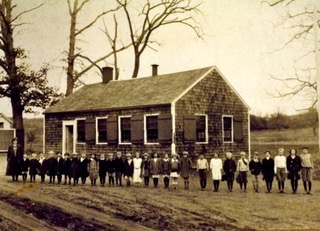


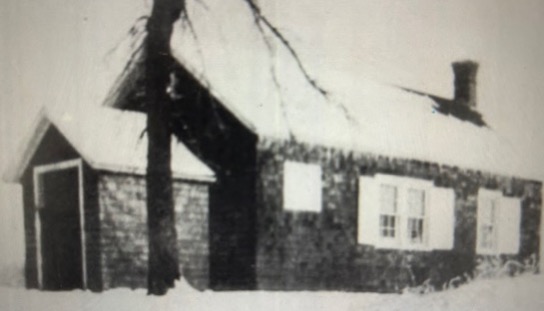




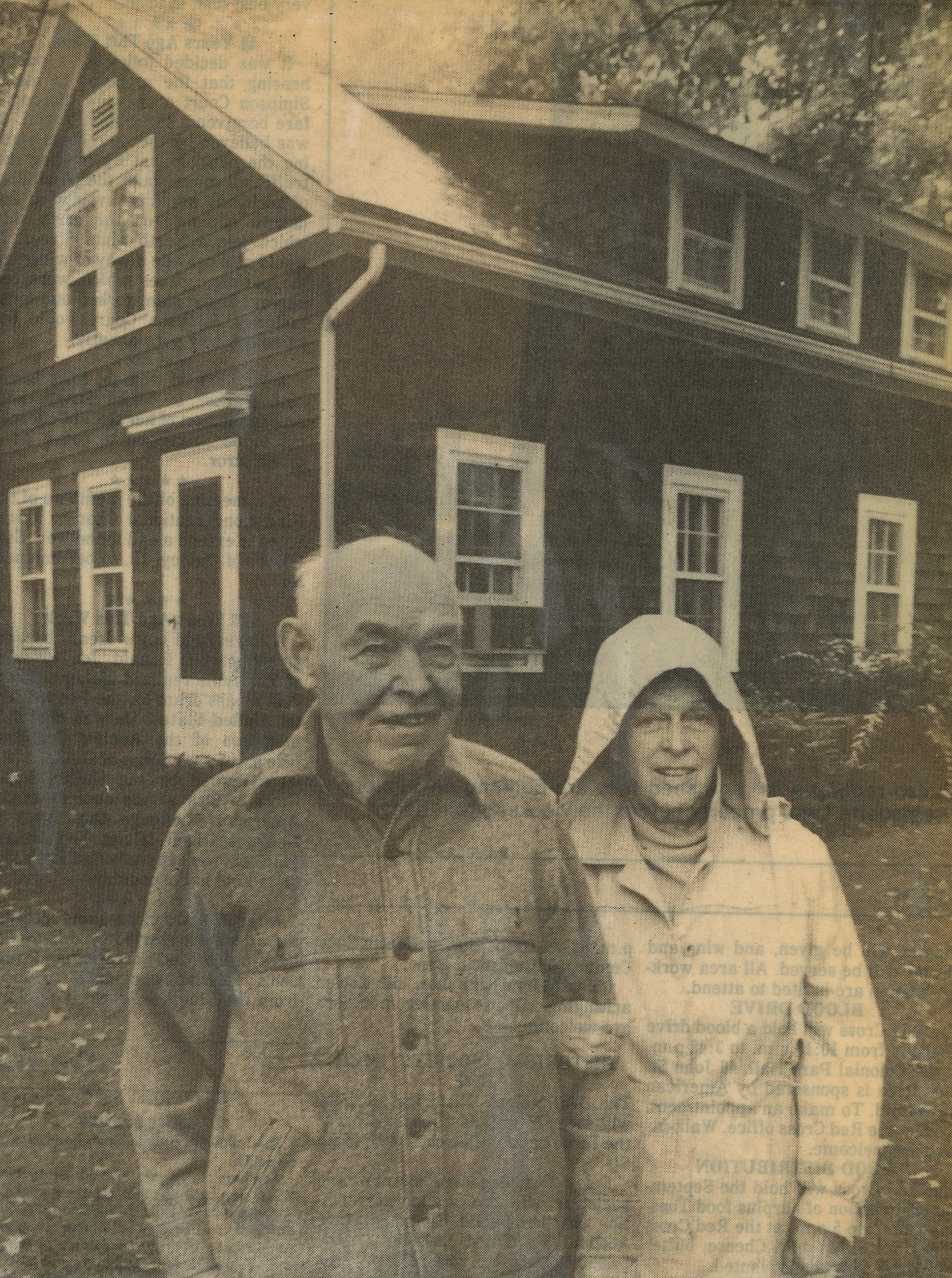


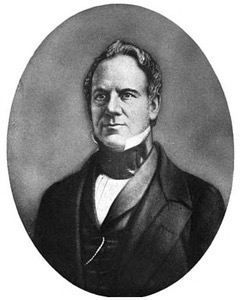

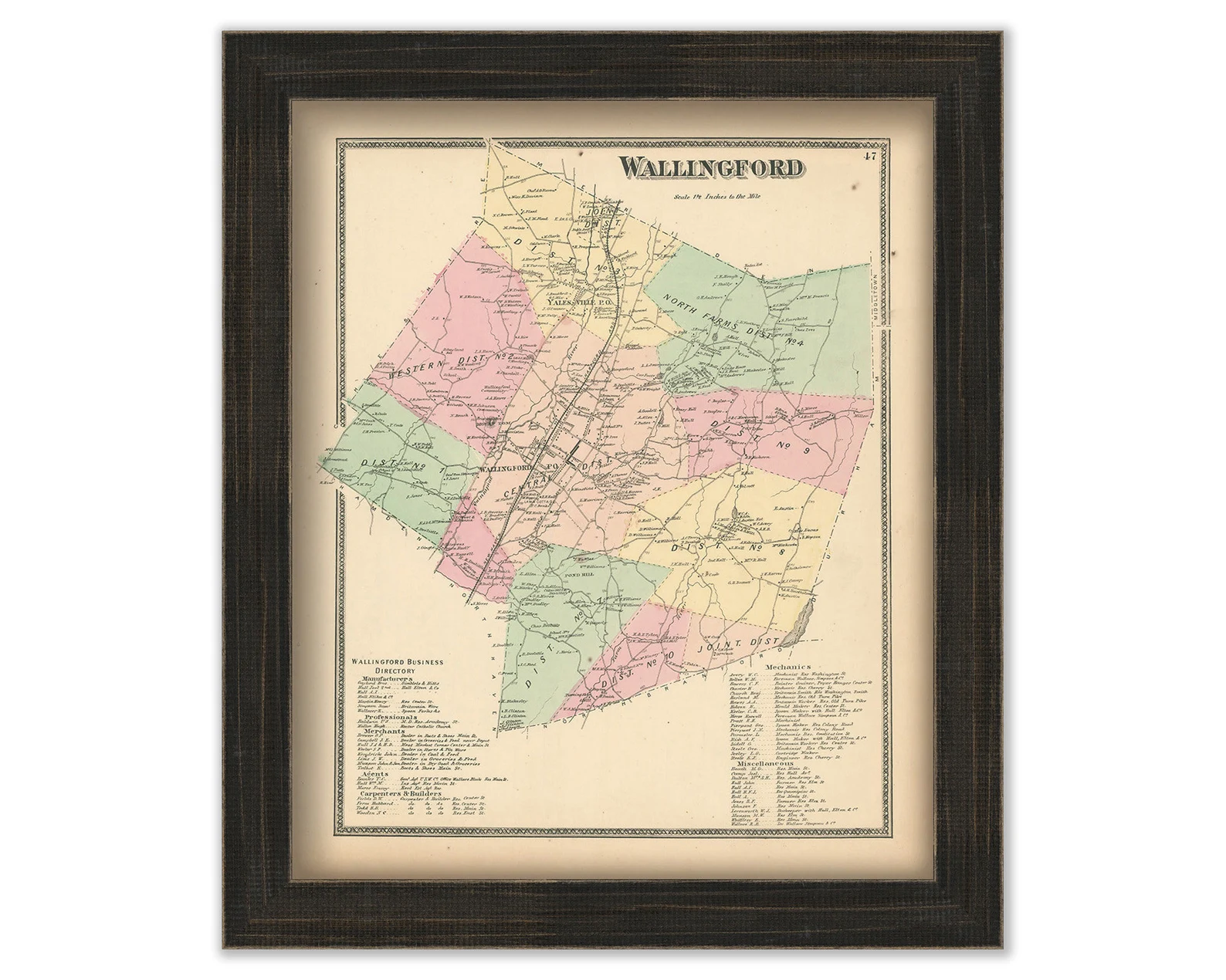


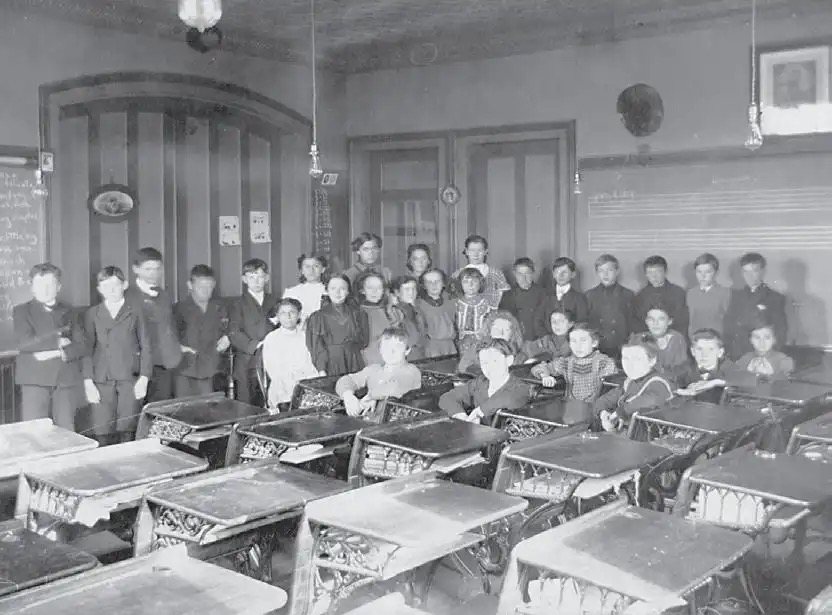
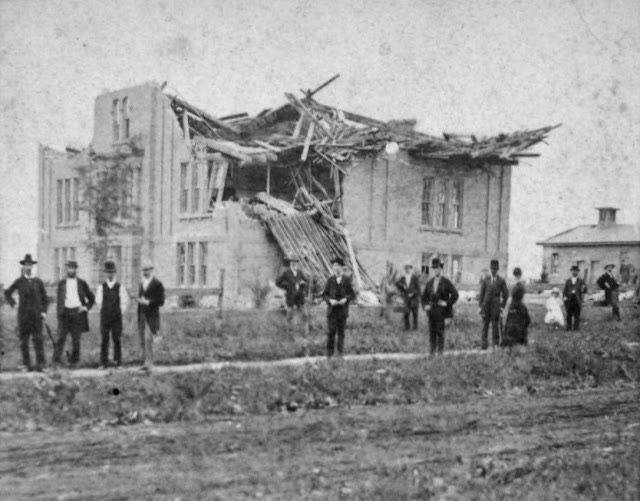
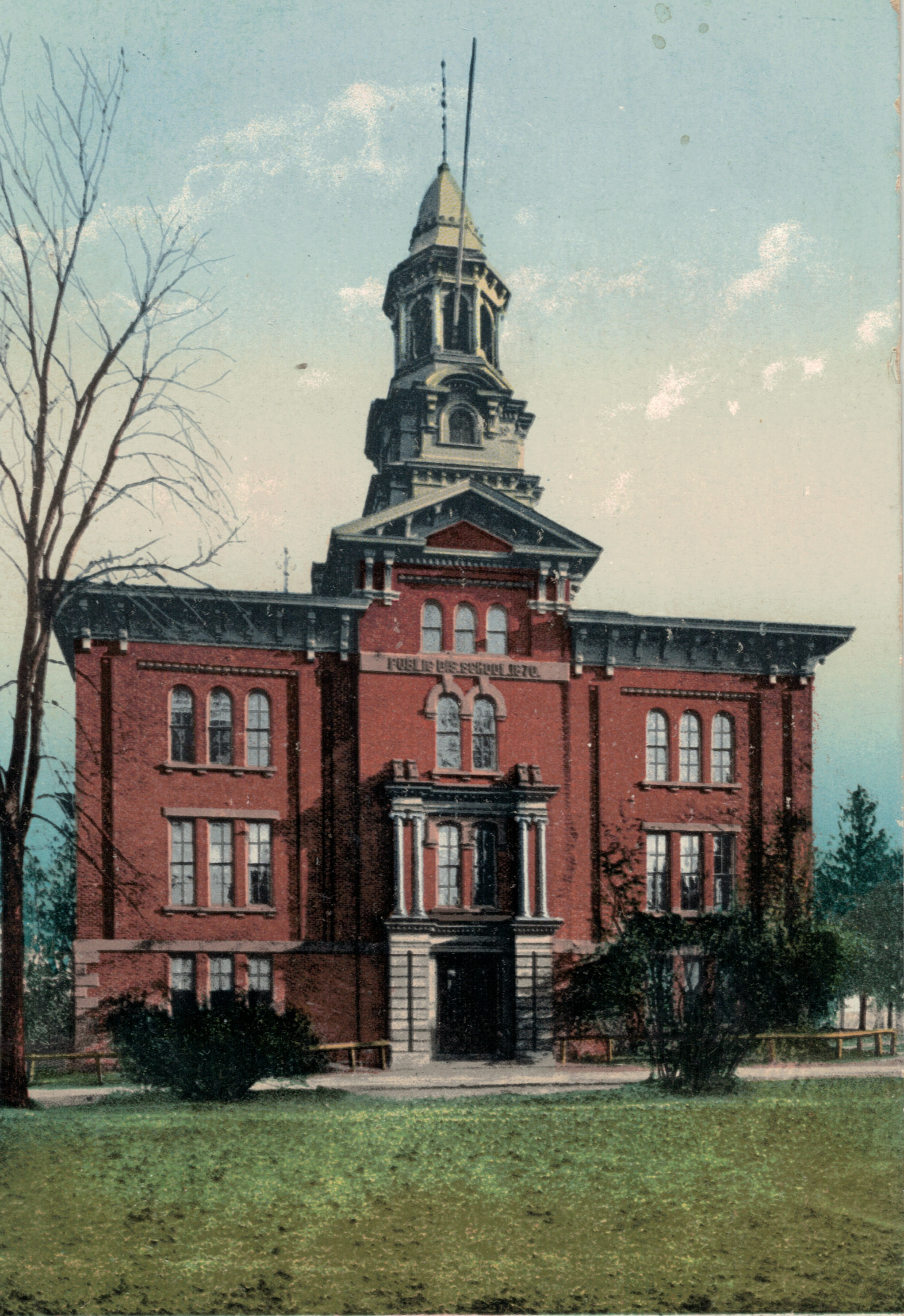


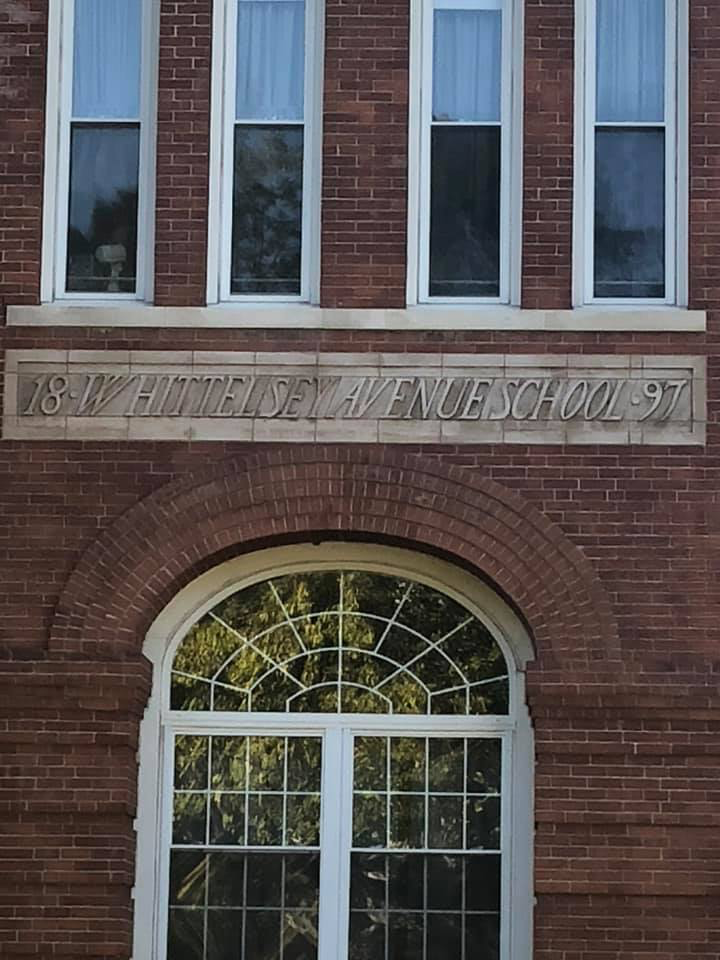


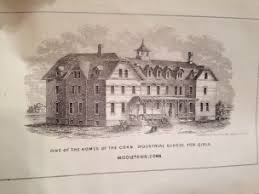

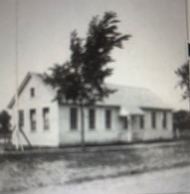


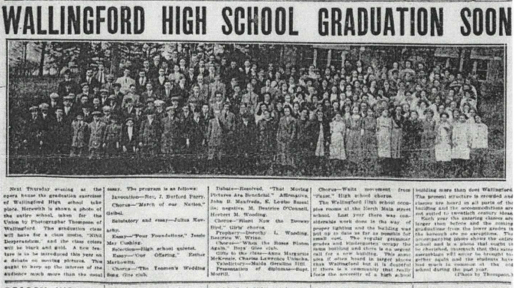

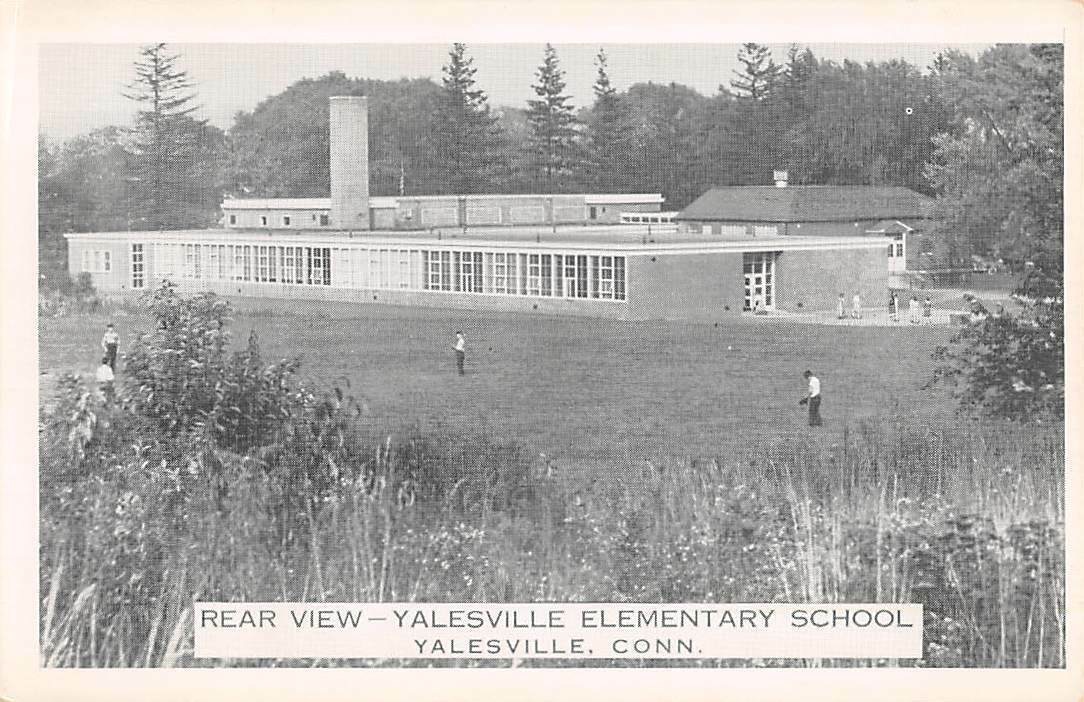
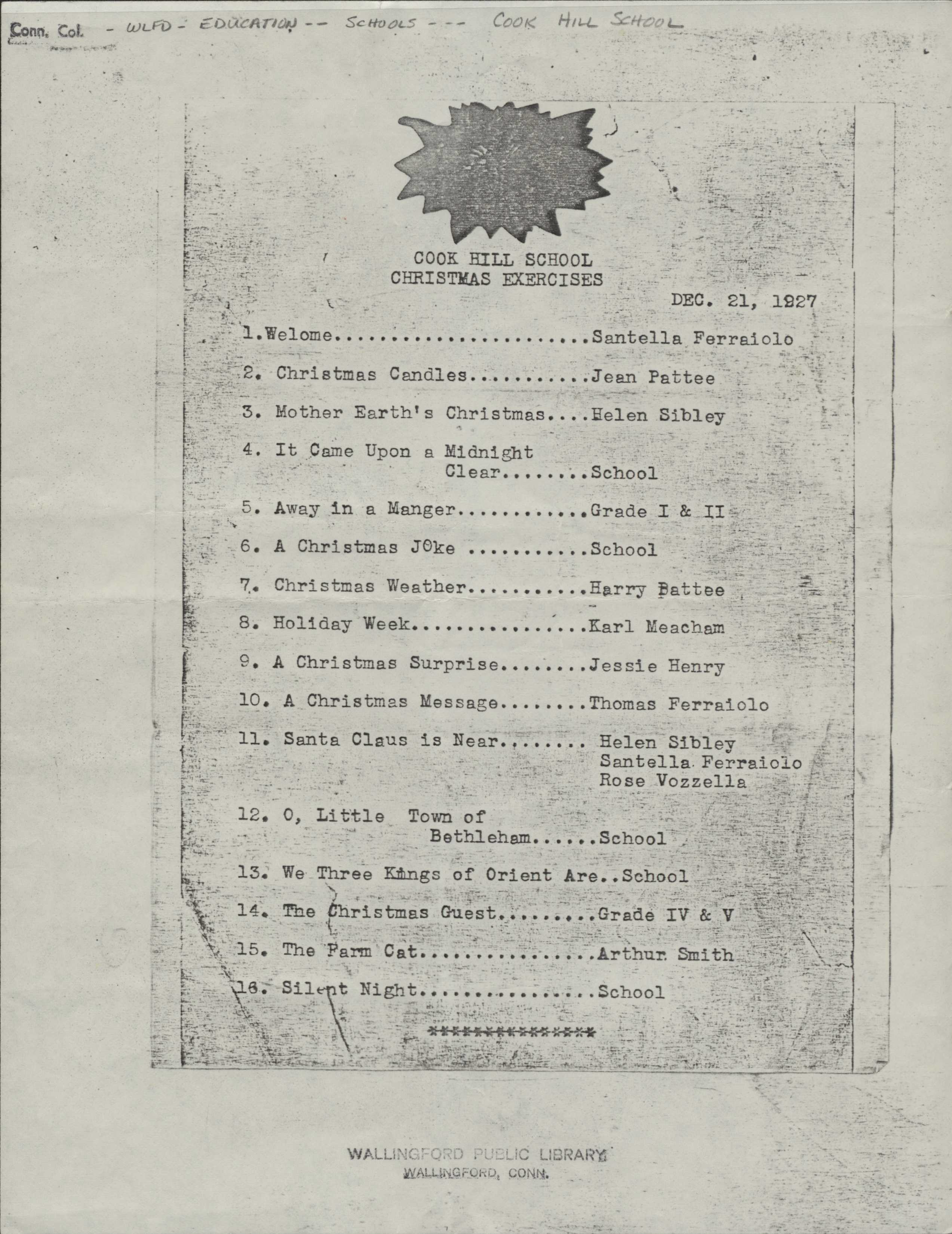
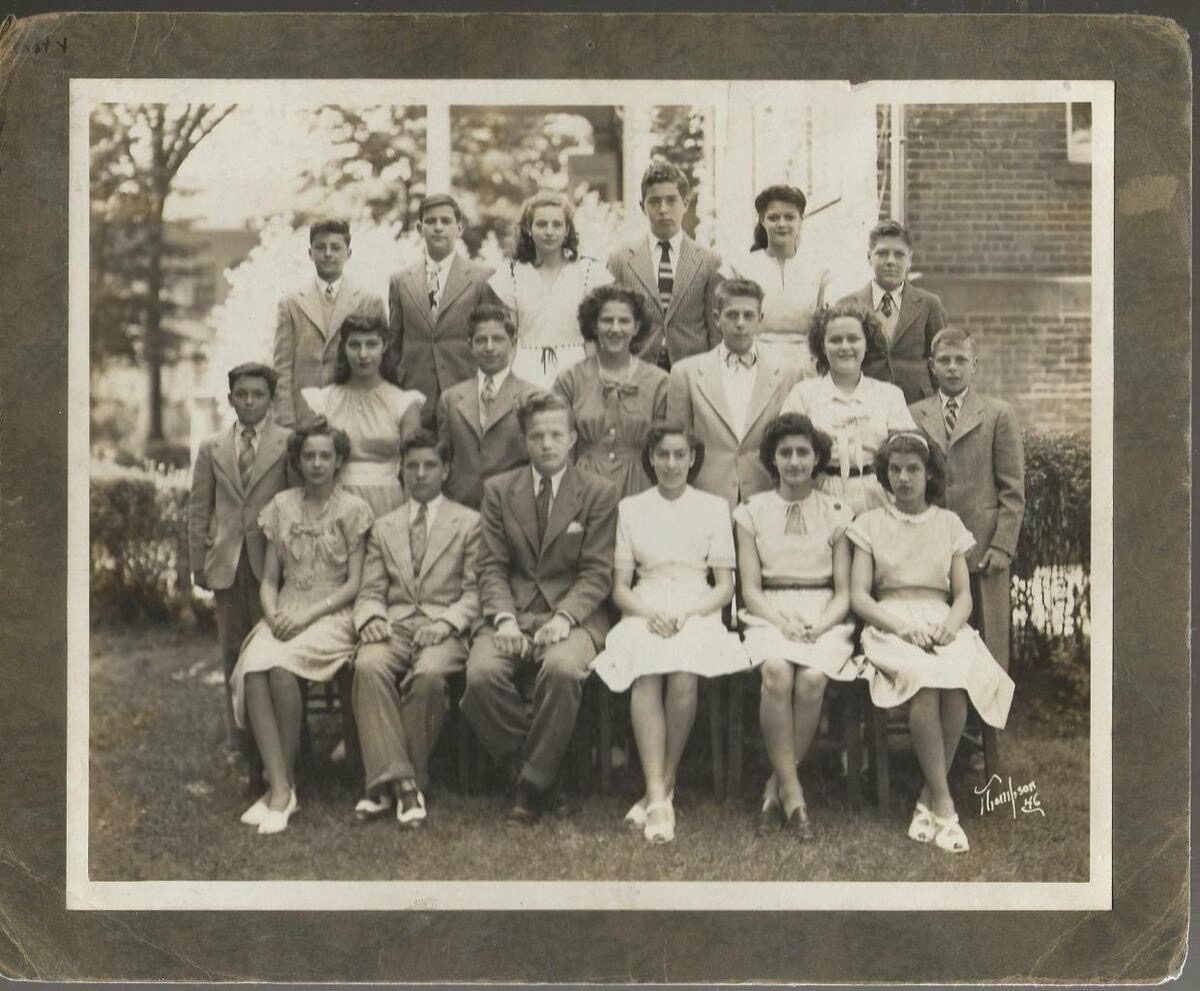


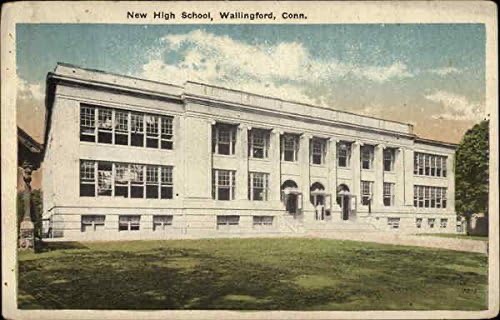
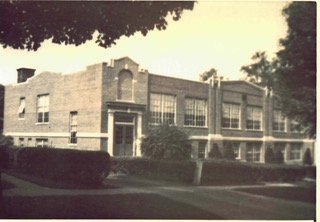

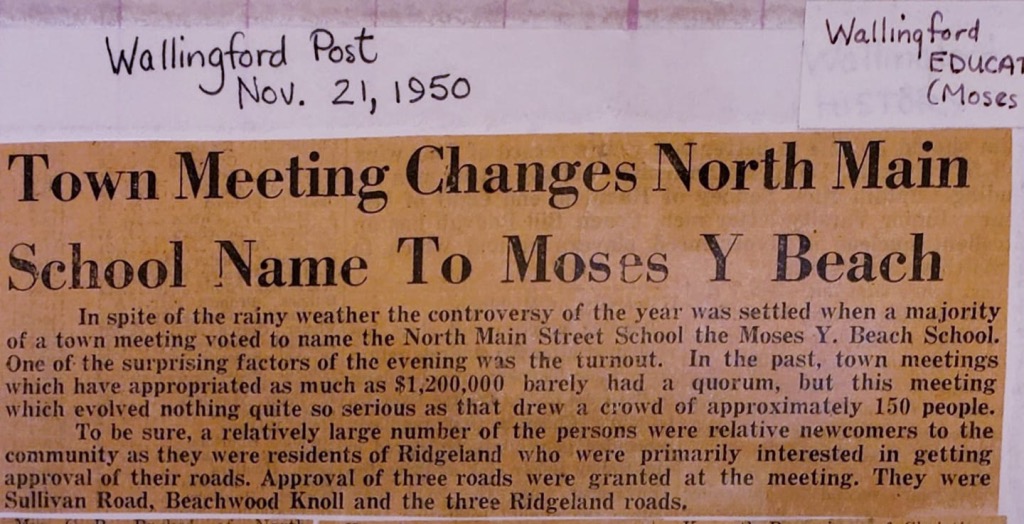
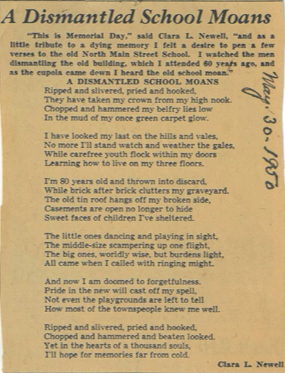
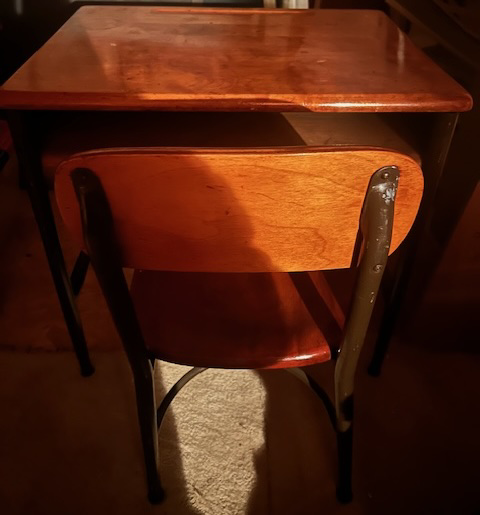



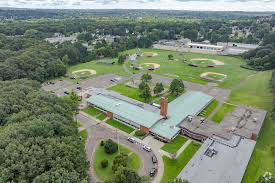


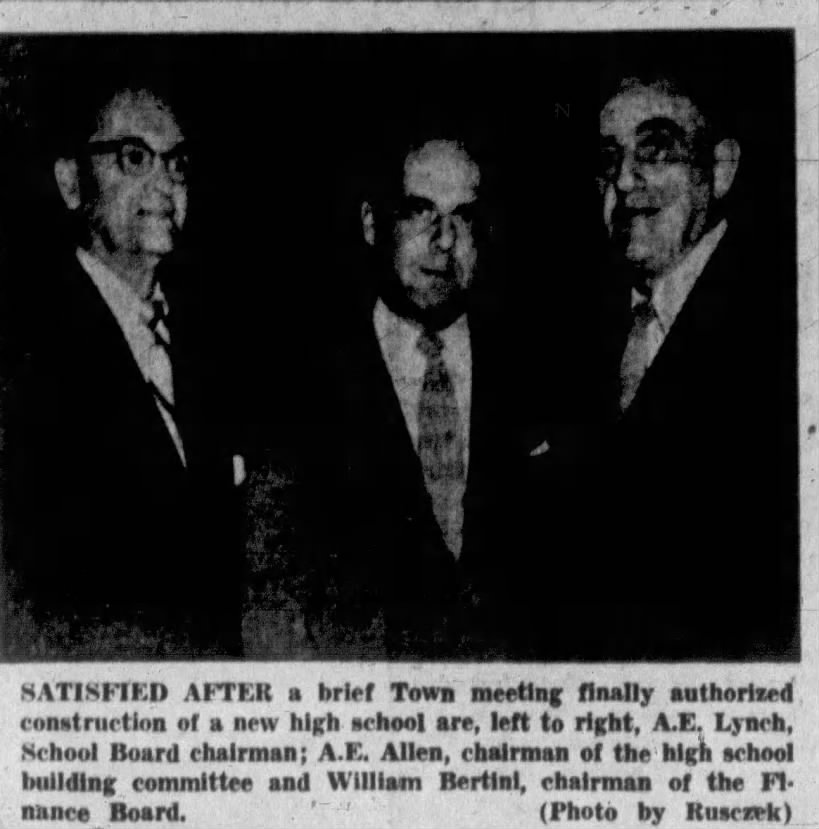



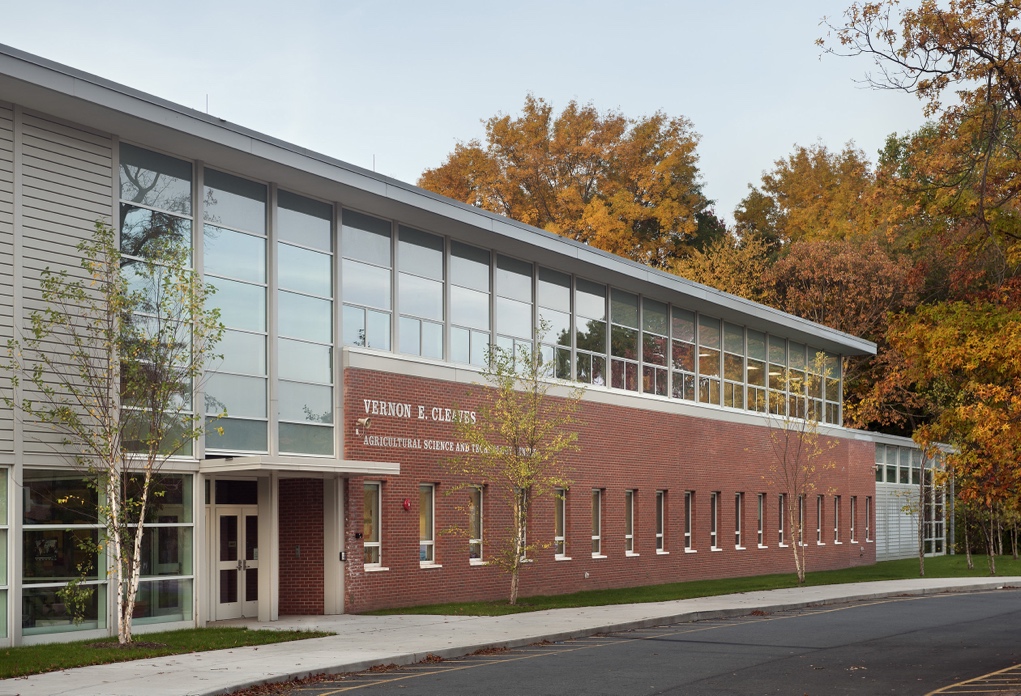


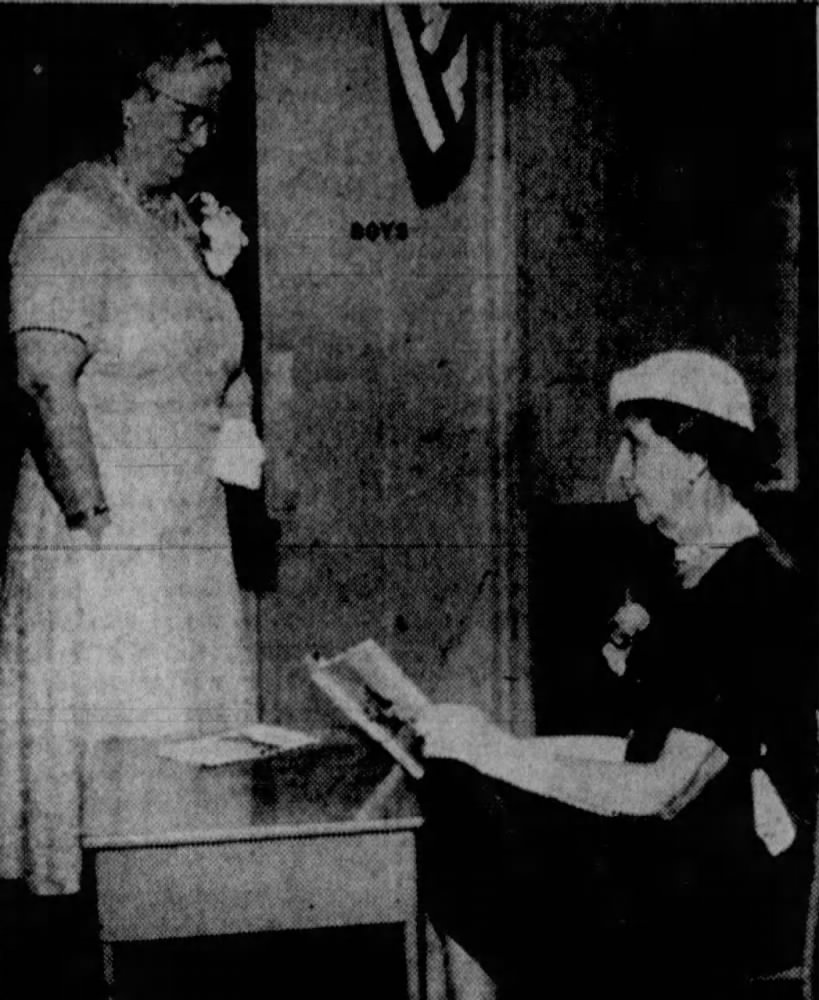


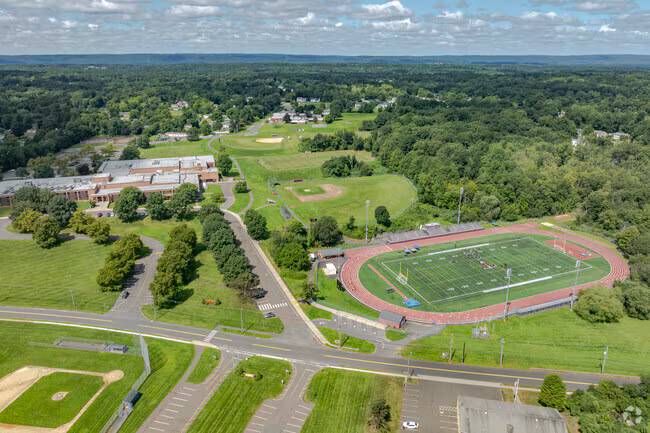

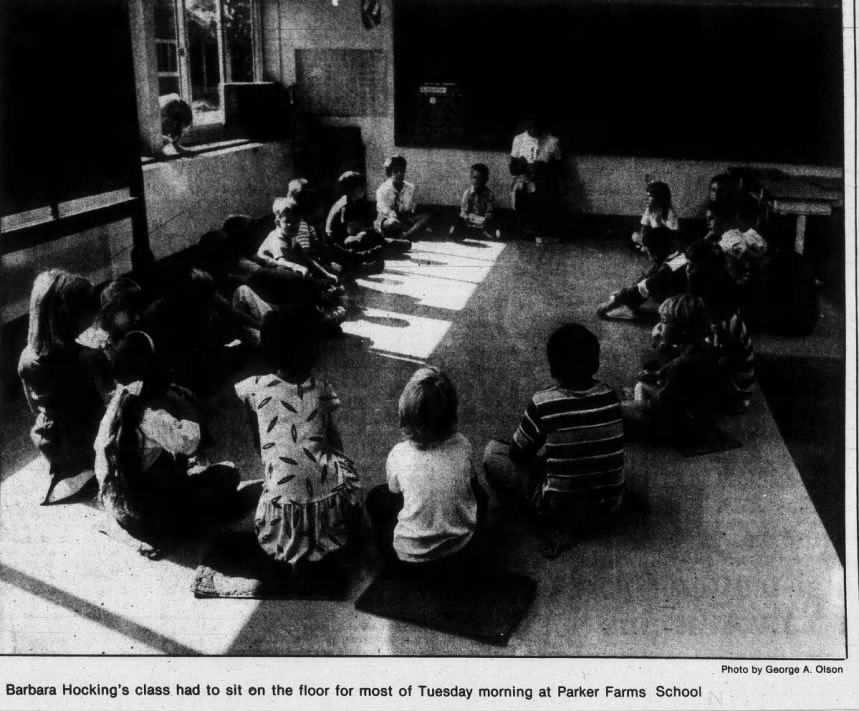
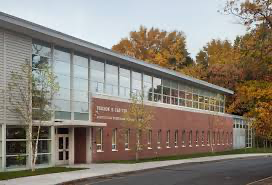

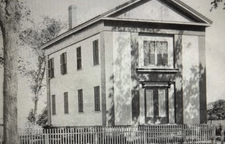










 ThinkingOregon

