Not ANOTHER Grandiose Presidential Center and Foundation!

The Clinton Foundation isn’t going to be the last money-grubbing institution established by a former president. Another foundation money race is already on.

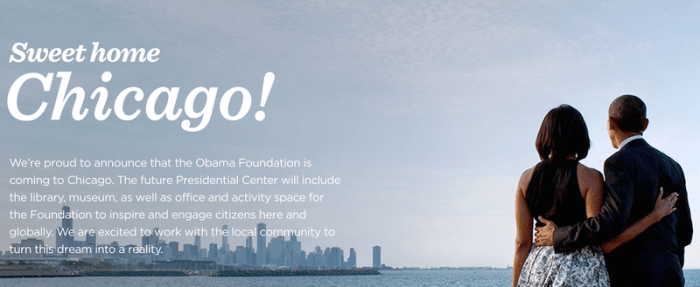
Hours before Donald Trump’s inauguration, Barak Obama posted a two-minute video on Obama.org calling on Americans to contribute to the Obama Foundation which will oversee the construction of the Barack Obama Presidential Center in Chicago.

obamas-chicago-library

The Obama Foundation will “focus on developing the next generation of citizens — and what it means to be a good citizen in the 21st century,” according to obama.org.

The Obama Foundation will try to raise money from the public to build and help maintain the Barack Obama Presidential Center. The Foundation has already raised $7.3 million at the end of 2015. The fundraising total for 2016 hasn’t been disclosed. The Center is expected to cost $1 billion.

“We once held the office of president, as well as its occupant, in high regard,” Anthony Clark wrote in his book, The Last Campaign: How Presidents Rewrite History, Run for Posterity, and Enshrine Their Legacies. “As we have lowered our opinions of both, presidential libraries, consequently, have grown larger and more powerful—and, not incidentally, less truthful.”

Writing in Salon, Clark said presidential centers tend to be “proud, defensive, and a little self-absorbed” that eventually become theme parks with declining numbers of visitors.

With that in mind, it is discouraging to see the number of extravagant presidential centers continue to grow. Do we really need another library and recklessly large foundation funded by influence seekers and built by a legacy-hungry ex-president?

Unfortunately, each successive administration seems to think its library needs to be more grandiose than its predecessor.

The 135,000 sq. ft. John F. Kennedy Presidential Library and Museum, including endowment of an Institute at Harvard for the study of politics and public affairs, cost $20.8 million. Adjusted for inflation, that would be $72.1 million.

The Ronald Reagan Presidential Library and Center for Public Affairs, the largest of all the presidential libraries, cost $60 million. Adjusted for inflation, that would be equivalent to a little more than $130 million now.

Obama’s $1 billion project would be twice what George W. Bush raised for his library and its programs.

It would also be more than the $165 million spent on William J. Clinton’s Presidential Center and Park in Little Rock, Arkansas.

Obama’s massive fundraising effort may well lead to all the same conflicts and questions associated with the Clinton Foundation.

It’s time to stop this arms race of ever-expanding presidential libraries and foundations.

Sen. Merkley Says He’s Committed To Bipartisanship; His Record Says Otherwise

jeffmerkley

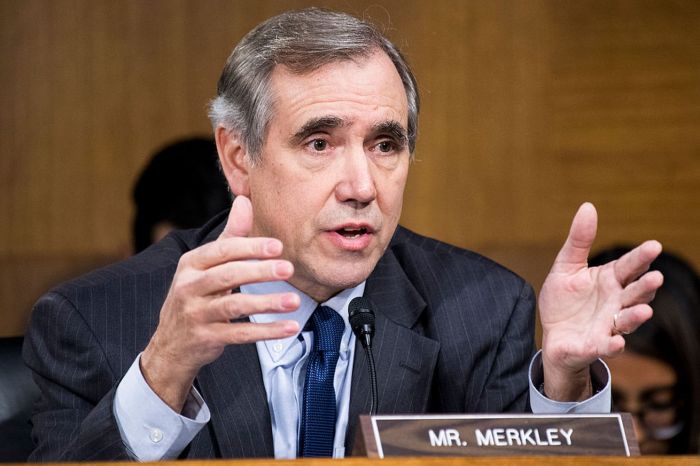
Senator Jeff Merkley (D-OR) is trying to portray himself to Oregonians as someone committed to bipartisanship, to working hand-in-hand with Republicans to advance the country’s interests.

“I believe that if you simply oppose the Administration because you’re of a different party, no one benefits, “ Merkley said in an interview with KGW-TV that ran Wednesday night. “I think of Gandhi’s expression when he said, ‘If all you believe in is an eye for an eye, the whole world goes blind.”

Not so fast, Senator. You can’t walk away from your record so easily with platitudes. The fact is your record shows you are one of the Senate’s MOST partisan members.

According to the Bipartisan Index of 98 senators released by The Lugar Center and Georgetown University’s McCourt School of Public Policy, Merkley had the fourth most partisan track record in the entire Senate in the most recent analysis covering the First Session of the 114th Congress in 2015.

That was even worse than Merkley did in the 113th Congress, when he was ranked the 7th most partisan senator.

The Index takes into account how well members of opposite parties and ideologies work together. The Bipartisan Index measures the frequency with which a Member co-sponsors a bill introduced by the opposite party and the frequency with which a Member’s own bills attract co-sponsors from the opposite party.

“We sought to develop an objective measure of how well members of opposite parties work with one another…,” former Sen. Richard Lugar (R-Ind) said.

Senator Bernie Sanders (I-VT) ranks as the most partisan on the list, followed by Senator Ted Cruz (R-Texas), Sen. Barbara Boxer (D-Calif) and then Merkley.

Bills introduced by highly partisan senators without co-sponsors from the other party “are being written not to maximize their chances of passage, but to serve as legislative talking points.,” Lugar said.


Taking Advantage: Why Doesn’t Metro Pay All Its Interns?

oregon-zoo-entrance

Portland area progressives have been the strongest advocates for fair wages. But the area’s regional government, Metro, isn’t walking the talk.

One result? Low-income Oregonians having to choose between a career enhancing internship with Metro and an afternoon job at a Dairy Queen may have little choice if they want to make any money.

That’s because some Metro internships pay zero. Not one thin dime. Not one red cent.

The Oregon Zoo, for example, is offering unpaid internships in:

It’s a good thing Metro is offering internship opportunities, but it is treading on thin ice by not paying interns.

Federal law is clear that most interns should be paid at least the minimum wage plus overtime after 40 hours a week. Under the Fair Labor Standards Act (FLSA), covered and non-exempt individuals who are “suffered or permitted” to work must be compensated for the services they perform for an employer.

In mid-2016, federal District Court Judge William H. Pauley III of New York ruled that Fox Searchlight Pictures broke the law when it didn’t pay production interns working on the movie “Black Swan” because they were essentially regular employees. “Searchlight received the benefits of their unpaid work, which otherwise would have required paid employees,” the judge said.

Pauley said unpaid internships should be permitted only in very limited circumstances. He added that whether an intern is receiving college credit for the work matters little in determining whether an intern should be paid.

Pauley’s ruling wasn’t a departure from precedent. There’ve been other cases, too, in which courts have ruled that interns must be paid.

You’d think employers would have learned by now and stopped trying to get free labor from interns, but many persist.

“In some industries, especially media, the unpaid internship is the risk many companies are willing to take,” Ed Reeves, a labor and employment attorney at Stoel Rives LLP, told me. “Less so in other businesses. We counsel against that risk, but not every company asks.”

Some employers that bring on interns without paying them may think it’s enough that they get experience, do some networking and get to hang around the fascinating people who do the “real work.”

But aside from the legal issues, that means students from well-off families can afford to take a career-building unpaid internship, but not the kid from an average family struggling to deal with potentially crippling college loan debt. That perpetuates inequality.

Paid internships tend to pay off more for students too. According to the National Association of Colleges & Employers, graduates who have done paid internships outpace their unpaid peers in job offers and salaries.

Metro says its employees are guided by the shared values of public service, excellence, teamwork, sustainability, innovation and respect.

A little more respect for interns by paying all of them a fair wage would be a good way to prove that.

What Hath Obama Wrought? Drone Warfare in the Trump Era.

drones

President Barack Obama was going to be different.

“Eight years ago, Mr. Obama suggested a messenger from a dreamy, multicultural future,” said Adam Shatz, a Fellow at the New York Institute for the Humanities. “America would be steered back on track, working with other countries to meet the challenges of what he often called an ‘interdependent’ world…”

“But it hasn’t worked out that way,” Shatz said. “Despite the best of intentions, Mr. Obama became one of the midwives of of this dangerous and angry new world , where his enlightened cosmopolitanism increasingly looks like an anachronism.”

One area where the dreamy optimism eroded was with the drone strikes carried out from operations centers around the world that President George Bush initiated and Obama escalated.

Pressed by public interest groups, in July 2016 the Obama Administration released its estimates of the number of civilians killed by drone strikes in Pakistan, Yemen, Somalia, and Libya, all countries where the United States is not officially at war. The three-page report, titled “Total Number of Strikes Against Terrorist Targets Outside Areas of Active Hostilities”, said 473 U.S. drone strikes in those three countries during Obama’s two terms killed 64-116 civilians. The report also said 2,372-2,581 combatants were killed in U.S. airstrikes from January 20, 2009, to December 31, 2015.

The government acknowledged that its figures differed substantially from estimates by non-governmental organizations. The Long War Journal, for example, estimated 207 civilian deaths just in Pakistan and Yemen, New America estimated at least 216 civilian deaths in the two countries   and the Bureau of Investigative Journalism estimated that 380-801 civilians died during Obama’s presidency.

The U.S. defended its conclusions, however, asserting that:

  • U.S. government post-strike methodologies for determining combatant and non-combatant deaths were superior
  • The government relied on a more extensive collection and analysis of multiple sources of intelligence before, during, and after a strike, and
  • Some figures released by others have been tainted by the deliberate spread of misinformation by some actors, including terrorist organizations.

President Bush’s embrace of drone killings (he authorized about 50 non-battlefield drone strikes) stirred angry protests by liberals, but the massive escalation of drone strikes under Nobel Peace Prize-winning President Obama, including strikes on American citizens, hasn’t stirred up much public turmoil.

Until now.

Now, with President-elect Donald Trump about to take office, public debate and concern about the drone program is resurfacing in liberal circles.

“That any president has this kind of power is concerning on its own, but it’s even more alarming now that Donald Trump, who has praised repressive dictators like Vladimir Putin and shown little respect for things like international law and the Geneva Conventions, is going to be in the White House,” reported Vox on Jan. 10.

If Trump does go even more hog-wild with drones, a supine Congress, deferring to the Bush and Obama administrations, set him up for it by tolerating aggressive presidential behavior and being willing to watch passively as executive power was stretched beyond its constitutional bounds.

“…the truth is that both major parties under the presidencies of George W. Bush and Barack Obama, have worked to remove the restraints on the presidency and drastically exaggerate its authority,” Michael Brendan Dougherty wrote recently in The Week. “If Donald Trump wants to wield nearly unlimited power, he’s seeking an office that provides it.”

Creating A New Blue Bubble

mediacoveringtrump2

One week after Donald Trump’s inauguration, editors from CNN, Slate, Univision, The New Yorker, and The Huffington Post plan to huddle for a discussion on how to cover the Trump presidency.

The collusion has begun.

“Join Slate for a conversation with top editors in New York about how the news media can and should proceed to cover the Trump presidency,” says an e-mail making its way around the major media universe. “The panel will discuss strategies they are implementing at their outlets, and how journalists and media companies at large can play a bigger role in making sure that fact prevails over fiction in the coming months and years.”

The e-mail, reported by Mediaite, says proceeds from the Jan. 25 event at the NYU Skirball Center will go to the Committee to Protect Journalists, a nonprofit dedicated to the global defense of press freedom. This is the same committee actress Meryl Streep urged people to support in her controversial Golden Globe remarks.

Slate is bringing the media together to advance a liberal  post-election agenda, just as the Democratic Party is using the confirmation process for Trump’s cabinet nominees as a first step in a rebuilding effort.

“That effort includes getting opposition research and outside messaging groups into high gear, fundraising off of certain confirmation hearing highlights or controversies regarding some  nominees, and coming up with a way to paint the administration they will run against in four years in an unflattering light,” said Caitlin Huey-Burns in Real Clear Politics.

The gathering is consistent with a call by New York Times media columnist Jim Rutenberg for reporters to present “a united front”.

A united front for press freedom is an admirable goal. A united front to attack a presidency is not.

But if you regularly follow Slate, Univision, The New Yorker, and The Huffington Post, they are already consistent in their disparagement of Trump and his coterie of advisers and supporters.

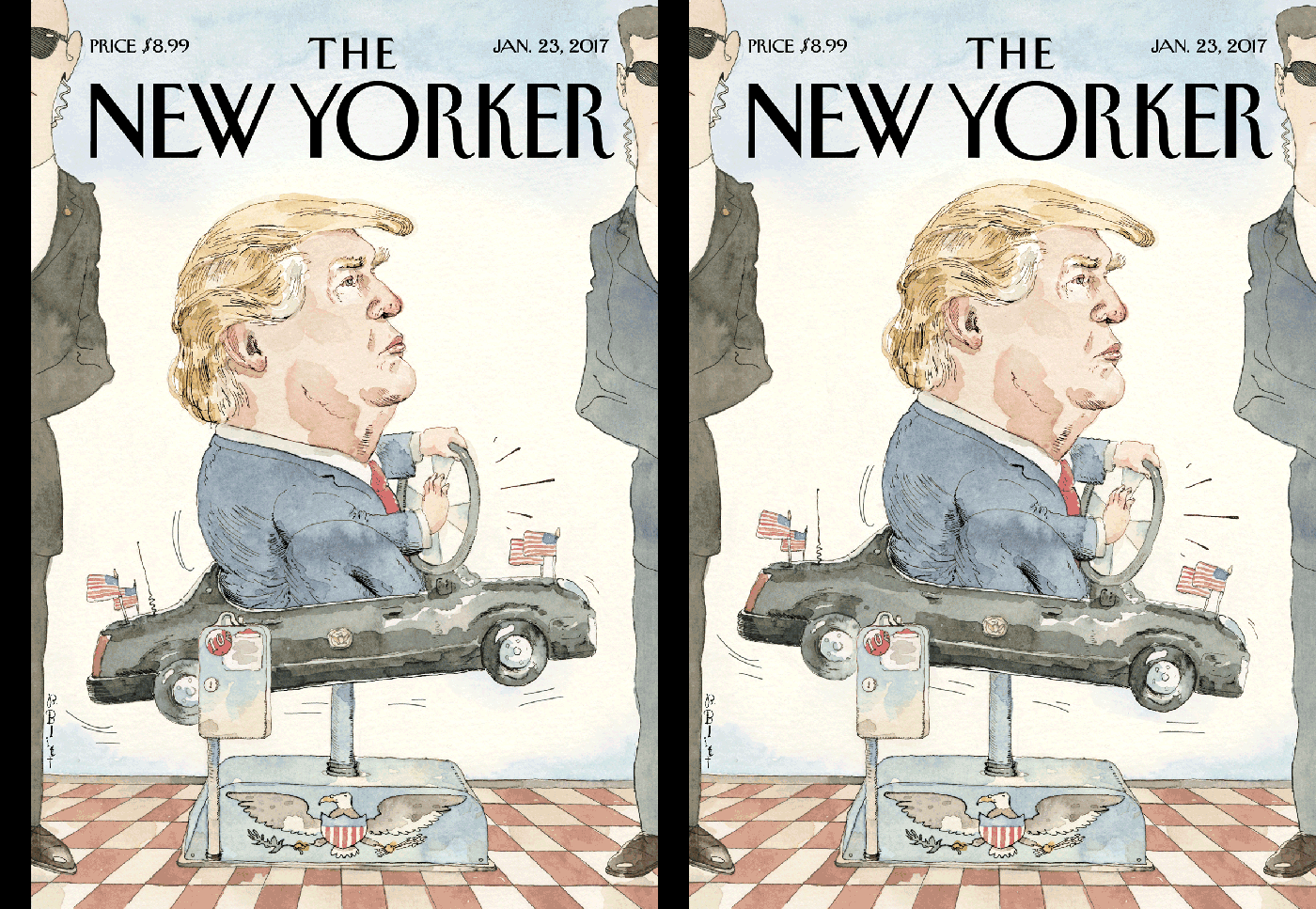
The current New Yorker, for example, has a cover portraying Trump as a child taking off in the family car with the hope he’ll be apprehended before he can do too much damage.

newyorkercovertrump

The magazine itself features multiple stories denigrating Trump and his allies. One accuses Trump of being “a clumsy bigfoot” with his comments on contributions to his campaign from an L.L. Bean family member. Other stories lambaste Trump’s inaugural festivities, liken Trump to Ray Kroc, the founder of McDonalds, in an upcoming movie that “conspires to smooth any wrinkles of villainy”, and take on Peter Thiel, a Silicon Valley venture capitalist and Trump supporter, in an odd piece about his views on Star Trek vs. Star Wars,

This all reminds me of the much-maligned JournoList, a private Google Groups forum for discussing politics and the media with membership consisting of 400 left-leaning journalists, pundits, academics and others. The forum, active during 2007-10, was accused of encouraging and facilitating coordinated messaging supporting liberal views, though many critics asserted any conspiracy theory was overblown.

JournoList did display, however, the inclination for the progressive community to bond over common political and personal biases. The new Slate-driven consortium of progressive publications is likely to head in the same direction, reinforcing their blue bubble as they battle Trump and his policies.

As Wall Street Journal columnist Peggy Noonan wrote shortly after the election:

“Much of the mainstream, legacy media continues its self-disgrace. Having failed to kill Donald Trump ’s candidacy they will now aim at his transition. Soon they will try to kill his presidency.”


Algorithm Politics: A Threat to Democracy

It’s not the Russians or fake news, the overhyped threats du jour, I’m most worried about. It’s algorithms.
facebooknews-feed-algorithm-1000x605

We’re all being sliced and diced like in an autopsy, analyzed and scrutinized so we can be messaged and manipulated. We are being told what we want to hear or what fits our biases. We accept lies because we’re being trained to do so.

As Howard Beale shrieked about television’s voice in the movie Network, “But, man, you’re never going to get any truth from us. We’ll tell you anything you want to hear; we lie like hell…We deal in illusions, man! None of it is true!”

We’ve gotten so used to the manipulation we usually don’t recognize it.

While recently strolling about the Washington Square mall’s new Amazon bookstore, I noticed that some of its racks had embraced the a fortiori tactic of many online sellers, “If you like …, you’ll love ….”

ifyoulikethisthen

On one shelf, printed notes said that if I liked Emma Donoghue’s novel “Room”, I’ll love Paul Pen’s “Light of the Fireflies” (“which deals with some very deep and disturbing topics, including incest”), Gillian Flynn’s “Sharp Objects” (featuring “…an incredibly flawed and fragile character…”) and Wally Lamb’s “I know this to be True” (an Oprah Book Club Pick in 1998).

It looks like the store is just being helpful, but it it is really steering your purchasing decision  in a particular direction based upon your characteristics and previous behavior.

It’s like LinkedIn alerting you to job openings that might appeal to you and Twitter feeding you promoted tweets based on your profile information, mobile device location, IP address or apps on your device.

It’s like Facebook delivering information to you on topics you’ve already signaled an interest in with a bias you’ve already displayed, and cutting out contrasting views, or not showing you certain ads based on your ethnicity (as it did until recently).

In Sept. 2016, ProPublica, an independent, non-profit that produces investigative journalism, wrote about Facebook having a comprehensive set of dossiers on its more than 2 billion members.

“Every time a Facebook member likes a post, tags a photo, updates their favorite movies in their profile, posts a comment about a politician, or changes their relationship status, Facebook logs it,” ProPublica said. “When they browse the Web, Facebook collects information about pages they visit that contain Facebook sharing buttons. When they use Instagram or WhatsApp on their phone, which are both owned by Facebook, they contribute more data to Facebook’s dossier.”

And in case that wasn’t enough, ProPublica said, Facebook also buys data about users’ mortgages, car ownership and shopping habits. Talk about invasive.

In a TED Talk, Eli Pariser, Moveon.org’s Board President, called this the “invisible algorithmic editing of the web.”

It’s like Breitbart and The Daily Beast satisfying their conservative and progressive audiences with red meat, allowing each group to retreat to what University of Wisconsin Journalism Prof. James Baughman has called “safe harbors”.

Algorythms are being used to personalize all your communications, constantly reaffirming and constraining your current perspectives, establishing and solidifying your opinion silos. As they get more sophisticated and widely used algorithms are creating what Pariser calls your “filter bubble”, accentuating rifts and perverting our democratic system.

When you log on to Facebook, an algorithm takes into account countless variables to predict what you want to see. Facebook also uses algorithms to categorize your political bent, taking into account your full range of interactions, including the pages you like and the political leanings of people who like the same pages you do.

If you want to know how Facebook categorizes you, just go to facebook.com/ads/preferences. Under the “Interests” header, click the “Lifestyle and Culture” tab. You may have to click on “More” to find it. Then look for a box titled “US Politics.” In parentheses, it will describe how Facebook has categorized you, such as liberal, moderate or conservative.

This and other information is used by opinion influencers to target you. Among those influencers are media of all stripes and politicians of all persuasions.

Politicians have long sought to appeal to different segments of voters with targeted messaging and carefully constructed personas, but until recently the process has been fairly rudimentary.

The image-making tactics described in Joe McGinnis’ groundbreaking book “The Selling of the President” about marketing Richard Nixon in the 1968 presidential race, came as a shocking surprise to a naive general public back then.

But the tactics that were pathbreaking almost 50 years ago are now old hat. They’ve been superseded by once unimaginable data collection and analysis and unforeseen content delivery systems.

Algorithm advocates are adamant that what’s being done is good for you. “Humans are facing an increasing number of choices in every aspect of their lives,” Netflix’s VP of Product Innovation Carlos A. Gomez-Uribe and Chief Product Officer Neil Hunt wrote in a co-published paper last year. “We are convinced that the field of recommender systems will continue to play a pivotal role in using the wealth of data now available to make these choices manageable, effectively guiding people to the truly best few options for them to be evaluated, resulting in better decisions.”

Gomez-Uribe and Hunt argued that Netflix’ impressive system, which breaks down films into over 75,000 hyper-specific sub-genres and uses those, and your past behavior, to make recommendations, is obviously a great thing because 80% of hours streamed at Netflix end up being of recommended films.

But Issie Lapowsky, at Wired, is less sanguine about the implications of algorithms, arguing that there’s a dark side to their use. “This (2016) election has shown us how the same platforms that put a world of facts and information at our fingertips can just as easily be used to undermine basic truths,” she wrote on Nov. 7.

In Weapons of Math Destruction, Cathy O’Neil argued that algorithms pose as neutral tools, but too often exploit people and distort the truth, contributing to the erosion of democracy.

“The social network (i.e. Facebook) may feel like a modern town square, but thanks to its tangle of algorithms, it’s nothing like the public forums of the past,” she said. “The company determines, according to its interests and those of its shareholders, what we see and learn on its social network. The result has been a loss of focus on critical national issues, an erosion of civil disagreement, and a threat to democracy itself.”

Algorithms cause us to “contribute to our own miseducation”, reinforcing echo chambers and making us more partisan, O’Neil said.  “Thanks in part to filtering and personalization… our information has become deeply unbalanced, skewed, and has lost its mooring.”

The increasing sophistication of data gathering and analysis reflected in algorithms is also allowing politicians to shape shift for almost each individual voter. A politician used to be one person, or maybe two if you didn’t like him. It used to be that a presidential candidate delivered similar personas and key messages to  all audiences. If he didn’t, his duplicity was exposed. Today, multiple personas and positions are carefully constructed  and messages are carefully targeted so they can be delivered to tiny slices of the electorate, often with no broader public awareness.

Micro-messaging allows specific online messages to be delivered to a certain group, such as just to attendees of the 2016 National Right to Life Convention at the Hilton Washington Dulles Airport  in Herndon, VA, or even to two members of a family in the same house with different views.

Often the dissection of voters allows a message to be massaged such that the recipient on social media or other channels believes she and the politician are in agreement, even if that’s not the case.  For example, an anti-union Congresswoman might tell a same-minded constituent of by her support for a right-to-work bill, while telling a union supporter about her vote for higher infrastructure spending that tends to reward unions.

Stanford Prof. Neil Malhotra’s research led him to suspect that this kind of  hypocrisy helps explain how members of Congress can get away with voting in a highly partisan or polarized way when their constituents are actually much more moderate.

“These people are good strategic communicators who can potentially take very extreme positions that are out of step with their constituents but then massage them with language,” Malhotra said in a Stanford Business article.

Of course, targeting voters is hardly a new thing; politicians have been doing it forever. But now the databases are substantially more comprehensive, sometimes scarily so, the messaging vehicles, such as social media, can be much more individualized and the political elite are fully embracing the new technology.

“Algorithms show us what we like, not what is ‘right’ ”, said Sebastian Buckup on Quartz. “As a result, they increase ideological segregation rather than creating a digital agora. Influencers no longer waste their time with facts…Rather than seeking truth, the age of data is creating its own.”

That new truth will put more power in the hands of manipulators who won’t have our best interests at heart.

Asked, “How did you go bankrupt?”, Ernest Hemingway replied, “Two ways. Gradually, then suddenly.”

That’s how our democracy will collapse, too, if algorithmic tools aren’t tamed to function in our best interest.
 

Identity Politics Run Amok at the University of Denver

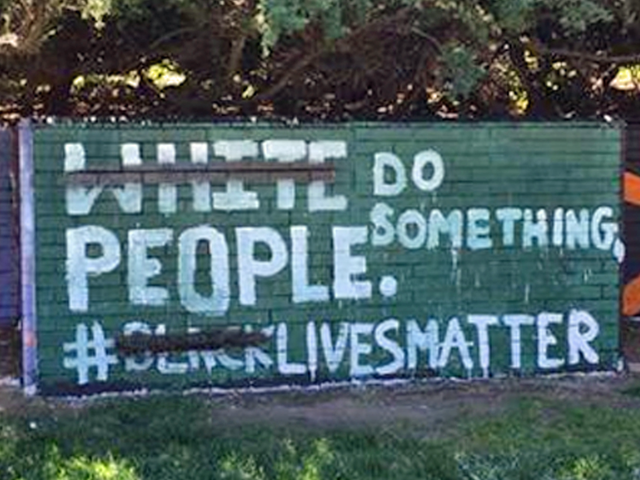
dufreespeechwall

Free Speech Wall at the University of Denver

Their heads full of self-righteousness and the angst of youth, too many campus activists seem determined to impose identity politics on campuses.

In 2015, some students at Princeton University acting under the banner of the Black Justice League demanded “cultural competency training” for faculty and staff, required classes on “marginalized peoples,” and a dedicated space on campus for black students.

The same misguided thinking has now infected my alma mater, the University of Denver.

In September 2016, the message “Disrupt the Peace, White Silence = Violence, White People Do Something, #BlackLivesMatter,” was painted on the university’s Free Speech Wall. The Wall was subsequently defaced to change the message , leading to a sit-in, a march and an Oct. 7 meeting with the school’s chancellor, Rebecca Chopp.

At that meeting, the Black Student Alliance presented the chancellor with a list of demands, including:

  • That a former mascot, called Boone (after Daniel Boone), be prohibited at any DU events because it is “representative of the western extinction of Native American culture” and that another mascot be picked “that celebrates inclusion and diversity while also acknowledging the history of the university’s part in violence against Native Americans”
  • That DU stop calling the students, teams, etc. “Pioneers”, which they’ve been doing since 1925, because “The term ‘pioneer’ is highly problematic for many, especially Native American students, as it is defined as a person who is among the first to explore or settle a new country or area.
  • That all students applying to DU be required to write an essay articulating their understanding of Inclusive Excellence.
  • That all students complete a curriculum in “Race, Inequality & Social Change” in order to earn a degree.
  • That DU establish an Ethnic Studies Department.
  • That DU provide a budget for the following heritage/history month programs and events:

February – Black History Month

March – Women’s History Month

May – Asian/Pacific American Heritage Month

June – LGBT Pride Month

September – Latinx Heritage Month

October – LGBT History Month

November – Native American Indian/Alaska Native Heritage Month

In a counterintuitive move, a group of student leaders subsequently imposed restrictions on what could be written on the Free Speech Wall and a camera was installed to monitor who’s writing what there.

Hate speech has also been prohibited on the Wall. Hate speech “may take the form of direct or indirect offensive slurs, jokes, messages, or attacks on members of the DU community based on their race, gender, ethnic origin, religion, abilities, socioeconomic background, or sexual orientation,” a memo said.

The memo concluded with the nonsensical comment that “…these guidelines are not intended to restrict free expression; rather they are a means through which we can continue to thrive as an inclusive community with a shared value system and many varied viewpoints.”

Is all this really where we want our universities to go —coercive cultural sensitivity training, the Orwellian suppression of free speech in the name of supporting openness, the elimination of historical references that don’t conform to modern sensibilities, the imposition of identity politics?

The fact is, erasing history solves nothing. Nor does mandated cultural awareness. And the explosion of racial and ethnic heritage months is taking us all in the wrong direction. What we really need is to incorporate recognition and appreciation of various heritages into the daily flow of our calendar and lives.


Would #NeverTrump Stalwarts Now Support Sweet Cakes?

nevertrump

Liberals like those who condemned the owners of Sweet Cakes by Melissa are now giving a shrug to NeverTrumpers who are discriminating against Trump supporters by refusing to associate with them or patronize their businesses.

The liberals’ unlikely hero in all this today is Phoebe Pearl, a member of the famous dance troupe the Rockettes.

“Finding out that it has been decided for us that Rockettes will be performing at the Presidential inauguration makes me feel embarrassed and disappointed,” Pearl said in an Instagram post today. “…please know that after we found out this news, we have been performing with tears in our eyes and heavy hearts #notmypresident”.

Online comment sections lit up with endorsements of Pearl’s post.

“Proud that you stand up for your views/ beliefs especially to all those trumpies who are always on attack mode ready to become the vicious evil fake definitely not Christians judgmental psychos,” was posted by truthisabitch.

 Boston Globe columnist Jeff Jacoby praised the Rockettes in an article titled, Freedom of Association Isn’t Just for the Rockettes.

“The right to discriminate — to choose with whom we will and won’t associate — is vital to human liberty,” he wrote today. “No one should be forced to play a role in a celebration they want nothing to do with, or to hire themselves out to clients they would prefer not to serve. A liberal baker who declines to create a lavish cake decorated with the words “Congratulations, President Trump” is entitled to as much deference as a black baker who declines to decorate a cake with the Confederate flag…”

Pearl’s post follows actions by other NeverTrumpers asserting their intentions to discriminate against Trump supporters.

HeatStreet, a conservative leaning news website, reported in early December that some Wash., DC homeowners were removing their Airbnb listings so they wouldn’t be put in the position of renting to “…the residents of flyover country.”

“I have a visceral reaction to the thought of having a Trump supporter in my house,” said one Airbnb host. “No amount of money could make me change my mind. It’s about moral principles.”

Television chef Anthony Bourdain said he wouldn’t patronize a restaurant at the newly opened Trump International Hotel in Washington, D.C. “I will never eat in his restaurant,” Bourdain said. “I have utter contempt for him, utter and complete contempt”.

Designer Sophie Theallet gained some notoriety when she flamboyantly announced on Twitter that she would not dress or associate with Donald Trump’s wife Melania when she becomes first lady. She also called on other designers to follow her lead, saying “Integrity is our only true currency.”

Is all this a liberal double standard?

In 2013, Aaron and Melissa Klein, the owners of Sweet Cakes bakery in Gresham, OR refused to bake a cake for a same-sex wedding of a lesbian couple because of the Klein’s Christian beliefs against same-sex marriage.

In early 2015, then State Labor Commissioner Brad Avakian made a preliminary finding that the Kleins discriminated against the lesbian couple on the basis of their sexual orientation.

In July 2015, Avakian ordered the Kleins to pay $135,000 in damages to the couple for emotional and mental suffering they experienced because the Kleins had refused to sell them a wedding cake.

Liberals enthusiastically endorsed Avakian’s decision.

“The Kleins are religious zealots, and not very bright,” wrote one supporter of the decision. “They should stick to baking cakes, and leaving their religion in the back room and/or at home and at church. When one opens their doors to a commercial enterprise, they don’t get to tell people to —- off based on purposeful discrimination.”

“A sign saying “no lesbians are allowed to purchase wedding cakes in my store,” is every bit as discriminatory as a person verbally saying “no lesbians are allowed to purchase wedding cakes in my store” and the business in question should be held accountable,” Mat dos Santos, legal director of the American Civil Liberties Union of Oregon, wrote in an opinion column in The Oregonian.

The federal government, while asserting that you can’t discriminate on the basis of race, color, religion, sex, and national origin, doesn’t prohibit discrimination based on a person’s political bent. So the NeverTrumpers aren’t breaking the law when they support the ability of businesses to ban politically offensive customers, but how is that position morally different from the position the Kleins took?

Do the liberal NeverTrumpers denying services to Trump supporters now want to reverse Avakian’s decision or should they be held to the same standards as the Kleins?

Union Members Can Stop Subsidizing Liberal Candidates and Causes


liberalconservativesigns

A question to conservative Oregon union members (I know you’re out there): Why are you contributing to union political funds when most of the money ends up supporting liberal Democratic candidates?

About 18% of the electorate across the country was from union households in the Nov. 8, 2016 presidential election. Donald Trump captured 43% of those union-household voters.

In Oregon, 14.8 percent of the wage and salary workforce belonged to a union in 2015. It’s not clear how they voted, but it’s likely, based upon national patterns, that a decent share voted Republican.

Still, Oregon’s unions overwhelming endorsed Democrats. For example, all but two of the AFL-CIO’s 2016 Legislative endorsements in Oregon were for Democrats (one was an independent, one a Republican), as were all the statewide candidate endorsements.

Similarly, in the 2016 election, political contributions from Oregon’s unions went overwhelmingly to Democrats. For example, SEIU’s PAC, Citizen Action for Political Education (CAPE), spent $2,001,758.89 on the 2016 election. Of that, $706,750.00 went to Defend Oregon (the group pushing Measure 97), $205,000 to the Committee to Elect Brad Avakian, $180,000 to the Kate Brown Committee, and $37,380 to The Real Mike Nearman Committee (created to defeat Republican Mike Nearman).

So why don’t more union members who disagree with their union’s political stances decline to contribute to their union’s PAC and opt out of supporting the union’s political activities. It’s not that hard to do. All a union member has to do is become an “agency fee payer”, sometimes also called a “Fair Share Payer” or “Non-member.”

Oregon allows public employees who are part of a collective bargaining unit to refuse membership in the union that represents that unit. But because the union still has to negotiate on their behalf, these nonmembers must contribute to cover costs which cover collective bargaining, contract administration and grievance adjustment, but not costs associated with political activities.

This worker right was established in 2012 when the U.S. Supreme Court decided that while employees can be required to pay dues for the direct benefits they get from the union, they can’t be forced to give money to unions for political activities.

According to Steve Buckstein,  Founder and Senior Policy Analyst at Cascade Policy Institute, even before the 2012 Court decision, a telephone company employee named Harry Beck spent over two decades fighting for the right to opt out of paying the political portion of his union dues to the Communications Workers of America. In 1988, the U.S. Supreme Court ruled in his favor in Beck v. CWA and created what are now known as Beck rights. Harry is now retired and lives in Oregon. You can watch him tell his story here: https://www.youtube.com/watch?v=a29L3ouJ6tw.

Political spending by unions can be substantial…and influential.

In a Sept. 2015 report to individuals who pay Fair Share fees, the liberal-leaning Oregon Education Association (OEA) said 22.9 percent of its total expenses were nonchargeable for Fair Share fee payers and the liberal-leaning National Education Association (NEA) said a whopping 62.71 percent of its total expenses were nonchargeable for Fair Share fee payers.

This means that if annual OEA dues were $600, they could have been reduced to $462.60 and if annual NEA dues were $185, they could have been reduced to $68.99.

Think of it. Workers, rather than union bosses, deciding for themselves how, or whether, they want to spend their money on political causes.


Is Motor Voter Promoting Voter fraud in Oregon?

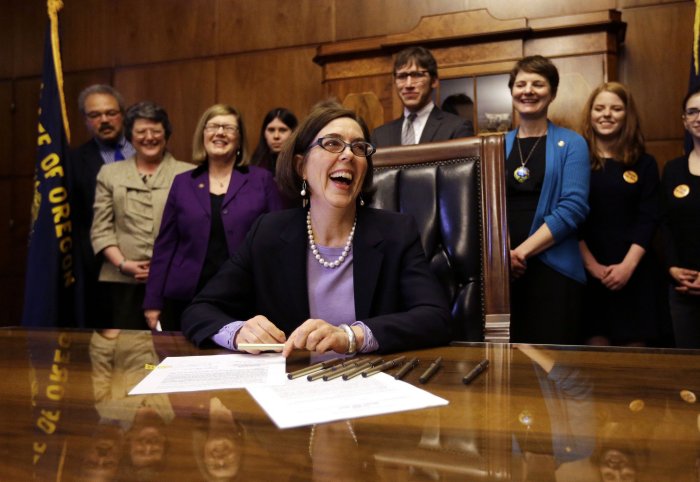
Oregon Gov. Kate Brown was thrilled when she signed the automatic motor voter registration bill on March 16, 2015.

motor-voter-law-brown

But does it have a flaw that could enable fraud?

Under Oregon’s Motor Voter law, when an eligible unregistered voter (over 17 years old, an Oregon resident and a US citizen) visits the DMV to apply for, renew, or replace an Oregon drivers’ license, ID card, or permit, that person receives a mailing from the Oregon Elections Division explaining their options for registering to vote.

Recipients of the mailing can:

  • Do nothing. In that case, the person is registered to vote as a nonaffiliated voter (not a member of a political party).
  • Choose a political party by returning the card. Joining a political party will allow the person to vote in its primary elections.
  • Use the card to opt-out and decline to register to vote.

On Oct. 25, 2016, Willamette Week ran a story that reviewed the new voter numbers. It noted that since the start of 2016, the Motor Voter law has added 247,501 newly registered voters. The story also noted that 9,292 DMV-generated voter registration cards could not be delivered.

Who are those 9,292 people? Could that mean that 9,292 people were fraudulently registered to vote?

According to Dr. Russell Terry, a Voter Engagement Advocate in the Oregon Secretary of State’s Elections Division, cards returned to the Elections Division as undeliverable can be because:

  • the address does not adhere to the USPS standardization for mailing addresses
  • the individual provided DMV with an address before updating their address through USPS
  • the individual is not identified as being at the address to which the mail is delivered

You might expect that a few addresses would be invalid if it took a while to send out the cards and people moved in the interim. But Terry said the transfer of data from the DMV to the Elections Division “…is only a few days, before or right around the time DMV would be mailing a driver’s license to that address as well.”

Is there a way, then, to check whether the people whose cards were undeliverable are legitimate voters?

I asked if I could access a list of all the names and addresses on those cards so a sampling could be checked.

Nope. “The Oregon Vehicle Code prohibits the disclosure of those individuals and their information,” Terry said.

So were up to 9,292 registered Oregon voters not eligible voters on Nov. 8? Who knows?

Given that situation, should the names of the 9,292 people whose cards were undeliverable be struck from the voter rolls?

Yes.