Hypocrisy alert: Billy Clinton and the liberals

billandmonica

Wall Street Journal columnist Bret Stephens excoriated a conservative Trump supporter today for supporting a reprobate.

“Tony Perkins of the Family Research Council brushed aside the controversy by insisting his support for Mr. Trump rested on “shared concerns” not “shared values,” Stephens wrote. “That marks a milestone: The president of an organization ostensibly devoted to the preservation of family values has endorsed a man who wants to sleep with other men’s wives.”

A milestone? Hardly.

How about a little history here for those who didn’t live through the mess.

When Bill Clinton’s tawdry exploitation of Monica Lewinsky, a 21-year-old White House intern, became public, one of the oddest reactions was that of some liberal women and their organizations.

“President Clinton’s sordid entanglements with Gennifer Flowers, Paula Jones, and now Monica Lewinsky have drawn barely a squeak of protest from the powerful writers, lawyers, activists, politicians, and academics who call themselves feminists,” Marjorie Williams wrote in Vanity Fair in 2007. Nor did Bill Clinton’s “… routine use of staff members, lawyers, and private investigators to tar the reputation of any woman who tries to call him to account for his actions.”

The chorus of women who had supported Anita Hill in her charges of sexual harassment by Clarence Thomas was silent or contemptuous when it came to Bill Clinton’s transgressions.

Susan Faludi, the author of Backlash: The Undeclared War Against American Women, said of Monica Lewinsky, “If anything, it sounds like she put the moves on him.”

 “We’re trying to think of the bigger picture, think about what’s best for women,” said Eleanor Smeal, president of the Feminist Majority Foundation, defending the organizations silence.

 And then there was Senator Carol Moseley-Braun (D- IL) who declared on Meet the Press, “Not so many years ago, a woman couldn’t be a White House intern.”

There was a reason some liberal women excused Bill Clinton. Clinton was on their side on most issues they cared about, like abortion, equal pay and affirmative action. It was more important that they keep an ally in the White House then that they be consistent in their public condemnation of reckless, inappropriate behavior towards women.

In January 1998, The Observer gathered 10 Manhatten women in a private room at Le Bernardin, an expensive French restaurant in New York City, to talk about the Clinton imbroglio. Their issues weren’t with Clinton’s abuse of a 21-year-old intern, which they casually dismissed, but about things like “a virile President…suddenly fulfilling this forbidden fantasy” and why Clinton had sex with a young woman, who might talk about it, rather than a mature woman who would have been discreet.

Then there was this exchange:

Nancy Friday, author of The Power of Beauty – “Don’t we all think that he could have chosen a better place? I mean, come on, I mean in the end, oral sex in the Oval Office … so many O’s-oral sex in the Oval Office is just bad timing, bad placing-

Elizabeth Benedict, author of The Joy of Writing Sex – “But what fun!”

I guess politics trumps morality.



Selling Wapato Jail: Is Multnomah County being duped?

“Lying is a thriving vocation.”

                                    Susanna Centlivre. Poet, actress, playwright

Garison Russo says he wants to buy the unoccupied Wapato Jail for $9 million.

County Chair Deborah Kafoury signed a counter offer on a letter of intent to purchase the Wapato Jail site in North Portland for $9 million on Sept. 21. Kafoury subsequently told the Tribune she signed a “non-binding” document that will begin the process to determine if the offer is viable. Kafoury wouldn’t identify the potential buyer.

KOIN 6 TV reported on the offer with a story titled “Mysterious buyer bids $9 million for Wapato”.

Mysterious indeed.

On Oct. 4, the Portland Tribune identified the bidder as Garison Russo, but didn’t offer much more.

To say the least, Russo has a spotty history and a vague background.

In February 2012, Eureka, CA-based Humboldt Bay Energy, of which Garison Russo was listed as founder and CEO, made an offer of more than $1.75 million to buy Blue Heron Paper Co. property in West Linn.

But Humboldt never followed through with the requirement that bidders deposit 10 percent of their intended bid on April 2, 2012. That left Clackamas County’s Water Environment Services as the only remaining bidder, so it acquired the land.

Today, for somebody who claims to have the resources to acquire the Wapato jail property, Russo’s a phantom.

There is no residential phone number in the white pages under the name Garison, Gari and Gary Russo in Eureka, CA. There is no LinkedIn or Facebook account under the name Garison, Gari or Gary Russo in Eureka, CA.

Russo’s primary visibility is a listing as founder and CEO of Humboldt Bay Energy LLC. Humboldt Bay Energy LLC was incorporated in Nevada on June 29, 2011 as a domestic limited-liability company with no capital and a Nevada Business ID of NV20111434134, an office address of 350 E St. Suite 207, Eureka, CA.

The incorporation papers said the company had three managers: Cory Cook, Randy Cook and Gary Russo. Its registration has since been “Revoked”. There’s no evidence that the company has since re-incorporated and registered with the California Secretary of State. Nor is there evidence the company has incorporated in any other state.

Humboldt Bay Energy has a website, but it just contains a logo and one line of text: Brave enough to think differently, Bold enough to believe we can change the world and Talented enough to make it happen”

humboldtbayenergylogopicture

Humboldt Bay Energy LLC once had a site advertising itself as a Solar Energy Equipment Supplier with an address of 1843 Quaker St, Eureka, CA 95501, but the site is “Permanently closed”, according to Google.

A “FindtheCompany” site has a page about Humboldt Bay Energy LLC at 1843 Quaker St, Eureka, California, noting: Humboldt Bay Energy LLC is a small, fairly new organization in the business consulting services industry located in Eureka, CA. It opened its doors in 2012 and now has an estimated $83,000 in yearly revenue and approximately 1 employee.”

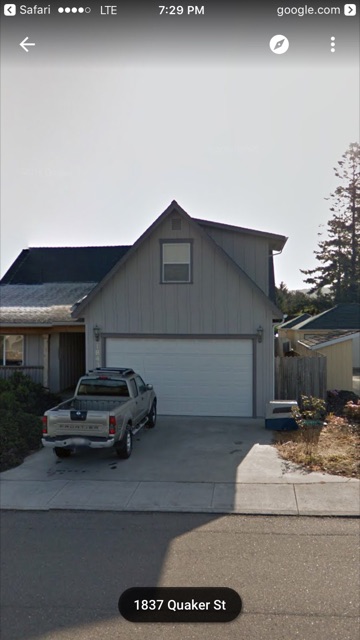
That address is a modest home, not an office building. A reverse directory says the home is occupied by Cory Miles Cook, 39, and Sharie Lynne Cook, 37, two of the managers of Humboldt Bay Energy mentioned earlier.

humboldthouse2

In Sept. 2011, Garison Russo’s name popped up in connection with Humboldt Bay Energy’s proposal to the Portland Development Commission to redevelop the Centennial Mills site in Portland. Humboldt Bay Energy was identified as a renewable energy company focusing on solar energy, solar thermal energy systems, wind energy systems and energy storage systems.

“We are interested in moving our global corporate headquarters to the World Trade Center in downtown Portland with the intent of potentially using the Centennial Mills site as a mass-production assembly and distribution center, business center and showroom center,” Russo said, adding that he would be working with his group of multibillion-dollar private equity investors to help a viable project pencil out.

The PDC ended up rejecting Russo’s and two other proposals.

Humboldt Bay Energy also has an undated Corporate Prospectus document online that says its office is at 408 7th St., Suite C, Eureka, CA 95501. In this document, the company says it is a technology company founded by Russo in March 2011 that “…has a disruptive technology surrounding the production of a new wind turbine that will alter the business model paradigms currently seen within the wind energy marketplace.”

The prospectus says the company is “…currently seeking “expansion capital” of up to $5,000,000 as we move forward in product.”

Garison Russo, described in the prospectus as having a 20 year background in renewable energy (wind and solar), design/construction and real estate development and finance,” is listed as the Founder and Chief Executive Officer of the company.

In defining Russo’s credentials, the prospectus says, “Gari studied architectural engineering at the BAC in Boston, MA and environmental planning and artificial intelligence at Harvard University’s professional extension program.”

BAC is otherwise known as Boston Architectural College. According to U.S. News & World Report’s college ranking, the school has an open admissions policy, meaning it has an acceptance rate of 100 percent. BAC’s registrar says Russo enrolled in some courses during 1979-80, but did not earn a degree.

Harvard University’s professional extension program also has no admission requirements to take a course.

When I was a newspaper reporter I came across a man who pitched himself as a successful entrepreneur and promised great returns to prospective investors. But something was fishy, including the fact he worked out of a shabby office on the 2nd floor of a shabby building. When I dug into his background I discovered he was a con man, through and through. But what was fascinating was that he seemed to truly believe in his own con. Perhaps that’s what we have here.

So now I guess now we’re just waiting for the truth.

Good luck, Deborah.

“Yes on 97” campaign relying on socialist endorser

The Yes on 97 campaign is featuring Martin Hart-Landsberg, Professor Emeritus of Economics at Lewis & Clark College, in its advertisements, assuming that an economist will be a persuasive voice of authority to the general public.

martin

Martin Hart-Landsberg

Economists support Measure 97

But what does the public know about Hart-Landsberg? Here’s some background on his views.

     About Martin Hart-Landsberg

“…seriously if I hear (in his class) how capitalism is bad, socialism is good one more time I might vomit.”

“(Class) mainly focuses on how capitalism is bad and socialism is good. You don’t learn very much else.”

Rate my Professors at Lewis & Clark College

___________________________________________

“…it is capitalism (as a dynamic and exploitative system), rather than neoliberalism (as a set of policies), that must be challenged and overcome.”

“…therefore, as participants in the resistance, …we can illuminate the common capitalist roots of the problems we face and the importance of building movements committed to radical social transformation and (international) solidarity.”

Neoliberalism: Myths and Reality by Martin Hart-Landsberg

___________________________________________

“…capitalist globalization is largely responsible for creating or intensifying many of our most serious economic and social problems.”

“…even a “robust” capitalism is now an obstacle to human progress.”

From the Claw to the Lion: A Critical Look at Capitalist Globalization, by Martin Hart-        Landsberg

_______________________________________

“The major obstacle to development is capitalism itself, and our efforts must be directed towards advancing new visions of democratic and sustainable development.”

Challenging Neoliberal Myths: A Critical Look at the Mexican Experience by Martin Hart-Landsberg

________________________________________

“If we want socialism for the twenty-first century, we need to understand why the ‘real’ socialisms of the last century so often ended in capitalism.”

Praise for “The contradictions of ‘real socialism’ by Martin Hart-Landsberg

_________________________________________

“For Hart-Landsberg and Burkett, a socialist program in China or elsewhere—which they identify with the confusionist formula of a “worker-community-centered economy”—must have little or no commerce with the corrupting evils of the world capitalist market.”

“Despite their professed Marxism, Hart-Landsberg and Burkett’s outlook amounts to a form of anarcho-populism.”

China’s “Market Reforms”: A Trotskyist Analysis, Workers Vanguard

___________________________________________

“…far from undermining the relevance of Marxism, the Chinese experience highlights its critical importance as a framework for understanding and overcoming the dynamics of contemporary capitalism.”

Thinking About China: Capitalism, Socialism and Class Struggle, By Paul Burkett and Martin Hart-Landsberg, Socialist Viewpoint


Enough said?

Memo to Portland landlords: raise your rents now

norentcontrol

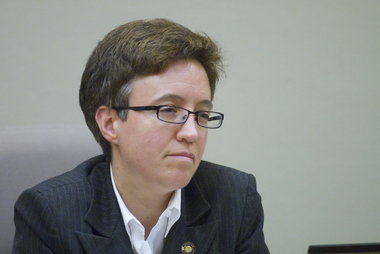
Oregon House Speaker Tina Kotek (D-Portland) wants to be a decider on regulating the cost of rental housing.

Kotek and other ill-informed Democrats want Oregonians struggling with rising rents to believe that ending the statewide ban on local rent-control measures is the holy grail that will solve their problems.

Don’t be fooled. Rent control is a simplistic political solution to a complex problem.

Though liberals may castigate the free market and favor government intervention, the facts on the ground support the conclusion that the free market works with rentals.

After a rental market boom has pushed up prices across the country, rents in some of the hottest markets are now starting to decline.

While the national apartment market is still performing above the long-term average, the moderation from the unsustainable levels of 2014 and 2015 has come, particularly in urban cores.

“Apartment rents declined in some of the country’s priciest cities during the third quarter, a dramatic reversal that could signal the end of a six-year boom for the U.S. rental market,” said Axiometrics Inc, a provider of apartment and student housing market intelligence.

The market is feeling the effects of the concentrated new supply according to Axiometrics. “In particular, rent growth has declined precipitously in markets with the highest rents in the country, such as New York and the San Francisco Bay Area,” Axiometrics reported recently. “Rent levels declined year over year in the three major markets with the highest rents – San Francisco, New York and San Jose.”

In other words, rent control promoters, the market works.

Not that this will dissuade liberal deniers. So, raise your rents now, landlords, before the know-nothings go into action.


With Oregon school finances tight, Democrats and unions push to raise costs

Oregon Democrats talk out of both sides of their mouth when addressing school finances.

While arguing that our schools desperately need more money and advocating for Measure 97, which would impose huge business tax increases to cover the bill, they’ve been working to increase school costs.

It all has to do with unemployment insurance.

unemploymentapplication_media-week_flickr1

School districts, not their employees, pay for unemployment insurance benefits. Under ordinary circumstances, school employees released for summer break, customary vacation periods or holiday recesses aren’t considered unemployed and aren’t eligible for unemployment compensation benefits.

But leave it to the Democrats, allied with their union supporters, to try to chip away at these restrictions and pass along the added costs to Oregon schools.

Democrats made a run at changing the law in 2015 when State Senator Michael Dembrow (D-District 23), who receives substantial campaign contributions from unions, introduced SB 470.

michaeldembrow

Oregon State Senator Michael Dembrow

At the time, school employees who performed services other than instruction, research or administration did not qualify for unemployment insurance benefits during school breaks. A committee amendment which replaced the original language of SB 470 would have changed that, permitting school employees who left their jobs for good cause to receive unemployment insurance benefits.

The bill was still in committee upon adjournment, so it died.

But the Democrats persisted.

Earlier this year, Senator Dembrow introduced SB 1534, which again proposed permitting school employees who leave their jobs for good cause to receive unemployment insurance benefits during summer and school breaks.

Tricia Smith of the Oregon School Employees Association testified before the Senate Committee on Workforce and General Government that school employees who could be eligible for benefits under the bill are in non-instructional positions such as secretaries, food service workers, custodians, school bus drivers and others.

schoolbusportland

Like the proverbial camel’s nose under the tent, the law was likely the first salvo in a long-range union attempt to make teachers eligible for unemployment compensation during summer and school breaks, too.

I was curious how much this expanded unemployment compensation allowance had cost school districts so far. So I asked the Oregon Employment Department to tell me how many people had collected unemployment insurance benefits under the new standards, their job categories and the amount of unemployment insurance benefits paid out to them.

Fortunately, I learned that the Democrat’s misguided attempt to burden Oregon schools with higher unemployment compensation costs has been crushed.

After passage of the legislation, the Employment Department received notice from the U. S. Department of Labor that SB 1534 does not conform with federal guidelines to administer the Unemployment Insurance program.

According to Craig Spivey, a Public Information Officer with the Oregon Employment Department, “SB 1534 included a provision that if the changes to Oregon statute fail to conform to federal guidelines, they would not go into effect. Therefore SB 1534 is not in effect at this time and no unemployment claims have been filed” under the more expansive criteria in the legislation.”

Whew! Oregon school districts dodged a bullet on this one.


Trump, Clinton and taxes: saving money the American way

U.S. Democratic Presidential candidate Hillary Clinton speaks at the American Federation of State, County and Municipal Employees convention in Las Vegas

According to Hillary Clinton, Donald Trump “abuses power and games the system” by declaring a $916 million loss on his 1995 income tax returns that could be used to avoid future federal income taxes.

But let’s get real here. The Clintons have taken advantage of tax laws to minimize their taxes, too.

According to their 2015 federal tax return, Hillary Clinton reported earning $1,475,500 in speaking fees. To reduce the amount of those earnings, and the amount of taxes owed, she claimed:

  • $93,073 in expenses for commissions and fees
  • $25,000 for taxes and fees
  • $231,498 for travel
  • $1,281 for deductible meals and entertainment
  • $460 for utilities

By claiming these deductions, Hillary Clinton reduced her taxable income from speaking by a total of $352,257.

Bill Clinton took advantage of tax laws to reduce his taxable income, too.

He reported earning $5,250,000 in speaking fees in 2015. To reduce the amount of those earnings, and the amount of taxes owed, Bill Clinton claimed:

  • $359,703 in expenses for commissions and fees
  • $25,000 for taxes and licenses
  • $445,654 for travel
  • $4,155 for deductible meals and entertainment

By claiming these deductions, Bill Clinton reduced his taxable income from speaking by a total of $834,512.

Bill Clinton also reported consulting income of $1,660, 575 in 2015, from which he deducted $84,234 in expenses in order to reduce his taxable income.

The Clinton’s also claimed a long-term capital loss carryover of $699,540, generating a net long-term capital loss of that amount.

In addition, the Clintons took advantage of allowed deductions for charitable contributions. In 2015, they claimed a deduction of $1,042,000 donations for charitable to the Clinton Family Foundation, a non-profit that was formed in 2002 and serves as a philanthropic vehicle for the Clinton family.

The Clintons have also been aggressive in estate planning steps that will minimize taxes. According to Money magazine, they’ve established property and insurance trusts that ensure that, after they die, at least some of their millions of dollars in assets will be shielded from the estate tax.

Money has reported that one way the couple has chosen to limit the tax hit on their estate is via residence trusts, which prevent any growth in the property’s value from being counted in the couple’s estate — and, therefore, from being taxed when passed along to heirs.

The Clintons established two such trusts in 2010 and shifted ownership of their home in Chappaqua, N.Y., into them the following year. If the value of their home continues to grow, the move could save their estate hundreds of thousands of dollars in taxes.

So before media and Clinton denunciations of Trump for his tax practices get totally out of hand, let’s remember that tax avoidance is not only common, but respectable.

Even the New York Times, which broke the story on Trump’s tax returns and has editorialized against Trump’s actions, paid no income tax for 2014 and got a $3.5 million refund, despite a pre-tax profit of $29.9 million, Forbes has reported.

As Judge Learned Hand so famously said:

“Anyone may arrange his affairs so that his taxes shall be as low as possible; he is not bound to choose that pattern which best pays the treasury. There is not even a patriotic duty to increase one’s taxes. Over and over again the Courts have said that there is nothing sinister in so arranging affairs as to keep taxes as low as possible. Everyone does it, rich and poor alike and all do right, for nobody owes any public duty to pay more than the law demands.”

Big campaign donations are evil, says Senator Ron Wyden, but keep them coming


senatorronwyden

Senator Ron Wyden (D-OR)  is running for-reelection. So he’s hitting up his constituents.

“Sign the petition calling for affordable housing solutions,” his email said on Sunday. “We need more affordable housing and we need it now. I’ve proposed new legislation to encourage, support, and accelerate the construction of affordable housing nationwide.”

And if you sign the petition, he asks for money, with choices ranging from $5 to $500 or more.

If you sign the petition, you also get a thank you message and another request for money, this time with choices of $7, $24, $36 or $125.

All these appeals from a Senator who, according to OpenSecrets.org,  had $7,557,657 of campaign contributions in the bank as of his last fundraising report on June 30. In comparison, his Republican opponent in this 2016 Senate race, Mark Callahan, had a measly $4,546 on hand.

And just 27 percent of the money Wyden has raised for his current race has come from donors within Oregon, with 73 percent ($5,420,369) coming from out of state.

In the meantime, while asserting that big donors undermine democracy, Wyden has been pulling in money from big donors big time.

Over the past six years, the biggest donors have been some really big players, like Nike Inc., Intel Corp., and Berkshire Hathaway.

campaignfinancebigdonors

If you think about it, why does Wyden, who’s 67, need such a big war chest? If he’s re-elected, as he likely will be, he’ll be 73 at the end of his next term and will have spent 42 years in Congress. Won’t that be enough?

If Wyden truly believes there’s too much money corrupting politics, with big donors of particular concern, why not take a break from fundraising? A lot of us would welcome the time-out.

(Good grief. I just got one more email fundraising plea from Wyden. This time, he’s asking me to contribute $25, $50, $100, $250, $500, $1,000 or more. Will the next plea be for $10,000 or more?)

Donations to Senator Ron Wyden 2011-2016 (Source: OpenSecrets.org)

These numbers don’t reflect donations from organizations themselves, but from the organizations’ PACs, their individual members or employees or owners, and those individuals’ immediate families. Organization totals include subsidiaries and affiliates.

Rank Contributor Total
1 Nike Inc. $124,222
2 Blue Cross/Blue Shield $105,900
3 League of Cons. Voters $75,012
4 Intel Corp. $74,307
5 Akin, Gump et al $70,155
6 Berkshire Hathaway $57,900
7 DaVita HealthCare Partners $50,750
8 Metlife Inc. $48,507
9 DLA Piper $43,700
10 King & Spalding $42,560

Hillary’s money grab (with help from a few Oregonians)

hillarycampaignmoney

Bill Clinton must have thought we all forgot his history when he began his 2016 Democratic Convention speech with the cringeworthy, “In the spring of 1971, I met a girl.” Oh my God, where’s he going, millions of viewers probably wondered.

But Bill didn’t continue about his sexual exploits. Instead, he went on to call his wife, a “change-maker”. Given the amount of money she’s raising for her presidential campaign, she’d be better named a “money-maker”.

This despite her proclamation, “Our democracy should work for everyone, not just the wealthy and well-connected.”

“There’s no question that we need to make Washington work much better than it does today,” Hillary said on June 22, 2016. “And that means, in particular, getting unaccountable money out of our politics. … That’s why I’m so passionate about this issue, and I will fight hard to end the stranglehold that the wealthy and special interests have on so much of our government.”

But Hillary Clinton and her supporters have been dogged in their pursuit of campaign money.

Clinton clearly likes the big givers the most and cultivates them assiduously. At an event at the Sag Harbor, N.Y. estate of hedge fund magnate Adam Sender a family photo with Clinton went for $10,000, according to attendees. For a $2,700 donation donors’ children under 16 could ask Clinton a question.

 More than 1,100 elite moneymen and women, called Hillblazers, have together raised better than $113 million for Clinton, operating as bundlers who collect checks from friends or associates, according to an analysis by the Center for Public Integrity.

Hillblazers are individuals who have contributed and/or raised $100,000 or more for Hillary for America, the Hillary Victory Fund, and/or the Hillary Action Fund since the launch of Clinton’s campaign on April 12, 2015.

Among the list of high-profile Clinton bundlers, which includes actor Ben Affleck, filmmaker George Lucas, Facebook Chief Operating Officer Sheryl Sandberg and fashion designer Vera Wang, are a few (very few) people who list themselves as Oregonians:

  • Timothy Boyle, president and CEO of Columbia Sportswear, and his wife, Mary Boyle.
  • Peter Bragdon, Executive Vice President, Chief Administrative Officer, General Counsel and Secretary, Columbia Sportswear
  • Carol Butler, Principal, Carol Butler and Associates, Democratic campaign consultant
  • Dwight Holton, former U.S. Attorney for Oregon/ defeated by Ellen Rosenblum in 2012 Democratic primary for Oregon Attorney General, and his wife, Mary Ellen Glynn, chief of staff to Anne Holton, wife of Democratic vice-presidential nominee Tim Kaine.
  • Jane Paulson, a Portland personal injury lawyer at the law firm of Paulson Coletti.

The money has flowed into Hillary Clinton’s campaign organization, Democratic Party committees and so-called independent outside groups.

According to OpenSecrets.org, Clinton and her acolytes had raised a total of $698,169,981 as of the end of last month, and pushing for $1 billion.

Presidential fundraising through Aug. 31, 2016

Category Clinton  
Candidate $373,281,866
National Party $181,378,218
Outside Spending $143,509,897
Total $698,169,981

Most of this money has come from large donors.

Clinton’s campaign, for example, has raised nearly $300 million in large contributions, or donations bigger than $200, the threshold for detailed disclosure of donor information, according to OpenSecrets.

Only about 19 percent of her contributions (roughly $70.7 million) have come in smaller amounts. Obama, in contrast, received about 37 percent of his contributions in amounts of $200 or less through August in his 2012 campaign.

So much for ending the stranglehold that the wealthy have on our government.

Rent control: Kotek’s folly

On Sept. 12, Oregon House Speaker Tina Kotek (D-Portland) said she planned to push for an end to Oregon’s ban on rent-control laws, enabling local governments to move ahead with measures of their own.

Kotek said she also wants to ban all rent increases above a “reasonable” percentage and end to no-cause evictions.

tinakotek

Oregon House Speaker Tina Kotek

The problem is, no matter how much liberals embrace the concept, rent control doesn’t work. Any short-term benefits, including the applause of some constituents, are always overshadowed by the long-term problems rent control creates.

  • However you phrase it, under rent control, government dictates what private owners are allowed to charge for their private property. Yes, the free market has flaws, but it is far better than having bureaucrats running things.
  • Landlords who can’t raise the rent on their property to a market price are more likely to cut back on maintenance and less likely to invest in improvements. Not only will landlords have absolutely no economic incentive to invest more in their properties, they may not even have the funds because of limits on their rental income.
  • Rent control distorts the housing market by misallocating rental units to those who are already renting them. Whenever government prevents the charging of prices high enough to clear the market, shortages will occur.
  • The imposition of rent control can lead to a “demolition derby” where older controlled rental units are purposely torn down and replaced with higher priced units.
  • Rent control does not guarantee low rents because it doesn’t regulate the starting rent for a new tenant. When a tenant in a rent-controlled unit moves out, any savvy  landlord will set the rent in the new lease at the current market rent, which is likely to be much higher.
  • In a review of 140 economics studies on rent control in Economics Journal Watch, economists overwhelmingly agreed that, “A ceiling on rents reduces the quantity and quality of housing available.” From the abstract: “I find that the preponderance of the literature points toward the conclusion that rent control introduces inefficiencies in housing markets. Moreover, the literature on the whole does not sustain any plausible redemption in terms of redistribution.”
  • A broad survey of economists by the IGM (Initiative on Global Markets) Forum revealed a similar repudiation of rent control. The Forum is a program of the University of Chicago’s Booth School of Business. “Rent control discourages supply of rental units,” said Associate Head of the MIT Department of Economics, David Autor. “Incumbent renters benefit from capped prices. New renters face reduced rental options.”
  • Once rent control is imposed, it is extremely hard to get rid of, even where its futility is eventually recognized. That’s because rent control will have held rents far below the market rate, so removing them is likely to cause immediate and substantial rent increases, something few politicians (and even some rent control critics) will be willing to embrace in the face of a potential public outcry.

As Art Carden put it in The Unintended Consequences of Rent Control, “Suppose that you want to destroy a city. Should you bomb it, or would it be sufficient just to impose rent control?”

It’s bail-out time for the United Mine Workers of America union

unitedmineworkersofamerica

It’s election time, so let’s bail out somebody.

The Senate Finance Committee voted Wednesday to rescue the coal miners union’s pension plan and avoid its likely insolvency by the end of this year.

The Committee approved a bill, known as the Miners Protection Act, that would transfer hundreds of millions of dollars from a federal fund meant for cleaning abandoned mines to the United Mine Workers of America’s (UMWA) multi-employer pension plan.

Supporters of the bill included all the Democrats on the Committee, but some Republicans cautioned that the bill could set the stage for bailout demands by hundreds of other multi-employer pension plans at risk of insolvency.

Among the supporters of the bill was Sen. Ron Wyden (D-OR). “Today, tens of thousands of mine workers and their families, including so many widows, are in serious danger of losing that lifeline, losing that security,” Wyden said. “These are hard-working people who come from communities where broken promises, bad policies and bankruptcies have hit like one wrecking ball after another for decades,” he said. “Congress, in my view, has an obligation to step in and make good on the promise that America made back in 1946.”

The fate of the bill in the full Senate and the House is still to be determined.

This isn’t the first time Wyden, no friend of fiscal responsibility, has backed efforts to bail out the United Mine Workers of America union.

In 2014, while Congress, the country and media were fixated on the twists and turns of efforts to rescue the Highway Trust Fund, Wyden tried to use the Trust Fund legislation to bail out the underfunded United Mine Workers of America’s pension plan.

When the Senate Finance Committee, which Wyden chaired at the time, first reported out a Highway Trust Fund bill it slipped in a provision advocated by Senator Jay Rockefeller (D-W.Va). The provision called for $2.7 billion of the funds raised to be diverted to help bail out the underfunded pension plan for retired coal miners.

In 2014, Wyden’s committee proposed paying for the union rescue with a gimmick called “pension smoothing” that has been roundly criticized by liberals and conservatives alike as nothing more than a sham.

Thankfully, Wyden’s gambit failed when the Senate accepted a House version without the miners’ pension provision.

But bad ideas never seem to die in Congress, and it’s election season, so here we go again.