Is It Time To Bring Back “Bum”?

On June 17, Portland’s alternative weekly, Willamette Week, posted a story titled, “Tires Slashed, Mirrors Shattered Along Laurelhurst Street Where Tensions Between Neighbors and Houseless Residents Continue to Escalate.” 

“Houseless residents”? 

How did the media and much of liberal Portland get to the point where people who slash tires, shatter car mirrors, rip out landscape lights, overturn trash and recycling bins, destroy landscaping and damage parking strip trees are simply described as “houseless,” as though that’s their defining characteristic? 

How did we get to the point where people doing this:
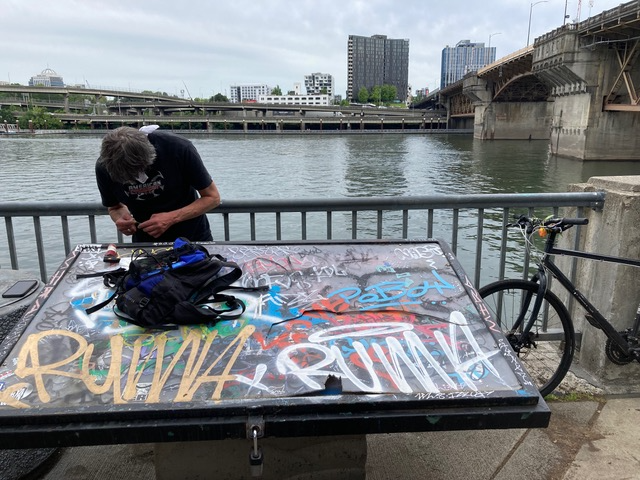
or this:

or this:

are excused because they are “homeless” or “houseless” or some other insipid term? That’s just plain criminal.

Some would say calling some people bums is offensive, callous and unfeeling, that it’s not “fair” to lump people together for any reason.

Being homeless or houseless should not be a free pass to a different set of behavioral expectations. Being homeless doesn’t give somebody license to break into a small business, deface property with graffiti, shoot at each other and unsuspecting pedestrians, bury sidewalks and parkland under trash and garbage, pollute waterways , steal and chop up bicycles and cars, openly sell and buy drugs, assault  random passers-by and litter private properties with discarded syringes.

On June 20, KGW8 television reported on incidents at a tent site on the corner of Southeast 33rd Avenue and Powell Blvd. in Portland next to Grover Cleveland High School’s track and sports field. 

“We live in a war zone basically and there’s nothing I can do,” said Elias Giangos, who said he’s lived in the neighborhood for the past seven years. He and his wife plan to move out at the end of the month. Giangos said he was assaulted multiple times by those living at the campsite. Scars from the time he was stabbed by someone living at the campsite disfigure his left arm.

“Even when I was getting assaulted, we called the police, there’s no response,” he said.

Things recently got so bad with the so-called homeless around Multnomah County’s Gladys McCoy Building in Portland across from Union Station that the county hired a firm to assess the risks to county employees and recommend responses. 

According to the Physical Security Vulnerability Assessment of the area in and around Multnomah County’s Gladys McCoy Building prepared by Eric Tonsfeldt / Operations Manager – Foresight Security Consulting, “The density of unsanctioned homeless camping immediately around the McCoy Building represents the most immediate, consistent, and palpable threat to the safety and security of the employees and contractors in the McCoy Building.”

“The building is currently surrounded by ongoing, frequent drug abuse and distribution, violence, and aggression within dense areas of unsanctioned houseless camping.,” the report said. 

The report said the following crime occurred just within the 1/8-mile area centered on the McCoy Building between 7/19/2020 and 7/18/2021: 33 assaults, 79 instances of larceny, 7 instances of vandalism and 35 drug/narcotics offenses.

Those aren’t the to-be-ignored actions of “the homeless.” They’re the actions of vagrants, malcontents, addicts, crooks, criminals….bums.

.

Sen. Merkley Says He’s Committed To Bipartisanship; His Record Says Otherwise

jeffmerkley

Senator Jeff Merkley (D-OR) is trying to portray himself to Oregonians as someone committed to bipartisanship, to working hand-in-hand with Republicans to advance the country’s interests.

“I believe that if you simply oppose the Administration because you’re of a different party, no one benefits, “ Merkley said in an interview with KGW-TV that ran Wednesday night. “I think of Gandhi’s expression when he said, ‘If all you believe in is an eye for an eye, the whole world goes blind.”

Not so fast, Senator. You can’t walk away from your record so easily with platitudes. The fact is your record shows you are one of the Senate’s MOST partisan members.

According to the Bipartisan Index of 98 senators released by The Lugar Center and Georgetown University’s McCourt School of Public Policy, Merkley had the fourth most partisan track record in the entire Senate in the most recent analysis covering the First Session of the 114th Congress in 2015.

That was even worse than Merkley did in the 113th Congress, when he was ranked the 7th most partisan senator.

The Index takes into account how well members of opposite parties and ideologies work together. The Bipartisan Index measures the frequency with which a Member co-sponsors a bill introduced by the opposite party and the frequency with which a Member’s own bills attract co-sponsors from the opposite party.

“We sought to develop an objective measure of how well members of opposite parties work with one another…,” former Sen. Richard Lugar (R-Ind) said.

Senator Bernie Sanders (I-VT) ranks as the most partisan on the list, followed by Senator Ted Cruz (R-Texas), Sen. Barbara Boxer (D-Calif) and then Merkley.

Bills introduced by highly partisan senators without co-sponsors from the other party “are being written not to maximize their chances of passage, but to serve as legislative talking points.,” Lugar said.


Why Brad Avakian could win (sadly)

avakian750xx6016-3384-0-316

“Got ya fooled, don’t I?”

A local pollster told me awhile ago that about 50 percent of eligible voters in Oregon don’t know that the state has two U.S. senators (maybe because there’s only one senate race at a time).

KGW-TV reporter Pat Dooris recently held up two signs, one with the name Brad Avakian and the other with the name Dennis Richardson, and asked passersby in downtown Portland if they knew who the people were. All the answers? Nope. Nope. Nope.

I mention these situations because they demonstrate that a lot of voters are, in fact, a basket of deplorables in terms of political knowledge.

ignorance

Political knowledge levels have been poor for decades, despite increased education and the availability of information on the Internet.

A recent Fairleigh Dickinson University survey studied the “clueless factor” among voters. The survey found that only 34% of Americans can name the three branches of government, and 30% can’t even name one.

Other studies routinely find that large numbers of voters don’t know which officials are responsible for which issues, a circumstance that makes it hard to hold them accountable for their performance.

All that cluelessness bodes well for Brad Avakian.

Avakian is running for Oregon Secretary of State, but you’d never know it from his campaign. In a classic example of misdirection, instead of emphasizing his fit for the Secretary of State job, he’s running as a champion of liberal causes.

Look at one of his ubiquitous TV ads.

The ad notes that Avakian is endorsed by the Oregon League of Conservation Voters, the NARAL Pro Choice Oregon PAC, Planned Parenthood PAC of Oregon, Sierra Club Oregon Chapter, Oregon Education Association, and the Working Families Party.

Meanwhile, speakers in the ad emphasize how Avakian will protect the environment, break down the walls of discrimination, ensure a woman can make personal medical decisions about her pregnancy, and fight for regular people and not corporate special interests.

These topics have little to do with the job of the Oregon Secretary of State, but they do tug at the heartstrings of liberal voters. And that may well be what attracts enough voters to Avakian to make him the winner (and us the losers).

Playing fast and loose: Multnomah County and the Wapato Jail

wapatojail

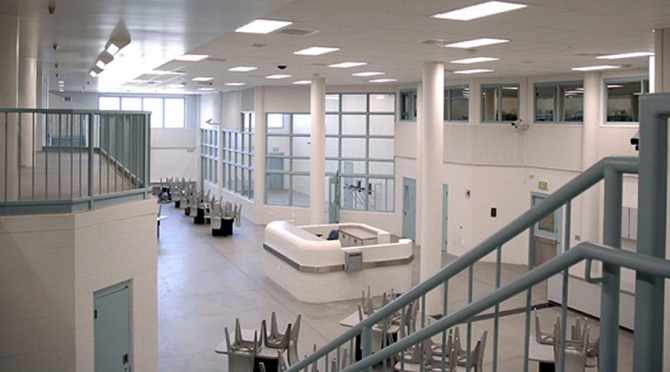
The still empty Wapato Jail

Has Multnomah County been flouting the law in its management of the Wapato jail?

In 1996, Multnomah County voters approved a $79.7 million public-safety bond measure to deal with inmate crowding and predictions of rising crime.

Of the total, $43.9 million went toward construction of the $58.4 million Wapato Jail in North Portland. The 168,420 sq. ft. jail was completed in 2004…and has sat empty ever since.

Now some folks, including Multnomah County Commissioner Loretta Smith, want to turn the jail into a giant homeless shelter. But other county officials are adamant the jail is unsuitable for such a use.

A major reason is because county officials have chosen to do what was convenient, rather than what was right.

When property at the County Sheriff’s office or other county jails broke or got too old or just needed replacing, rather than buying something new, the county ransacked Wapato.

“What people think is out there is a fully functioning building with kitchens and everything. It has none of that. It’s been stripped bare,” County spokesman Dave Austin told KGW-TV. “What we did was, if the sheriff’s office in their other three jails had a need for something — you know a big stove, an oven, a dishwasher — if those broke, we didn’t spend taxpayer dollars and buy new stuff. We went and took the stuff from Wapato.”

It would cost taxpayers at least $5 million to $7 million to replace all the stuff that was spirited away and get Wapato ready for occupancy, Austin told KOIN 6 News.

That’s right. County employees have ripped off $5-$7 million of Wapato property for other uses.

The problem is the 1996 bond measure for Wapato didn’t say that after the county built the jail, it could loot it.

The Dec. 17, 1996 Official Statement, the offering document delivered to prospective investors for the $79.7 million of bonds that were sold in the public market, specified that the bond proceeds would be used for the following:

  • Increase jail beds to end unsupervised early release of prisoners
  • Secure treatment facilities for mandatory drug and alcohol treatment of offenders
  • Computer systems and high-tech equipment for tighter tracking of criminals
  • Restructured booking facilities to eliminate delays for police
  • Expansion of the juvenile justice complex
  • Child Abuse Center

 In 2003, the State authorized the County to shift from building the bed alcohol and drug / work release / mental health beds to building 300 jail beds, instead, raising the total number of Wapato jail beds to 525 and committing $58.4 million to the project.

Wapato Jail was finally completed in July 2004.

But one thing didn’t change with all the machinations. There was still no provision allowing for the Wapato jail to be raided of contents worth millions so they could be shifted to other facilities.

A California case supports the view that such slippery shenanigans are prohibited.

In 2008, voters in the San Diego, CA Unified School District authorized $2.1 billion in general obligation bonds for school projects listed in a 96-page pamphlet. Later that year, voters challenged the District’s use of general obligation bond proceeds for the acquisition and installation of field lighting for the football stadium at a local high school.

In 2013, the California Court of Appeal determined in Taxpayers for Accountable School Bond Spending v. San Diego Unified School Dist. that the school district’s failure to make explicit reference to the installation of stadium lighting within the site-specific section of a bond project list rendered that expenditure unlawful.

Maybe some folks involved in pillaging the Wapato Jail should be in it.