City Club of Portland: wrong on Measure 97

tax-increaseAppalling! What else can you say?

Members of the City Club of Portland voted Tuesday to support Measure 97, which proposes imposing burdensome gross receipts taxes on Oregon businesses that could total $6.1 billion in the 2017-19 biennium.

It’s hard to believe that such a distinguished civic group could support such a flawed scheme.

Oregon’s General Fund expenses are expected to grow by about 14 percent, or $2.7 billion, in the 2017-2019 biennium. The budget anticipates only about half that will be covered by new revenue, translating to a projected $1.35 billion shortfall.

Given such things as public employee pay increases, higher Medicaid expenses, and pension rate increases for state government and school district employees covered by PERS, some additional revenue may be justified. But not $6.1 billion. That’s highway robbery.

And collecting the additional revenue through an odious gross receipts tax, which ignores a business’s profitability, or lack thereof, is irresponsible. How well-educated City Club members, many of whom presumably work in the private sector, could endorse such a tax is inexplicable.

Also damning is the uneven applicability of Measure 97’s proposed taxes. Taxation of just C Corporations would create a vastly uneven playing field for Oregon businesses.

As the minority noted in the City Club’s committee report, “Many large businesses are LLCs and S corps, and they often compete with C corps in similar sectors. For example, Fred Meyer (Kroger) and Safeway grocery store chains are C corps and would pay the tax. New Seasons Market, a B corporation,47 and Albertson’s, a limited liability corporation (LLC),48 would not pay it. “

The flaws in the City Club’s arguments in favor of Measure 97 are evident right off the bat.

The City Club committee charged with determining the merit of Measure 97 said it “…presents a long-awaited opportunity to assure adequate investment in the health, education and the well-being of Oregonians.”

Nonsense!

The fact is there is absolutely no guarantee the legislature will apply Measure 97 revenue to early childhood through grade 12 public education, healthcare and services for senior citizens, in the coming years as the measure states.

If Measure 97 is approved by voters, the Legislature can appropriate its revenues “in any way it chooses,” Legislative Counsel Dexter Johnson said in an Aug. 1 letter to Rep. John Davis, R-Wilsonville, a member of the House Committee on Revenue. Not only are Legislators “not bound by the spending requirements” of Measure 97, they can “simply ignore” them,” Johnson added.

What is most likely is that over time Measure 97 revenue would be spread around like honey in response to pressure from self-serving special interests with access to, and influence on, decision-makers.

Rep. Mitch Greenlick (D-Portland) said when endorsing the measure, “If that passes, we’ll have a lot of money to pay for stuff.” The hundreds of groups that spend millions annually lobbying the legislature will have plenty of ideas on what “stuff” to spend the money on.

There’s also a high likelihood that some of those lobbyists will seek exemptions from all or part of the tax, just as Nike cut a deal with former Gov. John Kitzhaber and the legislature in 2012 to protect it from changes in the way the state calculates the company’s state income taxes.

Gov. Brown has already said she’d favor some “technical adjustments” if Measure 97 passes, including:

  • Allowing businesses to subtract a portion of their Oregon payroll from their corporate tax bill.
  • Prohibiting businesses from changing their corporate status “for the primary purpose” of evading the new gross receipts tax. (As written, the measure would exempt “benefit corporations” from the new tax)
  • Helping out software companies in Oregon by classifying sales of their services based on the location of the purchaser, rather than the location of the company selling the service.

The majority of the City Club committee that recommended a “yes” vote on Measure 97 also argued that “… the potential benefit of adequately funded state services outweighed any of the tax’s potential detrimental effects and that the consequences of prolonging the state’s revenue shortage where (sic) too great.”

Outweighed “any of the potential detrimental effects”? In other words, satisfying the state’s greed with $6.1 billion in additional revenue per biennium is more important that an expected dampening of income, job and population growth. Give me a break.

Finally, in endorsing Measure 97, the City Club is giving an easy out to liberal Democrats who want to avoid tackling difficult spending issues.

For example, as the minority pointed out, the unfunded PERS liability is $21-$22 billion. If nothing is done to deal with the creeping cost of PERS, even the Measure 97 windfall won’t be enough to avoid a funding crisis.

It’s not as though Oregon’s budget problems snuck up on the Democrat-controlled Legislature, leaving it no choice but to abdicate its responsibilities and leave it to a poorly crafted union-inspired ballot measure to fix things.

It’s been abundantly clear for a long time that trouble was coming. Where was the grit to fix things right?


Black student demands to erase history at the University of Oregon: just say no.

DeadyHall

The University of Oregon’s first building opened on Oct. 16, 1876. It was named Deady Hall for Judge Matthew Deady in 1893.

On November 17, 2015, the University of Oregon’s Black Student Task Force sent a list of twelve demands to four top university administrators.

The group asserted that “the historical structural violence and direct incidents of cultural insensitivity and racism” on campus create an environment that prevents black students from succeeding.

In order to create “a healthy and positive campus climate” for black students, the Black Student Task Force said:

“We…DEMAND that you work with us and implement the following list of programs:

  • Change the names of all of the KKK related buildings on campus. DEADY Hall will be the first building to be renamed.
  • We cannot and should not be subjugated to walk in any buildings that have been named after people that have vehemently worked against the Black plight, and plight of everyone working to achieve an equitable society.
  • Allowing buildings to be named after members who support these views is in direct conflict with the university’s goal to keep black students safe on campus.
  • We demand this change be implemented by Fall 2016”

University President Michael Schill appointed a committee of administrators, faculty, and students to develop criteria for evaluating whether to strip the names off Deady Hall and Dunn Hall, part of Hamilton residence hall, because of their association with racist actions in Oregon in the nineteenth and early twentieth centuries.

Once the criteria were established, Schill assembled a panel of three historians to research the history of Matthew P. Deady and Frederick S. Dunn to guide his decision-making.

The historians recently released an exhaustive, extensively footnoted 34-page report.

The report described the complex lives of both men, lives filled with negatives, positives, ambiguity and contradictions.

Deady, though a territorial legislator, constitutional convention delegate and presiding officer, and U.S. District Judge for thirty-four years, supported slavery.

Dunn, though he graduated from the University of Oregon, spent the vast majority of his career there and enjoyed a national reputation as a classics scholar, was also a prominent member of the Ku Klux Klan and led the Eugene chapter.

Based on the historians’ report, there is no question that both men held views and engaged in activities that would be considered loathsome today.

But that does that mean their names should be summarily erased from history at the University of Oregon.

To surrender to the Black Students Task Force’s demands would be to embrace presentism in all its intellectual weakness, to endorse interpreting historical events without any reference to the context or complexity of the time.

If there’s one thing students should learn in college, it’s that It makes no sense to see the world entirely in the present tense.

In looking at history, it is critical to acknowledge the degree to which our position and experiences color how we look at bygone days, places and people.

Presentism “…encourages a kind of moral complacency and self-congratulation,” said Lynn Hunt, president of the American Historical Association. “Interpreting the past in terms of present concerns usually leads us to find ourselves morally superior…,”

Many of our forbears espoused racial views that are today considered abhorrent, including people we still consider exemplars of the American experience.

In addition, somebody’s historical goodness and worth should not be based on just one criteria.

“…making race the only basis of judgment…does violence to the spirit of historical investigation, because it reduces complex individuals to game show contestants who must simply pass or fail a single test,” says David Greenberg, a professor of history and journalism and media studies at Rutgers University.

In April 2016, Schill and Vice President for Equity and Inclusion Yvette Alex-Assensoh published a letter to the campus community saying, “…we recognize that we can and must do more as an institution to meet the needs of Black students”, but made no commitments on the building renaming issue.

When Schill does make a decision, I earnestly hope he will just say no.


Lies, damn lies and statistics: SEIU’s campaign for Measure 97

lyingcartoon

“Those who lie, twist life so that it looks tasty to the lazy, brilliant to the ignorant, and powerful to the weak,” said José N. Harris, an American author.

Based on pro-Measure 97 arguments being put out there by the Service Employees International Union (SEIU), the union knows all about twisting life.

A flyer just mailed to Oregon households by SEIU says 0.25% of Oregon’s 400,000 businesses would pay more under measure 97. Not so fast.

An analysis by the Oregon Legislative Revenue Office on the potential impacts of Measure 97 (when it was still referred to as Initiative Petition 28) made clear that the actual number of businesses that will pay the new taxes is unknown and trying to pin down an exact number is “particularly risky”. That’s because it’s not known how many businesses will take steps to reduce or eliminate the increased tax triggered by the measure.

Potential tax avoidance strategies, according to the Legislative Revenue Office, include:

o Shifting from a C-Corporation to an S-Corporation or non-corporation status.

o Spinning off subsidiaries into separate businesses to reduce Oregon sales below $25 million on the combined state corporate tax return.

o Using mergers and acquisitions or other methods to adjust where the plurality of services are performed under the cost of performance apportionment methodology.

o Vertically integrating with intermediate suppliers in order to reduce taxable transactions.

o Converting to a benefit company, which would not be subject to the new tax.

The risk of setting a firm number for tax revenue under Measure 97 is heightened further by the fact the direct effect of the measure would be “…so heavily concentrated on a relatively few large corporations, thereby giving them a powerful incentive to develop tax planning strategies,” the Revenue Office concluded.

To the extent businesses do take steps to minimize or avoid the new tax, the predicted revenue may not flow into the state’s coffers, forcing more tough choices.

The SEIU is also guilty of peddling dishonest information when it says in its flyer” “Fact: funding can only be spent to improve education, health care and senior services.” SEIU knows full well that Measure 97 would not limit how the resulting tax revenue could be spent by the legislature.

Measure 97’s spending requirements are meaningless Legislative Counsel Dexter Johnson said in an Aug. 1 letter to Rep. John Davis, R-Wilsonville, a member of the House Committee on Revenue.

If Measure 97 is approved by voters, the Legislature can appropriate its revenues “in any way it chooses,” Johnson said. Not only are Legislators “not bound by the spending requirements” of Measure 97, they can “simply ignore” them,” Johnson added.

And even if Gov. Kate Brown has said, “…I will make sure the funds the measure yields go ­toward schools, health care and seniors, as the voters expect,” she is not bound to that commitment, nor are future governors or legislators.

In its purposeful deceit, the SEIU is revealing its true opinion of Oregonians. As John-Paul Sartre said, “the worst part about being lied to is knowing you weren’t worth the truth.”


Measure 97: don’t buy a pig in a poke

piginapoke

After months of waffling and so-called reflection, Oregon Gov. Kate Brown now says she supports a whopping increase in business taxes through Ballot Measure 97. Surprise!

What liberal Democrat wouldn’t salivate over the prospect of $6.1 billion of additional state revenue in the 2017-19 biennium?

What’s dismaying is that Brown seems to be on the voters’ side, according to a recent poll by Clout Research. That poll, released on July 27, concluded the following with respect to Measure 97:

  • Yes              39%
  • No               34%
  • Not Sure    27.1%

The only saving grace here is that, according to FiveThirtyEight, Clout Research isn’t too reliable, earning a lousy C- ranking. Of the 9 Clout polls FiveThirtyEight reviewed, Clout called only 3 correctly. This compares, for example, with the ABC News/Washington Post which polled 78 percent of 51 races reviewed correctly and earned an A+ rating.

 Opponents of Measure 97 can also take some solace in the fact that The Clout poll  found support for the measure is diminishing. About 39 percent of respondents to the Clout poll favored the measure, versus 44 percent who favored it in early May.

Still, Brown’s support for Measure 97 is hard to fathom given the real impacts and uncertainties associated with the measure.

For example, Democrats always like to position themselves as dedicated, empathetic protectors of the poor. But Measure 97, if approved, would be a significant burden on the poor.

“…the gross receipts tax is subject to the same equity concerns as the retail sales tax because under most circumstances it eventually leads to higher consumer prices,” said Oregon’s nonpartisan Legislative Revenue Office in a report. “Any tax that is based on general consumption will have a regressive impact on the distribution of the tax burden, meaning that lower income households will experience a higher tax burden as a percentage of their income than higher income households.”

According to the report, families earning up to $48,000 a year will see a 9 percent decrease in net household after-tax Income under Measure 97 after wages and prices have adjusted to the new tax policy. In contrast, families earning over $206,000 a year will see just a 4 percent decrease in net household after-tax Income.

In the same vein, Measure 97 would change the distribution of Oregon’s state and local tax burden to disadvantage low-income Oregonians. According to the report, families earning up to $48,000 a year would see their effective tax rate go up in the range of .51 percent-.80 percent. In contrast, the effective tax rate of families earning more than $206,000 would go up just .27 percent.

So much for the Democrat’s commitment to low-income families.

For a party that says so often that it wants fairness and equality in the economy, its support for Measure 97 is also inconsistent. That’s because Measure 97 could really cause the equality of Oregon’s corporate tax system to go seriously awry.

According to the Legislative Revenue Office report, gross receipts taxes, such as those proposed in Measure 97, can distort tax payments because of something called pyramiding. “Pyramiding occurs when the gross receipts tax is built in at the time each transaction occurs and then passed on to the next stage,” the report said. “Because industries vary greatly in the number of transactions that occur, the effective tax rates can be considerably higher for those industries with multiple transactions compared to those that have very few.”

A study by the Washington Legislature, cited in the Legislative Revenue Office report, backed up this conclusion. “Because the degree of pyramiding varies widely, this means that effective tax rates will vary widely among industries, thereby distorting market prices and decisions,” the report said.

With all their talk of fighting inequality, is that really what Democrats want, a flawed, unequal business tax system?

Democrats will also be relying on some very iffy revenue expectations if Measure 97 passes and they grow spending based on the Legislative Revenue Office’s revenue projections. The office’s report projects that the largest 274 corporations based on Oregon sales would see their annual Oregon taxes increase by over $2 billion, or most of the total tax revenue increase from Measure 97.

But the office emphasizes that this is a very dubious number. “Since these corporations are large, operate globally in many cases, and often have substantial market power; accurately predicting their behavioral response to a large tax increase presents numerous challenges. The individual behavioral response of these corporations will be a key factor in determining how the tax burden is ultimately distributed.”

Finally, Oregonians who support Measure 97 because they believe Democrats’ claims that the revenue would be committed to things like K-12 education and healthcare are tragically misinformed. On Aug. 1, 2016, the nonpartisan Office of the Legislative Counsel released an opinion saying, in essence, the Legislature can do anything it damn pleases with Measure 97 revenue.

“Section 3 would not bind a future legislature in its spending decisions,” wrote Chief Legislative Counsel Dexter Johnson in the opinion. “If Measure 97 becomes law, the Legislative Assembly may appropriate revenues generated by the measure in any way it chooses.”

In other words, don’t bet your sweet bippy on how this would all play out.

With all these negatives and uncertainties, do Oregonians really want to buy the Democrat’s and unions’ Measure 97 snake oil?


Think third party: your vote will not be wasted

hillaryEvilQueen2Trumpclown1

It doesn’t have to be a choice between an evil queen and a bombastic clown, two toxic, fatally flawed candidates.

About two-thirds of prospective voters consider both Donald Trump and Hillary Clinton dishonest and untrustworthy. That’s millions of Americans who hold both candidates in high disregard, but appear ready to just hold their noses and vote for one of them, unwittingly helping to preserve the status quo. That’s insanity.

The idea that a third party candidate can’t win will then become a self-fulfilling prophecy.

But there is another option in this presidential race. Support, and then vote for, a candidate from another party, such as  Libertarian candidate Gary Johnson or Green Party candidate Jill Stein. Your vote won’t be wasted and America will be the better for it.

As Eugene V. Debs, five-time presidential candidate of the Socialist Party of America, observed, “It is better to vote for what you want and not get it than to vote for what you don’t want and get it.”

The potential receptivity of Oregonians to a third party is reflected in the fact that about a third of Oregon’s three million registered voters don’t belong to the Democratic or Republican Party.

Some of that is surely a clear decision by voters refusing to align themselves with one of the major parties. Some may be tied to Oregon’s new policy of automatically registering voters when they visit a Department of Motor Vehicles. Under that process, voters are automatically registered as “unaffiliated” and later given the option of picking a party choice, but most do nothing.

Nationally, the nonpartisan Pew Research Center recently reported that the share of independents in the public, which long ago surpassed the percentages of either Democrats or Republicans, continues to increase. In a 2016 report, based on 2014 data, 39% identify as independents, 32% as Democrats and 23% as Republicans. This is the highest percentage of independents in more than 75 years of public opinion polling, according to Pew.

In a 2014 Gallup poll, 58 percent of U.S. adults also favored having a third party because the Republican and Democratic parties “do such a poor job” representing the American people. Only 35 percent said the two existing major parties do an adequate job of this.

Your willingness to express support for a third party candidate will have one immediate impact. In 2000, the Commission on Presidential Debates (CPD), a private company, approved rules stipulating that, besides being on enough state ballots to win an Electoral College majority, debate participants must clear 15% in pre-debate opinion polls.

At a minimum, if you express your support for another party’s candidate, that person will have a better chance of joining the presidential debates, making Americans more aware of their positions and enhancing the possibility that they will emerge as a serious contender.

Don’t cop out by endorsing write-ins instead. If you agree that voting is about expressing a political preference, write-ins only signal a defection from the two-party system, not support for another person and agenda. Voting for a third party conveys endorsement of a recognizable set of principles, a public platform.

Even if your third party candidate doesn’t win, your vote will have an impact. Willie Sutton reputedly replied to a reporter’s inquiry as to why he robbed banks by saying “because that’s where the money is.” Politicians follow a similar principle. They go where the votes are. If voters reject the history, values and solutions of Clinton and Trump, other politicians will become more open to alternatives.

Americans will not be throwing away or wasting their votes by casting them for people and policies they support, rather than for the lesser of two evils.

As John Quincy Adams said, “Always vote for principle, though you may vote alone, and you may cherish the sweetest reflection that your vote is never lost.”

The only wasted vote is one that’s not cast at all.

(Postscript: The Chicago Tribune agrees: Editorial: Let Libertarian Gary Johnson debate Clinton and Trump, http://trib.in/2b6FGv4)


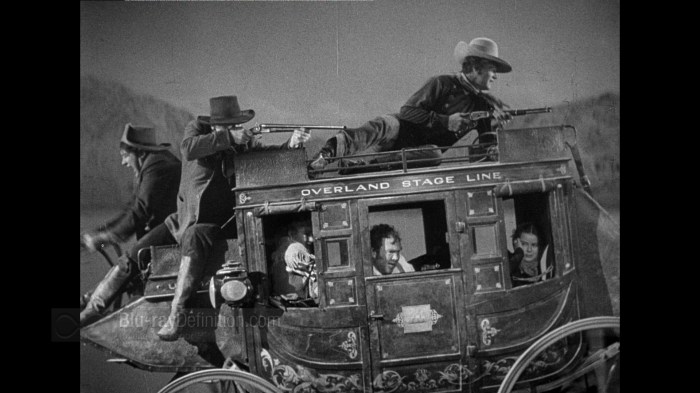
WES: going off the rails

stagecoach

“We’re in a fine fix, my friends.”  Stagecoach. 1939.

TriMet is buying 2 more train cars for WES, the Westside Express Service train that runs a 14.7-mile limited schedule between Wilsonville and Beaverton.

Hey, why not? When things are going downhill, double down.

On May 25, after just six minutes of consideration, TriMet’s Board of Directors voted unanimously to approve bidding on the purchase of two used Budd RDC passenger diesel railcars from Dallas Area Rapid Transit (DART) for a total of up to $1.5 million. An additional $550,000 is expected to be needed for retrofit work to make the cars service-ready.

“We need to plan for ridership growth,” TriMet spokeswoman Mary Fetsch told The Oregonian. “Staff believes that these cars would meet the expected demands for the growing WES service for at least the next ten years…,” Neil McFarlane, TriMet’s general manager, said to the Board in a May 25 memo.

Oh sure, plan for massive ridership growth.

In early 2009, TriMet predicted WES would have 2,400 daily riders its first year of operations and 3000 by 2020.

But things started to go south quickly. WES began operating in February 2009. By Dec. 2009, weekday boardings averaged 1,140. By June 2010, the last month of Fiscal Year (FY) 2010, weekday boardings for the year averaged 1,200, less than half the number TriMet had predicted.

TriMet General Manager Fred Hansen told The Oregonian it was way too early to say if the agency’s heavy-rail gambit was a mistake.

He was wrong.

In FY15, weekday boardings averaged just 1869. Equally disturbing, operating costs per boarding on WES are stubbornly high at $13.50, versus $2.83 on busses and $2.14 on MAX.

Operating cost per boarding ride measures the direct cost of providing each ride. Operating costs are expenses for labor, energy and expendable supplies to provide transit service and to maintain vehicles and plant facilities. It does not include general andf administrative costs, interest or depreciation.

WESgraphwithkey

Here we are in 2016 and the situation is still appalling.

As of April 2016, the most recent month for which I was able to obtain data from TriMet, average daily boardings in FY16 are just 1,779. Operating costs per boarding ride are also still substantially imbalanced, at $2.67 for busses, $2.01 for MAX and $12.56 for WES.

The WES figure translates into a fare recovery ratio of operating costs of just 8.1 percent. Operations costs are expenses for labor, energy and expendable supplies to provide transit service and to maintain vehicles and plant facilities.

And these figures don’t even take into account the $161.2 million spent to build WES.

Even if WES reaches 3000 average daily boardings, operating costs per boarding ride will remain much higher than for busses and MAX.

The fact is, WES is a train wreck.

Hear that sucking sound? That’s Oregon tax Initiative Petition 28

Democrats and their union allies want to suck more money out of Oregon businesses than we thought.

govttaxes

Oregon’s Legislative Revenue Office predicted today (May 23, 2016) that Initiative Petition 28, if approved in November, would generate $6.1 billion in new revenue by the 2017-19 biennium. That’s almost $1 billion more than the $5.3 billion initially predicted.

Talk about greed!

The Revenue Office’s report also estimated that 38,220 private sector jobs would be lost by 2022 if the initiative passed. Meanwhile, in an odd twist, the public sector would add 17,700 jobs.

Talk about an absurd outcome!

And Gov. Kate Brown’s thoughtful response?  “I greatly appreciate the analysis provided by the Legislative Revenue Office, which helps inform our understanding of the impacts of IP-28,” Brown said. “As I have said previously, the problem I remain focused on is how to improve our graduation rate and fund essential services while sustaining economic growth and protecting Oregon jobs. I will begin discussions with my legislative colleagues about a way forward that, should the measure pass, would safeguard new revenue for education while sustaining economic growth and protecting Oregon jobs.”

Whew! Makes you wonder if the governor is being paid by the word.

Initiative Petition 28 is being promoted by A Better Oregon, a campaign organization operating under the umbrella of Portland-based Our Oregon, a coalition of unions and progressive groups.

The measure would raise the corporate minimum tax on Oregon sales of more than $25 million a year from the current minimum of $50,000 to $30,001 plus 2.5 percent of the excess over $25 million. The tax would be based solely on sales, not profit.

Corporate taxes during the 2017-2019 biennium under the current system are projected to reach about $1.1 billion.

In other words, the passage of Initiative petition 28 would increase corporate tax collections per biennium by almost 600 percent in one fell swoop.

Rep. Mitch Greenlick (D-Portland), when endorsing the measure, said it would eliminate much of the constant need to choose between funding critical budget concerns each legislative session. “If that passes, we’ll have a lot of money to pay for stuff,” Greenlick said.

Otherwise, Greenlick said, most of the additional revenue in the economic forecast for the 2017-2019 budget would go to cover increased PERS liabilities and the state’s increased share of Medicaid funding, leaving little additional revenue for new stuff.

“This measure will make sure that large and out-of-state corporations do their part to fund the schools and services that will make Oregon thrive,” Our Oregon says.

As long ago as I can remember advocates for higher taxes in Oregon have been making “out-of-state corporations” the bogeyman, the malignant beast that’s doing Oregonians wrong and needs to pay.

But as attractive a target as these corporations are, they’re not fools. They will find a way to avoid paying the taxes or they’ll pass on the added taxes to Oregon consumers.

Then we’d all pay.

The liberal coalition behind Initiative petition 28, recalling their success in a tax increase battle in 2010, may be figuring they have a sure thing again with another measure targeting big business, but hopefully Oregonians in their wisdom will see this proposal is a reach too far.


Why is Val Hoyle smiling?

moneyinpolitics

Like Hillary Clinton, Rep. Val Hoyle, D-Eugene, who’s running for Secretary of State,  wants to get the obscene amounts of money out of politics…..later.


That way, she can rake in bundles of money now while running for Oregon Secretary of State as a champion of fundraising reform.

hoyle-mobile

Val Hoyle (D-Eugene)

In the past, Hoyle has said she supports enacting a constitutional amendment to limit campaign contributions, so long as the limits aren’t “unreasonably low”.

She has also blamed Democratic losses outside Oregon on “fear and cynicism” among voters fostered by large political contributions “from a small handful of special interests”.

So much for worrying about special interests.

According to state records, Hoyle has raised $587,000 to date, putting her at the top of the fundraising pile among the Secretary of State candidates.

Val Hoyle (D)……………………..$592,728

Brad Avakian (D)…………………$387,482

Dennis Richardson (R)………….$297,413

Richard Devlin (D)……………. ..$172,315

Sid Leiken (R)……………………..$ 45,104

Hoyle’s biggest contributor is Michael Bloomberg, a New York businessman who supports aggressive gun control measures. On April 29, he gave Hoyle $250,000 in appreciation for her support of legislation that passed in the last session expanding background checks to almost all private firearm transfers.

“Mike is supporting Val Hoyle because her leadership in passing Oregon’s background check bill is truly notable,” Howard Wolfson, a spokesman for Bloomberg, told Willamette Week in an email. “No one in the country has worked harder —or more successfully—to take on the NRA than she has.”

Hoyle has also received $105,000 in contributions from Emily’s List, a Washington, D.C.-based political action committee that supports female candidates.

Without those two large contributions, both from out-of-state, Hoyle would have raised just $237,728, which would have put her behind both Brad Avakian and Dennis Richardson in fundraising totals.


P.S.: The other candidates aren’t exactly pure in their fundraising either, although they’re collecting nothing comparable to Hoyle from individual donors.

Brad Avakian’s larger contributions

  • $40,000 from United Food and Commercial Workers Local 555
  • $30,000 from Oregon School Employees Association – Voice of Involved Classified Employees (2307)
  • $10,000 from Pacific NW Regional Council of Carpenters, SSF
  • $10,000 from Oregon League of Conservation Voters PAC (2352)
  • $7,500 from Peter Goldman, a Seattle attorney
  • $6,000 from Naral Pro-Choice Oregon PAC (172)
  • $2,500 from Mt. & M Gaming, operator of The Last Frontier Casino in La Center, WA


Dennis Richardson’s larger contributions 

  • $25,000 from Sherman and Wanda Olsrud of Medford, OR
  • $15,000 from Larry Keith of Salem, OR
  • $15,000 from James Young of Lebanon, OR
  • $15,000 from Freres Timber, Inc. of Lyons, OR
  • $10,000 from Stephen M Greenleaf of Medford, OR
  • $10,000 from Richard E Uihlein of Lake Forest, IL
  • $10,000 from Murphy Co. of Eugene, OR
  • $5,000 from Zidelle Collin s of Shady Grove, OR
  • $5,000 from David A deVilleneuve of Central Point, OR

Sock it to ’em: Hales and the left long for more taxes

More taxes. That’s the left’s answer for everything. Usually, they try to spread out the tax increases so you won’t notice how the total is escalating. But this year, they’re going whole hog.

Funny Tax Picture 2

On Tuesday, Portland Mayor Charlie Hales proposed an $8.7 million increase in the Business License Fee. Now 2.2 percent of a business’ net profit, the fee would increase to 2.5 percent for 25,200 Portland businesses.

“We need to be responsible leaders by providing enough revenue to deliver basic City services and invest in making lasting progress on our challenges,” Hales said. “A slightly larger fee on business’ profits will have a far-reaching, positive impact on the city as a whole.”

Meanwhile, Our Oregon, a coalition of unions and progressive groups, is promoting Initiative Petition 28 for the November 2016 ballot.

The measure would raise the corporate minimum tax on Oregon sales of more than $25 million a year from the current minimum of $50,000 to $30,001 plus 2.5 percent of the excess over $25 million. The tax would be based solely on sales, not profit.

The Legislative Revenue Office estimates the corporate tax measure would raise $5.3 billion during the 2017-2019 biennium. Corporate taxes during that biennium under the current system are projected to reach about $1.1 billion.

In other words, the measure would increase corporate tax collections per biennium by a whopping 400 percent in one fell swoop.

“If that passes, we’ll have a lot of money to pay for stuff,” said Rep. Mitch Greenlick (D-Portland).

All this would be on top of Portland’s much-maligned Arts Tax, which a large swath of the city’s liberal population isn’t paying, and an additional 10 cents a gallon gas tax in Portland, the brainchild of Portland Commissioner Steve Novick, that would generate $64 million over the next four years if voters approve it on May 17.

Yesterday, May 3, an Oregon judge approved ballot language for another tax, a payroll tax that would support Portland State University. Supporters will now begin collecting signatures to get the tax on the ballot in November. The proposed one-tenth of 1 percent payroll tax on wages paid by Portland-area businesses would generate about $40 million annually for PSU.

And if all these new taxes aren’t enough, the increases in the minimum wage that the Democrats in the state Legislature just pushed through will start in July.

Meanwhile, Gov. Brown is meeting in Portland today with lawmakers and business executives to start the process of crafting a multi-billion dollar funding package for state roads. The package would likely involve higher gas taxes and vehicle registration and driver license fees.

Hold on  to your wallets, folks.


Marijuana: Oregon’s new lottery

Oregon government has found a new addiction – marijuana taxes.

marijuanapic

Oregon collected $3.48 million in marijuana taxes in January 2016, the first month of taxing legal recreational marijuana. Based on these returns, the future looks bright for Oregon’s budget.

Economics consulting firm ECONorthwest initially projected the state would see $38.5 million in marijuana tax revenue in 2016. The Oregon Liquor Control Commission, which regulates recreational marijuana, projected less. But if Oregon sales for the rest of the year stay on the current trajectory, Oregon will collect $41.76 million in 2016, the Bend Bulletin figures.

“While state officials were quick to caution that it will take time to get an accurate view of the money coming in through marijuana sales, the early estimate shows pot may be a bigger boon than initially thought for Oregon’s schools and police, which receive a portion of tax revenue,” the Bulletin said.

Under Ballot Measure 91, revenue after costs will be divided as follows: 40 percent to the Common School Fund; 20 percent to mental health, alcoholism and drug services; 15 percent to state police; 10 percent each to cities and counties; 5 percent to the Oregon Health Authority for alcohol and drug abuse prevention.

What a windfall is coming their way.

And soon enough, just as has happened with the State lottery, the Oregon Liquor Control Commission and the Legislature will find themselves looking for ways to generate more marijuana money.

Lottery money has already turned the state into an addict, as Oregon’s lottery take has gone from $87.8 million in FY86 to $1.12 billion for the fiscal year ended June 30, 2015, an increase of 6.1 percent over fiscal year 2014. The Lottery is a very big business.

Going forward, the Lottery is working hard to expand its audience and revenues with development of new games, platforms, and venues in order to attract more diverse demographic groups.

The lure of raking in lottery dollars without having to raise taxes has long been appealing to politicians anxious to satiate government’s insatiable thirst for revenue. In fact, the lottery is often referred to as a “voluntary tax”, though behavioral research calls the “voluntary” part into question.

Whatever it’s called, the state always wants more of it, just as it will with marijuana taxes. You can count on it.