Over the top: Oregon’s $10 million State Senate election

“There are two things that are important in politics,” U.S. Senator Mark Hanna said in 1895. “The first is money and I can’t remember what the second one is.”

Candidates for Oregon’s state Senate showed the truth in that observation in their 2014 races, which led to campaign spending of $10 million. That’s right, $10 million to decide the winners of just 16 Senate seats in a state with a smaller population than Kentucky.

Oregon Senate

Oregon Senate

That’s $10 million, enough to cover the annual tuition and fees of 1026 students at the University of Oregon.

But wait. There’s more. Candidates in 3 of those 16 races ran unopposed and candidates in 7 others were in such uncompetitive races that the victor won by more than 15%. That leaves just 6 seats with real races.

Here are the 6, with the expenditures by each candidate and the winning margins:

Screen Shot 2014-11-22 at 5.42.14 PM

Of the 6 competitive races, the Democrats won 4 and the Republicans 2, giving the Democrats more solid control of the Senate.

Based on filings with the Oregon Secretary of State, the committees of all the candidates for the 16 Senate seats spent a combined total of $7,816,657.33 in the primary and the general elections.

The most expensive race in terms of candidate committee spending expenditures was the one between Bruce Starr and Chuck Riley with total expenditures of $1,794,346.39. That made it the most expensive State Senate race in Oregon history.

Bruce Starr (L) and Chuck Riley

Bruce Starr (L) and Chuck Riley

On top of these candidate committee expenditures, the Senate Republican and Democratic Party Leadership Funds spent a bundle.

Figuring out how much they spent beyond the spending of the candidate committees gets a little tricky here. That’s because some of the money spent by the Senate Leadership Funds came from contributions by candidate committees. These contributions also show up as expenditures by the candidate committees, so counting them also as expenditures by the Leadership Funds would be double counting. Therefore, in order to accurately figure out additional spending by the Leadership Funds you have to subtract the money they received from the candidate committees. Got it?

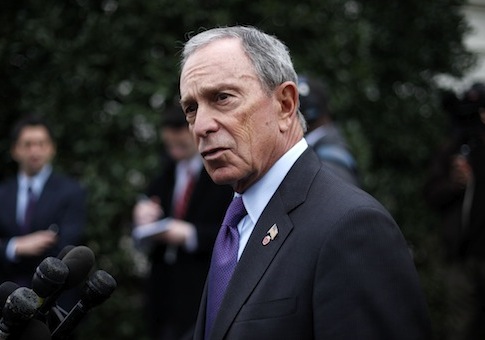
In the case of the Senate Democratic Leadership Fund, the contributions it received beyond donations from the candidate committees include $50,000 from Everytown for Gun Safety (former New York Mayor Michael Bloomberg’s operation), $100,000 from the Democratic Leadership Campaign Committee (A Washington, D.C.-based group that works to win state legislative seats and chambers for Democrats), and $50,000 from the Oregon Priorities PAC.

Michael Bloomberg

Michael Bloomberg

After the election, Everytown for Gun Safety, which also contributed $75,000 to the successful State Senate campaign of Chuck Riley-D and $250,000 to Gov. Kitzhaber, boasted of its campaign influence. “…the election of Rep. Sara Gelser (who received $186,014.40 from the Senate Democratic Leadership Fund) to the state Senate signals a pro-background check majority in 2015, which clears the most significant roadblock in Everytown for Gun Safety’s work over the past two years to pass a background check bill there,” Everytown said.

The extra expenditures by the Senate Democratic Leadership Fund, beyond contributions it received from candidate committees, totaled $1,140,387.53.

In the case of The Leadership Fund for Senate Republicans, major contributions, beyond donations from the committees of the candidates running in 2014, included $15,000 from the Oregon Sportsmens Association PAC, $45,000 from the Oregon Family Farm Association PAC, $25,000 from the Taxpayers Association of Oregon PAC and $20,000 from the Pacific Seafood Group Employee PAC.

The Republican Leadership Fund, just like the Democratic Leadership Fund, also received substantial sums from current state senators not running in 2014. Friends of Ted Ferrioli, for example, raised $305,298.28 in 2014, then turned around and donated $213,500 of that to the Republican Leadership Fund.

Using the same formula as with the Senate Democratic Leadership Fund, the extra expenditures by The Leadership Fund for Senate Republicans totaled $1,222,851.

Add it all up and you have $10,179,985.80.

And that doesn’t even count money spent by other groups in support of Senate candidates, including some so-called dark money which will never be disclosed.

Clearly, Oregon is headed for the big time. The question: what are the big contributors going to expect as a return on their investments?

Climate change and guns: the long arms of out-of-state billionaires reach into the Oregon Senate

What do Tom Steyer of San Francisco (and Lake Tahoe and Pescadero) and Michael Bloomberg of New York (and Bermuda, London, Colorado and Florida) have to do with Oregon politics? A lot it turns out.

Their money helped the Democrats strengthen their hold on the Oregon Senate and potentially push through controversial environmental and gun control legislation.

Bloomberg is the billionaire co-founder of Bloomberg L.P., a privately held financial software, data and media company based in New York City, and a former mayor of New York City.

Michael Bloomberg

Michael Bloomberg

Steyer is a billionaire who co-founded the $21 billion Farallon Capital Management fund. He spent an estimated $65 million this election through his NextGen Climate political action committee (PAC) to help candidates who support the need to deal with climate change.

Tom Steyer

Tom Steyer

Steyer spent $8.5 million in Colorado to help Democrat Sen. Mark Udall in his losing race against Republican Cory Gardner.

He also spent $11 million in Iowa to help Democrat Bruce Braley in his losing Senate race against Republican Joni Ernst.

His ambitions in Oregon were considerably more modest, but could still have a big impact. Here his NextGen PAC spent $130,000 to help Democrat Chuck Riley in his race against Republican State Senator Bruce Starr and Democrat Sara Gelser in her Senate race against Republican Betsy Close.

Riley defeated Starr in a squeaker by just 221 votes, 17,930 to 17,709; Gelser handily defeated Close by 27,375 to 21,571.

Riley’s campaign finance report doesn’t show any contributions from Streyer’s out-of-state PAC. That’s because the PAC donated the money to the Oregon League of Conservation Voters (OLCV) PAC, which is for all intents and purposes an arm of the Democratic Party. The in-state OLCV PAC then used the funds to support Riley, giving him a total of $191,120.02.

To further bolster the Democrat’s cause, Steyer’s NextGen Climate Action Committee also gave $100,000 to the Democratic Party of Oregon.

Gelser’s campaign finance report doesn’t show any contributions from Streyer’s out-of-state PAC either, but it does show $76,755.36 from the OLCV.
.
Meanwhile, Bloomberg’s EveryTown for Gun Safety Action Fund sent $75,000 to Riley’s campaign, as well as $250,000 to Gov. Kitzhaber and $50,000 to the Senate Democratic Leadership Fund.

Everytown for Gun Safety was created earlier this year by combining a Bloomberg-backed group, Mayors Against Illegal Guns, with Moms Demand Action for Gun Sense in America, a movement that grew out of the Newtown shootings in 2012. The two groups have been working together since December.

Did the Steyer and Bloomberg money make a difference?

According to filings with the Oregon Secretary of State, Riley raised a total of $891,153.99 for his campaign and Starr a total of $901,097.63. That means a significant portion of Riley’s campaign money came just from Steyer and Bloomberg.

Add whatever impact Steyer’s $100,000 donation to the Democratic Party of Oregon had on Riley’s race and these two out-of-staters likely played a huge role in Riley’s victory.

According to filings with the Oregon Secretary of State, Gelser raised a total of $843,711.67 for her campaign. Of that, $76,755.36 came from the OLCV. Close raised significantly less, $556,628.14.

The Steyer/OLCV money probably didn’t play as much of a key role in Gelser’s victory, but it surely helped expand her advantage.

Oregon tried to limit the influence of out-of-state campaign contributions in 1994 when it passed Ballot Measure 6 that amended the Oregon Constitution to limit out-of-district contributions to 10 percent of the total. But a federal appeals court ruled in 1998 that the limit violated the First Amendment and was unconstitutional.

So expect more of the same in future Oregon elections, and then some.

Merkley loses

As of Oct. 15, 2014, Senator Jeff Merkley’s Leadership PAC had given out contributions to other Senate Democrats running for office in Nov. 2014. Based on the results of the election, he didn’t make very good investments. And now he’s going to be in the minority, too. Tough luck.

merkleySenate

Total to Democrats: $91,000
Total to Republicans: $0

Recipient Total

Begich, Mark (D-AK) $10,000 LOST
Braley, Bruce (D-IA) $ 1,500 LOST
Coons, Chris (D-DE) $ 5,000 LOST
Franken, Al (D-MN) $ 5,000
Grimes, Alison (D-KY) $ 5,000 LOST
Hagan, Kay R (D-NC) $ 7,500 LOST
Landrieu, Mary L (D-LA) $ 7,500 WILL LOSE
Markey, Ed (D-MA $ 2,000
Nunn, Michelle (D-GA) $ 5,000 LOST
Peters, Gary (D-MI) $ 1,500
Pryor, Mark (D-AR) $ 7,500 LOST
Reed, Jack (D-RI) $ 5,000
Schatz, Brian (D-HI) $ 2,500
Shaheen, Jeanne (D-NH) $ 7,500
Udall, Mark (D-CO) $ 5,000 LOST
Udall, Tom (D-NM) $ 3,500
Walsh, John (D-MT) $ 5,000 WITHDREW
Warner, Mark (D-VA) $ 5,000

Based on data released by the FEC on October 25, 2014.
Center for Responsive Politics.

In responsione: OSU and state support for higher education

After I wrote about Oregon’s abandonment of higher education, focusing on the situation at the University of Oregon, Steve Clark, Vice President for University Relations at OSU, responded to me with some informative comments.

Steve Clark, Oregon State University

Steve Clark, Oregon State University

Mr. Clark agreed to let me share them:

Like you, at Oregon State, we worry about the cost of higher education for Oregonians. I would like to share with you a number of steps we have taken to minimize the impacts of this change in state funding, but we do realize that there is more work to do in this regard. And while our efforts are many and have had a positive impact, we continue to urge Oregon legislators to restore higher education funding at least to levels provided in 2007.

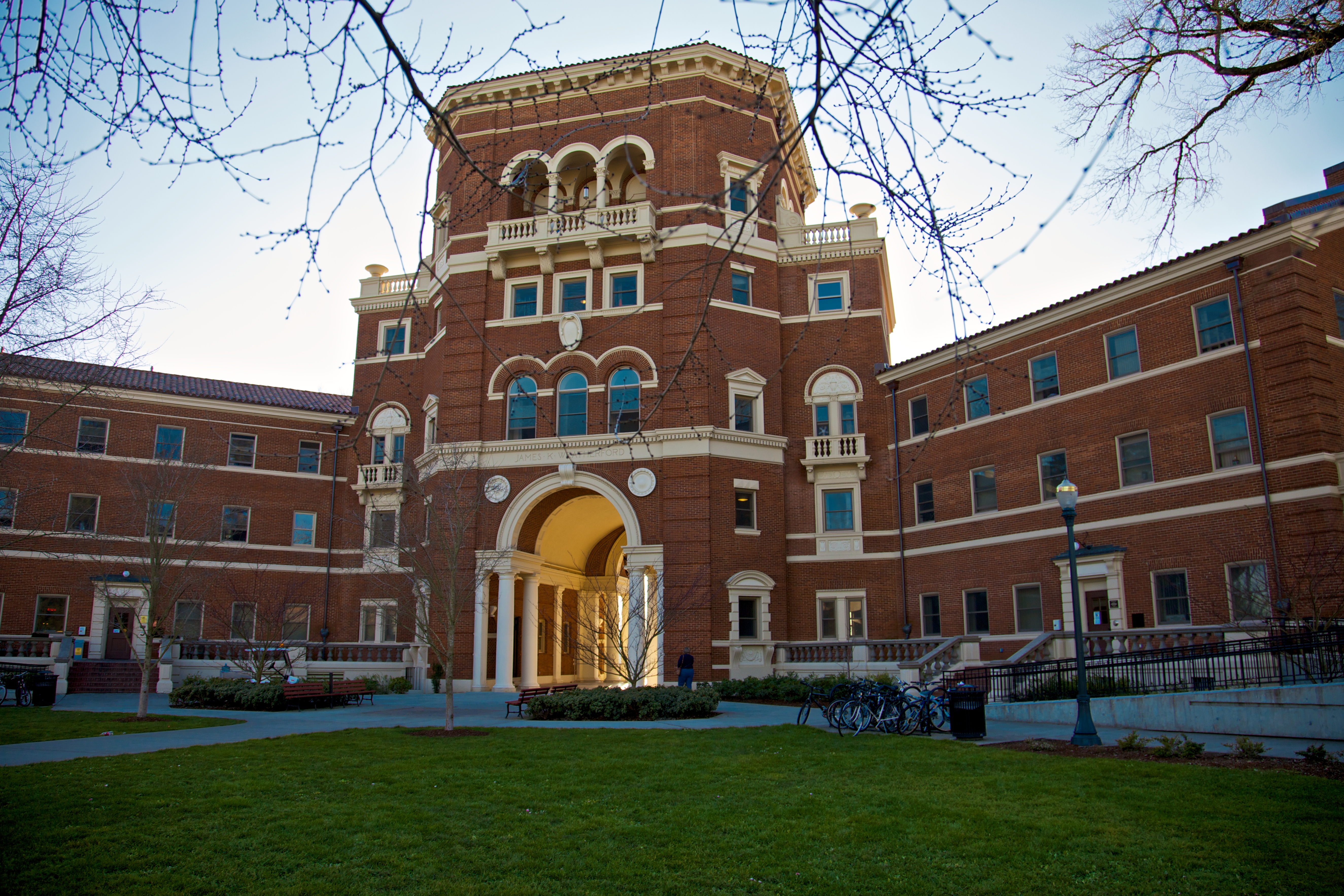
Weatherford Hall at Oregon State University

Here is some information that I hope aids you and shows how Oregon State remains a public university for Oregonians.

I realize that while your column largely shared statistics about the University of Oregon, your point was that all of Oregon’s public universities are public in name only.

While OSU’s out-of-state and international enrollment has grown over the past decade, OSU’s undergraduate enrollment is still 74% made up of Oregonians. That percentage has declined over the past decade, but we have pledged to not let it fall below 66%. That’s our land grant mission.

Meanwhile, we have launched OSU Open Campus to bring educational programs directly to Oregon communities in partnership with local school districts, ESDs and community colleges. And we have dual degree partnerships with all of our Oregon’s 17 community colleges … so students can simultaneously enroll at OSU and the community college near their home and then transfer after a year or two of community college to attend Oregon State without losing credits. In some cases – such as in an agricultural sciences program with Klamath Community College – a student can graduate in four years without ever having to come to Corvallis, but instead take community college courses for two years or so and then complete their degree taking OSU on-line distance learning classes.

We do recognize tuition and fees are expensive. OSU’s in-state tuition and fees are $9,123 per year compared to the $9,918 you pointed out about UO. Still that is a lot more than students paid 7 to 10 years ago. Out-of-state tuition at OSU is $26,295 per year compared with $30,888 at UO.

With such a heavy tuition load in mind, we launched many years ago our Bridge to Success program. It enables 2,600 to 3,000 Oregonians per year to attend OSU without paying any tuition and fees. The program combines Oregon Opportunity Grants, federal Pell funds and university funds. And then there is our OSU Foundation philanthropy – The Campaign for OSU has raised more than $183 million for student scholarships.

Yes, there is a significant issue with how the state funds higher education in Oregon and we are working with the legislature to change that. Time will tell about such efforts. Meanwhile, as Oregon’s statewide university, we will not abandon Oregonians. And we will work hard to moderate costs, bring higher education to many Oregon communities, and grow funding for financial aid for students.

Steve Clark

Killing Trust: Kitzhaber the unobservant

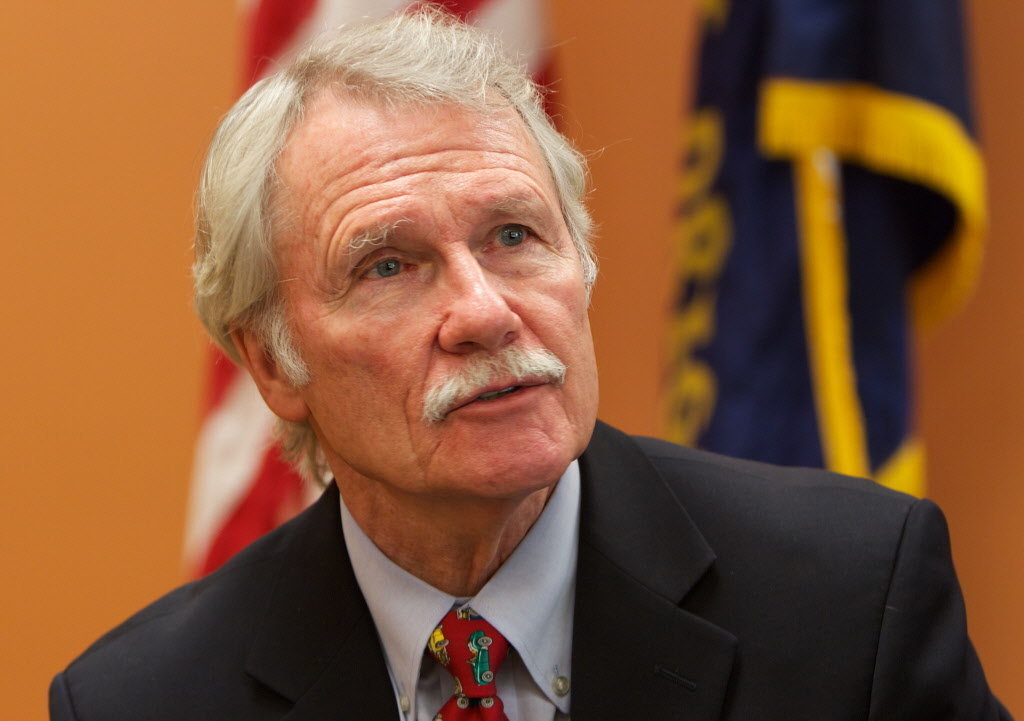
John Kitzhaber’s latest tour of duty in the governor’s chair has exposed him as an empty suit in terms of faithfully overseeing the government he runs.

kitzhaberjpg

First, he hired education czar Rudy Crew. Remember him?

Rudy Crew (R) with Governor Kitzhaber

Rudy Crew (R) with Governor Kitzhaber

Crew checked in to his $280,000 a year job as Oregon’s first chief education officer in June 2012. Hailed by Kitzhaber as a man with a track record of leadership and innovation, his collapse as a leader was quick and dramatic.

Crew spent a year travelling extensively, often first class, on the state’s dime to speak at non-Oregon related events, took vacations at every turn, and made the scrambled eggs-and-bacon circuit around the state, telling the same heartwarming stories over and over again, while he continued to make money on the side. On July 1, 2013, Crew checked out and headed back East, a failed experiment in every way.

“How big of a setback was the Rudy Crew fiasco?” Portland Business Journal Publisher Craig Wessel asked Kitzhaber in January 2014. “It had to be difficult.”
“It was,” Kitzhaber responded. “It was an embarrassment.”

It was more than that. It was a complete failure to exercise good judgment and to oversee the performance of a key figure in Kitzhaber’s administration.

Then there’s Cover Oregon, another debacle.

coveroregonAd

Millions were spent there on a disastrous website, ubiquitous advertising and highly paid top staff (The total compensation of the each of the top ten highest paid of Cover Oregon’s employees in early 2014 was between $154,000 and $229,000, more than their boss, Kitzhaber.) In April 2014, Cover Oregon’s board of directors voted to close the state-run exchange and adopt the Federal HealthCare.gov exchange in 2015.

Cover Oregon’s troubles were compounded when the state tried shenanigans to avoid making public a scathing report on the program by consultant, Clyde Hamstreet. The report was made available to the media only after it was requested under Oregon Public Records Law.

“In retrospect, I should have been more engaged in the (Cover Oregon) project,” Kitzhaber said in November 2013. I’ll say.

Then there’s the matter of First Lady Cylvia Hayes.

Cylvia Hayes at an Oct. 9. 2014 press conference where she admitted entering into an illegal marriage in 1997.

Cylvia Hayes at an Oct. 9. 2014 press conference where she admitted entering into an illegal marriage in 1997.

On Oct. 8, Willamette Week raised serious questions about her business dealings and possible conflicts of interest while associated with Kitzhaber. Subsequent stories have disclosed that, unknown to Kitzhaber, Hayes accepted $5,000 as payment for illegally marrying an Ethiopian immigrant in 1997, allowing the man to remain in the U.S.

On Oct. 12, Kitzhaber asked the Oregon Government Ethics Commission to determine whether Hayes is subject to state ethics laws and, if so, whether she has broken them.

A better question is why is he only paying attention now? Where has he been since his third term began on ensuring that all of Hayes’ business relationships comported fully with state ethics rules?

Pay attention, John.

Monica Wehby: down for the count

Originally positioned by the Republicans as a smart female political newcomer and seen as a credible challenger to Senator Jeff Merkley (D-OR), Monica Wehby has become a damaged candidate with diminishing changes of success.

“I’m not a politician,” she said in announcing her candidacy in January 2014. So, far, that’s pretty clear. A pediatric neurosurgeon at Randall Children’s Hospital, she has been tripped up almost from day one.

wehby

It’s not as though Merkley should be a particularly strong opponent. Winning the first time by just 49% to 46%, he’s a pretty colorless Senator with one of the most liberal voting records and without any significant legislative accomplishments.

With today being the first day of the federal fiscal year, Merkley can also be fairly targeted as a Senator who has done nothing to effectively deal with the burgeoning national debt, now at $17.5 billion and counting, that is going to burden all our children.

Merkley is also running at a time when the country overall is in a pretty sour mood, with 67 percent of registered voters saying the nation is on the wrong track (NBC/Wall Street Journal) and 57 percent of registered voters nationwide saying it’s time to give a new person a chance in Congress (NBC/Wall Street Journal).

But if the polls are right, that doesn’t seem to matter to enough Oregonians to make Merkley vulnerable.

Instead, Wehby has been left defending herself against such things as charges arising out of opposition research that she harassed a boyfriend and her ex-husband. As Joe Pounder, a veteran GOP researcher, told Politico, “There’s the growing intensity of a media cycle fueled by the salacious and voyeuristic.”

Likely opposition research that generated reports on the website Buzzfeed in September that multiple portions of position documents on Wehby’s website had been plagiarized also has slowed any Wehby momentum.

Despite Wehby’s efforts to position herself as a new choice, and the significant support she’s been getting from independent spending, it’s pretty clear at this point that she hasn’t broken out to capture the hearts, minds and votes of enough Oregonians to win.

American businesses: meet your future job applicants

When Ellis Island opened in 1892, it welcomed immigrants escaping war, drought, famine and religious persecution and hoping America would offer them a new start.

Today, the Hillsboro School District is welcoming an increasingly diverse group of students, many of whom left their homes around the world because of brutal wars, punishing poverty, religious and political conflict, violence and/or a simple desire for a better life.

Tobias Elementary School, for example, is filling with children from Central America, Mexico, Ukraine, Thailand, Cambodia, Somalia, Egypt, Iraq and other countries speaking up to 30 languages. The mix depends, to some degree, on where the greatest turmoil and unrest is occurring, according to Steve Callaway, Tobias’ principal.

somalistudents

Many of these students are from low-income and, in many cases, low-educated, families where English is not the first language at home, behaviors and value systems vary widely and the American culture is not deeply embedded.

The shift has been dramatic. In the 1999-2000 school year, Tobias was largely white and culturally homogenous, with just 6.3 percent of the student body from principally mobile Hispanic migrant families and more from a smattering of other ethnicities, including Asian children whose parents worked in high-tech.

By the 2013-2014 school year, minority students from diverse cultures outnumbered white students at Tobias for the first time:

White: 47.8 percent.

Black: 3.5 percent.

Hispanic: 24.7 percent.

Asian/Pacific Islander: 12.2 percent.

American Indian/Alaskan Native: 0.6 percent.

Multiethnic: 11.3 percent.

The trend at Tobias is being replicated at the rest of Hillsboro’s schools, which were 49.5 percent white in the 2013-2014 school year.

Hillsboro School District demographics
Ethnicity No. of students Pct. of students
American Indian 174 0.83
Black 439 2.10
Hispanic 7,475 35.67
Asian 1,341 6.40
Pacific Islander 163 0.78
Multiethnic 965 4.74
White 10,368 48.48
TOTAL 20,955 100.00

Concentrations of children from particular ethnic groups are occurring in certain Hillsboro schools because their families want to live in close proximity. This has led, for example, to 19 Somali students attending Hillsboro’s Imlay Elementary School in the 2013-2014 school year and 15 this school year.

The U.S. Department of Education projects that minorities will outnumber whites among the nation’s public school students for the first time this fall. In other words, the minorities will become the majority.

What this means in the longer term is that Hillsboro’s workforce of the future is going to look quite different from today. Hillsboro’s economic viability and America’s greatness will be diminished if we don’t do all we can to educate these ethnically and culturally diverse children.

It’s critical that we prepare them for success as creative problem solvers and engaged community members in work and life. It’s also essential that we inculcate in them a belief in the American Dream and a commitment to the kind of effort that will bring them social and economic mobility.

“Kids don’t care how much you know until they know how much you care,” says Callaway. There are so many ways local businesses can show much they care about preparing children for work.

Companies can open their facilities to students who want to learn more about the world of work and career options by offering job shadows and paid internships. “All students need to be more aware of what job opportunities are out there,” says Leslie Smith Mayfield, a 3rd grade teacher and STEM Coordinator at Tobias. “We need help from business to expose kids, even in the elementary grades, to what options there are in the real world. Some bright kids are going to go to waste if they don’t realize the options they can work towards.”

Awareness also needs to expand to the skilled trades, which can offer well-paid, stable careers. For example, Callaway says he’d welcome having IBEW workers come in to teach kids about basic electrical circuitry.

Elaine Philippi, manager of student programs at the Business Education Compact, talks up the BEC STEM Connect TM Initiative. Volunteers from a business visit a school at least four times in an academic year, educating the students about their company, engaging students in activities that promote STEM concepts and collaborative processes and helping out at a science night or other community event.

Employees at local businesses can also get involved by helping with field trips, providing reading assistance, giving technical demonstrations, and even presenting on their hobbies. Astronomy and geology hobbyists, for example, have visited Tobias classrooms.

Businesses can give grants of all sizes to enable schools to offer innovative programs. For example, a Tobias teacher secured a grant to support an engineering math program for 6th grade girls.

Equipment can be donated to enhance the learning experience.

Companies can form partnerships with local schools, as FEI, Intel and Vernier have already done with Tobias.

All of this could help boost achievement levels and increase completion rates at Hillsboro’s increasingly diverse schools. That will benefit the local business community down the road when these youngsters enter the job market.

Watch video about Tobias Elementary School

This blog also appeared as a column in the Hillsboro Argus, October 1, 2014

Availability of affordable, quality child care can clear a path out of poverty

This week the U.S. Census Bureau released comprehensive reports on nationwide and state poverty in 2013. There are a lot of almost mind-numbing numbers in the reports, but behind those numbers are millions of Americans struggling with poverty that infects their lives 24 hours a day and shapes their future.

The Census Bureau reports reveal that the poverty rate for Oregon improved somewhat from 17.2 percent in 2012 to 16.7 percent in 2013, but remains stubbornly high. One way to reduce it further is to ensure that quality, affordable child care is available to low-income families.

Holding tight, a child grins as she enjoys being pushed on a swing by Jan McIntosh at Good Apple Child Care Preschool in Hillsboro. What a treat.

childcarefot

But for this child’s low-income parents, and many other low-income Washington County residents who want to work and want the best for their children, it can be tough to access affordable, quality child care.

But child care is essential to help low-income people climb out of poverty and children who don’t get a good start often enter kindergarten behind and stay behind throughout their schooling.

It’s in the community’s best interest to provide a strong foundation for all children to develop into well-educated adults ready to participate in the work force and keep our economy strong. It’s also in the community’s interest to facilitate work by adults because work builds self-esteem and creates self-sufficiency.

One Oregon program that helps make work possible is the Employment Related Day Care program run by the state’s Department of Human Services (DHS). It provides financial assistance to help eligible low-income working families pay for child care, enabling parents to stay employed and children to be well cared for in stable child care arrangements.

The program helps approximately 20,000 Oregon families every year pay for child care for about 35,000 children.

About half the children who attended Good Apple Child Care Preschool in Hillsboro this summer were being helped by the program.

The preschool’s owners, Jan and James McIntosh, operate out of their 1,200 square foot home with its half-acre backyard playground.

If a child wants to enjoy arts and crafts, hike through Jackson Bottom Wetlands, take a field trip to the Enchanted Forest, get introduced to reading and music, or dunk her feet in poster paint and make footprints on poster paper, Good Apple’s the place to be.

The 16 boisterous children there this summer ranged from 6 months to 9 years of age; that switches to children 6 months to 5 years of age when school starts. The children are overseen by between three to six staff members, depending on the activities under way.

The nonprofit Community Action organization, which works to eliminate conditions of poverty and create opportunities for people and communities to thrive, helped Good Apple succeed.

“We were hooked up early on with Jan Alvarez, a child care specialist at Community Action of Washington County, and she has been awesome,” said Jan McIntosh. “She’s encouraged us to take the steps to get our certification, get nationally accredited and then participate in Oregon’s Quality Rating Improvement System (QRIS), which aims to raise the bar on quality child care and prepare children for kindergarten.”

Community Action also educates low-income working families about child care options, such as home-based programs and child care centers, and offers a broad range of face to face and online training classes in English and Spanish to child care operators and staff, such as first aid and CPR and child abuse and neglect training.

Karen Henkemeyer, who manages the child care program at Community Action, said some low-income families also find that providing child care can help lift them out of poverty while allowing them to stay close to their own children.

Child care providers throughout Washington County are striving to make a difference for low-income children and their parents. It’s critical that we support efforts to provide a full range of affordable, high quality child care if the county and all of its residents are to prosper.

For more information about child care-related programs in Washington County, call Community Action at 971-223-6100 or visit its website, caowash.org/ccrr.

Honey, our paychecks are shrinking

It was a lofty goal.

One of the principal goals of the Oregon Business Plan when it launched in 2002 was to raise Oregon’s per capita personal income above the national average by 2020.

DREAM-JOB

So much for that dream.

Oregon’s per capita personal income in 2013, total personal income divided by total population, was 90.3 percent of the U.S. average, which was actually down from 2001, when it was 94.6 percent.*

Oregon’s per capita income has grown for the past three years, and that’s reason for optimism, but so has the per capita income in other states, so Oregon is still lagging behind.

Eric Fruits, a faculty member at Portland State University, warns against braking out the bubbly over Oregon’s income growth, even though it put Oregon 15th in personal income growth among the United States and the District of Columbia. That’s because, he argues, over the long run Oregon’s per capita income growth has lagged the rest of the U.S. by two to four tenths of a percentage point and the difference compounds over time.

“Even the tiniest drags on the economy can compound over time such that a state that begins almost nine percent richer than the rest of the country can end up decades later being nine percent poorer than the rest of the country,” Fruits wrote recently.

Equally troubling is that behind the per capita income numbers are some discouraging data on Oregon’s and the nation’s changing workforce.

Oregon’s job growth in 2013, during which its job base grew by 2.4 percent and it added about 39,000 jobs, was one of the fastest in the country. It was exceeded only by North Dakota and Florida.  If the pace continues this year, Oregon could recover all the jobs lost in the recession before 2014 ends.

Already, the country as a whole has regained all the jobs lost during the Great Recession, though it took six and one-half years. But consider that the country’s population has grown by about 15 million since the Great Recession began and the potential workforce has grown as well.

Also, consider the types of jobs that are being created.

At the start of 2008, a private-sector worker earned $818.31 a week. In April 2014, almost six and one-half years later, that figure had grown to $838.70, just $20 a week more.

While the economy has been adding jobs, the new jobs are not enough to keep up with population growth and too often aren’t the solid middle class jobs we need for the overall economy to thrive.

“Although employers added jobs in a broad range of industries, the bulk of new jobs added are found in a handful of industries known for low wages—accommodation and food services, temporary help services, retail trade, and long-term health care, ” the left-leaning Center for American Progress notes.

Image

If Oregon really wants to advance relative to other states, we need more firms selling lots of products, hiring lots of people, and paying high wages to generate the gains that are needed across the state, the Oregon Business Plan recently noted.. That means we need to start more, grow more, recruit more and retain more highly productive companies in a variety of sectors across the state.


_______

*Per capita personal income

National        Oregon

2002       $31,481         $29,400

2003       $32,295         $30,144

2004       $33,909         $31,597

2005       $35,452         $32,542

2006       $37,725         $34,644

2007       $39,506         $35,796

2008       $40,947         $36,772

2009       $38,637         $35,621

2010       $39,791         $35,869

2011       $41,560         $37,744

2012       $42,693         $39,166

2013       $44,543         $40,233


*Source: U.S. Department of Commerce, Bureau of Economic Analysis; Oregon Employment Department, WorkSource Oregon


Vote? Fuhgettaboutit

A bunch of folks won in Oregon’s May  20 primary elections, but that doesn’t mean they enjoy the enthusiastic support of Oregonians. In fact, far too often a small number of Oregonians are determining the winners and losers in Oregon politics. Only about one-third of registered voters bothered to vote in the May primaries.

And this doesn’t take into account the fact that significant numbers of eligible adults 18 years and older are not even registered to vote.

non_voters

In the hotly contested Republican primary for the U.S. Senate race against Jeff Merkley, candidate Monica Wehby captured 132,501 votes, 49.99 percent. That allowed her to overcome her principal challenger, Jason Conger, who pulled in 99,706 votes, 37.61 percent.

Wehby’s victory sounds impressive until you realize that there are 650,176 Oregonians registered as Republicans. That means Wehby won the primary with the votes of just 19.77 percent of registered Republicans. Those are the only people who can vote in Oregon’s Republican primary in the state’s closed primaries.

Votes in Washington County Commission races were similarly low. There are 284,138 registered voters in the county.For the nonpartisan Commissioner-at-large position, Andy Duyck won with 43,837 votes. That’s 15.4 percent of registered voters.

The fact is, despite Oregon’s much-vaunted vote-by-mail system, the May primary had one of Oregon’s lowest voter turnouts ever and turnout has been falling for years.

Why?

In races where there seems to be no real contest, motivating voters to turn out is damn hard. Jeff Merkley won the Democratic primary for U.S. Senator with 271,344 votes, just 33 percent of registered Democrats.

In other cases, it’s hard to get excited when there truly is no contest. For example, in three Metro races the incumbent candidates, Carlotta Collette, Shirley Craddick and Kathryn Harrington, had no opponents.

In some cases the ideological split in a voting district is so unbalanced, with Democrats or Republicans firmly in control, that going to the polls if you’re in the minority seems like a total waste of time. A Republican in Multnomah County may feel that way as may eligible voters in most Congressional districts in the U.S. According to the Pew Research Center, political scientists and analysts disagree on why so few House districts are competitive; some blame gerrymandering, while others say the district maps reflect a politically polarized America where people are more likely to live among those who think like they do.

Then there are the races that just don’t engage voters, where few voters feel any connection to whoever wins and probably couldn’t even name the incumbent if asked.

Of course, Oregon’s closed primary system is also a guilty party. With 648,146 Oregonians registered as Nonpartisan (nonaffiliated, minor parties & others), a number that’s been growing steadily, none of them can vote in a Republican or Democratic primary.

There’s also the growing disenchantment with politics and politicians in general in Oregon and across the country. In Kentucky, for example, turnout was only 26 percent in a nationally covered intensely competitive primary between U.S. Senate Republican Leader Mitch McConnell and Matt Bevin.