The Oregon State Bar Association is blatantly failing its responsibility to Oregonians.
On Oct. 9, 2023, I filed a complaint with the Oregon State Bar Association asserting that a number of Oregon lawyers are misrepresenting their credentials, that they are acting in an unethical manner by asserting to potential and current clients that their selection as “Lawyers of Distinction” by a Florida-based business is evidence of their legal skills and achievements. I filed a second, more detailed complaint on Feb. 17, 2023 and followed up with an email asking whether the association intends to respond.
Lawyers of Distinction, incorporated in 2014, is in fact just like a diploma mill, an outfit that claims to be a higher education institution, but only provides illegitimate academic degrees and diplomas for a fee.
The Oregon Rules of Professional Conduct (as amended effective January 1, 2024) for Oregon attorneys is explicit about how attorneys must communicate about themselves:
Rule 7.1 A lawyer shall not make a false or misleading communication about the lawyer or the lawyer’s services. A communication is false or misleading if it contains a material representation of fact or law, or omits a fact necessary to make a statement considered as a whole not materially misleading.
Rule 8.4 It is professional misconduct for a lawyer to…engage in conduct involving dishonesty, fraud, deceit or misrepresentation that reflects adversely on the lawyer’s fitness to practice law.
An Oregon attorney claiming he or she is a exceptional because of membership in “Lawyers of Distinction” is clearly making “a false or misleading communication” and engaging in “professional misconduct” involving “dishonesty” “deceit” and “misrepresentation”.
The Oregon Bar Association’s response to my complaint? Nothing. Nada. Crickets.
Here are the facts.
According to the Lawyers of Distinction’s website, a Charter Membership, for $475 a year, comes with a Customized 14″ x 11″ genuine rosewood plaque. A Featured Membership, for $575 a year, brings the plaque and inclusion in a membership roster published in USA Today, The New York Times, The American Lawyer and the National Law Journal.
Then there’s the Distinguished Membership, for $775 per year, the most expensive choice (described on the organization’s website as “Most Popular”), which brings the rosewood plaque, the membership roster ads and an 11″tall translucent personalized crystal statue.
The Lawyers of Distinction website describes the application review process as complex and rigorous.
Don’t believe it.
It’s just pay-for-play. It’s selling badges. It’s paying for meaningless accolades. Apply, pay the annual membership fee and you’re in. The result? People relying on the Lawyers of Distinction accolade in choosing an attorney are being duped.
According to the Florida Division of Corporations, “Lawyers of Distinction Inc.” is a private for-profit company with a principal address of 4700 Millenia Boulevard, Suite 175, Orlando, FL 32839. Robert B. Baker, at the same address, is listed as the Owner in the company’s 2023 Annual Report.
But don’t go to the office address expecting to be ushered into a space with a clean, modern aesthetic that communicates success. The address is only a virtual office.
If the Oregon State Bar Association and its 14,000 members are honestly committed to accountability, excellence, fairness, and leadership in the legal profession, as it claims, it should insist that Oregon attorneys immediately halt falsely advertising themselves as Lawyers of Distinction or holders of other unearned accolades.
NOTE: Paul O. Edgar, a retired Business Systems Analyst, submitted a response to this post. It is reprinted at the conclusion of my post.
————————–
Shades of the U.S.-Mexico border conflict.
Stephen F. Austin, the “father of Texas”, had strong opinions about ” invaders”. In a May 4, 1836 letter, appealing for U.S. assistance during Texas’ war of independence, Austin declared “A war of extermination is raging in Texas — a war of barbarism and of despotic principles waged by the mongrel Spanish-Indian and Negro race, against civilization and the Anglo-American race…. Indians, Mexicans, and renegades, all mixed together, and all the natural enemies of white men and civilization.”
It doesn’t look like Republican Joe Kent, who lost his 2022 race in Washington’s in Washington’s Third Congressional District against Democrat Marie Gluesenkamp Perez and is challenging her again in 2024, likes outsiders much either,, especially folks from Oregon.
In mid-January 2024, Kent proclaimed that a replacement for the deteriorating I-5 bridge and a new light rail line “… would be an expressway for Portland’s crime & homeless into Vancouver…”
“…the drug addicts and criminals in their tent colonies that are spreading their crime from Portland into Vancouver…,” are not welcome in his district, he said.
In a Feb. 29, 2024 news release, Kent repeated that allegation. “What we don’t need – and the people of my district agree on this regardless of party – is a toll road that unfairly targets Washingtonians commuting to Portland, or light rail that there is no demand for and would bring Portland’s crime problem further into Clark County.”
Kent has repeated that point of view on Facebook. ““We don’t want the problems of downtown Portland dumped right into our district in Vancouver,” he said. “If you look at the murder rate, the crime rate, that’s the last thing we want in Vancouver.”
The New York Times says the I-5 dispute “… is an example of how Republicans…are seeking to transform even the most basic of local issues into battlegrounds in the nation’s culture wars in elections this year in which control of Congress is at stake. Mr. Kent’s attacks, which rely on buzzwords of the hard right, place the bridge at the center of a national political discussion that vilifies the left and plays on fears of demographic change.”
So I guess we can expect more of this as the Kent-Perez contest heats up.
Response by Paul O. Edgar
The I-5 bridge and light rail issues are about more than crime.
The most important issue is whether there is a need to have this very expensive TriMet Light Rail Transit (LRT) line extended into Clark County, with an additional $2 billion added into the I-5 Interstate Bridge Replacement (IBR) plan cost.
TriMet also wants to also get reimbursed for all operating costs. Currently they are estimated to be $21.6 Million dollars per year.
TriMet already has a huge under-funded earned health and retirement obligation that the citizens of Clark County Washington would become partners in if the I-5 bridge/Light Rail project goes through. TriMet has been working on trying to deal with those obligations, but the limit on payroll tax revenues and other State of Oregon funds already make TriMet look like a Chapter 11 bankrupt organization.
Reading its performance reports, TriMet ridership has plunged and costs have been understated. The West-side Commuter Rail System (WES), for example, appears to be losing $1 million dollars per month and TriMet’s LRT may well be losing $10 million dollars per month. Some of that is because of the increase in virtual offices and public concerns about drug addicts and other troubled people on the system.
All this, plus burdensome bridge tolls, will mean added costs for Clark County commuters, 99% of whom will also not be able get directly to their place of work or back home on a Fixed Rail System without even more added costs. The cost of what Clark County residents would be the assuming of the costs associate with extending TriMet Light Rail Transit are to far great.
This is important, and you can read TriMet’s performance reports that less than 1% of the incident of travel generated in the TriMet Service are handled by TriMet. Not enough people will use TriMet Light Rail Transit and it would be very hard for people to justify the ongoing cost, including the toll costs that will go on for ever and ever.
Maybe the answer for many Clark County residents who now travel to Portland will be to find employment and do their shopping elsewhere.
Janelle Bynum and Jamie McLeod-Skinner are running neck-and-neck in the money race in the contentious Democratic primary for the 5th Congressional District seat occupied by Kurt Schrader until replaced by Lori Chavez-DeRemer.
The race is a top target for Democrats trying to flip the U.S. House, which is now narrowly in Republican hands. The district, which voted for Joe Biden in 2020 and has more registered Democrats than Republicans, stretches from Bend to Portland.
According to campaign finance numbers posted today by the Federal Election Commission (FEC), Bynum and McLeod-Skinner had raised almost equal amounts and had almost equal cash-on-hand as of the end of 2023. Bynum had raised $439,286.38 and had $233,246.16 cash-on-hand; McLeod-Skinner had raised $438,831.45 and had cash-on-hand of $242,300.59.
Two of the other three other Democrats in the primary race, Kevin Easton and Matthew Davie, haven’t yet filed their campaign finance reports for all of 2023. The third, Metro President Lynn Peterson, had raised $254,603.76, but had just $52,834.13 cash-on-hand, as of the end of 2023.
Going forward, Bynum may have the advantage given that the Democratic Congressional Campaign Committee announced its support for her on January 29, noting that it had put her on its “Red to Blue” list of key candidates running to replace Republican members as part of the Democrats’ strategy to reclaim the House majority.
Bynum may also have an edge because she’s attracting more out-of-state money. Recent out-of-state contributions include $4,500 from Brian Hairston, owner of Dunham Management Group in Englewood, NJ, $3,300 from James Williams owner of Estel Foods in Saint Louis, MO and $3,300 from Troy A. Carter Sr., a congressman from Louisiana.
The primary winner will take on Republican U.S. Rep. Lori Chavez-DeRemer, who won her seat in 2020, defeating Democrat McLeod-Skinner 51% – 49%.
Chavez-DeRemer’s end-of-the-year campaign finance report with the FEC shows she had raised $2,529,913.60 and had cash on hand of $1,608,021.56. Her aggressive fundraising is expected to make her a strong candidate in the race against her eventual Democratic opponent.
Despite the Democratic lead in registrations in the district, the Cook Political Report rates the race as a toss-up.
If there was ever a time for Oregon schools to teach about the holocaust, the time is now.
In a December 2023 YouGov/Economist poll, 20% of young American respondents aged 18-29 said the Holocaust is a myth. Another 30% said they don’t know if it’s a myth. And the proportion of respondents who said they believe the Holocaust is a myth was similar across all levels of education.
And now, denial of the well-documented Oct. 7 Hamas terrorist attack on Israel that left about 1,200 people dead is spreading, despite truly massive real-time documentation of the attacks.
On social media, an expanding group of denialists link Israel itself to the attack, claiming it was a “false flag” event spurred by Israel to cast blame on Hamas. And as the Washington Post has reported, the denialism is “bleeding into the real world.”
“Demonstrators have shouted the claim at anti-Israel protests and have used it to justify removing posters of hostages in cities like London and Chicago,” the Washington Post reported. “At a November city council meeting in Oakland, Calif., multiple residents disputed the veracity of the attack.”
According to the Post, “researchers are warning that Oct. 7 conspiracy theories may follow a similar trajectory to Holocaust denial, which was waning before social media platforms propelled a resurgence a decade ago.”
Fortunately, Oregon is ahead on educating its public school students on the Holocaust.
Claire Sarnowski, when she was a freshman at Lake Oswego’s Lakeridge High School, came up with the idea of mandating Holocaust instruction at Oregon’s public schools after hearing a Holocaust survivor, Alter Wiener, tell his story. Sarnowski approached state Sen. Rob Wagner, who agreed to introduce a bill, SB 664.
The bill passed unanimously in the Oregon House and Governor Brown signed it on June 4, 2019.
The bill required school districts across Oregon to provide instruction about the Holocaust and genocide in social studies classes, starting in the 2020-21 school year, to “enable students to evaluate the morality of the Holocaust, genocide and similar acts of mass violence and to reflect on the causes of related historical events.”
.As so often happens with legislation, the true believers expanded on Sarnowski’s vision and declared that the instruction must also address: the immorality of mass violence; respect for cultural diversity; the obligation to combat wrongdoing through resistance, including protest, and; the value of restorative justice. Like anti-terrorism laws, it was a classic example of mission creep.
But it was at least a start. And now it’s needed more than ever.
The question, of course, is whether schools are aggressively following the law’s mandates and whether students are absorbing the lessons. The State has also mandated drug prevention education in Oregon’s public schools, for example, but an investigative series from the Lund Report, the University of Oregon’s Journalism Project and Oregon Public Broadcasting (OPB) has revealed that what students are being taught varies widely and that many school districts don’t use programs backed by evidence that they are effective at delaying or preventing substance abuse.
And then there’s the question of whether students are acting on what they are learning about the Holocaust.
Rep. Ritchie Torres (D-NY) said recently in a Dr. Martin Luther King Jr. Sermon at Central Synagogue NYC that when he was asked why he spoke out so frequently and forcefully about anti-Semitism, his answer was, “The question is not why have I chosen to be outspoken. The question is why have others chosen to be silent amidst the deadliest days for Jews since the Holocaust?”
Gov. Kotek has apparently decided not to immediately pursue multiple money-raising proposals put forward by her Housing Production Advisory Council to address the affordable housing crisis in Oregon. But you have to wonder, who are these people and what in God’s name were they thinking? How could they have been so oblivious, so tone-deaf to, the public mood?
Oregonians are in no mood for massive tax hikes, particularly to pay for more wasteful programs run by a parasitic government determined to hoover up hard-earned private income .
The proposals in the Council’s ill-advised 20-page draft report, HPAC Policy Recommendations, all of which would have continued until sunsetting in 2032, include:
Increase all personal income tax brackets by ½ percentage point
Establish a special $1 per $1,000 real property tax assessment outside of Measure 5.
Implement a 0.5% retail sales tax
Implement a 0.5% payroll tax
Double the current state fuel tax
Targeted Measure 50 Reform:
Increase annual Maximum Assessed Value change from 3% to 5%.
Authorize voters to increase the permanent levy of their local jurisdiction.
Exempt cities and counties from compression.
Adopt Land Value Tax
Eliminate Mortgage Interest Deduction for Second Homes (i.e., abolish income tax deduction for interest paid on second homes).
Enact temporary property tax exemption for new housing at 120% AMI or below.
Reduce or Eliminate Tax Expenditures (i.e., tax exemptions) not related to housing.
Total projected ANNUAL new revenue from just the first five proposals would be $2.4 billion. If enacted in 2024, and maintained until sunsetting in 2032, they would would fill state coffers by grabbing almost an astonishing additional $27 billion from taxpayers. Measure 50 reform surely would grab millions more.
Who came up with this stuff?
The report notes that four lawmakers sat as members on Kotek’s Council:
I can understand the two liberal Democrats, given their party’s predilection for government spending.
Jama represents Oregon’s 24th Senate District, which includes parts of Multnomah and Clackamas Counties. He co-founded the Center for Intercultural Organizing, now Unite Oregon, and served as the director until 2021. He was appointed unanimously by the Clackamas and Multnomah County Boards of Commissioners to replace Shemia Fagan after she was elected Secretary of State. He won election by 58.7% in 2022.
Dexter represents Oregon’s 33rd House District, which covers the Northwest District and Northwest Heights of Portland, plus Cedar Mill, Oak Hills and most of Bethany. She was appointed in June 2020 after the death of Democrat Mitch Greenlick. She won election by 84.8% in 2022.
It’s harder to understand why Republicans Dick Anderson of Lincoln City and Vikki Breese-Iverson of Prineville signed on to the Advisory Council’s massive tax proposals, unless you accept the proposition that the two parties are actually a duopoly focused on expanding government through mock competition..
Anderson squeaked into office after the incumbent Democrat decided not to run for re–election. He defeated Democrat Melissa Cribbins in the 2020 general election by just 49.4% to 46.5%.
Breese-Iverson, who formerly served as minority leader of the Oregon House, is an even more surprising advocate of higher taxes. Her Prineville home is in conservative Sen. Lynn Findley’s district. He’s one of one of six Republican senators who might be unable to run for reelection in 2024 because of his 2023 walkout. If he doesn’t run, Breese-Iverson may run in his place.
Then there are all the gubernatorial appointees to the Council.[1] With broad experience in affordable housing, finance and architecture, and most with a long Oregon presence, you’d think they would be sensitive to the public mood. They weren’t.
The reality is that the optimism and liberal tolerance so long present in Oregon has been degrading for quite a while.
A January 2022 statewide survey conducted by the Oregon Values and Beliefs Center found Oregonians questioning government spending, with half of respondents saying more than 44 cents of every dollar in state spending is wasted.
“We spent way too much money on programs without any evidence that those programs are SOLVING the problems they are meant to address,” said one male respondent aged 45-54in Multnomah County. “It seems that spending money is seen as a solution, but it isn’t. I want problems SOLVED andthen the program must end. The programs go on forever and accomplish little, if anything.”
Young adults (18-29)—a group likely to exhibit strong support for tax increases to fund social programs—reported the highest perceived waste in the state budget of any demographic group. The median response among young adults was that a whopping 56 cents per dollar of state spending are wasted.
Liberal patience has degraded most noticeably in the Portland Metro area, where about half of Oregon’s population resides.
In a May 2023 poll carried out by GS Strategy Group for People for Portland, 75% of Multnomah County voters said homelessness in the area was “an out-of-control disaster”.
More than half (55%) said “Portland has lost what made it a special place to live”. And even worse, 65% agreed that elected officials in the Portland area were listening to “a small group of insider political activists” on important issues, rather than the public at large.
The erosion of once reliable liberal tolerance for the homeless and community crime was also evident in the overwhelming support (67%) for compelling drug addiction and mental health treatment for people in crisis.
Similar shifts in public mood were evident in a December 2023 survey of Portland voters by DMH Research for the Portland Police Association. About two-thirds of respondents said the city was on “the wrong track” and more than half said they would leave if they could afford to. Almost 70 percent of those surveyed said the city was “losing what made it special” and only about 20% said the city’s best days lie ahead.
Against this backdrop, the members of the Housing Production Advisory Council were way off track in their revenue-raising proposals. Simply put, they clearly failed to “read the room” .
_____________
Gubernatorial appointees to the Housing Production Advisory Council
Ernesto Fonseca is the CEO of Hacienda Community Development Corp., which provides affordable housing, homeownership support, economic advancement and educational opportunities.
Elissa Gertler, former executive director of the Northwest Oregon Housing Authority, is Clatsop County Housing Manager, leading the county’s efforts in developing more affordable housing.
Riley Hill is a longtime local contractor in Eastern Oregon and former Ontario mayor from 2019 to 2022.
Natalie Janney is Vice President at Multi/Tech Engineering, which designs subdivision and multi-family projects throughout Oregon.
Robert Justus was co-founder of housing company Home First. With its development partners, the company has built 1,425 units of affordable housing with a development cost of more than $381 million. Justus stepped away from the company at the end of 2023.
Joel Madsen is Executive Director at Mid-Columbia Housing Authority and Columbia Cascade Housing Corporation. Both work towards promoting and administering affordable housing in the Columbia River Gorge.
Ivory Justice was selected as Executive Director of Home Forward, Oregon’s largest provider of low-income housing, in January 2023. She previously worked as Chief Executive Officer for Columbia Housing and Cayce Housing in South Carolina.
Erica Mills is Chief Executive Officer at NeighborWorks Umpqua in Roseburg. The private non-profit works with residents in Coos, Curry, Douglas, Jackson and Josephine Counties on affordable housing development, education, training, and homeowner assistance as well as lending, loan servicing and other financial services.
Eric Olsen is the owner of Monmouth-based Olsen Design and Development, Inc., a design-build land development company focusing on small to midsize projects with emphasis on residential.
Gauri Rajbaidya is a principal at Portland-based SERA Architects.
Karen Rockwell has been Executive Director with the Housing Authority of Lincoln County since late 2022. She served previously as Executive Director of Benton Habitat for Humanity in Corvallis, a commissioner on the Linn Benton Housing Authority and as vice chair of the Corvallis Housing and Community Development Advisory Board.
Margaret Van Vliet is a Portland-based consultant focusing on strategy development, organizational improvement and project management. Her specialties are housing homelessness and wildfire recovery.
Justin Wood is a Portland developer and vice president of Fish Construction NW Inc.
Government just can’t seem to stop wanting more money.
In a strange twist, now there’s a move to make life less affordable for many Oregonians in order to promote affordable housing.
Oregon Governor Tina Kotek’s Housing Production Advisory Council has just submitted a 20-page draft report, HPAC Policy Recommendations, on ideas on how to address the affordable housing crisis. And, of course, the ideas include raising more money. The Taxpayer Association of Oregon revealed the report on Jan. 10, 2024.
Remember when voters passed Measure 50 in 1997? It introduced maximum assessed value (MAV), which acts as a “cap” on the growth of taxable (assessed) value for most property. MAV growth is limited to 3 percent per year. Combined with permanent tax rates, Measure 50 effectively limited tax increases, except under specific circumstances. Kotek’s Housing Production Advisory Council is proposing raising that to 5%.
Own a vacation property in Bend? Kotek’s Housing Production Advisory Council is proposing eliminating the Mortgage Interest Deduction for Second Homes (i.e., abolishing the income tax deduction for interest paid on second homes).
Drive a gas car? Kotek’s Housing Production Advisory Council is proposing doubling fuel taxes.
On section 7 (Page 16/17) it lists 5 suggestions to raise new revenue (as shown below):
Generate new, state-level revenue to fund critical local infrastructure. a. New revenue generation to be limited to duration of HPAC Timeline (i.e., sunset in 2032) and in support of the related work plan topics described below. Potential sources include:
i. Revenue Source and Annual Revenue Generated (Legislative Revenue Office, 2023, p. B7, FY 23-24 dollars).
Increase all personal income tax brackets by ½ percentage point. a. $699 Million
Establish Special $1 per $1,000 real property tax assessment outside of Measure 5. a. $504 Million
Implement 0.5% Retail Sales Tax. a. $501 Million
Implement 0.5% Payroll Tax. a. $620 Million
Double Fuel Tax. a. $686 Million
The report also proposes:
Reform Oregon’s tax system to encourage development of needed housing and provide adequate revenue for local governments to support housing production. a. Taxes are both a tool to raise revenue for government and to shape taxpayer behavior. Attaining the Governor’s desired housing production goals will require significant new revenue; this recommendation highlights actions that can address revenue shortfalls and encourage a shift in taxpayer behavior to support housing production. b. Potential actions include (but are not limited to): i. Targeted Measure 50 Reform:
Increase annual Maximum Assessed Value change to 5%.
Authorize voters to increase the permanent levy of their local jurisdiction.
Exempt Cites and Counties from compression. ii. Adopt Land Value Tax iii. Eliminate Mortgage Interest Deduction for Second Homes (i.e., abolish income tax deduction for interest paid on second homes). iv. Enact temporary property tax exemption for new housing at 120% AMI or below. v. Reduce or Eliminate Tax Expenditures (i.e., tax exemptions) not related to housing.
The report notes that four lawmakers, from both parties, sit as members on Kotek’s Council. They are:
There are also a number of community members appointed to theCouncil by Governor Kotek.
They need to hear from taxpayers.
_______________________________________
Gubernatorial Appointments:
Co-chair J.D. Tovey – rural Oregon and an enrolled member of the Confederated Tribes of the Umatilla Indian Reservation – land use, building codes and housing development
Co-chair Damien Hall – Metro- land use, and affordable and market housing development
Daniel Bunn– Southern Oregon – land use and financing market housing
Thomas Cody– Metro area – affordable and market housing development
Deborah Flagan – Central Oregon – market housing development and construction
Ernesto Fonseca– Metro area – affordable and market housing development and financing affordable housing
Elissa Gertler– Oregon Coast – land use and financing affordable housing
Riley Hill– rural Oregon – land use and market housing development
Natalie Janney– Willamette Valley area – land use, market housing development
Robert Justus – Metro area – affordable and market housing development
Joel Madsen– Columbia Gorge – affordable housing development and financing
Ivory Mathews – Metro area – affordable housing development and financing
Erica Mills– Southern Oregon – financing affordable and market housing
Eric Olsen– Willamette Valley area – construction, market housing development
Gauri Rajbaidya– Metro area – affordable and market housing development
Karen Rockwell – Oregon Coast – affordable and market housing development
Margaret Van Vliet – Metro area – financing market and affordable housing, and affordable housing development
Justin Wood – Metro – construction and market housing development
That was one of the recommendations of Gov. Tina Kotek’s Portland Central City Task Force convened to consider the city’s most challenging problems and recommend ways to address them.
“Declare a moratorium on new taxes…” urges the Task Force report. “…elected officials should consider a three-year pause, through 2026, on new taxes and fees…”
Oh well, so much for that.
Your Portland property taxes, which were due Nov. 15, probably already went up and will likely go up again in 2024. According to the Lincoln Institute of Land Policy and the Minnesota Center for Fiscal Excellence, Portland ranked fifth highest nationally for effective property tax rate — a homeowner’s tax bill as a percentage of a property’s value — on a median-value home in 2022.
And Portland Commissioners Dan Ryan and Rene Gonzalez are already floating a November 2024 ballot measure that would raise property taxes to cover a $800 million bond for maintenance and new construction projects for the city’s parks and fire departments.
Oregonians are also already paying higher gas taxes. Oregon’s gas tax increased to 40 cents as of Jan. 1, 2024. That’s an increase of two cents per gallon from last year. The new rate keeps Oregon among the ten states in the U.S. with the highest gas taxes. Propane and Natural Gas Flat Fee increases also went into effect for qualified vehicles on Jan. 1.
Portlanders (and many more folks) are also facing increases in electricity rates. PGE customers can expect to pay 18% more on their power bills starting Jan. 1. The 2024 rate increase will cost the average single-family household an extra $24.59 each month.
And then there are all the taxes and fees the 2003 Legislature gleefully enacted.
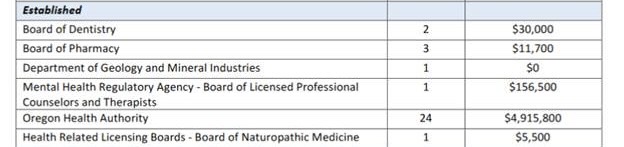
According to the Taxpayer Association of Oregon, Oregon lawmakers passed 185 fee increases (increasing existing fees and establishing new fees) in 2023 that will mean $47 million in higher costs.
Of those, 77 new or increased fees will directly impact the cost of medicine, hospitals and health care, which are all already straining the budgets of Oregonians. Another 47 fee increases will impact Oregon’s agriculture industry and consumers.
A list of 2024 fee increases by agency is below:
And then there are the new fees the 2023 Legislature created:
Portlanders and almost all Oregonians are also going to be paying a new cell phone tax this year. Starting January 1, 2024, a 988 Coordinated Crisis Services Tax will be added to the existing Oregon Emergency Communications (911) Tax. The new tax was implemented by the Oregon Legislature with the passage of House Bill 2757. The $50 million a biennium tax is slated to fund the state’s new 9-8-8 suicide prevention hotline.
DMV fees have gone up, too, touching just about everybody with a vehicle. For example:
Class C driver license or restricted Class C driver license, increased from $54 to $58
Commercial driver license, increased from $75 to $160
Instruction driver permit, increased from $23 to $30
Commercial learner driver permit, increased from $23 to $40
Hardship driver permit application, increased from $50 to $75
Fee for renewal of a commercial driver license, increased from $55 to $98
Fee for knowledge test for a motorcycle endorsement, increased from $5 to $7
Fee for a skills test for any commercial driver license, increased from $70 to $145
And the list of fee increases goes on, nickeling and diming Oregonians.
And of course legislators are busy thinking of new taxes.
For example, because the Oregon Department of Forestry wants more money to fight wildfires, Sen. Elizabeth Steiner, D-Portland, wants to charge every property owner in the state an annual fee to pay for what she perceives as a statewide issue.
And then, of course, there’s always inflation. It has been pushed down by aggressive Federal Reserve action, but in its long-term economic projections from December, the Federal Open Market Committee forecasted core Personal Consumption Expenditures Price Index inflation will drop from 3.2% in 2023 to 2.4% in 2024 and 2.2% in 2025.
But, still, hold on to your wallet. The state is considering tolls on I-205, I-5, U.S. 26 and Highway 217.
When educators from across the Portland Public Schools (PPS) district’s 81 schools began their strike on Nov. 1, they had a lengthy list of demands, with a focus on teacher salaries.
“As costs have risen here, teachers’ salaries haven’t kept up,” the National Education Association asserted in a news release supporting the PPS strike.
Data suggests, however, that Portland’s teachers were actually doing fairly well in comparison with other teachers across the country, though there is no question inflation has eroded their financial position. The same is true of Oregon teachers in general.
During the strike, PPS said the average salary for a Portland teacher was $87,000; the Portland Association of Teachers (PAT) union said it was about $83,000. Pay can vary widely depending on multiple factors, including amount of education, certifications, additional skills, and the number of years spent in the profession.
PAT also raised concerns about pay for new teachers, with the lowest annual base salary in the district for a teacher with a BA starting at $50,020.
When the strike began, PAT wanted a 23% cost-of-living adjustment over three years; PPS offered about 11%. In the new contract, educators will receive a 14.4% compounded increase over the next three years (6.25% the first year, 4.5% the second and 3% the third) and about half of all educators will also earn a 10.6% bump from yearly step increases.
To get a handle on how all this translates into actual dollars, I asked PPS and PAT for their numbers on the current average and median salaries of educators in the district and what they expect the average and median salaries of teachers will be in the first year of the new contract?
PAT never responded. PPS responded to an initial request with a commitment to provide the data. Repeated follow-ups, however, brought nothing but excuses for the delay. Eventually my entreaties just went into a black hole. So much for public accountability.
In 2018, The Oregonian reported that in 2016-17, the average Oregon teacher made nearly $61,900 a year, higher than the national average of $59,700. Oregon ranked 13th highest for average teacher pay among the 50 states. “Oregon teachers have long been better compensated than most of their peers around the country,” the paper reported.
In 2023, according to the National Education Association (NEA), the average Oregon teacher made $70,402 a year, higher than the national average of $66,745, and again Oregon ranked 13th highest for average teacher pay among the 50 states.
In other words, Oregon has actually been holding its own in average salaries, although the numbers for starting teacher pay are not as favorable for Oregon.
In 2023,the average salary for a starting teacher inOregonwith a bachelor’s degree and no experience was $40,374 (31st in the US, where the average was $42,844). Under the PPS contract with PAT, the salary for a starting teacher with a bachelor’s degree and no experience in 2023 was $50,020.
Averages, however, can be deceiving. Very high or very low salaries can skew the numbers. Median compensation represents a more accurate picture of how much Portland’s teachers are being paid, but neither PPS nor PAT agreed to provide median salary numbers.
The Oregon Center for Public Policy, a progressive economic research organization, argues that Oregon public school teachers are underpaid by about 22%. Even after accounting for the more generous benefits earned by public school teachers, the Center claims Oregon public school teachers are underpaid by about 9%.
But the analysis is not based on compensation for other teachers. Rather, the Center claims Oregon teachers are underpaid “relative to comparable private-sector workers (in Oregon)…with similar levels of education and experience”. The claim that public-school teachers endure a salary penalty with this comparison is dubious.
Less dubious was PAT’s assertion before the strike that recent inflation has eroded teachers’ wage gains over time.
In an annual report that ranked and analyzed teacher salaries by state, the NEA estimated that the national average teacher salary for the 2021-22 school year was $66,397 — a 1.7 percent increase from the previous year. But when adjusted for inflation, the average teacher salary actually decreased by an estimated 3.9 percent over the last decade.
In other words, teachers were making $2,179 less, on average, than they did 10 years earlier when the salaries are adjusted for inflation. A similar NEA report issued in 2023 concluded that teachers made on average $3,644 less than they did 10 years ago, adjusted for inflation.
However, comparing over a longer period, the average Oregon teacher’s salary in 1970 was $8,818. Inflation adjusted, that figure would have been $66,509.99 in 2022. In other words, although there has been a decrease in inflation-adjusted pay in recent years, average teacher salaries in Oregon have kept up with inflation over the long term.
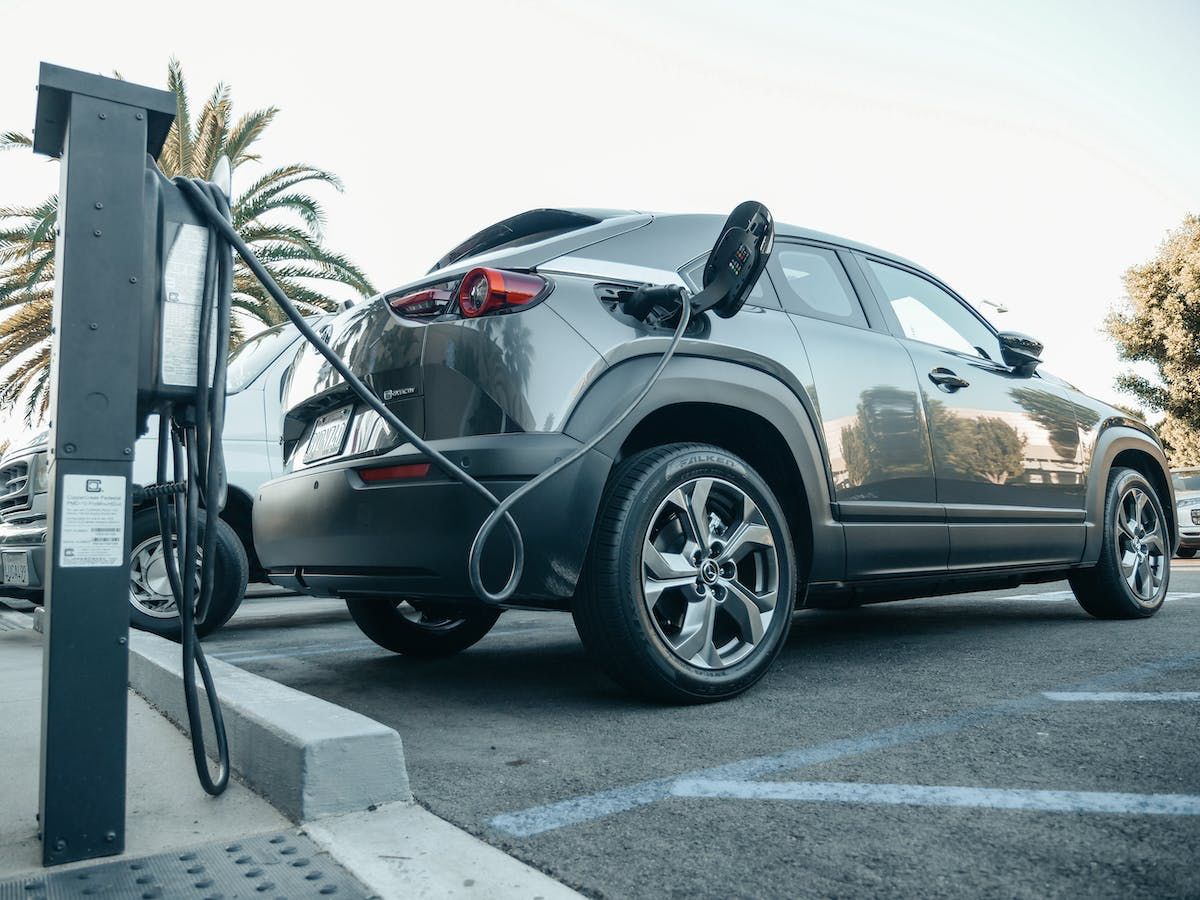
Oregon’s hyper-projections for electric vehicle adoption are proving to be wishful thinking.
On Nov. 6, 2017, Gov. Kate Brown signed Executive Order 17-21 stating “It is the policy of the State of Oregon to establish an aggressive timeline to achieve a statewide goal of 50,000 or more registered and operating electric vehicles by 2020.” (emphasis in original).
In 2019, Senate Bill 1044 restated the Zero Emission Vehicle (ZEV) adoption target as 50,000 registered on Oregon roads by 2020.
It didn’t happen.
According to information provided by the Oregon Department of Transportation on Dec. 25, 2023, there were just 5,537 registered and operating electric vehicles in Oregon in 2020, 13,572 in 2021 and 23,163 in 2022.
Senate Bill 1044 also set a target of 250,000 registered Zero Emission Vehicles on Oregon roads by 2025.
That ain’t gonna happen either.
As of July 2023, there were 51,355 Battery Electric Vehicles (BEVs), vehicles powered solely by an electric battery, with no gas engine parts, registered and operating in Oregon, according to the Oregon Department of Energy.[1] The number of Oregon-registered zero emission vehicles on Oregon roads as of September 2023 was just 70,000. The likelihood that this number will grow to 250,000 over the next 12 months is nil.
In December 2022, Gov. Brown, in a burst of environmental overreach that slavishly followed California’s lead, announced that all new cars sold in Oregon would have to be emissions-free starting in 2035.
The way things are going, that’s a pipe dream.
The fact is adoption of zero emission EVs is falling far behind earlier exuberant expectations. Sales are growing, but the rate of growth is slowing and unsold inventory is piling up for multiple brands., despite car companies offering discounts and low-interest rates in an attempt to propel demand. The only segment seeing significant growth in demand is hybrids, which are not zero emission vehicles.
“The first wave of buyers willing to pay a premium for a battery-powered car has already made the purchase, dealers and executives say, and automakers arenow dealing with a more hesitant group, just as a barrage of new EV models are expected to hit dealerships in the coming years,” according to the Wall Street Journal.
Some resistance to EVs may also be emerging because of their environmental costs, particularly the need for minerals for the batteries. And as The Washington Post has pointed out, mining the minerals is only the first step.
“The ore is almost never pure and needs to be refined, or processed, to become the minerals that go into batteries, the Post reported. ” When it comes to processing, there is one major player: China, which handles more than half of the mineralscritical to EV batteries. These elements aren’t used only to power EVs; they also appear in everything from building materials to toys. But as the demand for EV components soars, so could dependency on China’s refining infrastructure.”
Resistance to EVs in Oregon may also be related to the insufficiency of charging ports. Oregon is hoping to install about 370 new electric vehicle charging ports across the state in 2024 as part of an Oregon Department of Transportation rebate program.
In the meantime, car companies are cutting back on plans for battery plants and EV production.
In mid-December, for example, Ford announced it was cutting its 2024 F-150 Lightning products by half. Ford has delayed about $12 billion in new EV investments, reducing some Mustang Mach-E production and postponing opening one of two planned Kentucky planned battery plants.
The high cost of EVs is one major factor that will likely continue to hold back their widespread adoption in Oregon. EVs remain much more expensive than internal combustion engine vehicles, especially in North America. High interest rates will also restrain purchases. Consumer frustrations with the availability of EV chargers, excessive charging times, questions about reliability and high repair costs are also undermining early robust sales predictions.
While maintenance costs for EVs are proving to be lower than for internal combustion vehicles (EV-owners spend half as much maintaining their vehicles as their gasoline-owning counterparts, according to Consumer Reports), repairs after collisions can cost thousands of dollars because the fixes tend to require more replacement parts, the vehicles are more complicated and fewer people do such repairs.
The market is reflecting the concerns about EVs as investors have responded to the changed outlook for them. The iShares Self-Driving EV and Tech ETF | IDRV, set up in July 2019, seeks to track the investment results of an index composed of developed and emerging market companies that may benefit from growth and innovation in and around electric vehicles, battery technologies and autonomous driving technologies. A $10,000 investment at the fun’s inception would have more than doubled in value to $22,815 as of Nov. 2, 2021, but had declined to $14,432.58 as of Dec. 13, 2023.
So don’t bet the farm on EV predictions by politicians and bureaucrats. Their track record so far isn’t great.
[1] There were also 23,328 Plug-in Hybrid Electric Vehicles (PHEVs) similar to a Hybrid, but with a larger battery and electric motor, plus a charging port and a gas tank, which cannot truly be considered Zero Emission Vehicles.
Shana McConville Radford of the Confederated Tribes of the Umatilla Indian Reservation has joined Gov. Tina Kotek’s administration as Oregon’s first Tribal Affairs Director.
Shana McConville Radford
I have a job for her.
Tackle the embarrassingly poor academic achievement and embarrassingly high absenteeism rates of K-12 American Indian and Alaska Native students in Oregon.[1]
Some truth-telling is essential here. It is painfully clear that Oregon’s schools are failing these young people and that somebody needs a good kick in the shins to set things right.
We need to give kids, all kids, the tools they need to make their own way. Allowing academic failure is not the way to do that.
The numbers from tests given during the 2022-2023 school year tell the story. A predominant share of the American Indian/Alaska Native students taking the tests were American Indian.
All the academic achievement numbers come from reams of data posted online by the Oregon Department of Education showing downloadable files of state assessment results in English Language Arts (ELA), Mathematics, and Science. Absenteeism figures come from data posted online by the Oregon Department of Education in Annual Performance Progress Reports on Attendance and Absenteeism.
Some of the more egregious low proficiency scores were at districts that also have chronic student absenteeism, defined by the Oregon Department of Education as absent from school for more than 10% of the academic year.
The Department requires that there be no fewer than 265 consecutive calendar days between the first and last instructional day of each school year at each grade level, so missing 10% of school days would mean missing at least 26 days.
It’s a lot of numbers, but they are worth examining closely..
Subject
Student Group
Grade Level
Percent Proficient
English Language Arts
American Indian/Alaskan Native
All Grades
25.6
English Language Arts
American Indian/Alaskan Native
Grade 3
20.5
English Language Arts
American Indian/Alaskan Native
Grade 4
24.0
English Language Arts
American Indian/Alaskan Native
Grade 5
27.2
English Language Arts
American Indian/Alaskan Native
Grade 6
22.1
English Language Arts
American Indian/Alaskan Native
Grade 7
28.7
English Language Arts
American Indian/Alaskan Native
Grade 8
25.6
English Language Arts
American Indian/Alaskan Native
Grade HS (11)
31.1
Subject
Student Group
Grade Level
Percent Proficient
Mathematics
American Indian/Alaskan Native
All Grades
13.6
Mathematics
American Indian/Alaskan Native
Grade 3
22.2
Mathematics
American Indian/Alaskan Native
Grade 4
18.2
Mathematics
American Indian/Alaskan Native
Grade 5
14.7
Mathematics
American Indian/Alaskan Native
Grade 6
10.0
Mathematics
American Indian/Alaskan Native
Grade 7
13.7
Mathematics
American Indian/Alaskan Native
Grade 8
10.9
Mathematics
American Indian/Alaskan Native
Grade HS (11)
5.7
Subject
Student Group
Grade Level
Percent Proficient
Science
American Indian/Alaskan Native
All Grades
16.3
Science
American Indian/Alaskan Native
Grade 5
14.1
Science
American Indian/Alaskan Native
Grade 8
14.7
Science
American Indian/Alaskan Native
Grade HS (11)
20.8
A review of the performance of American Indian/Alaska Native students at individual districts is also revealing.
The details below show all Oregon school districts reporting enrollment of American Indian/Alaska Native students, in all grades, 2022-2023 and the % of students proficient of those tested.
Not all districts administered the Science test. Less than 5% means fewer than 5% of students who took the test achieved Level 3 or 4 / Meets or Exceeds. Absenteeism rates for American Indian/Alaska Native students in selected districts are also noted.
Athena-Weston SD 29RJ
English language arts. 40%
Mathematics. Less than 5%
Beaverton SD 48J
English language arts. 43.3%
Mathematics. 31.8%
Science. 21.2%
Bend-LaPine Administrative SD 1
English language arts. 33.3%
Mathematics. 31.3%
Science. 36.8%
Bethel SD 52
English language arts. 25.9%
Mathematics. 20.8%
Science. 9.1%
Brookings-Harbor SD 17C
English language arts. 20%
Mathematics. Less than 5%
Science. 27.3%
Cascade SD 5
English language arts. 42.9%
Mathematics. 21.4%
Science. 20%
Centennial SD 28J
English language arts. 17.4%
Mathematics. Less than 5%
Central Point SD 6
English language arts. 32.1%
Mathematics. 17.9%
Central SD 13J
English language arts. 31.3%
Mathematics. 5.9%
Coos Bay SD 9
English language arts. 20%
Mathematics. 8.9%
Science. 25%
Corvallis SD 509J
English language arts. Less than 5%
Mathematics. 8.3%
Creswell SD 40
English language arts. 30.8%
Mathematics. 21.4%
Crook County SD
English language arts. 26.3%
Mathematics. 16.7%
Dallas SD 2
English language arts. 29.5%
Mathematics. 14.8%
Science. 12.2%
David Douglas SD 40
English language arts. 16.1%
Mathematics. 10.0%
Science. 9.1%
Dufur SD 29
English language arts. 10.5%
Mathematics. Less than 5%
Eagle Point SD 9
English language arts. 47.4%
Mathematics. 31.6%
Science. 40%
Eugene SD 4J
English language arts. 37.8%
Mathematics. 31.6%
Science. 38.5%
Forest Grove SD 15
English language arts. 25.0%
Mathematics. 16.7%
Grants Pass SD 7
English language arts. 50%
Mathematics. 7.1%
Greater Albany Public SD 8J
English language arts. 26.7%
Mathematics. 21.4%
Science. 27.3%
Gresham-Barlow SD 10J
English language arts. 35.5%
Mathematics. 17.2%
Science. 28.6%
Harney County SD 3
English language arts. 13.3%
Mathematics. 6.7%
Hillsboro SD 1J
English language arts. 32.6%
Mathematics. 23.3%
Science. 13.6%
Hood River County SD
English language arts. 29.4%
Mathematics. 5.9%
Jefferson County SD 509J
English language arts. 17.5%
Mathematics. 6.4%.
Science. 8.4%
NOTE. 49.7% of American Indian/Alaska Native students in Jefferson County SD 509J were chronically absent in the 2022-23 school year.
Junction City SD 69
English language arts. 60%
Mathematics. 30%
Klamath County SD
English language arts. 27.1%
Mathematics. 14.6%
Science. 17%
NOTE: 38.5% of the American Indian/Alaska Native students in the Klamath County SD were chronically absent in the 2022-23 school year..
Klamath Falls City Schools
English language arts. 20.8% proficient
Mathematics. 11.3%
Science. 9.1%
NOTE: 69.5% of American Indian/Alaska Native students in the Klamath Falls City Schools district were chronically absent in the 2022-23 school year.
Lincoln County SD
English language arts. 16.5%
Mathematics. 5.9%
Science. 9.3%.
NOTE: 57.9% of the American Indian/Alaska Native students in the Lincoln County SD were chronically absent in the 2022-23 school year.
McMinnville SD 40
English language arts. 45.9%
Mathematics. 40%
Science. 47.1%
Medford SD 549C
English language arts. 51.3%
Mathematics. 21.1%
Science. 29.4%
Molalla River SD 35
English language arts. 16.7%
Mathematics. 15.4%
Myrtle Point SD 41
English language arts. 30%
Mathematics. 10%
Newberg SD 29J
English language arts. Less than 5%
Mathematics. Less than 5%
North Bend SD 13
English language arts. 32%
Mathematics. 36%
Science. 33.3%
North Clackamas SD 12
English language arts. 20%
Mathematics. 17.6%
Science. 10%
North Wasco County SD 21
English language arts. 26.1%
Mathematics. 8.7%
Science. 9.1%
Oregon Trail SD 46
English language arts. 42.9%
Mathematics. 28.6%
Pendleton SD 16
English language arts. 27.8%
Mathematics. 9.1%
Science. 14%
NOTE: 51.3% of the American Indian/Alaska Native students in the Pendleton SD 16 district were chronically absent. in the 2022-23 school year.
Phoenix-Talent SD 4
English language arts. 9.1%
Mathematics. Less than 5%
Portland SD 1J
English language arts. 17.2%
Mathematics. 11.6%
Science. 15.2%
NOTE: 66.1% of the American Indian/Alaska Native students in the Portland SD 1J district were chronically absent in the 2022-23 school year.
Redmond SD 2J
English language arts. 40.0%
Mathematics. 26.7%
Reynolds SD 7
English language arts. 23.3%
Mathematics. 13.3%
Science. Less than 5%
Salem-Keizer SD 24J
English language arts. 21.8%
Mathematics. 8.5%.
Science. 18.3%
NOTE: 58.2% of the American Indian/Alaska Native students in Salem-Keizer SD 24J district were chronically absent in the 2022-23 school year.
Santiam Canyon SD 129J
English language arts. 20%
Mathematics. 20%
Sheridan SD 48J
English language arts. 12.9%
Mathematics. 6.7%
Science. Less than 5%
South Lane SD 45J3
English language arts. 12.5%
Mathematics. 12.5%
South Umpqua SD 19
English language arts. 20%
Mathematics. 10%
Springfield SD 19
English language arts. 31.4%
Mathematics. 13.9%
Science. 29.4%
St Helens SD 502
English language arts. 18.8%
Mathematics. 6.7%
Sutherlin SD 130
English language arts. 13.3%
Mathematics. 13.3%
Three Rivers/Josephine County SD
English language arts. 27.9%
Mathematics. 11.6%
Science. 5.3%t
Tigard-Tualatin SD 23J
English language arts. 33.3%
Mathematics. 33.3%
Umatilla SD 6R
English language arts. 20%
Mathematics. 10%
Willamina SD 30J
English language arts. 25.4%
Mathematics. 8.7%
Science. Less than 5%
Winston-Dillard SD 116
English language arts. 23.1%
Mathematics. 16.7%
[1] American Indian/Alaskan Native– As defined by the Oregon Department of Education, includes all students identified as having origins in any of the original peoples of North America and not Hispanic.










 ThinkingOregon