Post-Election: More of the Same

“Much of the mainstream, legacy media continues its self-disgrace. Having failed to kill Donald Trump ’s candidacy they will now aim at his transition. Soon they will try to kill his presidency.

Columnist Peggy Noonan, Nov. 19, 2016

not-my-president-anti-trump-protesters-900

New York Times Headlines from just one day, November 19, 2016

Trump Selects Loyalists on Right Flank: Strident Team of Like Minds

Donald Trump’s Disturbing Picks

Michael Flynn (Trump’s pick for National Security Adviser), Too Hotheaded for a Sensitive Position

As Trump Rises, So Do Some Hands Waving Confederate Flags

Amid Divisions, a March Seeks to Unite Women

Diplomats Shift Focus to a New Threat Facing Paris Pact: Trump

 Disoriented ‘Never Trump’ Stalwarts Try to Focus on Policy, Not the Man

 Muslim Americans Speak of Escalating Worry

650 Harvard Business School Women Assail Bannon (Trump’s pick for chief strategist)

 Conflicts and Nepotism Under Trump?

(Trump) The Man Who Would be King

Oh, No! Trump’s Calling

Daughter (of Trump)’s Presence at Meeting Poses Questions

An Anti-Muslim Proposal

As the The Nieman Lab, a respected media analysis organization, wrote recently:
 
“…will the increased clarity about the divides in this country encourage a more targeted product for affluent, coastal, progressive audiences? And will reporters and editors at these outlets — who, it is fair to assume, did not vote for Trump in large numbers — begin to see themselves as more explicitly oppositional?” 
Based on the New York Times, the answer is yes.


The City Club of Portland: Still in its Blue Bubble

trump-family-election-night-mem-161111_12x5_1600

Hundreds gathered at a City Club of Portland Friday Forum on Friday, Nov. 11 to commiserate on the results of the Nov. 8 election.

“Elections 2016: What Just Happened?” was the topic. After an hour of dialogue, it was clear that what didn’t happen in Portland was a new understanding of why vast areas of middle America and rural areas of Oregon rejected liberal dogma and the Democratic Party.

Instead, the discussion swarmed with complaints of racism, misogeny, Islamaphobia and xenophobia by Donald Trump and his supporters.

The panel moderator was Sarah Mirk, online editor of ‪@BitchMedia and host of feminist podcast, Popaganda Backtalk. Her perspective was revealed the night of the election when she tweeted, “Should have brought anti-nausea meds to watch the election results.

The panel included: Jesse Beason, Director of Color PAC; Amy Herzfeld-Copple, co-executive director of Basic Rights Oregon, and; Julie Rabadi, chair of Young Republicans of Oregon.

“So many of us are still reeling today in shock and despair,” Mirk observed in her opening remarks. “No question this election has left us scared, stunned and angry,” Herzfeld-Copple added. “Many of us are grieving.”

Studies showed that Trump supporters were “much higher on the racial resentment score,” Beason said. This was “the first election I can remember where someone running on a racist and misogynist platform wins. Either voters themselves have racist proclivities, or it just didn’t matter enough that their presidential nominee did, for them not to vote for him.”

“…the ugliness and targeting of marginal communities” won’t stop until Americans “who perceive themselves as losing power get to less than a majority,” opined Herzfeld-Copple.

What the panel didn’t talk about

What the panel didn’t talk about was this map of the U.S., showing how the Republicans swept most of middle America and then some:

2016nationalelectionmap

or this map showing Hillary Clinton’s loss of most of rural Oregon, including Lake County, where Donald Trump captured 79 percent of the votes for president:

finaloregonelectionmap

or the clear evidence that economically anxious blue collar voters, particularly whites, feel they’ve been forgotten, that America’s middle class is under seige, that many Americans were deeply offended by Hillary Clinton calling many of Trump’s supporters “deplorables” and “irredeemable.”

The Friday Forum panel didn’t talk about the fact that, in contrast to much of middle America, they and their City Club audience were largely higher income, educated, upwardly mobile professionals

What wasn’t discussed was that the Forum participants were largely liberal Oregonians living in a blue bubble. As Michael Moore said, “Unfortunately, you are living in a bubble that comes with an adjoining echo chamber…” and don’t understand the anger of Americans at “… all who wrecked their American Dream.”

What the Friday Forum, taking place in a liberal “Sanctuary City”, didn’t talk about was how much of America is struggling to deal with massive immigration, both legal and illegal, and changes to American culture. Beason even said, “…illegal immigration is actually not a significant issue here in America.”

Finally, what they didn’t talk enough about was the need to listen to and try to understand people not like themselves. “No one wants to hear an opposing viewpoint.,” said Young Republicans Chair Julie Rabadi. “No one wants to consider it, to understand why somebody else thinks a different way.”

Not a good sign.


A “Throw the Bums Out” Election? Not exactly.

2016election

Despite all the current cultural and political turmoil, a lot less has changed with the election than you might think.

Nationally, after Tuesday’s election, despite Trump’s surprising win, Congressional delegations in most states in January will look pretty much almost exactly like they do now.

Similarly, in Oregon, despite the crushing defeat of Measure 97, backed by unions and Democrats, and Republican Dennis Richardson’s success in the Secretary of State race, the make-up of the next state Legislature will hardly change.

At the national level, races were competitive on Tuesday in only 40 of the 435 seats in the House, according to the non-partisan Cook Political Report. Many seats were so safe for one party or the other that there was only one candidate.

Some of that may be due to skillful gerrymandering of congressional districts, but it may also be due to the increasing tendency of people of a like mind congregating in the same geographies, the birds of a feather flock together trend.

Americans may say they prefer living in diverse communities, but the Pew Research Center says people don’t practice what they preach.

“Americans are increasingly sorted into think-alike communities that reflect not only their politics but their demographics,” Pew said in a January 2016 report.

That’s certainly true of Oregon.

The Republican Legislative Campaign Committee (RLCC), a state-oriented national organization that seeks to elect Republicans to state legislatures, identified the Oregon State Senate and House of Representatives as targets in the 2016 elections. You’d never know it.

Senate

A total of 16 seats out of the 30 in the State Senate were up for election in 2016. Of the 16 seats, Democrats fielded unopposed candidates in five and Republicans fielded unopposed candidates in two. In other words, voters really had no choice in almost half the seats.

Meanwhile, 4 incumbents—one Republican and three Democrats—didn’t run for re-election. Only one of those seats had competition between a Democrat and a Republican in the general election.

That meant there were only 9 Senate seats where there was competition between Republican and Democratic candidates. Incumbents won seven of those races. The other 2 seats were open races. In one case, Republican Senator Doug Whitsett decided unexpectedly to leave politics. In the other case, Democrat Senator Alan Bates died.

According to Ballotpedia, incumbents almost always win re-election in state legislative elections. Since 1972, except for one year, the win rate for incumbents hasn’t gone below 90 percent.

House

 All 60 seats in the Oregon House were up for election in 2016. Democrats fielded candidates unopposed by Republicans in one district and Republicans fielded candidates unopposed by Democrats in five districts. So voters really had no Republican vs. Democrat choice in 20 percent of the seats.

That meant only 24 House races involved competition between Republican and Democratic candidates. Incumbents who ran won every single one of their races. In the seven districts where no incumbent ran, the winner was from the same party in every case. No revolution there.

———

What does all this mean? In Oregon, there will be some new faces, but the ideological split will likely remain pretty much unchanged. Maybe that the more things change, the more they stay the same.

Democrats will still control both chambers of the Oregon Legislature. However, they lost their chance to pick up an extra seat in the House to secure the three-fifths majority necessary to potentially pass bills to raise taxes without Republican support.

With the defeat of Measure 97, that hobbles the Democrats’ ability to go it alone on taxation alternatives.

As Martha Stewart would say, that’s a good thing.


Brad Avakian and his party are worried

With polls showing Republican Dennis Richardson leading Democrat Brad Avakian in the Oregon Secretary of State race, it looks like Avakian’s supporters are worried.

avakianfrown

Why isn’t this man smiling?

Just in the first three days of this month they pumped $398,915 into his campaign, according to state filings.

Although union members account for just 14.8 percent of wage and salary workers in Oregon, they play a big role in Avakian’s campaign. Union donations in the first three days of November included:

  • The NEA Fund for Children and Public Education – $50,000
  • AFSCME – $30,000
  • Local 48 Electricians PAC (4572) – $15,000
  • American Federation of Teachers-Oregon Candidate PAC (113) – $10,000
  • Ironworkers Political Action League Muti Candidate Committee – $5,000
  • Our Oregon – $5,000
  • Oregon AFSCME Council 75 – $4,000

Some donors to other Democratic candidates may be surprised to learn that another significant source of recent donations to Avakian is the campaign committees of fellow Democratic candidates. In a move that should be prohibited, those committees simply took contributions to them and, in effect, passed them on to Avakian.

These donors include:

  • Friends of Tobias Read – $5,000
  • Sara Gelser for State Senate (4680) – $1,000
  • Blumenauer for Congress – $2,000
  • Friends of Mark Hass (11487) – $1,000
  • Rosenbaum for Senate (Diane) (1430) – $1,000
  • Friends of Lee Beyer (14049) – $5,000
  • Friends of Tina Kotek (4792) – $5,000
  • Reardon for Oregon (15621) – $3,000
  • Kurt Schrader for Congress – $5,000
  • Elect Ellen Rosenblum for Attorney General (15406) – $5,000
  • Friends of Jeff Barker (4270) – $2,000
  • Friends of Jennifer Williamson (15145) – $2,500

Other large contributors to Avakian’s campaign in early November included the Cow Creek Band of Umpqua Tribe of Indians ($10,000) , the Oregon Health Care Association PAC (275), $5,000) , Cain Petroleum ($5,000) and James D. Fuiten, President of Metro West Ambulance ($5,000).

These recent contributions brought Avakian’s campaign committee total to $2,216,482.79 as of Nov. 3, 2016, substantially more than the $1,490,837.52 raised by Richardson, as of Nov. 4.

We’ll see whether all this loot can pull Avakian ahead.


Is Brad Avakian running for Secretary of State or Director or Public Health?

doctor-image__opt

One of Brad Avakian’s more ubiquitous TV ads emphasizes how he will “ensure a woman can make personal medical decisions about her pregnancy.”

And Planned Parenthood says reproductive health care in Oregon depends on voting for Brad Avakian. “Your reproductive health care is on the Oregon ballot,” says an article by Mary Nolan, executive director for Planned Parenthood PAC of Oregon, on Blue Oregon, a progressive online news and commentary site. Nolan quotes Avakian saying, “As a civil rights attorney, legislator and now Labor Commissioner, I know access to safe and affordable abortion service is a fundamental civil right.”

Planned Parenthood PAC has also made a $7500 contribution to Avakian’s campaign. If I were a contributor to Planned Parenthood, I’d ask for my money back.

 After all, where is protecting reproductive health care listed among the duties of Oregon’s Secretary of State?

Numerous studies have shown that large numbers of voters don’t know which officials are responsible for which issues, a circumstance that makes it hard to hold them accountable for their performance.

All that cluelessness could work to Avakian’s advantage.  In a classic example of misdirection, instead of emphasizing his fit for the Secretary of State job, he’s running as a champion of liberal causes.

Don’t fall for it.

The Clackamas County Commission Chair position is nonpartisan, right?

bernardludlow

Jim Bernard (R) is challenging John Ludlow (L)

The Clackamas County Commission Chair position is nonpartisan, right? Don’t believe it.

The race between Jim Bernard and John Ludlow for Chair of the Clackamas County Board of Commissioners make the partisanship clear.

Start with a look at Bernard’s endorsers in the Oregon Voters Pamphlet:

  • Congressman Kurt Schrader     (Democrat)
  • Representative Brent Barton     (Democrat)
  • Representative Shemia Fagan  (Democrat)
  • Representative Carolyn Tomei (Democrat)
  • Milwaukie Mayor Mark Gamba (Democrat)
  • Milwaukie UFCW Local 555
  • Oregon League of Conservation Voters (A wholly owned subsidiary of the Democratic Party)


Now, let’s look at Bernard’s principal campaign contributors in 2016:

  • United Food and Commercial Workers local 555                            $23,841.46
  • Clackamas County Democratic Central Committee (293)           $12,473.90
  • Blumenauer for Congress                                                                       $ 8,877.79
  • Joint Council of Teamsters No. 37 Political Fund (80)                   $ 7,000.00
  • Oregon AFSCME Council 75                                                                    $ 5,000.00
  • Local 48 Electricians PAC (4572)                                                           $ 4,500.00
  • Pacific Northwest Regional Council of Carpenters                         $ 2,650.00
  • AFSCME Local 350 Political Fund                                                          $ 1,500.00
  • Plumbers & Steamfitters PAC (221)                                                      $ 1,500.00
  • Willamette Women Democrats PAC (5534)                                        $ 1,250.00
  • Oregon Laborers Political Action Committee (16480)                    $ 1,000.00
  • Oregon League of Conservation Voters (2352)                                  $ 1,000.00
  • NW Regional Council NCA 91                                                                  $ 1,000.00
  • IUPAT Intl Union of Painters and Allied Trades                                $ 1,000.00
  • Amalgamated Transit Union 757 Political Fund (3094)                  $    800.00
  • Professional Firefighters PAC #3219 (3219)                                        $    750.00
  • Oregon Truck PAC                                                                                        $    500.00
  • Oregon Trail Democrats (10087)                                                             $    300.00

According to records filed with the Oregon Secretary of State, Bernard’s campaign for Clackamas County Chair has raised $176,532.81 in 2016. This includes $18,080.35 in loans and $18,480.35 of in-kind contributions (Total: $36,560.70) to the campaign from Bernard’s Garage Inc.

Subtracting the personal loans and Bernard’s Garage in-kind contributions, Bernard’s campaign has raised $139,972.11. Of that, $74,943.15 has come just from state and federal Democratic party organizations, Democratic office holders and unions.

In other words, at least 54 percent of the contributions to Bernard’s campaign have come from state and federal Democratic party organizations, Democratic office holders and unions.

Still think the Commission Chair race is nonpartisan?

 P.S. – I sent a copy of this story to Clackamas County Clerk Sherry Hall. She responded “Yes”. Maybe all she read was the headline.


Here comes Hillary…and Elizabeth Warren

Yes, I know, the election isn’t even over, but stop for a moment and think what it’s going to be like after Hillary Clinton’s ascendancy.

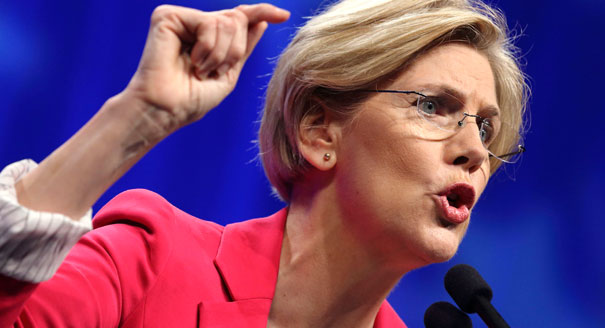
For one thing, are you ready for Senator Elizabeth Warren (D-MA) and her anti-business agenda?
elizabethwarrendma

Senator Elizabeth Warren (D-MA)

Warren, a fierce slash-and-burn progressive, is already flexing her muscles, getting ready for Hillary’s administration.

Her first demand? That President Obama dismiss Securities and Exchange Commission (SEC) Chairman Mary Jo White.

Warren claims she wants White out because she won’t devise and enforce an SEC rule that would force companies to disclose their political donations. But White will likely leave the SEC anyway when the next president assumes office. Warren’s real objective is to make sure she has a voice in selection of the next chairman in a Clinton Administration and that the new chairman advances Warren’s full left-wing agenda.

The effort to force disclosure of corporate political contributions has been underway for some time, with limited success.

In October 2013, White declined to pursue a rule, saying said disclosure rules pushed by outside groups “seem more directed at exerting societal pressure on companies to change behavior, rather than to disclose financial information that primarily informs investment decisions.”

In May 2015, the nonprofit Campaign for Accountability filed a lawsuit seeking to force the U.S. Securities and Exchange Commission to adopt a rule requiring publicly traded companies to disclose political contributions.

In August 2015, 44 senators (42 Democrats, including Warren, plus independents Bernie Sanders and Angus King) signed a letter to White urging her to require that public companies disclose their spending on political campaigns, but White has not complied and in Jan. 2016, U.S. District Judge Rosemary Collyer in Washington, D.C. dismissed the Campaign for Accountability’s lawsuit.

That has left disclosure advocates with only the options of pressuring individual companies to take action or submitting shareholder proposals on the issue.

The vast majority of shareholder proposals have failed to garner sufficient support. But the effort to put pressure on companies is robust, led by the Center for Political Accountability (CPA). The CPA issues an annual report, the CPA-Zicklin Index, that claims to benchmark the political disclosure and accountability policies and practices of leading U.S. public companies. The Index’s list of companies is based on the S&P 500.

In its Sept. 2016 report, the CPA said 153 companies engaged by CPA and/or its investor partners have adopted political disclosure and accountability policies using the Center’s proposed model. Overall, the report said, 305 companies have adopted some level of political disclosure and accountability.

CPA hopes its steady pressure, combined with some public wins, will force companies into compliance. “As the number of companies adopting disclosure and accountability policies grows, companies do not want to be seen as outliers,” says CPA Director Bruce Freed.

Critics of the CPA assert that the disclosure push is driven more by a desire to inhibit business participation in the political process, to mute the business community’s voice in political and public policy debates, than to increase transparency.

“The strategy of pressuring companies to voluntarily disclose the details of their spending on public policy engagement for the purpose of reducing that engagement is, in fact, their ultimate goal,” U.S. Chamber of Commerce President and CEO Tom Donohue, Business Roundtable President John Engler and National Association of Manufacturers President and CEO Jay Timmons said in an Oct. 2015 letter to business leaders across the country.

Critics of the disclosure push also say the criteria by which companies are judged in the CPA-Zicklin Index are often arbitrary and vague and incorporate moving targets year-to-year.

In a classic case of do as I say, not as I do, the CPA does not disclose the identities of its own contributors. The sections of Annual CPA reports to the I.R.S. where contributor’s names can be listed are blank and a request to CPA Director Bruce Freed for such information went unanswered.

An SEC disclosure rule will be just one of Warren’s objectives in a Clinton Administration, many of which will differ from Clinton’s agenda. As The Nation, a long-time progressive magazine, put it, “The inalterable really is that (Warren’s) agenda is fundamentally different from the agenda Clinton will want too pursue.”

Clinton will likely try to squirm out of some of the more rigid progressive demands, but Warren won’t give up.

As Warren told a New Populism conference:

“The game is rigged. The rich and the powerful have lobbyists, lobbyists and lawyers and plenty of friends in Congress. Everyone else, not so much. Now we can whine about it. We can whimper. Or we can fight back.

Me? I’m fighting back.”


Economists endorsing Measure 97: not as good as it looks

dilbert-economist-3

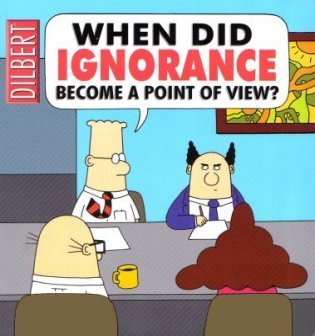
Yes on 97 aggressively trumpets that Measure 97 enjoys widespread support among economists.

To learn the reason for such support, I queried some of the economists identified as Measure 97 endorsers.

“Higher taxes on corporations are exactly what’s needed to spur equitable growth,” said Dr. Susan Feiner, professor of economics at the University of Southern Maine.

“No one likes paying taxes, but the State of Oregon needs revenue, and Measure 97 is a reasonable way to raise it,” said Anders Fremstad, Asst. Professor of Economics at Colorado State University.

 “…I spent my career at Portland State, where two decades of relentless cuts have resulted in declining quality in what we offer students…,” said Mary King, Professor Emerita, Economics Dept., Portland State University. “I have been thinking for years about how we could turn around our state, and invest in education the way that other states do.
After carefully reading all of the analyses of the measure, meeting with the authors of the studies to talk with them, and then with other economists, I am in complete support of Measure 97.”

“It is high time to address the widening income inequalities right across countries and the world at large,” said Muttukrishna Sarvananthan, Development Economist & Principal Researcher at the Point Pedro Institute of Development in Sri Lanka. “Tax policy is one tool that could help narrow the widening income gap across communities and countries; raising taxes on corporations is one such policy tool.”

All in all, Yes on 97 lists 89 economists as endorsers of Measure 97. The list includes economists affiliated with schools such as Rutgers University, University of California-Berkeley, Northeastern University, Howard University, Bowdoin College, the University of South Australia and Anadolu University in Turkey.

No question it’s a long list, but a couple things stand out.

One is that just 18 of the 89 economists cited as supporters of Measure 97 are from Oregon*.

For a tax measure that its backers say is widely supported, the limited number of economist endorsers from Oregon challenges that assertion.

Another thing that stands out is the clear, and disturbing, anti-capitalism bent of some of the economists.

One endorser, Michael Meeropol, Professor Emeritus of Economics at Western New England University, is the younger son of Ethel and Julius Rosenberg, who were convicted and executed on Jun 19, 1953 for passing secrets of the atomic bomb to the Soviet Union. Meeropol calls himself a “New Leftist” and is calling for “…a fundamental restructuring of neoliberal, globalized capitalism.”

“Whether you hold your nose and vote for Clinton and Kaine, decide to vote for Green Party Candidate Jill Stein, or sit out the election entirely, don’t accept that you are voting for a “progressive” unless you are voting for someone whose program at least seeks to restructure, if not destroy, today’s rapacious capitalism,” Meeropol says in his blog.

Another endorser, Yan Liang, Associate Professor of Economics at Willamette University, is an active member of The Union for Radical Political Economics, which says its mission “…involves a continuing critique of both the capitalist system, and of all forms of exploitation and oppression” with a goal of constructing a “radical alternative to capitalism.”

Endorser Robert Pollin is Co-Director of the Political Economy Research Institute at University of Massachusetts-Amherst. The economics department of the university is known for its Marxist traditions and radical economics. Pollin is also a member of the Union of Radical Political Economics, which represents the nation’s Marxist economists.

Then there’s endorser Martin Hart-Landsberg, Professor Emeritus of Economics at Lewis & Clark College in Portland. “…it is capitalism (as a dynamic and exploitative system)…that must be challenged and overcome,” Hart-Landsberg wrote in Neoliberalism: Myths and Reality.

Maybe Yes on 97’s list of economists isn’t such a blessing to the campaign.


*Economists from Oregon supporting Measure 97

  1. Cliff Bekar, Professor and Chair of Economics at Lewis & Clark College
  2. Marty Hart-Landsberg, Professor Emeritus of Economics at Lewis and Clark College; Member of Workers’ Rights Board, Portland Jobs with Justice
  3. Justin Elardo, Instructor of Economics at Portland Community College
  4. David Ervin, Professor Emeritus of Environmental Management and Economics at Portland State University
  5. John Gallup, Assoc. Professor of Economics at Portland State University
  6. Mary King, Professor of Economics at Portland State University
  7. James Woods, Assist. Professor of Economics at Portland State University
  8. John Hall, Professor of Economics at Portland State University
  9. Jerry Gray, Professor of Economics at Willamette University
  10. Yan Liang, Assoc. Professor of Economics at Willamette University
  11. Cathleen Whiting, Assoc. Professor of Economics at Willamette  University
  12. Tabitha Knight, Assist. Professor of Economics at Willamette University
  13. Margaret Hallock, Professor Emerita of Economics at University of Oregon
  14. Gordon Lafer, Professor and Political Economist at University of Oregon
  15. Hassan Pirasteh, Professor Emeritus of Economics at Southern Oregon University
  16. Linda Wilcox Young, Professor of Economics at Southern Oregon University
  17. Kevin Furey, Instructor of Economics at Chemeketa Community College
  18. Denise Hare, Professor of Economics at Reed College


Why Brad Avakian could win (sadly)

avakian750xx6016-3384-0-316

“Got ya fooled, don’t I?”

A local pollster told me awhile ago that about 50 percent of eligible voters in Oregon don’t know that the state has two U.S. senators (maybe because there’s only one senate race at a time).

KGW-TV reporter Pat Dooris recently held up two signs, one with the name Brad Avakian and the other with the name Dennis Richardson, and asked passersby in downtown Portland if they knew who the people were. All the answers? Nope. Nope. Nope.

I mention these situations because they demonstrate that a lot of voters are, in fact, a basket of deplorables in terms of political knowledge.

ignorance

Political knowledge levels have been poor for decades, despite increased education and the availability of information on the Internet.

A recent Fairleigh Dickinson University survey studied the “clueless factor” among voters. The survey found that only 34% of Americans can name the three branches of government, and 30% can’t even name one.

Other studies routinely find that large numbers of voters don’t know which officials are responsible for which issues, a circumstance that makes it hard to hold them accountable for their performance.

All that cluelessness bodes well for Brad Avakian.

Avakian is running for Oregon Secretary of State, but you’d never know it from his campaign. In a classic example of misdirection, instead of emphasizing his fit for the Secretary of State job, he’s running as a champion of liberal causes.

Look at one of his ubiquitous TV ads.

The ad notes that Avakian is endorsed by the Oregon League of Conservation Voters, the NARAL Pro Choice Oregon PAC, Planned Parenthood PAC of Oregon, Sierra Club Oregon Chapter, Oregon Education Association, and the Working Families Party.

Meanwhile, speakers in the ad emphasize how Avakian will protect the environment, break down the walls of discrimination, ensure a woman can make personal medical decisions about her pregnancy, and fight for regular people and not corporate special interests.

These topics have little to do with the job of the Oregon Secretary of State, but they do tug at the heartstrings of liberal voters. And that may well be what attracts enough voters to Avakian to make him the winner (and us the losers).

Measure 97 is just a Trojan horse for bigger government

biggovernment

The cat’s out of the bag.

Now we know what the Democrats and their union allies want with Measure 97.

It’s not the measure as written, with its deceptive promises of more money for education, healthcare and senior services. It’s $6 billion more out of taxpayer’s pockets each biennium that the Democrats can use to grow government, cover their disastrous PERS decisions over the years, reward their friends and punish their enemies.

Rep. Mitch Greenlick (D-Portland), when endorsing the measure in late 2015, said it would eliminate much of the constant need to choose between funding critical budget concerns each legislative session. “If that passes, we’ll have a lot of money to pay for stuff,” Greenlick said.

Stuff, indeed.

Oregonians who support Measure 97 because they believe Democrats’ claims that the revenue would be committed to education, healthcare and senior services are going to be mighty disillusioned if the Measure passes because, the fact is, the Legislature will be able to do just about anything it pleases with the resulting revenue.

On Aug. 1, 2016, the nonpartisan Office of the Legislative Counsel confirmed this when it released an opinion. “Section 3 would not bind a future legislature in its spending decisions,” wrote Chief Legislative Counsel Dexter Johnson in the opinion. “If Measure 97 becomes law, the Legislative Assembly may appropriate revenues generated by the measure in any way it chooses.”

It turns out that the Democrat-controlled Legislature could even change how the revenue is raised. Some people probably support Measure 97 now because they want to “put it to big business.” But there’s nothing to stop the Democrat-controlled Legislature from changing the entire tax formula, so long as it doesn’t result in more tax revenue, according to the Oct. 18 Portland Tribune. Only a simple majority of the Legislature would be required to approve changes in the formula, or anything else.

Sen. Mark Haas, D-Beaverton, Chairman of the Senate Finance and Revenue Committee, told the Tribune the Legislature can expect “a cavalcade of 10,000 lobbyists from every industry with valid stories about why their rates should be lower.”

And every one of those lobbyists will be expected to back up their pleas with campaign contributions, further exacerbating the already excessive role of money in Oregon politics.

A senior Democratic Legislator once defended Measure 97 as the best solution because there was no other option. Clearly, even the Democrats now believe that’s not the case.