DACA Lawsuit is dead in the water

DACA PROTEST

“If you have the facts on your side, pound the facts,” goes an old legal aphorism. “ If you have the law on your side, pound the law. If you have neither on your side, pound the table.”

Sixteen state attorneys general, all Democrats, have decided to pound the table to stop President Trump from rolling back Obama’s Deferred Action for Childhood Arrivals (DACA) program.

Their lawsuit in federal court in the Eastern District of New York asserts:

“Rescinding DACA will cause harm to hundreds of thousands of the States’ residents, injure State-run colleges and universities, upset the States’ workplaces, damage the States’ economies, hurt State-based companies, and disrupt the States’ statutory and regulatory interests.”

In other words, people who come into the United States illegally shouldn’t be subject to deportation because they generate economic activity. Drug dealers generate economic activity, too, but I don’t see attorneys general arguing they should, therefore, be able to do their business without restraint. Millions of people from other countries who are overstaying their visas in the United States generate economic activity, but that doesn’t exempt them from the law if they are caught.

Trump has the law on his side because DACA is likely unconstitutional as an overreach of executive authority. Meanwhile, most of the media,  instead of recognizing the illegality of Obama’s action and the need for comprehensive constitutional immigration reform, concentrates on touching stories that suggest supporters of Trump’s decision lack concern for the 800,000 children of illegal immigrants covered by DACA.

Not that any of this matters, of course. Trump, who blasted out his administration’s intention to rescind DACA if Congress doesn’t come up with a legislative alternative within six months, undermined his stern threats when he subsequently tweeted:

“Congress now has 6 months to legalize DACA (something the Obama Administration was unable to do). If they can’t, I will revisit this issue! — Donald J. Trump”

@realDonaldTrump, September 6, 2017

So much for Trump’s hard-nosed commitment to principle. And so much for any chance the Democrats will be willing to compromise.

The Attorneys General Letter to Trump: The Rest of the Story

trumpcharlottesville

After the violent demonstrations in Charlottesville and Trump’s controversial response, the media reported eagerly on a letter signed by 67 former state attorneys general and top government lawyers reminding the country of the need to respond vigorously to hate.

“There are times in the life of a nation, or a president, or a state attorney general, when one is called upon to respond directly to the voice of hate,” they wrote in a letter released on Monday, Aug. 21.

The letter cited how, in 1976, Bill Baxley, Alabama’s Attorney General, responded to a threatening letter from a Ku Klux Klan leader. “…all who seek to equivocate in times of moral crisis” should look to the 1976 response of Alabama’s attorney general at the time to the Ku Klux Klan: “[K]iss my ass.”

Though it didn’t mention him by name, the letter was clearly intended as a condemnation of President Trump.

The media jumped on the story.

“Dozens of former attorneys general urge Trump to tell KKK ‘kiss my ass’,” said The Hill.

“Former Attorneys General Urge Trump To Condemn Hate With ‘Moral Clarity’,” wrote HuffPost.

“More than 60 former attorneys general from U.S. states and territories released a letMonday seeking to provide clarity on how to respond to acts of hate,” declared the Washington Post.

“Citing former Alabama AG, officials urge Trump to tell KKK to ‘kiss my….” blasted AL.com, an Alabama news site. “The signatories represent both major parties and 36 of the 50 states, as well as the District of Columbia, Guam and Puerto Rico,” The New York Times reported.

From the headlines and stories in media across the board, most people likely concluded the letter was truly bipartisan.

Not so fast.

I didn’t see any media outlet note that of the 67 signatories to the letter, all but 12 were Democrats, many of whom left office decades ago. It took me very little time to ascertain this from available records, so obviously the major media weren’t prevented from doing the same.

The letter was essentially a political hatchet job. This isn’t to excuse trump for his offensive comments, but to say that too many journalists hide behind a facade of objectivity. In this case, for all their claims of fairness and balance, the media owe us better.

The Washington Post highlighted that the signers included “several former officials who went on to even more political prominence,” but it cited only former U.S. senator Joe Lieberman, former Secretary of the Interior Bruce Babbitt and former Michigan Gov. Jennifer Granholm. It didn’t note that all three were Democrats.

Media coverage also didn’t note the sullied reputations of some of the Democrat signers.

None of the media pointed out that signer State Attorney General Charlie Brown, Democrat of West Virginia, abruptly resigned in August 1989 in exchange for an end to a grand jury investigation into his campaign financial records and allegations that he lied under oath and planned to pay $50,000 in hush money to a former secretary who claimed to need an abortion.

None of the media pointed out that signer State Attorney General Steve Clark, Democrat of Arkansas, resigned as Attorney General and withdrew from a race for governor in 1990 after a scandal. The Arkansas Gazette newspaper reported that his office spent a suspicious $115,729 on travel and meals, and that his vouchers listed a lot of people who said they’d never been his guests. Clark was convicted of fraud by deception.

Nobody pointed out that signer Jim Guy Tucker, an Arkansas Democrat who served as the state’s 43rd governor and Attorney General, resigned the governorship in 1996 after he was convicted of one count of conspiracy and one count of mail fraud.

As radio broadcaster Paul Harvey used to say in his velvety voice, “Now you know the rest of the story.”

What Does the Resistance Want?

trump-protest.w710.h473

 Good grief. Another nationwide anti-Trump march is in the works.

 Indivisible, a national anti-Trump movement advocating a permanent, organized rebellion, is calling for a March For Truth on Saturday, June 3.

“Let’s rise together to call for a fair and impartial investigation into the Trump administration’s ties to Russia and demand the pursuit of truth.” Indivisible says.

Indivisible says marches are already planned for at least 50 cities across the country. Portland’s is set to take place at Terry Schrunk Plaza in Portland.

The March for Truth will follow the March for Science, the Tax March, the People’s Climate March and the Women’s March.

We’re starting to look like France, with its perpetual violent protests over such things as police brutality, politicians, labor laws, pay policies, pension reform, education reform, nurse suicides, the ruling elite and just about everything else.

But as the US progressive-led protests multiply, what exactly is the point?

“Resist!” the protesters exclaim. Resist what? That they lost an election? That the winner is not advocating the policies and programs the loser and her backers favored?

The protests may be an emotionally rewarding bonding exercise, but as a New York Post column noted, “In a self-governing republic with established democratic processes, there is no honorable role for “resistance.”

This resistance suggests progressives only support free elections if they win.

“Those who lose elections in free countries are the opposition, and can fix that by winning their next election,” the Post column said. “Instead of asking why they lost, the ‘resistance’ decided to pretend the loss of any election amounts to oppression and have adopted the language of revolution to rally themselves.”

Making things more deplorable, the principal organization behind the protests doesn’t disclose who is funding them. That organization, The Indivisible Project, is a registered 501c(4) nonprofit that says its mission “… is to fuel a progressive grassroots network to defeat the Trump agenda. “

Indivisible’s most recent Facebook post features a plea for donations and includes a lengthy explanation of its fundraising philosophy, but leaves out any mention of transparency. It highlights that a major donor has agreed to match all donations dollar-for-dollar until the beginning of Memorial Day recess, May 26th.

But at a time when progressives complain about dark money in politics, the major donor is not named.

Standing indivisible against the Trump agenda: The new Tea Party


chavettz

A crowd yells insults at a Feb. 9, 2017 Town Hall held by Rep. Jason Chaffetz, R-Utah


Anti-Trump Democratic activists are out in force around the country stirring up the kind of public turmoil the media love.

Rep. Jason Chaffetz (R-Utah) got the full treatment on Feb. 9 when he showed up to meet with locals at a suburban Salt Lake City high school auditorium. Police estimated that at least 1,000 people jammed into the space and more chanted outside.

Television, newspaper and online channels showed people yelling, “Chaffetz is a coward” and “Do your job.”

Watching from afar, you might think this turmoil is spontaneous and that Chaffetz is in deep political trouble with his constituents. But looks can be deceiving, which is exactly what the protest organizers want.

Chaffetz represents Utah’s 3rd Congressional District. The heavily Republican district is located in the eastern portion of the state and includes Carbon, Emery, Grand, San Juan, and Wasatch counties as well as portions of Salt Lake and Utah counties.

Chaffetz was first elected to the House in 2008 with 65.6% of the vote and has consistently won subsequent races by wide margins. In his 2016 race he won convincingly with 73.5%.

Not only did he win in 2016, but his constituents voted overwhelmingly for Trump in all but two of the counties represented in his district. In Carbon County, Chaffetz took 79.8 percent of the vote. In Utah County, Hillary Clinton took only 14 percent.

In other words, despite the orchestrated chaos in the auditorium, it’s highly unlikely, that the protesters represented the majority opinion in Chaffetz’ district and Chaffetz is pretty damn safe in his seat. But pictures and news stories about the hostile, roaring crowd helped spread the liberal, anti-Trump message.

That’s what Indivisible wants.

Beginning with a conversation between two former congressional staffers for Democrats anguished over Trump’s win, Indivisible is a national movement with a reported 7,000 affiliated groups in every state and almost every congressional district.

Created as a flip side to the Tea Party activists, the group even has an Indivisible Guide, A Practical Guide for Resisting the Trump Agenda.

“Donald Trump is the biggest popular-vote loser in history to ever call himself President-Elect. In spite of the fact that he has no mandate, he will attempt to use his congressional majority to reshape America in his own racist, authoritarian, and corrupt image. If progressives are going to stop this, we must stand indivisibly opposed to Trump and the Members of Congress (MoCs) who would do his bidding,” the guide says.

The Guide encourages anti-Trumpers to go to in-district events held by members of Congress (“Make them listen to you, and report out when they don’t.”), local events members attend (“Don’t let them get photo-ops without questions about racism, authoritarianism, and corruption.”), and to members’ district offices (“Report to the world if they refuse to listen.”).

The overall goal?

Reaffirm the illegitimacy of the Trump agenda,” the Guide says.The hard truth is that Trump, McConnell, and Ryan will have the votes to cause some damage. But by objecting as loudly and powerfully as possible, and by centering the voices of those who are most affected by their agenda, you can ensure that people understand exactly how bad these laws are from the very start—priming the ground for the 2018 midterms and their repeal when Democrats retake power.”

Indivisible is being aided and abetted by Trump opponents within the government’s  vast  bureaucracy. This is illustrated by the highly unusual disclosure to the Washington Post of secret recordings, presumably made by the NSA, of Michael Flynn’s telephone conversations with Sergey Kislyak, the Russian ambassador to the United States. In this case, somebody in the intelligence community was willing to play dirty, even a the risk of being charged with a felony

It’s not clear whether this highly scripted anti-Trump effort will succeed,  but it does signal a new phase in American politics of permanent, organized rebellion against whoever is currently in power. That’s an alarming prospect.

What Trump-Related Business Do I Boycott Now?


boykot_trump_app-_jpg

Decisions. Decisions.

It used to be that if the presidential candidate you favored lost the election you sulked a bit, regretfully tore your candidate’s sticker off your car bumper and moved on.

Now you’re expected to scream in dismay, post diatribes on every possible social media channel and boycott a mind boggling array of businesses that have even the slightest connection with the winner and his or her family.

So here we are, politics intruding in every aspect of our lives. All this foolishness, this symbolic act of frustration, is really getting out of hand.

Shannon Cuoulter, the 45-year-old owner of a small marketing firm in the San Francisco Bay area, is a key instigator in all this. In October 2016, she found herself increasingly upset with Donald Trump’s comments about, and behavior toward, women. Deciding to take action, she first created a #fashionnotfascism hashtag and urged people via Twitter to avoid stores that carried Ivanka Trump’s clothing and accessories.

Later changing her campaign hashtag to #GrabYourWallet, she created a website with a spreadsheet people could use to avoid transgressing businesses. The spreadsheet starts with a short list of the “Top 10 Companies We’re Boycotting.”

The list includes 9 retailers that sell Trump family products (Macy’s, Bloomingdale’s, Dillards, Zappos, Amazon, Hudson Bay, TJ Maxx, Lord & Taylor and Bed, Bath & Beyond) and one retailer where a board member contributed to the Trump campaign (LL Bean). “LL Bean: official winter clothing of the New Reich,” one critic tweeted.

But Cuoulter doesn’t stop there.

The spreadsheet goes on to list 46 more companies to boycott, including:

  • Trump-owned, branded, or operated businesses, including Trump hotels and Trump golf courses
  • More retailers that sell Trump family products, including Overstock.com, Ross, and Walmart
  • Companies that advertise on Celebrity Apprentice (Donald Trump is Executive Producer)
  • Companies with CEOs who raised funds for Trump and or a Trump PAC, including LendingTree and New Balance.
  • And Yuengling Beer. GrabYourWallet says Yuengling should be boycotted because its founder donated to Trump’s campaign. But the founder, David G. Yuengling, died in 1877. Presumably, the donor was the company’s current president, Richard Yuengling.

With such a wide net, GrabYour Wallet goes through some convoluted explanations for why the list isn’t even longer.

The website includes a lengthy explanation, for example, for why Facebook is not included on the boycott list:

“Given its massive international user base and high levels of daily engagement, the ways in which Facebook contributed to the distribution of propaganda / fake news during the election is of serious concern in our democracy and in the world. That Trump surrogate Peter Thiel is on the board of Facebook doesn’t help matters much. After extensive discussions w/ Grab Your Wallet participants, Facebook is NOT being placed on the boycott list at this time for several reasons: (1) it’s a vital tool for self-organizing, particularly Pantsuit Nation & its local chapters (2) Mark Zuckerberg has made formal statements acknowledging the problem of propaganda & fake news on the Facebook platform as well as a committment (sic) to addressing / fixing it, although these statements did not represent as strong a committment (sic) as we would have liked to have seen and (3) the media category (which is what FB is, a media outlet) is the one we are most conservative about adding new companies to the list b/c of the importance of free expression.”

Whew!

Other sites urging shoppers not to buy Trump-related products include Boycott Trump (with little or no explanation of why particular companies are targeted), and the Democratic Coalition Against Trump, which offers an app that allows users to identify over 250 companies and people to boycott because they’re directly connected to Trump. “Make Trump and his allies pay, literally, for their hateful rhetoric and regressive policies,” the app promotion says.

Some companies have encountered boycott threats just for executives making positive statements about Trump. After Under Armour CEO and Chairman Kevin Plank made some favorable comments to CNBC about Trump’s impact on business, boycott threats popped up all over Twitter.   “Businesses who stand up for this madness will be starved out one by one. ,” said one tweet.

Then there are the calls to boycott the United States itself because of Trump’s actions.

The new target of the academic boycott movement is the United States. According to Inside Higher Ed, at least 3,000 academics from around the world have signed on to a call to to boycott international academic conferences held in the United States in solidarity with those affected by Trump’s executive order barring entry by nationals of seven countries.

Frankly, this whole exercise in condemnation is as arbitrary as can be.

The boycott of LL Bean, for example, is justified on the basis that Linda Bean, an heiress to the Bean fortune, a member of LL Bean’s board and one of 50 family members involved in the business, made donations to Trump’s campaign.

If mere donations to Trump’s campaign from some odd associates with a business are to be the justification for corporate boycotts,  potential targets are legion. Just review the Federal Election Commission’s data on campaign contributors and you will likely find that somebody at just about every major company in America contributed to Trump’s campaign or said something complimentary about him.

All this is poisoning and polarizing public debate, exacerbating division, undermining relationships, and inserting politics into daily life to an unsettling degree,

And if you think about it, the way things are going the boycott Trump folks are going to be insisting that you stop buying anything online or in brick-and-mortar stores, and that you make your own beer in the basement.

My thinking? This is all getting out of hand. It’s time to boycott boycotts.


Trump’s Not The First To Try To Control the Drip Drip Drip

leaks

Media are joining in on the hysteria about the Trump Administration’s efforts to control federal government communications.

“Federal agencies are clamping down on public information and social media in the early days of Donald Trump’s presidency, limiting employees’ ability to issue news releases, tweet, make policy pronouncements or otherwise communicate with the outside world, according to memos and sources from multiple agencies,” Politico reported today, Jan. 25.

Willamette Week jumped on the bandwagon today as well, telling readers, “Send us tips, oppressed comrades!”

“Got information that would make a great story, but worried about revealing who you are? (Because you work for, say, the U.S. Environmental Protection Agency under President Trump?) WW has two new ways to send tips without disclosing your identity,” WW said.

“It’s a dark time right now,” because of Trump Administration restrictions on the use of social media and other channels by government employees, a former Obama administration spokeswoman told Politico. “From what we can tell, the cloud of Mordor is descending across the federal service,” added Jeff Ruch, executive director of the watchdog group Public Employees for Environmental Responsibility.

Before everybody goes off the deep end on all this, assuming it’s something new under the sun with the evil Trump, let’s step back a bit.

Every administration in recent memory has tried mightily to control the flow of information it doesn’t want disclosed from its agencies, with varying degrees of success.

In 1962, President Kennedy approved the wiretapping of a New York Times reporter and then set in motion Project Mockingbird, illegal CIA domestic surveillance on American reporters.

Richard Nixon fought leaks to the media with a vengeance. After an initial honeymoon with the media, he later distrusted them and fought them tooth and nail, believing coverage of him was deeply biased. And, frankly, it was. As Politico’s John Aloysius Farrell wrote in 2014, “Just because he was paranoid doesn’t mean the media wasn’t out to get him.”

A recent report commissioned by the Committee to Protect Journalists blasted the Obama administration for being overly aggressive in controlling government communications with the media, too, saying its information disclosure policies had a“…chilling effect on accountability.”

“The war on leaks and other efforts to control information are the most aggressive I’ve seen since the Nixon administration,” said Leonard Downie, a former Washington Post executive who authored the study.

David Sanger, the chief Washington correspondent for the New York Times, said in the report: “This is the most closed, control-freak administration I’ve ever covered.”

The report told of how the Obama administration used the 1917 Espionage Act to prosecute leakers and created the “Insider Threat Program” requiring government employees to help prevent leaks to the media by monitoring their colleagues’ behavior.

The report also described how the Justice Department secretly subpoenaed and seized all the records for 20 Associated Press telephone lines and switchboards for two months of 2012, after an AP investigation into a covert CIA operation in Yemen.

“Put all these together and it paints a pretty damning picture of an administration that talks about openness and transparency but isn’t willing to engage with the media around these issues,” said Joel Simon, executive director of the Committee to Protect Journalists.

So before everybody goes ballistic, singling out Trump’s efforts to tightly manage public pronouncements and minimize leaks, consider that he’s part of a long line of presidents who have fought hard to do the same.

That’s just a fact. Depressing, isn’t it.

The Media Are Missing the Mark In Their Trump Coverage

Did you know President Trump’s press secretary and the media were engaged in an all-out war over the size of the crowd at the inauguration?

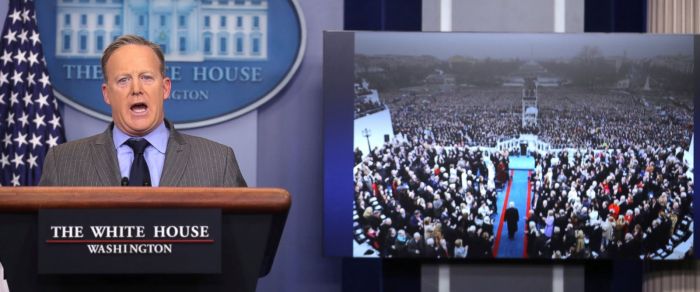
spicer

White House Press Secretary Sean Spicer blasted the media on Jan. 21, accusing them of intentionally falsely reporting on the size of Donald Trump’s inauguration crowd.

Do you know that Saturday Night Live writer Katie Rich has been suspended for a tasteless tweet about Trump’s 10-year-old son Barron: “Barron will be this country’s first homeschool shooter?” And that about 80,000 people have signed a Change.org petition demanding that Rich be fired?

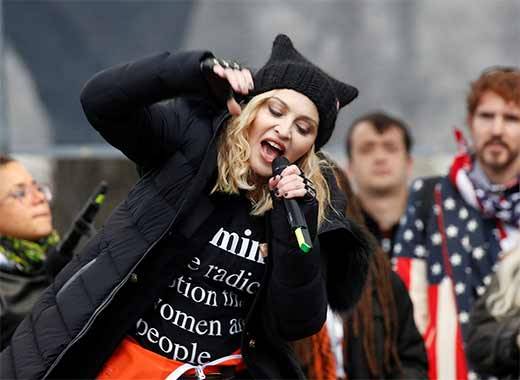
madonna-reuters

Madonna at the Women’s March

How about that attention-hogging Madonna said “Fuck” multiple times in her remarks to the Wash., D.C. Women’s March, that a Time magazine reporter incorrectly said in a tweet and a pool report that a bust of Martin Luther King Jr. had been removed from the Oval Office, or that actor, James Franco, who had a breakout role in 1999’s “Freaks and Geeks”, said he’s “spiraled into a depression” following Hillary Clinton’s loss to Trump?

You have probably heard about all this because the media loves this stuff and figures you do too. But in the media’s obsession with being adversarial and entertaining in its coverage of the new Trump Administration, they are falling into a trap of covering the non-consequential.

To an unfortunate degree, the media has gone from its obsequious coverage of Barack Obama, what Noah Rothman called in Commentary a “kind of vapidity that typified political media in the Obama years,” to a 24-7 hostility to Trump that can’t distinguish between the trivial and the significant.

Meanwhile there’s real consequential governing going on.

Today, for example, Trump signed executive actions that cut aid to groups that provide or promote abortions overseas, withdraw from the Trans-Pacific Partnership and impose an immediate federal hiring freeze.

Trump’s administration also has signaled it is unlikely to move quickly to discontinue the Deferred Action for Childhood Arrivals (DACA) program Obama established in 2012, that it is rethinking its earlier promise to move the American Embassy in Israel from Tel Aviv to Jerusalem, and that plans to penalize so-called sanctuary cities are expected to move ahead.

If the media really wants to perform a service for the American people, they need to move away from distracting audiences with inconsequential blathering, petty grievances and tit-for-tat arguments and commit to focusing on significant events in the United States and around the world that have the potential to change our lives.

Media Malpractice: Reporting on Post-Election Hate

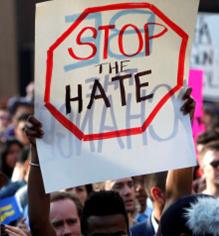
stopthehate

There’s not just fake news out there. There’s also a lot of reporting that’s just plain unreliable and biased, but is accepted uncritically by people because it fits their preconceived expectations and those of their like-minded circle.

Tales of hate incidents, threats and intimidation of minorities abound, with many commentators suggesting there’s a linkage between the incidents and Donald Trump’s election.

Much of the recent debate has relied on data gathered by the Montgomery, Alabama-based Southern Poverty Law Center (SPLC).

On Nov. 29, the SPLC released reports “documenting (emphasis mine) how President-elect Donald Trump’s own words have sparked hate incidents across the country and had a profoundly negative effect on the nation’s schools”. The reports said that in the ten days after the election the SPLC counted 867 incidents of harassment and intimidation.

Most of the incidents cited by the SPLC involved anti-immigrant incidents (136), followed by anti-black (89) and anti-LGBT (43). A “Trump” category (41) referred to incidents where there was no clear defined target, like the vandalism of a “unity” sign in Connecticut, which the SPLC categorized as “pro-Trump vandalism”.

The New York Times jumped on the report, observing that, “Hate Crimes have surged across the country,” linking that assertion to the SPLC ‘s “hate crimes” reports and denouncing Trump for not being more aggressive in “condemning the hate talk and violence being done in his name.”

The New Yorker, citing the SPLC reports, said, “Since Donald Trump won the Presidential election, there has been a dramatic uptick in incidents of racist and xenophobic harassment across the country.”

“Hate, harassment incidents spike since Trump election”, CBS News reported, basing its report largely on SPLC’s data.

Willamette Week picked up the SPLC’s report, running a story headlined, “Report on Post-Election Hate Incidents Shows Oregon at Top of List; New Southern Poverty Law Center info paints alarming picture of Pacific Northwest.”

NPR’s All Things Considered also had a segment on the topic.

“Since Tuesday (Nov. 8), the Southern Poverty Law Center, which tracks hate groups, has counted some 250 incidents…. ,” said NPR’s Eyder Peralta. “While they have not verified all of them, they include anti-Semitic, anti-black, anti-Muslim messages and, in the case of a Michigan middle school, a lunchroom anti-immigrant taunt – build the wall.”

“I think that the emotions that were unleashed by the Trump campaign’s use of bigotry as a tool to get elected has reached every part of our society, “ said Heidi Beirich, an employee of the Southern Poverty Law Center (SPLC) described as an expert on various forms of extremism. “I think that the emotions that were unleashed by the Trump campaign’s use of bigotry as a tool to get elected has reached every part of our society.”

Because the SPLC is widely recognized as a reputable source, or because many media outlets have taken the easy way out and simply parroted the SPLC’s reports, the media have been awash in reports citing the SPLC data.

There’s one big problem. Media don’t note that the SPLC has not verified the incidents it cites so breathlessly as evidence of a spike in hate crimes..

On its website, the SPLC admits the hate incidents it cites came from news reports, social media, and direct submissions via SPLC’s #ReportHate page. “These incidents, aside from news reports, are largely anecdotal” and “…it was not possible to confirm the veracity of all reports” the SPLC says.

And there’s no way for the public to even read the details of all the reported incidents because the SPLC’s website doesn’t provide access to them.

There may, indeed, have been a recent rise in hate incidents, and the SPLC’s reports make for bone-chilling reading. But the reports don’t “document” hate incidents if the word is taken to mean providing hard evidence.

Hanna Goldfield addressed the critical need for writing to be accurate, even if an alternative version is more “beautiful” or makes a story stronger, in a piece she wrote for the New Yorker. “The conceit that one must choose facts or beauty—even if it’s beauty in the name of “Truth” or a true “idea”—is preposterous,” she said. “A good writer—with the help of a fact-checker and an editor, perhaps—should be able to marry the two, and a writer who refuses to even try is, simply, a hack.”

Reporters should also recognize that data sources are rarely neutral observers. the SPLC, for example, has a position to plead, a message to deliver in order to generate contributions, a desire to be quoted so its influence will be enhanced.

Paul Sperry, a former Washington bureau chief for Investor’s Business Daily, also points out that although the SPLC claims to be a nonpartisan civil rights law firm, it receives funding from leftist groups, including ones controlled by billionaire George Soros. And a review of Federal Election Commission records reveals that its board members contributed more than $13,400 to Hillary Clinton’s presidential campaigns.

In summary, there’s a lesson here for current and aspiring reporters. Reporters shouldn’t just accept and promote information that affirms their biases or makes for a story that attracts a lot of clicks.  That’s sloppy reporting that undermines trust in the media, and rightfully so.


Post-Election: More of the Same

“Much of the mainstream, legacy media continues its self-disgrace. Having failed to kill Donald Trump ’s candidacy they will now aim at his transition. Soon they will try to kill his presidency.

Columnist Peggy Noonan, Nov. 19, 2016

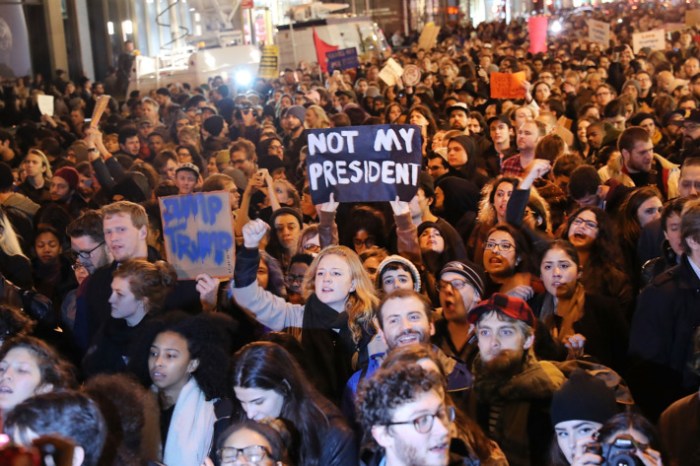
not-my-president-anti-trump-protesters-900

New York Times Headlines from just one day, November 19, 2016

Trump Selects Loyalists on Right Flank: Strident Team of Like Minds

Donald Trump’s Disturbing Picks

Michael Flynn (Trump’s pick for National Security Adviser), Too Hotheaded for a Sensitive Position

As Trump Rises, So Do Some Hands Waving Confederate Flags

Amid Divisions, a March Seeks to Unite Women

Diplomats Shift Focus to a New Threat Facing Paris Pact: Trump

 Disoriented ‘Never Trump’ Stalwarts Try to Focus on Policy, Not the Man

 Muslim Americans Speak of Escalating Worry

650 Harvard Business School Women Assail Bannon (Trump’s pick for chief strategist)

 Conflicts and Nepotism Under Trump?

(Trump) The Man Who Would be King

Oh, No! Trump’s Calling

Daughter (of Trump)’s Presence at Meeting Poses Questions

An Anti-Muslim Proposal

As the The Nieman Lab, a respected media analysis organization, wrote recently:
 
“…will the increased clarity about the divides in this country encourage a more targeted product for affluent, coastal, progressive audiences? And will reporters and editors at these outlets — who, it is fair to assume, did not vote for Trump in large numbers — begin to see themselves as more explicitly oppositional?” 
Based on the New York Times, the answer is yes.


Should the two major parties make the rules? It’s debatable.

thirdpartychoiceAnother reason why so many Americans are frustrated, despondent, and bitter this election year.

Both parties have lost ground among the public. Independents now outnumber either Democrats or Republicans, with 40% of Americans choosing that label, according to the Pew Research Center.

But the private, Democrat and Republican-created and -controlled Commission on Presidential Debates announced on Friday, Sept. 16, that only Donald Trump and Hillary Clinton will be allowed on the stage for the first presidential debate.

This when:

  • In a recent Quinnipiac University poll that asked likely voters, “Do you think that Gary Johnson, the Libertarian candidate for president, should be included in the presidential debates this year, or not?”, 62% answered “yes.”
  • Johnson is going to be on the ballot in all 50 states and the District of Columbia
  • A new Washington Post/Survey Monkey poll shows Johnson is in double digits in 42 states. In 15, he’s at 15 percent or higher, including 25 percent in New Mexico, 23 percent in Utah and 19 percent in Alaska, Idaho, and South Dakota.

So here we have a Commission that’s a creature of the two major parties setting the ground rules for who gets to be on the debate stage, securing free airtime for its choices on C-SPAN, ABC, CBS, FOX and NBC, as well as all cable news channels including CNN, Fox News, MSNBC and others.

Not exactly a reason to celebrate our political system, is it?